


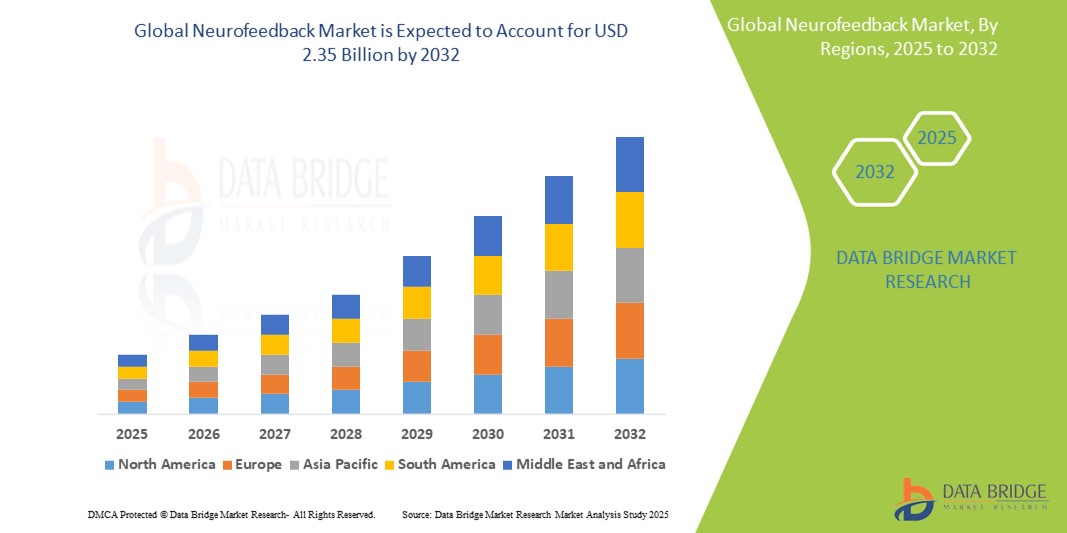
Neurofeedback Market Size
- The global Neurofeedback market size was valued at USD 1.35 billion in 2024 and is expected to reach USD 2.35 billion by 2032, at a CAGR of 7.18% during the forecast period
- The market growth is primarily driven by increasing awareness about mental health, rising prevalence of neurological disorders, and advancements in neurofeedback technology and protocols
- In addition, growing demand for non-invasive, drug-free treatment options for conditions such as ADHD, anxiety, depression, and PTSD is propelling the adoption of neurofeedback therapies across clinical and personal wellness settings. These factors collectively are fueling the expansion of the global neurofeedback market
Neurofeedback Market Analysis
- Neurofeedback, a technique using real-time brain activity monitoring to train self-regulation of brain functions, is gaining prominence as an effective non-invasive treatment for various neurological and psychological disorders in both clinical and wellness environments due to its personalized approach and minimal side effects
- The growing demand for neurofeedback is largely driven by increasing awareness of mental health issues, rising incidence of disorders such as ADHD, anxiety, and PTSD, and advancements in neurofeedback devices that improve accuracy and user experience
- North America dominated the neurofeedback market with the largest revenue share of 39.2% in 2024, characterized by high healthcare expenditure, established mental health infrastructure, and the presence of key market players investing in R&D and clinical validation of neurofeedback therapies
- Asia-Pacific is expected to be the fastest growing region in the neurofeedback market during the forecast period due to increasing mental health awareness, expanding healthcare access, and rising adoption of innovative neurotherapeutic solutions
- Computer software segment dominated the neurofeedback market with a market share of 42.8% in 2024, driven by its continuous technological advancements and the growing demand for customizable, user-friendly neurofeedback platforms
Report Scope and Neurofeedback Market Segmentation
|
Attributes |
Neurofeedback Key Market Insights |
|
Segments Covered |
|
|
Countries Covered |
North America
Europe
Asia-Pacific
Middle East and Africa
South America
|
|
Key Market Players |
|
|
Market Opportunities |
|
|
Value Added Data Infosets |
In addition to the insights on market scenarios such as market value, growth rate, segmentation, geographical coverage, and major players, the market reports curated by the Data Bridge Market Research also include in-depth expert analysis, pricing analysis, brand share analysis, consumer survey, demography analysis, supply chain analysis, value chain analysis, raw material/consumables overview, vendor selection criteria, PESTLE Analysis, Porter Analysis, and regulatory framework. |
Neurofeedback Market Trends
“AI-Driven Personalization and Remote Therapy Integration”
- A significant and accelerating trend in the global neurofeedback market is the growing integration of artificial intelligence (AI) and remote therapy platforms to enhance the personalization, accuracy, and accessibility of neurofeedback treatments. This technological fusion is transforming how neurofeedback is delivered, making it more adaptive and patient-centered
- For instance, solutions such as Myndlift and Neuropeak Pro leverage AI algorithms to analyze brainwave activity in real time and dynamically adjust training protocols, enabling more tailored and effective therapy sessions. These platforms also support remote monitoring by clinicians, allowing patients to receive high-quality care from the comfort of their homes
- AI integration in neurofeedback systems enables features such as automated progress tracking, anomaly detection during sessions, and personalized session optimization based on historical data. For instance, Neuroelectrics combines AI with wearable EEG devices to improve data interpretation and deliver smarter, individualized training plans over time
- The seamless incorporation of AI and cloud-based teletherapy systems allows users to undergo sessions using mobile devices, while clinicians maintain oversight via remote dashboards. This expands access to therapy for patients in remote or underserved areas and supports greater adherence to treatment protocols
- This trend towards intelligent, adaptive, and remote neurofeedback solutions is fundamentally reshaping user expectations for mental health and neurological care. Consequently, companies such as BrainBit are developing advanced AI-enabled platforms that offer real-time personalization, remote compatibility, and enhanced data analytics for improved outcomes
- The demand for neurofeedback systems that integrate AI and support remote use is growing rapidly across both clinical and wellness sectors, as users increasingly prioritize flexible, data-driven, and personalized mental health solutions
Neurofeedback Market Dynamics
Driver
“Rising Demand for Non-Invasive Mental Health Therapies and Personalized Neurotechnology”
- The increasing global awareness of mental health issues, coupled with a growing preference for non-invasive and drug-free treatment options, is a major driver fueling the demand for neurofeedback systems. This demand is further amplified by the need for personalized, data-driven therapies that adapt to individual neurological profiles
- For instance, in March 2024, Neuroelectrics launched its enhanced wireless neurofeedback platform combining cloud analytics and wearable EEG devices, enabli`ng more precise and remote cognitive therapy solutions. Such advancements are reinforcing the adoption of neurofeedback in both clinical and consumer wellness applications
- As mental health disorders such as ADHD, anxiety, and depression continue to rise globally, patients and practitioners are seeking effective alternatives to conventional pharmacological treatments. Neurofeedback offers a promising solution by allowing individuals to self-regulate brain activity through real-time feedback, without the side effects associated with medication
- Furthermore, technological advancements in EEG sensors, AI-based analytics, and mobile neurofeedback apps have made neurofeedback more accessible and user-friendly, supporting its integration into home therapy, telehealth platforms, and wearable health ecosystems
- The convenience of personalized training sessions, real-time progress monitoring, and the ability to receive treatment remotely are key factors accelerating neurofeedback adoption across healthcare, performance enhancement, and wellness markets. As digital mental health solutions gain traction, neurofeedback is emerging as a preferred modality for cognitive enhancement and emotional regulation
Restraint/Challenge
“Lack of Standardization, High Equipment Costs, and Limited Clinical Validation”
- A significant challenge to broader adoption of neurofeedback technology lies in the lack of standardization across protocols and devices, as well as the relatively high cost of equipment and therapy sessions. These factors create barriers for both practitioners and patients, particularly in regions with limited healthcare funding or infrastructure
- For instance, the absence of universally accepted guidelines for neurofeedback therapy leads to varying practices across providers, which can impact treatment outcomes and hinder regulatory acceptance. This inconsistency affects the perceived reliability and credibility of neurofeedback in mainstream clinical settings
- In addition, advanced neurofeedback systems—particularly those integrating AI, real-time EEG, or fMRI capabilities—can be prohibitively expensive for smaller clinics, wellness centers, and independent practitioners. While entry-level systems such as those used in home-based training apps are more accessible, high-precision systems used for clinical diagnosis and treatment carry steep acquisition and maintenance costs
- Furthermore, although neurofeedback shows promise in treating conditions such as ADHD, anxiety, and depression, there is still a need for larger-scale clinical studies and peer-reviewed research to validate its long-term efficacy and establish it as a first-line treatment. This limits insurance coverage and deters conservative healthcare systems from integrating neurofeedback into routine care
- Overcoming these challenges will require collaborative efforts to standardize treatment protocols, enhance clinical research, and develop cost-effective, scalable solutions that can bridge the gap between experimental and widely accepted therapeutic applications
Neurofeedback Market Scope
The market is segmented on the basis of product, system, application, and end user
- By Product
On the basis of product, the neurofeedback market is segmented into amplifiers, electrodes or sensors, and computer software. The computer software segment dominated the market with the largest market revenue share of 42.8% in 2024, driven by its crucial role in interpreting brain signals and facilitating real-time feedback for users. These platforms are essential for integrating data from EEG hardware and enabling neurofeedback sessions through customizable and interactive interfaces, both in clinical and remote therapy settings. The rising adoption of AI-based features and cloud integration in software solutions is further propelling growth in this segment.
The amplifiers segment is anticipated to witness the fastest growth rate from 2025 to 2032, owing to technological advancements that improve signal fidelity, portability, and wireless data transmission. Compact and wearable amplifier units are seeing increased demand in home-based neurofeedback systems, allowing broader access to therapy beyond clinical environments.
- By System
On the basis of system, the neurofeedback market is segmented into frequency/power neurofeedback system, slow cortical potential neurofeedback (SCP-NF) system, low-energy neurofeedback system (LENS), hemoencephalographic (HEG) neurofeedback system, live Z-Score neurofeedback system, low-resolution electromagnetic tomography (LORE-TA), and functional magnetic resonance imaging (fMRI). The frequency/power neurofeedback system segment held the largest market revenue share in 2024 due to its widespread use in addressing common neurological disorders such as ADHD and anxiety. These systems analyze the amplitude of brainwave frequencies to provide feedback, making them user-friendly and highly adaptable for both clinical and non-clinical settings.
The low-resolution electromagnetic tomography (LORE-TA) segment is expected to register the fastest growth rate from 2025 to 2032, supported by its advanced imaging capabilities that allow for deeper brain source localization. Its application in research and treatment of complex neuropsychological conditions is gaining prominence due to high accuracy and diagnostic potential.
- By Application
On the basis of application, the neurofeedback market is segmented into attention deficit hyperactivity disorder (ADHD), anxiety, depression, epilepsy, insomnia, drug addiction, schizophrenia, and others. The attention deficit hyperactivity disorder (ADHD)segment dominated the market in 2024, driven by increasing clinical validation and parental demand for non-pharmacological treatment alternatives for children. Neurofeedback is being widely adopted in pediatric clinics and neurotherapy centers as a safe, effective, and long-term management strategy for ADHD symptoms.
The anxiety segment is projected to grow at the fastest CAGR during the forecast period. Growing global mental health awareness, coupled with the rise in stress-related disorders and preference for self-regulated treatment approaches, is boosting the adoption of neurofeedback therapies for anxiety management across diverse age groups.
- By End User
On the basis of end user, the neurofeedback market is segmented into hospitals, physician offices, and ambulatory surgical centers. The hospitals segment accounted for the largest revenue share in 2024 due to their comprehensive infrastructure, increasing neurological disorder diagnoses, and integration of neurofeedback into multidisciplinary treatment approaches. Hospitals often use advanced systems such as fMRI and LORE-TA for diagnostic and therapeutic purposes.
The physician offices segment is expected to witness the highest growth rate during the forecast period, driven by the growing trend of outpatient neurofeedback services, cost-effective setups, and accessibility for follow-up sessions in non-hospital environments. The emergence of compact and user-friendly systems supports broader adoption by independent practitioners and therapists.
Neurofeedback Market Regional Analysis
- North America dominated the neurofeedback market with the largest revenue share of 39.2% in 2024, driven by high healthcare expenditure, established mental health infrastructure, and the presence of key market players investing in R&D and clinical validation of neurofeedback therapies
- The region’s strong presence of specialized neurofeedback clinics, advanced healthcare infrastructure, and increasing adoption of mental wellness solutions contribute significantly to market expansion
- Furthermore, favorable reimbursement frameworks, increasing awareness about neurotherapy, and rising investments in neurotechnology startups bolster regional demand. The growing popularity of home-based neurofeedback systems, particularly in the U.S., is also accelerating market penetration across both medical and consumer wellness segments
U.S. Neurofeedback Market Insight
The U.S. neurofeedback market captured the largest revenue share of 80.3% in 2024 within North America, propelled by a high prevalence of neurological conditions such as ADHD, anxiety, and PTSD, along with growing acceptance of alternative, non-pharmacological treatments. Widespread access to advanced healthcare, strong presence of trained neurofeedback practitioners, and the rising trend of personalized brain training programs are key contributors. In addition, the emergence of home-use neurofeedback systems and integration with mental wellness apps are further expanding consumer reach.
Europe Neurofeedback Market Insight
The Europe neurofeedback market is projected to witness robust CAGR throughout the forecast period, driven by rising mental health awareness and increasing demand for non-invasive therapy options. Countries across the region are increasingly embracing neurofeedback in clinical practices, schools, and wellness centers. The integration of neurofeedback into psychiatric and psychological care, along with favorable reimbursement structures in some European countries, is fueling growth. In addition, research initiatives and technological innovation continue to strengthen the market outlook.
U.K. Neurofeedback Market Insight
The U.K. neurofeedback market is expected to grow steadily during the forecast period, driven by rising diagnoses of mental health disorders and growing demand for cognitive training among students and professionals. Increased media coverage and public discussions around brain health and neuroplasticity are supporting adoption. Moreover, the expansion of neurofeedback service providers and interest from private mental health clinics are contributing to the market's upward trajectory.
Germany Neurofeedback Market Insight
The Germany neurofeedback market is poised to expand at a considerable CAGR, underpinned by a strong healthcare infrastructure and a tech-savvy population that increasingly seeks alternatives to medication-based therapy. The country’s proactive stance on neurological wellness, coupled with rising government and academic support for mental health technologies, is enhancing market growth. Germany's focus on evidence-based interventions also supports the credibility and adoption of neurofeedback practices.
Asia-Pacific Neurofeedback Market Insight
The Asia-Pacific neurofeedback market is anticipated to grow at the fastest CAGR from 2025 to 2032, fueled by growing awareness of mental health issues and expanding access to innovative therapeutic technologies. Rapid urbanization, rising disposable incomes, and increased demand for stress management and cognitive enhancement in nations such as China, Japan, and India are key drivers. In addition, the expansion of telehealth and mobile neurofeedback solutions is making therapy more accessible to wider populations across the region.
Japan Neurofeedback Market Insight
The Japan neurofeedback market is gaining momentum due to its strong emphasis on technology-driven healthcare and mental wellness. With increasing concern over workplace stress, aging-related cognitive decline, and academic performance, neurofeedback is becoming a popular modality in both clinical and wellness settings. The country’s robust digital infrastructure and widespread use of wearables and brain training applications are also supporting the rise of neurofeedback-based interventions.
India Neurofeedback Market Insight
The India neurofeedback market accounted for the largest revenue share in Asia Pacific in 2024, supported by rapid digital healthcare transformation, rising mental health awareness, and growing adoption of brain-training programs in schools and corporate settings. The expanding middle class, rising prevalence of anxiety and ADHD among youth, and increasing integration of neurofeedback with holistic wellness practices are major growth drivers. In addition, startups and health tech innovators are introducing cost-effective, user-friendly solutions that are expanding access across urban and semi-urban areas.
Neurofeedback Market Share
The neurofeedback industry is primarily led by well-established companies, including:
- BrainMaster Technologies, Inc. (U.S.)
- BEE Medic GmbH (Germany)
- Mitsar Co. Ltd. (Russia)
- Thought Technology Ltd. (Canada)
- Myndlift Ltd. (Israel)
- Mindfield Biosystems Ltd. (U.K.)
- Narbis (U.S.)
- NeuroCare Group AG (Germany)
- Neurobit Systems (Poland)
- Wearable Sensing (U.S.)
- NeuroSky Inc. (U.S.)
- BrainworksNeurotherapy (U.S.)
- InteraXon Inc. (Canada)
- Mind Media Inc. (Netherlands)
- Brain Vision LLC (U.S.)
- Bee Medic LLC (U.S.)
- Neuroelectrics Corporation (Spain)
- Neurofield Inc. (U.S.)
- NIRx Medical Technologies LLC (U.S.)
What are the Recent Developments in Global Neurofeedback Market?
- In May 2025, A study published in introduced an Active Inference model to better understand and improve neurofeedback training. This computational framework simulates how individuals interact with neurofeedback environments, highlighting the impact of feedback quality and individual beliefs on training effectiveness
- In November 2023, Recent studies have explored the integration of connectivity-based EEG neurofeedback with simultaneous fMRI for emotion regulation. This approach has shown effectiveness in enhancing neural modulation, particularly in regions associated with emotion regulation such as the amygdala, thalamus, and insula, suggesting potential for treating mental disorders such as PTSD, anxiety, and depression
- In July 2023, Brain Scientific Inc. announced enhancements to its NeuroCap, a disposable EEG headset. The improvements include a proprietary gel for better conductivity and enhanced adhesive pads, aiming to improve performance and user comfort in neurofeedback applications
- In February 2023, Neurofeedback and brain mapping techniques, such as SPECT scans, are gaining popularity as tools for addressing mental health issues and trauma. These technologies offer a way to visualize brain functioning in conditions such as depression, PTSD, and anxiety, potentially aiding in treatment planning
- In November 2021, LiveToBeHappy, Inc., a land developer and community home builder, acquired RenuYou, a Board Certified (BCIA) clinic referred to patients by the Mayo Clinic for neurofeedback treatment, research, and development. This acquisition signifies a strategic move to integrate neurofeedback services into broader wellness and community offerings

- Interactive Data Analysis Dashboard
- Company Analysis Dashboard for high growth potential opportunities
- Research Analyst Access for customization & queries
- Competitor Analysis with Interactive dashboard
- Latest News, Updates & Trend analysis
- Harness the Power of Benchmark Analysis for Comprehensive Competitor Tracking
Data collection and base year analysis are done using data collection modules with large sample sizes. The stage includes obtaining market information or related data through various sources and strategies. It includes examining and planning all the data acquired from the past in advance. It likewise envelops the examination of information inconsistencies seen across different information sources. The market data is analysed and estimated using market statistical and coherent models. Also, market share analysis and key trend analysis are the major success factors in the market report. To know more, please request an analyst call or drop down your inquiry.
The key research methodology used by DBMR research team is data triangulation which involves data mining, analysis of the impact of data variables on the market and primary (industry expert) validation. Data models include Vendor Positioning Grid, Market Time Line Analysis, Market Overview and Guide, Company Positioning Grid, Patent Analysis, Pricing Analysis, Company Market Share Analysis, Standards of Measurement, Global versus Regional and Vendor Share Analysis. To know more about the research methodology, drop in an inquiry to speak to our industry experts.
Data Bridge Market Research is a leader in advanced formative research. We take pride in servicing our existing and new customers with data and analysis that match and suits their goal. The report can be customized to include price trend analysis of target brands understanding the market for additional countries (ask for the list of countries), clinical trial results data, literature review, refurbished market and product base analysis. Market analysis of target competitors can be analyzed from technology-based analysis to market portfolio strategies. We can add as many competitors that you require data about in the format and data style you are looking for. Our team of analysts can also provide you data in crude raw excel files pivot tables (Fact book) or can assist you in creating presentations from the data sets available in the report.













