


Nutritional Analysis Market Overview
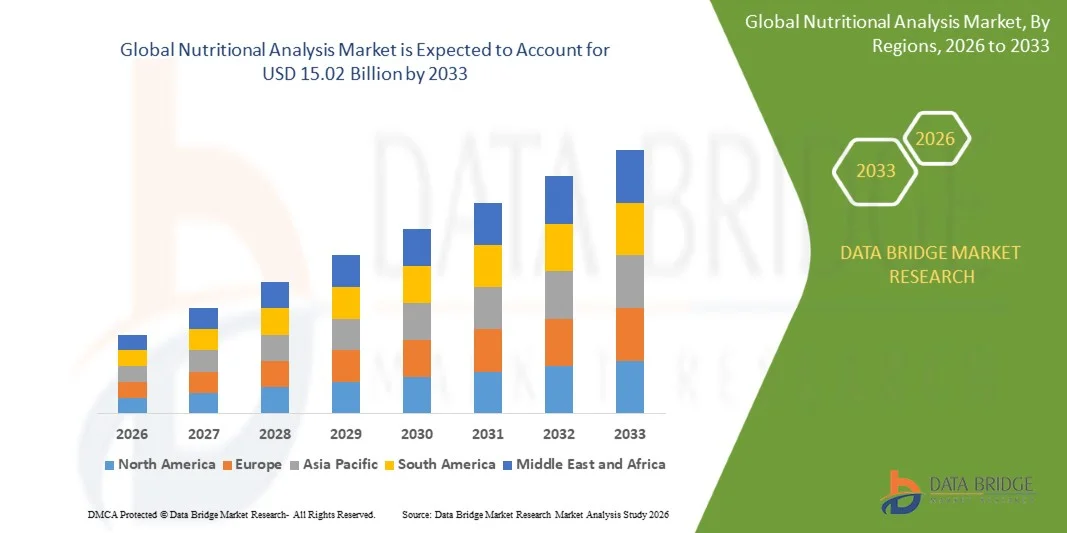
The Nutritional Analysis Market was valued at USD 7.59 billion in 2025 and is projected to reach USD 15.02 billion by 2033, growing at a CAGR of 8.90% from 2026 to 2033. The market is experiencing strong growth driven by rising demand for accurate food labeling, increasing consumer awareness regarding health and dietary intake, and growing regulatory requirements for nutritional transparency across packaged food and beverage products.
The increasing prevalence of lifestyle-related diseases such as obesity, diabetes, and cardiovascular disorders is further encouraging consumers to monitor nutritional content in daily diets, prompting food manufacturers and testing laboratories to adopt advanced nutritional analysis solutions. In addition, rapid expansion of functional foods, dietary supplements, and personalized nutrition trends is accelerating the adoption of laboratory-based and digital nutritional analysis tools across the global food industry.
Key Market Trends & Insights
- North America dominated the nutritional analysis market with the largest revenue share of 39.6% in 2025, supported by stringent regulatory frameworks, high consumer awareness regarding dietary health, and strong adoption of advanced laboratory testing technologies across food manufacturing and processing industries.
- Asia-Pacific is expected to be the fastest-growing region, recording a CAGR of 9.7% from 2026 to 2033. Growth is driven by rapid urbanization, rising disposable incomes, increasing consumption of packaged and functional foods, and strengthening food safety regulations across countries such as China, India, and Japan.
- The Calories segment held the largest market revenue share of approximately 21.6% in 2025 driven by its critical role in food labeling regulations, consumer diet tracking, and widespread usage across packaged food and beverage products. Calorie analysis is widely adopted by food manufacturers and regulatory bodies due to its importance in obesity management and standardized nutritional disclosure requirements.
- The Protein segment is projected to register the fastest growth at a CAGR of 10.4% from 2026 to 2033, driven by increasing demand for high-protein diets, sports nutrition products, and functional foods across global consumer markets. Rising awareness of muscle health, weight management, and dietary optimization is accelerating adoption of protein profiling in nutritional testing solutions.
- The Beverages segment held the largest market revenue share of approximately 21.9% in 2025 driven by extensive nutritional labeling requirements across soft drinks, functional beverages, energy drinks, and dairy-based drinks. Beverage manufacturers increasingly rely on nutritional analysis to ensure regulatory compliance and support clean-label product positioning.
- The Bakery and Confectionery segment is projected to register the fastest growth at a CAGR of 9.8% from 2026 to 2033, driven by rising demand for packaged bakery products, sugar-controlled formulations, and fortified confectionery items. Increasing consumer focus on calorie control and ingredient transparency is further supporting segment expansion.
- The Product Labelling segment held the largest market revenue share of approximately 46.3% in 2025 driven by mandatory nutritional disclosure requirements and growing consumer demand for transparent food labeling across global markets. Food manufacturers extensively use nutritional analysis to ensure accuracy in packaged food labeling and maintain brand trust.
- The New Product Development segment is projected to register the fastest growth at a CAGR of 11.2% from 2026 to 2033, driven by increasing innovation in functional foods, dietary supplements, and personalized nutrition products. Companies are leveraging nutritional analysis to optimize formulations, enhance product positioning, and meet evolving health-focused consumer preferences.
Market Size & Forecast
- Global Market Value (2025): USD 7.59 Billion
- Expected Market Value (2033): USD 15.02 Billion
- Forecast CAGR (2026–2033): 8.90%
- Leading Region in 2025: North America
- Fastest Growing Region: Asia-Pacific
Report Scope and Nutritional Analysis Market Segmentation
|
Attributes |
Nutritional Analysis Key Market Insights |
|
Segments Covered |
|
|
Countries Covered |
North America
Europe
Asia-Pacific
Middle East and Africa
South America
|
|
Key Market Players |
• SGS SA (Switzerland) |
|
Market Opportunities |
• Expansion Of Personalized Nutrition And Dietary Planning Services |
|
Value Added Data Infosets |
In addition to the insights on market scenarios such as market value, growth rate, segmentation, geographical coverage, and major players, the market reports curated by the Data Bridge Market Research also include in-depth expert analysis, pricing analysis, brand share analysis, consumer survey, demography analysis, supply chain analysis, value chain analysis, raw material/consumables overview, vendor selection criteria, PESTLE Analysis, Porter Analysis, and regulatory framework. |
Nutritional Analysis Market Trends
Trend: Growth In Digital Nutritional Profiling And AI-Based Dietary Assessment Solutions
Increasing demand for accurate, real-time nutritional evaluation and personalized diet monitoring across healthcare, food manufacturing, and wellness sectors is driving the adoption of advanced nutritional analysis technologies. Traditional manual food composition analysis methods are time-consuming, less scalable, and prone to variability, encouraging the shift toward automated laboratory systems and AI-enabled nutritional profiling platforms.
In modern food processing and healthcare applications, companies are integrating laboratory-based spectroscopy, chromatography, and AI-driven databases, For instance for macronutrient and micronutrient profiling of packaged foods and clinical diet planning, to improve accuracy and regulatory compliance. In healthcare systems, nutritional analysis tools are being used to design personalized diet plans for patients with diabetes, obesity, and cardiovascular diseases, improving treatment outcomes and preventive care strategies.
The rapid expansion of functional foods, dietary supplements, and sports nutrition products is also increasing demand for precise nutritional labeling and validation systems capable of supporting regulatory standards such as FDA and EFSA compliance. In addition, foodservice chains and packaged food manufacturers are increasingly relying on nutritional analysis software to meet clean-label requirements and consumer transparency expectations. Growing industry validation through digital food databases in 2025 across North America and Europe demonstrated nearly 12–15% improvement in labeling accuracy and compliance efficiency using AI-powered nutritional analysis platforms.
Nutritional Analysis Market Dynamics
Key Market Driver: Rising Demand For Food Safety And Nutritional Transparency Regulations
Governments and regulatory authorities worldwide are enforcing stricter labeling standards and nutritional disclosure requirements to ensure food safety, consumer awareness, and public health protection. Increasing concerns related to obesity, diabetes, and lifestyle diseases are further accelerating the need for accurate nutritional profiling across packaged and processed food products.
Food manufacturers, restaurant chains, and supplement companies are increasingly adopting nutritional analysis solutions to comply with evolving regulatory frameworks and avoid labeling discrepancies. For instance, food producers in the European Union and the United States are required to provide detailed macronutrient and allergen information, driving widespread adoption of laboratory testing and digital nutritional tracking systems.
Similarly, growing consumer awareness regarding calorie intake, protein content, and clean-label ingredients is pushing brands to invest in transparent nutritional labeling technologies. Industry compliance reports from 2024 indicated that over 65–70% of large-scale food manufacturers in developed markets have integrated advanced nutritional analysis systems to meet regulatory and consumer transparency demands.
Key Restraint/Challenge: High Testing Costs And Complex Analytical Procedures
Nutritional analysis requires advanced laboratory equipment, skilled personnel, and time-intensive testing methods such as chromatography, spectrometry, and biochemical assays, which significantly increase operational costs for manufacturers and testing laboratories. Small and medium-sized food companies often face financial barriers in adopting comprehensive nutritional profiling systems.
In addition, variations in food composition, ingredient sourcing, and processing methods create challenges in maintaining consistent analytical accuracy across large product portfolios. Limited standardization across global testing protocols further complicates cross-border food labeling compliance, particularly for multinational food exporters.
Commercial benchmarking studies indicate that advanced laboratory nutritional testing can cost between 20–30% higher for multi-ingredient processed foods compared to standard single-ingredient analysis, limiting adoption in cost-sensitive markets and smaller food production units
Key Market Opportunity: Expansion Of Personalized Nutrition And Digital Health Integration
Growing consumer interest in personalized nutrition, preventive healthcare, and fitness optimization is creating significant opportunities for AI-driven nutritional analysis platforms and digital dietary assessment tools. Increasing adoption of wearable health devices and mobile nutrition tracking applications is further enhancing demand for real-time dietary monitoring solutions.
Healthcare providers and wellness companies are increasingly integrating nutritional analysis systems with digital health platforms to create customized diet plans based on genetic, metabolic, and lifestyle data. For instance, hospitals and nutrition clinics are using AI-powered diet assessment tools to improve patient recovery outcomes and manage chronic diseases through precision nutrition strategies.
In addition, advancements in cloud-based nutritional databases and machine learning algorithms are enabling faster food composition analysis and predictive dietary recommendations. Digital health programs conducted in 2025 across the U.S. and Japan reported nearly 14–18% improvement in patient adherence to prescribed diets using AI-supported nutritional planning systems.
Nutritional Analysis Market Scope
The market is segmented on the basis of parameter, product type, and objective.
• By Parameter
On the basis of parameter, the Nutritional Analysis Market is segmented into Vitamin Profile, Mineral Profile, Fat Profile, Moisture, Proteins, Total Dietary Fiber, Sugar Profile, Cholesterol, and Calories. The Calories segment held the largest market revenue share of approximately 21.6% in 2025 driven by its critical role in food labeling regulations, consumer diet tracking, and widespread usage across packaged food and beverage products. Calorie analysis is widely adopted by food manufacturers and regulatory bodies due to its importance in obesity management and standardized nutritional disclosure requirements.
The Protein segment is projected to register the fastest growth at a CAGR of 10.4% from 2026 to 2033, driven by increasing demand for high-protein diets, sports nutrition products, and functional foods across global consumer markets. Rising awareness of muscle health, weight management, and dietary optimization is accelerating adoption of protein profiling in nutritional testing solutions.
• By Product Type
On the basis of product type, the market is segmented into Beverages, Snacks, Bakery and Confectionery, Meat and Poultry, Sauces, Dressings and Condiments, Dairy and Desserts, Fruits and Vegetables, Edible Fats and Oils, Baby Food, and Others. The Beverages segment held the largest market revenue share of approximately 21.9% in 2025 driven by extensive nutritional labeling requirements across soft drinks, functional beverages, energy drinks, and dairy-based drinks. Beverage manufacturers increasingly rely on nutritional analysis to ensure regulatory compliance and support clean-label product positioning.
The Bakery and Confectionery segment is projected to register the fastest growth at a CAGR of 9.8% from 2026 to 2033, driven by rising demand for packaged bakery products, sugar-controlled formulations, and fortified confectionery items. Increasing consumer focus on calorie control and ingredient transparency is further supporting segment expansion.
• By Objective
On the basis of objective, the market is segmented into Product Labelling, New Product Development, and Regulation Compliance. The Product Labelling segment held the largest market revenue share of approximately 46.3% in 2025 driven by mandatory nutritional disclosure requirements and growing consumer demand for transparent food labeling across global markets. Food manufacturers extensively use nutritional analysis to ensure accuracy in packaged food labeling and maintain brand trust.
The New Product Development segment is projected to register the fastest growth at a CAGR of 11.2% from 2026 to 2033, driven by increasing innovation in functional foods, dietary supplements, and personalized nutrition products. Companies are leveraging nutritional analysis to optimize formulations, enhance product positioning, and meet evolving health-focused consumer preferences.
Nutritional Analysis Market Regional Analysis
North America Nutritional Analysis Market Insight
North America dominated the nutritional analysis market with the largest revenue share of 39.6% in 2025, supported by stringent food labeling regulations, high consumer awareness regarding dietary health, and strong adoption of advanced laboratory testing technologies across the U.S. and Canada. Consumers in the region increasingly demand transparent nutritional information across packaged foods, beverages, and dietary supplements, driving widespread use of analytical solutions by food manufacturers. The presence of major food testing laboratories, well-established regulatory frameworks such as FDA guidelines, and increasing focus on obesity and diabetes management further strengthen market growth. In addition, rising demand for functional foods, sports nutrition products, and clean-label formulations continues to accelerate adoption of nutritional analysis solutions across both retail and foodservice sectors.
U.S. Nutritional Analysis Market Insight
The U.S. nutritional analysis market captured the largest revenue share in 2025 within North America, driven by strict regulatory requirements for food labeling, rapid expansion of functional food products, and increasing consumer focus on health and wellness tracking. Food manufacturers are increasingly adopting advanced analytical tools such as chromatography and spectrometry to ensure accurate nutrient profiling and compliance with FDA standards. The growing popularity of personalized nutrition apps and dietary tracking platforms is further enhancing demand for nutritional analysis services. In addition, strong growth in packaged food innovation, sports nutrition, and dietary supplements is significantly contributing to market expansion.
Europe Nutritional Analysis Market Insight
The Europe nutritional analysis market is expected to witness the fastest growth rate from 2026 to 2033, primarily driven by strict EU food safety regulations, increasing demand for clean-label products, and rising health consciousness among consumers. Food manufacturers in the region are increasingly investing in advanced nutritional testing systems to comply with mandatory labeling requirements and support transparency initiatives. The growing prevalence of lifestyle diseases and expanding vegan and organic food markets are further encouraging adoption of nutritional analysis solutions across processed food industries. In addition, strong growth in functional foods and fortified products is supporting regional market expansion.
U.K. Nutritional Analysis Market Insight
The U.K. nutritional analysis market is expected to witness the fastest growth rate from 2026 to 2033, driven by increasing demand for transparent food labeling, rising adoption of plant-based diets, and growing focus on preventive healthcare. Consumers are increasingly seeking detailed nutritional breakdowns of packaged and restaurant foods, encouraging manufacturers to invest in advanced testing solutions. The expansion of health-focused retail chains and digital nutrition tracking platforms is further supporting market growth. In addition, rising government focus on obesity reduction and dietary awareness campaigns is strengthening demand for nutritional analysis services across food industries.
Germany Nutritional Analysis Market Insight
The Germany nutritional analysis market is expected to witness the fastest growth rate from 2026 to 2033, fueled by strong regulatory emphasis on food quality, increasing demand for organic and clean-label products, and rising consumer awareness of healthy eating habits. Food manufacturers are increasingly using nutritional analysis to support product innovation in functional foods, vegan products, and fortified dietary items. Germany’s advanced laboratory infrastructure and strong focus on sustainability and food transparency further promote adoption of analytical technologies. In addition, growing demand for precision nutrition and personalized diet planning is contributing to market expansion.
Asia-Pacific Nutritional Analysis Market Insight
The Asia-Pacific nutritional analysis market is expected to witness the fastest growth rate from 2026 to 2033, supported by rapid urbanization, rising disposable incomes, and increasing awareness of dietary health across countries such as China, India, and Japan. The region’s expanding packaged food industry and growing demand for functional and fortified foods are driving adoption of nutritional testing solutions. Governments are also strengthening food safety regulations, encouraging manufacturers to adopt standardized nutritional labeling practices. In addition, increasing penetration of global food brands and rising health consciousness among younger populations are further accelerating market growth.
Japan Nutritional Analysis Market Insight
The Japan nutritional analysis market is expected to witness the fastest growth rate from 2026 to 2033 due to the country’s aging population, high health awareness, and strong demand for precision nutrition and functional foods. Japanese consumers increasingly prefer foods with clear nutritional labeling and scientifically validated health benefits, driving adoption of advanced analysis systems. Food manufacturers are integrating nutritional testing into product development processes for low-calorie, fortified, and disease-preventive foods. In addition, strong healthcare infrastructure and increasing use of digital health platforms are further supporting market expansion.
China Nutritional Analysis Market Insight
The China nutritional analysis market accounted for the largest market revenue share in Asia Pacific in 2025, attributed to rapid urbanization, expanding middle-class population, and increasing consumption of packaged and processed foods. The growing demand for food safety, nutritional transparency, and regulatory compliance is driving widespread adoption of nutritional analysis technologies. Food manufacturers are increasingly investing in laboratory testing and digital nutritional databases to meet rising consumer expectations. In addition, strong growth in e-commerce food retail, functional beverages, and dietary supplements is further supporting market expansion across urban and semi-urban regions.
Nutritional Analysis Market Share
The Nutritional Analysis industry is primarily led by well-established companies, including:
• SGS SA (Switzerland)
• Intertek Group plc (U.K.)
• Eurofins Scientific (Luxembourg)
• Bureau Veritas (France)
• ALS Limited (Australia)
• Mérieux NutriSciences Corporation (U.S.)
• Thermo Fisher Scientific Inc. (U.S.)
• AsureQuality Services (New Zealand)
• TÜV NORD GROUP (Germany)
• Dairy Technical Services Limited (U.K.)
• QIAGEN (Germany)
• Covance (U.S.)
• AWTA Ltd (Australia)
• Microbac Laboratories, Inc. (U.S.)
• Food Lab, Inc. (U.S.)
• NutriData (U.S.)
• MenuSano (Canada)
• nettnutrition (U.K.)
• Nutritional Information Solutions (U.S.)

- Interactive Data Analysis Dashboard
- Company Analysis Dashboard for high growth potential opportunities
- Research Analyst Access for customization & queries
- Competitor Analysis with Interactive dashboard
- Latest News, Updates & Trend analysis
- Harness the Power of Benchmark Analysis for Comprehensive Competitor Tracking
Global Nutritional Analysis Market, Supply Chain Analysis and Ecosystem Framework
To support market growth and help clients navigate the impact of geopolitical shifts, DBMR has integrated in-depth supply chain analysis into its Global Nutritional Analysis Market research reports. This addition empowers clients to respond effectively to global changes affecting their industries. The supply chain analysis section includes detailed insights such as Global Nutritional Analysis Market consumption and production by country, price trend analysis, the impact of tariffs and geopolitical developments, and import and export trends by country and HSN code. It also highlights major suppliers with data on production capacity and company profiles, as well as key importers and exporters. In addition to research, DBMR offers specialized supply chain consulting services backed by over a decade of experience, providing solutions like supplier discovery, supplier risk assessment, price trend analysis, impact evaluation of inflation and trade route changes, and comprehensive market trend analysis.
Data collection and base year analysis are done using data collection modules with large sample sizes. The stage includes obtaining market information or related data through various sources and strategies. It includes examining and planning all the data acquired from the past in advance. It likewise envelops the examination of information inconsistencies seen across different information sources. The market data is analysed and estimated using market statistical and coherent models. Also, market share analysis and key trend analysis are the major success factors in the market report. To know more, please request an analyst call or drop down your inquiry.
The key research methodology used by DBMR research team is data triangulation which involves data mining, analysis of the impact of data variables on the market and primary (industry expert) validation. Data models include Vendor Positioning Grid, Market Time Line Analysis, Market Overview and Guide, Company Positioning Grid, Patent Analysis, Pricing Analysis, Company Market Share Analysis, Standards of Measurement, Global versus Regional and Vendor Share Analysis. To know more about the research methodology, drop in an inquiry to speak to our industry experts.
Data Bridge Market Research is a leader in advanced formative research. We take pride in servicing our existing and new customers with data and analysis that match and suits their goal. The report can be customized to include price trend analysis of target brands understanding the market for additional countries (ask for the list of countries), clinical trial results data, literature review, refurbished market and product base analysis. Market analysis of target competitors can be analyzed from technology-based analysis to market portfolio strategies. We can add as many competitors that you require data about in the format and data style you are looking for. Our team of analysts can also provide you data in crude raw excel files pivot tables (Fact book) or can assist you in creating presentations from the data sets available in the report.













