




Global Oligonucleotide Therapeutics Market
Market Size in USD Billion
CAGR :
% 
 USD
30.56 Billion
USD
86.26 Billion
2025
2033
USD
30.56 Billion
USD
86.26 Billion
2025
2033
 Forecast Period Forecast Period |
2026 –2033 |
 Market Size (Base Year) Market Size (Base Year) |
USD 30.56 Billion |
 Market Size (Forecast Year) Market Size (Forecast Year) |
USD 86.26 Billion |
 CAGR CAGR |
% |
| Major Markets Players |
|
Oligonucleotide Therapeutics Market Size
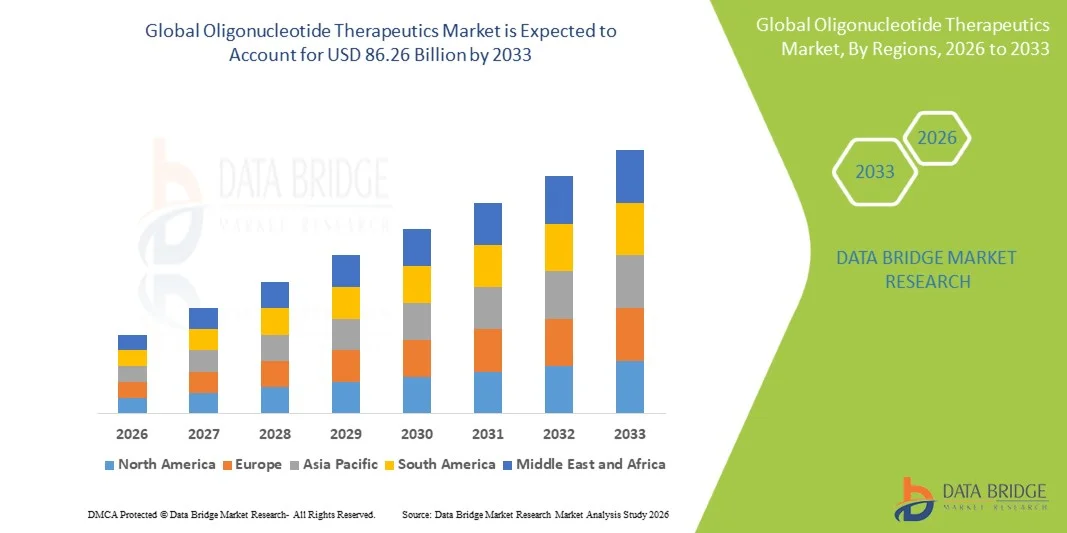
- The global oligonucleotide therapeutics market size was valued at USD 30.56 billion in 2025 and is expected to reach USD 86.26 billion by 2033, at a CAGR of 13.85% during the forecast period
- The market growth is primarily driven by increasing advancements in nucleic acid–based drug design, expanding clinical success of antisense oligonucleotides and siRNA therapies, and rising investment in precision medicine and gene-targeted treatments, which are accelerating drug development pipelines across rare and chronic diseases
- Furthermore, growing demand for highly specific, targeted therapeutic approaches with improved efficacy and reduced off-target effects, along with expanding applications in oncology, genetic disorders, and neurological diseases, is establishing oligonucleotide therapeutics as a transformative modality in modern medicine, thereby significantly boosting the industry's growth
Oligonucleotide Therapeutics Market Analysis
- Oligonucleotide therapeutics, comprising antisense oligonucleotides, siRNA, and other nucleic acid–based modalities, are increasingly becoming a cornerstone of precision medicine due to their ability to selectively regulate gene expression and address previously “undruggable” targets across genetic, rare, and chronic disease areas
- The rising demand for oligonucleotide therapeutics is primarily driven by rapid advancements in RNA-based drug discovery, increasing clinical approvals, and expanding research into targeted therapies for oncology, neurological disorders, and rare genetic diseases, supported by strong pharmaceutical and biotech R&D investments
- North America dominated the oligonucleotide therapeutics market with the largest revenue share of 42.6% in 2025, supported by a strong biotech ecosystem, high R&D expenditure, and early regulatory approvals, with the U.S. leading due to robust clinical pipelines and active participation from major biopharmaceutical companies and innovative startups focused on gene-silencing and RNA-targeted therapies
- Asia-Pacific is expected to be the fastest growing region in the oligonucleotide therapeutics market during the forecast period, driven by rising healthcare expenditure, expanding biotechnology infrastructure, increasing clinical research activity, and growing adoption of advanced genetic and RNA-based therapies across emerging economies such as China, Japan, and India
- The antisense oligonucleotide segment dominated the oligonucleotide therapeutics market with a significant market share of 48.3% in 2025, attributed to its earlier clinical maturity, proven efficacy in treating genetic disorders, and broader commercial availability compared to newer RNA interference–based therapies
Report Scope and Oligonucleotide Therapeutics Market Segmentation
|
Attributes |
Oligonucleotide Therapeutics Key Market Insights |
|
Segments Covered |
|
|
Countries Covered |
North America
Europe
Asia-Pacific
Middle East and Africa
South America
|
|
Key Market Players |
|
|
Market Opportunities |
|
|
Value Added Data Infosets |
In addition to the insights on market scenarios such as market value, growth rate, segmentation, geographical coverage, and major players, the market reports curated by the Data Bridge Market Research also include in-depth expert analysis, patient epidemiology, pipeline analysis, pricing analysis, and regulatory framework |
Oligonucleotide Therapeutics Market Trends
“Advancing Precision Medicine Through RNA-Based Therapeutics and Platform Innovation”
- A significant and accelerating trend in the global oligonucleotide therapeutics market is the expanding adoption of RNA-based modalities such as antisense oligonucleotides and siRNA, supported by continuous advancements in gene-silencing technologies and delivery platforms that are improving targeting efficiency and clinical outcomes
- For instance, Ionis Pharmaceuticals’ antisense therapies and Alnylam Pharmaceuticals’ RNAi-based drugs are demonstrating clinical success in treating rare genetic disorders, showcasing the growing maturity of nucleic acid–based drug development
- Integration of advanced delivery systems such as lipid nanoparticles and ligand-conjugated platforms is enabling improved tissue targeting and enhanced stability of oligonucleotide drugs, thereby increasing therapeutic effectiveness and reducing off-target effects
- Furthermore, increasing application of oligonucleotide therapeutics in oncology and neurological diseases is driving the development of next-generation pipeline candidates designed for high specificity and personalized treatment approaches
- This trend towards highly targeted, genetically driven therapies is fundamentally reshaping drug discovery models, as companies such as Sarepta Therapeutics are developing exon-skipping and gene-modulating therapies with improved precision and durability
- The demand for oligonucleotide-based precision medicines is growing rapidly across rare disease and oncology segments, as pharmaceutical companies increasingly prioritize RNA-targeted platforms for faster and more efficient drug development
- In addition, increasing adoption of AI-driven drug discovery and computational biology tools is accelerating the identification and optimization of novel oligonucleotide sequences, reducing development timelines and improving success rates
Oligonucleotide Therapeutics Market Dynamics
Driver
“Rising Demand Due to Expanding Genetic Disorder Burden and Advancements in RNA Therapeutics”
- The increasing prevalence of rare genetic disorders and chronic diseases, coupled with rapid advancements in RNA-targeted drug development, is a major driver accelerating demand for oligonucleotide therapeutics across global healthcare systems
- For instance, in 2025, FDA approvals for RNA-based therapies such as antisense and siRNA drugs have strengthened clinical confidence and encouraged further investment in nucleic acid–based treatment pipelines
- Growing unmet medical needs in conditions with limited or no treatment options, particularly in neuromuscular and neurodegenerative diseases, are pushing pharmaceutical companies to develop highly specific gene-targeting therapies
- Furthermore, rising investments from biotechnology firms and strategic collaborations between pharma companies are accelerating clinical trials and commercialization of oligonucleotide-based drugs
- The ability of these therapies to selectively modulate gene expression and provide personalized treatment solutions is making them increasingly preferred over conventional small-molecule drugs
- Expanding regulatory support for orphan drugs and expedited approval pathways is further boosting market growth across both developed and emerging regions
- Furthermore, increasing healthcare expenditure and strengthening genomic research infrastructure in emerging economies are significantly expanding patient access to advanced RNA-based therapies
Restraint/Challenge
“High Development Costs and Delivery Efficiency Limitations”
- Concerns related to high development costs and complex manufacturing processes of oligonucleotide therapeutics pose a significant challenge to widespread commercialization and accessibility across global markets
- For instance, the production of chemically modified oligonucleotides requires highly specialized synthesis and purification techniques, increasing overall cost and limiting scalability for some developers
- Delivery efficiency challenges, including poor cellular uptake and rapid degradation in biological systems, continue to restrict optimal therapeutic performance despite advancements in formulation technologies
- Furthermore, stringent regulatory requirements for safety, immunogenicity, and long-term efficacy testing are increasing the time and cost associated with product approvals
- Companies such as Ionis Pharmaceuticals and Alnylam Pharmaceuticals are investing heavily in advanced delivery technologies, yet achieving consistent tissue-specific targeting remains a technical hurdle
- Overcoming these challenges through improved delivery systems, scalable manufacturing innovations, and cost-effective production strategies will be essential for sustaining long-term market growth
- In addition, concerns related to long-term safety profiles and potential off-target genetic effects are creating hesitation among clinicians and slowing broader adoption in some therapeutic areas
Oligonucleotide Therapeutics Market Scope
The market is segmented on the basis of type and application.
- By Type
On the basis of type, the oligonucleotide therapeutics market is segmented into antisense oligonucleotides, ribozymes, aptamers, miRNA-based therapeutics, CpG/immunostimulatory oligonucleotides, and RNAi (siRNA). The antisense oligonucleotides segment dominated the market with the largest revenue share of 48.3% in 2025, driven by its strong clinical maturity, multiple regulatory approvals, and proven effectiveness in treating genetic and rare diseases. Antisense therapies have a well-established development pathway, making them the preferred choice for pharmaceutical companies targeting high-value indications such as neuromuscular and metabolic disorders. In addition, their relatively advanced commercialization status compared to newer modalities further strengthens their market dominance. Strong pipeline expansion and continued investment from leading players such as Ionis Pharmaceuticals are also reinforcing segment leadership. The segment benefits from a broad therapeutic applicability and established safety profile, which increases physician and patient confidence.
The RNA interference (RNAi/siRNA) segment is expected to witness the fastest growth rate of 22.4% from 2026 to 2033, driven by increasing clinical success of siRNA-based drugs and advancements in targeted delivery technologies such as lipid nanoparticles and GalNAc conjugation. RNAi therapeutics are gaining strong traction due to their ability to silence disease-causing genes with high specificity and long-lasting effects. For instance, approved therapies from Alnylam Pharmaceuticals have validated the commercial potential of RNAi-based drugs in rare and chronic diseases. The growing pipeline across oncology, cardiovascular, and liver diseases is further accelerating segment expansion. In addition, improved stability and reduced dosing frequency are enhancing patient compliance and adoption. Expanding research collaborations and strong funding support are also contributing to rapid market penetration of RNAi-based therapeutics.
- By Application
On the basis of application, the oligonucleotide therapeutics market is segmented into infectious diseases, oncology, neurodegenerative disorders, cardiovascular diseases, kidney diseases, and others. The oncology segment dominated the market with the largest revenue share of 39.6% in 2025, driven by the high global cancer burden and increasing adoption of precision medicine approaches. Oligonucleotide therapeutics are being widely explored for gene regulation, tumor suppression, and overcoming drug resistance in cancer treatment. Strong clinical pipelines targeting oncogenes and cancer-driving mutations are accelerating segment dominance. Pharmaceutical companies are increasingly focusing on RNA-based cancer therapies due to their high specificity and ability to target previously “undruggable” genes. Rising investments in oncology drug development and supportive regulatory pathways for breakthrough therapies are further strengthening this segment. In addition, combination strategies with immunotherapy and targeted drugs are expanding clinical success rates and market adoption.
The neurodegenerative disorders segment is expected to witness the fastest growth rate of 23.1% from 2026 to 2033, driven by rising prevalence of diseases such as Alzheimer’s, Parkinson’s, and Huntington’s disease, along with limited availability of disease-modifying treatments. Oligonucleotide therapeutics offer a promising approach by targeting disease-related RNA and modulating gene expression at the molecular level. For instance, antisense-based therapies in clinical trials have shown potential in slowing disease progression in genetic neurological conditions. Increasing research funding and strong interest from biotech companies are accelerating pipeline development in this area. Advances in blood-brain barrier delivery technologies are also improving therapeutic feasibility for central nervous system disorders. Furthermore, growing unmet medical need and expanding geriatric population are significantly boosting demand for innovative RNA-based neurological treatments.
Oligonucleotide Therapeutics Market Regional Analysis
- North America dominated the oligonucleotide therapeutics market with the largest revenue share of 42.6% in 2025, supported by a strong biotech ecosystem, high R&D expenditure, and early regulatory approvals
- The region benefits from a high concentration of leading pharmaceutical and biotech companies actively developing antisense and siRNA-based therapies, along with strong regulatory support from agencies such as the FDA for expedited approvals and orphan drug designations
- This widespread leadership is further supported by advanced genomic research infrastructure, strong clinical trial activity, and significant venture capital funding, establishing oligonucleotide therapeutics as a key component of precision medicine development in both rare and chronic diseases
U.S. Oligonucleotide Therapeutics Market Insight
The U.S. oligonucleotide therapeutics market captured the largest revenue share of 81% within North America in 2025, driven by rapid advancements in RNA-based drug development and strong adoption of precision medicine approaches across healthcare systems. The country benefits from a highly developed biotechnology sector, extensive clinical research networks, and strong participation from leading pharmaceutical and biotech companies focused on antisense and siRNA therapies. Increasing FDA approvals and accelerated regulatory pathways are further supporting commercialization of oligonucleotide-based drugs. In addition, strong venture capital investment, advanced genomic research capabilities, and high prevalence of rare and genetic diseases are significantly contributing to market expansion in the U.S.
Europe Oligonucleotide Therapeutics Market Insight
The Europe oligonucleotide therapeutics market is projected to expand at a substantial CAGR throughout the forecast period, primarily driven by increasing government support for advanced therapy medicinal products (ATMPs) and growing focus on rare disease treatment innovation. The region is witnessing rising clinical research collaborations between biotechnology firms and academic institutes, along with strong regulatory encouragement for RNA-based drug development under streamlined approval pathways. European countries are increasingly investing in genomic medicine initiatives and precision healthcare programs, supporting wider adoption of antisense and RNAi-based therapeutics across oncology and neurological disorders.
U.K. Oligonucleotide Therapeutics Market Insight
The U.K. oligonucleotide therapeutics market is anticipated to grow at a noteworthy CAGR during the forecast period, driven by strong biotech startup activity, expanding clinical trial participation, and increasing focus on next-generation RNA-based medicines. Growing government support for life sciences innovation and the presence of globally recognized research institutions are further accelerating the development of oligonucleotide therapies in the country. In addition, rising demand for targeted treatments in rare and neurodegenerative diseases is encouraging faster adoption of antisense and siRNA-based therapeutics in the U.K. healthcare system.
Germany Oligonucleotide Therapeutics Market Insight
The Germany oligonucleotide therapeutics market is expected to expand at a considerable CAGR during the forecast period, fueled by strong pharmaceutical manufacturing capabilities and increasing investment in genetic and RNA-based drug research. Germany’s emphasis on innovation, precision medicine, and structured healthcare infrastructure supports early clinical adoption of oligonucleotide therapeutics, particularly in oncology and metabolic disorders. Furthermore, growing participation in EU-funded research programs and collaborations with global biotech firms is strengthening the country’s position in RNA therapeutic development.
Asia-Pacific Oligonucleotide Therapeutics Market Insight
The Asia-Pacific oligonucleotide therapeutics market is poised to grow at the fastest CAGR of 23.5% during 2026 to 2033, driven by rising healthcare expenditure, expanding biotechnology infrastructure, and increasing prevalence of genetic and chronic diseases. The region is witnessing rapid growth in clinical research activities and strong government support for biotechnology innovation, particularly in China, Japan, and India. In addition, improving manufacturing capabilities and increasing affordability of advanced RNA-based therapies are expanding patient access and accelerating market penetration across emerging economies.
Japan Oligonucleotide Therapeutics Market Insight
The Japan oligonucleotide therapeutics market is gaining momentum due to strong focus on regenerative medicine, advanced healthcare infrastructure, and high adoption of precision medicine approaches. The country’s aging population is significantly driving demand for therapies targeting neurodegenerative and chronic genetic disorders, increasing interest in RNA-based treatment solutions. Furthermore, strong collaboration between pharmaceutical companies and academic research institutions is accelerating development of next-generation antisense and RNAi therapeutics.
India Oligonucleotide Therapeutics Market Insight
The India oligonucleotide therapeutics market accounted for the largest market revenue share in Asia-Pacific in 2025, attributed to rapid expansion of biotechnology research, growing clinical trial activity, and increasing burden of genetic and chronic diseases. India’s strong position as a global pharmaceutical manufacturing hub is supporting cost-effective development and production of oligonucleotide-based drugs. In addition, government initiatives promoting biotechnology innovation and improving healthcare infrastructure are driving wider adoption of advanced RNA therapeutics across the country.
Oligonucleotide Therapeutics Market Share
The Oligonucleotide Therapeutics industry is primarily led by well-established companies, including:
- Ionis Pharmaceuticals, Inc. (U.S.)
- Alnylam Pharmaceuticals, Inc. (U.S.)
- Sarepta Therapeutics, Inc. (U.S.)
- Biogen Inc. (U.S.)
- Arrowhead Pharmaceuticals, Inc. (U.S.)
- Regulus Therapeutics Inc. (U.S.)
- Stoke Therapeutics, Inc. (U.S.)
- Wave Life Sciences Ltd. (Singapore)
- ProQR Therapeutics N.V. (Netherlands)
- Avidity Biosciences, Inc. (U.S.)
- Dyne Therapeutics, Inc. (U.S.)
- Silence Therapeutics plc (U.K.)
- Arcturus Therapeutics Holdings Inc. (U.S.)
- Moderna, Inc. (U.S.)
- Akcea Therapeutics, Inc. (U.S.)
- Benitec Biopharma Ltd. (Australia)
- Nippon Shinyaku Co., Ltd. (Japan)
- Dicerna Pharmaceuticals, Inc. (U.S.)
- CureVac N.V. (Germany)
- Marina Biotech, Inc. (U.S.)
What are the Recent Developments in Global Oligonucleotide Therapeutics Market?
- In December 2025, Ionis Pharmaceuticals announced that the U.S. FDA granted Breakthrough Therapy Designation to zilganersen, an antisense oligonucleotide therapy for Alexander disease, a rare and progressive neurological disorder. This designation is intended to accelerate development and review of therapies that show early clinical potential in serious conditions with no approved treatments
- In March 2025, the FDA approved Qfitlia (fitusiran), the first RNAi (siRNA) therapy for hemophilia A and B with or without inhibitors. This milestone demonstrated the clinical maturity of RNA interference technology in coagulation disorders. It also confirmed RNAi as a validated therapeutic platform for large-scale chronic disease treatment
- In March 2025, Alnylam’s RNAi therapy AMVUTTRA (vutrisiran) received expanded FDA acceptance for treatment of ATTR amyloidosis with cardiomyopathy, marking a major expansion of siRNA therapeutics into cardiovascular disease. The decision strengthened the role of oligonucleotide drugs in systemic chronic diseases beyond rare conditions
- In December 2024, the U.S. FDA approved Tryngolza (olezarsen), an antisense oligonucleotide therapy for familial chylomicronemia syndrome (FCS). This marked the first approved treatment for this ultra-rare metabolic disorder and expanded antisense applications into lipid and cardiovascular disease management. The approval reinforced Ionis’ leadership in RNA-targeted therapeutics
- In November 2024, Alnylam Pharmaceuticals announced that the U.S. FDA accepted its supplemental New Drug Application (sNDA) for vutrisiran (AMVUTTRA) for the treatment of transthyretin amyloidosis with cardiomyopathy (ATTR-CM). The submission acceptance marked an important regulatory step toward expanding RNAi therapy into a large cardiovascular indication beyond rare neuropathic disease
SKU-
Get online access to the report on the World's First Market Intelligence Cloud

- Interactive Data Analysis Dashboard
- Company Analysis Dashboard for high growth potential opportunities
- Research Analyst Access for customization & queries
- Competitor Analysis with Interactive dashboard
- Latest News, Updates & Trend analysis
- Harness the Power of Benchmark Analysis for Comprehensive Competitor Tracking
Research Methodology
Data collection and base year analysis are done using data collection modules with large sample sizes. The stage includes obtaining market information or related data through various sources and strategies. It includes examining and planning all the data acquired from the past in advance. It likewise envelops the examination of information inconsistencies seen across different information sources. The market data is analysed and estimated using market statistical and coherent models. Also, market share analysis and key trend analysis are the major success factors in the market report. To know more, please request an analyst call or drop down your inquiry.
The key research methodology used by DBMR research team is data triangulation which involves data mining, analysis of the impact of data variables on the market and primary (industry expert) validation. Data models include Vendor Positioning Grid, Market Time Line Analysis, Market Overview and Guide, Company Positioning Grid, Patent Analysis, Pricing Analysis, Company Market Share Analysis, Standards of Measurement, Global versus Regional and Vendor Share Analysis. To know more about the research methodology, drop in an inquiry to speak to our industry experts.
Customization Available
Data Bridge Market Research is a leader in advanced formative research. We take pride in servicing our existing and new customers with data and analysis that match and suits their goal. The report can be customized to include price trend analysis of target brands understanding the market for additional countries (ask for the list of countries), clinical trial results data, literature review, refurbished market and product base analysis. Market analysis of target competitors can be analyzed from technology-based analysis to market portfolio strategies. We can add as many competitors that you require data about in the format and data style you are looking for. Our team of analysts can also provide you data in crude raw excel files pivot tables (Fact book) or can assist you in creating presentations from the data sets available in the report.












