


Oncology Theranostics Platforms Market Overview
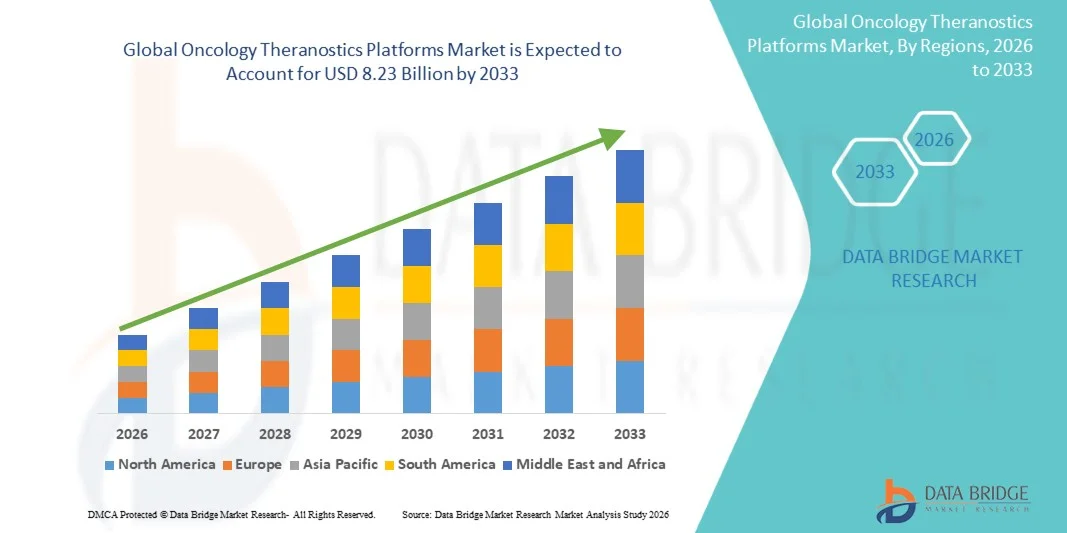
The Oncology Theranostics Platforms Market was valued at USD 3.14 billion in 2025 and is projected to reach USD 8.23 billion by 2033, growing at a CAGR of 12.80% from 2026 to 2033. The market is experiencing consistent growth driven by rising demand for personalized cancer treatment approaches, increasing adoption of precision oncology, and rapid advancements in molecular imaging, radiopharmaceuticals, and biomarker-based diagnostic technologies.
The growing prevalence of cancer worldwide, combined with the need for targeted therapies and improved treatment monitoring, is encouraging hospitals, pharmaceutical companies, and research institutions to adopt advanced oncology theranostics platforms. Radioligand-based therapies, companion diagnostics, AI-enabled imaging solutions, and molecular profiling technologies are transforming cancer care by enabling patient-specific diagnosis, treatment selection, and real-time therapy response assessment. These platforms are improving clinical outcomes by supporting early disease detection, targeted therapeutic delivery, and more effective management of complex cancers.
Key Market Trends & Insights
- North America dominated the Oncology Theranostics Platforms Market with the largest revenue share of 41.8% in 2025, supported by advanced oncology infrastructure, strong presence of pharmaceutical and biotechnology companies, increasing adoption of precision medicine, and significant investments in molecular imaging and radiopharmaceutical technologies. The region benefits from established cancer care networks, expanding clinical adoption of theranostic approaches, and growing demand for personalized treatment strategies combining diagnosis and targeted therapy.
- The prostate cancer segment dominated the market with a 44.8% share in 2025 due to high global prevalence and strong clinical adoption of PSMA-targeted theranostic agents.
- Asia-Pacific is expected to be the fastest-growing region at a CAGR of 13.2% from 2026 to 2033, fueled by rising cancer prevalence, expanding healthcare infrastructure, increasing investments in nuclear medicine technologies, and growing adoption of advanced oncology diagnostics and therapeutics across China, Japan, South Korea, and India. Improving access to precision medicine, increasing clinical research activities, and development of regional radiopharmaceutical manufacturing capabilities are expected to accelerate market growth.
- Hospitals & cancer treatment centers dominated the market by end user with a 48.7% share in 2025, owing to increasing integration of theranostic platforms into oncology treatment workflows, expansion of nuclear medicine facilities, and rising adoption of personalized cancer management strategies. Healthcare providers are increasingly implementing molecular imaging, biomarker analysis, and targeted therapy solutions to improve treatment selection and patient outcomes.
Market Size & Forecast
- Global Market Value (2025): USD 3.14 Billion
- Expected Market Value (2033): USD 8.23 Billion
- Forecast CAGR (2026–2033): 12.80%
- Leading Region in 2025: North America
- Fastest Growing Region: Asia-Pacific
Report Scope and Oncology Theranostics Platforms Market Segmentation
|
Attributes |
Oncology Theranostics Platforms Key Market Insights |
|
Segments Covered |
|
|
Countries Covered |
North America · U.S. · Canada · Mexico Europe · Germany · France · U.K. · Netherlands · Switzerland · Belgium · Russia · Italy · Spain · Turkey · Rest of Europe Asia-Pacific · China · Japan · India · South Korea · Singapore · Malaysia · Australia · Thailand · Indonesia · Philippines · Rest of Asia-Pacific Middle East and Africa · Saudi Arabia · U.A.E. · South Africa · Egypt · Israel · Rest of Middle East and Africa South America · Brazil · Argentina · Rest of South America |
|
Key Market Players |
• Novartis AG (Switzerland) |
|
Market Opportunities |
· Expansion of Personalized Medicine and Precision Oncology · Growth of Radiopharmaceutical and Molecular Imaging Applications · Integration of Artificial Intelligence and Digital Health Technologies |
|
Value Added Data Infosets |
In addition to the insights on market scenarios such as market value, growth rate, segmentation, geographical coverage, and major players, the market reports curated by the Data Bridge Market Research also include in-depth expert analysis, geographically represented company-wise production and capacity, network layouts of distributors and partners, detailed and updated price trend analysis and deficit analysis of supply chain and demand. |
Oncology Theranostics Platforms Market Trends
Trend: Rising Adoption of Precision Oncology and Integrated Diagnostic-Therapeutic Platforms
The Oncology Theranostics Platforms Market is witnessing significant growth as healthcare providers, pharmaceutical companies, and research institutions increasingly adopt integrated approaches that combine advanced diagnostics with targeted cancer treatment. Oncology theranostics platforms enable patient-specific treatment selection by using molecular imaging, biomarker analysis, and targeted therapeutic approaches to improve treatment outcomes. The growing adoption of radiopharmaceutical theranostics, AI-enabled diagnostic platforms, and molecular imaging technologies is accelerating innovation across cancer care. In recent years, advancements in PSMA-targeted imaging, radioligand therapy, and biomarker-driven treatment strategies have expanded applications across prostate cancer, neuroendocrine tumors, breast cancer, and other solid tumors. For instance, increasing clinical adoption of lutetium-177-based radioligand therapies and growing research investments in next-generation radioisotopes such as actinium-225 are strengthening the development of advanced theranostic platforms for precision oncology.
Oncology Theranostics Platforms Market Dynamics
Key Market Driver: Increasing Demand for Personalized Cancer Treatment and Targeted Therapeutic Approaches
The rising global cancer burden and growing preference for personalized medicine are major factors driving demand for oncology theranostics platforms. Healthcare providers and pharmaceutical companies are increasingly adopting molecular imaging, biomarker-based diagnostics, and targeted therapies to improve patient selection and treatment effectiveness. The integration of diagnostic and therapeutic capabilities enables clinicians to identify suitable patients, monitor treatment response, and optimize therapeutic strategies. For example, the expansion of PSMA-based theranostic approaches for prostate cancer and somatostatin receptor-targeted platforms for neuroendocrine tumors has accelerated investments in radiopharmaceutical development, imaging infrastructure, and specialized cancer treatment centers. In addition, increasing adoption of PET and SPECT imaging technologies, along with AI-assisted diagnostic analysis, is creating new opportunities for advanced oncology care solutions.
Key Restraint/Challenge: High Development Complexity and Infrastructure Requirements for Theranostic Platforms
A major challenge for the Oncology Theranostics Platforms Market is the complexity involved in developing, implementing, and scaling advanced diagnostic and therapeutic solutions. These platforms require specialized infrastructure, advanced imaging systems, radiopharmaceutical handling capabilities, skilled professionals, and compliance with strict regulatory requirements. The production and distribution of therapeutic radioisotopes, including short half-life isotopes, create additional challenges related to manufacturing, storage, transportation, and timely availability. Furthermore, high costs associated with clinical research, molecular imaging equipment, GMP-compliant facilities, and technology integration can limit adoption among smaller healthcare organizations and research institutions.
Key Market Opportunity: Integration of Artificial Intelligence and Next-Generation Theranostic Technologies
The integration of artificial intelligence, advanced molecular imaging, and next-generation therapeutic platforms presents significant growth opportunities for the oncology theranostics platforms market. AI-enabled systems can support improved biomarker identification, treatment planning, image interpretation, and patient stratification, enhancing the efficiency of precision oncology workflows. Companies and research organizations are increasingly investing in AI-driven diagnostic platforms, advanced radiopharmaceutical solutions, and combination theranostic approaches to expand treatment options across multiple cancer types. For instance, growing investments in alpha-emitter therapies, targeted molecular therapies, and AI-assisted imaging technologies are supporting the development of more personalized cancer treatment pathways. The continued expansion of oncology pipelines, increasing adoption of radioligand therapies, and rising investments in cancer care infrastructure across North America, Europe, and Asia-Pacific are expected to accelerate commercialization and adoption of advanced oncology theranostics platforms through 2033.
Oncology Theranostics Platforms Market Scope
The oncology theranostics platforms market is segmented on the basis of platform type, therapeutic approach, cancer type, and end user.
By Platform Type
On the basis of platform type, the Oncology Theranostics Platforms Market is segmented into Molecular Imaging Platforms, Radiopharmaceutical Theranostic Platforms, Biomarker-Based Theranostic Platforms, and AI-Enabled Diagnostic Platforms. The Molecular Imaging Platforms segment dominated the market with a 38.6% share in 2025, owing to its high precision in real-time tumor visualization, strong clinical adoption in PET and SPECT imaging, and widespread use in cancer staging and treatment planning across hospitals and oncology centers. These platforms are extensively preferred due to their ability to support early diagnosis and accurate therapy monitoring. The Radiopharmaceutical Theranostic Platforms segment also held a strong position supported by increasing use of targeted radioisotopes in personalized oncology treatment. AI-Enabled Diagnostic Platforms are gaining momentum due to integration with imaging systems for improved diagnostic accuracy. Growing demand for precision oncology and hybrid imaging technologies continues to drive overall market expansion.
The AI-Enabled Diagnostic Platforms segment is projected to register the fastest growth at a CAGR of 9.2% from 2026 to 2033, driven by rapid adoption of artificial intelligence in oncology diagnostics and treatment planning. Increasing use of machine learning algorithms for tumor detection, automated image interpretation, and predictive treatment response analysis is significantly boosting demand. Rising investments in digital pathology, AI-based radiology tools, and cloud-integrated imaging platforms are further accelerating growth. In addition, expanding use of AI-powered decision-support systems in hospitals and cancer research institutes is enhancing efficiency and scalability.
By Therapeutic Approach
On the basis of therapeutic approach, the Oncology Theranostics Platforms Market is segmented into Radioligand Therapy, Immunotherapy-Based Theranostics, Targeted Molecular Therapy, and Combination Theranostic Approaches. The Radioligand Therapy segment dominated the market with a 41.3% share in 2025 due to its high specificity in targeting cancer cells while minimizing damage to healthy tissues. Increasing clinical approvals and adoption of PSMA and somatostatin receptor-targeted therapies have strengthened its leadership position. The growing success of radiopharmaceutical-based treatments in prostate cancer and neuroendocrine tumors is further driving demand. Immunotherapy-Based Theranostics is also expanding steadily due to rising use in immune system activation against tumors. Targeted Molecular Therapy continues to gain traction for precision oncology applications.
The combination theranostic approaches segment is projected to witness the fastest growth at a CAGR of 10.1% from 2026 to 2033, driven by increasing adoption of multi-modal cancer treatment strategies. Integration of radioligand therapy with immunotherapy and targeted molecular therapy is improving treatment outcomes and patient survival rates. Rising number of clinical trials evaluating combination regimens is accelerating innovation. In addition, growing focus on personalized medicine and tumor-specific treatment customization is further supporting segment expansion.
By Cancer Type
On the basis of cancer type, the Oncology Theranostics Platforms Market is segmented into Prostate Cancer, Neuroendocrine Tumors, Breast Cancer, Lung Cancer, and Other Solid Tumors. The Prostate Cancer segment dominated the market with a 44.8% share in 2025 due to high global prevalence and strong clinical adoption of PSMA-targeted theranostic agents. Increasing use of radioligand therapies in advanced and metastatic prostate cancer cases has significantly strengthened demand. Neuroendocrine Tumors also represent a key segment due to established somatostatin receptor-based imaging and therapy applications. Breast and lung cancer segments are expanding steadily due to rising research in targeted radiopharmaceuticals and biomarker-driven diagnostics. Increasing global cancer burden is further supporting overall segment growth.
The Lung Cancer segment is projected to register the fastest growth at a CAGR of 11.3% from 2026 to 2033, driven by rising incidence rates and increasing adoption of targeted theranostic solutions. Advances in molecular imaging and radiolabeled tracers for early lung tumor detection are improving diagnosis accuracy. Expanding clinical trials in radioligand-based lung cancer therapies are accelerating innovation. In addition, growing use of combination therapies and precision oncology approaches in lung cancer treatment is significantly boosting adoption.
By End User
On the basis of end user, the Oncology Theranostics Platforms Market is segmented into Hospitals & Cancer Treatment Centers, Pharmaceutical & Biotechnology Companies, Research Institutes & Academic Organizations, and Diagnostic Imaging Centers. The Hospitals & Cancer Treatment Centers segment dominated the market with a 46.2% share in 2025 due to high patient inflow, advanced imaging infrastructure, and strong adoption of theranostic treatment protocols. These centers are primary hubs for radiopharmaceutical administration and cancer therapy monitoring. Pharmaceutical & Biotechnology Companies are key contributors to drug development and clinical trials for theranostic agents. Research Institutes & Academic Organizations support innovation and early-stage clinical studies. Diagnostic Imaging Centers are increasingly adopting advanced theranostic platforms for early diagnosis and monitoring.
The pharmaceutical & biotechnology companies segment is projected to witness the fastest growth at a CAGR of 12.0% from 2026 to 2033, driven by rising investment in radiopharmaceutical development and targeted oncology therapeutics. Increasing collaboration between biotech firms and research institutes is accelerating innovation in next-generation theranostic drugs. Expanding clinical trial pipelines and strong funding for precision oncology research are further boosting growth. In addition, growing commercialization of novel cancer therapies is enhancing adoption across pharmaceutical companies
Oncology Theranostics Platforms Market Regional Analysis
North America dominated the Oncology Theranostics Platforms Market and accounted for the largest revenue share of 41.8% in 2025, supported by advanced oncology infrastructure, strong presence of pharmaceutical and biotechnology companies, increasing adoption of precision medicine, and significant investments in molecular imaging and radiopharmaceutical technologies. The region benefits from established cancer care networks, expanding clinical adoption of theranostic approaches, and growing demand for personalized treatment strategies combining diagnosis and targeted therapy.
U.S. Oncology Theranostics Platforms Market Insight
The U.S. oncology theranostics platforms market is witnessing strong growth due to rising cancer burden, rapid expansion of nuclear medicine departments, and increasing adoption of precision oncology approaches such as radioligand and theranostic therapies. Strong pharmaceutical R&D activity, coupled with widespread clinical integration of PET/SPECT imaging and targeted treatment planning, is driving demand for advanced theranostics platforms. In addition, growing investments in radiopharmaceutical development and AI-assisted diagnostic imaging are strengthening the country’s leadership in oncology innovation and clinical translation.
Europe Oncology Theranostics Platforms Market Insight
The Europe oncology theranostics platforms market remains a major contributor to global revenue, driven by strong healthcare systems, expanding nuclear medicine capabilities, and increasing focus on personalized cancer treatment. Widespread adoption of hybrid imaging technologies, along with growing clinical use of radiopharmaceutical-based theranostics, is supporting market expansion. Government-backed research initiatives and increasing collaboration between hospitals, research institutes, and pharmaceutical companies are further accelerating the development and deployment of advanced theranostic solutions across the region.
U.K. Oncology Theranostics Platforms Market Insight
The U.K. oncology theranostics platforms market is experiencing steady growth, supported by rising investments in precision oncology, expanding nuclear medicine infrastructure, and increasing adoption of advanced diagnostic imaging technologies. Growing integration of AI-driven imaging analytics and radiopharmaceutical workflows in leading cancer centers is improving diagnostic accuracy and treatment planning efficiency. In addition, strong academic research activity and clinical trials in targeted cancer therapies are reinforcing market development in the country.
Germany Oncology Theranostics Platforms Market Insight
The Germany oncology theranostics platforms market is expanding steadily due to its strong medical technology ecosystem, advanced research infrastructure, and high adoption of molecular imaging technologies. Increasing use of PET/CT and SPECT-based theranostic workflows in oncology diagnostics and treatment planning is driving market growth. Strong collaboration between academic institutions, pharmaceutical companies, and healthcare providers is further supporting innovation in radiopharmaceuticals and targeted cancer therapies.
Asia-Pacific Oncology Theranostics Platforms Market Insight
The Asia-Pacific oncology theranostics platforms market is expected to witness rapid growth, driven by rising cancer prevalence, expanding healthcare infrastructure, and increasing investments in nuclear medicine and precision oncology. Countries such as China, Japan, South Korea, and India are rapidly adopting advanced diagnostic imaging and radiopharmaceutical-based therapies. Growing government initiatives, increasing clinical research activities, and rising availability of targeted cancer treatment options are further accelerating regional market expansion.
Japan Oncology Theranostics Platforms Market Insight
The Japan oncology theranostics platforms market is witnessing consistent growth due to its advanced healthcare system, strong focus on cancer diagnostics, and early adoption of radiopharmaceutical technologies. Increasing use of molecular imaging for early cancer detection and treatment planning, along with rising integration of precision medicine approaches, is strengthening market demand. Japan’s strong research ecosystem in nuclear medicine and oncology therapeutics further supports innovation and clinical adoption.
China Oncology Theranostics Platforms Market Insight
The China oncology theranostics platforms market is growing rapidly, driven by rising cancer incidence, expanding healthcare infrastructure, and increasing investments in advanced medical imaging technologies. Strong government support for precision medicine, coupled with growing adoption of radiopharmaceutical therapies and nuclear medicine practices, is accelerating market growth. Expanding hospital networks and increasing clinical research collaborations are further positioning China as a key growth hub in the Oncology Theranostics Platforms Market.
Oncology Theranostics Platforms Market Share
The Oncology Theranostics Platforms industry is primarily led by well-established companies, including:
- Novartis AG (Switzerland)
- Eli Lilly and Company (U.S.)
- Bristol Myers Squibb (U.S.)
- AstraZeneca (U.K.)
- Johnson & Johnson (U.S.)
- Bayer AG (Germany)
- Siemens Healthineers (Germany)
- GE HealthCare (U.S.)
- Telix Pharmaceuticals (Australia)
- Lantheus Medical Imaging (U.S.)
- Advanced Accelerator Applications (Switzerland)
- Curium Pharma (France)
- ITM Isotope Technologies Munich SE (Germany)
- Eckert & Ziegler (Germany)
- NorthStar Medical Radioisotopes (U.S.)
- Cardinal Health (U.S.)
- RayzeBio (U.S.)
- Fusion Pharmaceuticals (Canada)
- Actinium Pharmaceuticals (U.S.)
- POINT Biopharma (U.S.)
- Radiopharm Theranostics (Australia)
- Perspective Therapeutics (U.S.)
- Orano Med (France)
- Nucleus RadioPharma (U.S.)
- Endocyte (U.S.)
- Blue Earth Diagnostics (U.K.)
- Clovis Oncology (U.S.)
- Alpha9 Theranostics (Canada)
- Isotopia Molecular Imaging (Israel)
- Cerveau Technologies (U.S.)
- TriSalus Life Sciences (U.S.)
- IBA Group (Belgium)
- Koninklijke Philips N.V. (Netherlands)
- Siemens Molecular Imaging (Germany)
- Thermo Fisher Scientific Inc. (U.S.)
Latest Developments in Oncology Theranostics Platforms Market
- In December 2021, Novartis reported continued clinical advancement of its radioligand therapy pipeline, including expanded studies of Lutetium-177 (Lu-177) based therapies across prostate and neuroendocrine tumors, reinforcing the growing role of theranostic platforms in precision oncology. The development highlighted increasing integration of diagnostic imaging and targeted radionuclide therapy in cancer care
- In January 2022, Novartis expanded its Lutathera (Lu-177 dotatate) commercialization efforts across multiple global markets, strengthening the adoption of radioligand therapy for neuroendocrine tumors and accelerating clinical integration of theranostic treatment pathways in nuclear medicine centers worldwide
- In May 2022, Bayer and other nuclear medicine stakeholders advanced late-stage clinical programs in targeted alpha and beta radiopharmaceuticals, reflecting increasing industry-wide investment in theranostic platforms and next-generation precision oncology solutions
- In May 2024, Novartis announced the acquisition of Mariana Oncology for up to USD 1.75 billion, strengthening its radioligand therapy (RLT) pipeline and expanding capabilities in next-generation targeted cancer therapies, including early-stage theranostic drug development programs
- In June 2024, clinical research publications highlighted advancing development of Actinium-225 (Ac-225) based radioligand therapies, particularly PSMA-targeted treatments for prostate cancer, demonstrating higher tumor-killing efficiency compared to beta-emitting isotopes such as Lutetium-177 and accelerating interest in alpha-emitter theranostic platforms
- In February 2025, Novartis and research collaborators reported continued clinical evaluation of next-generation PSMA-targeted radioligand therapies using alpha-emitting isotopes such as Actinium-225, showing promising anti-tumor activity in advanced prostate cancer patients, including those previously treated with Pluvicto
- In March 2025, ongoing clinical trials of novel radiopharmaceutical theranostic agents such as Ac-225 and Lu-177 based compounds demonstrated expanding therapeutic potential across multiple cancer types, including prostate cancer, neuroendocrine tumors, and other solid tumors, reinforcing strong pipeline growth in precision oncology platforms

- Interactive Data Analysis Dashboard
- Company Analysis Dashboard for high growth potential opportunities
- Research Analyst Access for customization & queries
- Competitor Analysis with Interactive dashboard
- Latest News, Updates & Trend analysis
- Harness the Power of Benchmark Analysis for Comprehensive Competitor Tracking
Data collection and base year analysis are done using data collection modules with large sample sizes. The stage includes obtaining market information or related data through various sources and strategies. It includes examining and planning all the data acquired from the past in advance. It likewise envelops the examination of information inconsistencies seen across different information sources. The market data is analysed and estimated using market statistical and coherent models. Also, market share analysis and key trend analysis are the major success factors in the market report. To know more, please request an analyst call or drop down your inquiry.
The key research methodology used by DBMR research team is data triangulation which involves data mining, analysis of the impact of data variables on the market and primary (industry expert) validation. Data models include Vendor Positioning Grid, Market Time Line Analysis, Market Overview and Guide, Company Positioning Grid, Patent Analysis, Pricing Analysis, Company Market Share Analysis, Standards of Measurement, Global versus Regional and Vendor Share Analysis. To know more about the research methodology, drop in an inquiry to speak to our industry experts.
Data Bridge Market Research is a leader in advanced formative research. We take pride in servicing our existing and new customers with data and analysis that match and suits their goal. The report can be customized to include price trend analysis of target brands understanding the market for additional countries (ask for the list of countries), clinical trial results data, literature review, refurbished market and product base analysis. Market analysis of target competitors can be analyzed from technology-based analysis to market portfolio strategies. We can add as many competitors that you require data about in the format and data style you are looking for. Our team of analysts can also provide you data in crude raw excel files pivot tables (Fact book) or can assist you in creating presentations from the data sets available in the report.












