


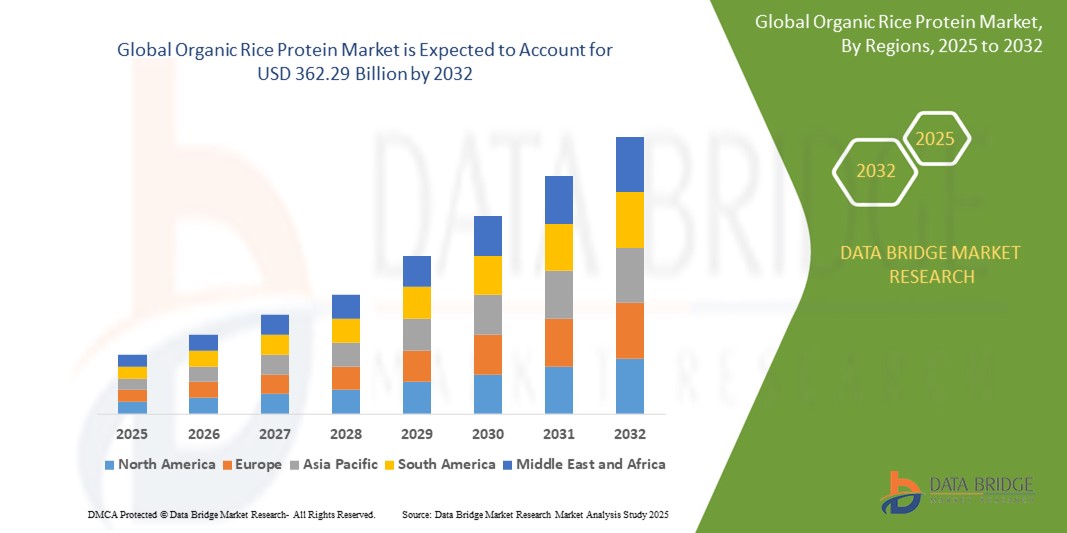
Organic Rice Protein Market Size
- The global organic rice protein market size was valued at USD 162.62 million in 2024 and is expected to reach USD 362.29 million by 2032, at a CAGR of 18.50% during the forecast period
- The market growth is largely fueled by rising health consciousness and dietary preferences
- Consumers are increasingly shifting toward plant-based diets due to health concerns, ethical considerations, and environmental sustainability. Organic rice protein, being allergen-free and easy to digest, is gaining popularity among vegans and health-conscious individuals
- Organic rice protein is being widely used in energy bars, sports drinks, meat substitutes, and infant foods. Manufacturers are leveraging its functional properties, such as emulsification and texture enhancement, to create clean-label and nutritious products
Organic Rice Protein Market Analysis
- The organic rice protein market is witnessing strong growth due to the rising consumer shift toward high-quality organic rice protein isolates, which are preferred for their neutral taste, digestibility, and compatibility in various formulations across food and beverage products
- Several manufacturers are increasingly focusing on producing isolates over concentrates as isolates offer better functional properties and higher protein content, making them more suitable for clean-label and high-performance nutritional products
- North America dominates the Organic Rice Protein market with the largest revenue share of 44.14% in 2024, driven by increasing consumer preference for plant-based and allergen-free nutrition options
- Asia-Pacific is expected to be the fastest growing region in the Organic Rice Protein market during the forecast period due to propelled by increasing urbanization, rising disposable incomes, and growing health consciousness.
- The rice protein isolates segment dominates the global organic rice protein market with market share of 50.11% due to its higher protein content, superior purity, and excellent functional properties such as better solubility and emulsification
Report Scope and Organic Rice Protein Market Segmentation
|
Attributes |
Organic Rice Protein Key Market Insights |
|
Segments Covered |
|
|
Countries Covered |
North America
Europe
Asia-Pacific
Middle East and Africa
South America
|
|
Key Market Players |
|
|
Market Opportunities |
|
|
Value Added Data Infosets |
In addition to the insights on market scenarios such as market value, growth rate, segmentation, geographical coverage, and major players, the market reports curated by the Data Bridge Market Research also include in-depth expert analysis, pricing analysis, brand share analysis, consumer survey, demography analysis, supply chain analysis, value chain analysis, raw material/consumables overview, vendor selection criteria, PESTLE Analysis, Porter Analysis, and regulatory framework. |
Organic Rice Protein Market Trends
“Rising Demand for High-Purity Rice Protein Isolates”
- The organic rice protein market is witnessing a strong trend toward the use of rice protein isolates as they offer higher purity, better taste, and improved functionality in food and beverage formulations
- This trend is supported by the growing demand from manufacturers seeking cleaner and more efficient plant-based protein options that blend well in various product types
- For instance, several companies have shifted their product development strategies to include more isolate-based formulations to meet the expectations of health-conscious consumers
- The increased focus on isolates is also driven by their ability to deliver enhanced texture, solubility, and nutritional performance in high-protein snacks, drinks, and supplements
- With improved processing technologies making rice protein isolates more accessible and appealing, their presence is expanding across mainstream food and wellness categories
- In conclusion, the preference for organic rice protein isolates is reshaping the current market landscape, as both manufacturers and consumers continue to prioritize cleaner, high-performance protein ingredients in everyday nutrition products
Organic Rice Protein Market Dynamics
Driver
“Growing Preference for Clean-Label and Plant-Based Nutrition”
- One of the main drivers of the organic rice protein market is the growing consumer shift toward clean-label and plant-based nutrition with brands such as Nestlé and Danone investing in transparent, plant-based ingredient sourcing to meet evolving consumer demands
- As global health awareness increases, consumers are focusing more on product labels and ingredients leading to demand for minimally processed and allergen-free proteins such as organic rice protein which is free from soy, gluten, and dairy
- The rise in plant-based lifestyles across demographic groups including vegans and flexitarians is boosting the appeal of rice protein as seen in the growing number of product launches such as Orgain’s plant-based protein powder featuring organic rice protein
- Rice protein is gaining traction for its digestibility and amino acid profile making it a popular ingredient in infant nutrition, protein bars, and wellness beverages with brands such as NOW Foods and Garden of Life featuring it in their product lines
- Manufacturers are reformulating products with organic certifications and ethically sourced ingredients including rice protein to align with clean-label trends which is reflected in increasing certifications and partnerships across the food and beverage industry
Restraint/Challenge
“High Production Costs and Limited Raw Material Availability”
- A key challenge in the organic rice protein market is the high cost of production driven by organic farming practices that avoid chemical inputs and typically yield less per acre compared to conventional methods
- The limited global availability of certified organic rice leads to supply constraints making it difficult for manufacturers to maintain consistency and scale especially when catering to the needs of large food and beverage companies
- For instance, companies such as Axiom Foods and RiceBran Technologies have reported difficulties in scaling due to raw material shortages and supply chain disruptions during high-demand periods
- Advanced processing technologies needed for isolating rice protein require substantial investments in equipment, water, and energy which adds to the overall cost and limits access for small to mid-sized manufacturers
- The premium pricing of organic rice protein due to these combined costs can deter consumers in cost-sensitive markets where soy and pea protein continue to dominate as more affordable alternatives
- In conclusion the high production and supply chain complexities are slowing the broader adoption of organic rice protein and require strategic investment and innovation to support sustainable growth
Organic Rice Protein Market Scope
The market is segmented on the basis of type, form, end use, function, brand, extraction process, and application
-
By Type
On the basis of type, the organic rice protein market is segmented into rice protein concentrates, rice protein isolates, and other. The rice protein isolates segment dominates the global organic rice protein market with market share of 50.11% due to its higher protein content, superior purity, and excellent functional properties such as better solubility and emulsification. These characteristics make isolates highly preferred in premium food and beverage products, especially in protein supplements and sports nutrition where quality and taste are critical. Isolates also help manufacturers achieve cleaner labels and improved texture, driving their widespread adoption.
The rice protein concentrates segment is expected to witness the fastest growth over the forecast period. Concentrates provide a more affordable protein source with moderate protein levels, making them attractive to manufacturers in bakery, confectionery, and processed food sectors. Their balance between cost and nutritional benefit fuels rising demand, especially in applications where price sensitivity is higher.
- By Form
On the basis of form, the organic rice protein market is segmented into dry form, and liquid form. The dry form segment holds the largest share of the market because of its long shelf life, ease of transport, and convenient use in a wide range of products such as protein powders, bars, and baking mixes. Dry organic rice protein powders are stable and versatile, supporting their dominance across various industries including sports nutrition and food manufacturing.
The liquid form segment is projected to grow the fastest as ready-to-drink beverages and functional drinks gain popularity. Liquid protein offers easier incorporation into beverages without the need for reconstitution, providing better texture and mouthfeel in products such as smoothies and protein shakes. This convenience is fueling rapid adoption of liquid organic rice protein in the beverage sector.
- By End Use
On the basis of end use, the organic rice protein market is segmented into sports and energy nutrition, beverages, bakery and confectionery, meat analogues and extenders, dairy alternatives, and others. The sports and energy nutrition segment currently leads the market in revenue share by 91.06%, driven by consumers’ growing interest in plant-based, allergen-free protein sources for muscle building and recovery. Organic rice protein’s digestibility and clean-label appeal make it a preferred ingredient in protein powders, energy bars, and fitness supplements, securing its dominant position in this segment.
The dairy alternatives segment is expected to exhibit the fastest growth due to rising lactose intolerance and increasing consumer demand for plant-based milk, yogurts, and cheese substitutes. Organic rice protein enhances the protein content and texture of these dairy alternatives, supporting their expansion as a mainstream option among health-conscious consumers.
- By Function
On the basis of function, the organic rice protein market is segmented into emulsifying, texturing, gelling, and foaming. The emulsifying function segment dominates the organic rice protein market as it effectively stabilizes oil-water mixtures in products such as dressings, beverages, and bakery items, improving texture and shelf life. Its natural emulsification ability makes it a valuable ingredient for clean-label formulations requiring consistent quality.
The gelling function segment is forecasted to grow the fastest, driven by demand for plant-based meat analogues and extenders where organic rice protein helps mimic the texture and bite of animal meat. The growing popularity of meat substitutes fuels innovation and increased use of gelling proteins in this rapidly expanding market.
- By Brand
On the basis of brand, the organic rice protein market is segmented into proryza, oryzatein, gabiotein, and nu-rice proryza holds the largest market share due to its extensive distribution, strong organic certifications, and reputation for quality. Its established presence in multiple markets and reliable supply chain support give it a competitive edge, making it a preferred choice for manufacturers seeking trusted organic rice protein suppliers.
Nu-rice is expected to experience the fastest growth as it focuses on product innovation and expanding its footprint in functional foods and supplements. By catering to niche markets and emphasizing organic purity, nu-rice is rapidly gaining traction among brands targeting specialized nutrition applications.
- By Extraction Process
On the basis of extraction process, the organic rice protein market is segmented into hexane free protein extraction, and low-temperature protein extraction. Hexane-free protein extraction dominates the market as it aligns with consumer demand for environmentally friendly and solvent-free processing methods. This method supports organic integrity and meets stringent certification requirements, making it a preferred choice for manufacturers emphasizing clean-label production.
Low-temperature protein extraction is anticipated to be the fastest-growing segment due to its ability to preserve protein quality and nutritional value better than conventional extraction methods. This technology is increasingly adopted in premium product lines where maintaining protein functionality is critical.
- By Application
On the basis of application, the organic rice protein market is segmented into general applications and functional applications. General applications segment holds the largest revenue share, reflecting the widespread use of organic rice protein in bakery, beverages, and snack products. Its neutral taste, nutritional benefits, and functional versatility make it a staple ingredient in everyday food items, contributing to its dominant market presence.
Functional applications are set to grow at the fastest rate, driven by the increasing consumer interest in specialized nutrition such as sports supplements, medical nutrition, and dietary products. These applications demand high-quality protein sources with specific health benefits, boosting the use of organic rice protein in this niche but rapidly expanding segment.
Organic Rice Protein Market Regional Analysis
- North America dominates the organic rice protein market with the largest revenue share of 44.14% in 2024, driven by increasing consumer preference for plant-based and allergen-free nutrition options
- Rising health consciousness among consumers is fueling demand for clean-label, organic rice protein products that offer hypoallergenic benefits and fit well into vegan and gluten-free diets. This shift is especially strong in sports nutrition and dietary supplements where quality and source transparency are highly valued
- The region’s well-established retail and e-commerce infrastructure enables wide availability and easy access to organic rice protein products, encouraging trial and repeat purchases. Brands are also leveraging digital marketing and influencer collaborations to reach health-conscious and fitness-focused consumers
U.S. Organic Rice Protein Market Insight
The U.S. organic rice protein market holds a dominant position within North America, driven by strong consumer interest in clean-label, plant-based nutrition and allergen-free products. Rising health awareness and the growing sports nutrition sector are fueling demand for organic rice protein in protein powders, snacks, and dietary supplements. The well-established retail and e-commerce channels, alongside innovation in protein formulations, further support market growth. For instance, several leading brands are launching organic rice protein blends targeting vegan and gluten-free consumers, expanding product availability across the country.
Europe Organic Rice Protein Market Insight
The Europe organic rice protein market is growing steadily, supported by stringent organic certification standards and increasing consumer preference for sustainable, natural ingredients. The region’s focus on plant-based diets and environmental sustainability encourages manufacturers to integrate organic rice protein into beverages, bakery, and dairy alternative products. Moreover, government regulations promoting organic farming practices help maintain high product quality. For instance, the rise of vegan-friendly product launches across major European markets is accelerating organic rice protein adoption.
U.K. Organic Rice Protein Market Insight
The U.K. organic rice protein market is expected to experience considerable growth due to increasing consumer demand for allergen-free and plant-based protein sources. Heightened awareness about food allergies and digestive sensitivities is prompting both consumers and food manufacturers to favor organic rice protein over traditional animal proteins. Additionally, the U.K.’s strong e-commerce infrastructure and rising home cooking trends contribute to easier product accessibility. For instance, organic rice protein is increasingly incorporated in protein bars and meal replacement shakes available through online retail platforms.
Germany Organic Rice Protein Market Insight
The Germany organic rice protein market is expanding rapidly, driven by consumer focus on health, sustainability, and food safety. Germany’s robust organic food sector and commitment to eco-friendly farming support the supply of certified organic rice protein. The growing demand for plant-based meat alternatives and dairy substitutes also contributes to market growth. For example, several German food companies are innovating with organic rice protein to develop textured meat analogues and vegan cheese products, aligning with local consumer preferences.
Asia-Pacific Organic Rice Protein Market Insight
The Asia-Pacific organic rice protein market is projected to grow at the fastest rate of 9.2% CAGR, propelled by increasing urbanization, rising disposable incomes, and growing health consciousness. Countries such as China, India, and Japan are witnessing surging demand for organic and plant-based proteins in sports nutrition, beverages, and bakery products. Government initiatives promoting organic agriculture and food safety standards also facilitate market expansion. For instance, the expansion of organic food retail chains and online platforms in China is making organic rice protein more accessible to a wider consumer base.
Japan Organic Rice Protein Market Insight
The Japan organic rice protein market is gaining traction due to the country’s high awareness of health and wellness trends, alongside a growing elderly population requiring easily digestible proteins. Japan’s affinity for technological integration in food products promotes the adoption of organic rice protein in functional foods and beverages. Additionally, consumers appreciate the hypoallergenic nature of organic rice protein, making it a preferred option for infant nutrition and senior dietary products. For example, organic rice protein is increasingly used in Japan’s nutritional supplement market catering to aging consumers.
China Organic Rice Protein Market Insight
The China organic rice protein market commands a significant share in the Asia-Pacific region, driven by rapid urbanization, expanding middle-class population, and rising interest in plant-based nutrition. China’s position as a major manufacturing hub for organic rice protein products also helps reduce costs and improve availability. Increasing demand in residential, commercial, and rental properties supports the market’s growth, along with government efforts to develop smart and sustainable food systems. For instance, Chinese manufacturers are actively exporting organic rice protein ingredients to international markets while expanding domestic product offerings.
Organic Rice Protein Market Share
The organic rice protein industry is primarily led by well-established companies, including:
- Axiom Foods, Inc. (U.S.)
- RiceBran Technologies (U.S.)
- Golden Grain Group Limited (China)
- Ribus, Inc. (U.S.)
- The Green Labs LLC (U.S.)
- Top Health Ingredients (U.S.)
- NewGen Direct (U.S.)
- AKOLA CHEMICALS (India)
- Gulshan Polyols Ltd. (India)
- BENEO (Germany)
- Maxsun Industries, Inc (U.S.)
- Ingredion Incorporated (U.S.)
- AIDP (U.S.)
- Hill Pharma Inc. (U.S.)
- OPW Ingredients GmbH (Germany)
- Kerry (Ireland)
- NutriBiotic (U.S.)
- North Coast Naturals (Canada)
Latest Developments in Global Organic Rice Protein Market
-
In January 2024, RiceBran Technologies announced the sale of its Golden Ridge rice mill in Wynne, Arkansas, for USD 2.15 million. This strategic move aimed to decrease the company's annual net loss by about USD 1.5 million based on third-quarter 2023 results
- In June 2023, Anhui Shunxin Shengyuan Biological Food, in collaboration with ZXChem USA, introduced HydroRice PA80, an innovative rice protein powder specifically designed for plant-based applications, particularly focusing on dairy replacement solutions. It is ideal for a wide range of products, including ready-to-drink powdered beverages, yogurt, cream cheese and ice cream
- In June 2022, Roquette, a prominent leader in plant-based ingredients, expanded its product line by introducing two rice protein variants. This development is a significant addition to its diverse portfolio, bringing a new botanical origin. The newly unveiled NUTRALYS rice protein aims to provide consumers with a nutritious, high-quality alternative protein source
- In June 2020, Kerry Group expanded its plant protein ingredient portfolio, introducing organic, vegan, and allergen-free options. The expansion included the development of 13 new plant proteins for the ProDiem and Hypro ranges, featuring diverse sources such as rice, to enhance various food and beverage applications
- In May 2022, BENEO, a subsidiary of Südzucker, finalized the acquisition of Meatless BV, a company specializing in functional ingredients. This move enhances BENEO's product range, particularly in texturizing solutions for meat and fish alternatives, broadening their offerings in the plant-based market
- In February 2020, Kerry Group acquired Pevasa Biotech, a Spanish firm known for non-allergenic and organic plant protein ingredients. This acquisition adds valuable protein sources from rice and pea to Kerry's portfolio, supporting infant, general, and clinical nutrition with enhanced, allergen-free options

- Interactive Data Analysis Dashboard
- Company Analysis Dashboard for high growth potential opportunities
- Research Analyst Access for customization & queries
- Competitor Analysis with Interactive dashboard
- Latest News, Updates & Trend analysis
- Harness the Power of Benchmark Analysis for Comprehensive Competitor Tracking
Global Organic Rice Protein Market, Supply Chain Analysis and Ecosystem Framework
To support market growth and help clients navigate the impact of geopolitical shifts, DBMR has integrated in-depth supply chain analysis into its Global Organic Rice Protein Market research reports. This addition empowers clients to respond effectively to global changes affecting their industries. The supply chain analysis section includes detailed insights such as Global Organic Rice Protein Market consumption and production by country, price trend analysis, the impact of tariffs and geopolitical developments, and import and export trends by country and HSN code. It also highlights major suppliers with data on production capacity and company profiles, as well as key importers and exporters. In addition to research, DBMR offers specialized supply chain consulting services backed by over a decade of experience, providing solutions like supplier discovery, supplier risk assessment, price trend analysis, impact evaluation of inflation and trade route changes, and comprehensive market trend analysis.
Data collection and base year analysis are done using data collection modules with large sample sizes. The stage includes obtaining market information or related data through various sources and strategies. It includes examining and planning all the data acquired from the past in advance. It likewise envelops the examination of information inconsistencies seen across different information sources. The market data is analysed and estimated using market statistical and coherent models. Also, market share analysis and key trend analysis are the major success factors in the market report. To know more, please request an analyst call or drop down your inquiry.
The key research methodology used by DBMR research team is data triangulation which involves data mining, analysis of the impact of data variables on the market and primary (industry expert) validation. Data models include Vendor Positioning Grid, Market Time Line Analysis, Market Overview and Guide, Company Positioning Grid, Patent Analysis, Pricing Analysis, Company Market Share Analysis, Standards of Measurement, Global versus Regional and Vendor Share Analysis. To know more about the research methodology, drop in an inquiry to speak to our industry experts.
Data Bridge Market Research is a leader in advanced formative research. We take pride in servicing our existing and new customers with data and analysis that match and suits their goal. The report can be customized to include price trend analysis of target brands understanding the market for additional countries (ask for the list of countries), clinical trial results data, literature review, refurbished market and product base analysis. Market analysis of target competitors can be analyzed from technology-based analysis to market portfolio strategies. We can add as many competitors that you require data about in the format and data style you are looking for. Our team of analysts can also provide you data in crude raw excel files pivot tables (Fact book) or can assist you in creating presentations from the data sets available in the report.













