


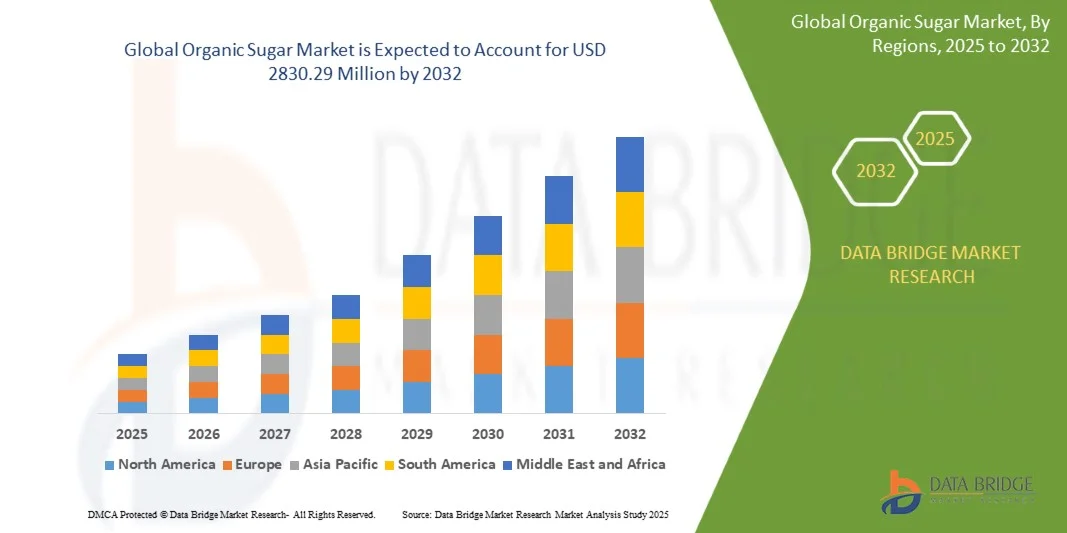
What is the Global Organic Sugar Market Size and Growth Rate?
- The global organic sugar market size was valued at USD 887.5 million in 2024 and is expected to reach USD 2830.29 million by 2032, at a CAGR of 15.6% during the forecast period
- Market growth is primarily driven by increasing consumer preference for natural and sustainably produced sweeteners, coupled with technological advancements in organic farming and sugar processing
- In addition, rising awareness about health and wellness, clean-label products, and environmentally friendly production practices is boosting the adoption of Organic Sugars across residential, commercial, and industrial applications, fueling overall market expansion
What are the Major Takeaways of Organic Sugar Market?
- Organic Sugars are gaining importance as a healthier alternative to conventional sugar, finding widespread use in food and beverage products, bakery, confectionery, and nutraceuticals, owing to their natural origin, minimal processing, and absence of synthetic chemicals
- The market is propelled by growing consumer inclination towards organic products, increasing demand for low-calorie and non-GMO options, and the surge in organic-certified food products across global retail and e-commerce channels
- The Asia-Pacific organic sugar market dominated the global market with the largest revenue share of 42% in 2024, driven by rising urbanization, growing disposable incomes, and increasing awareness of organic and natural sweeteners
- The North America Organic Sugar market is expected to witness the fastest CAGR of 10.69% during 2025 to 2032, driven by increasing consumer preference for organic and natural sweeteners, rising health consciousness, and the clean-label movement
- The Sugarcane segment dominated the market with the largest revenue share of 62% in 2024, driven by its high sucrose content, natural sweetness, and widespread availability
Report Scope and Organic Sugar Market Segmentation
|
Attributes |
Organic Sugar Key Market Insights |
|
Segments Covered |
|
|
Countries Covered |
North America
Europe
Asia-Pacific
Middle East and Africa
South America
|
|
Key Market Players |
|
|
Market Opportunities |
|
|
Value Added Data Infosets |
In addition to the insights on market scenarios such as market value, growth rate, segmentation, geographical coverage, and major players, the market reports curated by the Data Bridge Market Research also include in-depth expert analysis, pricing analysis, brand share analysis, consumer survey, demography analysis, supply chain analysis, value chain analysis, raw material/consumables overview, vendor selection criteria, PESTLE Analysis, Porter Analysis, and regulatory framework. |
What is the Key Trend in the Organic Sugar Market?
“Rising Demand for Sustainable and Clean-Label Products”
- A major trend in the global organic sugar market is the growing consumer preference for sustainable, non-GMO, and clean-label sweeteners. This shift is driven by increasing health consciousness and awareness of environmental impact, leading manufacturers to adopt organic and environmentally friendly practices
- For instance, companies such as Wholesome Sweeteners and Florida Crystals are introducing certified organic cane sugar products and packaging innovations that emphasize sustainability, appealing to environmentally conscious consumers
- The adoption of traceable and ethically sourced organic sugar enables transparency across the supply chain, giving consumers confidence in product quality and origin. Brands are increasingly highlighting certifications such as USDA Organic, Fair Trade, and Non-GMO Project Verified to meet this demand
- The trend towards sustainable sweeteners is reshaping consumer expectations, encouraging manufacturers to innovate in sourcing, production, and packaging practices. Consequently, organic sugar products with eco-friendly attributes are witnessing rapid adoption globally
- The integration of organic sugar into clean-label formulations for bakery, beverages, and confectionery sectors is further accelerating its market growth, reinforcing the emphasis on health, safety, and sustainability
What are the Key Drivers of Organic Sugar Market?
- The growing consumer inclination towards natural, chemical-free, and minimally processed foods is a major driver for organic sugar demand. Health-conscious consumers increasingly avoid refined and synthetic sweeteners, favoring organic alternatives
- Increasing awareness of environmental and ethical sourcing practices is encouraging adoption, as consumers prioritize products with verified certifications such as USDA Organic, Fair Trade, and Rainforest Alliance
- Organic sugar is widely used in bakery, confectionery, and beverage applications due to its natural taste profile and versatility, supporting steady demand across commercial and residential segments
- Furthermore, the rise of e-commerce and direct-to-consumer platforms allows organic sugar brands to reach a broader audience, boosting accessibility and adoption
- Consumer preference for clean-label and allergen-free ingredients, combined with the expanding health and wellness trend, continues to fuel market growth for organic sugar products
Which Factor is Challenging the Growth of the Organic Sugar Market?
- High production costs and limited availability of certified organic raw materials pose a challenge to market expansion, often resulting in premium pricing compared to conventional sugar
- Volatility in agricultural yields and dependency on climate conditions affect the consistency of supply, impacting the scalability of organic sugar production
- The lack of awareness in emerging markets regarding the benefits of organic sugar can limit adoption, as consumers may opt for conventional alternatives due to price sensitivity
- Ensuring compliance with multiple organic certification standards across regions can increase operational complexity for manufacturers, hindering market penetration
- Overcoming these challenges through enhanced consumer education, expansion of certified organic farming, and technological innovation in sustainable production will be crucial for long-term market growth
How is the Organic Sugar Market Segmented?
The market is segmented on the basis of type, communication protocol, unlocking mechanism, and application.
- By Type
On the basis of type, the organic sugar market is segmented into Sugarcane, Beet, and Others. The Sugarcane segment dominated the market with the largest revenue share of 62% in 2024, driven by its high sucrose content, natural sweetness, and widespread availability. Sugarcane-based organic sugar is highly preferred in bakery, beverage, and confectionery applications due to its rich flavor profile and compatibility with clean-label formulations. Consumers also favor sugarcane sugar for its minimal processing and adherence to organic standards.
The Beet segment is anticipated to witness the fastest CAGR of 17.2% from 2025 to 2032, fueled by increasing production in Europe and North America, and its suitability for specialty products targeting health-conscious and diabetic-friendly formulations. Beet-based organic sugar adoption is further supported by initiatives promoting sustainable agriculture and low environmental impact. Overall, both segments benefit from growing awareness of natural, non-GMO sweeteners and demand for premium organic ingredients.
- By Source
On the basis of source, the organic sugar market is segmented into Brown and White. The White sugar segment dominated the market with a 55% revenue share in 2024, largely due to its widespread use in beverages, bakery products, and processed foods. White organic sugar is preferred for its uniform sweetness, ease of blending, and neutral flavor profile, which makes it highly versatile across industrial and household applications.
The Brown sugar segment is projected to witness the fastest CAGR of 16.5% from 2025 to 2032, driven by consumer preference for minimally refined, flavorful, and nutrient-rich sweeteners. Brown sugar is increasingly incorporated into organic confectionery, desserts, and specialty bakery products, appealing to health-conscious consumers seeking natural alternatives. The growing demand for sustainable and clean-label ingredients is expected to further boost brown sugar adoption globally.
- By Form
On the basis of form, the organic sugar market is segmented into Liquid, Powdered, and Granulated. The Granulated segment dominated the market with a 50.3% revenue share in 2024, owing to its convenience, long shelf life, and versatility across bakery, beverage, and household applications. Granulated organic sugar is easy to store, measure, and incorporate into recipes, making it highly preferred by both consumers and manufacturers.
The Powdered segment is anticipated to witness the fastest CAGR of 18% from 2025 to 2032, driven by its increasing usage in bakery, confectionery, and instant beverage formulations. Powdered sugar provides smooth texture, rapid dissolution, and enhanced product aesthetics, making it ideal for premium bakery and dessert products. The Liquid form, though smaller in market share, is gaining traction for ready-to-use beverages and specialty organic syrups, contributing to overall market growth.
- By End Use
On the basis of end use, the organic sugar market is segmented into Beverages, Confectionery, Bakery Products, Dairy Foods, and Others. The Beverages segment dominated the market with a 40% revenue share in 2024, driven by the growing preference for organic soft drinks, juices, and functional beverages globally. Consumers increasingly seek natural sweetness in beverages while avoiding refined sugar and artificial additives.
The Confectionery segment is projected to witness the fastest CAGR of 19% from 2025 to 2032, fueled by rising demand for organic chocolates, candies, and premium sweets. Growing health awareness and the clean-label trend are encouraging manufacturers to replace conventional sugar with organic alternatives.
Which Region Holds the Largest Share of the Organic Sugar Market?
- The Asia-Pacific organic sugar market dominated the global market with the largest revenue share of 42% in 2024, driven by rising urbanization, growing disposable incomes, and increasing awareness of organic and natural sweeteners
- Consumers in the region are increasingly adopting organic products for health and wellness, sustainability, and clean-label preferences. Countries such as China, India, and Japan are witnessing robust growth in retail, e-commerce, and foodservice channels, which is boosting organic sugar demand
- Strong government initiatives promoting organic farming, coupled with the availability of local manufacturing and processing units, are further enhancing market penetration. The rising inclination toward healthier alternatives in both households and commercial establishments establishes Asia-Pacific as the dominant region for organic sugar globally
China Organic Sugar Market Insight
The China organic sugar market accounted for the largest revenue share in Asia-Pacific in 2024, owing to the expanding middle-class population, increasing health-consciousness, and high technological adoption. Rapid urbanization and the popularity of clean-label and natural products in beverages, confectionery, and bakery applications are driving demand. Domestic manufacturers are making organic sugar more accessible and affordable, while smart retail and e-commerce platforms facilitate distribution across tier-II and tier-III cities. China’s push toward sustainable agriculture and organic farming practices further strengthens market growth, making it a key contributor to the regional dominance.
Japan Organic Sugar Market Insight
The Japan organic sugar market is growing steadily due to rising health awareness, increasing disposable incomes, and demand for natural and organic sweeteners in daily consumption. Consumers increasingly prefer organic sugar in beverages, bakery, and confectionery products. Moreover, Japan’s aging population is favoring products with minimal processing and functional benefits, boosting demand for organic sugar. The growth of e-commerce, specialty food stores, and premium retail channels is further enhancing market accessibility. Integration with clean-label and functional ingredients in the food and beverage industry is expected to support long-term market expansion.
Which Region is the Fastest Growing Region in the Organic Sugar Market?
The North America organic sugar market is expected to witness the fastest CAGR of 10.69% during 2025 to 2032, driven by increasing consumer preference for organic and natural sweeteners, rising health consciousness, and the clean-label movement. The U.S. and Canada are witnessing robust demand across beverages, confectionery, and bakery products, fueled by consumer awareness of organic certifications and sustainable sourcing practices. Growing penetration of organic products in retail, supermarkets, and e-commerce, along with new product launches by major players, is further accelerating growth.
U.S. Organic Sugar Market Insight
The U.S. organic sugar market captured the largest revenue share of 78% within North America in 2024, supported by the widespread adoption of organic products in households and foodservice industries. Consumers prioritize health, wellness, and sustainability, driving demand for sugarcane- and beet-based organic sugar in beverages, bakery, and confectionery applications. E-commerce and specialty retail channels are facilitating broader access to premium and certified organic sugar. Government regulations and certifications, such as USDA Organic, are fostering consumer trust and encouraging manufacturers to expand their product portfolios.
Canada Organic Sugar Market Insight
The Canada organic sugar market is witnessing notable growth, fueled by rising health awareness, preference for clean-label ingredients, and increasing incorporation of organic sugar in beverages, bakery, and confectionery products. Canadian consumers are increasingly demanding sustainably sourced, non-GMO, and eco-friendly products. Retail and e-commerce penetration, along with government support for organic agriculture, is expanding product availability and accessibility. The market is also driven by new product launches targeting functional and natural sweetener applications, supporting long-term growth across commercial and residential segments.
Which are the Top Companies in Organic Sugar Market?
The organic sugar industry is primarily led by well-established companies, including:
- Wholesome Sweeteners (U.S.)
- Florida Crystals Corporation (U.S.)
- The Hain Celestial Group, Inc. (U.S.)
- Nordic Sugar A/S (Denmark)
- Organically Grown Company (U.S.)
- Ecoideas (Spain)
- Domtar Corporation (Canada)
- Organic Tattva (India)
- Rapunzel Naturkost GmbH (Germany)
- Imperial Sugar Company (U.S.)
What are the Recent Developments in Organic Sugar Market?
- In August 2023, Just Date natural sweeteners announced the nationwide launch of organic date sugar in Sprouts Farmers Market stores, made from organic, non-GMO dates. This initiative targets health-conscious consumers seeking natural sweeteners, reflecting the rising demand for alternative sugar options and demonstrating the brand's commitment to offering high-quality organic products
- In July 2023, Nordzucker, through its brand SweetFamily, introduced locally sourced brown organic sugar, expanding its portfolio. Produced in Germany, the product emphasizes traceability, environmental responsibility, and adherence to organic certification standards. The launch addresses consumer demand for natural and sustainable ingredients, showcasing the company’s focus on quality and eco-conscious production
- In January 2023, Whole Earth Brands Inc., under its Wholesome brand, launched a new product line featuring Organic Coconut Palm Sugar and Organic Cane Sugar. These offerings cater to consumers seeking healthier, sustainably sourced alternatives, highlighting the brand's dedication to expanding its portfolio of natural and organic sweeteners while meeting growing market demand

- Interactive Data Analysis Dashboard
- Company Analysis Dashboard for high growth potential opportunities
- Research Analyst Access for customization & queries
- Competitor Analysis with Interactive dashboard
- Latest News, Updates & Trend analysis
- Harness the Power of Benchmark Analysis for Comprehensive Competitor Tracking
Global Organic Sugar Market, Supply Chain Analysis and Ecosystem Framework
To support market growth and help clients navigate the impact of geopolitical shifts, DBMR has integrated in-depth supply chain analysis into its Global Organic Sugar Market research reports. This addition empowers clients to respond effectively to global changes affecting their industries. The supply chain analysis section includes detailed insights such as Global Organic Sugar Market consumption and production by country, price trend analysis, the impact of tariffs and geopolitical developments, and import and export trends by country and HSN code. It also highlights major suppliers with data on production capacity and company profiles, as well as key importers and exporters. In addition to research, DBMR offers specialized supply chain consulting services backed by over a decade of experience, providing solutions like supplier discovery, supplier risk assessment, price trend analysis, impact evaluation of inflation and trade route changes, and comprehensive market trend analysis.
Data collection and base year analysis are done using data collection modules with large sample sizes. The stage includes obtaining market information or related data through various sources and strategies. It includes examining and planning all the data acquired from the past in advance. It likewise envelops the examination of information inconsistencies seen across different information sources. The market data is analysed and estimated using market statistical and coherent models. Also, market share analysis and key trend analysis are the major success factors in the market report. To know more, please request an analyst call or drop down your inquiry.
The key research methodology used by DBMR research team is data triangulation which involves data mining, analysis of the impact of data variables on the market and primary (industry expert) validation. Data models include Vendor Positioning Grid, Market Time Line Analysis, Market Overview and Guide, Company Positioning Grid, Patent Analysis, Pricing Analysis, Company Market Share Analysis, Standards of Measurement, Global versus Regional and Vendor Share Analysis. To know more about the research methodology, drop in an inquiry to speak to our industry experts.
Data Bridge Market Research is a leader in advanced formative research. We take pride in servicing our existing and new customers with data and analysis that match and suits their goal. The report can be customized to include price trend analysis of target brands understanding the market for additional countries (ask for the list of countries), clinical trial results data, literature review, refurbished market and product base analysis. Market analysis of target competitors can be analyzed from technology-based analysis to market portfolio strategies. We can add as many competitors that you require data about in the format and data style you are looking for. Our team of analysts can also provide you data in crude raw excel files pivot tables (Fact book) or can assist you in creating presentations from the data sets available in the report.













