


Osteonecrosis Treatment Market Size
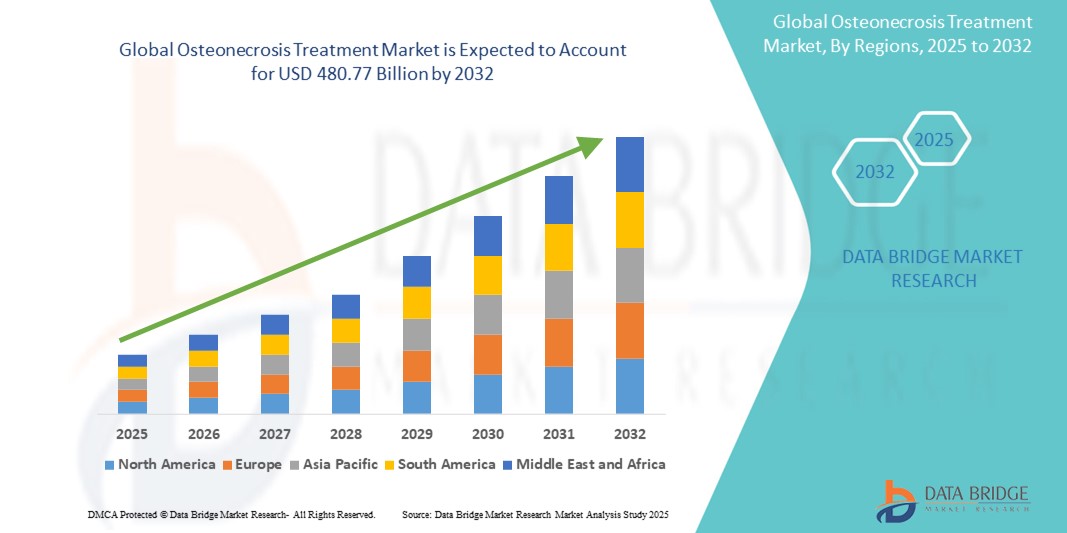
- The global osteonecrosis treatment market size was valued at USD 286.16 billion in 2024 and is expected to reach USD 480.77 billion by 2032, at a CAGR of 6.70% during the forecast period
- The market growth is largely fueled by the increasing prevalence of osteonecrosis, coupled with advancements in diagnostic imaging and therapeutic interventions such as core decompression, bone grafting, and stem cell therapy. Technological progress in minimally invasive surgical techniques and biologics is significantly enhancing treatment efficacy and recovery outcomes
- Furthermore, rising awareness among patients and healthcare professionals about early diagnosis and the availability of innovative treatment options is establishing osteonecrosis therapies as a critical component in musculoskeletal care. These converging factors are accelerating the uptake of osteonecrosis treatment solutions, thereby significantly boosting the industry's growth
Osteonecrosis Treatment Market Analysis
- Osteonecrosis treatment solutions, encompassing pharmacological therapies, surgical interventions, and regenerative medicine, are becoming increasingly vital in orthopedic and trauma care settings. This is due to the rising incidence of osteonecrosis linked to corticosteroid use, alcohol abuse, and trauma, as well as an aging population susceptible to degenerative bone conditions
- The escalating demand for osteonecrosis treatment is primarily driven by improvements in diagnostic modalities such as MRI and CT scans, advancements in stem cell therapies, and the growing adoption of minimally invasive surgical techniques that aim to preserve joint function and delay the need for total joint replacement
- North America dominated the osteonecrosis treatment market with the largest revenue share of 49% in 2024, characterized by early adoption of advanced treatment protocols, well-established healthcare infrastructure, high healthcare spending, and robust clinical research activities
- Asia-Pacific is expected to be the fastest-growing region in the osteonecrosis treatment market, projected to grow at a CAGR of 12.3% during the forecast period (2025–2032). This growth is driven by increasing awareness, improving healthcare infrastructure, rising disposable incomes, and government initiatives supporting orthopedic care
- The joint replacement therapy segment dominated the osteonecrosis treatment market, accounting for a market share of 52.4% in 2024, driven by its widespread use in advanced-stage osteonecrosis cases where joint preservation is no longer viable. Total hip and knee replacements are highly effective in restoring mobility and alleviating pain, especially in elderly populations. However, Stem Cell Therapy is anticipated to witness the fastest growth, owing to its regenerative potential and increasing clinical adoption
Report Scope and Osteonecrosis Treatment Market Segmentation
|
Attributes |
Osteonecrosis Treatment Key Market Insights |
|
Segments Covered |
|
|
Countries Covered |
North America
Europe
Asia-Pacific
Middle East and Africa
South America
|
|
Key Market Players |
|
|
Market Opportunities |
|
|
Value Added Data Infosets |
In addition to the insights on market scenarios such as market value, growth rate, segmentation, geographical coverage, and major players, the market reports curated by the Data Bridge Market Research also include in-depth expert analysis, pricing analysis, brand share analysis, consumer survey, demography analysis, supply chain analysis, value chain analysis, raw material/consumables overview, vendor selection criteria, PESTLE Analysis, Porter Analysis, and regulatory framework. |
Osteonecrosis Treatment Market Trends
“Enhanced Convenience Through Advanced Therapeutic Innovations”
- A significant and accelerating trend in the global osteonecrosis treatment market is the growing adoption of advanced therapeutic modalities, including minimally invasive surgeries, regenerative medicine, and targeted drug therapies. These innovations are significantly enhancing patient outcomes and improving quality of life by reducing recovery times and preserving joint integrity
- For instance, newer treatment protocols such as core decompression combined with bone marrow aspirate concentrate (BMAC) or vascularized bone grafting are offering more effective and sustainable outcomes for patients in early to mid-stages of osteonecrosis. Similarly, bisphosphonate therapy and anticoagulants are increasingly being used to manage bone damage and promote vascular recovery
- Innovations in imaging techniques and orthopedic biomaterials are also enabling more precise diagnoses and personalized treatment planning. For instance, MRI-based staging allows clinicians to tailor interventions according to disease progression, while advanced grafting materials improve structural support and osteogenesis
- The integration of osteonecrosis treatment into broader musculoskeletal and orthopedic care platforms is enabling healthcare providers to deliver coordinated, multidisciplinary care. This includes physical therapy, pain management, and post-operative rehabilitation, resulting in a more unified and patient-centric treatment experience
- This trend toward more effective, less invasive, and better-integrated osteonecrosis treatment options is fundamentally reshaping clinical expectations and standard of care in orthopedic practices. Consequently, companies and healthcare institutions are investing in next-generation therapies, such as stem cell-based treatments and biologics, to expand their treatment offerings and meet the growing demand for non-prosthetic solutions
- The demand for osteonecrosis treatments that offer better functionality, fewer complications, and faster recovery is growing rapidly across both developed and emerging healthcare markets, as patients and providers alike prioritize long-term joint preservation and quality of life improvements
Osteonecrosis Treatment Market Dynamics
Driver
“Growing Need Due to Rising Incidence and Advancements in Osteonecrosis Treatment”
- The increasing global burden of osteonecrosis—driven by factors such as corticosteroid use, alcohol abuse, trauma, and sickle cell disease—is a key driver for the growing demand for effective treatment solutions. The rising geriatric population and increasing incidence of lifestyle-related diseases also contribute to a higher prevalence of osteonecrosis, especially in weight-bearing joints such as the hip and knee
- For instance, in April 2024, several orthopedic centers in the U.S. adopted next-generation stem cell-based therapies in clinical practice, aimed at regenerating necrotic bone tissue and delaying joint replacement. Such advancements are expected to drive the Osteonecrosis Treatment industry growth in the forecast period
- As awareness of early diagnosis and the consequences of untreated osteonecrosis grows, patients and healthcare providers are seeking advanced therapeutic options such as core decompression, bone grafting, and bisphosphonates. These offer better prognosis when implemented in early disease stages
- Furthermore, the increasing accessibility to imaging technologies such as MRI and CT scans, coupled with government and private healthcare investments, is making it easier to diagnose osteonecrosis at earlier, more treatable stages
- The convenience of outpatient procedures, faster recovery times, and the shift toward joint-preserving techniques are key factors propelling the adoption of modern osteonecrosis treatments in hospitals, specialty clinics, and ambulatory surgical centers. This is particularly evident in developed markets and urban healthcare settings
Restraint/Challenge
“Concerns Regarding High Treatment Costs and Limited Access to Advanced Therapies”
- One of the significant challenges facing the osteonecrosis treatment market is the high cost of advanced surgical procedures and biologic therapies, which limits accessibility, especially in low- and middle-income countries. Treatments such as stem cell injections, vascularized bone grafts, and custom implants can be expensive and are not always covered by insurance
- For instance, the cost of cell-based therapies can exceed thousands of dollars per treatment cycle, making them unaffordable for a significant portion of the global population. In addition, specialized expertise and surgical infrastructure are required for certain procedures, which may not be readily available outside of major urban centers
- Addressing these cost and accessibility challenges will be critical to achieving broader market penetration. This includes efforts to develop cost-effective treatment alternatives, expand insurance coverage, and increase the availability of skilled orthopedic professionals and equipment in underserved regions
- While technological innovation is advancing rapidly, a lack of standardized treatment protocols and limited long-term clinical data on emerging therapies such as stem cells may also lead to hesitancy among healthcare providers
- Overcoming these challenges through cost reduction, patient education, and global collaboration on clinical research will be vital for sustaining the momentum of growth in the osteonecrosis treatment market
Osteonecrosis Treatment Market Scope
The market is segmented on the basis of therapy, drug type, treatment, route of administration, distribution channel, and end-user.
• By Therapy
On the basis of therapy, the osteonecrosis treatment market is segmented into stem cell therapy and joint replacement therapy. The joint replacement therapy segment held the largest market revenue share of 52.4% in 2024, primarily due to its widespread use in advanced stages of osteonecrosis where joint preservation is no longer viable. Total hip or knee replacements are considered highly effective in restoring mobility and relieving pain.
The stem cell therapy segment is expected to witness the fastest CAGR of 10.8% from 2025 to 2032, driven by increasing clinical trials, advances in regenerative medicine, and the potential to delay or eliminate the need for invasive surgery.
• By Drug Type
On the basis of drug type, the osteonecrosis treatment market is segmented into non-steroidal anti-inflammatory drugs (NSAIDs), blood thinners, and others. The non-steroidal anti-inflammatory drugs (NSAIDs) segment dominated the market in 2024, accounting for 47.6% of the revenue share, owing to its common use in managing osteonecrosis-related pain and inflammation in the early stages of the disease.
The blood thinners segment is projected to grow at the fastest CAGR of 9.5%, supported by the growing recognition of vascular insufficiency as a contributing factor to osteonecrosis and the role of anticoagulants in enhancing blood flow to affected bones.
• By Treatment
Based on treatment, the osteonecrosis treatment market is segmented into medication and surgery. The medication segment held the largest revenue share of 58.3% in 2024, driven by its applicability in early-stage osteonecrosis and its non-invasive nature. Patients often begin treatment with pharmacological options such as NSAIDs and vasodilators.
The surgery segment is anticipated to be the fastest-growing, with a CAGR of 11.2% from 2025 to 2032, as more patients progress to later stages requiring core decompression, bone grafting, or joint replacement.
• By Route of Administration
On the basis of route of administration, the osteonecrosis treatment market is segmented into oral and parenteral routes of administration. The oral route accounted for the largest market share of 60.1% in 2024, due to ease of administration, high patient compliance, and widespread use of oral NSAIDs and anticoagulants.
The parenteral segment is expected to register the fastest growth at a CAGR of 9.8%, particularly due to the increasing use of injectable stem cells, bisphosphonates, and other advanced therapies administered in clinical settings.
• By Distribution Channel
On the basis of distribution channel, the osteonecrosis treatment market is segmented into direct, online pharmacy, retailers, and others. The direct segment dominated in 2024, holding 45.7% of the market share, especially in hospital procurement and specialty pharmacy settings for high-cost surgical and biologic treatments.
The online pharmacy segment is expected to grow at the fastest CAGR of 10.6%, driven by increasing adoption of digital health platforms, convenience, and improved access in remote areas.
• By End-User
On the basis of end-user, the osteonecrosis treatment market is segmented into hospitals, homecare, specialty clinics, and others. The hospitals segment led the market in 2024 with a 51.3% share, owing to the availability of advanced diagnostic tools, specialized surgical expertise, and comprehensive care services.
The specialty clinics segment is projected to be the fastest-growing, registering a CAGR of 11.5% from 2025 to 2032, fueled by the rising number of orthopedic and regenerative medicine clinics offering outpatient stem cell and decompression therapies.
Osteonecrosis Treatment Market Regional Analysis
- North America dominates the osteonecrosis treatment market with the largest revenue share of 49% in 2024, driven by a high prevalence of osteonecrosis cases, advanced healthcare infrastructure, and the widespread adoption of innovative treatment modalities such as stem cell therapy and minimally invasive surgeries
- Patients and providers in the region highly value early diagnosis and access to advanced orthopedic interventions, supported by well-established reimbursement policies and ongoing clinical research into regenerative therapies
- This growth is further reinforced by high healthcare expenditure, the presence of major pharmaceutical and medical device companies, and an aging population, particularly in the United States and Canada, contributing to the increasing demand for effective osteonecrosis treatment options in both hospital and outpatient settings
U.S. Osteonecrosis Treatment Market Insight
The U.S. osteonecrosis treatment market captured the largest revenue share of 60.4% in North America in 2024, driven by a high prevalence of osteonecrosis, a large aging population, and the widespread availability of advanced medical facilities. The country's strong focus on clinical research, early diagnosis, and access to both surgical and regenerative therapies has made it a dominant player in the regional market. The presence of key pharmaceutical and orthopedic device companies, coupled with favorable reimbursement policies, continues to support market expansion.
Europe Osteonecrosis Treatment Market Insight
The Europe osteonecrosis treatment market is projected to grow at a CAGR of 9.2% from 2025 to 2032, supported by increased awareness of early-stage bone disorders and expanding access to advanced treatments. Regulatory support for orthopedic innovations and aging demographics across major economies such as Germany, France, and the UK are fueling the uptake of joint-preserving and replacement therapies. The market is further driven by rising clinical research investments and demand for minimally invasive surgical solutions.
U.K. Osteonecrosis Treatment Market Insight
The U.K. osteonecrosis treatment market is expected to grow at a CAGR of 8.9% during the forecast period, driven by the adoption of cutting-edge therapies and a rising number of osteonecrosis diagnoses linked to long-term corticosteroid use and alcohol abuse. The NHS and private hospitals are increasingly adopting stem cell and bone graft treatments, supported by favorable healthcare infrastructure and growing patient awareness.
Germany Osteonecrosis Treatment Market Insight
The Germany osteonecrosis treatment market is anticipated to grow at a CAGR of 9.4% from 2025 to 2032, owing to the country’s strong orthopedic infrastructure, emphasis on technological innovation, and government support for regenerative medicine. With a rising elderly population and increased diagnostic rates, the demand for joint-preserving surgeries and pharmacological therapies is steadily increasing, particularly in university hospitals and specialty clinics.
Asia-Pacific Osteonecrosis Treatment Market Insight
The Asia-Pacific osteonecrosis treatment market is projected to grow at the fastest CAGR of 12.3% during the forecast period (2025–2032), fueled by rising healthcare expenditures, growing orthopedic disease burden, and rapid urbanization. Countries such as China, India, and Japan are witnessing strong growth due to increasing access to healthcare, adoption of innovative treatments, and expanding awareness campaigns related to bone health.
Japan Osteonecrosis Treatment Market Insight
The Japan osteonecrosis treatment market is expanding steadily, with a projected CAGR of 8.7%, attributed to a large elderly population and a national emphasis on preventative and regenerative care. The country’s advanced healthcare system and strong presence of orthopedic specialists support early diagnosis and treatment. Stem cell therapy adoption is particularly rising in clinical research institutions and private orthopedic centers.
China Osteonecrosis Treatment Market Insight
The China osteonecrosis treatment accounted for the largest revenue share in the Asia-Pacific Osteonecrosis Treatment market in 2024, with approximately 37.2% share, due to its rapidly growing middle class, high healthcare investment, and government initiatives promoting advanced medical treatments. With increasing diagnoses of steroid-induced osteonecrosis and trauma-related cases, demand for surgical interventions and emerging regenerative solutions is on the rise. The local pharmaceutical industry also plays a significant role in driving accessibility.
India Osteonecrosis Treatment Market Insight
The India osteonecrosis treatment market is expected to grow at a robust CAGR of 13.5% during the forecast period, supported by rising awareness about orthopedic health, improving diagnostic infrastructure, and the increasing prevalence of lifestyle-related diseases. Access to MRI and early-stage interventions is improving in urban areas, and the private sector is actively investing in joint replacement and biologic therapy offerings. Despite challenges in rural outreach, affordability of generics and expansion of specialty clinics are helping the market penetrate deeper.
Osteonecrosis Treatment Market Share
The osteonecrosis treatment industry is primarily led by well-established companies, including:
- Merck & Co. Inc. (U.S.)
- Novartis AG (Switzerland)
- Pfizer Inc. (U.S.)
- Johnson & Johnson Services, Inc. (U.S.)
- Pharmanovia (U.K.)
- Teva Pharmaceutical Industries Ltd. (Israel)
- Viatris Inc. (U.S.)
- INTEGRA LIFESCIENCES (U.S.)
- Enzo Biochem Inc. (U.S.)
- Emcure (India)
- Viramal (U.K.)
- EuroPharma USA (U.S.)
- Boehringer Ingelheim International GmbH (Germany)
- Pantarhei Bioscience (Netherlands)
- F. Hoffmann-La Roche Ltd (Switzerland)
- GSK plc (U.K.)
- Shionogi & Co., Ltd. (Japan)
- BioSyent Inc. (Canada)
- GLENMARK PHARMACEUTICALS LTD (India)
- BioSenic SA (Belgium)
- Amgen Inc. (U.S.)
- Zimmer Biomet (U.S.)
- Vericel Corporation (U.S.)
- Abacus ALS (U.S.)
- Medacta International (Switzerland)
- Exactech, Inc. (U.S.)
Latest Developments in Global Osteonecrosis Treatment Market
- In April 2024, Vericel Corporation, a leader in advanced cell therapies, announced the expansion of its stem cell manufacturing facility in the U.S. to support the increasing demand for autologous cell-based treatments for orthopedic conditions, including osteonecrosis. This move reflects the company's commitment to scaling up production of regenerative therapies such as MACI, used in joint preservation, and reinforces its focus on tackling early-stage osteonecrosis using biologic solutions
- In March 2024, Medtronic plc entered into a strategic research collaboration with orthopedic centers across Europe to evaluate the effectiveness of minimally invasive core decompression systems for treating early-stage femoral head osteonecrosis. The partnership aims to generate real-world evidence supporting less invasive interventions and broaden treatment access through physician training programs
- In March 2024, Sanofi initiated Phase II clinical trials for its investigational bisphosphonate formulation targeting bone remodeling in patients with glucocorticoid-induced osteonecrosis. The trial is being conducted across major hospitals in the U.S., India, and China, indicating a rising focus on pharmaceutical approaches for halting disease progression at early stages
- In February 2024, Zimmer Biomet launched a new orthopedic implant system specifically designed for hip resurfacing and replacement in patients affected by late-stage osteonecrosis. This next-generation implant offers improved bone preservation and has already received CE Mark approval, with U.S. FDA submission expected by Q4 2025
- In January 2024, Smith+Nephew announced the successful commercialization of its Bone Graft Substitute (BGS) platform in Asia-Pacific markets, particularly targeting orthopedic surgeons treating osteonecrosis of the femoral head. The platform combines synthetic scaffolds and bone morphogenetic proteins (BMPs) to stimulate natural bone healing and reduce the need for total joint replacement

- Interactive Data Analysis Dashboard
- Company Analysis Dashboard for high growth potential opportunities
- Research Analyst Access for customization & queries
- Competitor Analysis with Interactive dashboard
- Latest News, Updates & Trend analysis
- Harness the Power of Benchmark Analysis for Comprehensive Competitor Tracking
Data collection and base year analysis are done using data collection modules with large sample sizes. The stage includes obtaining market information or related data through various sources and strategies. It includes examining and planning all the data acquired from the past in advance. It likewise envelops the examination of information inconsistencies seen across different information sources. The market data is analysed and estimated using market statistical and coherent models. Also, market share analysis and key trend analysis are the major success factors in the market report. To know more, please request an analyst call or drop down your inquiry.
The key research methodology used by DBMR research team is data triangulation which involves data mining, analysis of the impact of data variables on the market and primary (industry expert) validation. Data models include Vendor Positioning Grid, Market Time Line Analysis, Market Overview and Guide, Company Positioning Grid, Patent Analysis, Pricing Analysis, Company Market Share Analysis, Standards of Measurement, Global versus Regional and Vendor Share Analysis. To know more about the research methodology, drop in an inquiry to speak to our industry experts.
Data Bridge Market Research is a leader in advanced formative research. We take pride in servicing our existing and new customers with data and analysis that match and suits their goal. The report can be customized to include price trend analysis of target brands understanding the market for additional countries (ask for the list of countries), clinical trial results data, literature review, refurbished market and product base analysis. Market analysis of target competitors can be analyzed from technology-based analysis to market portfolio strategies. We can add as many competitors that you require data about in the format and data style you are looking for. Our team of analysts can also provide you data in crude raw excel files pivot tables (Fact book) or can assist you in creating presentations from the data sets available in the report.












