


What is the Ozone Therapy in Dermatology Market Size and Growth Rate?
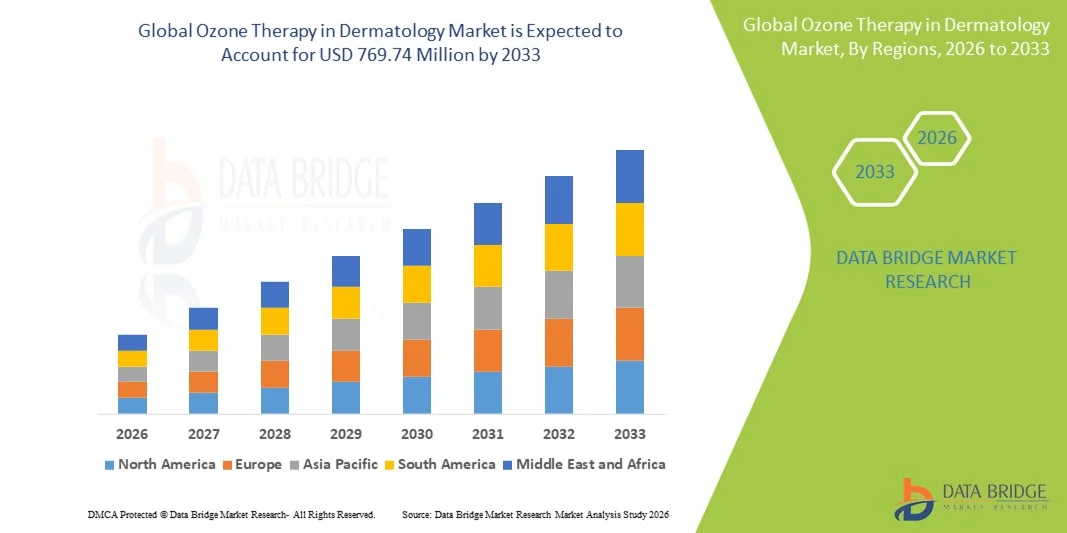
- As per Data Bridge Market Research analysis, the global ozone therapy in dermatology market size was valued at USD 499.67 million in 2025 and is expected to reach USD 769.74 million by 2033, at a CAGR of 5.55% during the forecast period
- The market growth is primarily fueled by the rising use of ozone-based modalities for skin rejuvenation, acne management, wound care, and inflammation reduction, supported by growing interest in minimally invasive dermatological procedures
- In addition, increasing consumer preference for safe, natural, and regenerative skin treatments is positioning ozone therapy as a promising dermatological approach. These converging factors are accelerating the adoption of ozone-based dermatology solutions, thereby significantly boosting the industry’s growth
Market Size & Forecast
- Global Market Value (2025): USD 499.67 million
- Expected Market Value (2033): USD 769.74 million
- Forecast CAGR (2026-2033): 5.55%
What are the Major Takeaways of Ozone Therapy in Dermatology Market?
- Ozone therapy devices and medications, used for dermatological conditions such as eczema, acneiform eruptions, psoriasis, and mycosis, are gaining traction as minimally invasive treatment options due to their antimicrobial, anti-inflammatory, and tissue-regenerative properties, making them valuable additions to modern dermatology practices across hospitals and clinics
- The rising adoption of ozone-based dermatological procedures is primarily fueled by growing patient preference for natural, non-pharmacological therapies, increasing prevalence of chronic skin disorders, and expanding clinical evidence supporting ozone’s efficacy in wound healing, inflammation control, and skin rejuvenation
- North America dominated the global ozone therapy in dermatology market with the largest revenue share of 38.7% in 2025, supported by advanced dermatology infrastructure, high treatment awareness, and increasing integration of ozone therapy within cosmetic and therapeutic dermatology. The U.S. leads the regional market, driven by expanding clinical usage and growing availability of ozone therapy systems in dermatology clinics
- Asia-Pacific is expected to be the fastest-growing region during the forecast period, powered by rising disposable incomes, increasing dermatology clinic expansions, and growing acceptance of ozone-based skin treatments among younger populations seeking minimally invasive solutions
- Devices segment dominated the market with a 56.4% share in 2025, attributed to rising utilization of ozone generators and dermatology-specific ozone devices for acne, eczema, and wound-care applications
Report Scope and Ozone Therapy in Dermatology Market Segmentation
|
Attributes |
Ozone Therapy in Dermatology Key Market Insights |
|
Segments Covered |
|
|
Countries Covered |
North America
Europe
Asia-Pacific
Middle East and Africa
South America
|
|
Key Market Players |
|
|
Market Opportunities |
|
|
Value Added Data Infosets |
In addition to the insights on market scenarios such as market value, growth rate, segmentation, geographical coverage, and major players, the market reports curated by the Data Bridge Market Research also include in-depth expert analysis, patient epidemiology, pipeline analysis, pricing analysis, and regulatory framework |
What is the Key Trend in the Ozone Therapy in Dermatology Market?
Rising Adoption of Ozone-Based Regenerative Dermatology Treatments
- A significant and accelerating trend in the global ozone therapy in dermatology market is the growing shift toward minimally invasive regenerative skin treatments that leverage ozone’s antimicrobial, anti-inflammatory, and tissue-repair properties to enhance clinical outcomes in conditions such as acne, eczema, and chronic wounds
- For instance, several dermatology clinics in Europe and Asia now integrate medical ozone generators into their treatment portfolios to offer non-pharmacological solutions for resistant dermatological conditions, supporting broader acceptance among patients seeking natural alternatives
- AI-enabled ozone devices are emerging, enabling personalized ozone dosage adjustments, improved safety monitoring, and precise delivery tailored to patient-specific skin responses. For instance, next-generation ozone therapy systems are being developed with smart sensors capable of regulating concentration levels to prevent irritation and optimize therapeutic efficacy
- Furthermore, voice-assisted and automated device functions are making ozone therapy equipment easier to use in outpatient dermatology settings, enabling clinicians to perform treatments with simplified controls and real-time feedback, thereby improving workflow efficiency
- The seamless integration of ozone devices with digital dermatology platforms allows clinicians to track treatment progress, skin changes, and ozone exposure levels through centralized dashboards, supporting more evidence-based and data-driven care
- This trend toward intelligent, intuitive, and technologically refined ozone therapy devices is reshaping expectations for dermatological treatment delivery, prompting companies to invest in advanced ozone generators with features such as automated safety shut-off, dose calibration, and clinical protocol support
- The demand for ozone therapy solutions that provide regenerative benefits, enhanced convenience, and improved treatment precision is growing rapidly across both hospitals and dermatology clinics, as patients increasingly prioritize safer and more natural therapeutic options
Ozone Therapy in Dermatology Market Dynamics
Driver
Increasing Demand for Natural, Non-Pharmacological Dermatology Treatments
- The rising preference for natural, chemical-free, and regenerative skin therapies among dermatology patients, coupled with growing awareness of ozone’s antimicrobial and anti-inflammatory benefits, is significantly driving adoption of ozone therapy across clinical practices
- For instance, in 2025, multiple dermatology centers in Germany, South Korea, and Italy introduced ozone-based modalities for chronic skin infections and inflammatory disorders, reinforcing clinical confidence and accelerating market expansion during the forecast period
- As consumers become more concerned about side effects associated with long-term steroid or antibiotic use, ozone therapy offers a compelling alternative with benefits such as enhanced oxygenation, microbial reduction, and improved tissue healing, making it attractive for both clinicians and patients
- Furthermore, the growing popularity of minimally invasive dermatology treatments and the desire for faster recovery with fewer complications are positioning ozone therapy as a preferred option for conditions such as acne, psoriasis, and eczema
- The convenience of outpatient treatment, shorter procedural time, and compatibility with other dermatology modalities are strengthening ozone therapy’s adoption in hospitals and clinics. In addition, expanding availability of portable and user-friendly ozone devices is supporting market penetration in emerging economies
- The trend toward integrative dermatology and patient-centric care further contributes to the rising acceptance of ozone therapy, as clinicians increasingly incorporate alternative and complementary therapeutic strategies into standard care plans
Restraint/Challenge
Skin Irritation Issues and Regulatory Compliance Hurdle
- Concerns surrounding potential skin irritation, ozone overexposure risks, and inconsistent device calibration pose a significant challenge to broader adoption in dermatology practices, prompting clinicians to carefully evaluate the safety profile of ozone-based procedures
- For instance, reports from certain clinics highlight cases of mild irritation or redness following improperly administered ozone concentrations, which has led regulatory bodies in several countries to strengthen compliance protocols for ozone therapy devices
- Addressing these safety concerns through strict dosage control, improved device calibration, and clinician training is crucial for increasing patient confidence and clinical acceptance. Several companies emphasize their built-in sensors and dosage-limiting features to ensure safe therapeutic delivery
- In addition, the relatively limited clinical standardization and varying regulatory frameworks across countries can create barriers for manufacturers attempting to commercialize ozone therapy systems globally, particularly in regions with stringent medical device approval requirements
- While awareness of ozone therapy benefits is increasing, inconsistent reimbursement support and higher initial device costs can still hinder adoption in smaller dermatology practices, especially in cost-sensitive markets
- Overcoming these challenges through stronger clinical validation, more robust regulatory alignment, and the development of affordable, safety-enhanced ozone devices will be essential for sustainable market growth
How is the Ozone Therapy in Dermatology Market Segmented?
The market is segmented on the basis of type, end user, and application.
- By Type
On the basis of type, the global ozone therapy in dermatology market is segmented into devices and medications. The devices segment dominated the market with the largest market revenue share of 56.4% in 2025, driven by the rising adoption of ozone delivery systems such as ozone generators, infusion devices, and topical application equipment across dermatology practices. Devices are preferred due to their ability to deliver precise, controlled ozone concentrations, ensuring standardized treatments and improved patient outcomes across multiple dermatological conditions. Growing awareness among dermatologists regarding the benefits of ozone devices in treating chronic skin disorders such as eczema, psoriasis, and acneiform eruptions further strengthens demand. The increasing installation of advanced ozone therapy systems in hospitals and large dermatology centers also contributes to the segment’s dominance. In addition, technological advancements improving device portability and treatment accuracy are further supporting widespread clinical adoption.
The medications segment is anticipated to witness the fastest growth rate from 2026 to 2033, fueled by increasing demand for ozone-based topical formulations, ozonated oils, gels, and injectable preparations. Medications are increasingly being adopted due to their ease of use, high patient compliance, and ability to support long-term dermatological treatment protocols. The expansion of product portfolios by manufacturers offering stabilized ozonated formulations is accelerating market acceptance across both clinical and home-use scenarios. Rising consumer interest in natural, regenerative, and chemical-free skin therapies is further propelling the adoption of ozone-based medications. In addition, their suitability for conditions requiring ongoing management, such as dermatitis, mycosis, and recurrent herpes, supports strong, sustained demand during the forecast period.
- By End User
On the basis of end user, the market is segmented into hospitals, clinics, and others. The hospitals segment dominated the market with the largest market revenue share in 2025, supported by the higher availability of advanced ozone therapy devices, certified dermatology departments, and trained medical professionals. Hospitals remain the primary centers for specialized and intensive ozone-based dermatology procedures due to superior diagnostic infrastructure and strict treatment protocols. Increasing patient preference for hospital-based care for chronic or severe skin disorders also strengthens this segment. Investment by hospitals in modern ozone therapy systems further boosts adoption across various dermatology units. In addition, the rising volume of patients seeking evidence-based, clinically supervised ozone therapy enhances the hospital segment’s dominance.
The clinics segment is expected to witness the fastest growth rate from 2026 to 2033, driven by the rapid expansion of independent dermatology clinics and aesthetic treatment centers offering ozone-based skin therapies. Clinics offer quicker access, shorter appointment times, and personalized treatment plans, attracting a growing number of patients seeking minimally invasive ozone therapies. The rising trend of outpatient dermatological procedures and the growing availability of compact ozone devices suitable for clinic environments are fueling adoption. Clinics are increasingly integrating ozone therapy into treatment packages for acne management, skin rejuvenation, and infection control. In addition, affordability and accessibility advantages over hospitals support strong market growth for this segment during the forecast period.
- By Application
On the basis of application, the market is segmented into eczema, herpes, acneiform eruption, psoriasis, mycosis, and others. The eczema segment dominated the market with the largest market revenue share in 2025, driven by the high global prevalence of dermatological inflammation disorders and the proven anti-inflammatory and antimicrobial effects of ozone therapy. Ozone therapy supports barrier repair, reduces oxidative stress, and enhances skin healing, making it widely adopted for eczema management. Dermatologists increasingly recommend ozone modalities due to reduced reliance on corticosteroids and improved patient tolerability. Rising adoption of ozonated oils and ozonated water therapies for chronic eczema cases further contributes to segment strength. In addition, patient demand for natural and steroid-sparing treatments fuels the dominance of ozone therapy in eczema management.
The acneiform eruption segment is anticipated to witness the fastest growth rate from 2026 to 2033, supported by the rising incidence of acne and acne-related inflammation among adolescents and adults. Ozone’s potent antibacterial activity, particularly against acne-causing pathogens, is driving preference for ozone-based dermatology treatments. Clinics and dermatologists increasingly integrate ozone devices and topical ozonated formulations into acne treatment plans due to their ability to reduce sebum, inflammation, and bacterial load effectively. The growing popularity of non-invasive, chemical-free skin therapies further accelerates adoption. In addition, the rise in cosmetic dermatology procedures and aesthetic clinics offering ozone-based acne treatments drives strong segment growth throughout the forecast period.
Which Region Holds the Largest Share of the Ozone Therapy in Dermatology Market?
- North America dominated the global ozone therapy in dermatology market with the largest revenue share of 38.7% in 2025, supported by advanced dermatology infrastructure, high treatment awareness, and increasing integration of ozone therapy within cosmetic and therapeutic dermatology
- Consumers in the region show a high preference for regenerative, natural, and technology-supported therapies, with ozone-based modalities gaining traction for chronic skin conditions such as eczema, psoriasis, acne, and wound healing
- This widespread adoption is also supported by the presence of well-established dermatology clinics, high healthcare spending, and growing awareness of alternative skin-rejuvenation therapies, positioning ozone therapy as an emerging and preferred dermatological solution across both medical and aesthetic segments
U.S. Ozone Therapy in Dermatology Market Insight
The U.S. ozone therapy in dermatology market captured the largest revenue share within North America in 2025, supported by the rising adoption of minimally invasive dermatology procedures and increasing demand for natural, regenerative therapies. Consumers are increasingly prioritizing non-pharmacological solutions for skin conditions such as acne, eczema, and chronic wounds, driving the preference for ozone-based modalities. The growing preference for in-clinic ozone treatments, combined with rising awareness of oxidative healing benefits, further strengthens market growth. Moreover, expanding integration of advanced ozone therapy devices and the presence of specialized dermatology centers are significantly contributing to the market’s expansion.
Europe Ozone Therapy in Dermatology Market Insight
The Europe ozone therapy in dermatology market is projected to expand at a substantial CAGR throughout the forecast period, primarily driven by the region’s strong inclination toward alternative skin therapies and growing regulatory support for non-invasive dermatological treatments. The increase in chronic skin disorders, coupled with the rising demand for integrative dermatology, is fostering the adoption of ozone therapy. European consumers are also drawn to the safety profile and anti-inflammatory benefits offered by ozone-based therapies. The region is experiencing significant growth across hospitals, dermatology clinics, and wellness centers, with ozone therapy increasingly incorporated into treatment plans for both acute and chronic skin conditions.
U.K. Ozone Therapy in Dermatology Market Insight
The U.K. ozone therapy in dermatology market is anticipated to grow at a noteworthy CAGR during the forecast period, driven by the escalating interest in biologically oriented skin treatments and heightened awareness of chronic inflammatory skin disorders. In addition, increasing cases of eczema, dermatitis, and acne are encouraging both dermatology practices and wellness clinics to adopt ozone-based solutions. The U.K.’s openness to complementary and integrative medical approaches, alongside its expanding aesthetic and dermatology service sector, is expected to continue stimulating market growth.
Germany Ozone Therapy in Dermatology Market Insight
The Germany ozone therapy in dermatology market is expected to expand at a considerable CAGR during the forecast period, fueled by rising demand for natural, evidence-based dermatological treatments and the country’s emphasis on medical innovation. Germany’s well-developed healthcare infrastructure, combined with its widespread acceptance of ozone applications in clinical settings, supports the adoption of ozone therapies for skin conditions such as psoriasis, mycosis, and chronic ulcers. The integration of ozone devices with advanced dermatology systems is becoming increasingly prevalent, aligned with consumer preference for safe, non-drug, and technology-enhanced treatment options.
Asia-Pacific Ozone Therapy in Dermatology Market Insight
The Asia-Pacific ozone therapy in dermatology market is poised to grow at the fastest CAGR during the forecast period of 2026 to 2033, driven by increasing urbanization, rising disposable incomes, and expanding awareness of advanced dermatology treatments across countries such as China, Japan, and India. The region's growing inclination toward aesthetic procedures, supported by government initiatives promoting healthcare modernization, is driving the adoption of ozone therapy. Furthermore, as APAC emerges as a production hub for ozone therapy devices, the improved affordability and accessibility of ozone-based dermatology solutions are expanding the market across both urban and semi-urban populations.
Japan Ozone Therapy in Dermatology Market Insight
The Japan ozone therapy in dermatology market is gaining momentum due to the nation’s advanced medical technology infrastructure, high awareness of skin health, and preference for non-invasive dermatology solutions. The market places strong emphasis on safety, precision, and anti-inflammatory dermatology practices, driving adoption of ozone therapy in hospitals and private clinics. The integration of ozone therapy with other dermatology modalities, such as phototherapy and regenerative treatments, is fueling growth. Moreover, Japan's aging population is such asly to spur demand for therapeutic skin treatments addressing chronic conditions, sensitivity issues, and impaired skin healing.
India Ozone Therapy in Dermatology Market Insight
The India ozone therapy in dermatology market accounted for the largest market revenue share in Asia-Pacific in 2025, attributed to the country’s rising dermatology patient base, growing middle-class population, and rapid expansion of aesthetic clinics. India stands as one of the fastest adopters of non-invasive skin treatments, and ozone therapy is becoming increasingly popular for acne, eczema, fungal infections, and scar management. The push toward modernizing dermatology infrastructure and the availability of affordable ozone therapy devices, along with strong participation from domestic manufacturers, are key factors propelling India’s market growth.
Which are the Top Companies in Ozone Therapy in Dermatology Market?
The Ozone Therapy in Dermatology industry is primarily led by well-established companies, including:
- MEDOZONS Ltd. (Germany)
- Zotzmann + Stahl GmbH + Co. KG (Germany)
- The Ozone Company LLC (U.S.)
- Promolife (Italy)
- Ozolabs, LLC (U.S.)
- O3organics (U.S.)
- Humares GmbH (Germany)
- Dr. J. Hänsler GmbH (Germany)
- Apoza Enterprise Co., Ltd. (Taiwan)
- MIO International Ozonytron GmbH (Germany)
- Medical Expo (France)
- Herrmann Apparatebau GmbH (Germany)
- AM Ozonics Pvt. Ltd. (India)
- Chemtronics (U.S.)
- Eltech Ozone Pvt. Ltd. (India)
- Mellifiq (U.S.)
- Sedecal (Spain)
- HYF Medical Center (Germany)
- iClear HealthCare (India)
- Eskulap Medycyna Estetyczna (Poland)
What are the Recent Developments in Global Ozone Therapy in Dermatology Market?
- In October 2025, O3 Charged announced the launch of a new ozone-infused skincare line aimed at anti-aging and overall skin wellness. The line uses a “cold ozone infusion” process to preserve ozone potency, offering products such as moisturizers, salves, and lotions that aim to deliver ozone’s purported benefits (such as cellular oxygenation, skin rejuvenation, and detoxification) for everyday consumer use
- In May 2025, Ozone Apothecary launched a range of high-performance ozonated skincare and oral-care products extending ozone therapy beyond just clinical dermatology into consumer wellness and personal care. Their formulations emphasise “pure, medical-grade ozone” infused into organic oils to deliver skin and oral health benefits naturally, targeting users seeking gentle, ozone-based alternatives to synthetic cosmetic products
- In March 2025, Ozone Solutions announced the acquisition of Ozonetech expanding its therapeutic ozone-generator portfolio and consolidating resources for both industrial and clinical ozone applications. This kind of consolidation may accelerate R&D, distribution, and adoption of ozone-based dermatology devices globally
- In February 2025, a study published in Scientific Reports reported that using an Ozone Liquid Dressing (OLD) significantly improved wound healing and reduced infection in patients suffering from Bullous Pemphigoid a chronic autoimmune blistering skin disease. The findings added to clinical evidence of ozone therapy's potential as a dermatological adjunct treatment
- In August 2024, a long-term preclinical study on rats demonstrated that systemic ozone treatment accelerated healing of skin wounds (faster closure, improved histological outcomes), supporting ozone’s role in wound repair and regeneration which may translate into future dermatology protocols

- Interactive Data Analysis Dashboard
- Company Analysis Dashboard for high growth potential opportunities
- Research Analyst Access for customization & queries
- Competitor Analysis with Interactive dashboard
- Latest News, Updates & Trend analysis
- Harness the Power of Benchmark Analysis for Comprehensive Competitor Tracking
Data collection and base year analysis are done using data collection modules with large sample sizes. The stage includes obtaining market information or related data through various sources and strategies. It includes examining and planning all the data acquired from the past in advance. It likewise envelops the examination of information inconsistencies seen across different information sources. The market data is analysed and estimated using market statistical and coherent models. Also, market share analysis and key trend analysis are the major success factors in the market report. To know more, please request an analyst call or drop down your inquiry.
The key research methodology used by DBMR research team is data triangulation which involves data mining, analysis of the impact of data variables on the market and primary (industry expert) validation. Data models include Vendor Positioning Grid, Market Time Line Analysis, Market Overview and Guide, Company Positioning Grid, Patent Analysis, Pricing Analysis, Company Market Share Analysis, Standards of Measurement, Global versus Regional and Vendor Share Analysis. To know more about the research methodology, drop in an inquiry to speak to our industry experts.
Data Bridge Market Research is a leader in advanced formative research. We take pride in servicing our existing and new customers with data and analysis that match and suits their goal. The report can be customized to include price trend analysis of target brands understanding the market for additional countries (ask for the list of countries), clinical trial results data, literature review, refurbished market and product base analysis. Market analysis of target competitors can be analyzed from technology-based analysis to market portfolio strategies. We can add as many competitors that you require data about in the format and data style you are looking for. Our team of analysts can also provide you data in crude raw excel files pivot tables (Fact book) or can assist you in creating presentations from the data sets available in the report.













