


Paraneoplastic Neurologic Syndrome Market Size
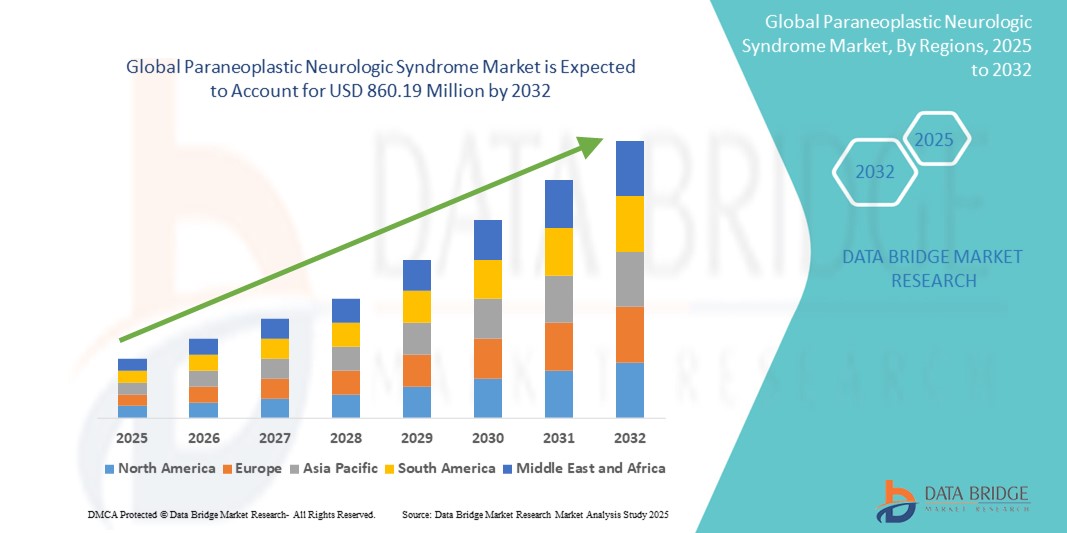
- The global paraneoplastic neurologic syndrome market size was valued at USD 547.91 million in 2024 and is expected to reach USD 860.19 million by 2032, at a CAGR of 5.80% during the forecast period
- The market growth is largely fueled by the increasing awareness and early diagnosis of Paraneoplastic Neurologic Syndrome (PNS), driven by advancements in neurological imaging, immunologic assays, and oncology screening tools. Improved healthcare access and the integration of AI in diagnostic technologies are enhancing detection rates across both developed and emerging markets
- Furthermore, rising demand for effective, targeted immunotherapies and user-friendly treatment solutions in hospital and clinical settings is establishing immunomodulatory agents and monoclonal antibodies as the treatment backbone for PNS. These converging factors—combined with expanding oncology pipelines, increased funding for rare neurological diseases, and growing interdisciplinary collaborations—are significantly accelerating the uptake of Paraneoplastic Neurologic Syndrome treatment solutions, thereby boosting overall industry growth
Paraneoplastic Neurologic Syndrome Market Analysis
- Paraneoplastic Neurologic Syndrome (PNS) is gaining increasing attention within the healthcare industry due to its complex autoimmune nature, often associated with underlying malignancies. As diagnostic capabilities and clinical awareness improve, the demand for early detection and targeted treatment is rising globally
- The growth of the PNS market is largely driven by increasing prevalence of cancer, heightened awareness among clinicians, rising demand for immunotherapy, and the growing availability of diagnostic biomarkers specific to paraneoplastic syndromes
- North America dominated the paraneoplastic neurologic syndrome market, accounting for the largest revenue share of 39.4% in 2024, attributed to early adoption of advanced diagnostic tools, robust cancer screening programs, strong research and development activities, and high healthcare spending
- Asia-Pacific is projected to be the fastest-growing region in the paraneoplastic neurologic syndrome market during the forecast period, driven by rising cancer incidence rates, increasing urbanization, improved healthcare infrastructure, and rising disposable incomes across countries such as China, India, and Japan
- The parenteral segment dominated the paraneoplastic neurologic syndrome market with a market share of 58.3% in 2024, owing to its rapid-effect delivery routes and suitability for administering critical therapies such as intravenous immunoglobulin (IVIg), corticosteroids, and plasmapheresis. This route is widely adopted in hospital settings and specialized neurology units for acute and severe cases requiring immediate therapeutic intervention
Report Scope and Paraneoplastic Neurologic Syndrome Market Segmentation
|
Attributes |
Paraneoplastic Neurologic Syndrome Key Market Insights |
|
Segments Covered |
|
|
Countries Covered |
North America
Europe
Asia-Pacific
Middle East and Africa
South America
|
|
Key Market Players |
|
|
Market Opportunities |
|
|
Value Added Data Infosets |
In addition to the insights on market scenarios such as market value, growth rate, segmentation, geographical coverage, and major players, the market reports curated by the Data Bridge Market Research also include in-depth expert analysis, pricing analysis, brand share analysis, consumer survey, demography analysis, supply chain analysis, value chain analysis, raw material/consumables overview, vendor selection criteria, PESTLE Analysis, Porter Analysis, and regulatory framework. |
Paraneoplastic Neurologic Syndrome Market Trends
“Rising Demand for Advanced and Integrated Treatment Approaches”
- A significant and accelerating trend in the global Paraneoplastic Neurologic Syndrome (PNS) market is the growing emphasis on integrated treatment strategies and patient-centric care models. This includes enhanced coordination across neurology, oncology, and immunology disciplines to deliver targeted and timely interventions
- For instance, multi-specialty clinics and research hospitals are adopting personalized treatment regimens based on tumor type and antibody profile, helping to improve neurological outcomes and reduce long-term disability. These approaches are now increasingly supported by centralized patient management platforms that improve decision-making and streamline care delivery
- Integration of advanced diagnostic technologies, such as neural-specific autoantibody panels and high-resolution imaging, is enabling earlier and more accurate diagnosis of PNS. This proactive identification is particularly important in cases where neurological symptoms precede cancer detection
- Precision medicine protocols are also emerging in the market, allowing physicians to tailor immunotherapy combinations—such as corticosteroids, plasmapheresis, and intravenous immunoglobulin (IVIG)—based on a patient's individual immune response and cancer subtype
- Centralized platforms for neurological monitoring and patient data integration now allow for synchronized treatment tracking across departments, enabling enhanced collaboration between oncologists and neurologists. These systems often facilitate real-time alerts, symptom monitoring, and predictive analytics to prevent relapse and improve long-term care planning
- The shift towards more intelligent, intuitive, and interconnected healthcare systems is fundamentally reshaping both provider workflows and patient expectations. Consequently, several biopharma companies are investing in biomarker discovery and companion diagnostics to support more targeted immunomodulatory therapies
- The demand for comprehensive, multidisciplinary care solutions is growing rapidly across healthcare institutions globally, as providers and patients increasingly prioritize convenience, clinical accuracy, and seamless care experiences for managing complex conditions such as Paraneoplastic Neurologic Syndrome
Paraneoplastic Neurologic Syndrome Market Dynamics
Driver
“Growing Need Due to Rising Prevalence and Early Diagnostic Demand”
- The increasing awareness and diagnosis of paraneoplastic neurologic syndrome (PNS), a group of rare disorders triggered by an immune response to cancer, is significantly driving demand for early and precise diagnostic tools and effective treatment options. The growing global cancer burden, particularly of small-cell lung cancer, breast cancer, and ovarian cancer, which are commonly associated with PNS, underlines the urgent need for advanced solutions
- For instance, in 2024, multiple leading research institutes initiated collaborative programs to develop antibody-based biomarker panels for the early detection of PNS, which is often misdiagnosed due to its nonspecific neurological symptoms. These initiatives are expected to accelerate the development of more reliable diagnostic pathways, thereby improving patient outcomes and fueling market expansion
- As neurologists and oncologists become more aware of PNS and its immune-mediated pathophysiology, there is an increasing trend towards integrating neuroimmunology into routine oncology diagnostics. This shift is propelling the demand for advanced serological and imaging diagnostics, as well as targeted immunotherapies
- Furthermore, increased funding from both government and private sectors to support rare neurological disease research is creating a favorable environment for the development and commercialization of novel PNS treatments, such as monoclonal antibodies, corticosteroids, immunoglobulins, and plasma exchange therapy
- The rising adoption of personalized medicine and a better understanding of the link between cancer and autoimmunity are also playing critical roles in advancing the management of PNS. Biopharmaceutical companies are increasingly investing in research targeting paraneoplastic syndromes as part of their broader neuro-oncology pipeline
Restraint/Challenge
“Low Awareness and High Diagnostic Complexity”
- A major challenge hindering the growth of the Paraneoplastic Neurologic Syndrome market is the lack of clinical awareness and diagnostic complexity associated with these conditions. Due to the rarity of PNS and its symptom overlap with other neurological disorders, misdiagnosis or delayed diagnosis is common, leading to poor prognosis and treatment delays
- Moreover, limited access to advanced diagnostic facilities, particularly in low- and middle-income countries, exacerbates the difficulty in detecting PNS. The lack of standardized protocols for antibody testing and neuroimaging interpretation further complicates timely diagnosis and treatment
- In addition, the high cost associated with immunotherapy and biologics, which are emerging as potential treatments for PNS, can limit accessibility for patients without comprehensive health insurance or those in regions with underfunded healthcare systems. This financial barrier can result in suboptimal treatment or complete lack of therapy, particularly for patients in developing countries
- Pharmaceutical companies also face regulatory hurdles in getting approvals for therapies targeting ultra-rare neurological conditions like PNS. The small patient population makes it challenging to conduct large-scale clinical trials, leading to slower market entry of novel therapeutics
- To overcome these challenges, a multipronged approach involving greater clinical education, international diagnostic guidelines, and more affordable immunotherapy options is essential. Collaborations between oncology centers, neurologists, and rare disease networks will also be key in advancing diagnosis and care standards
Paraneoplastic Neurologic Syndrome Market Scope
The market is segmented on the basis of type, treatment, diagnosis, symptoms, dosage, route of administration, end-users, and distribution channel.
- By Type
On the basis of type, the paraneoplastic neurologic syndrome market is segmented into limbic encephalitis, subacute sensory neuropathy, cerebellar degeneration, lambert-eaton myasthenic syndrome, and peripheral nerve hyperexcitability syndrome. Limbic Encephalitis held the largest market share of 34.6% in 2024, due to its prevalence and established diagnostic framework.
Lambert-Eaton Myasthenic Syndrome (LEMS) is projected to grow at the fastest CAGR of 8.3% from 2025 to 2032, owing to its rising association with small cell lung cancer and improved screening.
- By Treatment
On the basis of treatment, paraneoplastic neurologic syndrome market is segmented into medication, intravenous immunoglobulin (IVIg), plasmapheresis, physical therapy, and speech therapy. Medication dominated with a market share of 38.2% in 2024, led by immunosuppressive and anti-seizure therapies.
intravenous immunoglobulin (IVIg) is expected to witness the fastest CAGR of 9.1% from 2025 to 2032, due to its rising usage in acute management.
- By Diagnosis
On the basis of diagnosis, the paraneoplastic neurologic syndrome market is segmented into blood tests, lumbar puncture, imaging tests, and others. Imaging Tests accounted for the largest share of 35.8% in 2024, mainly MRI and PET scans used in neurological evaluation.
Blood Tests is expected to witness the fastest CAGR from 2025 to 2032, benefiting from increasing antibody panel use.
- By Symptoms
On the basis of symptoms, the paraneoplastic neurologic syndrome market is segmented into gait disturbance, decreased muscle tone, decreased speech intelligibility, dysphagia, fine motor coordination, visual problems, memory loss, dizziness, sensory deficits, epileptic seizures, and others. Memory Loss dominated the market in 2024, due to their early onset and diagnostic relevance.
Epileptic Seizures are projected to grow at the fastest CAGR of 8.6% from 2025 to 2032, as their association with autoimmune encephalitis becomes clearer.
- By Dosage
On the basis of dosage, the market is segmented into injection, tablets, and others. The injection segment held the largest market share of 54.7% in 2024, driven by the widespread use of intravenous immunoglobulin (IVIg) and corticosteroids for acute symptom management.
The tablets segment is anticipated to grow at the fastest CAGR of 6.9% from 2025 to 2032, particularly in outpatient care settings due to their convenience and suitability for long-term treatment protocols.
- By Route of Administration
On the basis of route of administration, the market is segmented into oral, parenteral, and others. The parenteral segment dominated with a market share of 58.3% in 2024, attributed to its effectiveness in delivering rapid symptom relief via IVIg and other injectables.
The oral segment is expected to witness the fastest CAGR from 2025 to 2032, since it is gaining traction for long-term symptom management due to ease of administration and patient adherence.
- By End-Users
On the basis of end-users, the market is segmented into clinic, hospital, and others. The hospital segment held the largest share of 61.4% in 2024, supported by advanced infrastructure for diagnosis and intensive therapies such as IVIg and plasmapheresis.
The clinic segment is projected to grow at the fastest CAGR of 7.2% from 2025 to 2032 as outpatient neurology and early intervention services expand.
- By Distribution Channel
On the basis of distribution channel, the market is segmented into hospital pharmacy, retail pharmacy, and online pharmacy. The hospital pharmacy segment led the market with a share of 52.1% in 2024, owing to their centralized role in dispensing high-cost and specialty drugs like IVIg.
The online pharmacy segment is projected to grow at the fastest CAGR of 9.5% from 2025 to 2032, driven by rising digital health adoption and improved access to chronic care medications.
Paraneoplastic Neurologic Syndrome Market Regional Analysis
- North America dominated the paraneoplastic neurologic syndrome market with the largest revenue share of 39.4% in 2024, driven by strong healthcare infrastructure
- Early disease diagnosis, advanced neuroimmunology research, and significant awareness among clinicians
- The region benefits from robust funding for oncology and neurology research, enabling the rapid deployment of diagnostic tools such as antibody testing, MRI, and PET scans for PNS detection
U.S. Paraneoplastic Neurologic Syndrome Market Insight
The U.S. paraneoplastic neurologic syndrome market captured 82.3% of the North American share in 2024, owing to the country’s advanced cancer care infrastructure, increasing incidence of cancer-linked autoimmune disorders, and high awareness among healthcare professionals. The adoption of paraneoplastic antibody panels, access to immunotherapies (like corticosteroids and IVIG), and dedicated neuro-oncology programs in major hospitals continue to drive market growth.
Europe Paraneoplastic Neurologic Syndrome Market Insight
The Europe paraneoplastic neurologic syndrome market is projected to expand at a CAGR of 7.8% from 2025 to 2032, driven by the region’s emphasis on early cancer detection and growing integration of neuroimmunology in clinical settings. Countries such as Germany, France, and the U.K. are witnessing rising cases, better diagnostic availability, and improved cross-disciplinary coordination between neurologists and oncologists.
U.K. Paraneoplastic Neurologic Syndrome Market Insight
The U.K. paraneoplastic neurologic syndrome market is expected to grow at a CAGR of 8.1% during the forecast period, driven by growing awareness, cancer screening programs, and enhanced neuroimmunological diagnostic capabilities in NHS hospitals. The region is also adopting AI-based medical diagnostics to assist in early identification of rare disorders like PNS.
Germany Paraneoplastic Neurologic Syndrome Market Insight
The Germany paraneoplastic neurologic syndrome market is anticipated to register a CAGR of 7.9%, owing to the country’s strong pharmaceutical industry, access to advanced neuroimaging and immunodiagnostic platforms, and growing collaboration between neurology and oncology departments.
Asia-Pacific Paraneoplastic Neurologic Syndrome Market Insight
The Asia-Pacific paraneoplastic neurologic syndrome market is poised to grow at the fastest CAGR of 11.6% from 2025 to 2032, fueled by the growing burden of cancer, improving healthcare infrastructure, and increased investment in rare disease diagnostics. China, Japan, and India are witnessing accelerated adoption of neurodiagnostic technologies.
Japan Paraneoplastic Neurologic Syndrome Market Insight
The Japan paraneoplastic neurologic syndrome market is expected to grow at a CAGR of 10.9%, supported by rapid urbanization, an aging population, and strong adoption of advanced medical imaging and immunotherapy. The increasing number of neurology-specialized clinics and integration with oncology care are further boosting market demand.
China Paraneoplastic Neurologic Syndrome Market Insight
The China paraneoplastic neurologic syndrome market accounted for 36.5% of the Asia-Pacific market share in 2024, due to the country’s rising cancer incidence, growing adoption of advanced diagnostics, and expansion of high-end specialty hospitals. Government healthcare reforms and local biotech developments are also accelerating accessibility.
Paraneoplastic Neurologic Syndrome Market Share
The paraneoplastic neurologic syndrome industry is primarily led by well-established companies, including:
- F. Hoffmann-La Roche Ltd. (Switzerland)
- Novartis AG (Switzerland)
- AstraZeneca (U.K.)
- Johnson & Johnson Services, Inc. (U.S.)
- AbbVie Inc. (U.S.)
- Bristol-Myers Squibb Company (U.S.)
- Pfizer Inc. (U.S.)
- Sanofi (France)
- Aurobindo Pharma (India)
- Viatris Inc. (U.S.)
- GSK plc (U.K.)
- Cipla (India)
- Sun Pharmaceutical Industries Ltd. (India)
- Abbott (U.S.)
- Teva Pharmaceutical Industries Ltd. (Israel)
- Bausch Health Companies Inc. (Canada)
- UCB S.A. (Belgium)
- S&D Pharma Limited (Romania)
- Jazz Pharmaceuticals, Inc. (Ireland)
- Takeda Pharmaceutical Company Limited (Japan)
- Sumitomo Pharma Co., Ltd. (Japan)
- Biocon (India)
- Merck KGaA (Germany)
- LEO Pharma A/S (Denmark)
Latest Developments in Global Paraneoplastic Neurologic Syndrome Market
- In September 2024, a team led by Mayo Clinic (including Zhao‑Fleming, Dubey, Zekeridou, and Pittock) published a comprehensive analysis introducing the PNS‑CARE diagnostic criteria, a standardized scoring system to improve accuracy in diagnosing Paraneoplastic Neurologic Syndromes. This milestone enhances diagnostic consistency in clinical practice and research.
- In April 2024, Mohamed Rezk and colleagues identified SKOR2‑IgG as a novel biomarker for PNS, enabling earlier diagnosis and better distinction from other neurologic syndromes. This discovery strengthens Mayo Clinic’s biomarker-led precision medicine efforts.
- In June 2024, Frontiers in Immunology published a study detailing clinical characteristics and immunotherapy response in PNS patients, revealing correlations between high‑risk autoantibody profiles and therapeutic outcomes. This provides pivotal insights for tailoring immunotherapy.
- In 2024, Thermo Fisher Scientific launched advanced multiplex immunoassay panels (e.g., ProcartaPlex Luminex panels) designed to detect multiple onconeural and neuroinflammation markers from CSF and plasma—streamlining biomarker profiling in PNS research

- Interactive Data Analysis Dashboard
- Company Analysis Dashboard for high growth potential opportunities
- Research Analyst Access for customization & queries
- Competitor Analysis with Interactive dashboard
- Latest News, Updates & Trend analysis
- Harness the Power of Benchmark Analysis for Comprehensive Competitor Tracking
Data collection and base year analysis are done using data collection modules with large sample sizes. The stage includes obtaining market information or related data through various sources and strategies. It includes examining and planning all the data acquired from the past in advance. It likewise envelops the examination of information inconsistencies seen across different information sources. The market data is analysed and estimated using market statistical and coherent models. Also, market share analysis and key trend analysis are the major success factors in the market report. To know more, please request an analyst call or drop down your inquiry.
The key research methodology used by DBMR research team is data triangulation which involves data mining, analysis of the impact of data variables on the market and primary (industry expert) validation. Data models include Vendor Positioning Grid, Market Time Line Analysis, Market Overview and Guide, Company Positioning Grid, Patent Analysis, Pricing Analysis, Company Market Share Analysis, Standards of Measurement, Global versus Regional and Vendor Share Analysis. To know more about the research methodology, drop in an inquiry to speak to our industry experts.
Data Bridge Market Research is a leader in advanced formative research. We take pride in servicing our existing and new customers with data and analysis that match and suits their goal. The report can be customized to include price trend analysis of target brands understanding the market for additional countries (ask for the list of countries), clinical trial results data, literature review, refurbished market and product base analysis. Market analysis of target competitors can be analyzed from technology-based analysis to market portfolio strategies. We can add as many competitors that you require data about in the format and data style you are looking for. Our team of analysts can also provide you data in crude raw excel files pivot tables (Fact book) or can assist you in creating presentations from the data sets available in the report.












