


What is the Pea Protein Market Size and Growth Rate?
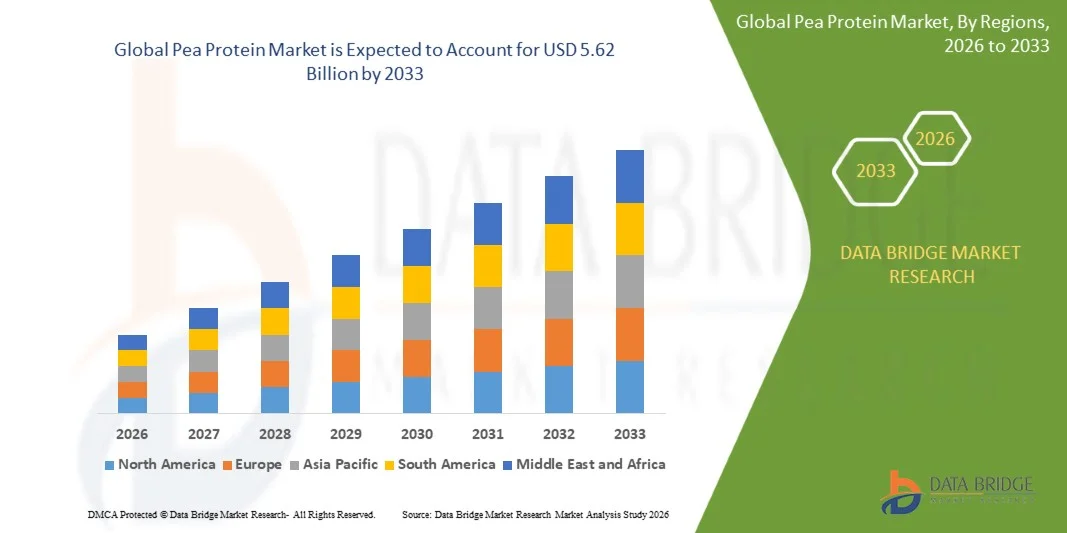
- As per Data Bridge Market Research analysis, the pea protein market was valued at USD 2.53 billion in 2025 and is projected to reach USD 5.62 billion by 2033, growing at a CAGR of 10.50% from 2026 to 2033.
- The market is experiencing consistent growth driven by rising demand for plant-based and vegan protein sources, increasing health and wellness awareness, and expanding use of pea protein in meat alternatives, dietary supplements, beverages, and functional foods.
- The increasing shift toward sustainable and allergen-free protein ingredients, combined with growing consumer preference for vegan and vegetarian diets, is encouraging food and beverage manufacturers to adopt pea protein. Isolates, concentrates, and textured pea protein are increasingly being incorporated into sports nutrition, plant-based meat, bakery products, and beverages, offering versatile and nutritious alternatives to conventional animal-based proteins.
Market Size & Forecast
- Global Market Value (2025): USD 2.53 Billion
- Expected Market Value (2033): USD 5.62 Billion
- Forecast CAGR (2026–2033): 10.50%
- Leading Region in 2025: North America
- Fastest Growing Region: Asia Pacific
What are the Major Takeaways of the Pea Protein Market?
- North America dominated the pea protein market with the largest revenue share of 35.85% in 2025, supported by strong adoption of plant-based foods, established sports nutrition demand, and expanding use of pea protein in meat and dairy alternatives.
- Asia-Pacific is expected to be the fastest-growing region at a CAGR of 6.87% from 2026 to 2033, fueled by rising health awareness, increasing demand for plant-based nutrition, and expanding food and beverage industries across China, India, and other Asian markets.
- The yellow split peas segment led the market with a 62.4% share in 2025, driven by their established use as a primary raw material for pea protein production.
- Lentils are the fastest-growing source type, projected to register a CAGR of 8.10%, reflecting the surge in interest in diversifying plant-protein raw materials.
- The isolates segment dominated the type category with a 43.8% revenue share in 2025, led by its high protein concentration and broad functionality across food and nutrition applications.
- Dry textured pea protein accounted for 72.4% of the market share in 2025, preferred by its advantages in storage, transportation, handling, and shelf stability.
- The performance nutrition segment is the fastest-growing application category, with a CAGR of 8.9%, driven by rising participation in fitness and sports activities.
Report Scope and Pea Protein Market Segmentation
|
Attributes |
Pea Protein Key Market Insights |
|
Segments Covered |
|
|
Countries Covered |
North America
Europe
Asia-Pacific
Middle East and Africa
South America
|
|
Key Market Players |
|
|
Market Opportunities |
|
|
Value Added Data Infosets |
In addition to the insights on market scenarios such as market value, growth rate, segmentation, geographical coverage, and major players, the market reports curated by the Data Bridge Market Research also include in-depth expert analysis, pricing analysis, brand share analysis, consumer survey, demography analysis, supply chain analysis, value chain analysis, raw material/consumables overview, vendor selection criteria, PESTLE Analysis, Porter Analysis, and regulatory framework. |
What is the Key Trend in the Pea Protein Market?
- Demand for clean-label plant-based protein is accelerating pea protein adoption across meat alternatives, dairy alternatives, sports nutrition, and functional beverages, as consumers increasingly seek sustainable, allergen-friendly, and nutritionally attractive protein sources worldwide.
- For instance, in June 2025, Roquette launched NUTRALYS T PEA 700XC, a textured pea protein containing 70% protein, designed as a large-chunk ingredient for plant-based meat, fish, and ready-meal applications. The launch reflects the trend toward improving the texture, functionality, and versatility of pea protein in mainstream plant-based foods.
- Manufacturers are improving pea protein taste, texture, solubility, and functionality to expand applications beyond protein powders into mainstream foods and beverages, addressing sensory limitations that previously restricted broader consumer acceptance among mainstream consumers globally.
- Textured pea protein is gaining traction as manufacturers seek meat-like structures and simpler formulations for plant-based foods, while isolates remain important for high-protein beverages and supplements because of concentration, functionality, and nutritional performance.
- The growing emphasis on protein-rich diets is further supporting pea protein incorporation into functional nutrition products, particularly as consumers seek convenient plant-based sources that support fitness, wellness, and daily nutritional requirements across markets.
- For instance in February 2026, Roquette launched NUTRALYS Pea 850F, a new pea protein isolate developed to provide a cleaner, more neutral taste in plant-based formulations. Roquette stated that three in five consumers worldwide are actively increasing their protein intake, highlighting the growing demand for high-protein products with improved sensory characteristics.
- As food manufacturers continue prioritizing cleaner labels, improved sensory performance, and higher protein content, innovation in pea protein ingredients is expected to accelerate, reinforcing pea protein as a versatile ingredient across mainstream food and nutrition applications.
What are the Key Drivers of the Pea Protein Market?
- The rapid expansion of plant-based diets and growing consumer awareness of sustainable nutrition are significantly increasing demand for pea protein, particularly because it provides a plant-derived, allergen-friendly protein option suitable for numerous food formulations worldwide.
- For instance, in July 2025, McDonald’s India launched a soy- and pea-protein slice, developed with Indian government food scientists, in response to growing consumer interest in protein-rich foods. The product sold 32,000 units within 24 hours, with most of the company’s more than 400 outlets initially running out of stock, demonstrating strong consumer demand for convenient plant-based protein options.
- Food and beverage manufacturers are integrating pea protein into meat alternatives, dairy alternatives, beverages, bakery products, snacks, and nutritional supplements to satisfy increasing demand for protein-rich products while reducing dependence on conventional animal-derived protein ingredients.
- Increasing investments in regional pea protein production are also strengthening supply capabilities, reducing dependence on imports, and encouraging manufacturers to develop locally sourced ingredients for growing plant-based food and nutrition markets.
- For instance, in March 2024, Oscar Mayer introduced its first plant-based NotHotDogs and NotSausages, formulated using ingredients including pea protein, bamboo fiber, and mushroom. The products were scheduled for nationwide U.S. grocery distribution across approximately 2,000 stores, highlighting the growing incorporation of pea protein into mainstream meat-alternative products.
- With increasing consumer preference for plant-based nutrition, expanding food applications, and substantial investment in processing infrastructure, pea protein demand is expected to remain strong across food, beverage, sports nutrition, and functional-food markets.
Which Factors are Challenging the Growth of the Pea Protein Market?
- Pea protein manufacturers continue to face challenges related to characteristic beany flavors, bitterness, poor solubility, and texture, which can negatively affect the sensory quality of finished products and limit consumer acceptance in certain mainstream food applications.
- For instance, in June 2024, the U.S. International Trade Commission reported that severe drought conditions in major dry-pea-growing regions of the Upper Midwest during 2021–2022 caused shortages and higher prices for dry peas, creating a raw-material supply challenge for pea protein processors.
- Advanced processing and formulation technologies required to improve taste, functionality, and protein quality can increase manufacturing complexity and production costs, creating challenges for manufacturers attempting to deliver affordable pea protein products at large commercial volumes.
- Supply-chain disruptions and production bottlenecks can also constrain availability, particularly when manufacturers face fluctuations in pea supplies, processing capacity, inventory levels, and international trade conditions affecting the availability of high-protein-content pea ingredients.
- For instance, in August 2021, Roquette reported that poor pea yields in Europe, combined with severe wet-weather damage to the French crop, created a shortage of peas amid strong demand for pea protein
- These sensory, processing, cost, and supply-chain challenges can increase formulation expenses and restrict consistent ingredient availability, particularly for smaller manufacturers and companies entering price-sensitive markets where consumers remain highly sensitive to product prices.
How is the Pea Protein Market Segmented?
The pea protein market is segmented on the basis of source, type, form, application, and nature
- By Source
On the basis of source, the pea protein market is segmented into yellow split peas, chickpeas, and lentils. The yellow split peas segment dominated the market with 62.4% share in 2025, owing to their established use as a primary raw material for pea protein production. Yellow split peas offer a strong protein profile and are widely processed into protein isolates, concentrates, and textured ingredients. Their established agricultural supply chain supports consistent availability for large-scale protein manufacturers. They are also suitable for applications ranging from meat alternatives to sports nutrition and functional foods. Growing consumer preference for plant-based and sustainable protein sources is further supporting demand for yellow split pea-derived ingredients.
The lentils segment is projected to register the fastest growth at a CAGR of 8.10% from 2026 to 2033, supported by increasing interest in diversifying plant-protein raw materials. Lentils provide a valuable source of plant-based protein and can be incorporated into protein concentrates and other functional ingredients. Growing investments in pulse-processing technologies are improving the commercial potential of lentil-based protein extraction. Manufacturers are increasingly exploring alternative pulse sources to reduce dependence on conventional pea raw materials. Rising demand for sustainable and nutritionally dense ingredients is also encouraging the development of lentil-derived protein products.
- By Type
On the basis of type, the pea protein market is segmented into isolates, concentrates, and textured. The isolates segment dominated the market with 43.8% share in 2025, owing to its high protein concentration and broad functionality across food and nutrition applications. Pea protein isolates are particularly attractive for products requiring substantial protein fortification. They are widely incorporated into sports nutrition products, protein beverages, dietary supplements, and functional foods. Their nutritional profile and relatively high protein content make them suitable for health-conscious consumers seeking plant-based alternatives. Improvements in processing technologies are also helping manufacturers improve taste, solubility, and formulation performance.
The textured segment is projected to register the fastest growth at a CAGR of 9.10% from 2026 to 2033, driven by expanding demand for plant-based meat alternatives. Textured pea protein provides a fibrous structure that can replicate some of the texture and bite of conventional meat. It is increasingly used in burgers, nuggets, sausages, mince, and other meat-alternative products. Advances in extrusion and texturization technologies are improving the sensory characteristics of these products. Growing investments by food manufacturers in plant-based product portfolios are creating additional opportunities for textured pea protein. Increasing flexitarian, vegetarian, and vegan consumption is further expanding the potential customer base.
- By Form
On the basis of form, the pea protein market is segmented into dry textured pea protein and wet textured pea protein. The dry textured pea protein segment dominated the market with 72.4% share in 2025, supported by its advantages in storage, transportation, handling, and shelf stability. Dry textured protein can be stored and transported without the same requirements associated with high-moisture ingredients. This makes it attractive to manufacturers operating large-scale and geographically distributed supply chains. It is widely used in meat substitutes and other food formulations where the ingredient can be hydrated during processing. Its relatively convenient handling characteristics also contribute to lower logistical complexity.
The wet textured pea protein segment is projected to register the fastest growth at a CAGR of 8.9% from 2026 to 2033, supported by increasing demand for high-moisture meat alternatives. Wet texturization enables manufacturers to produce products with a moist, fibrous structure that can more closely resemble conventional meat. This is particularly beneficial for premium burgers, nuggets, sausages, and other ready-to-cook plant-based products. Technological improvements in extrusion and protein structuring are enhancing the quality and consistency of wet-textured products. Food manufacturers are increasingly investing in processing capabilities that can deliver improved taste and texture. Growing consumer expectations for more realistic meat alternatives are therefore supporting demand for wet textured pea protein.
- By Application
On the basis of application, the pea protein market is segmented into meat substitutes, performance nutrition, functional foods, snacks, beverages, bakery products, and confectionery. The meat substitutes segment dominated the market with 30.32% share in 2025, driven by increasing consumer adoption of plant-based meat alternatives. Pea protein provides both nutritional and functional benefits in burgers, nuggets, sausages, and other meat-replacement products. Its ability to contribute protein while supporting desirable product texture makes it attractive to food manufacturers. Increasing flexitarian and vegan consumption is expanding demand for plant-based meat products across retail and foodservice channels. Manufacturers are also improving formulations to address taste, texture, and mouthfeel limitations.
The performance nutrition segment is projected to register the fastest growth at a CAGR of 8.9% from 2026 to 2033, supported by rising participation in fitness and sports activities. Consumers are increasingly seeking convenient sources of protein to support muscle recovery, weight management, and overall nutritional intake. Pea protein provides a plant-based alternative to whey and other animal-derived protein ingredients. It is increasingly incorporated into protein powders, nutrition bars, shakes, and specialized sports-nutrition products. Growing interest in vegan and vegetarian fitness diets is further expanding the consumer base for plant-based performance nutrition. Product innovation focused on improved flavor, solubility, and amino-acid profiles is also supporting adoption.
- By Nature
On the basis of nature, the pea protein market is segmented into organic and conventional. The conventional segment dominated the market with 85% share in 2025, supported by its broader availability and lower production costs. Conventional pea protein is widely used in mainstream food and beverage manufacturing because manufacturers can source it at relatively competitive prices. Its established agricultural and processing infrastructure also enables large-volume production. The segment is extensively used in meat substitutes, beverages, bakery products, snacks, and nutritional formulations. Conventional ingredients remain particularly important in price-sensitive mass-market applications.
The organic segment is projected to register the fastest growth at a CAGR of 8.12% from 2026 to 2033, driven by increasing consumer preference for clean-label and sustainably sourced ingredients. Organic pea protein is increasingly used in premium nutritional products, functional foods, and plant-based formulations. Consumers are showing greater interest in products associated with organic certification, traceability, and environmentally responsible production. Premium food and nutrition brands are therefore expanding their organic protein portfolios. Although organic pea protein generally involves higher production and certification costs, its premium positioning provides manufacturers with opportunities for product differentiation.
Which Region Holds the Largest Share of the Pea Protein Market?
- North America dominated the pea protein market with the largest revenue share of 35.85% in 2025, supported by strong adoption of plant-based foods, established sports nutrition demand, and expanding use of pea protein in meat and dairy alternatives.
- The region also benefits from increasing consumption of protein-rich snacks, energy bars, beverages, and meat substitutes, along with a strong food-processing infrastructure and established pea-protein supply chain. Growing consumer preference for healthy, sustainable, and allergen-free protein ingredients continues to strengthen North America's leading position in the global market.
U.S. Pea Protein Market Insight
The U.S. pea protein market is witnessing strong growth due to rising consumer demand for plant-based protein, functional foods, and protein-enriched nutrition products. The country’s mature food and beverage industry, along with increasing adoption of pea protein in meat substitutes, sports nutrition, beverages, and snacks, is driving market demand across diverse applications. In addition, growing consumer preference for sustainable, clean-label, and allergen-friendly protein ingredients is accelerating the incorporation of pea protein into new product formulations.
Asia-Pacific Pea Protein Market Insight
The Asia-Pacific pea protein market is expected to witness rapid growth, driven by increasing health awareness, expanding food and beverage industries, and rising demand for plant-based protein products across countries such as China, India, and Japan. Growing consumer interest in protein-rich foods, nutritional beverages, and meat alternatives is supporting regional market expansion. In addition, increasing investments in plant-based food manufacturing, improving distribution networks, and growing adoption of Western dietary trends are accelerating pea protein consumption across commercial and retail food sectors.
Japan Pea Protein Market Insight
The Japan pea protein market is witnessing consistent growth due to rising demand for plant-based and functional food products, increasing health consciousness, and growing interest in alternative protein sources. Food manufacturers are increasingly incorporating pea protein into beverages, nutritional products, meat substitutes, and snacks to address changing consumer dietary preferences. Moreover, the country’s focus on healthy aging, nutrition, product innovation, and sustainable food solutions is further contributing to market growth.
China Pea Protein Market Insight
The China pea protein market is growing rapidly, driven by increasing health awareness, expanding demand for plant-based foods, and rising consumption of protein-enriched products. Growing adoption of meat substitutes, nutritional beverages, sports nutrition products, and functional foods is significantly boosting market demand. In addition, increasing investments in plant-based food production, expanding food-processing capabilities, and growing consumer interest in sustainable protein sources are positioning China as one of the fastest-growing markets for pea protein globally.
U.K. Pea Protein Market Insight
The U.K. pea protein market is experiencing steady growth, supported by rising adoption of plant-based foods, increasing demand for sustainable protein ingredients, and expanding vegan and flexitarian consumer groups. Increasing use of pea protein in meat alternatives, sports nutrition, beverages, snacks, and functional foods is contributing to market growth. Furthermore, growing consumer preference for clean-label products and environmentally responsible food choices is encouraging manufacturers to expand pea-protein-based product portfolios, positioning the U.K. as an important market for plant-based protein innovation.
Germany Pea Protein Market Insight
The Germany pea protein market is expanding steadily due to the country’s strong food-processing industry, increasing demand for plant-based alternatives, and growing consumer focus on sustainable nutrition. Food manufacturers and nutrition companies are increasingly utilizing pea protein in meat substitutes, functional foods, beverages, and sports nutrition products. Continuous product innovation, rising flexitarian consumption, and growing interest in environmentally responsible protein sources are further driving market growth in Germany.
Which are the Top Companies in Pea Protein Market?
The pea protein industry is primarily led by well-established companies, including:
- Roquette Frères (France)
- Ingredion Incorporated (U.S.)
- Cargill, Incorporated (U.S.)
- ADM (U.S.)
- COSUCRA (Belgium)
- Glanbia plc (Ireland)
- Kerry Group plc (Ireland)
- Axiom Foods, Inc. (U.S.)
- The Scoular Company (U.S.)
- SOTEXPRO (France)
- Nutri-Pea LP (Canada)
- Emsland Group (Germany)
- Shandong Jianyuan Foods Co., Ltd. (China)
- Yantai Shuangta Food Co., Ltd. (China)
- FENCHEM (Canada)
- Vestkorn Milling AS (Norway)
- A&B Ingredients, Inc. (U.S.)
- Farbest Brands (U.S.)
- SHANDONG HUA-THAI FOODPRODUCTS CO., LTD. (China)
- Yantai Oriental Protein Tech Co., Ltd. (China)
What are Latest Developments in Pea Protein Market?
- In March 2025, Daily Harvest launched its Organic Pea Protein Powder, designed as a convenient protein addition for its Smoothies and Breakfast Bowls. The product was introduced in response to growing consumer demand for convenient, high-quality protein options and reflects the increasing incorporation of pea protein into everyday nutrition products. The launch also expands the use of pea protein beyond traditional meat alternatives into convenient meal and beverage formats, supporting broader consumer adoption of plant-based protein.
- In July 2024, Ingredion launched VITESSENCE Pea 100 HD, a pea protein ingredient developed specifically for cold-pressed nutrition bars in the U.S. and Canada. The ingredient was designed to maintain softness throughout shelf life while delivering improved texture and sensory characteristics. It expands Ingredion’s North American-grown and produced protein portfolio and provides food manufacturers with a pea-protein solution for high-protein snack formulations. The development highlights continued innovation aimed at overcoming texture and sensory challenges associated with plant proteins.
- In February 2023, Roquette expanded its NUTRALYS plant protein portfolio with four new pea protein ingredients, including an isolate, hydrolysate, and two textured pea proteins. The ingredients were developed to improve taste, texture, and formulation flexibility in plant-based foods and high-protein nutritional products. The new solutions target applications such as nutritional bars, protein beverages, plant-based meat, and dairy alternatives. This development demonstrates continued product innovation focused on improving the functionality and sensory performance of pea protein ingredients.
- In July 2022, Burcon NutraScience and its joint venture Merit Functional Foods launched Peazazz C pea protein, a new ingredient designed for food and beverage applications. The ingredient was developed to provide improved solubility and a smooth, creamy texture, particularly for ready-to-drink beverages. The launch addressed formulation challenges associated with pea protein and targeted the rapidly expanding plant-based beverage category. The development strengthened the availability of higher-functionality pea protein ingredients for food and beverage manufacturers.
- In December 2021, Belgian startup Tiptoh partnered with SIG and Olympia Dairy to launch a new range of pea-protein beverages in Belgium. The products represented a new application for pea protein in the Belgian plant-based beverage market, which had traditionally been dominated by soy- and almond-based drinks. The partnership combined Tiptoh’s product concept with SIG’s packaging and filling capabilities and Olympia Dairy’s manufacturing expertise. The launch demonstrated the expansion of pea protein into mainstream dairy-alternative beverage applications and supported greater diversification of plant-based protein product

- Interactive Data Analysis Dashboard
- Company Analysis Dashboard for high growth potential opportunities
- Research Analyst Access for customization & queries
- Competitor Analysis with Interactive dashboard
- Latest News, Updates & Trend analysis
- Harness the Power of Benchmark Analysis for Comprehensive Competitor Tracking
Global Pea Protein Market, Supply Chain Analysis and Ecosystem Framework
To support market growth and help clients navigate the impact of geopolitical shifts, DBMR has integrated in-depth supply chain analysis into its Global Pea Protein Market research reports. This addition empowers clients to respond effectively to global changes affecting their industries. The supply chain analysis section includes detailed insights such as Global Pea Protein Market consumption and production by country, price trend analysis, the impact of tariffs and geopolitical developments, and import and export trends by country and HSN code. It also highlights major suppliers with data on production capacity and company profiles, as well as key importers and exporters. In addition to research, DBMR offers specialized supply chain consulting services backed by over a decade of experience, providing solutions like supplier discovery, supplier risk assessment, price trend analysis, impact evaluation of inflation and trade route changes, and comprehensive market trend analysis.
Data collection and base year analysis are done using data collection modules with large sample sizes. The stage includes obtaining market information or related data through various sources and strategies. It includes examining and planning all the data acquired from the past in advance. It likewise envelops the examination of information inconsistencies seen across different information sources. The market data is analysed and estimated using market statistical and coherent models. Also, market share analysis and key trend analysis are the major success factors in the market report. To know more, please request an analyst call or drop down your inquiry.
The key research methodology used by DBMR research team is data triangulation which involves data mining, analysis of the impact of data variables on the market and primary (industry expert) validation. Data models include Vendor Positioning Grid, Market Time Line Analysis, Market Overview and Guide, Company Positioning Grid, Patent Analysis, Pricing Analysis, Company Market Share Analysis, Standards of Measurement, Global versus Regional and Vendor Share Analysis. To know more about the research methodology, drop in an inquiry to speak to our industry experts.
Data Bridge Market Research is a leader in advanced formative research. We take pride in servicing our existing and new customers with data and analysis that match and suits their goal. The report can be customized to include price trend analysis of target brands understanding the market for additional countries (ask for the list of countries), clinical trial results data, literature review, refurbished market and product base analysis. Market analysis of target competitors can be analyzed from technology-based analysis to market portfolio strategies. We can add as many competitors that you require data about in the format and data style you are looking for. Our team of analysts can also provide you data in crude raw excel files pivot tables (Fact book) or can assist you in creating presentations from the data sets available in the report.













