What is the Pediatric Congenital Athymia Treatment Market Size and Growth Rate?
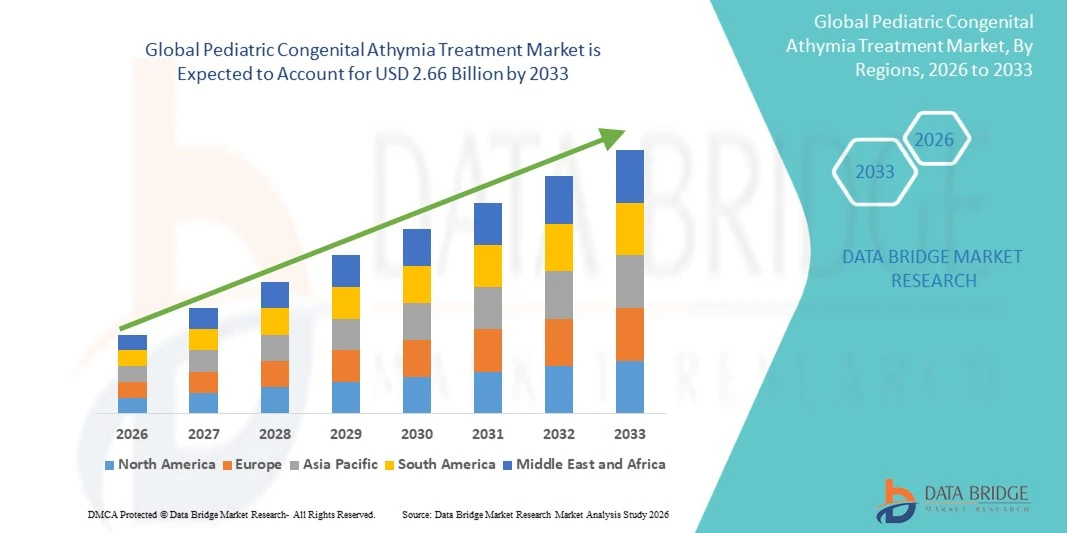
- As per Data Bridge Market Research analysis, the pediatric congenital athymia treatment market was valued at USD 1.94 billion in 2025 and is projected to reach USD 2.66 billion by 2033, growing at a CAGR of 4.00% from 2026 to 2033.
- The market is growing at a steady pace, supported by wider newborn screening and genetic testing that identify affected infants earlier, the established position of thymus tissue implantation as first-line therapy, favourable orphan-disease policy and payer coverage, and ongoing clinical evidence that refines how and when treatment is delivered.
- Congenital athymia is an ultra-rare condition in which children are born without a thymus, leaving them without the organ that develops T cells and exposing them to life-threatening infections and immune dysregulation; without treatment, most affected children die in early childhood. Thymus tissue implantation, in which processed donor thymus tissue is surgically implanted into the recipient, is the recommended first-line therapy, and in the U.S., it is delivered as an FDA-approved regenerative tissue-based product. Supportive measures, including immunoglobulin replacement and anti-infective prophylaxis, and hematopoietic stem cell transplantation in selected cases, complete the treatment landscape.
Market Size & Forecast
- Global Market Value (2025): USD 1.94 Billion
- Expected Market Value (2033): USD 2.66 Billion
- Forecast CAGR (2026–2033): 4.00%
- Leading Region in 2025: North America
- Fastest Growing Region: Asia-Pacific
What are the Major Takeaways of the Pediatric Congenital Athymia Treatment Market?
- North America dominated the global pediatric congenital athymia treatment market with the largest revenue share of 44.86% in 2025, supported by the availability of the only FDA-approved thymus tissue therapy, established newborn screening for T-cell lymphopenia, and a concentration of specialized pediatric immunology and transplant centers.
- Asia-Pacific is expected to be the fastest-growing region at a CAGR of 5.6% from 2026 to 2033, driven by expanding newborn screening and genetic testing programmes, rising awareness of rare pediatric immunodeficiencies, and growing investment in specialized pediatric care.
- The thymus tissue implantation segment led the treatment type category with a 42.63% share in 2025, owing to its recommended status as first-line therapy, its ability to reconstitute durable T-cell immunity, and its position as the only FDA-approved therapy for immune reconstitution in congenital athymia.
- Emerging regenerative and cell-based therapies are the fastest-growing treatment type, projected to register a CAGR of 9.8% from a small base, reflecting research interest in reducing dependence on donor thymus tissue.
- The complete DiGeorge syndrome segment dominated the etiology category with a 68.92% revenue share in 2025, as it is the most common cause of congenital athymia, while FOXN1 deficiency and other genetic causes are the fastest-growing category, driven by broader use of genetic testing.
- Neonates and infants accounted for 61.28% of the market by age group in 2025, reflecting evidence that younger age at implantation is associated with better immune reconstitution and the push toward early diagnosis.
- The specialty pharmacies segment is fastest-growing distribution channel category with a CAGR of 5.4%, driven by growing home-based delivery of immunoglobulin replacement therapies and long-term prophylactic medicines used in the ongoing management of children with athymia.
Report Scope and Pediatric Congenital Athymia Treatment Market Segmentation
|
Attributes |
Pediatric Congenital Athymia Treatment Key Market Insights |
|
Segments Covered |
|
|
Countries Covered |
North America
Europe
Asia-Pacific
Middle East and Africa
South America
|
|
Key Market Players |
|
|
Market Opportunities |
|
|
Value Added Data Infosets |
In addition to the insights on market scenarios such as market value, growth rate, segmentation, geographical coverage, and major players, the market reports curated by the Data Bridge Market Research also include in-depth expert analysis, patient epidemiology, pipeline analysis, pricing analysis, and regulatory framework. |
What is the Key Trend in the Pediatric Congenital Athymia Treatment Market?
- The key trend in the pediatric congenital athymia treatment market is the maturing clinical evidence for cultured thymus tissue implantation, with increasing focus on treatment timing, immune reconstitution, and procedural safety. As congenital athymia is an ultra-rare disorder, additional clinical datasets are helping physicians better understand which patient and treatment characteristics are associated with immune recovery and how implantation can be performed safely.
- For instance, in May 2026, Samantha Cresoe-Ortiz and colleagues published “Rebooting immunity in congenital athymia: Factors impacting reconstitution with thymus implantation” in the Journal of Human Immunity. The study of 76 children found that younger age at implantation was associated with improved immune reconstitution, while reconstitution was not associated with immune-suppressing therapies or donor-recipient HLA matching.
- For instance, in July 2026, Felix R. De Bie and colleagues published “Cultured Thymus Tissue Implantation for Congenital Athymia: Surgical Site Complications and Dose-Effect Analysis” in the Journal of Pediatric Surgery. Among 107 children, 8.4% experienced surgery-related adverse events, all grade I or II. The study found low procedure-site morbidity and no significant association between tissue dose or volume and T-cell reconstitution.
- Overall, the accumulating evidence is shifting the treatment landscape from establishing thymus tissue implantation as an effective immune-restoration approach toward optimizing patient selection, earlier intervention, procedural safety, and understanding the factors that influence immune reconstitution. As earlier diagnosis enables treatment at younger ages and additional long-term clinical data become available, evidence-based optimization of implantation protocols is expected to remain an important trend in the pediatric congenital athymia treatment market.
What are the Key Drivers of the Pediatric Congenital Athymia Treatment Market?
- Expanding newborn screening for severe combined immunodeficiency and T-cell lymphopenia, together with broader genetic testing and next-generation sequencing, is facilitating earlier identification of congenital athymia. The 2024 European Society for Immunodeficiencies (ESID) guidelines note that outcomes are better when diagnosis and thymus transplantation occur before infectious and inflammatory complications develop.
- For instance, in September 2024, Alexandra Y. Kreins and colleagues, on behalf of the ESID Clinical Working Party, published “European Society for Immunodeficiencies guidelines for the management of patients with congenital athymia” in the Journal of Allergy and Clinical Immunology. The guidelines recommend allogeneic thymus transplantation as the first-line treatment for congenital athymia and emphasize early referral to a thymus-transplantation center.
- For instance, on October 8, 2021, the U.S. Food and Drug Administration (FDA) approved RETHYMIC (allogeneic processed thymus tissue-agdc) for immune reconstitution in pediatric patients with congenital athymia. The FDA also granted the product a Rare Pediatric Disease Priority Review Voucher, supporting development incentives for therapies targeting rare pediatric conditions.
- Earlier diagnosis, established treatment guidelines, and regulatory support for specialized therapies are key drivers of the pediatric congenital athymia treatment market. Continued improvements in diagnostic capabilities and access to specialized thymus-transplantation centers are expected to support treatment adoption during the forecast period.
What Factors are Challenging the Growth of the Pediatric Congenital Athymia Treatment Market?
- Ultra-rare patient population: Congenital athymia affects only approximately 17–24 infants annually in the United States, limiting the addressable population, clinical trial recruitment, and potential treatment volumes.
- Limited donor tissue and specialized manufacturing: RETHYMIC depends on donated thymus tissue from infants undergoing cardiac surgery. Each product lot is manufactured from a single donor for one patient, while tissue is cultured for 12–21 days, creating supply and manufacturing constraints.
- For instance, in December 2024, the European Society for Immunodeficiencies (ESID) published guidelines in the Journal of Allergy and Clinical Immunology noting that thymus transplantation is a highly specialized treatment requiring referral to experienced centers.
- Limited treatment infrastructure can create geographic, logistical, and financial barriers for families, particularly outside established treatment centers.
How is the Pediatric Congenital Athymia Treatment Market Segmented?
The pediatric congenital athymia treatment market is segmented on the basis of treatment type, etiology, age group, diagnosis method, end user and distribution channel.
- By Treatment Type
On the basis of treatment type, the global pediatric congenital athymia treatment market is segmented into thymus tissue implantation, hematopoietic stem cell transplantation, immunoglobulin replacement therapy, anti-infective prophylaxis & supportive care, and emerging regenerative & cell-based therapies. The thymus tissue implantation segment dominated the market with a 42.63% share in 2025, owing to its recommended status as first-line therapy, its ability to generate durable recipient-derived T-cell immunity, and its position as the only FDA-approved therapy for immune reconstitution in congenital athymia.
The emerging regenerative & cell-based therapies segment is projected to register the fastest growth at a CAGR of 9.8% from 2026 to 2033, from a small base, driven by research aimed at reducing dependence on scarce donor thymus tissue and at broadening the number of patients who can be treated.
- By Etiology
On the basis of etiology, the global pediatric congenital athymia treatment market is segmented into complete DiGeorge syndrome (typical and atypical), FOXN1 deficiency & other genetic causes, and CHARGE syndrome-associated athymia. The complete DiGeorge syndrome segment dominated the market with a share of 68.92% in 2025, as it is the most common cause of congenital athymia, and includes both typical presentations and atypical presentations that may involve rash, lymphadenopathy, or oligoclonal T cells.
The FOXN1 deficiency & other genetic causes segment is expected to witness the fastest CAGR of 5.8% from 2026 to 2033, driven by broader use of genetic testing, including next-generation sequencing, which identifies rarer monogenic disorders of thymic development that might previously have gone undiagnosed.
- By Age Group
On the basis of age group, the global pediatric congenital athymia treatment market is segmented into neonates & infants (0–12 months), toddlers & young children (1–5 years), and older children (above 5 years). The neonates & infants segment dominated the market with a share of 61.28% in 2025, reflecting evidence that younger age at implantation is associated with better immune reconstitution and clinical emphasis on treating before infectious and inflammatory complications develop.
The toddlers & young children segment is expected to witness the fastest CAGR of 4.3% from 2026 to 2033, driven by continued diagnosis of atypical presentations and of children identified after early infections, who are referred for treatment beyond infancy.
- By Diagnosis Method
On the basis of diagnosis method, the global pediatric congenital athymia treatment market is segmented into newborn screening (TREC assay), flow cytometry & immunophenotyping, genetic testing (next-generation sequencing), and clinical presentation-based diagnosis. The newborn screening segment dominated the market with a share of 44.63% in 2025, as screening for severe combined immunodeficiency and T-cell lymphopenia now flags many affected infants shortly after birth and triggers confirmatory immunologic and genetic work-up.
The genetic testing segment is expected to witness the fastest CAGR of 6.9% from 2026 to 2033, driven by broader availability of next-generation sequencing that helps confirm the underlying cause of athymia, supports counselling, and guides treatment decisions.
- By End User
On the basis of end user, the global pediatric congenital athymia treatment market is segmented into specialized pediatric transplant centers & academic hospitals, tertiary pediatric hospitals, and specialty pediatric immunology clinics. The specialized pediatric transplant centers & academic hospitals segment dominated the market with a share of 71.85% in 2025, reflecting the highly specialized nature of thymus tissue implantation, which is performed at very few centers worldwide.
The specialty pediatric immunology clinics segment is expected to witness the fastest CAGR of 5.2% from 2026 to 2033, driven by long-term follow-up care, immunoglobulin replacement, infection prophylaxis, and monitoring of immune reconstitution after implantation, much of which is delivered closer to patients’ homes.
- By Distribution Channel
On the basis of distribution channel, the global pediatric congenital athymia treatment market is segmented into direct institutional supply, hospital pharmacies, and specialty pharmacies. The direct institutional supply segment dominated the market with a share of 66.42% in 2025, reflecting the fact that thymus tissue products are made for a single patient and delivered directly to the treating institution for surgical implantation.
The specialty pharmacies segment is expected to witness the fastest CAGR of 5.4% from 2026 to 2033, driven by growing home-based delivery of immunoglobulin replacement therapies and long-term prophylactic medicines used in the ongoing management of children with athymia.
Which Region Holds the Largest Share of the Pediatric Congenital Athymia Treatment Market?
- North America dominated the pediatric congenital athymia treatment market and accounted for the largest revenue share of 44.86% in 2025, supported by the availability of the only FDA-approved thymus tissue therapy, a long-established thymus transplantation programme at Duke University Medical Center that has operated since 1993, and newborn screening programmes that identify affected infants early.
- The region also benefits from commercial payer medical policies that address coverage of thymus tissue therapy, a strong network of pediatric immunology and transplant specialists, and research funding from bodies such as the National Institutes of Health. Continued clinical evidence generation is expected to reinforce North America’s leadership through the forecast period.
U.S. Pediatric Congenital Athymia Treatment Market Insight
The U.S. pediatric congenital athymia treatment market holds the leading position within North America, underpinned by the FDA approval of RETHYMIC in October 2021, the country’s newborn screening infrastructure, and specialized treatment delivered through Duke University Medical Center. With approximately 17 to 24 new cases occurring each year, the market is defined by very small patient numbers and high per-patient treatment value. Payer medical policies, such as that maintained by Blue Cross and Blue Shield of Florida, define eligibility and documentation requirements, and ongoing academic and industry-funded studies continue to refine treatment practice.
Canada Pediatric Congenital Athymia Treatment Market Insight
Canada’s pediatric congenital athymia treatment market is emerging alongside greater recognition of rare primary immunodeficiencies and advances in pediatric transplantation and immune-restoration therapies. Demand is supported by improved diagnosis, specialized clinical care, and multidisciplinary management at tertiary healthcare centers. Treatment approaches may include thymic tissue transplantation and supportive infection management, depending on patient needs and availability. Market development is influenced by specialized expertise, healthcare funding, clinical evidence, regulatory pathways, and access to rare-disease therapies.
Asia-Pacific Pediatric Congenital Athymia Treatment Market Insight
The Asia-Pacific pediatric congenital athymia treatment market is expected to witness the fastest growth globally, driven by expanding newborn screening and genetic testing programmes, rising awareness of rare pediatric immunodeficiencies, and growing investment in specialized pediatric care. Access to thymus tissue therapy remains limited across the region, and economic and geographical factors restrict access to specialized immunology centers, early diagnostic testing, and essential therapies for many patients, creating substantial unmet need as diagnostic capacity improves.
China Pediatric Congenital Athymia Treatment Market Insight
China’s pediatric congenital athymia treatment market is developing with growing awareness of rare congenital immunodeficiencies and advances in pediatric immunology. Demand is supported by improved diagnostic capabilities, specialized tertiary hospitals, and increasing attention to early intervention. Treatment may involve thymic tissue transplantation, infection prevention, immune-supportive care, and management of associated conditions. Market growth is influenced by clinical expertise, availability of specialized therapies, healthcare infrastructure, regulatory requirements, treatment costs, and expanding research into rare-disease management.
Japan Pediatric Congenital Athymia Treatment Market Insight
The Japan pediatric congenital athymia treatment market is growing steadily, shaped by the country’s advanced pediatric care system and its role as the home of Sumitomo Pharma, the company that now markets the only FDA-approved therapy for congenital athymia. Growing policy attention to rare pediatric immunodeficiencies and to regenerative medicine is expected to support diagnosis and referral, although treatment access for athymic patients remains dependent on specialized centers and cross-border care pathways.
Which are the Top Companies in Pediatric Congenital Athymia Treatment Market?
The pediatric congenital athymia treatment industry is primarily led by well-established companies and institutions, including:
- Sumitomo Pharma Co., Ltd. (Japan)
- CSL Behring (U.S.)
- Takeda Pharmaceutical Company Limited (Japan)
- Grifols, S.A. (Spain)
- Octapharma AG (Switzerland)
- Kedrion Biopharma (Italy)
- Bio Products Laboratory Ltd (U.K.)
- ADMA Biologics, Inc. (U.S.)
- LFB S.A. (France)
- Biotest AG (Germany)
- Orchard Therapeutics (Kyowa Kirin Group) (U.K.)
- Rocket Pharmaceuticals, Inc. (U.S.)
- Gamida Cell Ltd. (Israel)
- Revvity, Inc. (U.S.)
- Illumina, Inc. (U.S.)
- Thermo Fisher Scientific Inc. (U.S.)
- Pfizer Inc. (U.S.)
- Merck & Co., Inc. (U.S.)
- GSK plc (U.K.)
- Astellas Pharma Inc. (Japan)
- Gilead Sciences, Inc. (U.S.)
What are Latest Developments in Pediatric Congenital Athymia Treatment Market?
- In July 2026, the Journal of Pediatric Surgery published online a study by De Bie and colleagues on surgical site complications and the dose-effect relationship of cultured thymus tissue implantation, reporting that the procedure was associated with a low rate of procedure-site morbidity in an immunocompromised population.
- In May 2026, the Journal of Human Immunity published an analysis of factors affecting immune reconstitution after RETHYMIC implantation in children under five years of age, funded by Sumitomo Pharma America and the National Institutes of Health, finding that younger age at implantation was associated with improved immune reconstitution, while reconstitution was not associated with T-cell function, immune suppression, or HLA matching.
- In January 2026, Blue Cross and Blue Shield of Florida revised its medical policy for allogeneic processed thymus tissue (RETHYMIC), following a review completed on December 10, 2025, describing the therapy as approved by the FDA in October 2021 as the first treatment for congenital athymia and detailing coverage criteria for the product.
- In January 2026, a correspondence in the Journal of Allergy and Clinical Immunology responding to the European Society for Immunodeficiencies guidelines clarified distinctions between RETHYMIC, an FDA-regulated tissue-based regenerative medicine available through Sumitomo Pharma Switzerland GmbH at Duke University Hospital, and thymus transplantation at Great Ormond Street Hospital, noting the absence of comparative data between the two approaches.
- In December 2024, the European Society for Immunodeficiencies published guidelines for the management of patients with congenital athymia in the Journal of Allergy and Clinical Immunology, recommending allogeneic thymus transplantation as first-line treatment and highlighting the role of expanded newborn screening and next-generation sequencing in earlier identification of affected infants.
- Interactive Data Analysis Dashboard
- Company Analysis Dashboard for high growth potential opportunities
- Research Analyst Access for customization & queries
- Competitor Analysis with Interactive dashboard
- Latest News, Updates & Trend analysis
- Harness the Power of Benchmark Analysis for Comprehensive Competitor Tracking
Data collection and base year analysis are done using data collection modules with large sample sizes. The stage includes obtaining market information or related data through various sources and strategies. It includes examining and planning all the data acquired from the past in advance. It likewise envelops the examination of information inconsistencies seen across different information sources. The market data is analysed and estimated using market statistical and coherent models. Also, market share analysis and key trend analysis are the major success factors in the market report. To know more, please request an analyst call or drop down your inquiry.
The key research methodology used by DBMR research team is data triangulation which involves data mining, analysis of the impact of data variables on the market and primary (industry expert) validation. Data models include Vendor Positioning Grid, Market Time Line Analysis, Market Overview and Guide, Company Positioning Grid, Patent Analysis, Pricing Analysis, Company Market Share Analysis, Standards of Measurement, Global versus Regional and Vendor Share Analysis. To know more about the research methodology, drop in an inquiry to speak to our industry experts.
Data Bridge Market Research is a leader in advanced formative research. We take pride in servicing our existing and new customers with data and analysis that match and suits their goal. The report can be customized to include price trend analysis of target brands understanding the market for additional countries (ask for the list of countries), clinical trial results data, literature review, refurbished market and product base analysis. Market analysis of target competitors can be analyzed from technology-based analysis to market portfolio strategies. We can add as many competitors that you require data about in the format and data style you are looking for. Our team of analysts can also provide you data in crude raw excel files pivot tables (Fact book) or can assist you in creating presentations from the data sets available in the report.