What is the Pediatric Mechanical Heart Valve Market Size and Growth Rate?
- As per Data Bridge Market Research analysis, the pediatric mechanical heart valve market was valued at USD 16.79 billion in 2025 and is projected to reach USD 44.63 billion by 2033, growing at a CAGR of 13.00% from 2026 to 2033.
- The market is experiencing consistent growth driven by the rising prevalence of heart valve diseases among pediatric patients, increasing awareness of heart valve disorders, favourable reimbursement scenarios, and technological advancements in prosthetic heart valve systems.
- The increasing adoption of advanced pediatric cardiac procedures, combined with regulatory approvals for new prosthetic heart valves and improvements in healthcare infrastructure, is encouraging hospitals and specialized cardiac care facilities to adopt durable mechanical valve solutions. Technological modernization and the availability of diverse heart valve systems are further supporting market expansion.
Market Size & Forecast
- Global Market Value (2025): USD 16.79 Billion
- Expected Market Value (2033): USD 44.63 Billion
- Forecast CAGR (2026–2033): 13.00%
- Leading Region in 2025: North America
- Fastest Growing Region: Asia Pacific
What are the Major Takeaways of the Pediatric Mechanical Heart Valve Market?
- North America dominated the pediatric mechanical heart valve market with the largest revenue share of 40% in 2025, supported by increased awareness of heart valve diseases and a favorable reimbursement scenario for prosthetic heart valves.
- Asia-Pacific is expected to be the fastest-growing region at a CAGR of 8.5% from 2026 to 2033, fueled by the increasing prevalence of congenital heart defects, rising healthcare expenditure, and expanding access to advanced pediatric cardiac-care technologies
- The bileaflet mechanical heart valves segment led the market with a 60% share in 2025, driven by established clinical use, durability, and favorable flow characteristics.
- Tilting-disc mechanical heart valves are the fastest-growing valve type, projected to register a CAGR of 7.0%, reflecting the surge in demand for durable mechanical prostheses and different valve configurations for pediatric anatomy.
- The mitral valve segment dominated the valve position category with a 40% revenue share in 2025, led by the clinical need for mechanical replacement in children with severe mitral valve abnormalities.
- Infants accounted for 35% of the market share in 2025, preferred by the substantial need for appropriately sized mechanical valves among very young patients with serious congenital cardiac conditions
- The toddlers segment is the fastest-growing population category, with a CAGR of 7.5% driven by continuing treatment requirements among young children with congenital or acquired valve disorders.
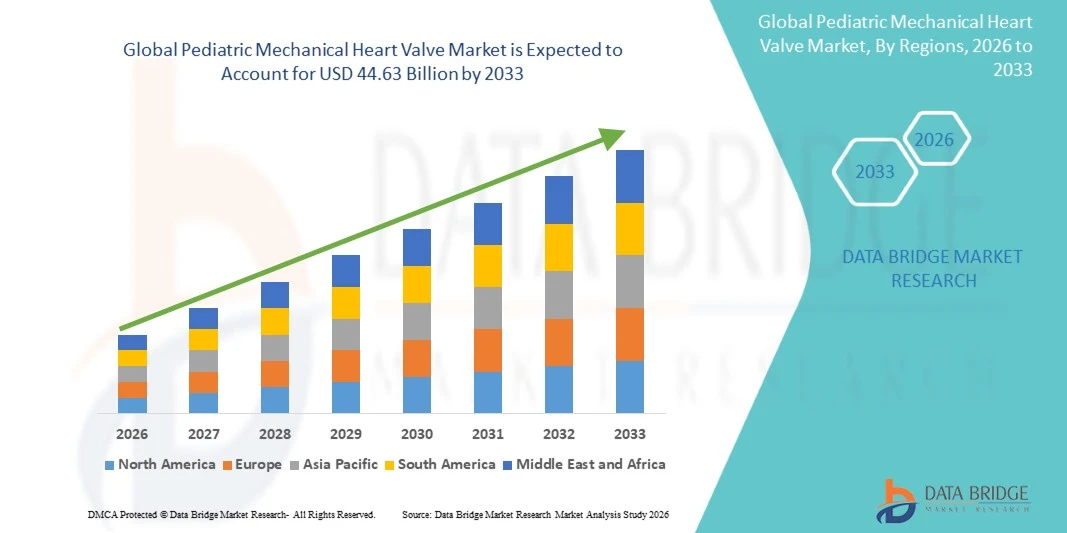
Report Scope and Pediatric Mechanical Heart Valve Market Segmentation
|
Attributes |
Pediatric Mechanical Heart Valve Key Market Insights |
|
Segments Covered |
|
|
Countries Covered |
North America
Europe
Asia-Pacific
Middle East and Africa
South America
|
|
Key Market Players |
|
|
Market Opportunities |
|
|
Value Added Data Infosets |
In addition to the insights on market scenarios such as market value, growth rate, segmentation, geographical coverage, and major players, the market reports curated by the Data Bridge Market Research also include in-depth expert analysis, patient epidemiology, pipeline analysis, pricing analysis, and regulatory framework. |
What is the Key Trend in the Pediatric Mechanical Heart Valve Market?
- Pediatric mechanical heart valve development is increasingly focused on miniaturization, improved hemodynamic performance, biocompatible materials, and designs that better accommodate the rapid growth of infants and children.
- For instance, in November 2025, researchers published a study in Bioactive Materials describing a miniaturized pediatric heart valve developed specifically for children with congenital heart disease. The valve combined an electrospun synthetic polymer, protein-engineered elastin, and a tailor-made stent; testing demonstrated stresses exceeding 6 MPa, burst pressures above 1,000 mmHg, and regurgitation fractions below 15%, supporting the trend toward smaller, durable, and biocompatible pediatric valve designs.
- The need for smaller valve sizes is particularly important because conventional adult-oriented prostheses may not fit the anatomy of neonates and young children, creating demand for pediatric-specific valve technologies.
- Researchers are also exploring growth-adaptive and expandable valve concepts that could reduce the number of repeat surgical interventions required as pediatric patients grow.
- Advanced biomaterials and computationally optimized designs are being investigated to improve durability, reduce thrombogenicity, and maintain effective valve function at very small diameters.
- For instance, in April 2025, Congenital Heart Disease published an article highlighting advances in pediatric heart valve replacement, including the use of small-sized mechanical valves and technologies designed to address patient–prosthesis mismatch caused by somatic growth
- As pediatric cardiac specialists and medical-device developers increasingly prioritize smaller, durable, and growth-compatible valve technologies, innovation in pediatric mechanical heart valves is expected to remain a major focus of the market.
What are the Key Drivers of the Pediatric Mechanical Heart Valve Market?
- The growing burden of congenital heart defects and childhood-onset heart disease is increasing the need for specialized pediatric cardiac interventions, including valve repair and replacement procedures.
- For instance, in April 2024, the Journal of the American College of Cardiology reported that 9,897 pediatric valve-implant procedures were identified in a North American registry, involving 11,197 implanted valves, but only 9% were approved specifically for pediatric use. The findings highlight the substantial unmet need for pediatric-specific valve technologies and continued clinical demand for suitable valve replacement devices.
- Congenital heart disease is the most common birth defect, and the need for timely diagnosis, surgery, and lifelong cardiac care is particularly significant in low- and middle-income countries where specialized pediatric cardiac infrastructure remains limited.
- Improvements in pediatric cardiac surgery, imaging, postoperative management, and prosthetic valve technology are expanding treatment options for children with complex congenital valve conditions.
- Increasing clinical and research attention toward pediatric-specific medical devices is also encouraging manufacturers and research institutions to develop valve technologies designed specifically for small anatomical structures rather than adapting adult devices.
- For instance, in August 2024, The Annals of Thoracic Surgery reported five-year outcomes from the HALO clinical trial evaluating the 15-mm St. Jude mechanical mitral valve in infants and children. The trial included 23 children aged 0.4–27.4 months, with 85% younger than one year, demonstrating continued clinical investigation of mechanical valve replacement for very young pediatric patients with severe mitral valve disease.
- With the global pediatric cardiac-care burden increasing and clinical research increasingly focused on purpose-built devices, demand for advanced pediatric mechanical heart valve solutions is expected to strengthen.
Which Factors are Challenging the Growth of the Pediatric Mechanical Heart Valve Market?
- The requirement for lifelong anticoagulation therapy with mechanical valves represents a significant clinical challenge in pediatric patients because maintaining appropriate anticoagulation is essential for reducing thrombotic complications while excessive anticoagulation can increase bleeding risks.
- For instance, in May 2024, The Annals of Thoracic Surgery reported five-year outcomes from the HALO clinical trial of the 15-mm St. Jude mechanical mitral valve in 23 infants and children. Three patients experienced valve thrombosis requiring explantation, while five experienced nonfatal bleeding complications within four months, demonstrating the clinical challenges associated with thrombosis and anticoagulation in very young patients.
- Children also experience rapid anatomical growth, meaning a mechanical valve implanted at a very young age may eventually become unsuitable and require another intervention as the patient's heart and valve structures enlarge.
- The limited availability of pediatric-specific valve sizes further constrains treatment options, particularly for neonates and infants with very small cardiac anatomy.
- Clinical evidence and regulatory pathways for pediatric-specific valve technologies also remain challenging because pediatric devices require specialized evaluation across different ages, anatomical sizes, and growth stages.
- For instance, in November 2023, a study published in The Journal of Pediatrics evaluated 405 children with congenital or acquired heart disease receiving vitamin K antagonist therapy. The study reported 0.9% thrombotic events and 2.3% major bleeding events per patient-year, while a time-in-therapeutic-range below 70% was independently associated with a higher risk of bleeding, highlighting the difficulty of maintaining safe and effective anticoagulation in pediatric patients.
- These anticoagulation requirements, growth-related reintervention needs, and limited pediatric device availability continue to create clinical and technological challenges for wider adoption of mechanical heart valves in children.
How is the Pediatric Mechanical Heart Valve Market Segmented?
The pediatric mechanical heart valve market is segmented on the basis of valve type, valve position, population, and end-use.
- By Valve Type
On the basis of valve type, the pediatric mechanical heart valve market is segmented into single-leaflet mechanical heart valves, bileaflet mechanical heart valves, tilting-disc mechanical heart valves, and other mechanical heart valves. The bileaflet mechanical heart valves segment dominated the market with 60% share in 2025, supported by established clinical use, durability, and favorable flow characteristics. Bileaflet valves use two movable leaflets that open and close within the valve housing. Their established use across pediatric and adult cardiac procedures provides physicians with extensive clinical experience. The availability of small-sized bileaflet valves is particularly important for infants and young children requiring valve replacement. The durability of mechanical prostheses also makes this design relevant where long-term valve performance is required.
The tilting-disc mechanical heart valves segment is projected to register the fastest growth at a CAGR of 7.0% from 2026 to 2033, supported by continuing demand for durable mechanical prostheses and different valve configurations for pediatric anatomy. Tilting-disc valves use a single occluder that pivots within the valve housing. Their mechanical construction provides long-term durability for patients requiring valve replacement. Growing diagnosis of congenital and acquired valve disorders is supporting demand for pediatric valve interventions. Improvements in pediatric cardiac surgery are also expanding the range of patients who can receive valve replacement. Increasing attention to appropriately sized prostheses is further supporting development across mechanical valve designs.
- By Valve Position
On the basis of valve position, the pediatric mechanical heart valve market is segmented into aortic valve, mitral valve, pulmonary valve, tricuspid valve, and multiple valve replacement. The mitral valve segment dominated the market with 40% share in 2025, supported by the clinical need for mechanical replacement in children with severe mitral valve abnormalities. Mechanical valves are used when valve repair is not feasible or when long-term durability is an important consideration. The availability of small mechanical prostheses has expanded treatment possibilities for infants and young children. Pediatric mitral valve replacement is particularly complex because of the small size of the cardiac structures and continued somatic growth. Advances in pediatric cardiac surgery and postoperative management are supporting improved treatment pathways.
The aortic valve segment is projected to register the fastest growth at a CAGR of 7.2% from 2026 to 2033, driven by increasing treatment of congenital and acquired aortic valve abnormalities. Mechanical valves provide a durable replacement option for selected pediatric patients requiring aortic valve replacement. Improvements in pediatric cardiac imaging are supporting earlier identification and treatment planning for aortic valve disorders. Advances in surgical techniques are also expanding the ability of specialized cardiac centers to manage complex pediatric cases. The availability of smaller mechanical prostheses is particularly relevant for children with smaller anatomical structures. Increasing specialization in pediatric cardiovascular surgery is further supporting adoption.
- By Population
On the basis of population, the pediatric mechanical heart valve market is segmented into infants, toddlers, school age, and adolescents. The infants segment dominated the market with 35% share in 2025, reflecting the substantial need for appropriately sized mechanical valves among very young patients with serious congenital cardiac conditions. Infants require specialized valve sizes because conventional adult-oriented prostheses may not be suitable for their smaller anatomy. The availability of very small mechanical valves has helped address this clinical requirement. The FDA's approval of a 15-mm mechanical heart valve specifically expanded treatment options for newborns and infants with congenital valve defects. Pediatric cardiac centers also provide specialized surgical and postoperative management for these patients.
The toddlers segment is projected to register the fastest growth at a CAGR of 7.5% from 2026 to 2033, supported by continuing treatment requirements among young children with congenital or acquired valve disorders. Toddlers have rapidly developing cardiac anatomy, creating specific requirements for appropriately sized prosthetic valves. Improvements in pediatric cardiac imaging are enabling earlier detection and more detailed assessment of valve abnormalities. Specialized cardiac centers are increasingly equipped to provide complex valve replacement and postoperative monitoring. Mechanical valves offer durability for selected children who require long-term prosthetic valve function. Growing awareness of pediatric cardiac disorders is also encouraging earlier referral to specialist centers.
- By End-Use
On the basis of end-use, the pediatric mechanical heart valve market is segmented into hospitals, special clinics, and ambulatory surgical units. The hospitals segment dominated the market with 80% share in 2025, supported by advanced cardiac surgery infrastructure, pediatric intensive-care facilities, and multidisciplinary specialist teams. Mechanical heart valve implantation requires specialized surgical expertise and comprehensive perioperative monitoring. Hospitals are generally equipped to manage complex pediatric cardiac procedures and potential postoperative complications. Specialized imaging and cardiac-care equipment further supports hospital-based treatment. The availability of pediatric cardiologists, cardiac surgeons, anesthesiologists, and intensive-care teams strengthens the role of hospitals.
The ambulatory surgical units segment is projected to register the fastest growth at a CAGR of 9.0% from 2026 to 2033, supported by increasing development of specialized surgical facilities and improvements in perioperative pediatric cardiac care. Ambulatory surgical units can provide selected procedures within more streamlined healthcare environments. Advances in surgical techniques and patient monitoring are improving the feasibility of appropriately selected outpatient-oriented interventions. Increasing healthcare infrastructure investment is also expanding access to specialized cardiac services. However, complex mechanical valve implantation continues to require highly specialized cardiac teams and appropriate postoperative monitoring. The segment's expansion will therefore depend on clinical suitability, facility capabilities, and evolving pediatric cardiac-care protocols.
Which Region Holds the Largest Share of the Pediatric Mechanical Heart Valve Market?
- North America dominated the pediatric mechanical heart valve market with the largest revenue share of 40% in 2025, supported by increased awareness of heart valve diseases and a favorable reimbursement scenario for prosthetic heart valves.
- The region also benefits from a well-established network of pediatric cardiac centers, ongoing clinical research, and increasing adoption of advanced valve technologies. Strong awareness of heart valve diseases and continued investment in specialized pediatric cardiac procedures further support North America's leading position in the global market.
U.S. Pediatric Mechanical Heart Valve Market Insight
The U.S. pediatric mechanical heart valve market is witnessing steady growth due to advanced pediatric cardiac care infrastructure, specialized congenital heart disease centers, and increasing demand for complex valve interventions. The country’s established network of pediatric cardiac hospitals, favorable reimbursement environment, and continued clinical research are supporting adoption of mechanical heart valves for children requiring long-term valve replacement. In addition, ongoing development of smaller and more specialized cardiac devices is strengthening demand for pediatric valve technologies.
Asia-Pacific Pediatric Mechanical Heart Valve Market Insight
The Asia-Pacific pediatric mechanical heart valve market is expected to witness rapid growth, driven by increasing healthcare investments, expanding pediatric cardiac infrastructure, and rising diagnosis of congenital heart defects across countries such as China, India, and Japan. Growing availability of specialized cardiac centers, improvements in pediatric surgical capabilities, and increasing adoption of advanced heart valve technologies are supporting regional market expansion. In addition, rising investments in minimally invasive cardiac procedures and increasing access to specialized pediatric cardiac care are accelerating demand across the region.
Japan Pediatric Mechanical Heart Valve Market Insight
The Japan pediatric mechanical heart valve market is witnessing consistent growth due to the country’s advanced pediatric cardiac care infrastructure, established surgical capabilities, and increasing adoption of sophisticated treatment technologies. Pediatric cardiac centers are increasingly utilizing advanced surgical approaches for congenital heart conditions and complex valve procedures. Moreover, Japan’s mature healthcare system, specialized clinical expertise, and continued development of innovative pediatric cardiac treatments are contributing to market growth.
China Pediatric Mechanical Heart Valve Market Insight
The China pediatric mechanical heart valve market is growing rapidly, driven by expanding pediatric cardiac centers, increasing detection of congenital heart defects, and rising investment in specialized healthcare infrastructure. The country has developed a broad network of pediatric cardiac centers, while major hospitals are increasingly performing complex congenital heart procedures and adopting advanced treatment technologies. In addition, growing healthcare capacity and continued improvements in pediatric cardiac surgery are supporting increasing demand for mechanical heart valve solutions.
U.K. Pediatric Mechanical Heart Valve Market Insight
The U.K. pediatric mechanical heart valve market is experiencing steady growth, supported by established pediatric cardiac services, specialized congenital heart disease care, and continued adoption of advanced cardiovascular technologies. Hospitals and specialist cardiac centers are increasingly focused on improving treatment options for children requiring complex valve replacement and long-term cardiac management. Furthermore, strong clinical expertise, established healthcare infrastructure, and ongoing advancements in pediatric cardiac care are contributing to market development across the country.
Germany Pediatric Mechanical Heart Valve Market Insight
The Germany pediatric mechanical heart valve market is expanding steadily due to the country’s advanced healthcare infrastructure, specialized pediatric cardiac centers, and strong capabilities in congenital heart disease treatment. Hospitals and cardiovascular institutions are increasingly utilizing sophisticated surgical techniques and specialized valve technologies to manage complex pediatric cardiac conditions. Continuous advancements in pediatric cardiac surgery, established clinical expertise, and growing emphasis on specialized heart care are further supporting the adoption of pediatric mechanical heart valve solutions.
Which are the Top Companies in Pediatric Mechanical Heart Valve Market?
The pediatric mechanical heart valve industry is primarily led by well-established companies, including:
- Medtronic (Ireland)
- LivaNova PLC (U.K.)
- Edwards Lifesciences Corporation (U.S.)
- Abbott (U.S.)
- Boston Scientific Corporation (U.S.)
- Artivion, Inc. (U.S.)
- TTK Healthcare Limited (India)
- Terumo Corporation (Japan)
- MicroPort Scientific Corporation (China)
- Venus Medtech (Hangzhou) Inc. (China)
- Balton Sp. z o.o. (Poland)
- Meril Life Sciences Pvt. Ltd. (India)
- Lepu Medical Technology (Beijing) Co., Ltd. (China)
- Colibri Heart Valve LLC (U.S.)
- PECA Labs, Inc. (U.S.)
- Foldax, Inc. (U.S.)
- Xeltis B.V. (Netherlands)
- Anteris Technologies Ltd. (Australia)
- Corcym S.r.l. (Italy)
What are Latest Developments in Pediatric Mechanical Heart Valve Market?
- In June 2025, University of California, Irvine announced the development of the Iris Valve, a growth-accommodating transcatheter pulmonary heart valve designed specifically for toddlers and young children with congenital cardiac defects. The valve is designed to be implanted through a minimally invasive catheter and expanded as the child grows, with the aim of reducing repeated valve replacement surgeries. The development had successfully progressed through laboratory and early-stage animal feasibility testing, representing a significant advancement in pediatric-specific valve technology.
- In December 2023, Columbia University Irving Medical Center reported the development of a new expandable artificial heart-valve prototype designed to grow with pediatric patients. Developed using biocompatible polyurethane, the prototype can be enlarged using a balloon catheter, addressing the limitation of conventional prosthetic valves that do not grow with children. The research team was progressing toward improved prototypes and animal testing.
- In June 2023, PECA Labs announced the successful first-in-human implantation of its MASA Valve, a pediatric pulmonary valved conduit developed for children requiring pulmonary valve reconstruction. The polymeric valve was designed to provide a durable pediatric solution with the potential to reduce reoperations and reinterventions. The company began its U.S. early-feasibility clinical study following FDA Humanitarian Use Device and Investigational Device Exemption authorization.
- In September 2022, Draper announced the development of its Low-force Expanding/Adaptable Pediatric (LEAP) Valve, a growth-adaptive pediatric heart valve designed to expand passively as a child grows. The device uses a spring-like stent that expands gradually without requiring balloon dilation, with the goal of reducing repeated heart-valve replacement surgeries in infants and young children.
- In August 2022, Children’s of Mississippi announced access to the newly approved Edwards SAPIEN 3 transcatheter valve with the Alterra adaptive prestent for pediatric patients with severe pulmonary regurgitation. The technology enables valve treatment through a catheter-based procedure rather than conventional open-heart surgery, expanding minimally invasive treatment options for children with congenital heart conditions.

- Interactive Data Analysis Dashboard
- Company Analysis Dashboard for high growth potential opportunities
- Research Analyst Access for customization & queries
- Competitor Analysis with Interactive dashboard
- Latest News, Updates & Trend analysis
- Harness the Power of Benchmark Analysis for Comprehensive Competitor Tracking
Data collection and base year analysis are done using data collection modules with large sample sizes. The stage includes obtaining market information or related data through various sources and strategies. It includes examining and planning all the data acquired from the past in advance. It likewise envelops the examination of information inconsistencies seen across different information sources. The market data is analysed and estimated using market statistical and coherent models. Also, market share analysis and key trend analysis are the major success factors in the market report. To know more, please request an analyst call or drop down your inquiry.
The key research methodology used by DBMR research team is data triangulation which involves data mining, analysis of the impact of data variables on the market and primary (industry expert) validation. Data models include Vendor Positioning Grid, Market Time Line Analysis, Market Overview and Guide, Company Positioning Grid, Patent Analysis, Pricing Analysis, Company Market Share Analysis, Standards of Measurement, Global versus Regional and Vendor Share Analysis. To know more about the research methodology, drop in an inquiry to speak to our industry experts.
Data Bridge Market Research is a leader in advanced formative research. We take pride in servicing our existing and new customers with data and analysis that match and suits their goal. The report can be customized to include price trend analysis of target brands understanding the market for additional countries (ask for the list of countries), clinical trial results data, literature review, refurbished market and product base analysis. Market analysis of target competitors can be analyzed from technology-based analysis to market portfolio strategies. We can add as many competitors that you require data about in the format and data style you are looking for. Our team of analysts can also provide you data in crude raw excel files pivot tables (Fact book) or can assist you in creating presentations from the data sets available in the report.