Global Pediatric Medical Devices Market
Market Size in USD Billion
CAGR :
% 
 USD
36.93 Billion
USD
64.50 Billion
2025
2033
USD
36.93 Billion
USD
64.50 Billion
2025
2033
 Forecast Period Forecast Period |
2026 –2033 |
 Market Size (Base Year) Market Size (Base Year) |
USD 36.93 Billion |
 Market Size (Forecast Year) Market Size (Forecast Year) |
USD 64.50 Billion |
 CAGR CAGR |
% |
| Major Markets Players |
|
Pediatric Medical Devices Market Size
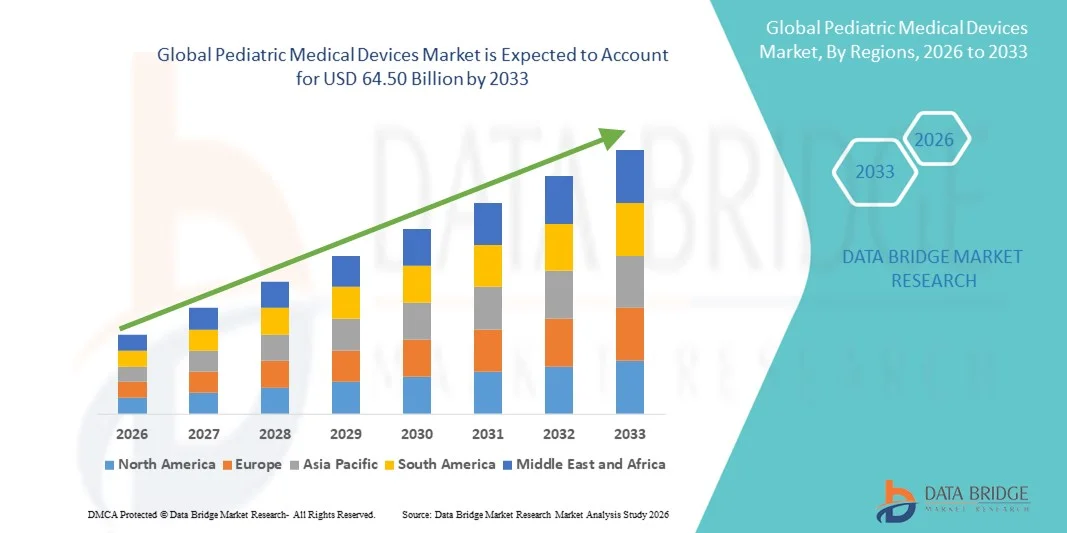
- The global pediatric medical devices market size was valued at USD 36.93 billion in 2025 and is expected to reach USD 64.50 billion by 2033, at a CAGR of 7.22% during the forecast period
- The market growth is largely fueled by increasing prevalence of chronic and congenital diseases in children, rising healthcare spending on pediatric care, and continuous technological advancements in diagnostic, therapeutic, and monitoring devices tailored for infants and adolescents leading to greater adoption in hospitals, clinics, and homecare settings
- Furthermore, growing demand for safer, child‑centric medical solutions and innovations such as AI‑enabled monitoring, telemedicine, and miniaturized equipment is driving investment from key manufacturers, while heightened awareness and government initiatives aimed at improving pediatric health infrastructure are accelerating uptake thereby significantly boosting the industry’s growth
Pediatric Medical Devices Market Analysis
- Pediatric medical devices, encompassing diagnostic, therapeutic, and monitoring equipment specifically designed for infants, children, and adolescents, are becoming increasingly essential in hospitals, clinics, and homecare settings due to their focus on safety, accuracy, and age‑appropriate design
- The growing demand for pediatric medical devices is primarily driven by the rising prevalence of chronic and congenital diseases among children, increasing healthcare expenditure on pediatric care, and continuous technological advancements such as AI-enabled monitoring, telemedicine integration, and minimally invasive solutions
- North America dominated the pediatric medical devices market with the largest revenue share of 38.7% in 2025, supported by advanced healthcare infrastructure, high healthcare spending, and the presence of key industry players. The U.S. is witnessing significant adoption of pediatric medical devices, particularly in specialized pediatric hospitals and homecare applications, driven by innovations in patient monitoring and child-centric treatment solutions
- Asia-Pacific is expected to be the fastest-growing region in the pediatric medical devices market during the forecast period, fueled by increasing healthcare investments, improving pediatric care infrastructure, and rising awareness of child health needs
- Monitoring devices segment dominated the pediatric medical devices market with a market share of 41.5% in 2025, driven by the critical need for accurate, real-time health monitoring and early detection of illnesses in children
Report Scope and Pediatric Medical Devices Market Segmentation
|
Attributes |
Pediatric Medical Devices Key Market Insights |
|
Segments Covered |
|
|
Countries Covered |
North America
Europe
Asia-Pacific
Middle East and Africa
South America
|
|
Key Market Players |
|
|
Market Opportunities |
|
|
Value Added Data Infosets |
In addition to the insights on market scenarios such as market value, growth rate, segmentation, geographical coverage, and major players, the market reports curated by the Data Bridge Market Research also include in-depth expert analysis, patient epidemiology, pipeline analysis, pricing analysis, and regulatory framework |
Pediatric Medical Devices Market Trends
Advancements Through AI-Enabled Monitoring and Telemedicine
- A significant and accelerating trend in the global pediatric medical devices market is the integration of artificial intelligence (AI) and telemedicine platforms into monitoring and diagnostic devices, enhancing real-time patient care and remote disease management
- For instance, AI-powered wearable monitors allow continuous tracking of vital signs in neonates and children, alerting caregivers and physicians to abnormal patterns instantly. Similarly, telehealth-enabled devices facilitate virtual consultations and remote follow-ups for pediatric patients
- AI integration enables predictive analytics for early disease detection, automated alerts for abnormal readings, and personalized treatment recommendations based on historical patient data. For instance, smart infusion pumps adjust dosages according to AI-driven calculations to ensure pediatric safety
- The seamless integration of devices with electronic health records (EHR) and connected healthcare platforms allows centralized monitoring of multiple patients, enabling clinicians to track treatment progress, manage medications, and schedule interventions efficiently
- This trend toward more intelligent, interconnected, and patient-centric pediatric devices is reshaping expectations for child healthcare. Consequently, companies are developing AI-enabled monitoring solutions with automated alerts, remote connectivity, and predictive analytics for clinical decision support
- The demand for pediatric devices offering AI and telemedicine integration is growing rapidly across hospitals, clinics, and homecare sectors, as healthcare providers increasingly prioritize continuous monitoring, early intervention, and convenience for caregivers
Pediatric Medical Devices Market Dynamics
Driver
Increasing Prevalence of Pediatric Diseases and Healthcare Investments
- The rising incidence of chronic, congenital, and acute pediatric diseases, coupled with growing investments in child healthcare infrastructure, is a major driver for the increasing adoption of pediatric medical devices
- For instance, in April 2025, a leading pediatric device manufacturer launched a range of AI-enabled wearable monitors for neonatal intensive care, aimed at improving early detection and intervention outcomes. Such initiatives by key companies are expected to accelerate market growth
- As awareness of pediatric health challenges grows among parents and healthcare providers, devices offering real-time monitoring, minimally invasive treatment, and precise diagnostics are increasingly preferred over traditional methods
- Furthermore, government initiatives, rising healthcare spending, and the expansion of pediatric specialty hospitals are promoting adoption, while the trend of integrating devices into homecare solutions is enhancing patient access and continuity of care
- The convenience of remote monitoring, personalized treatment, and age-appropriate device designs are key factors driving uptake in hospitals, clinics, and homecare environments, while the development of user-friendly devices further contributes to market growth
Restraint/Challenge
High Cost and Regulatory Compliance Hurdles
- The relatively high cost of advanced pediatric medical devices and stringent regulatory requirements pose a significant challenge to broader market adoption. Advanced devices often require expensive materials, precision engineering, and certification processes before market entry
- For instance, delays in regulatory approvals for AI-enabled monitoring devices can slow adoption in hospitals and homecare settings, making companies cautious about launching innovative products
- Meeting rigorous safety, efficacy, and quality standards while maintaining affordability is critical, particularly in emerging markets where budget constraints limit access to advanced pediatric care
- Furthermore, cybersecurity and data privacy concerns associated with connected pediatric devices can hinder adoption, requiring robust encryption and secure patient data management protocols
- While device costs are gradually decreasing due to technological advancements and economies of scale, the premium associated with high-end pediatric solutions can still limit adoption in price-sensitive regions, emphasizing the need for affordable and compliant alternatives
- Overcoming these challenges through regulatory alignment, cost optimization, enhanced cybersecurity, and caregiver education will be vital for sustained growth in the pediatric medical devices market
Pediatric Medical Devices Market Scope
The market is segmented on the basis of product and end user.
- By Product
On the basis of product, the pediatric medical devices market is segmented into cardiology devices, in vitro diagnostic (IVD) devices, diagnostic imaging devices, telemedicine, anesthesia and respiratory care devices, neonatal ICU devices, monitoring devices, and others. The monitoring devices segment dominated the pediatric medical devices market with a market share of 41.5% in 2025, driven by the critical need for accurate, continuous, and non-invasive health tracking in hospitals, NICUs, pediatric wards, and homecare settings. Devices such as vital sign monitors, glucose monitors, and wearable trackers are increasingly preferred due to their real-time monitoring capabilities and integration with electronic health records. Hospitals and neonatal intensive care units are the primary adopters because of regulatory requirements for child safety and the high volume of pediatric patients. Advanced features such as AI-based alerts, predictive analytics, and cloud-based data management make these devices essential in modern pediatric care. Increasing prevalence of chronic pediatric illnesses and parental demand for home monitoring solutions further fuel the segment. Continuous innovation in wearable and minimally invasive devices is expected to sustain its dominance through the forecast period.
The Telemedicine segment is anticipated to witness the fastest growth rate of 22.3% CAGR from 2026 to 2033, fueled by the rising need for remote pediatric consultations, home-based monitoring, and virtual care solutions. Telemedicine devices include AI-powered monitoring tools, wearable sensors, and platforms enabling real-time communication between caregivers and clinicians. Adoption is supported by increasing internet penetration, mobile device usage, and government initiatives promoting digital healthcare in children. Telemedicine reduces hospital visits, lowers infection risks, and enhances access to specialized pediatric care, particularly in rural and underserved regions. Integration with AI and wearable devices further improves predictive healthcare and timely interventions. Pediatric homecare providers and parents are key adopters, driving strong growth for this segment.
- By End User
On the basis of end user, the pediatric medical devices market is segmented into hospitals, pediatric clinics, ambulatory surgery centers, research and academic institutes, and others. The hospital segment dominated the pediatric medical devices market with the largest revenue share of 52.1% in 2025, driven by the presence of well-established pediatric wards, NICUs, and specialized care units. Hospitals are early adopters of advanced pediatric devices due to regulatory compliance, high patient throughput, and demand for integrated diagnostic and therapeutic solutions. Large hospitals also have dedicated budgets for AI-enabled monitoring devices, neonatal care equipment, and child-specific surgical instruments. The segment benefits from strong collaborations between device manufacturers and healthcare providers to trial innovative solutions. Hospitals continue to lead adoption due to their ability to invest in expensive and technologically sophisticated devices.
The Pediatric Clinics segment is expected to witness the fastest growth rate of 18.9% CAGR from 2026 to 2033, fueled by rising outpatient services and demand for specialized pediatric care. Clinics increasingly adopt devices such as portable diagnostic imaging, point-of-care testing kits, and homecare monitoring solutions. The convenience of quick diagnostics, cost-effectiveness, and accessibility drives clinic adoption. Telemedicine and AI-based monitoring integration further boost the demand in this segment. Pediatric clinics in urban and semi-urban regions are expanding rapidly, creating opportunities for device manufacturers to provide compact, child-friendly solutions. Rising awareness among parents about early detection and preventive care also contributes to growth.
Pediatric Medical Devices Market Regional Analysis
- North America dominated the pediatric medical devices market with the largest revenue share of 38.7% in 2025, supported by advanced healthcare infrastructure, high healthcare spending, and the presence of key industry players
- Healthcare providers and hospitals in the region highly prioritize the adoption of pediatric devices that offer precision, safety, and age-appropriate designs, including monitoring devices, neonatal ICU equipment, and diagnostic tools
- This widespread adoption is further supported by well-established pediatric hospitals, availability of skilled healthcare professionals, and strong collaborations between device manufacturers and healthcare institutions, establishing North America as the leading market for pediatric medical devices
U.S. Pediatric Medical Devices Market Insight
The U.S. pediatric medical devices market captured the largest revenue share of 82% in 2025 within North America, driven by advanced healthcare infrastructure, high healthcare spending, and growing awareness of child-specific medical solutions. Hospitals, pediatric clinics, and homecare providers are increasingly adopting AI-enabled monitoring devices, neonatal ICU equipment, and diagnostic tools. The rising prevalence of chronic and congenital pediatric diseases, coupled with strong insurance coverage and reimbursement policies, further propels market growth. In addition, ongoing innovations in minimally invasive surgery and wearable pediatric devices are enhancing adoption. The integration of devices with electronic health records and telemedicine platforms is also contributing to market expansion.
Europe Pediatric Medical Devices Market Insight
The Europe pediatric medical devices market is projected to expand at a substantial CAGR throughout the forecast period, primarily driven by rising investments in pediatric healthcare infrastructure and stringent regulatory standards ensuring patient safety. Increasing urbanization, coupled with higher awareness of child healthcare, is fostering the adoption of pediatric medical devices. European hospitals and specialty pediatric clinics are adopting advanced monitoring, diagnostic imaging, and telemedicine solutions. The market is witnessing growth across both public and private healthcare sectors, with devices being incorporated into new hospital constructions and upgraded facilities. Moreover, healthcare policies promoting early disease detection and preventive care are accelerating adoption.
U.K. Pediatric Medical Devices Market Insight
The U.K. pediatric medical devices market is anticipated to grow at a noteworthy CAGR during the forecast period, driven by the rising focus on pediatric healthcare and increasing hospital investments. Concerns regarding child health, chronic conditions, and neonatal care are encouraging healthcare providers to adopt advanced monitoring and diagnostic devices. The U.K.’s robust healthcare system, along with government initiatives supporting pediatric research and telemedicine integration, is expected to stimulate market growth. Hospitals, clinics, and homecare providers are increasingly integrating age-appropriate devices for safer and more effective care. Technological innovations, such as AI-enabled monitoring and child-centric surgical instruments, further support market expansion.
Germany Pediatric Medical Devices Market Insight
The Germany pediatric medical devices market is expected to expand at a considerable CAGR during the forecast period, fueled by increasing awareness of child health and safety, and demand for technologically advanced solutions. Germany’s well-developed healthcare infrastructure and emphasis on innovation encourage the adoption of pediatric monitoring, diagnostic, and neonatal care devices. Hospitals and specialty pediatric centers are upgrading to integrated systems combining monitoring, imaging, and telemedicine. The focus on preventive care and early diagnosis aligns with regulatory standards, enhancing device adoption. In addition, eco-friendly and energy-efficient devices are gaining traction, reflecting Germany’s emphasis on sustainability in healthcare technology.
Asia-Pacific Pediatric Medical Devices Market Insight
The Asia-Pacific pediatric medical devices market is poised to grow at the fastest CAGR of 23% from 2026 to 2033, driven by increasing urbanization, rising disposable incomes, and improving healthcare infrastructure in countries such as China, Japan, and India. Growing awareness of child health, higher prevalence of congenital diseases, and government initiatives to strengthen pediatric care are driving adoption. Hospitals and neonatal care centers are investing in advanced monitoring and diagnostic solutions. The expanding telemedicine ecosystem and AI-based remote monitoring devices are enhancing pediatric care access, especially in semi-urban and rural areas. Furthermore, Asia-Pacific is emerging as a manufacturing hub for pediatric medical devices, improving affordability and accessibility.
Japan Pediatric Medical Devices Market Insight
The Japan pediatric medical devices market is gaining momentum due to high technological adoption, urbanization, and focus on child healthcare. Hospitals and clinics are increasingly adopting AI-enabled monitoring, neonatal ICU devices, and diagnostic imaging systems. The aging population combined with a growing focus on child safety is driving demand for user-friendly, precise, and secure pediatric devices. Integration of devices with electronic health records and homecare monitoring systems is also boosting adoption. Moreover, Japan’s healthcare policies promoting preventive pediatric care and telemedicine contribute to market growth. The market emphasizes innovations in child-centric and minimally invasive solutions.
India Pediatric Medical Devices Market Insight
The India pediatric medical devices market accounted for the largest market revenue share in Asia-Pacific in 2025, driven by rapid urbanization, an expanding middle class, and high rates of technological adoption. Hospitals, pediatric clinics, and homecare providers are increasingly investing in monitoring devices, neonatal ICU equipment, and portable diagnostic tools. Government initiatives promoting child health and smart hospital infrastructure further accelerate market growth. The availability of cost-effective pediatric devices, combined with rising awareness of early disease detection and preventive care, is fueling adoption. Domestic manufacturing capabilities and telemedicine integration also enhance accessibility and affordability for pediatric care across the country.
Pediatric Medical Devices Market Share
The Pediatric Medical Devices industry is primarily led by well-established companies, including:
- 3M (U.S.)
- Abbott (U.S.)
- Atom Medical Corporation (Japan)
- Baxter (U.S.)
- Boston Scientific Corporation (U.S.)
- Cardinal Health (U.S.)
- Drägerwerk AG & Co. KGaA (Germany)
- Fritz Stephan GmbH (Germany)
- GE HealthCare (U.S.)
- Hamilton Medical AG (Switzerland)
- Koninklijke Philips N.V. (Netherlands)
- Medtronic (Ireland)
- Ningbo David Medical Device Co. Ltd. (China)
- Novonate Inc. (U.S.)
- Phoenix Medical Systems Pvt Ltd (India)
- Siemens Healthineers AG (Germany)
- Stryker (U.S.)
- Trimpeks İth. Ihr. Tur. A.S. (Turkey)
- TSE Medical GmbH (Germany)
What are the Recent Developments in Global Pediatric Medical Devices Market?
- In November 2025, Piccolo Medical, Inc. received FDA 510(k) clearance to extend its ECGuide™ catheter tip positioning technology for use in pediatric and neonatal patients, reducing reliance on chest X‑rays for central venous access and improving safety and efficiency for vulnerable young patients
- In June 2025, the U.S. Food and Drug Administration (FDA) expanded the indication for XENOVIEW®, a functional lung imaging technology, to include children aged 6 years and older, significantly broadening the eligible pediatric population by approximately one million patients and enhancing imaging options for chronic respiratory conditions in children
- In October 2024, Children’s National Hospital and the Alliance for Pediatric Device Innovation (APDI) announced a global collaboration with the European DeCODe consortium to accelerate innovation and development of pediatric and orphan medical devices, addressing unmet needs for children with rare diseases
- In August 2024, Renata Medical received FDA approval for the Minima Growth Stent System, the first expandable cardiac stent designed specifically for neonates, infants, and young children with congenital heart defects, enabling minimally invasive treatment that can grow with the child
- In September 2023, the FDA awarded nearly USD 7.5 million to the Alliance for Pediatric Device Innovation (APDI) led by Children’s National Hospital to support the development and commercialization of innovative medical devices for children, including real‑world evidence generation for pediatric device development
SKU-
Get online access to the report on the World's First Market Intelligence Cloud

- Interactive Data Analysis Dashboard
- Company Analysis Dashboard for high growth potential opportunities
- Research Analyst Access for customization & queries
- Competitor Analysis with Interactive dashboard
- Latest News, Updates & Trend analysis
- Harness the Power of Benchmark Analysis for Comprehensive Competitor Tracking
Research Methodology
Data collection and base year analysis are done using data collection modules with large sample sizes. The stage includes obtaining market information or related data through various sources and strategies. It includes examining and planning all the data acquired from the past in advance. It likewise envelops the examination of information inconsistencies seen across different information sources. The market data is analysed and estimated using market statistical and coherent models. Also, market share analysis and key trend analysis are the major success factors in the market report. To know more, please request an analyst call or drop down your inquiry.
The key research methodology used by DBMR research team is data triangulation which involves data mining, analysis of the impact of data variables on the market and primary (industry expert) validation. Data models include Vendor Positioning Grid, Market Time Line Analysis, Market Overview and Guide, Company Positioning Grid, Patent Analysis, Pricing Analysis, Company Market Share Analysis, Standards of Measurement, Global versus Regional and Vendor Share Analysis. To know more about the research methodology, drop in an inquiry to speak to our industry experts.
Customization Available
Data Bridge Market Research is a leader in advanced formative research. We take pride in servicing our existing and new customers with data and analysis that match and suits their goal. The report can be customized to include price trend analysis of target brands understanding the market for additional countries (ask for the list of countries), clinical trial results data, literature review, refurbished market and product base analysis. Market analysis of target competitors can be analyzed from technology-based analysis to market portfolio strategies. We can add as many competitors that you require data about in the format and data style you are looking for. Our team of analysts can also provide you data in crude raw excel files pivot tables (Fact book) or can assist you in creating presentations from the data sets available in the report.