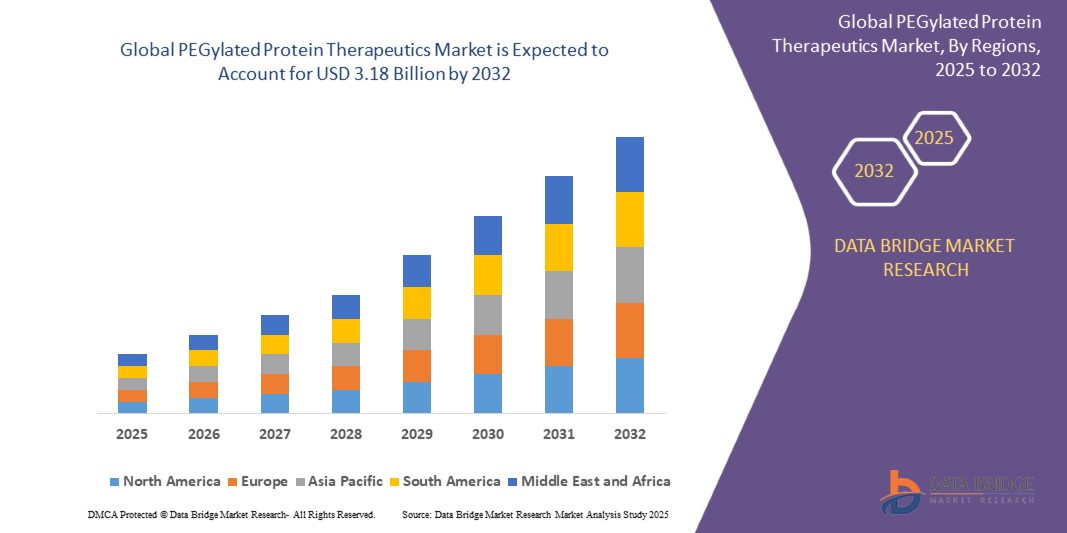
PEGylated Protein Therapeutics Market Size
- The Global PEGylated Protein Therapeutics Market size was valued at USD 1.31 billion in 2024 and is expected to reach USD 3.18 billion by 2032, at a CAGR of 11.71% during the forecast period
- Market growth is primarily driven by the rising global prevalence of amyloidosis (ATTR), alongside enhanced awareness and early diagnosis efforts. Advances in genetic testing and biomarker diagnostics enable quicker detection and treatment initiation, boosting demand for innovative PEGylated protein therapies.
- Moreover, increasing patient preference for disease-modifying treatments targeting amyloidosis pathology is accelerating market demand. Novel RNA interference (RNAi) therapies and transthyretin (TTR) stabilizers are transforming treatment approaches, positioning PEGylated protein therapeutics at the forefront of rare disease management and driving rapid global market expansion.
PEGylated Protein Therapeutics Market Analysis
- PEGylation refers to a biochemical process of attachment of polyethylene glycol, which aids in treating chronic conditions with the help of genetic modifications. It provides several benefits, such as reduced dosage frequency, improved drug solubility, and increased drug stability, which boost its demand in the market.
- The increasing global prevalence of transthyretin amyloidosis (ATTR), coupled with advancements in diagnostic capabilities, is driving the demand for PEGylated protein therapeutics. Enhanced awareness and early diagnosis initiatives are enabling quicker identification and treatment initiation, propelling the need for innovative therapies.
- North America is projected to lead the Global PEGylated Protein Therapeutics Market, accounting for the largest revenue share of 40.01% in 2025. This dominance is supported by early adoption of novel therapeutics, higher healthcare spending, strong reimbursement structures, and the robust presence of major pharmaceutical players. The U.S., in particular, is witnessing significant growth due to the availability of approved therapies like tafamidis and the expansion of clinical trials.
- The Asia-Pacific region is anticipated to be the fastest-growing market during the forecast period, driven by increasing urbanization, improving healthcare infrastructure, rising disposable incomes, and a growing focus on rare diseases. Countries such as China, Japan, and South Korea are investing heavily in early diagnosis and treatment access for amyloidosis.
- The Colony Stimulating Factor segment is projected to capture the largest market share of 43.2% in 2025, driven by its demonstrated clinical effectiveness, well-established safety profile, and its critical role in managing neutropenia associated with chemotherapy. PEGylated formulations enhance its half-life, reducing dosing frequency and improving patient adherence—making it a preferred therapeutic choice among oncologists and hematologists.
Report Scope and PEGylated Protein Therapeutics Market Segmentation
|
Attributes |
PEGylated Protein Therapeutics Key Market Insights |
|
Segments Covered |
|
|
Countries Covered |
North America
Europe
Asia-Pacific
Middle East and Africa
South America
|
|
Key Market Players |
|
|
Market Opportunities |
|
|
Value Added Data Infosets |
In addition to the insights on market scenarios such as market value, growth rate, segmentation, geographical coverage, and major players, the market reports curated by the Data Bridge Market Research also include in-depth expert analysis, pricing analysis, brand share analysis, consumer survey, demography analysis, supply chain analysis, value chain analysis, raw material/consumables overview, vendor selection criteria, PESTLE Analysis, Porter Analysis, and regulatory framework. |
PEGylated Protein Therapeutics Market Trends
“Growing adoption of AI-driven drug development and precision medicine in PEGylated protein therapeutics”
- A significant trend shaping the Global PEGylated Protein Therapeutics Market is the increasing integration of artificial intelligence (AI) and precision medicine approaches in drug development and patient care. AI technologies enable the analysis of vast datasets to identify optimal therapeutic targets, predict patient responses, and personalize treatment regimens, thereby improving efficacy and safety profiles of PEGylated therapeutics.
- For instance, in 2024, Biogen partnered with a leading AI healthcare company to accelerate the discovery and development of PEGylated biologics for neurological disorders. This collaboration leverages AI algorithms to analyze genetic and clinical data, enhancing the precision of therapy design and patient stratification.
- The adoption of AI-driven platforms supports faster, more cost-effective drug development cycles and allows for tailoring treatments to individual patient profiles, which is especially beneficial for rare and complex diseases managed with PEGylated proteins.
- This trend is particularly impactful in technologically advanced markets like the U.S. and Europe, where healthcare providers are increasingly embracing data-driven diagnostics and personalized medicine, resulting in higher demand for sophisticated PEGylated therapeutics.
- Globally, the move towards AI-enabled precision medicine not only improves patient outcomes but also helps pharmaceutical companies optimize resource allocation, reduce clinical trial failures, and expand access to innovative treatments across diverse populations.
PEGylated Protein Therapeutics Market Dynamics
Driver
“Increased Prevalence of Chronic Diseases Requiring Long-Acting Therapies”
- A significant driver of growth in the Global PEGylated Protein Therapeutics Market is the rising global burden of chronic diseases such as cancer, diabetes, cardiovascular disorders, and autoimmune conditions. These diseases often necessitate long-term management strategies, creating a demand for therapies that offer sustained efficacy and improved patient compliance.
- For instance, the U.S. reports approximately 200 new cases of multiple sclerosis diagnosed each week, underscoring the need for effective long-term treatments. PEGylated protein therapeutics, known for their extended half-life and reduced dosing frequency, are increasingly favored in managing such chronic conditions.
- The growing prevalence of chronic diseases not only drives the demand for PEGylated therapies but also encourages pharmaceutical companies to invest in the development of innovative, long-acting biologics, thereby accelerating market expansion.
- This trend is especially significant in regions such as India, where affordable healthcare access remains a critical need. Strategic partnerships and collaborations help introduce advanced PEGylated protein therapeutics to underserved populations, improving treatment availability and outcomes.
- Globally, there is a rising demand for advanced PEGylated protein therapeutics that incorporate artificial intelligence (AI) and data-driven diagnostic tools. These innovations enable healthcare providers and patients to achieve greater precision, earlier disease detection, and personalized treatment strategies, enhancing overall therapeutic effectiveness.
Restraint/Challenge
“High Development Costs and Regulatory Challenges Impede Market Growth”
- The high cost of PEGylated Protein Therapeutics remains a significant restraint in the global market, limiting accessibility for many patients, especially in low- and middle-income countries. These advanced therapies often involve complex development processes, extensive clinical trials, and stringent regulatory requirements, which collectively drive up the price.
- For instance, tafamidis, a leading PEGylated protein therapeutic for transthyretin amyloidosis, is priced at approximately $225,000 per year in the U.S., making it inaccessible to a large portion of the patient population globally. This premium pricing challenges healthcare systems and insurers, particularly in regions with limited reimbursement frameworks.
- The substantial financial burden on patients and payers restricts widespread adoption and slows market growth, emphasizing the urgent need for cost-effective alternatives and enhanced patient assistance programs.
- Although pharmaceutical companies like Pfizer and Akcea Therapeutics are investing in biosimilar development and patient support initiatives to improve affordability, the overall high expense of PEGylated therapeutics remains a critical barrier to broader market expansion.
PEGylated Protein Therapeutics Market Scope
The market is segmented on the basis of product type, therapeutic area, indication, drugs, route of administration and distribution channel.
- By Type
On the basis of type, the Global PEGylated Protein Therapeutics Market is segmented into colony stimulating factor, interferon, erythropoietin (EPO), recombinant factor VIII, monoclonal antibody, enzyme, and others. The colony stimulating factor segment dominates the market with the largest revenue share of 43.2% in 2025, driven by the proven efficacy of therapies such as tafamidis, which stabilize transthyretin proteins and delay disease progression. Its well-established safety profile, oral administration, and ease of use significantly enhance patient adherence and treatment outcomes.
The colony stimulating factor segment is also expected to register the fastest compound annual growth rate (CAGR) of 21.7% between 2025 and 2032, supported by its expanding applications in both hereditary and wild-type transthyretin amyloidosis. Factors such as advancements in diagnostic techniques, increased awareness among healthcare providers, and a growing patient population are key drivers accelerating the growth of this segment in the global market.
- By Therapeutic Area
On the basis of therapeutic area, the Global PEGylated Protein Therapeutics Market is segmented into oncology, dermatology, gastroenterology, and others. The oncology segment held the largest market revenue share in 2025, driven by its clinical efficacy in reducing abnormal plasma cell production in patients with AL amyloidosis. Oncology remains a foundational treatment approach, especially when combined with stem cell transplantation, supported by extensive clinical evidence and strong physician familiarity.
The oncology segment is also projected to experience the fastest compound annual growth rate (CAGR) from 2025 to 2032, fueled by rising global diagnosis rates, improved access to oncology care, and increased awareness of amyloidosis as a plasma cell disorder. Additionally, ongoing advancements in safer and more tolerable chemotherapeutic regimens are expected to enhance treatment outcomes and expand patient access, further propelling growth in this segment.
- By Indication
On the basis of indication, the Global PEGylated Protein Therapeutics Market is segmented into cancer, gastrointestinal disorders, hepatitis, autoimmune disorders, hemophilia, multiple sclerosis, solid tumors, and others. The cancer segment held the largest market revenue share in 2025, driven by the increasing prevalence of various cancer types and the growing adoption of PEGylated protein therapies that improve treatment efficacy and patient compliance.
The cancer segment is also expected to witness the fastest compound annual growth rate (CAGR) from 2025 to 2032, supported by advancements in targeted therapies, rising awareness about early diagnosis, and expanding healthcare infrastructure. The development of novel PEGylated therapeutics with improved safety profiles and reduced dosing frequency further fuels growth in this segment.
- By Drugs
On the basis of drugs, the Global PEGylated Protein Therapeutics Market is segmented into pegfilgrastim, pegadamese, pegaspargase, pegvisomant, and others. The pegfilgrastim segment accounted for the largest market revenue share in 2024, driven by increasing awareness of amyloidosis and the proven efficacy of drugs like tafamidis in stabilizing transthyretin proteins to slow disease progression. Growing patient preference for targeted therapies and expanded approvals are key growth factors.
The pegfilgrastim segment is expected to witness the fastest compound annual growth rate (CAGR) from 2025 to 2032, fueled by ongoing research advancements, expanding indications in hereditary and wild-type amyloidosis, and rising accessibility of novel therapeutics in emerging markets. Enhanced patient outcomes and favorable reimbursement policies further boost adoption of this drug class.
- By Drugs
On the basis of drugs, the Global PEGylated Protein Therapeutics Market is segmented into pegfilgrastim, pegadamese, pegaspargase, pegvisomant, and others. The pegfilgrastim segment accounted for the largest market revenue share in 2024, driven by increasing awareness of amyloidosis and the proven efficacy of drugs like tafamidis in stabilizing transthyretin proteins to slow disease progression. Growing patient preference for targeted therapies and expanded approvals are key growth factors.
The pegfilgrastim segment is expected to witness the fastest compound annual growth rate (CAGR) from 2025 to 2032, fueled by ongoing research advancements, expanding indications in hereditary and wild-type amyloidosis, and rising accessibility of novel therapeutics in emerging markets. Enhanced patient outcomes and favorable reimbursement policies further boost adoption of this drug class.
- By Route Of Administration
On the basis of route of administration, the Global PEGylated Protein Therapeutics Market is segmented into intravenous, subcutaneous, and intramuscular. The intravenous segment held the largest market share in 2024, driven by its widespread use in delivering pegylated proteins due to advantages such as rapid onset of action and high bioavailability.
The subcutaneous segment is expected to witness significant growth over the forecast period, attributed to the increasing preference for self-administration and reduced risk of adverse effects associated with this route of administration. The intramuscular segment is also anticipated to experience steady growth, primarily driven by the use of pegylated proteins for the treatment of chronic diseases that require long-term administration.
- By Distribution Channel
On the basis of distribution channel, the Global PEGylated Protein Therapeutics Market is segmented into hospital pharmacies and retail pharmacies. The hospital pharmacies segment dominated the market share in 2024, primarily due to the centralized dispensing of PEGylated therapeutics for complex conditions such as cancer, hepatitis, and chronic autoimmune diseases. This channel benefits from medical oversight and streamlined coordination with infusion centers and inpatient care facilities.
The hospital pharmacies segment is projected to continue its strong growth trajectory over the forecast period, supported by increasing hospital admissions for chronic diseases, availability of advanced PEGylated formulations, and enhanced treatment adherence through healthcare supervision. Meanwhile, retail pharmacies are expected to gain traction due to the rising availability of PEGylated injectables for outpatient and at-home use, catering to the growing trend of self-administration and convenience-driven care models.
PEGylated Protein Therapeutics Market Regional Analysis
- North America leads the Global PEGylated Protein Therapeutics Market, accounting for the largest revenue share of 40.01% in 2024, primarily due to well-established healthcare infrastructure, growing prevalence of chronic diseases, and significant investment in biotechnology R&D.
- The region's strong focus on early disease diagnosis and access to innovative biologic treatments—including PEGylated interferons, enzymes, and cytokines—is supported by favorable reimbursement policies and regulatory support from agencies like the FDA.
- This leadership is further reinforced by high healthcare expenditure, a rising elderly population prone to chronic and rare diseases, and the strong presence of leading biopharmaceutical companies. These factors position North America as a key market for the development and adoption of PEGylated protein therapeutics across oncology, infectious diseases, and metabolic disorders.
U.S. PEGylated Protein Therapeutics Market Insight
The U.S. PEGylated Protein Therapeutics market accounted for the largest revenue share of 81% within North America in 2025, driven by the increasing prevalence of chronic and rare diseases, coupled with the rising adoption of biologics. The availability of advanced PEGylation technologies, robust clinical research infrastructure, and growing biopharmaceutical R&D investments are accelerating product development and commercialization. Additionally, strong healthcare infrastructure, high healthcare spending, and favorable regulatory and reimbursement frameworks contribute to the country’s leadership in the PEGylated protein therapeutics landscape.
Europe PEGylated Protein Therapeutics Market Insight
The European PEGylated Protein Therapeutics market is projected to grow at a robust CAGR during the forecast period, driven by the increasing prevalence of chronic and genetic disorders and the expanding use of biologics in therapeutic applications. Advancements in PEGylation technologies and strong governmental support for biotechnology innovation are promoting the development and commercialization of PEGylated therapies. Additionally, favorable regulatory policies, rising healthcare expenditure, and improved access to cutting-edge treatments across both urban and rural regions are accelerating market penetration. A growing emphasis on patient-centric care and improved therapeutic outcomes continues to fuel demand across Europe.
U.K. PEGylated Protein Therapeutics Market Insight
The U.K. PEGylated Protein Therapeutics market is projected to register a significant CAGR during the forecast period, driven by increasing investment in biopharmaceutical R&D and growing demand for long-acting biologic therapies. The country’s robust healthcare infrastructure, strong academic and clinical research ecosystem, and supportive regulatory environment are facilitating the development and adoption of PEGylated therapeutics. Additionally, rising incidence of chronic diseases and genetic disorders, coupled with growing awareness of advanced treatment options, are further propelling market growth in the U.K.
Germany PEGylated Protein Therapeutics Market Insight
The German PEGylated Protein Therapeutics market is projected to grow at a notable CAGR during the forecast period, fueled by increasing prevalence of chronic and genetic disorders and strong government support for biopharmaceutical innovation. Germany's advanced healthcare system, coupled with significant public and private investment in life sciences research, underpins the adoption of PEGylated protein therapies. Moreover, the country’s emphasis on high therapeutic standards, early diagnosis, and precision medicine is accelerating the uptake of long-acting biologics. The presence of leading biopharma companies and research institutions further supports market expansion in Germany.
Asia-Pacific PEGylated Protein Therapeutics Market Insight
The Asia-Pacific PEGylated Protein Therapeutics market is expected to register the fastest CAGR of over 24% during the forecast period, driven by increasing prevalence of hereditary and chronic diseases, expanding healthcare infrastructure, and growing awareness about advanced biopharmaceutical treatments in key countries such as China, Japan, and India. Government support for healthcare innovation and rising investments in research and development are further propelling market growth. Additionally, the region’s role as a major manufacturing hub for PEGylated protein therapeutics is improving affordability and accessibility, thereby broadening patient access across both urban and rural areas.
Japan PEGylated Protein Therapeutics Market Insight
The Japan PEGylated Protein Therapeutics market is gaining momentum due to the country’s advanced healthcare infrastructure, increasing prevalence of hereditary and chronic diseases, and strong focus on innovative biopharmaceutical treatments. Growing awareness about early diagnosis and advanced therapeutics is driving adoption. Additionally, Japan’s aging population and supportive government policies aimed at improving patient outcomes are expected to significantly boost demand across both residential and commercial healthcare sectors.
China PEGylated Protein Therapeutics Market Insight
The China PEGylated Protein Therapeutics market captured the largest revenue share in the Asia-Pacific region in 2025, propelled by rapid urbanization, expanding middle-class population, and increasing adoption of advanced healthcare technologies. As a key player in the global biopharmaceutical landscape, China is witnessing growing utilization of PEGylated Protein Therapeutics across hospitals, specialty clinics, and home care settings. Supportive government policies focused on healthcare innovation, combined with cost-effective domestic production, are driving significant market expansion.
PEGylated Protein Therapeutics Market Share
The PEGylated Protein Therapeutics industry is primarily led by well-established companies, including:
- Enzon Pharmaceuticals, Inc. (U.S.)
- F. Hoffmann-La Roche Ltd (Switzerland)
- Takeda Pharmaceutical Company Limited (Japan)
- Affymax, Inc. (U.S.)
- Novo Nordisk A/S (Denmark)
- Biogen (U.S.
- Amgen Inc. (U.S.)
- Pfizer Inc. (U.S.)
- Teva Pharmaceutical Industries Ltd (Israel)
- Merck & Co., Inc. (U.S.)
- AstraZeneca (United Kingdom)
- Nektar Therapeutics, Inc. (U.S.)
- Leadiant Biosciences, Inc. (U.S.)
- UCB S.A. (Belgium
- Horizon Therapeutics plc (Ireland)
- Eiger BioPharmaceuticals (U.S.)
- Halozyme, Inc. (U.S.)
- Biocad (Russia
- PharmaEssentia Corporation (Taiwan)

- Interactive Data Analysis Dashboard
- Company Analysis Dashboard for high growth potential opportunities
- Research Analyst Access for customization & queries
- Competitor Analysis with Interactive dashboard
- Latest News, Updates & Trend analysis
- Harness the Power of Benchmark Analysis for Comprehensive Competitor Tracking
Data collection and base year analysis are done using data collection modules with large sample sizes. The stage includes obtaining market information or related data through various sources and strategies. It includes examining and planning all the data acquired from the past in advance. It likewise envelops the examination of information inconsistencies seen across different information sources. The market data is analysed and estimated using market statistical and coherent models. Also, market share analysis and key trend analysis are the major success factors in the market report. To know more, please request an analyst call or drop down your inquiry.
The key research methodology used by DBMR research team is data triangulation which involves data mining, analysis of the impact of data variables on the market and primary (industry expert) validation. Data models include Vendor Positioning Grid, Market Time Line Analysis, Market Overview and Guide, Company Positioning Grid, Patent Analysis, Pricing Analysis, Company Market Share Analysis, Standards of Measurement, Global versus Regional and Vendor Share Analysis. To know more about the research methodology, drop in an inquiry to speak to our industry experts.
Data Bridge Market Research is a leader in advanced formative research. We take pride in servicing our existing and new customers with data and analysis that match and suits their goal. The report can be customized to include price trend analysis of target brands understanding the market for additional countries (ask for the list of countries), clinical trial results data, literature review, refurbished market and product base analysis. Market analysis of target competitors can be analyzed from technology-based analysis to market portfolio strategies. We can add as many competitors that you require data about in the format and data style you are looking for. Our team of analysts can also provide you data in crude raw excel files pivot tables (Fact book) or can assist you in creating presentations from the data sets available in the report.