


What is the Phenytoin Market Size and Growth Rate?
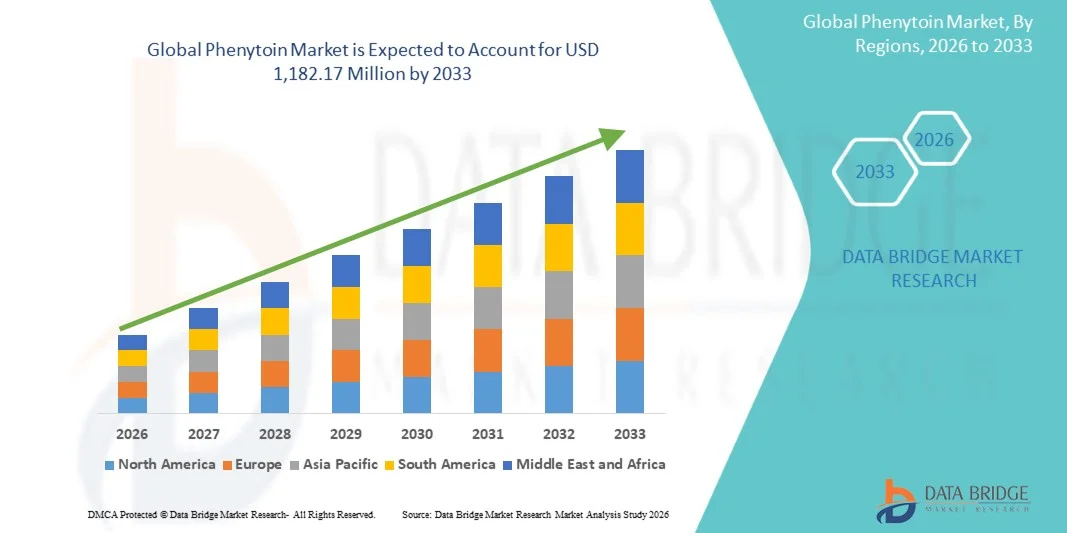
- As per Data Bridge Market Research analysis, the phenytoin market was valued at USD 926.00 million in 2025 and is projected to reach USD 1,182.17 million by 2033, growing at a CAGR of 3.10% from 2026 to 2033.
- The market is experiencing steady, mature-category growth driven by the rising global prevalence of epilepsy and other seizure disorders, phenytoin's continued inclusion on the WHO Model List of Essential Medicines, and its established role as a cost-effective, first-line anticonvulsant across both developed and emerging healthcare systems.
- Sustained institutional demand from hospitals and emergency departments for injectable phenytoin in acute seizure management, combined with continued generic manufacturer participation, is supporting stable category volumes even as newer-generation antiepileptic drugs expand prescriber choice.
Market Size & Forecast
- Global Market Value (2025): USD 926.00 Million
- Expected Market Value (2033): USD 1,182.17 Million
- Forecast CAGR (2026–2033): 3.10%
- Leading Region in 2025: North America
- Fastest Growing Region: Asia-Pacific
What are the Major Takeaways of the Phenytoin Market?
- North America dominated the global phenytoin market with the largest revenue share of 38.60% in 2025, supported by a mature healthcare infrastructure, high diagnosis rates for epilepsy, and consistent institutional demand for both oral and injectable formulations.
- Asia-Pacific is expected to be the fastest-growing region at a CAGR of 4.80% from 2026 to 2033, fueled by rising epilepsy diagnosis rates, expanding access to affordable generic medications, and growing healthcare infrastructure investment in China and India.
- The oral tablets segment led the market with a 48.20% share in 2025, driven by widespread use in long-term outpatient epilepsy management and broad availability across generic manufacturers.
- Injectable solutions are the fastest-growing formulation type, projected to register a CAGR of 4.60%, reflecting rising hospital reliance on intravenous phenytoin for acute status epilepticus management.
- The epilepsy segment dominated the application category with a 62.30% revenue share in 2025, supported by phenytoin's established role as a first-line therapy for generalized tonic-clonic and complex partial seizures.
- The generic drug type segment accounted for 76.40% of the market share in 2025, reflecting phenytoin's long-off-patent status and broad participation from established generic manufacturers.
- The online pharmacies distribution channel is the fastest-growing category, with a CAGR of 6.20%, driven by growing consumer preference for convenient prescription refills for chronic epilepsy medications.
Report Scope and Phenytoin Market Segmentation
|
Attributes |
Phenytoin Key Market Insights |
|
Segments Covered |
|
|
Countries Covered |
North America
Europe
Asia-Pacific
Middle East and Africa
South America
|
|
Key Market Players |
|
|
Market Opportunities |
|
|
Value Added Data Infosets |
In addition to the insights on market scenarios such as market value, growth rate, segmentation, geographical coverage, and major players, the market reports curated by the Data Bridge Market Research also include in-depth expert analysis, patient epidemiology, pipeline analysis, pricing analysis, and regulatory framework. |
What is the Key Trend in the Phenytoin Market?
- Manufacturers and health systems are increasingly focused on strengthening phenytoin's supply chain resilience following a series of intermittent shortages affecting both injectable and oral suspension formulations in recent years.
- For instance, in August 2025, Hikma Pharmaceuticals confirmed full availability of its phenytoin sodium injection vials, resolving a shortage of the 50 mg/mL formulation that had persisted since 2022–2023 and had prompted greater hospital reliance on fosphenytoin as an alternative during the disruption.
- Growing use of fosphenytoin, the water-soluble prodrug of phenytoin, as a supply-chain buffer during periods of intermittent shortage is gradually reshaping prescribing patterns in emergency and inpatient settings.
- Health systems and pharmacy associations are increasingly monitoring narrow-therapeutic-index generic drugs such as phenytoin more closely, given that switching between manufacturers or formulations requires careful therapeutic drug level monitoring.
- As global generic manufacturers continue to expand production capacity to offset historical supply disruptions, sustained multi-source manufacturing is expected to remain a key trend supporting long-term category stability.
What are the Key Drivers of the Phenytoin Market?
- The rising global prevalence of epilepsy and other seizure disorders, combined with phenytoin's continued inclusion on the WHO Model List of Essential Medicines, is sustaining stable baseline demand across both developed and emerging markets.
- For instance, phenytoin remains a first-line therapy for generalized tonic-clonic and complex partial seizures and continued to be one of the most commonly prescribed antiepileptic drugs in the U.S. in recent years, reflecting its enduring clinical relevance despite the availability of newer-generation anticonvulsants.
- Expanding access to affordable generic anticonvulsants across emerging economies is improving epilepsy treatment rates in regions with historically limited access to neurological care.
- In October 2025, the continued presence of multiple established generic manufacturers, including Sun Pharmaceutical Industries, Wockhardt, Aurobindo Pharma, and Zydus Lifesciences, supported the availability of low-cost phenytoin products across price-sensitive markets, contributing to broader access to antiseizure treatment.
- With epilepsy remaining one of the most common chronic neurological disorders worldwide and phenytoin continuing to serve as a cost-effective, well-established treatment option, sustained demand from both hospital and outpatient settings is expected to remain a key growth driver for the market.
Which Factors are Challenging the Growth of the Phenytoin Market?
- Phenytoin's narrow therapeutic index requires careful therapeutic drug monitoring, and switching between manufacturers or formulations is not straightforward, creating clinical complexity that can affect prescriber confidence and patient adherence.
- For instance, clinical briefings issued to providers in 2026 continued to caution that switching phenytoin extended-release capsule manufacturers during periods of shortage requires close monitoring of serum drug levels, given the drug's narrow target therapeutic range of 10 to 20 mcg/mL.
- Periodic manufacturing-related supply disruptions continue to affect specific formulations, creating access challenges for hospitals and pharmacies dependent on a limited number of qualified suppliers.
- For instance, in July 2025, Sun Pharmaceutical Industries reported its phenytoin oral suspension on backorder due to manufacturing delays, while Viatris separately delayed the return of its Dilantin-125 oral suspension in 237 mL bottles, illustrating the fragility of the category's supply base.
- The combination of narrow-therapeutic-index-related clinical complexity, periodic manufacturing-related supply disruptions, and competitive pressure from newer, better-tolerated anticonvulsants continues to restrain broader growth of the phenytoin market despite its established role in epilepsy management.
How is the Phenytoin Market Segmented?
The phenytoin market is segmented on the basis of formulation type, application, dosage strength, route of administration, distribution channel, end user, patient age group, drug type, packaging type, and therapy line.
- By Formulation Type
On the basis of formulation type, the global phenytoin market is segmented into oral tablets, injectable solutions, extended-release capsules, chewable tablets, and oral suspension. The oral tablets segment dominated the market with a 48.20% share in 2025, owing to their widespread use in long-term outpatient epilepsy management, ease of administration, and broad availability across generic manufacturers globally.
The injectable solutions segment is projected to register the fastest growth at a CAGR of 4.60% from 2026 to 2033, driven by rising use of intravenous phenytoin in emergency and hospital settings for the acute management of status epilepticus and seizure control during neurosurgical procedures.
- By Application
On the basis of application, the global phenytoin market is segmented into epilepsy, seizure prevention, status epilepticus, neurosurgery, and trigeminal neuralgia. The epilepsy segment dominated the market with a 62.30% share in 2025, driven by phenytoin's established role as a first-line therapy for generalized tonic-clonic and complex partial seizures and its continued inclusion on the WHO Model List of Essential Medicines.
The status epilepticus segment is expected to witness the fastest CAGR of 4.90% from 2026 to 2033, driven by increasing emergency department reliance on rapid-acting intravenous anticonvulsants for acute, life-threatening seizure episodes.
- By Dosage Strength
On the basis of dosage strength, the global phenytoin market is segmented into low dose, medium dose, and high dose. The medium dose segment dominated the market with a 46.10% share in 2025, reflecting its widespread use as a standard maintenance dose for the majority of adult epilepsy patients under long-term seizure management.
The high dose segment is anticipated to witness the fastest CAGR of 4.30% from 2026 to 2033, driven by rising use of loading-dose regimens in acute and emergency seizure management settings.
- By Route of Administration
On the basis of route of administration, the global phenytoin market is segmented into oral, intravenous, and intramuscular. The oral segment dominated the market with a 71.40% share in 2025, supported by its convenience for chronic outpatient epilepsy management and broad availability across tablet, capsule, and suspension formats.
The intravenous segment is projected to witness the fastest CAGR of 4.80% from 2026 to 2033, driven by its critical role in rapidly achieving therapeutic drug levels during acute seizure emergencies and status epilepticus.
- By Distribution Channel
On the basis of distribution channel, the global phenytoin market is segmented into hospital pharmacies, retail pharmacies, and online pharmacies. The hospital pharmacies segment dominated the market with a 44.30% share in 2025, supported by consistent institutional demand for both oral and injectable formulations in inpatient neurology and emergency care settings.
The online pharmacies segment is expected to witness the fastest CAGR of 6.20% from 2026 to 2033, driven by growing consumer preference for convenient prescription refills and expanding digital pharmacy infrastructure, particularly for chronic, long-term epilepsy medications.
- By End User
On the basis of end user, the global phenytoin market is segmented into hospitals, clinics, home care settings, and ambulatory surgical centers. The hospitals segment dominated the market with a 53.10% share in 2025, driven by the need for close therapeutic monitoring during initial dose titration and management of acute seizure episodes.
The home care settings segment is anticipated to witness the fastest CAGR of 5.40% from 2026 to 2033, supported by the growing shift toward outpatient management of stable, well-controlled epilepsy patients.
- By Patient Age Group
On the basis of patient age group, the global phenytoin market is segmented into pediatric, adult, and geriatric. The adult segment dominated the market with a 57.80% share in 2025, reflecting the higher overall prevalence of diagnosed epilepsy and seizure disorders within the adult population.
The geriatric segment is expected to witness the fastest CAGR of 4.70% from 2026 to 2033, driven by rising incidence of late-onset epilepsy linked to stroke, dementia, and other age-related neurological conditions within a growing elderly population.
- By Drug Type
On the basis of drug type, the global phenytoin market is segmented into branded and generic. The generic segment dominated the market with a 76.40% share in 2025, reflecting phenytoin's long-off-patent status and the presence of numerous established generic manufacturers offering lower-cost alternatives to legacy branded products such as Dilantin.
The branded/extended-release segment is projected to witness the fastest CAGR of 3.80% from 2026 to 2033, supported by continued prescriber preference for established extended-release formulations with well-documented bioavailability profiles.
- By Packaging Type
On the basis of packaging type, the global phenytoin market is segmented into bottles, blister packs, ampoules & vials, and prefilled syringes. The bottles segment dominated the market with a 41.60% share in 2025, owing to their widespread use for oral tablet, capsule, and suspension formulations dispensed through both hospital and retail pharmacy channels.
The prefilled syringes segment is expected to witness the fastest CAGR of 5.10% from 2026 to 2033, driven by growing hospital preference for ready-to-administer injectable formats that reduce dosing errors and preparation time in emergency settings.
- By Therapy Line
On the basis of therapy line, the global phenytoin market is segmented into first-line monotherapy and adjunct/combination therapy. The first-line monotherapy segment dominated the market with a 54.20% share in 2025, supported by phenytoin's long-established efficacy and cost-effectiveness as an initial treatment option for generalized tonic-clonic seizures.
The adjunct/combination therapy segment is anticipated to witness the fastest CAGR of 4.50% from 2026 to 2033, driven by rising use of phenytoin alongside newer anticonvulsants in patients with drug-resistant or difficult-to-control epilepsy.
Which Region Holds the Largest Share of the Phenytoin Market?
- North America dominated the phenytoin market and accounted for the largest revenue share of 38.60% in 2025, supported by a mature healthcare infrastructure, high epilepsy diagnosis rates, and consistent institutional demand for both oral and injectable phenytoin formulations.
- The region also benefits from a well-established generic drug distribution network, active pharmacy shortage monitoring by organizations such as ASHP, and continued reliance on phenytoin as a cost-effective option within broader antiepileptic treatment protocols, which continues to reinforce North America's leadership position in the global market.
U.S. Phenytoin Market Insight
The U.S. phenytoin market is experiencing steady, mature-category growth, supported by consistent institutional demand from hospitals and emergency departments and the drug's continued use as a cost-effective first-line and adjunct anticonvulsant. Active monitoring of drug shortages by organizations such as ASHP continues to support faster resolution of supply disruptions. Growing use of therapeutic drug monitoring services is further supporting safer, more consistent phenytoin dosing across the country.
India Phenytoin Market Insight
The India phenytoin market is expanding steadily, supported by the country's position as a major global hub for generic phenytoin manufacturing and export. Leading domestic manufacturers, including Sun Pharmaceutical Industries, Wockhardt, Aurobindo Pharma, Cipla, and Zydus Lifesciences, continue to supply cost-effective phenytoin formulations to both domestic and international markets. Rising epilepsy diagnosis rates and expanding rural healthcare access are further supporting market growth in India.
Asia-Pacific Phenytoin Market Insight
The Asia-Pacific phenytoin market is expected to witness the fastest growth globally, driven by rising epilepsy diagnosis rates, expanding access to affordable generic medications, and growing healthcare infrastructure investment across China, India, and Japan. The region's strong generic manufacturing base continues to support both domestic consumption and export-led growth, improving overall access to essential anticonvulsant therapy.
Germany Phenytoin Market Insight
The Germany phenytoin market is growing steadily, supported by the country's well-established healthcare system and consistent institutional demand for anticonvulsant therapies. Hospitals and specialty pharmacies continue to rely on phenytoin for both chronic epilepsy management and acute seizure control, supported by strong regulatory oversight of narrow-therapeutic-index generic medications. Continued availability of both branded and generic formulations is further supporting market stability in Germany.
China Phenytoin Market Insight
The China phenytoin market is growing steadily, supported by expanding healthcare infrastructure investment and rising diagnosis rates for epilepsy and other seizure disorders. Growing domestic generic pharmaceutical manufacturing capacity is improving the affordability and availability of phenytoin formulations across both urban and rural healthcare settings. Continued government investment in neurological care access is further supporting long-term market growth across China.
Which are the Top Companies in Phenytoin Market?
The phenytoin industry is primarily led by well-established companies, including:
- Pfizer Inc. (U.S.)
- Sun Pharmaceutical Industries Ltd. (India)
- Wockhardt Ltd. (India)
- Baxter International Inc. (U.S.)
- Viatris Inc. (U.S.)
- Teva Pharmaceutical Industries Ltd. (Israel)
- Hikma Pharmaceuticals PLC (U.K.)
- Zydus Lifesciences Limited (India)
- Fresenius Kabi AG (Germany)
- Amneal Pharmaceuticals, Inc. (U.S.)
- Aurobindo Pharma Limited (India)
- Lupin Limited (India)
- Cipla Limited (India)
- Dr. Reddy's Laboratories Ltd. (India)
- Novartis AG (Switzerland)
What are Latest Developments in Phenytoin Market?
- In August 2025, Hikma Pharmaceuticals confirmed that its 5 mL phenytoin sodium injection vials were fully available, resolving a supply shortage of the 50 mg/mL formulation that had significantly disrupted hospital and emergency-care access to the injectable product since 2022–2023.
- In July 2025, Sun Pharmaceutical Industries reported its phenytoin 125 mg/5 mL oral suspension in 8-ounce bottles on backorder due to manufacturing delays, without a confirmed release date, adding further pressure to an already constrained oral suspension supply.
- In 2025, May, Viatris reported availability of its Dilantin-125 oral suspension in 237 mL bottles following supply issues, while its 240 mL phenytoin oral suspension format had been discontinued, shifting product availability toward the 237 mL presentation.
- In 2024, June, Fresenius Kabi and Glenmark Pharmaceuticals were listed by the American Society of Health-System Pharmacists (ASHP) as having fosphenytoin sodium injection available, providing hospitals with alternative sources during an intermittent shortage affecting another supplier.
- In 2020, November, Pfizer completed the transaction to spin off its Upjohn business and combine it with Mylan to form Viatris, transferring the relevant Upjohn pharmaceutical portfolio into the newly formed company and reshaping the branded and generic distribution landscape for phenytoin products in the U.S.

- Interactive Data Analysis Dashboard
- Company Analysis Dashboard for high growth potential opportunities
- Research Analyst Access for customization & queries
- Competitor Analysis with Interactive dashboard
- Latest News, Updates & Trend analysis
- Harness the Power of Benchmark Analysis for Comprehensive Competitor Tracking
Data collection and base year analysis are done using data collection modules with large sample sizes. The stage includes obtaining market information or related data through various sources and strategies. It includes examining and planning all the data acquired from the past in advance. It likewise envelops the examination of information inconsistencies seen across different information sources. The market data is analysed and estimated using market statistical and coherent models. Also, market share analysis and key trend analysis are the major success factors in the market report. To know more, please request an analyst call or drop down your inquiry.
The key research methodology used by DBMR research team is data triangulation which involves data mining, analysis of the impact of data variables on the market and primary (industry expert) validation. Data models include Vendor Positioning Grid, Market Time Line Analysis, Market Overview and Guide, Company Positioning Grid, Patent Analysis, Pricing Analysis, Company Market Share Analysis, Standards of Measurement, Global versus Regional and Vendor Share Analysis. To know more about the research methodology, drop in an inquiry to speak to our industry experts.
Data Bridge Market Research is a leader in advanced formative research. We take pride in servicing our existing and new customers with data and analysis that match and suits their goal. The report can be customized to include price trend analysis of target brands understanding the market for additional countries (ask for the list of countries), clinical trial results data, literature review, refurbished market and product base analysis. Market analysis of target competitors can be analyzed from technology-based analysis to market portfolio strategies. We can add as many competitors that you require data about in the format and data style you are looking for. Our team of analysts can also provide you data in crude raw excel files pivot tables (Fact book) or can assist you in creating presentations from the data sets available in the report.












