


Photocoagulator Devices Market Size
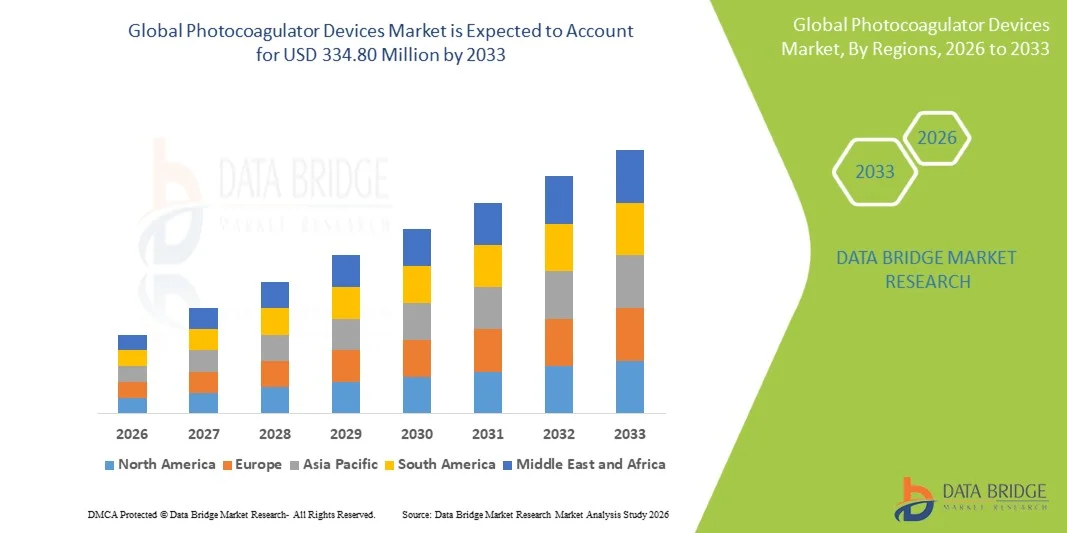
- The global photocoagulator devices market size was valued at USD 250.36 million in 2025 and is expected to reach USD 334.80 million by 2033, at a CAGR of 3.70% during the forecast period
- The market growth is largely fueled by the increasing prevalence of ophthalmic disorders such as diabetic retinopathy, glaucoma, and age-related macular degeneration, along with continuous advancements in laser-based medical technologies, leading to improved precision and treatment outcomes in clinical settings
- Furthermore, rising demand for minimally invasive procedures, growing awareness regarding early diagnosis and treatment of eye diseases, and the expansion of healthcare infrastructure in emerging economies are establishing photocoagulator devices as essential tools in modern ophthalmology. These converging factors are accelerating the adoption of photocoagulation systems, thereby significantly boosting the industry's growth
Photocoagulator Devices Market Analysis
- Photocoagulator devices, utilizing laser technology to treat retinal and other ophthalmic disorders through controlled coagulation, are increasingly vital components of modern ophthalmology due to their precision, effectiveness, and ability to support minimally invasive treatment procedures in both hospital and specialty clinic settings
- The escalating demand for photocoagulator devices is primarily fueled by the rising prevalence of eye diseases such as diabetic retinopathy and age-related macular degeneration, growing aging population, and increasing awareness regarding early diagnosis and treatment of vision-related disorders
- North America dominated the photocoagulator devices market with the largest revenue share of 38.6% in 2025, characterized by advanced healthcare infrastructure, high adoption of laser-based technologies, and a strong presence of leading ophthalmic device manufacturers, with the U.S. witnessing significant growth driven by increasing outpatient ophthalmic procedures and technological advancements
- Asia-Pacific is expected to be the fastest growing region in the photocoagulator devices market during the forecast period due to expanding healthcare infrastructure, rising patient pool, and improving access to advanced ophthalmic treatments across emerging economies
- Retinal laser photocoagulation segment dominated the photocoagulator devices market with a market share of 44.1% in 2025, driven by its widespread use in managing diabetic retinopathy and age-related macular degeneration, along with its proven clinical effectiveness in preventing vision loss
Report Scope and Photocoagulator Devices Market Segmentation
|
Attributes |
Photocoagulator Devices Key Market Insights |
|
Segments Covered |
|
|
Countries Covered |
North America
Europe
Asia-Pacific
Middle East and Africa
South America
|
|
Key Market Players |
|
|
Market Opportunities |
|
|
Value Added Data Infosets |
In addition to the insights on market scenarios such as market value, growth rate, segmentation, geographical coverage, and major players, the market reports curated by the Data Bridge Market Research also include in-depth expert analysis, patient epidemiology, pipeline analysis, pricing analysis, and regulatory framework |
Photocoagulator Devices Market Trends
“Advancements in Laser Precision and Integration with Imaging Systems”
- A significant and accelerating trend in the global photocoagulator devices market is the integration of advanced laser technologies with real-time imaging systems such as optical coherence tomography (OCT) and fundus cameras. This convergence is significantly enhancing treatment precision and clinical outcomes
- For instance, modern retinal laser systems are increasingly being integrated with imaging platforms, allowing ophthalmologists to visualize retinal layers during procedures and deliver targeted photocoagulation therapy with higher accuracy. Similarly, pattern scanning laser photocoagulators enable rapid and uniform laser spot delivery for improved treatment efficiency
- Technological advancements in photocoagulator devices enable features such as automated laser spot placement, customizable treatment patterns, and reduced procedure time. For instance, some advanced systems utilize pattern scanning technology to deliver multiple laser spots in quick succession, minimizing patient discomfort and improving procedural consistency. Furthermore, integration with imaging tools allows clinicians to monitor treatment progress in real time and adjust parameters accordingly
- The seamless integration of photocoagulator devices with digital imaging and diagnostic platforms facilitates comprehensive ophthalmic care. Through a unified interface, clinicians can diagnose, plan, and treat retinal conditions within a single system, improving workflow efficiency and patient outcomes
- This trend towards more precise, efficient, and integrated laser treatment systems is fundamentally reshaping ophthalmic care standards. Consequently, companies such as leading ophthalmic device manufacturers are developing next-generation photocoagulators with enhanced imaging compatibility and automated treatment features
- The demand for photocoagulator devices with advanced imaging integration and precision capabilities is growing rapidly across hospitals and specialty eye clinics, as healthcare providers increasingly prioritize improved clinical outcomes and operational efficiency
- Growing incorporation of digital interfaces and software-driven treatment planning tools is further enhancing usability, allowing clinicians to customize procedures and improve overall treatment accuracy and consistency
Photocoagulator Devices Market Dynamics
Driver
“Rising Burden of Retinal Disorders and Increasing Adoption of Laser-Based Treatments”
- The increasing prevalence of retinal diseases such as diabetic retinopathy and age-related macular degeneration, coupled with the growing adoption of laser-based treatment solutions, is a significant driver for the heightened demand for photocoagulator devices
- For instance, in March 2024, several healthcare providers expanded their ophthalmology services by incorporating advanced retinal laser systems to enhance treatment capabilities and address the rising patient burden. Such strategies by healthcare institutions are expected to drive the photocoagulator devices market growth in the forecast period
- As the global aging population increases and the incidence of diabetes rises, the demand for effective and minimally invasive treatment options is growing, with photocoagulation offering proven clinical benefits in preventing vision loss
- Furthermore, the increasing awareness regarding early diagnosis and timely intervention for eye diseases is encouraging patients to seek advanced treatment options, thereby boosting the adoption of photocoagulator devices
- The ability of photocoagulator devices to deliver precise, outpatient-based treatments with reduced recovery time and lower complication risks is a key factor propelling their adoption in both developed and emerging healthcare markets. The expansion of specialized eye care centers and improved access to ophthalmic services further contribute to market growth
- Rising government and non-government initiatives focused on blindness prevention and diabetic eye care programs are further supporting the adoption of photocoagulation technologies globally
- Increasing investments by healthcare providers in advanced ophthalmic infrastructure and laser technologies are accelerating the availability and utilization of photocoagulator devices
Restraint/Challenge
“High Equipment Costs and Limited Accessibility in Emerging Regions”
- The high cost associated with advanced photocoagulator devices and related ophthalmic equipment poses a significant challenge to widespread adoption, particularly in cost-sensitive and developing regions
- For instance, smaller clinics and healthcare facilities often face budget constraints that limit their ability to invest in high-end laser systems, thereby restricting market penetration in underserved areas
- The requirement for skilled ophthalmologists and trained professionals to operate photocoagulator devices further adds to the challenge, as a shortage of specialized healthcare providers can hinder effective utilization
- Furthermore, limited awareness and access to advanced ophthalmic treatments in rural and remote regions reduce the overall adoption of photocoagulation procedures, especially in low- and middle-income countries
- Addressing these challenges through cost-effective device innovations, training programs for healthcare professionals, and improved healthcare infrastructure will be essential for expanding market reach. In addition, government initiatives and public-private partnerships aimed at enhancing eye care services can support broader adoption of photocoagulator devices
- While technological advancements continue to improve device capabilities, the high initial investment and operational costs remain key barriers, and overcoming these limitations will be critical for sustained market growth
- Stringent regulatory approval processes and compliance requirements for medical laser devices can delay product launches and increase time-to-market for manufacturers
- Maintenance costs and the need for periodic calibration of laser systems add to the overall operational burden, particularly for smaller healthcare facilities
Photocoagulator Devices Market Scope
The market is segmented on the basis of clinical condition, application, and end use.
- By Clinical Condition
On the basis of clinical condition, the photocoagulator devices market is segmented into diabetic retinopathy and age-related macular degeneration. The diabetic retinopathy segment dominated the market with the largest market revenue share in 2025, driven by the rapidly increasing global diabetic population and the high incidence of vision-threatening retinal complications associated with diabetes. Photocoagulation remains a standard and widely adopted treatment for managing diabetic retinopathy, particularly in preventing disease progression and vision loss. The growing awareness regarding early screening and treatment of diabetic eye diseases further supports the segment’s dominance. In addition, government-led screening programs and increasing access to ophthalmic care services are contributing to higher treatment rates. The availability of advanced laser systems with improved precision also enhances treatment outcomes in diabetic retinopathy cases.
The age-related macular degeneration segment is anticipated to witness the fastest growth rate from 2026 to 2033, fueled by the rising geriatric population and increasing prevalence of age-related eye disorders. As life expectancy increases globally, the burden of macular degeneration is expected to rise significantly, driving demand for effective treatment solutions such as photocoagulation. Technological advancements in laser therapies and improved diagnostic capabilities are supporting early detection and intervention. In addition, increasing awareness among elderly populations regarding vision care is encouraging timely treatment. The expansion of specialized ophthalmic centers is further contributing to the growth of this segment.
- By Application
On the basis of application, the photocoagulator devices market is segmented into retinal laser photocoagulation, iridotomy, laser trabeculoplasty, and iridoplasty. The retinal laser photocoagulation segment dominated the market with the largest market revenue share of 44.1% in 2025, driven by its extensive use in treating retinal disorders such as diabetic retinopathy and macular degeneration. This procedure is widely preferred due to its proven clinical efficacy in preventing vision loss and stabilizing retinal conditions. The increasing number of retinal disease cases and the growing availability of advanced laser systems are supporting segment growth. In addition, the minimally invasive nature of the procedure and its suitability for outpatient settings contribute to its widespread adoption. Continuous improvements in laser precision and treatment protocols further strengthen its dominance in the market.
The laser trabeculoplasty segment is expected to witness the fastest CAGR from 2026 to 2033, driven by the rising prevalence of glaucoma and the increasing preference for non-invasive treatment options. Laser trabeculoplasty offers an effective alternative to long-term medication by improving aqueous fluid drainage and reducing intraocular pressure. The growing awareness regarding glaucoma management and the need for early intervention are supporting segment growth. In addition, advancements in laser technologies are enhancing treatment safety and effectiveness. The increasing adoption of outpatient procedures and expanding ophthalmology clinics are further contributing to the rapid growth of this segment.
- By End Use
On the basis of end use, the photocoagulator devices market is segmented into hospitals, clinics, and others. The hospitals segment dominated the market with the largest market revenue share in 2025, driven by the availability of advanced healthcare infrastructure and access to skilled ophthalmologists. Hospitals are often equipped with high-end photocoagulator systems and comprehensive diagnostic facilities, enabling them to handle complex ophthalmic cases. The higher patient inflow and availability of reimbursement policies in many regions further support the dominance of this segment. In addition, hospitals serve as primary centers for specialized eye treatments, including laser-based procedures. Continuous investments in hospital infrastructure and technology upgrades are also contributing to segment growth.
The clinics segment is anticipated to witness the fastest growth rate from 2026 to 2033, fueled by the increasing shift toward outpatient care and the growing number of specialized eye clinics. Clinics offer cost-effective and convenient treatment options, making them an attractive choice for patients seeking quick and accessible care. The adoption of compact and portable photocoagulator devices is enabling clinics to expand their service offerings. In addition, shorter waiting times and personalized care are encouraging patient preference for clinic-based treatments. The rising trend of ambulatory surgical centers and private ophthalmology practices is further accelerating the growth of this segment.
Photocoagulator Devices Market Regional Analysis
- North America dominated the photocoagulator devices market with the largest revenue share of 38.6% in 2025, characterized by advanced healthcare infrastructure, high adoption of laser-based technologies, and a strong presence of leading ophthalmic device manufacturers
- Healthcare providers in the region highly value the precision, clinical effectiveness, and integration capabilities offered by photocoagulator devices with advanced diagnostic imaging systems such as OCT and fundus imaging
- This widespread adoption is further supported by advanced healthcare infrastructure, high healthcare expenditure, and the presence of leading ophthalmic device manufacturers, establishing photocoagulator devices as a preferred solution for treating complex eye conditions in both hospitals and specialty clinics
U.S. Photocoagulator Devices Market Insight
The U.S. photocoagulator devices market captured the largest revenue share of 80% in 2025 within North America, fueled by the rising prevalence of retinal disorders and the strong adoption of advanced laser-based ophthalmic technologies. Healthcare providers are increasingly prioritizing precision-based treatment solutions to manage conditions such as diabetic retinopathy and macular degeneration. The growing preference for minimally invasive outpatient procedures, combined with robust demand for integrated imaging and laser systems, further propels the market. Moreover, the increasing incorporation of advanced diagnostic tools such as OCT and fundus imaging with laser devices is significantly contributing to the market's expansion.
Europe Photocoagulator Devices Market Insight
The Europe photocoagulator devices market is projected to expand at a substantial CAGR throughout the forecast period, primarily driven by the increasing burden of age-related eye diseases and the rising demand for advanced ophthalmic treatments. The growth in aging population, coupled with improvements in healthcare infrastructure, is fostering the adoption of photocoagulator devices. European healthcare systems are also focusing on early diagnosis and preventive care, supporting increased use of laser-based therapies. The region is experiencing steady growth across hospitals and specialty eye clinics, with photocoagulation procedures being widely incorporated into routine ophthalmic care.
U.K. Photocoagulator Devices Market Insight
The U.K. photocoagulator devices market is anticipated to grow at a noteworthy CAGR during the forecast period, driven by the increasing incidence of diabetic eye diseases and a strong emphasis on early diagnosis and treatment. In addition, rising awareness regarding vision care and advancements in ophthalmic technologies are encouraging healthcare providers to adopt laser-based treatment solutions. The UK’s well-established healthcare system, along with its focus on innovation and patient care, is expected to continue to stimulate market growth.
Germany Photocoagulator Devices Market Insight
The Germany photocoagulator devices market is expected to expand at a considerable CAGR during the forecast period, fueled by increasing demand for technologically advanced medical devices and a strong focus on precision healthcare solutions. Germany’s well-developed healthcare infrastructure, combined with its emphasis on innovation and research, promotes the adoption of advanced photocoagulation systems. The integration of laser devices with diagnostic imaging technologies is also becoming increasingly prevalent, with a strong preference for efficient and high-quality treatment solutions aligning with clinical standards.
Asia-Pacific Photocoagulator Devices Market Insight
The Asia-Pacific photocoagulator devices market is poised to grow at the fastest CAGR of 7.6% during the forecast period of 2026 to 2033, driven by increasing prevalence of diabetes, rising healthcare expenditure, and improving access to advanced ophthalmic care in countries such as China, Japan, and India. The region's growing focus on early diagnosis and treatment of eye diseases, supported by government healthcare initiatives, is driving the adoption of photocoagulator devices. Furthermore, as APAC strengthens its healthcare infrastructure and expands specialty eye care services, the accessibility of photocoagulation treatments is increasing across a broader patient population.
Japan Photocoagulator Devices Market Insight
The Japan photocoagulator devices market is gaining momentum due to the country’s advanced healthcare system, rapidly aging population, and increasing demand for effective retinal treatment solutions. The Japanese market places a strong emphasis on precision and quality in medical treatments, and the adoption of photocoagulator devices is driven by the rising number of age-related eye disorders. The integration of advanced laser systems with diagnostic technologies is fueling growth. Moreover, Japan's aging population is likely to spur demand for efficient, minimally invasive ophthalmic treatment solutions in both hospitals and specialized clinics.
India Photocoagulator Devices Market Insight
The India photocoagulator devices market accounted for the largest market revenue share in Asia Pacific in 2025, attributed to the country’s growing diabetic population, increasing awareness regarding eye health, and expanding access to ophthalmic care. India stands as one of the key markets for ophthalmic devices, and photocoagulator systems are becoming increasingly utilized in hospitals, clinics, and specialized eye care centers. The push towards improving healthcare infrastructure and the availability of cost-effective treatment options, alongside government initiatives for blindness prevention, are key factors propelling the market in India.
Photocoagulator Devices Market Share
The Photocoagulator Devices industry is primarily led by well-established companies, including:
- IRIDEX Corporation (U.S.)
- TOPCON CORPORATION (Japan)
- NIDEK CO., LTD. (Japan)
- Alcon Inc. (Switzerland)
- Carl Zeiss Meditec AG (Germany)
- Bausch & Lomb Incorporated (U.S.)
- Lumenis Be Ltd. (Israel)
- Lumibird Medical (France)
- LightMed Corporation (U.S.)
- A.R.C. Laser GmbH (Germany)
- Ziemer Ophthalmic Systems AG (Switzerland)
- SCHWIND eye-tech-solutions GmbH (Germany)
- Optotek Medical (Slovenia)
- Katalyst Surgical, LLC (U.S.)
- Beaver-Visitec International, Inc. (U.S.)
- Ophthalmic Technologies Inc. (Canada)
- Meridian AG (Switzerland)
- Norlase ApS (Denmark)
- OD-OS GmbH (Germany)
- Appasamy Associates Private Limited (India)
What are the Recent Developments in Global Photocoagulator Devices Market?
- In January 2025, Norlase announced FDA 510(k) clearance and CE Mark approval for its LYNX™ Pattern Scanning Laser Indirect Ophthalmoscope. The device integrates pattern scanning laser technology into a portable headset, enabling efficient and flexible retinal treatments. It enhances treatment speed, mobility, and workflow efficiency for ophthalmologists, reflecting innovation in photocoagulation systems
- In May 2023, Norlase received FDA 510(k) clearance and CE Mark approval for its ECHO™ Green Pattern Laser photocoagulator. The system is a portable scanning laser device using MEMS technology, integrating laser and scanner into a single unit for improved usability and precision in retinal treatments
- In May 2023, Norlase officially announced the global launch of its ECHO™ Green Pattern Laser photocoagulator following regulatory approvals. The device features wireless control, no external fiber, and advanced pattern delivery, improving efficiency and accessibility of photocoagulation procedures worldwide
- In May 2023, Norlase’s ECHO™ laser photocoagulator was highlighted for its portable design and enhanced treatment capabilities in ophthalmology-focused media coverage. The system supports tissue-sparing treatment modes and voice-controlled operation, reflecting growing emphasis on precision and ease-of-use in retinal therapies
- In October 2021, Norlase expanded commercialization of its LEAF laser photocoagulator, an ultra-compact slit-lamp-mounted device. The system enables flexible use in clinical settings with minimal setup, supporting the shift toward portable and space-efficient ophthalmic laser technologies

- Interactive Data Analysis Dashboard
- Company Analysis Dashboard for high growth potential opportunities
- Research Analyst Access for customization & queries
- Competitor Analysis with Interactive dashboard
- Latest News, Updates & Trend analysis
- Harness the Power of Benchmark Analysis for Comprehensive Competitor Tracking
Data collection and base year analysis are done using data collection modules with large sample sizes. The stage includes obtaining market information or related data through various sources and strategies. It includes examining and planning all the data acquired from the past in advance. It likewise envelops the examination of information inconsistencies seen across different information sources. The market data is analysed and estimated using market statistical and coherent models. Also, market share analysis and key trend analysis are the major success factors in the market report. To know more, please request an analyst call or drop down your inquiry.
The key research methodology used by DBMR research team is data triangulation which involves data mining, analysis of the impact of data variables on the market and primary (industry expert) validation. Data models include Vendor Positioning Grid, Market Time Line Analysis, Market Overview and Guide, Company Positioning Grid, Patent Analysis, Pricing Analysis, Company Market Share Analysis, Standards of Measurement, Global versus Regional and Vendor Share Analysis. To know more about the research methodology, drop in an inquiry to speak to our industry experts.
Data Bridge Market Research is a leader in advanced formative research. We take pride in servicing our existing and new customers with data and analysis that match and suits their goal. The report can be customized to include price trend analysis of target brands understanding the market for additional countries (ask for the list of countries), clinical trial results data, literature review, refurbished market and product base analysis. Market analysis of target competitors can be analyzed from technology-based analysis to market portfolio strategies. We can add as many competitors that you require data about in the format and data style you are looking for. Our team of analysts can also provide you data in crude raw excel files pivot tables (Fact book) or can assist you in creating presentations from the data sets available in the report.













