


What is the Phytonutrient Ingredients Market Size and Growth Rate?
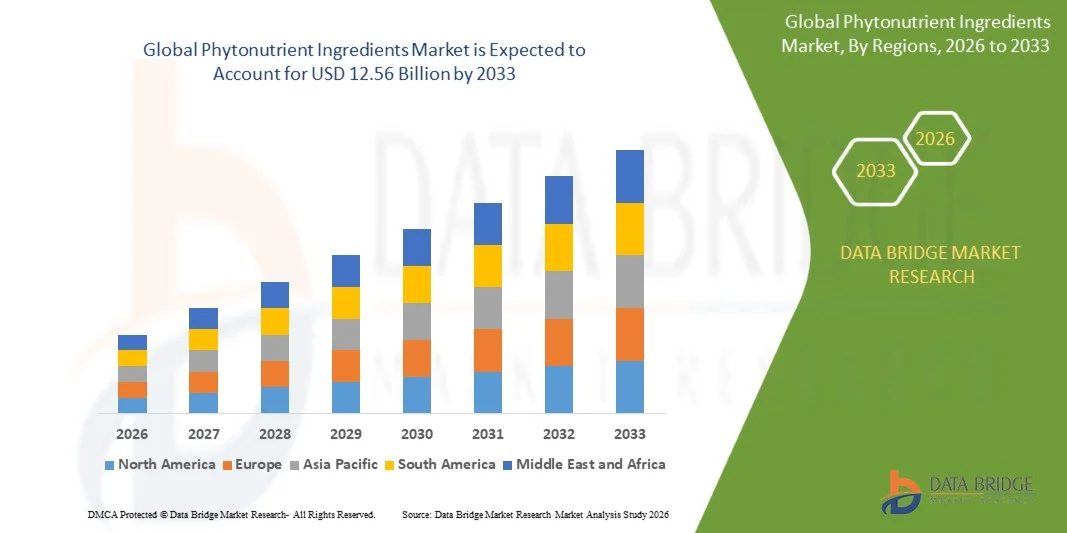
- As per Data Bridge Market Research analysis, the phytonutrient ingredients market was valued at USD 6.79 billion in 2025 and is projected to reach USD 12.56 billion by 2033, growing at a CAGR of 8.00% from 2026 to 2033.
- The market is experiencing consistent growth driven by rising consumer awareness of the health benefits of phytonutrients, increasing preference for natural and clean-label ingredients, and expanding applications across food and beverages, pharmaceuticals, animal feed, dietary supplements, and cosmetics. Phytonutrients such as carotenoids, flavonoids, anthocyanins, and phenolic compounds are increasingly used because of their antioxidant, anti-inflammatory, and other health-promoting properties.
- The growing focus on preventive healthcare, functional nutrition, and plant-based diets, combined with increasing demand for clean-label products, is compelling manufacturers to incorporate phytonutrient ingredients into innovative formulations. The expanding use of plant-derived bioactive compounds in functional foods, fortified beverages, nutritional supplements, pharmaceutical formulations, and personal care products is further supporting market growth.
Market Size & Forecast
- Global Market Value (2025): USD 6.79 Billion
- Expected Market Value (2033): USD 12.56 Billion
- Forecast CAGR (2026–2033): 8.00%
- Leading Region in 2025: North America
- Fastest Growing Region: Asia Pacific
What are the Major Takeaways of the Phytonutrient Ingredients Market?
- North America dominated the phytonutrient ingredients market with the largest revenue share of 36.34% in 2025, supported by increasing health awareness, a strong dietary supplement industry, and rising consumer demand for natural, plant-based functional ingredients.
- Asia-Pacific is expected to be the fastest-growing region at a CAGR of 9.47% from 2026 to 2033, fueled by rapid urbanization, rising middle-class incomes, increasing health awareness, and growing demand for functional nutrition.
- The carotenoids segment led the market with a 31.8% share in 2025, driven by their widespread use in functional foods, dietary supplements, pharmaceuticals, and fortified beverages.
- Flavonoids are the fastest-growing type, projected to register a CAGR of 18.6%, reflecting the surge in consumer interest in natural antioxidants and plant-based health ingredients.
- The food and beverages segment dominated the application category with a 39.4% revenue share in 2025, led by rising demand for fortified foods, functional beverages, and products containing naturally derived health-promoting ingredients.
- Dry accounted for 65% of the market share in 2025, preferred by food and beverage manufacturers, nutraceutical and dietary supplement producers, and pharmaceutical formulators
- The liquid segment is the fastest-growing form category, with a CAGR of 9.3%, driven by increasing demand for ready-to-drink functional beverages, growing preference for convenient liquid supplements, and advances in emulsification and encapsulation technologies
Report Scope and Phytonutrient Ingredients Market Segmentation
|
Attributes |
Phytonutrient Ingredients Key Market Insights |
|
Segments Covered |
|
|
Countries Covered |
North America
Europe
Asia-Pacific
Middle East and Africa
South America
|
|
Key Market Players |
|
|
Market Opportunities |
|
|
Value Added Data Infosets |
In addition to the insights on market scenarios such as market value, growth rate, segmentation, geographical coverage, and major players, the market reports curated by the Data Bridge Market Research also include in-depth expert analysis, pricing analysis, brand share analysis, consumer survey, demography analysis, supply chain analysis, value chain analysis, raw material/consumables overview, vendor selection criteria, PESTLE Analysis, Porter Analysis, and regulatory framework. |
What is the Key Trend in the Phytonutrient Ingredients Market?
- Consumers are increasingly shifting toward plant-based, clean-label, naturally sourced, and multifunctional ingredients, encouraging manufacturers to replace synthetic additives with phytonutrients across functional foods, beverages, nutraceuticals, dietary supplements, and personal care products.
- For instance, in October 2024, Lycored launched Lycomato Beadlets, a new delivery format containing six tomato-derived phytonutrients, including lycopene, phytosterols, phytoene, phytofluene, tocopherols, and beta-carotene, expanding phytonutrient applications across food, beverages, and dietary supplements.
- The growing preference for recognizable ingredients and transparent sourcing is encouraging ingredient suppliers to develop naturally derived carotenoids, flavonoids, polyphenols, and other botanical compounds that can support antioxidant, immunity, cardiovascular, cognitive, and overall wellness positioning.
- Phytonutrients are increasingly being incorporated into mainstream functional foods and beverages, including fortified drinks, nutritional bars, dairy products, cereals, and wellness products, enabling manufacturers to combine convenience with targeted nutritional benefits.
- At the same time, advances in encapsulation, emulsification, and delivery technologies are improving the stability, dispersibility, and bioavailability of sensitive phytonutrients, particularly carotenoids and polyphenols, thereby expanding their use in beverages and other formulations.
- The market is also moving toward targeted and personalized nutrition, with consumers increasingly seeking formulations designed around specific health objectives such as healthy aging, eye health, cognitive wellness, cardiovascular support, and metabolic health.
- For instance, in May 2025, Lycored received a positive EFSA scientific opinion for Lumenato, a standardized yellow tomato extract containing the rare carotenoids phytoene and phytofluene, expanding its potential use in ingestible skin-health products across global markets. The development supports the trend toward specialized, naturally sourced phytonutrients with targeted beauty and wellness benefits.
- As manufacturers increasingly combine natural sourcing, scientific validation, enhanced delivery systems, and targeted health positioning, phytonutrient ingredients are becoming an important component of next-generation functional nutrition and wellness products.
What are the Key Drivers of the Phytonutrient Ingredients Market?
- The growing consumer focus on preventive healthcare and nutrition-based wellness is increasing demand for plant-derived bioactive compounds such as carotenoids, flavonoids, anthocyanins, and polyphenols, particularly as consumers seek natural solutions for long-term health maintenance.
- For instance, in May 2025, the European Food Safety Authority (EFSA) concluded that yellow tomato extract, a carotenoid-rich ingredient containing phytoene and phytofluene, is safe for use as a novel food in adult food supplements, supporting the increasing scientific validation and commercial adoption of plant-derived phytonutrients in health and nutrition products.
- Increasing scientific interest in the antioxidant, anti-inflammatory, cardiovascular, cognitive, immune, and metabolic properties of phytonutrients is encouraging manufacturers to develop clinically supported ingredients and targeted formulations for functional nutrition and nutraceutical applications.
- The expanding incorporation of phytonutrients into functional foods, dietary supplements, fortified beverages, pharmaceuticals, animal nutrition, and cosmetics is broadening the addressable market and reducing dependence on traditional supplement formats.
- Advancements in extraction, purification, standardization, microencapsulation, and delivery technologies are improving ingredient stability and bioavailability, allowing sensitive compounds to be incorporated into a broader range of commercial products.
- For instance, in October 2025, Lycored unveiled its VAS (Versatile Application Solution) technology, using microencapsulated starch beadlets containing phytonutrients such as lycopene, beta-carotene, and lutein; the technology is designed to improve stability, solubility, homogeneity, and performance in tablets, gummies, powder beverages, and capsules
- With consumers increasingly connecting dietary choices with disease prevention and healthy aging, demand for scientifically substantiated plant-derived ingredients is expected to remain strong across global food, nutrition, healthcare, and personal-care industries.
Which Factors are Challenging the Growth of the Phytonutrient Ingredients Market?
- Phytonutrient ingredients can face limited bioavailability, chemical instability, degradation during processing, and variable absorption, particularly for compounds such as carotenoids, flavonoids, anthocyanins, and polyphenols, which can reduce their functional effectiveness in finished products.
- For instance, in September 2024, a study published in Food Chemistry Advances identified poor solubility, oxidation, and physicochemical instability as key challenges affecting the stability and bioavailability of macular carotenoids such as lutein and zeaxanthin, highlighting the technical limitations associated with incorporating phytonutrients into commercial formulations.
- Variations in plant variety, geographical origin, cultivation conditions, harvesting stage, processing methods, and extraction techniques can produce inconsistent concentrations of active compounds, creating challenges for standardized ingredient quality and reproducible product performance.
- Manufacturers also face higher costs associated with advanced extraction, purification, standardization, encapsulation, and stability-enhancement technologies, which can increase formulation costs and restrict adoption in price-sensitive food and beverage categories.
- Regulatory differences between countries concerning ingredient classification, permitted health claims, dosage requirements, labeling, novel ingredients, and safety assessments can increase commercialization complexity and lengthen product-development timelines.
- The need for stronger clinical evidence and substantiation of health claims remains an important challenge, as regulatory authorities and consumers increasingly demand scientifically supported efficacy, safety, and dosage information before accepting phytonutrient-based products.
- For instance, in July 2023, a study published in Food Research International reported that carotenoids face substantial stability challenges during food processing and storage, with thermal treatment potentially causing losses and compounds undergoing isomerization, oxidation, and cleavage.
- These technical, cost, quality, and regulatory challenges can limit the rapid commercialization of advanced phytonutrient formulations, particularly for smaller manufacturers and companies entering highly regulated markets
How is the Phytonutrient Ingredients Market Segmented?
The phytonutrient ingredients market is segmented on the basis of type, application, form, and source
- By Type
On the basis of type, the phytonutrient ingredients market is segmented into phenolic compounds, betalains, monoterpenes, lignans, carotenoids, flavonoids, vitamin E, alkaloids, and anthocyanins. The carotenoids segment dominated the market with a 31.8% revenue share in 2025, owing to their widespread use in functional foods, dietary supplements, pharmaceuticals, and fortified beverages. Carotenoids such as lutein, beta-carotene, and lycopene are increasingly used for eye health, antioxidant protection, cardiovascular wellness, and nutritional applications. Their natural coloring properties also support their use in clean-label food and beverage formulations. Growing consumer awareness of plant-derived health ingredients is further strengthening demand. Continued research into carotenoid benefits and improvements in delivery technologies are expected to support the segment's leading position.
The flavonoids segment is projected to register the fastest CAGR of 18.6% from 2026 to 2033, driven by increasing consumer interest in natural antioxidants and plant-based health ingredients. Flavonoids are naturally present in fruits, vegetables, tea, cocoa, and other botanical sources and are increasingly extracted for commercial applications. Their antioxidant and anti-inflammatory properties are supporting their incorporation into functional foods, beverages, supplements, and nutraceuticals. Growing research into their potential role in cardiovascular, metabolic, and chronic-disease health is further increasing demand. Advances in extraction, purification, and bioavailability technologies are helping manufacturers develop more effective formulations. The expanding preference for naturally derived multifunctional ingredients is therefore expected to accelerate flavonoid adoption.
- By Application
On the basis of application, the phytonutrient ingredients market is segmented into pharmaceuticals, feed, food and beverages, and cosmetics. The food and beverages segment dominated the market with a 39.4% revenue share in 2025, supported by rising demand for fortified foods, functional beverages, and products containing naturally derived health-promoting ingredients. Phytonutrients are increasingly incorporated into beverages, dairy products, bakery products, cereals, snacks, and other everyday food categories. Consumers are increasingly seeking products that provide additional benefits beyond basic nutrition. The clean-label movement is also encouraging manufacturers to use plant-derived ingredients instead of synthetic additives. Expanding functional-food innovation and increasing awareness of preventive nutrition are expected to maintain the segment's dominance.
The pharmaceuticals segment is expected to grow at the fastest CAGR of 17.9% from 2026 to 2033, driven by increasing scientific validation of plant-derived bioactive compounds and their integration into health-oriented formulations. Phytonutrients are increasingly investigated for antioxidant, anti-inflammatory, cardiovascular, immune, and metabolic health applications. Growing emphasis on preventive healthcare is encouraging pharmaceutical and nutraceutical manufacturers to explore botanical compounds as functional ingredients. The aging population and increasing prevalence of lifestyle-related health conditions are further supporting demand for preventive nutrition solutions. Improvements in extraction, purification, standardization, and formulation are increasing the consistency and usability of these compounds. These developments are expected to expand pharmaceutical applications of phytonutrient ingredients during the forecast period.
- By Form
On the basis of form, the phytonutrient ingredients market is segmented into dry and liquid forms. The dry segment is estimated to dominated with 65% share, based on broader global phytonutrient-market data showing powders/dry formats as the leading form. Dry ingredients benefit from longer shelf life, easier transportation, simplified storage, and compatibility with capsules, tablets, nutritional powders, food premixes, and functional beverages. They are also easier to standardize and incorporate into large-scale manufacturing processes. Technologies such as spray drying, freeze drying, and microencapsulation are improving the stability of sensitive plant-derived compounds. The broad use of dry phytonutrients in supplements and functional foods is therefore supporting their leading position.
The liquid segment is expected to be the fastest-growing form, with 9.3% CAGR from 2026 to 2033, based on broader phytonutrient-market estimates. Liquid formulations are increasingly used in ready-to-drink beverages, nutritional shots, liquid supplements, emulsions, and functional food products. They provide manufacturers with opportunities to incorporate phytonutrients into convenient, ready-to-consume products. Advances in emulsification, encapsulation, dispersion, and solubility-enhancement technologies are helping overcome the poor water solubility of several carotenoids and other plant compounds. The rapid expansion of functional beverages is creating additional demand for liquid phytonutrient ingredients. Rising consumer preference for convenient wellness products is expected to further accelerate liquid-format adoption.
- By Source
On the basis of source, the phytonutrient ingredients market is segmented into herbs and trees, fruits and vegetables, and cereals, pulses and oilseeds. The fruits and vegetables segment dominated the market with a 44.7% share in 2025, supported by their abundant availability of carotenoids, flavonoids, anthocyanins, and other bioactive compounds. These sources are widely accepted by consumers because of their natural origin and strong association with healthy diets. Fruit- and vegetable-derived ingredients are extensively used in food, beverages, supplements, and nutraceutical formulations. Their clean-label appeal aligns closely with the growing shift toward natural and plant-based products. The broad availability of raw materials and versatility across applications are expected to maintain the segment's dominant position.
The herbs and trees segment is expected to witness the fastest CAGR of 18.4% from 2026 to 2033, supported by increasing demand for herbal extracts, essential oils, botanical antioxidants, and concentrated plant compounds. Herbs and trees provide diverse sources of bioactive ingredients used in pharmaceuticals, dietary supplements, cosmetics, and functional foods. Growing consumer interest in traditional herbal wellness and natural remedies is increasing demand for these ingredients. Manufacturers are also investing in extraction and standardization technologies to improve the consistency and quality of botanical extracts. Increasing use of herbal ingredients in premium wellness and personal-care products is creating additional opportunities. The convergence of preventive healthcare, botanical wellness, and clean-label product development is expected to drive rapid growth in this segment.
Which Region Holds the Largest Share of the Phytonutrient Ingredients Market?
- North America dominated the phytonutrient ingredients market with the largest revenue share of 36.34% in 2025, supported by increasing health awareness, a strong dietary supplement industry, and rising consumer demand for natural, plant-based functional ingredients.
- The region also benefits from rising preventive healthcare adoption, high disposable incomes, advanced food and ingredient technologies, and increasing demand for clean-label products. Growing utilization of carotenoids, flavonoids, anthocyanins, and other plant-derived compounds across functional foods, beverages, dietary supplements, pharmaceuticals, and cosmetics continues to reinforce North America's leading position in the global market.
U.S. Phytonutrient Ingredients Market Insight
The U.S. phytonutrient ingredients market is witnessing strong growth due to rising consumer awareness of preventive healthcare, functional nutrition, and the health benefits of plant-derived bioactive compounds. The country’s mature dietary supplements, nutraceutical, food and beverage, and functional food industries, along with increasing demand for carotenoids, flavonoids, polyphenols, and other natural ingredients, are driving market expansion. In addition, growing preference for clean-label, plant-based, and naturally sourced products is accelerating the incorporation of phytonutrients across supplements, beverages, pharmaceutical formulations, and wellness products.
Asia-Pacific Phytonutrient Ingredients Market Insight
The Asia-Pacific phytonutrient ingredients market is expected to witness rapid growth, driven by increasing health awareness, rising disposable incomes, expanding functional food and beverage industries, and growing demand for plant-based nutritional ingredients across countries such as China, India, and Japan. Growing consumer interest in natural wellness products, traditional botanical ingredients, and preventive nutrition is supporting regional market expansion. In addition, increasing investments in nutraceutical manufacturing, food processing, and botanical extraction technologies are accelerating the adoption of phytonutrient ingredients across food, pharmaceutical, and personal-care applications.
Japan Phytonutrient Ingredients Market Insight
The Japan phytonutrient ingredients market is witnessing consistent growth due to rising demand for functional foods, dietary supplements, and ingredients supporting healthy aging and preventive healthcare. Food and beverage manufacturers, nutraceutical companies, and ingredient suppliers are increasingly incorporating carotenoids, flavonoids, polyphenols, and other plant-derived compounds into wellness-oriented products. Moreover, Japan’s aging population, strong functional food culture, and increasing consumer focus on maintaining health through nutrition are further contributing to market growth.
China Phytonutrient Ingredients Market Insight
The China phytonutrient ingredients market is growing rapidly, driven by increasing disposable incomes, expanding health-conscious consumer groups, and rising demand for functional foods, dietary supplements, and naturally sourced ingredients. Growing adoption of carotenoids, flavonoids, anthocyanins, and botanical extracts across food, beverage, nutraceutical, and pharmaceutical applications is significantly boosting market demand. In addition, increasing investments in functional food manufacturing, plant-based nutrition, and advanced extraction technologies are positioning China as one of the fastest-growing markets for phytonutrient ingredients globally.
U.K. Phytonutrient Ingredients Market Insight
The U.K. phytonutrient ingredients market is experiencing steady growth, supported by rising consumer demand for clean-label foods, plant-based nutrition, functional beverages, and dietary supplements. Increasing interest in natural antioxidants and ingredients associated with immunity, healthy aging, cardiovascular health, and general wellness is contributing to market growth. Furthermore, the expansion of nutraceutical innovation and increasing incorporation of botanical extracts, carotenoids, and polyphenols into health-oriented products are strengthening the U.K.’s position as an important European market for phytonutrient ingredients.
Germany Phytonutrient Ingredients Market Insight
The Germany phytonutrient ingredients market is expanding steadily due to the country’s strong food and beverage industry, established nutraceutical sector, and growing consumer preference for natural and health-oriented ingredients. Food manufacturers, supplement producers, and pharmaceutical companies are increasingly utilizing carotenoids, flavonoids, polyphenols, and other plant-derived compounds in functional and wellness formulations. Continuous innovation in natural ingredients, increasing demand for clean-label products, and strong consumer emphasis on preventive nutrition are further driving market growth in Germany.
Which are the Top Companies in Phytonutrient Ingredients Market?
The phytonutrient ingredients industry is primarily led by well-established companies, including:
- Kemin Industries, Inc. (U.S.)
- Lycored Corp. (U.S.)
- Divi's Laboratories Limited (India)
- OmniActive Health Technologies, (U.S.)
- Sabinsa Corporation (U.S.)
- Valensa International (U.S.)
- Indena S.p.A. (Italy)
- Martin Bauer (Germany)
- EUROMED (Spain)
- AIDP (U.S.)
- Blue California, Inc. (U.S.)
- Botanic Innovations LLC (U.S.)
- Plant Lipids (India)
- Arjuna Natural (India)
- Synthite Industries Ltd. (India)
- Horphag (Switzerland)
- Kensing, LLC (U.S.)
- Roquette Frères (France)
- Ingredion Incorporated (U.S.)
- dsm-firmenich (Netherlands)
What are Latest Developments in Phytonutrient Ingredients Market?
- In September 2025, Brightseed launched BioMetaControl, a new phytonutrient ingredient identified through its AI-powered Forager platform and derived from hemp hulls, targeting blood sugar control and metabolic health. Published by NutraIngredients, the launch expanded Brightseed’s phytonutrient portfolio beyond digestive wellness into metabolic-health applications and demonstrated the growing use of plant-derived bioactives for targeted health benefits.
- In November 2024, Crystal Tomato secured exclusive rights from Lucas Meyer Cosmetics, part of Clariant, to a new enhanced colourless carotenoid ingredient based on phytoene and phytofluene. Published by NutraIngredients, the development focused on creating an enhanced version of PhytoflORAL, a natural supplement derived from specially cultivated non-GMO tomatoes, supporting the expansion of tomato-derived phytonutrients into skin-health and beauty-from-within applications
- In April 2023, Divi’s Nutraceuticals introduced its Novel Application range of carotenoids and vitamins at Vitafoods Europe 2023, featuring silicon-dioxide-free spray-dried ingredients without synthetic antioxidants, palm oil, or added sugar. Published by NutraIngredients, the development was designed to support manufacturers seeking clean-label formulations while allowing the carotenoid ingredients to be used in supplements and fortified liquid and dry foods
- In April 2022, Bio-gen Extracts announced the launch of CaroRite, a patent-pending mixed carotenoid complex containing lutein, zeaxanthin, alpha-carotene, beta-carotene, and lycopene. Published by Nutraceutical Business Review, the ingredient was introduced as a clinically researched carotenoid complex, while Bio-gen also highlighted delivery technologies designed to expand carotenoid applications beyond conventional capsules and tablets
- In July 2021, Lycored’s Lycoderm tomato phytonutrient complex was incorporated into Herbalife Nutrition’s LycoGlow ingestible skincare product. Published by Nutrition Insight, the development combined tomato-derived lycopene, phytoene, and phytofluene with rosemary-derived carnosic acid and vitamins A and E, demonstrating the expansion of phytonutrients from traditional nutrition applications into beauty-from-within and skin-health products.

- Interactive Data Analysis Dashboard
- Company Analysis Dashboard for high growth potential opportunities
- Research Analyst Access for customization & queries
- Competitor Analysis with Interactive dashboard
- Latest News, Updates & Trend analysis
- Harness the Power of Benchmark Analysis for Comprehensive Competitor Tracking
Global Phytonutrient Ingredients Market, Supply Chain Analysis and Ecosystem Framework
To support market growth and help clients navigate the impact of geopolitical shifts, DBMR has integrated in-depth supply chain analysis into its Global Phytonutrient Ingredients Market research reports. This addition empowers clients to respond effectively to global changes affecting their industries. The supply chain analysis section includes detailed insights such as Global Phytonutrient Ingredients Market consumption and production by country, price trend analysis, the impact of tariffs and geopolitical developments, and import and export trends by country and HSN code. It also highlights major suppliers with data on production capacity and company profiles, as well as key importers and exporters. In addition to research, DBMR offers specialized supply chain consulting services backed by over a decade of experience, providing solutions like supplier discovery, supplier risk assessment, price trend analysis, impact evaluation of inflation and trade route changes, and comprehensive market trend analysis.
Data collection and base year analysis are done using data collection modules with large sample sizes. The stage includes obtaining market information or related data through various sources and strategies. It includes examining and planning all the data acquired from the past in advance. It likewise envelops the examination of information inconsistencies seen across different information sources. The market data is analysed and estimated using market statistical and coherent models. Also, market share analysis and key trend analysis are the major success factors in the market report. To know more, please request an analyst call or drop down your inquiry.
The key research methodology used by DBMR research team is data triangulation which involves data mining, analysis of the impact of data variables on the market and primary (industry expert) validation. Data models include Vendor Positioning Grid, Market Time Line Analysis, Market Overview and Guide, Company Positioning Grid, Patent Analysis, Pricing Analysis, Company Market Share Analysis, Standards of Measurement, Global versus Regional and Vendor Share Analysis. To know more about the research methodology, drop in an inquiry to speak to our industry experts.
Data Bridge Market Research is a leader in advanced formative research. We take pride in servicing our existing and new customers with data and analysis that match and suits their goal. The report can be customized to include price trend analysis of target brands understanding the market for additional countries (ask for the list of countries), clinical trial results data, literature review, refurbished market and product base analysis. Market analysis of target competitors can be analyzed from technology-based analysis to market portfolio strategies. We can add as many competitors that you require data about in the format and data style you are looking for. Our team of analysts can also provide you data in crude raw excel files pivot tables (Fact book) or can assist you in creating presentations from the data sets available in the report.













