


Poly-L-Lactic Acid (PLLA) Injectable Fillers Market Size
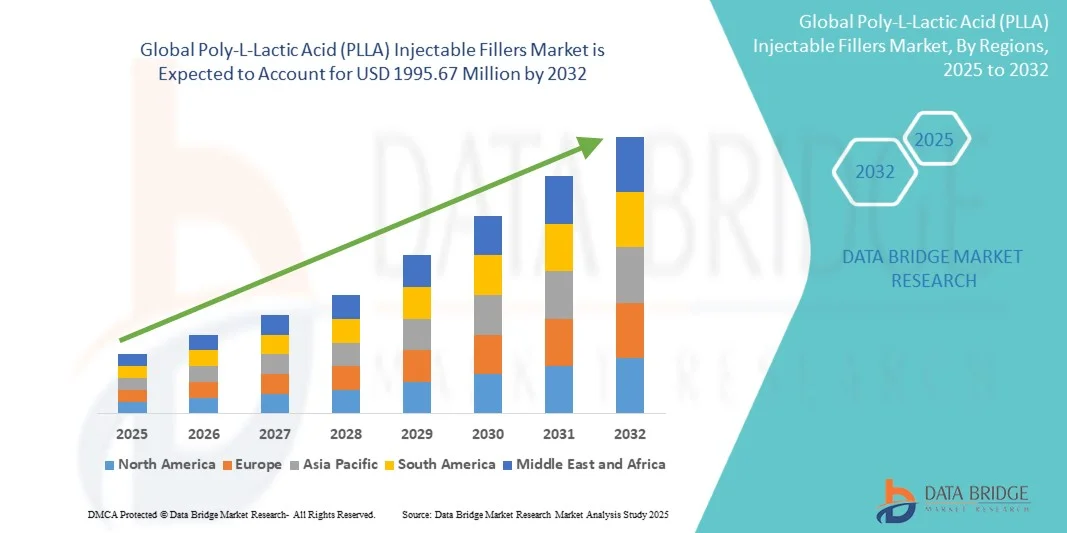
- The global poly-L-lactic acid (PLLA) injectable fillers market size was valued at USD 933.27 Million in 2024 and is expected to reach USD 1995.67 Million by 2032, at a CAGR of9.97% during the forecast period
- The market growth is largely fueled by the increasing demand for minimally invasive aesthetic treatments and the rising preference for long-lasting facial rejuvenation procedures. Advancements in dermal filler technologies and growing awareness of non-surgical cosmetic enhancements are significantly contributing to the adoption of poly-L-lactic acid (PLLA) injectable fillers globally
- Furthermore, the expanding aging population seeking anti-aging solutions and the surge in aesthetic clinics offering advanced injectable procedures are propelling market growth. These converging factors are accelerating the uptake of poly-L-lactic acid (PLLA) injectable fillers treatments, thereby significantly boosting the industry's expansion across both developed and emerging economies
Poly-L-Lactic Acid (PLLA) Injectable Fillers Market Analysis
- Poly-L-Lactic Acid (PLLA) Injectable Fillers, used for facial volume restoration and collagen stimulation, are increasingly vital components of modern aesthetic and dermatological procedures due to their long-lasting effects, biocompatibility, and ability to deliver natural-looking results in both clinical and non-surgical cosmetic settings
- The escalating demand for poly-L-lactic acid (PLLA) injectable fillers is primarily fueled by the growing preference for minimally invasive aesthetic treatments, increasing awareness about anti-aging procedures, and advancements in cosmetic dermatology technologies
- North America dominated the poly-l-lactic acid (PLLA) injectable fillers market with the largest revenue share of 41.5% in 2024, driven by the strong presence of aesthetic clinics, high consumer spending on cosmetic procedures, and early adoption of advanced injectable filler products in the U.S.
- Asia-Pacific is expected to be the fastest-growing region in the poly-l-lactic acid (PLLA) injectable fillers market during the forecast period, owing to increasing disposable incomes, rising beauty consciousness, and expanding medical tourism in countries such as South Korea, China, and India
- The facial fillers segment dominated the largest market revenue share of 47.6% in 2024, primarily driven by the growing consumer demand for facial volume restoration and contour enhancement procedures
Report Scope and Poly-L-Lactic Acid (PLLA) Injectable Fillers Market Segmentation
|
Attributes |
Poly-L-Lactic Acid (PLLA) Injectable Fillers Key Market Insights |
|
Segments Covered |
|
|
Countries Covered |
North America
Europe
Asia-Pacific
Middle East and Africa
South America
|
|
Key Market Players |
|
|
Market Opportunities |
|
|
Value Added Data Infosets |
In addition to the insights on market scenarios such as market value, growth rate, segmentation, geographical coverage, and major players, the market reports curated by the Data Bridge Market Research also include in-depth expert analysis, patient epidemiology, pipeline analysis, pricing analysis, and regulatory framework. |
Poly-L-Lactic Acid (PLLA) Injectable Fillers Market Trends
“Biostimulatory Shift Toward Collagen-Stimulating Fillers”
- A growing trend in the global PLLA injectable fillers market is the increasing preference for bio-stimulating dermal fillers that stimulate collagen production over time, rather than merely providing volumetric augmentation
- For instance, clinical studies have documented that PLLA microspheres induce type I collagen synthesis at 3 and 6 months post-injection, enhancing long-term skin quality and contour
- As consumer demand shifts toward longer-lasting, more natural-looking results, PLLA fillers are gaining traction relative to hyaluronic acid or calcium hydroxylapatite options
- In parallel, aesthetic clinicians are integrating PLLA treatments into comprehensive rejuvenation protocols that combine volume restoration with skin-quality improvement and laxity correction
- Marketing of PLLA products increasingly emphasises “collagen-stimulator” claims and delayed visible effect (versus immediate filler fill), appealing to patients seeking gradual improvement
- The availability of newer PLLA formulations with improved biocompatibility and optimized microsphere suspension is improving safety and practitioner confidence
- Regional uptake is accelerating in Asia-Pacific and Latin America, where medical-aesthetic tourism and rising disposable incomes drive minimally invasive treatment adoption
- In North America, higher clinic density and procedural infrastructure support rapid scaling of PLLA use across dermatology and aesthetic practices
- The overall effect is a transformation of the injectable fillers landscape from short-term volume-fill toward longer-term tissue-remodeling strategies
Poly-L-Lactic Acid (PLLA) Injectable Fillers Market Dynamics
Driver
“Rising Demand for Minimally Invasive Ageing Solutions and Non-Surgical Aesthetics”
- The increasing global demand for aesthetic procedures that are minimally invasive, have shorter downtime, and appeal to younger cohorts is a major driver for the PLLA filler market
- Demographic trends such as the growing population of middle-aged and older individuals concerned about facial volume loss and skin aging are boosting product uptake
- Cultural and social media influences emphasising youthful facial appearance, contour restoration, and “natural-look enhancements” are contributing to consumer adoption of advanced fillers
- For instance, in February 2024, Galderma launched an expanded clinical awareness campaign for Sculptra (PLLA) in the U.S., focusing on long-term collagen restoration benefits and subtle aesthetic outcomes. This initiative aimed to strengthen brand positioning and drive wider practitioner training and patient confidence
- Innovations in product design — such as improved microspheres, optimized delivery systems, and extended durability — are enabling practitioners to offer differentiated treatments and driving market expansion
- The evolving ecosystem of aesthetic clinics, med-spas, and dermatology centres with advanced offerings is lowering access barriers and increasing procedural volumes
- As treatment protocols become more sophisticated, combination therapies (PLLA + HA filler + skin tightening) are becoming common, further fueling demand for PLLA as a core component of aesthetic regimens
Restraint/Challenge
“Regulatory Complexity, Higher Costs and Practitioner Training Gaps”
- One significant restraint on the PLLA injectable fillers market is the comparatively higher cost of PLLA treatments and the need for multiple sessions before full effect is manifest, which can deter some patients
- Regulatory and safety oversight around injectable fillers remains stringent in many countries; mixed results in lesser-trained hands can raise caution among clinics and patients
- Training requirements for optimal PLLA injection technique, patient selection, and post-treatment management are more demanding than for simpler fillers, limiting broader adoption
- Competing filler types (e.g., hyaluronic acid) with immediate effect and lower cost can attract patients who prioritise quicker visible results, thereby moderating growth for PLLA in price-sensitive segments
- Geographic disparities in reimbursement, aesthetic regulation, and practitioner standards mean that adoption rates vary significantly across regions, which may slow global scale-up
- For instance, in March 2023, several clinics in the U.K. reported delayed uptake of new PLLA fillers following regulatory tightening and mandatory practitioner training standards, highlighting how compliance requirements can impact launch timelines
- Ensuring long-term safety and managing delayed outcome expectations (since PLLA works gradually) are operational challenges for clinics and may contribute to slower uptake in newer markets
Poly-L-Lactic Acid (PLLA) Injectable Fillers Market Scope
The market is segmented on the basis of product type, application, and end user.
• By Product Type
On the basis of product type, the Poly-L-Lactic Acid (PLLA) Injectable Fillers market is segmented into facial fillers, dermal fillers, and wrinkle reduction fillers. The facial fillers segment dominated the largest market revenue share of 47.6% in 2024, primarily driven by the growing consumer demand for facial volume restoration and contour enhancement procedures. The segment benefits from the increasing popularity of non-surgical aesthetic treatments and the longer-lasting results offered by PLLA-based formulations compared to traditional hyaluronic acid fillers. Additionally, the rise in social media influence, greater awareness of cosmetic procedures, and the expansion of aesthetic clinics have further accelerated the adoption of PLLA facial fillers worldwide. Their biocompatibility and ability to stimulate collagen production have positioned them as a preferred choice among dermatologists and cosmetic surgeons for natural-looking results.
The dermal fillers segment is projected to witness the fastest growth rate with a CAGR of 21.9% from 2025 to 2032, owing to the increasing use of PLLA-based fillers in comprehensive skin rejuvenation treatments. These fillers are gaining traction for their ability to correct deep dermal imperfections, improve skin elasticity, and restore youthful texture. Technological advancements in filler formulations and injection techniques, coupled with a rising focus on minimally invasive aesthetic enhancements, are fueling the segment’s rapid expansion. The demand is particularly strong in younger populations seeking preventive anti-aging treatments and in medical spas offering advanced rejuvenation procedures.
• By Application
On the basis of application, the Poly-L-Lactic Acid (PLLA) Injectable Fillers market is segmented into aesthetic enhancement, anti-aging, and scar correction. The anti-aging segment held the largest market revenue share of 42.3% in 2024, supported by the increasing global aging population and rising consumer preference for long-term collagen stimulation solutions. PLLA fillers are highly valued for their ability to gradually improve skin firmness and reduce fine lines and wrinkles over time, creating a natural rejuvenation effect. The segment also benefits from the growing acceptance of aesthetic procedures among both men and women and the influence of celebrity endorsements promoting youthful appearance. Furthermore, continuous product innovations and improved clinical outcomes have enhanced patient trust in PLLA-based anti-aging solutions.
The scar correction segment is anticipated to witness the fastest growth rate with a CAGR of 22.4% from 2025 to 2032, driven by increasing adoption of injectable fillers for post-acne, post-surgical, and traumatic scar revisions. PLLA fillers’ ability to stimulate collagen synthesis and smooth skin irregularities has made them a preferred choice in dermatological treatments. The growing awareness of aesthetic dermatology, rising acceptance of minimally invasive scar correction therapies, and availability of advanced PLLA formulations are accelerating growth. Expanding applications in reconstructive aesthetics and dermatology are expected to further enhance this segment’s market presence.
• By End User
On the basis of end user, the Poly-L-Lactic Acid (PLLA) Injectable Fillers market is segmented into hospitals, dermatology clinics, and medical spas. The dermatology clinics segment dominated the largest market revenue share of 49.1% in 2024, driven by the rising number of skilled dermatologists offering specialized filler treatments and growing consumer trust in certified skin experts. The segment is supported by advancements in injection technologies, availability of FDA-approved PLLA products, and increased patient preference for professional yet affordable outpatient procedures. Dermatology clinics also benefit from recurring clientele for follow-up treatments and combination procedures involving fillers, lasers, and skin boosters. Their focus on personalized care and treatment safety further strengthens their leadership in the market.
The medical spas segment is projected to record the fastest growth with a CAGR of 23.1% from 2025 to 2032, owing to the expanding accessibility of aesthetic treatments in non-traditional healthcare environments. Medical spas combine luxury experiences with clinical expertise, attracting a growing clientele seeking minimally invasive rejuvenation solutions. The rising demand for quick, no-downtime cosmetic enhancements and the proliferation of medspa chains offering advanced filler therapies are driving growth. Moreover, the increasing participation of certified practitioners in medspas ensures patient safety and expands the reach of PLLA injectable fillers beyond traditional clinical settings.
Poly-L-Lactic Acid (PLLA) Injectable Fillers Market Regional Analysis
- North America dominated the poly-l-lactic acid (PLLA) injectable fillers market with the largest revenue share of 41.5% in 2024, driven by the strong presence of aesthetic clinics, high consumer spending on cosmetic procedures, and early adoption of advanced injectable filler products in the U.S.
- The region’s growth is further supported by the availability of skilled dermatologists and plastic surgeons, increasing awareness about minimally invasive aesthetic treatments, and a growing aging population seeking long-lasting facial rejuvenation solutions
- Moreover, the presence of leading market players, continuous product innovations, and a well-established healthcare infrastructure are propelling the adoption of PLLA-based fillers across both medical and cosmetic applications
U.S. Poly-L-Lactic Acid (PLLA) Injectable Fillers Market Insight
The U.S. poly-l-lactic acid (PLLA) injectable fillers market captured the largest revenue share within North America in 2024, fueled by the strong preference for non-surgical facial enhancement procedures and the increasing availability of FDA-approved PLLA products. The growing number of aesthetic clinics and high awareness of anti-aging treatments have significantly contributed to market expansion. In addition, ongoing clinical studies focusing on product safety and efficacy, coupled with the rapid adoption of advanced injectable formulations, continue to strengthen the U.S. market’s dominance in the global landscape.
Europe Poly-L-Lactic Acid (PLLA) Injectable Fillers Market Insight
The Europe poly-l-lactic acid (PLLA) injectable fillers market is projected to grow at a substantial CAGR during the forecast period, driven by rising demand for minimally invasive cosmetic treatments and the growing preference for bio-stimulatory fillers. Increasing awareness of facial aesthetics, coupled with the rising number of trained aesthetic professionals, is promoting wider adoption across the region. Furthermore, regulatory support for safe and standardized injectable products, alongside a mature cosmetic industry, is fostering consistent market growth across major European countries.
U.K. Poly-L-Lactic Acid (PLLA) Injectable Fillers Market Insight
The U.K. poly-l-lactic acid (PLLA) injectable fillers market is anticipated to expand steadily during the forecast period, supported by a growing consumer inclination toward non-surgical cosmetic enhancements and facial rejuvenation. The increasing influence of social media, celebrity endorsements, and the rise in male aesthetic procedures are fueling demand. Moreover, favorable government regulations surrounding aesthetic practices and the availability of premium filler brands are reinforcing the U.K.’s strong position in the European market.
Germany Poly-L-Lactic Acid (PLLA) Injectable Fillers Market Insight
The Germany poly-l-lactic acid (PLLA) injectable fillers market is expected to witness consistent growth over the forecast period, driven by a mature medical aesthetics industry, strong healthcare infrastructure, and rising consumer confidence in injectable treatments. The country’s focus on safe, high-quality, and scientifically backed aesthetic solutions is promoting wider use of PLLA fillers among dermatologists and plastic surgeons. Increasing demand for natural-looking, long-term facial restoration further underpins the market’s expansion.
Asia-Pacific Poly-L-Lactic Acid (PLLA) Injectable Fillers Market Insight
The Asia-Pacific poly-l-lactic acid (PLLA) injectable fillers market is poised to grow at the fastest CAGR during the forecast period, owing to increasing disposable incomes, rising beauty consciousness, and expanding medical tourism in countries such as South Korea, China, and India. The growing popularity of non-invasive aesthetic procedures and affordable treatment options are accelerating regional demand. Additionally, local manufacturers are investing in advanced filler formulations, supporting broader accessibility and competitive pricing across emerging economies.
Japan Poly-L-Lactic Acid (PLLA) Injectable Fillers Market Insight
The Japan poly-l-lactic acid (PLLA) injectable fillers market is experiencing steady growth, driven by the country’s aging population, strong focus on skin health, and demand for natural anti-aging solutions. The preference for subtle aesthetic enhancements and long-lasting results has increased the use of PLLA fillers in dermatology and aesthetic clinics. Furthermore, technological advancements and the country’s reputation for high-quality cosmetic procedures are enhancing market potential.
China Poly-L-Lactic Acid (PLLA) Injectable Fillers Market Insight
The China poly-l-lactic acid (PLLA) injectable fillers market accounted for the largest market revenue share in the Asia-Pacific region in 2024, driven by rising disposable incomes, a booming aesthetic industry, and increasing public awareness of facial rejuvenation treatments. The country’s robust medical tourism sector, coupled with government support for cosmetic innovation, has fueled product adoption. The growing number of local manufacturers offering cost-effective yet high-quality PLLA fillers further strengthens China’s leadership in the regional market.
Poly-L-Lactic Acid (PLLA) Injectable Fillers Market Share
The Poly-L-Lactic Acid (PLLA) Injectable Fillers industry is primarily led by well-established companies, including:
- Galderma (Switzerland)
- Sinclair Pharma (U.K.)
- Hugel Inc. (South Korea)
- Revance Therapeutics, Inc. (U.S.)
- Merz Aesthetics (Germany)
- BioPlus Co., Ltd. (South Korea)
- Prollenium Medical Technologies (Canada)
- Anika Therapeutics, Inc. (U.S.)
- Teoxane Laboratories (Switzerland)
- Croma-Pharma GmbH (Austria)
- Dr. Korman Laboratories Ltd. (Israel)
- Daewoong Pharmaceutical Co., Ltd. (South Korea)
- Medytox Inc. (South Korea)
- Revanesse (Canada)
- Aptissio BioTech (U.S.)
- Luqa Pharmaceuticals (China)
- Hugel Pharma Co., Ltd. (South Korea)
- Sculptra (U.S.)
Latest Developments in Global Poly-L-Lactic Acid (PLLA) Injectable Fillers Market
- In October 2021, major manufacturers in the aesthetic injectables market reported ongoing R&D for next-generation Poly-L-Lactic Acid (PLLA) formulations aimed at improving biocompatibility and longevity, marking a key innovation phase for PLLA fillers
- In January 2023, Galderma Laboratories announced the expansion of its PLLA filler product line into the Asian market, strengthening its global presence and enhancing accessibility to minimally invasive aesthetic treatments
- In April 2023, the U.S. Food and Drug Administration (FDA) approved the PLLA-based filler Sculptra for the correction of fine lines and wrinkles in the cheek area, expanding its approved indications in the U.S. market
- In June 2024, several global aesthetic companies, including Revance and Sinclair Pharma, initiated clinical studies focusing on the long-term safety and efficacy of novel PLLA-based injectable formulations for facial volume restoration
- In August 2025, a peer-reviewed publication highlighted advancements in Poly-L-Lactic Acid (PLLA) injectable technology, emphasizing improved particle uniformity, enhanced collagen stimulation, and better treatment predictability for facial and neck rejuvenation applications

- Interactive Data Analysis Dashboard
- Company Analysis Dashboard for high growth potential opportunities
- Research Analyst Access for customization & queries
- Competitor Analysis with Interactive dashboard
- Latest News, Updates & Trend analysis
- Harness the Power of Benchmark Analysis for Comprehensive Competitor Tracking
Data collection and base year analysis are done using data collection modules with large sample sizes. The stage includes obtaining market information or related data through various sources and strategies. It includes examining and planning all the data acquired from the past in advance. It likewise envelops the examination of information inconsistencies seen across different information sources. The market data is analysed and estimated using market statistical and coherent models. Also, market share analysis and key trend analysis are the major success factors in the market report. To know more, please request an analyst call or drop down your inquiry.
The key research methodology used by DBMR research team is data triangulation which involves data mining, analysis of the impact of data variables on the market and primary (industry expert) validation. Data models include Vendor Positioning Grid, Market Time Line Analysis, Market Overview and Guide, Company Positioning Grid, Patent Analysis, Pricing Analysis, Company Market Share Analysis, Standards of Measurement, Global versus Regional and Vendor Share Analysis. To know more about the research methodology, drop in an inquiry to speak to our industry experts.
Data Bridge Market Research is a leader in advanced formative research. We take pride in servicing our existing and new customers with data and analysis that match and suits their goal. The report can be customized to include price trend analysis of target brands understanding the market for additional countries (ask for the list of countries), clinical trial results data, literature review, refurbished market and product base analysis. Market analysis of target competitors can be analyzed from technology-based analysis to market portfolio strategies. We can add as many competitors that you require data about in the format and data style you are looking for. Our team of analysts can also provide you data in crude raw excel files pivot tables (Fact book) or can assist you in creating presentations from the data sets available in the report.












