


Polymyalgia Rheumatica Treatment Market Size
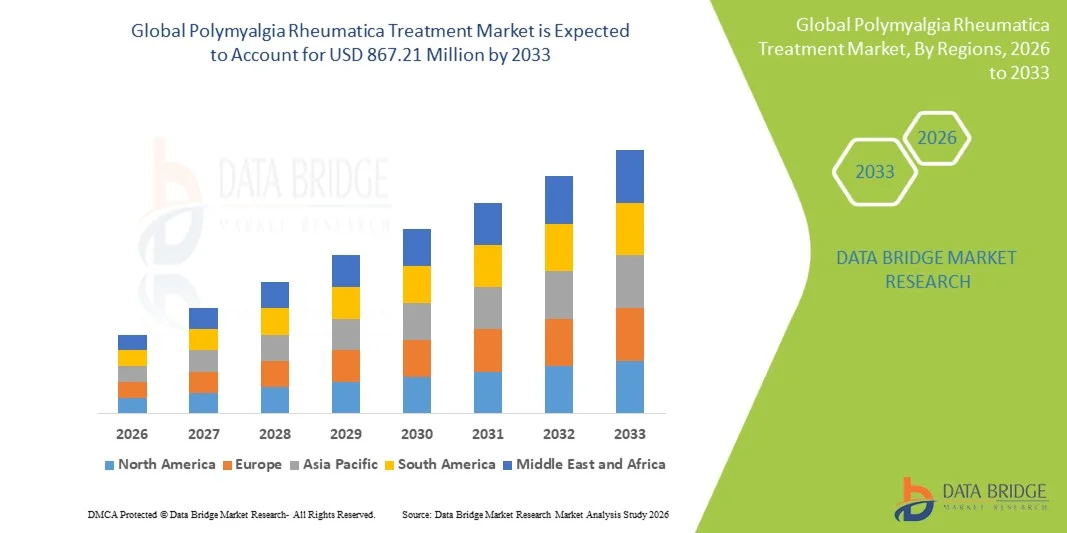
- The global polymyalgia rheumatica treatment market size was valued at USD 304.01 million in 2025 and is expected to reach USD 867.21 million by 2033, at a CAGR of 14.00% during the forecast period
- The market growth is largely driven by the rising prevalence of polymyalgia rheumatica, especially among the aging population increased disease awareness, improved diagnosis rates, and sustained reliance on effective therapeutic regimens such as corticosteroids and adjunct drugs
- Furthermore, increasing demand for advanced, patient‑friendly treatment options, growing healthcare expenditure, and ongoing developments in therapeutic interventions tailored to manage inflammatory symptoms are establishing polymyalgia rheumatica treatments as essential solutions for clinicians and patients globally. These converging factors are accelerating uptake of PMR treatments, thereby significantly boosting industry growth
Polymyalgia Rheumatica Treatment Market Analysis
- Polymyalgia rheumatica treatment market products, including corticosteroids and adjunct therapies, are increasingly vital in managing pain, stiffness, and inflammation in older adults, ensuring improved mobility and quality of life, and reducing complications associated with prolonged untreated inflammation
- The escalating demand in the polymyalgia rheumatica treatment is primarily fueled by the aging global population, increasing disease awareness, improved diagnostic capabilities, and a rising preference for personalized, patient-friendly therapeutic regimens that provide rapid symptom relief and reduce long-term corticosteroid side effects
- North America dominated the polymyalgia rheumatica treatment market with the largest revenue share of 38.5% in 2025, characterized by well-established healthcare infrastructure, high healthcare expenditure, and strong adoption of advanced therapeutic protocols, with the U.S. experiencing substantial growth in PMR treatment uptake due to early diagnosis initiatives and a strong presence of key pharmaceutical players focusing on innovative corticosteroid-sparing therapies
- Asia-Pacific is expected to be the fastest-growing region in the polymyalgia rheumatica treatment market during the forecast period, driven by increasing awareness of the disease, growing aging population, rising healthcare expenditure, and improving access to advanced diagnostic and therapeutic options
- The corticosteroid segment dominated the polymyalgia rheumatica treatment market with a market share of 70.2% in 2025, driven by its established efficacy in rapidly controlling inflammation and widespread clinical adoption as the first-line standard of care
Report Scope and Polymyalgia Rheumatica Treatment Market Segmentation
|
Attributes |
Polymyalgia Rheumatica Treatment Key Market Insights |
|
Segments Covered |
|
|
Countries Covered |
North America
Europe
Asia-Pacific
Middle East and Africa
South America
|
|
Key Market Players |
|
|
Market Opportunities |
|
|
Value Added Data Infosets |
In addition to the insights on market scenarios such as market value, growth rate, segmentation, geographical coverage, and major players, the market reports curated by the Data Bridge Market Research also include in-depth expert analysis, patient epidemiology, pipeline analysis, pricing analysis, and regulatory framework |
Polymyalgia Rheumatica Treatment Market Trends
“Advancements in Steroid-Sparing and Biologic Therapies”
- A significant and accelerating trend in the global polymyalgia rheumatica treatment market is the growing development and adoption of steroid-sparing therapies and targeted biologics, providing effective symptom control while reducing long-term corticosteroid side effects
- For instance, tocilizumab, an IL-6 receptor inhibitor, is increasingly being evaluated alongside standard corticosteroid therapy to improve treatment outcomes and reduce cumulative steroid doses in PMR patients
- These innovative therapies enable clinicians to personalize treatment regimens based on patient risk factors and disease severity, improving adherence and minimizing complications such as osteoporosis and diabetes associated with prolonged steroid use
- Furthermore, integration of biologics into standard care protocols is enhancing patient quality of life by allowing more rapid tapering of steroids and reducing relapse frequency, making PMR management more sustainable
- Adoption of digital monitoring tools and telehealth platforms for symptom tracking is also emerging, supporting timely dose adjustments and remote patient management
- This trend toward safer, more effective, and individualized treatment options is reshaping expectations among healthcare providers and patients, encouraging adoption of advanced therapeutic approaches
- The demand for biologics and adjunct therapies in the polymyalgia rheumatica treatment market is growing steadily across developed and emerging regions as patients and clinicians prioritize improved safety profiles and long-term management of the condition
Polymyalgia Rheumatica Treatment Market Dynamics
Driver
“Increasing Prevalence of PMR and Aging Population”
- The rising incidence of polymyalgia rheumatica among older adults, coupled with an expanding aging population globally, is a key driver of market growth in PMR treatment
- For instance, population studies in North America and Europe report PMR prevalence of 0.5–1% in individuals over 50 years, highlighting the growing patient pool requiring effective management
- As awareness and early diagnosis of PMR improve, demand for both corticosteroid therapy and emerging steroid-sparing treatments is increasing, ensuring timely intervention and reduced risk of complications
- Furthermore, rising healthcare expenditure, improved access to medical care, and patient preference for therapies with fewer side effects are strengthening adoption of PMR treatments
- The convenience of outpatient treatment, availability of oral and injectable formulations, and the focus on personalized medicine are key factors propelling growth of the polymyalgia rheumatica treatment market in both developed and emerging regions
- For instance, healthcare initiatives in Asia-Pacific focusing on early detection of autoimmune and inflammatory disorders are increasing patient access to effective PMR therapies
- Growing collaborations between pharmaceutical companies and healthcare providers to develop awareness programs and improve diagnosis rates are further accelerating market growth
- Increasing patient advocacy and education campaigns are also driving demand for safer and more effective treatment options globally
Restraint/Challenge
“Side Effects of Corticosteroids and Limited Awareness in Emerging Regions”
- Concerns regarding long-term corticosteroid therapy, including osteoporosis, hypertension, and diabetes, pose a significant challenge to broader adoption of standard PMR treatment regimens
- For instance, patients on prolonged prednisone therapy often require additional monitoring and supportive care, increasing treatment complexity and healthcare costs
- Low awareness of PMR symptoms among patients and primary care physicians in emerging regions delays diagnosis and therapy initiation, limiting market penetration
- Furthermore, high costs associated with biologics and newer steroid-sparing therapies can restrict access in price-sensitive regions, hindering widespread adoption of advanced treatments
- Limited insurance coverage for biologics in several regions also poses a barrier, restricting affordability and uptake among patients requiring long-term therapy. For instance, inadequate reimbursement policies in developing countries often prevent patients from accessing steroid-sparing or biologic treatments
- Cultural misconceptions and underreporting of musculoskeletal symptoms in older adults can further delay treatment initiation, impacting overall market growth
- Overcoming these challenges through patient education, physician training, and the development of affordable and safer therapeutic options will be critical for sustained growth in the Polymyalgia Rheumatica Treatment Market
Polymyalgia Rheumatica Treatment Market Scope
The market is segmented on the basis of drug class, route of administration, end-users, and distribution channels.
- By Drug Class
On the basis of drug class, the polymyalgia rheumatica treatment market is segmented into corticosteroids, disease-modifying anti-rheumatic drugs (DMARDs), nonsteroidal anti-inflammatory drugs (NSAIDs), and others. The corticosteroids segment dominated the market with the largest market revenue share of 70.2% in 2025, driven by their rapid efficacy in controlling inflammation and stiffness in PMR patients. Corticosteroids remain the first-line standard of care, widely prescribed across hospitals, specialty clinics, and homecare settings, and are effective in achieving quick symptom relief. Their established clinical profile, ease of dose adjustment, and availability in oral and parenteral forms further reinforce their dominance. Physicians prefer corticosteroids due to predictable outcomes, and patients demonstrate high adherence owing to fast-acting relief. Longstanding clinical familiarity and guideline recommendations make this segment the backbone of PMR therapy worldwide.
The DMARDs segment is anticipated to witness the fastest growth rate of 8.1% from 2026 to 2033, fueled by the increasing adoption of steroid-sparing therapies that minimize long-term corticosteroid side effects. DMARDs, including methotrexate and newer biologics, are increasingly preferred for patients with relapse-prone PMR or comorbidities that make prolonged steroid use risky. Expanding clinical evidence supporting DMARD efficacy is encouraging physicians to incorporate them earlier in therapy. Patient awareness campaigns and new approvals in developed and emerging markets are also contributing to growth. The segment benefits from rising adoption of combination therapies and growing investments in R&D.
- By Route of Administration
On the basis of route of administration, the market is segmented into oral, parenteral, and others. The oral segment dominated the market with the largest share in 2025, primarily due to convenience, patient compliance, and suitability for long-term corticosteroid therapy. Oral formulations allow flexible dosing and easy adjustment of treatment regimens by clinicians, making them preferred in outpatient and homecare settings. Patients benefit from reduced hospital visits and improved adherence, particularly among elderly populations. Oral medications also support combination therapy with DMARDs or NSAIDs, enhancing treatment effectiveness. The segment’s dominance is reinforced by wide availability in hospitals, retail, and online pharmacies, making oral therapy the standard choice globally.
The parenteral segment is expected to witness the fastest growth during the forecast period, driven by rising adoption of injectable biologics and DMARDs. Injectable therapies provide rapid and targeted delivery, particularly for patients with severe disease or inadequate response to oral corticosteroids. Pre-filled syringes, auto-injectors, and clinic-administered infusions improve convenience and safety. Growth is supported by expanding availability in specialty clinics and hospital outpatient services. Increasing awareness of biologic therapy benefits, such as reduced relapse rates, is further driving adoption in emerging markets.
- By End-Users
On the basis of end-users, the polymyalgia rheumatica treatment market is segmented into hospitals, homecare, specialty clinics, and others. The hospitals segment dominated the market with the largest revenue share in 2025, due to professional monitoring during initial corticosteroid therapy and dose tapering. Hospitals provide access to diagnostics such as laboratory tests and imaging, which are critical for accurate PMR diagnosis and treatment planning. Trained rheumatologists and multidisciplinary care teams ensure safe management of complex patients. Hospital settings also allow administration of injectable DMARDs and biologics under supervision. Furthermore, in-patient monitoring reduces complications and ensures adherence to therapy. The segment benefits from established infrastructure and high patient trust.
The homecare segment is expected to witness the fastest growth, driven by increasing patient preference for at-home management, oral corticosteroid therapy, and remote monitoring solutions. Telemedicine platforms, mobile apps, and nursing support services are facilitating home-based treatment for elderly or mobility-limited patients. Homecare reduces hospital visits and associated costs, while improving convenience and adherence. Patients and caregivers are increasingly empowered to manage therapy schedules. Growth is also supported by awareness campaigns and home-delivery of medications from retail and online pharmacies.
- By Distribution Channel
On the basis of distribution channel, the market is segmented into hospital pharmacy, retail pharmacy, online pharmacies, and others. The hospital pharmacy segment dominated the market with the largest revenue share in 2025, as corticosteroids and advanced therapies are primarily dispensed under medical supervision to ensure safe use and monitoring of side effects. Hospitals provide immediate access for inpatient and outpatient treatment. Pharmacists in hospital settings also counsel patients on dose tapering and combination therapies. Availability of injectable biologics and DMARDs strengthens hospital pharmacy dominance. Hospitals ensure adherence to treatment guidelines and regulatory standards. This segment remains critical for the controlled and safe distribution of PMR therapies.
The online pharmacy segment is expected to witness the fastest growth from 2026 to 2033, fueled by growing digitalization of healthcare and convenience of doorstep delivery. Patients can access corticosteroids, NSAIDs, and DMARDs from home, with integrated telemedicine prescription verification. Growth is especially strong in urban and semi-urban regions where online access is high. Privacy, ease of ordering, and subscription refill services enhance patient convenience. Increasing trust in e-pharmacies and awareness campaigns are accelerating adoption. Online pharmacies also enable faster access to new therapies soon after approvals.
Polymyalgia Rheumatica Treatment Market Regional Analysis
- North America dominated the polymyalgia rheumatica treatment market with the largest revenue share of 38.5% in 2025, characterized by well-established healthcare infrastructure, high healthcare expenditure, and strong adoption of advanced therapeutic protocols
- Patients and healthcare providers in the region highly value access to advanced treatment options, established healthcare infrastructure, and comprehensive monitoring of therapy to reduce long-term corticosteroid side effects
- This widespread adoption is further supported by high healthcare expenditure, well-developed insurance coverage, strong presence of key pharmaceutical players, and increasing awareness campaigns by patient advocacy groups, establishing the region as a dominant market for PMR treatments in both hospital and homecare settings
U.S. Polymyalgia Rheumatica Treatment Market Insight
The U.S. Polymyalgia Rheumatica Treatment Market captured the largest revenue share of 82% in 2025 within North America, driven by the high prevalence of PMR among the aging population and well-established healthcare infrastructure. Patients increasingly prioritize effective symptom management, with corticosteroids remaining the first-line therapy, complemented by emerging DMARDs and biologics. The adoption of advanced diagnostic tools, early detection programs, and patient education initiatives is boosting treatment uptake. In addition, the integration of telemedicine and homecare support is enhancing access to therapy, while growing awareness of steroid-sparing options further propels market growth. The U.S. market benefits from robust pharmaceutical R&D and strong presence of key global and local players.
Europe Polymyalgia Rheumatica Treatment Market Insight
The Europe Polymyalgia Rheumatica Treatment Market is projected to expand at a substantial CAGR during the forecast period, driven by the aging population, high PMR prevalence, and established rheumatology care networks. Countries such as Germany, France, and Italy are leading in early diagnosis and management, supported by advanced hospital systems and outpatient care facilities. Increased patient awareness campaigns, coupled with adoption of steroid-sparing DMARDs and biologics, are fostering market growth. Insurance coverage and reimbursement policies further encourage uptake, while urbanization and higher disposable incomes contribute to accessibility. The region sees strong growth across hospitals, specialty clinics, and homecare settings.
U.K. Polymyalgia Rheumatica Treatment Market Insight
The U.K. Polymyalgia Rheumatica Treatment Market is anticipated to grow at a noteworthy CAGR during the forecast period, driven by increasing disease awareness, early diagnosis, and access to effective therapies. Rising concerns about corticosteroid side effects have accelerated adoption of DMARDs and biologics among patients with recurrent PMR or comorbidities. The U.K.’s healthcare system, supported by the NHS, enables structured treatment pathways and monitoring. In addition, telehealth services and patient support programs are expanding access to care. Hospitals and specialty clinics remain the primary treatment points, while homecare therapy is gaining traction. These factors collectively stimulate consistent market growth.
Germany Polymyalgia Rheumatica Treatment Market Insight
The Germany Polymyalgia Rheumatica Treatment Market is expected to expand at a considerable CAGR during the forecast period, fueled by the aging population, advanced healthcare infrastructure, and early diagnosis initiatives. Patients increasingly prefer therapies that minimize long-term corticosteroid complications, supporting the adoption of DMARDs and biologics. High awareness of autoimmune and inflammatory conditions, combined with strong physician networks, promotes effective disease management. Hospitals and specialty clinics dominate treatment delivery, supported by reimbursement policies and insurance coverage. Patient education programs and telemedicine integration are further enhancing adherence and treatment outcomes.
Asia-Pacific Polymyalgia Rheumatica Treatment Market Insight
The Asia-Pacific Polymyalgia Rheumatica Treatment Market is poised to grow at the fastest CAGR of 9.5% during the forecast period of 2026 to 2033, driven by increasing awareness of PMR, rising geriatric populations, and improving healthcare infrastructure in countries such as China, Japan, and India. The region is witnessing enhanced adoption of corticosteroids, DMARDs, and emerging biologics, supported by telemedicine initiatives and homecare services. Government programs promoting digital health and early disease detection are contributing to market expansion. Growing access to affordable treatment options and the presence of both multinational and domestic pharmaceutical companies further support growth. Urbanization and rising disposable incomes are increasing treatment affordability and patient uptake.
Japan Polymyalgia Rheumatica Treatment Market Insight
The Japan Polymyalgia Rheumatica Treatment Market is gaining momentum due to the country’s aging population, high healthcare standards, and strong emphasis on early diagnosis. Patients increasingly prefer steroid-sparing therapies and biologics to reduce long-term corticosteroid complications. Hospitals and specialty clinics remain primary treatment hubs, while homecare and telemedicine solutions are becoming more widely adopted. Government initiatives and health awareness campaigns are supporting patient education. The availability of advanced diagnostics and close monitoring ensures improved clinical outcomes. Rising patient preference for personalized therapy further drives market adoption.
India Polymyalgia Rheumatica Treatment Market Insight
The India Polymyalgia Rheumatica Treatment Market accounted for the largest revenue share in Asia-Pacific in 2025, attributed to the country’s growing geriatric population, increasing awareness of autoimmune disorders, and improving healthcare access. Corticosteroids dominate treatment, while adoption of DMARDs and emerging biologics is steadily rising in urban centers. Hospitals, specialty clinics, and homecare services are expanding patient access to therapy. Government healthcare programs and private insurance initiatives are facilitating affordability. In addition, growing telemedicine and e-pharmacy penetration are enhancing treatment reach in semi-urban and rural regions. Awareness campaigns and physician training programs further drive market growth.
Polymyalgia Rheumatica Treatment Market Share
The Polymyalgia Rheumatica Treatment industry is primarily led by well-established companies, including:
- Regeneron Pharmaceuticals, Inc. (U.S.)
- Novartis AG (Switzerland)
- Pfizer Inc. (U.S.)
- Eli Lilly and Company (U.S.)
- AbbVie Inc. (U.S.)
- Amgen Inc. (U.S.)
- AstraZeneca (U.K.)
- Boehringer Ingelheim GmbH (Germany)
- Takeda Pharmaceutical Company Limited (Japan)
- UCB Pharma (Belgium)
- Johnson & Johnson Services, Inc. (U.S.)
- Gilead Sciences, Inc. (U.S.)
- Galapagos NV (Belgium)
- Sandoz International GmbH (Switzerland)
- Genentech, Inc. (U.S.)
- Sanofi (France)
- Celgene Corporation (U.S.)
- Bristol Myers Squibb Company (U.S.)
What are the Recent Developments in Global Polymyalgia Rheumatica Treatment Market?
- In October 2025, Novartis announced that Cosentyx® (secukinumab) met primary and all secondary endpoints in its global Phase III REPLENISH trial in patients with polymyalgia rheumatica, demonstrating statistically significant sustained remission and reductions in cumulative steroid dose versus placebo, highlighting its potential as a novel targeted treatment option
- In July 2025, phase 3 clinical data confirmed that sarilumab significantly improved patient‑reported outcomes, including quality of life and disease severity, in adults with relapsing polymyalgia rheumatica when used with a glucocorticoid taper, supporting its growing role in treatment beyond corticosteroids
- In May 2025, Health Canada issued a Notice of Compliance for Kevzara® (sarilumab) for the treatment of adult patients with polymyalgia rheumatica (PMR), marking its first regulatory approval in Canada for this indication and offering a new IL‑6 receptor blocker option to help achieve sustained remission and reduce steroid dependence in PMR patients
- In January 2025, early results from a randomized, placebo‑controlled study showed that the JAK inhibitor baricitinib may effectively treat polymyalgia rheumatica with significant reductions in disease activity without oral steroids, suggesting a promising steroid‑sparing alternative therapy
- In February 2023, the U.S. Food and Drug Administration approved Kevzara® (sarilumab) as the first and only biologic specifically indicated for polymyalgia rheumatica in adults with inadequate response or intolerance to corticosteroids, marking a landmark regulatory milestone for PMR therapy

- Interactive Data Analysis Dashboard
- Company Analysis Dashboard for high growth potential opportunities
- Research Analyst Access for customization & queries
- Competitor Analysis with Interactive dashboard
- Latest News, Updates & Trend analysis
- Harness the Power of Benchmark Analysis for Comprehensive Competitor Tracking
Data collection and base year analysis are done using data collection modules with large sample sizes. The stage includes obtaining market information or related data through various sources and strategies. It includes examining and planning all the data acquired from the past in advance. It likewise envelops the examination of information inconsistencies seen across different information sources. The market data is analysed and estimated using market statistical and coherent models. Also, market share analysis and key trend analysis are the major success factors in the market report. To know more, please request an analyst call or drop down your inquiry.
The key research methodology used by DBMR research team is data triangulation which involves data mining, analysis of the impact of data variables on the market and primary (industry expert) validation. Data models include Vendor Positioning Grid, Market Time Line Analysis, Market Overview and Guide, Company Positioning Grid, Patent Analysis, Pricing Analysis, Company Market Share Analysis, Standards of Measurement, Global versus Regional and Vendor Share Analysis. To know more about the research methodology, drop in an inquiry to speak to our industry experts.
Data Bridge Market Research is a leader in advanced formative research. We take pride in servicing our existing and new customers with data and analysis that match and suits their goal. The report can be customized to include price trend analysis of target brands understanding the market for additional countries (ask for the list of countries), clinical trial results data, literature review, refurbished market and product base analysis. Market analysis of target competitors can be analyzed from technology-based analysis to market portfolio strategies. We can add as many competitors that you require data about in the format and data style you are looking for. Our team of analysts can also provide you data in crude raw excel files pivot tables (Fact book) or can assist you in creating presentations from the data sets available in the report.












