


Postoperative Nausea and Vomiting Treatment Market Size
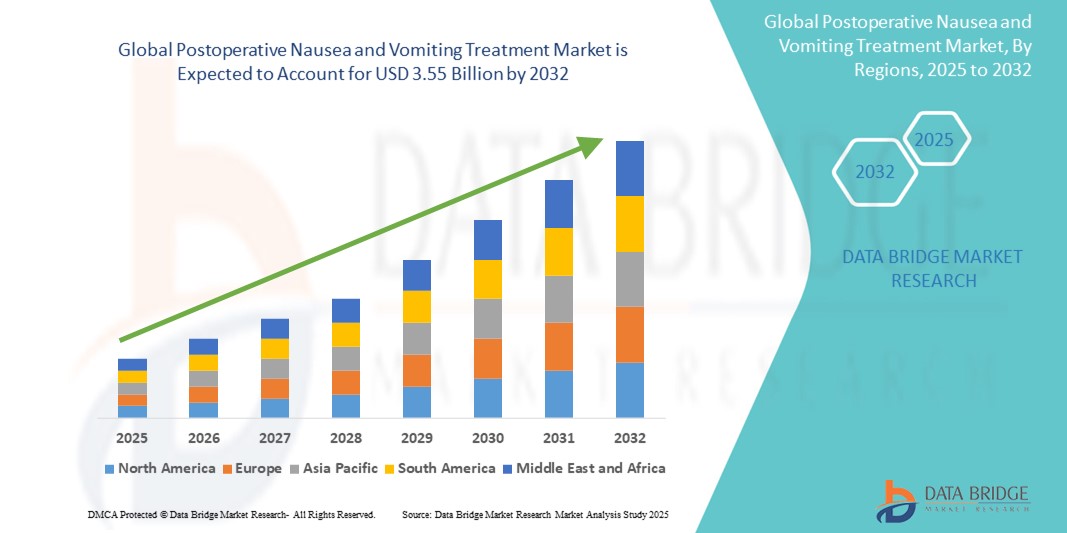
- The global postoperative nausea and vomiting treatment market size was valued at USD 2.31 billion in 2024 and is expected to reach USD 3.55 billion by 2032, at a CAGR of 5.52% during the forecast period
- The market growth is largely fuelled by the rising incidence of surgeries globally and the subsequent need to manage postoperative complications such as nausea and vomiting. Increasing awareness among healthcare providers and patients about the impact of PONV on recovery outcomes and patient satisfaction is driving the adoption of targeted therapeutic interventions. In addition, advancements in anesthetic techniques and multimodal analgesia protocols are further contributing to the demand for effective PONV treatment solutions
- Furthermore, the surge in outpatient surgical procedures and enhanced recovery after surgery (ERAS) programs is creating a greater need for fast-acting, patient-friendly antiemetic treatments. The development of novel drug formulations, such as transdermal patches, oral dissolvable films, and extended-release injections, is offering convenient alternatives for both patients and clinicians. These factors are significantly boosting the uptake of postoperative nausea and vomiting treatment solutions and accelerating the market's growth trajectory
Postoperative Nausea and Vomiting Treatment Market Analysis
- Postoperative Nausea and Vomiting (PONV) treatments, which include a range of antiemetic drugs and supportive therapies, are increasingly vital components of enhanced recovery after surgery (ERAS) protocols in both hospital and ambulatory settings due to their ability to improve patient comfort, reduce complications, and shorten recovery time
- The escalating demand for PONV treatments is primarily fueled by the rising number of surgical procedures worldwide, growing awareness of patient-centric care, and the increasing adoption of combination therapies to manage nausea and vomiting more effectively
- North America dominated the postoperative nausea and vomiting treatment market with the largest revenue share of 39.8% in 2024, characterized by the early implementation of ERAS programs, high healthcare expenditure, and a strong presence of pharmaceutical manufacturers
- Asia-Pacific is expected to be the fastest-growing region in the postoperative nausea and vomiting treatment market during the forecast period due to increasing surgical volumes, rising healthcare investments, and growing awareness about post-surgical care across countries such as China, India, and Japan
- Postoperative Nausea and Vomiting (PONV) segment dominated the postoperative nausea and vomiting treatment market with a market share of 45.2% in 2024, owing to the increasing number of surgical procedures and the widespread implementation of Enhanced Recovery After Surgery (ERAS) protocols that emphasize effective nausea and vomiting management to improve patient outcomes and reduce recovery time
Report Scope and Postoperative Nausea and Vomiting Treatment Market Segmentation
|
Attributes |
Postoperative Nausea and Vomiting Treatment Key Market Insights |
|
Segments Covered |
|
|
Countries Covered |
North America
Europe
Asia-Pacific
Middle East and Africa
South America
|
|
Key Market Players |
|
|
Market Opportunities |
|
|
Value Added Data Infosets |
In addition to the insights on market scenarios such as market value, growth rate, segmentation, geographical coverage, and major players, the market reports curated by the Data Bridge Market Research also include in-depth expert analysis, pricing analysis, brand share analysis, consumer survey, demography analysis, supply chain analysis, value chain analysis, raw material/consumables overview, vendor selection criteria, PESTLE Analysis, Porter Analysis, and regulatory framework. |
Postoperative Nausea and Vomiting Treatment Market Trends
“Increasing Demand Driven by Surgical Volume and Patient-Centric Care”
- A significant and accelerating trend in the global postoperative nausea and vomiting treatment market is the rising volume of surgeries, including minimally invasive and outpatient procedures, which has led to a larger at-risk population requiring effective antiemetic therapy
- For instance, in 2024, healthcare providers across North America and Europe reported a substantial increase in ambulatory surgeries, prompting higher adoption of fast-acting and short-duration anti-nausea medications to enable quicker recovery and discharge
- In addition, the shift towards enhanced recovery after surgery (ERAS) protocols is fueling the need for targeted antiemetic treatment options that reduce hospital stays and improve patient comfort. Drugs such as ondansetron, dexamethasone, and aprepitant continue to be integral components of multi-modal PONV management strategies
- The emphasis on patient-centric care is also driving demand for medications with fewer side effects and higher tolerability. This is encouraging pharmaceutical innovation focused on novel formulations such as long-acting injectables, transdermal patches, and oral dissolving tablets
- The increasing burden of chemotherapy-induced nausea and vomiting (CINV), along with PONV, is broadening the market scope, offering pharmaceutical companies opportunities to develop dual-indication therapies
- Furthermore, rising awareness of preventive treatment protocols, especially in high-risk patient populations (e.g., females, non-smokers, patients with prior history of motion sickness or nausea), is driving the prophylactic use of PONV treatments across hospitals and outpatient surgical centers worldwide
Postoperative Nausea and Vomiting Treatment Market Dynamics
Driver
“Growing Need Due to Rising Surgical Volumes and Patient-Centric Recovery Protocols”
- The increasing volume of surgical procedures worldwide, combined with the rising emphasis on improving post-surgical outcomes and patient comfort, is a significant driver for the heightened demand for Postoperative Nausea and Vomiting (PONV) treatments
- For instance, in April 2024, Heron Therapeutics announced advancements in its sustained-release antiemetic therapies aimed at improving patient outcomes and reducing the burden of multiple dosing regimens. Such innovations by key players are expected to drive the Postoperative Nausea and Vomiting Treatment industry growth in the forecast period
- As healthcare providers prioritize enhanced recovery after surgery (ERAS) protocols, effective management of PONV is becoming an essential component of perioperative care to reduce patient distress, improve satisfaction, and enable quicker discharges
- Furthermore, the growing use of minimally invasive surgeries, which often have outpatient recovery models, heightens the need for efficient and long-lasting PONV management to minimize unplanned readmissions
- The convenience of single-dose, long-acting formulations, availability of combination therapies targeting multiple receptor pathways, and increasing preference for non-invasive delivery methods are key factors propelling adoption in both inpatient and outpatient settings. Additionally, the trend toward personalized medicine and risk-based antiemetic prophylaxis is further contributing to the expansion of the market
Restraint/Challenge
“Concerns Regarding Side Effects and High Drug Costs”
- Concerns surrounding the side effects and tolerability of certain antiemetic drugs, particularly when used in combination or for high-risk patients, pose a significant challenge to wider adoption. Some 5-HT3 antagonists and NK1 receptor antagonists may be associated with constipation, headaches, or QT prolongation, leading clinicians to weigh benefits against potential risks
- For instance, clinical studies have highlighted the potential for interactions between antiemetics and anesthesia or chemotherapy agents, which may result in suboptimal outcomes or adverse events, especially in high-risk patient groups
- Addressing these concerns through improved safety profiles, patient education, and clinician training on optimal dosing strategies is crucial for building confidence in PONV therapies. Companies such as Merck & Co. and F. Hoffmann-La Roche emphasize the clinical efficacy and safety data supporting their antiemetic products to reassure healthcare professionals
- In addition, the relatively high cost of advanced antiemetic regimens can be a barrier to adoption in cost-sensitive markets or public healthcare settings. While generic versions of older drugs like ondansetron have helped reduce costs, newer agents with extended-release mechanisms or combination therapies remain expensive
- While healthcare systems in developed countries may absorb these costs, affordability challenges persist in developing regions. Overcoming these barriers through broader insurance coverage, pricing strategies, and inclusion in hospital formularies will be essential for sustained growth of the PONV treatment market
Postoperative Nausea and Vomiting Treatment Market Scope
The market is segmented on the basis of treatment type, application, end-users, and distribution channel.
- By Treatment Type
On the basis of treatment type, the postoperative nausea and vomiting treatment market is segmented into serotonin receptor antagonists, steroids, dopamine antagonists, neurokinin NK-1 Receptor antagonists, and non-pharmacological treatment. The serotonin receptor antagonists segment dominated the largest market revenue share of 41.6% in 2024, driven by their proven efficacy, rapid onset, and broad clinical use.
The Neurokinin NK-1 Receptor Antagonists segment is anticipated to witness the fastest growth at a CAGR of 22.3% from 2025 to 2032, due to their effectiveness in preventing delayed nausea and vomiting, especially in high-risk surgical and chemotherapy patients.
- By Application
On the basis of application, the postoperative nausea and vomiting treatment market is segmented into postoperative nausea and vomiting (PONV), chemotherapy-induced nausea and vomiting (CINV), motion sickness, pregnancy, and others. The postoperative nausea and vomiting (PONV) segment accounted for the largest revenue share of 45.2% in 2024, owing to the increasing number of surgical procedures and implementation of ERAS protocols.
The chemotherapy-induced nausea and vomiting (CINV) segment is expected to grow at the fastest CAGR of 20.1% from 2025 to 2032, driven by rising global cancer prevalence and increasing usage of multi-drug antiemetic regimens.
- By End-Users
On the basis of end-users, the postoperative nausea and vomiting treatment market is segmented into clinics, hospitals, and others. The hospitals segment held the largest market share of 53.7% in 2024, due to high procedure volumes, centralized procurement, and consistent use of PONV drugs in both perioperative and oncology settings.
The clinics segment is projected to grow at the fastest CAGR of 18.4% from 2025 to 2032, owing to the expansion of ambulatory surgery and day-care centers focused on outpatient treatment and short-stay recovery.
- By Distribution Channel
On the basis of distribution channel, the postoperative nausea and vomiting treatment market is segmented into hospital pharmacy, retail pharmacy, and online pharmacy. The hospital pharmacy segment dominated the market with the largest revenue share of 48.9% in 2024, supported by bulk institutional purchases and integration into surgical and cancer treatment workflows.
The online pharmacy segment is expected to grow at the highest CAGR of 21.6% from 2025 to 2032, fueled by rising digital adoption, convenience, and increasing access to prescription medications through telehealth platforms.
Postoperative Nausea and Vomiting Treatment Market Regional Analysis
- North America dominated the postoperative nausea and vomiting (PONV) treatment market with the largest revenue share of 39.8% in 2024, driven by the high volume of surgeries and strong pharmaceutical infrastructure
- Consumers in the region prioritize enhanced recovery and patient comfort post-surgery, supported by advanced antiemetic formulations and widespread clinical awareness
- The region’s growth is further supported by increased healthcare spending, access to combination therapies, and adoption of Enhanced Recovery After Surgery (ERAS) protocols
U.S. Postoperative Nausea and Vomiting Treatment Market Insight
The U.S. postoperative nausea and vomiting treatment market captured the largest revenue share of 81.2% within North America in 2024, attributed to the high surgical case load and wide availability of approved antiemetics. Advanced drug development pipelines, FDA approvals, and greater patient compliance with preventative PONV treatments support continued market dominance.
Europe Postoperative Nausea and Vomiting Treatment Market Insight
The Europe postoperative nausea and vomiting treatment held the second-largest revenue share of 30.5% in the global market in 2024, with countries emphasizing perioperative care improvements and patient safety standards. Aging population, rising outpatient surgeries, and policy-level focus on post-surgical complication reduction are accelerating market growth.
U.K. Postoperative Nausea and Vomiting Treatment Market Insight
The U.K. postoperative nausea and vomiting treatment contributed 21.3% of the European market share in 2024, supported by strong clinical adoption of prophylactic antiemetics in day-care surgeries. NHS protocols, rising ambulatory surgeries, and cost-effective generic offerings are driving demand.
Germany Postoperative Nausea and Vomiting Treatment Market Insight
The Germany postoperative nausea and vomiting treatment accounted for 27.6% of the European market share in 2024, bolstered by technological healthcare integration and clinical best practice adoption. Hospitals and clinics prefer evidence-based combinations of serotonin receptor antagonists and neurokinin-1 inhibitors.
Asia-Pacific Postoperative Nausea and Vomiting Treatment Market Insight
The Asia-Pacific postoperative nausea and vomiting treatment is poised to grow at the fastest CAGR of 24.3% from 2025 to 2032, contributing 18.7% of the global market revenue in 2024. Rising surgical interventions, especially in urbanizing economies like India and China, along with growing awareness and access to PONV treatments, are accelerating regional growth.
Japan Postoperative Nausea and Vomiting Treatment Market Insight
The Japan postoperative nausea and vomiting treatment represented 32.9% of the Asia-Pacific market share in 2024, supported by its aging population and advanced surgical and pharmaceutical sectors. Its market is driven by demand for improved post-surgical outcomes and adherence to international care standards.
China Postoperative Nausea and Vomiting Treatment Market Insight
The China postoperative nausea and vomiting treatment held the 38.7% share of the Asia-Pacific market in 2024, owing to increasing healthcare infrastructure development and high surgical volumes. A surge in public and private healthcare investments, along with domestic production of antiemetic drugs, is driving the market forward.
Postoperative Nausea and Vomiting Treatment Market Share
The postoperative nausea and vomiting treatment industry is primarily led by well-established companies, including:
- Acacia Pharma Group Plc (U.K.)
- Sanofi (France)
- Novartis AG (Switzerland)
- F. Hoffmann-La Roche Ltd. (Switzerland)
- ANI Pharmaceuticals, Inc. (U.S.)
- Camurus AB (Sweden)
- Helsinn Healthcare SA (Switzerland)
- Eisai Co., Ltd. (Japan)
- Merck & Co., Inc. (U.S.)
- Teva Pharmaceutical Industries Ltd. (Israel)
- GSK plc. (U.K.)
Latest Developments in Global Postoperative Nausea and Vomiting Treatment Market
- In 2023, Acacia Pharma introduced Barhemsys and Amisulpride as primary antiemetics for managing PONV. Barhemsys, an intravenous selective dopamine D2 and D3 receptor antagonist, effectively prevents and treats PONV, gaining regulatory approval in the US and Europe for its high efficacy
- In 2023, Roche developed a patient-controlled analgesia (PCA) system for PONV. This system administers opioids and antiemetics via a pump, significantly reducing PONV incidence and enhancing patient satisfaction

- Interactive Data Analysis Dashboard
- Company Analysis Dashboard for high growth potential opportunities
- Research Analyst Access for customization & queries
- Competitor Analysis with Interactive dashboard
- Latest News, Updates & Trend analysis
- Harness the Power of Benchmark Analysis for Comprehensive Competitor Tracking
Data collection and base year analysis are done using data collection modules with large sample sizes. The stage includes obtaining market information or related data through various sources and strategies. It includes examining and planning all the data acquired from the past in advance. It likewise envelops the examination of information inconsistencies seen across different information sources. The market data is analysed and estimated using market statistical and coherent models. Also, market share analysis and key trend analysis are the major success factors in the market report. To know more, please request an analyst call or drop down your inquiry.
The key research methodology used by DBMR research team is data triangulation which involves data mining, analysis of the impact of data variables on the market and primary (industry expert) validation. Data models include Vendor Positioning Grid, Market Time Line Analysis, Market Overview and Guide, Company Positioning Grid, Patent Analysis, Pricing Analysis, Company Market Share Analysis, Standards of Measurement, Global versus Regional and Vendor Share Analysis. To know more about the research methodology, drop in an inquiry to speak to our industry experts.
Data Bridge Market Research is a leader in advanced formative research. We take pride in servicing our existing and new customers with data and analysis that match and suits their goal. The report can be customized to include price trend analysis of target brands understanding the market for additional countries (ask for the list of countries), clinical trial results data, literature review, refurbished market and product base analysis. Market analysis of target competitors can be analyzed from technology-based analysis to market portfolio strategies. We can add as many competitors that you require data about in the format and data style you are looking for. Our team of analysts can also provide you data in crude raw excel files pivot tables (Fact book) or can assist you in creating presentations from the data sets available in the report.












