


Premium Chocolate Market Size
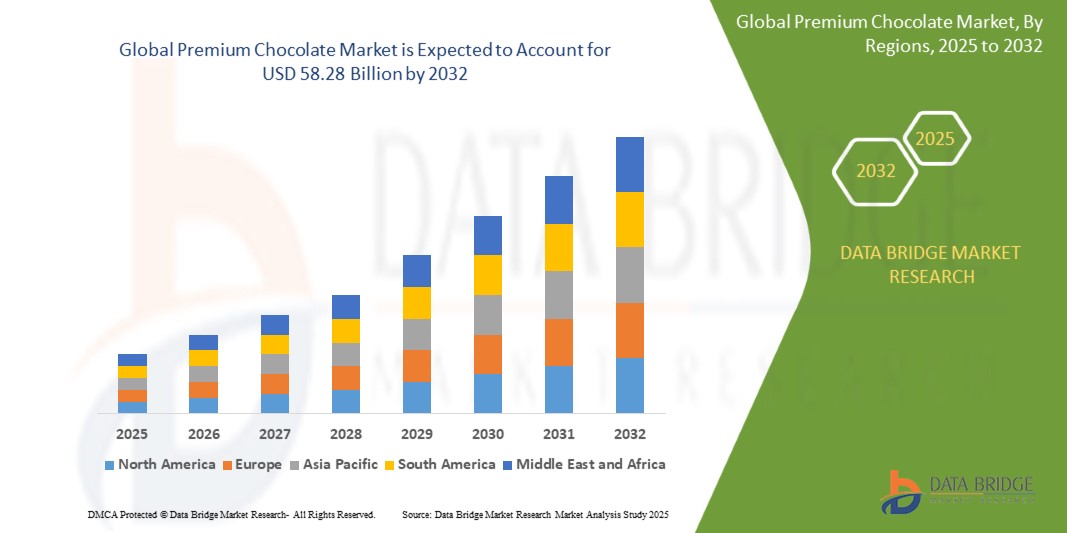
- The global premium chocolate market was valued at USD 41.61 billion in 2024 and is expected to reach USD 58.28 billion by 2032
- During the forecast period of 2025 to 2032 the market is likely to grow at a CAGR of 4.30%, primarily driven by the increasing consumer preference for high-quality, ethically sourced chocolate
- This growth is driven by factors such as rising disposable income, growing demand for artisanal and organic chocolate, and innovative flavor offerings by manufacturers
Premium Chocolate Market Analysis
- Premium chocolates are high-quality confections made with superior ingredients, often featuring higher cocoa content, organic or ethically sourced components, and artisanal production methods
- These chocolates cater to consumers seeking luxury experiences, unique flavors, and health-conscious alternatives within the confectionery segment
- The demand for premium chocolate is significantly driven by the rising disposable income of consumers, growing awareness of sustainable and fair-trade practices, and increasing appetite for indulgent, gourmet food experiences
- Over half of the global demand comes from urban, millennial, and Gen Z consumers, particularly in regions with strong gifting cultures and developed retail infrastructures
- The Europe region stands out as one of the dominant markets for premium chocolate, fueled by its long-standing chocolate-making tradition, high per capita chocolate consumption, and strong presence of artisanal and luxury chocolate brands
- For instance, Switzerland, Belgium, and Germany are home to several renowned premium chocolate manufacturers that continue to expand their global footprint through product innovation and seasonal offerings
- Globally, premium chocolate is one of the fastest-growing segments within the broader chocolate industry, with brands increasingly focusing on clean labels, unique flavor infusions (e.g., chili, sea salt, exotic fruits), and sustainable packaging to attract modern consumers
Report Scope and Premium Chocolate Market Segmentation
|
Attributes |
Premium Chocolate Key Market Insights |
|
Segments Covered |
|
|
Countries Covered |
North America
Europe
Asia-Pacific
Middle East and Africa
South America
|
|
Key Market Players |
|
|
Market Opportunities |
|
|
Value Added Data Infosets |
In addition to the insights on market scenarios such as market value, growth rate, segmentation, geographical coverage, and major players, the market reports curated by the Data Bridge Market Research also include import export analysis, production capacity overview, production consumption analysis, price trend analysis, climate change scenario, supply chain analysis, value chain analysis, raw material/consumables overview, vendor selection criteria, PESTLE Analysis, Porter Analysis, and regulatory framework. |
Premium Chocolate Market Trends
“Rising Focus on Ethical Sourcing and Sustainable Packaging”
- One prominent trend in the global premium chocolate market is the increasing focus on ethically sourced ingredients and eco-friendly packaging solutions
- Consumers are becoming more conscious about the origins of their food, driving demand for chocolates made from fair-trade cocoa, organic ingredients, and transparently sourced raw materials. This shift is influencing brands to adopt sustainability certifications and partner directly with cocoa farmers to ensure ethical supply chains
- For instance, several premium chocolate brands now highlight bean-to-bar transparency and use Rainforest Alliance or Fairtrade-certified cocoa, appealing to environmentally and socially conscious buyers
- Sustainable packaging is another key focus, with manufacturers adopting biodegradable wrappers, recyclable boxes, and reduced plastic use to align with global sustainability goals and consumer expectations
- This trend is transforming how premium chocolates are produced, marketed, and consumed—creating a competitive advantage for brands that prioritize responsible sourcing, minimal environmental impact, and authentic storytelling behind their products
Premium Chocolate Market Dynamics
Driver
“Rising Demand for Artisanal and Health-Conscious Indulgence”
- The growing consumer preference for high-quality, indulgent treats made with natural, organic, and ethically sourced ingredients is significantly contributing to the increased demand for premium chocolate
- As global consumers become more health-conscious and selective about their food choices, there is a noticeable shift towards chocolates that offer clean labels, reduced sugar content, and functional benefits—such as high cocoa concentration, antioxidant properties, or plant-based formulations
- Artisanal and bean-to-bar chocolates, often handmade in small batches, are increasingly popular for their distinctive flavors, craftsmanship, and unique storytelling, making them a preferred option for gifting and personal indulgence
- In addition, rising awareness about the ethical implications of cocoa farming is pushing consumers to support brands that prioritize fair trade, sustainable sourcing, and transparency in their supply chains
- As consumers seek indulgence without compromising on health or ethics, premium chocolate is emerging as a luxury yet conscious choice, reinforcing demand across global markets
For instance,
- In June 2023, Lindt & Sprüngli reported strong growth in its premium segment, attributing it to consumer demand for high-cocoa, single-origin, and organic chocolates
- As a result of these evolving consumer behaviors, the premium chocolate market is witnessing robust demand, particularly for products that combine indulgence with wellness, sustainability, and ethical values
Opportunity
“Expanding Global Premium Chocolate Market with Innovation and Sustainability”
- Premium chocolate brands are increasingly focusing on high-quality ingredients, unique flavors, and sustainable sourcing, capturing the growing demand for indulgent, luxury products
- Consumers are becoming more health-conscious, leading to a rise in demand for premium chocolates made with organic, fair-trade, and ethically sourced ingredients, such as single-origin cocoa beans
- Innovations in packaging, such as eco-friendly materials and premium designs, are attracting environmentally-conscious consumers, contributing to a more upscale brand perception
- In addition, premium chocolate manufacturers are incorporating functional ingredients like superfoods, such as turmeric, matcha, and probiotics, to cater to health-focused consumers without compromising on taste or quality
For instance,
- In March 2025, according to a report by Mintel, premium chocolate brands are embracing unique flavor profiles and artisanal techniques to meet evolving consumer tastes. New trends include chocolate with exotic spices, floral notes, and exotic fruit flavors, expanding the boundaries of chocolate consumption
- In December 2024, according to an article in the International Journal of Food Science and Technology, an increasing number of premium chocolate companies are adopting direct-trade models with cocoa farmers, ensuring better quality control and improved livelihoods for farmers. This model contributes to sustainability and fosters transparency in the supply chain
- As the global market for premium chocolates continues to expand, companies are also exploring sustainable practices, such as sourcing cocoa that is Rainforest Alliance or Fair Trade certified, to appeal to the growing base of eco-conscious and ethically-minded consumers
- The combination of innovation in flavors, sustainability in sourcing, and increased attention to health and wellness is driving the growth of the premium chocolate market globally
Restraint/Challenge
“High Raw Material Costs Impacting Profit Margins”
- The increasing prices of key raw materials, such as cocoa beans and premium ingredients like organic sugar and milk, pose a significant challenge for the premium chocolate market
- Cocoa bean prices, in particular, have been volatile due to factors such as climate change, supply chain disruptions, and fluctuating demand
- These rising costs make it difficult for manufacturers to maintain competitive pricing while preserving product quality, which can lead to higher retail prices and limit market accessibility
For instance,
- In October 2024, according to an industry report by the International Cocoa Organization, the global price of cocoa beans saw a significant surge, driven by adverse weather conditions in key cocoa-producing countries such as Ivory Coast and Ghana. This price hike has directly impacted the cost of premium chocolate production, forcing manufacturers to either absorb the costs or pass them on to consumers, potentially affecting sales volumes
- The high cost of premium raw materials also limits the ability of smaller companies or new entrants to compete with larger, more established brands, hindering overall market growth and innovation
Premium Chocolate Market Scope
The market is segmented on the basis of type, product type, inclusion, nature, category, cocoa content, packaging and distribution channel.
|
Segmentation |
Sub-Segmentation |
|
By Type |
|
|
By Product Type |
|
|
By Inclusion |
|
|
By Nature |
|
|
By Category |
|
|
By Cocoa Content |
|
|
By Packaging |
|
|
By Distribution Channel |
|
Premium Chocolate Market Regional Analysis
“Europe is the Dominant Region in the Premium Chocolate Market”
- Europe dominates the premium chocolate market, driven by strong cultural affinity for high-quality confectionery products, presence of globally recognized chocolatiers, and growing consumer demand for artisanal and ethically sourced chocolate
- Switzerland, Belgium, and France hold significant market shares due to their longstanding traditions in chocolate craftsmanship, increasing per capita chocolate consumption, and the availability of luxury chocolate brands
- The region benefits from stringent quality standards, well-developed retail infrastructure, and rising preference for organic, fair-trade, and bean-to-bar chocolate products
- In addition, innovation in flavor combinations, increasing gifting trends, and the growing popularity of limited-edition and seasonal premium offerings continue to fuel market growth across Europe
“Asia-Pacific is Projected to Register the Highest Growth Rate”
- The Asia-Pacific region is expected to witness the highest growth rate in the premium chocolate market, driven by rising disposable incomes, shifting consumer preferences toward high-quality indulgent products, and growing urbanization
- Countries such as China, India, and Japan are emerging as key markets due to increasing demand for artisanal and luxury chocolates, expanding middle-class populations, and a growing interest in Western-style confectionery
- Japan remains a crucial market, characterized by a strong gifting culture, innovation in flavors and packaging, and a high appreciation for premium and seasonal chocolate offerings
- China and India, with their expanding retail sectors and increasing exposure to global brands, are experiencing rising investments from international chocolate manufacturers. The growing popularity of premium chocolates during festivals and special occasions is further accelerating market growth across the region
Premium Chocolate Market Share
The market competitive landscape provides details by competitor. Details included are company overview, company financials, revenue generated, market potential, investment in research and development, new market initiatives, global presence, production sites and facilities, production capacities, company strengths and weaknesses, product launch, product width and breadth, application dominance. The above data points provided are only related to the companies' focus related to market.
The Major Market Leaders Operating in the Market Are:
- Mars, Incorporated (Virginia)
- Mondelēz International (U.S.)
- THE HERSHEY COMPANY (U.S.)
- Ferrero (Italy)
- Nestlé (Switzerland)
- General Mills, Inc. (U.S.)
- Meiji Holdings Co., Ltd. (Japan)
- Chocoladefabriken Lindt & Sprüngli AG (Switzerland)
- Barry Callebaut (Switzerland)
- The Kraft Heinz Company (U.S.)
- Cargill, Incorporated. (U.S.)
- Cloetta AB (Sweden)
- Ghirardelli Chocolate Company (A Subsidiary of Lindt & Sprüngli AG) (U.S.)
- Ezaki Glico Co., Ltd. (Japan)
- MORINAGA & CO., LTD (Japan)
- Arcor (Argentina)
Latest Developments in Global Premium Chocolate Market
- In January 2024, Mars, the global confectionery leader, expanded its portfolio by acquiring "Hotel Chocolat," a renowned UK-based premium chocolate brand. This strategic move supports Mars' goal of diversifying its offerings and entering the luxury chocolate market. Hotel Chocolat is celebrated for its high-quality ingredients and creative flavors, meeting the rising consumer demand for premium chocolate experiences
- In January 2024, Haldiram's ventured into the premium chocolate market with the launch of 'Cocobay.' This innovative brand emphasizes the use of 100% pure cocoa in its products, offering a range of uniquely crafted chocolates infused with traditional Indian flavors like fruits and spices. Cocobay aims to cater to local tastes while diversifying Haldiram's product portfolio
- In September 2023, Hershey Canada Inc. launched "Hershey's Oat Made," a plant-based chocolate line featuring two flavors: Creamy and Almond & Sea Salt. Designed for health-conscious consumers and those seeking dairy-free options, these vegan bars use oat flour instead of dairy, offering the classic Hershey's taste in a sustainable and innovative form
- In April 2023, Toll House, a Nestlé brand, introduced two plant-based chocolate chip varieties: Semi-Sweet and Dark Chocolate Morsels. These products cater to the rising demand for vegan and dairy-free baking options, offering rich flavor and smooth texture. Toll House's innovation empowers home bakers to create delectable treats without compromising on taste or dietary needs
- In September 2021, Ferrero International S.A. partnered exclusively with Lagardère Travel Retail to pre-launch a premium range of chocolate tablets. This innovative line includes three luxurious flavors: milk, dark (55% cocoa), and white chocolate, all made with top-quality ingredients. The collaboration seeks to elevate the travel retail experience by providing travelers with indulgent chocolate options

- Interactive Data Analysis Dashboard
- Company Analysis Dashboard for high growth potential opportunities
- Research Analyst Access for customization & queries
- Competitor Analysis with Interactive dashboard
- Latest News, Updates & Trend analysis
- Harness the Power of Benchmark Analysis for Comprehensive Competitor Tracking
Global Premium Chocolate Market, Supply Chain Analysis and Ecosystem Framework
To support market growth and help clients navigate the impact of geopolitical shifts, DBMR has integrated in-depth supply chain analysis into its Global Premium Chocolate Market research reports. This addition empowers clients to respond effectively to global changes affecting their industries. The supply chain analysis section includes detailed insights such as Global Premium Chocolate Market consumption and production by country, price trend analysis, the impact of tariffs and geopolitical developments, and import and export trends by country and HSN code. It also highlights major suppliers with data on production capacity and company profiles, as well as key importers and exporters. In addition to research, DBMR offers specialized supply chain consulting services backed by over a decade of experience, providing solutions like supplier discovery, supplier risk assessment, price trend analysis, impact evaluation of inflation and trade route changes, and comprehensive market trend analysis.
Data collection and base year analysis are done using data collection modules with large sample sizes. The stage includes obtaining market information or related data through various sources and strategies. It includes examining and planning all the data acquired from the past in advance. It likewise envelops the examination of information inconsistencies seen across different information sources. The market data is analysed and estimated using market statistical and coherent models. Also, market share analysis and key trend analysis are the major success factors in the market report. To know more, please request an analyst call or drop down your inquiry.
The key research methodology used by DBMR research team is data triangulation which involves data mining, analysis of the impact of data variables on the market and primary (industry expert) validation. Data models include Vendor Positioning Grid, Market Time Line Analysis, Market Overview and Guide, Company Positioning Grid, Patent Analysis, Pricing Analysis, Company Market Share Analysis, Standards of Measurement, Global versus Regional and Vendor Share Analysis. To know more about the research methodology, drop in an inquiry to speak to our industry experts.
Data Bridge Market Research is a leader in advanced formative research. We take pride in servicing our existing and new customers with data and analysis that match and suits their goal. The report can be customized to include price trend analysis of target brands understanding the market for additional countries (ask for the list of countries), clinical trial results data, literature review, refurbished market and product base analysis. Market analysis of target competitors can be analyzed from technology-based analysis to market portfolio strategies. We can add as many competitors that you require data about in the format and data style you are looking for. Our team of analysts can also provide you data in crude raw excel files pivot tables (Fact book) or can assist you in creating presentations from the data sets available in the report.













