What are the Major Takeaways of Probiotic Cosmetic Products?
The probiotic cosmetic products market is experiencing significant growth due to increasing consumer awareness of microbiome-friendly skincare and haircare solutions. Probiotics, known for their ability to balance the skin’s natural microbiota, are being integrated into cosmetic formulations to address concerns such as acne, eczema, and premature aging. Advancements in microbiome science, fermentation technology, and live probiotic delivery systems are enhancing product efficacy and expanding market potential. Leading beauty brands such as L'Oréal, Unilever, and Esse Skincare are investing in research to develop innovative probiotic-based creams, serums, and cleansers. The rise of clean beauty and consumer demand for chemical-free, natural formulations further fuel the adoption of probiotic cosmetics. E-commerce platforms, specialty beauty stores, and dermatology clinics are playing a crucial role in product distribution, making these formulations more accessible. In addition, growing interest in personalized skincare, with AI-driven microbiome analysis tools, is shaping the future of this market. With increasing R&D investments and expanding product portfolios, the probiotic cosmetic products market is poised for continuous innovation and substantial growth in the coming years.
What is the Probiotic Cosmetic Products Size and Growth Rate?
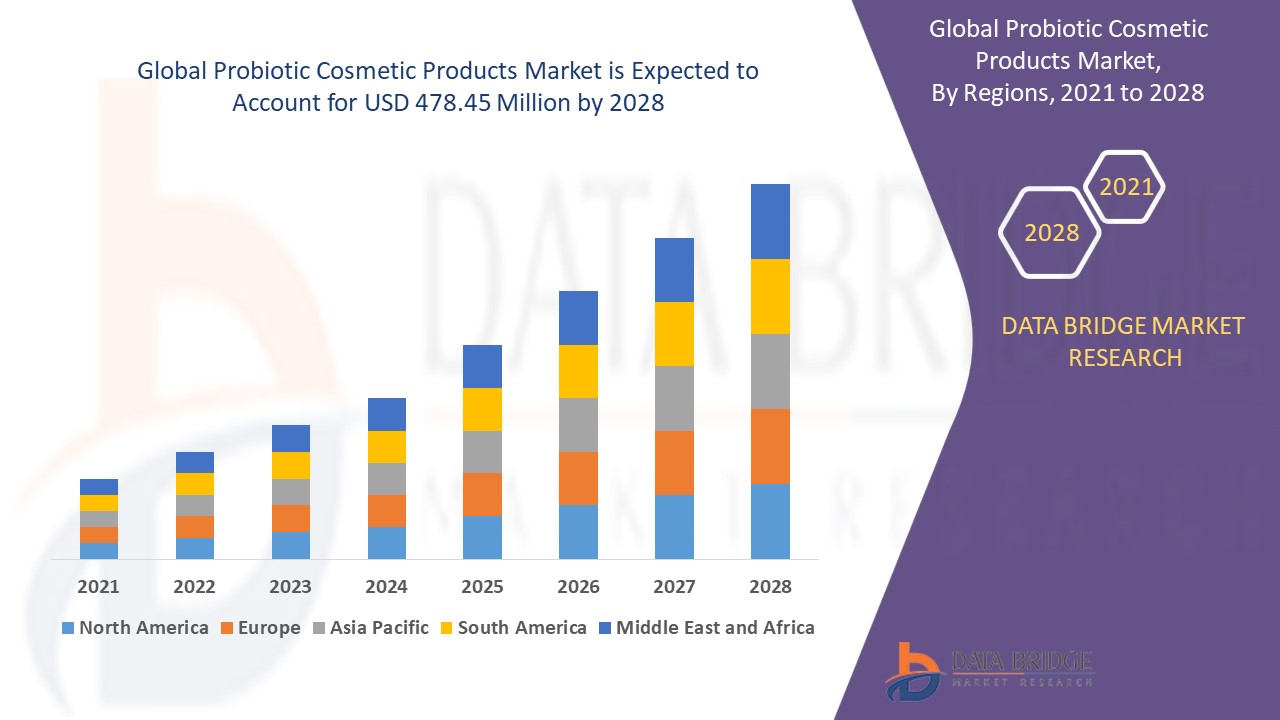
As per Data Bridge Market Research Analysis the global probiotic cosmetic products market size was valued at USD 360.13 million in 2024 and is projected to reach USD 635.63 million by 2032, with a CAGR of7.36% during the forecast period of 2025 to 2032. In addition to the insights on market scenarios such as market value, growth rate, segmentation, geographical coverage, and major players, the market reports curated by the Data Bridge Market Research also include in-depth expert analysis, pricing analysis, brand share analysis, consumer survey, demography analysis, supply chain analysis, value chain analysis, raw material/consumables overview, vendor selection criteria, PESTLE Analysis, Porter Analysis, and regulatory framework.
Market Size & Forecast
- Global Market Value (2024): USD 360.13 million
- Expected Market Value (2032): USD 635.63 million
- Forecast CAGR (2024–2032): 7.36%
What is the Key Trend in the Probiotic Cosmetic Products?
“Rise of Personalized Microbiome-Based Skincare”
One key trend shaping the probiotic cosmetic products market is the rise of personalized microbiome-based skincare, driven by advancements in AI and microbiome analysis technology. Consumers are increasingly seeking tailored skincare solutions that cater to their unique skin microbiota, leading to the development of AI-powered diagnostic tools that assess skin health and recommend probiotic-infused products accordingly. For instance, Unilever’s POND’S SKIN INSTITUTE Microbiome Analyzer, launched in 2024, offers personalized skincare recommendations based on real-time microbiome analysis. This trend aligns with the growing demand for science-backed beauty solutions that use live probiotics, postbiotics, and prebiotics to enhance skin barrier function and combat issues such as acne and inflammation. Premium brands such as L'Oréal and Esse Skincare are expanding their probiotic product lines, integrating biotechnology and dermatological research to optimize formulations. As personalized skincare gains traction, probiotic cosmetics are set to revolutionize the beauty industry by delivering targeted, microbiome-friendly solutions for diverse skin concerns.
Report Scope and Probiotic Cosmetic Products Market Segmentation
|
Attributes |
Probiotic Cosmetic Products Key Market Insights |
|
Segments Covered |
|
|
Countries Covered |
North America
Europe
Asia-Pacific
Middle East and Africa
South America
|
|
Key Market Players |
|
|
Market Opportunities |
|
|
Value Added Data Infosets |
|
Probiotic Cosmetic Products Market Definition
Probiotic cosmetic products are skincare and personal care formulations infused with live probiotics, prebiotics, or postbiotics that help balance the skin’s microbiome, strengthen its natural barrier, and promote overall skin health. These products support the growth of beneficial bacteria while reducing harmful microbes, helping to improve skin conditions such as acne, eczema, sensitivity, and inflammation.
Probiotic Cosmetic Products Market Dynamics
Drivers
- Rising Consumer Awareness of Skin Microbiome Health
The increasing recognition of the skin microbiome’s role in maintaining skin health has significantly boosted the demand for probiotic-infused skincare. Consumers are becoming more aware that a balanced microbiome can help prevent skin issues such as acne, eczema, and inflammation, leading them to seek products that support beneficial bacteria on the skin. For instance, brands such as Gallinée and TULA Skincare have capitalized on this trend by introducing prebiotic and probiotic-based products designed to nourish and protect the skin’s natural defense system. These formulations help restore microbial diversity, reducing skin irritation and promoting a healthier complexion. The rising consumer preference for science-backed, microbiome-friendly skincare is driving the growth of the probiotic cosmetic products market, as more brands incorporate probiotics to enhance skin barrier function and overall dermatological well-being.
- Increasing Demand for Natural and Clean Beauty Products
The demand for natural, organic, and clean beauty products has surged as consumers become more conscious of harmful chemicals in traditional skincare. Many individuals now seek chemical-free alternatives that are gentle, sustainable, and eco-friendly, making probiotic cosmetics a highly attractive option. These formulations offer an effective yet non-toxic approach to skincare, helping maintain skin hydration, reduce inflammation, and improve skin texture without relying on parabens, sulfates, or synthetic preservatives. For instance, brands such as Aurelia London and Esse Skincare emphasize probiotic and fermented ingredients to deliver clinically proven skincare benefits while adhering to clean beauty standards. The rise of sustainable and plant-based beauty trends further propels the probiotic cosmetics market, as more consumers embrace biodegradable packaging, cruelty-free testing, and naturally derived ingredients, solidifying probiotics as a key driver of the clean beauty movement
Opportunities
- Increasing Advancements in Microbiome Research and Biotechnology
Scientific advancements in microbiome research and biotechnology have transformed the probiotic cosmetic industry, enabling the creation of highly stable, effective probiotic formulations. Innovations in live probiotics, postbiotics, and fermented skincare have allowed brands to develop targeted solutions for improving skin hydration, repair, and protection. For instance, L’Oréal’s acquisition of Lactobio, a Danish company specializing in precision probiotics, highlights the growing investment in microbiome-based skincare research. This strategic move is expected to accelerate the development of next-generation probiotic cosmetics that integrate live bacteria for enhanced skin benefits. With brands increasingly utilizing biotechnology to enhance probiotic delivery systems, the market is set to expand with more advanced, scientifically backed skincare solutions, making microbiome research a key market opportunity for both established brands and new entrants.
- Growth of E-Commerce and Digital Influence on Skincare Trends
The rise of e-commerce, social media marketing, and influencer-driven beauty trends has fueled the rapid adoption of probiotic cosmetic products. Consumers are increasingly discovering microbiome-friendly skincare through digital platforms, where brands leverage AI-driven skincare diagnostics to offer personalized probiotic solutions. The proliferation of beauty subscription boxes, online tutorials, and live-stream shopping events has further amplified the demand for probiotic-based cosmetics. For instance, brands such as TULA Skincare and Glowbiotics have successfully used social media influencers and targeted digital campaigns to educate consumers on the benefits of probiotics for skin health, leading to increased sales and market penetration. As e-commerce continues to dominate the beauty industry, brands focusing on digital-first marketing strategies and AI-driven personalization have a significant opportunity to expand their reach and enhance customer engagement, making digital influence a powerful growth driver in the probiotic cosmetic products market.
Restraints/Challenges
- High Production Costs
The production of probiotic cosmetic products involves advanced biotechnology, specialized formulation techniques, and strict quality control to ensure the viability and efficacy of live probiotics. Unlike traditional skincare ingredients, probiotics require encapsulation technologies or other stabilizing methods to maintain their effectiveness throughout a product’s shelf life. This increases manufacturing costs significantly. In addition, specific storage conditions, such as refrigeration or air-tight packaging, further drive up expenses. For instance, brands such as Esse Skincare and TULA invest heavily in microencapsulation technology to ensure probiotics remain active until application. These added costs often lead to higher retail prices, making probiotic cosmetics less accessible to budget-conscious consumers. This financial barrier limits mass adoption and poses a challenge for new entrants trying to compete with established skincare brands that use conventional, cost-effective ingredients.
- Stringent Regulatory Approvals
The probiotic cosmetic market faces significant regulatory challenges due to the complexity of proving the efficacy and safety of live microorganisms in skincare formulations. Different regions have varying guidelines, making global market expansion difficult for manufacturers. For instance, in the European Union, probiotic-based cosmetics must comply with strict European Commission regulations, including scientific evidence supporting their claims. Similarly, in the U.S., the Food and Drug Administration (FDA) and the Federal Trade Commission (FTC) closely monitor product labeling and advertising to prevent misleading health benefit claims. Some brands struggle to navigate these regulatory frameworks, delaying product launches or limiting their formulations to avoid legal risks. The need for clinical trials and extensive documentation increases compliance costs, further adding to the financial burden on companies. This challenge restricts innovation and slows the entry of new probiotic skincare products into the market.
This market report provides details of new recent developments, trade regulations, import-export analysis, production analysis, value chain optimization, market share, impact of domestic and localized market players, analyses opportunities in terms of emerging revenue pockets, changes in market regulations, strategic market growth analysis, market size, category market growths, application niches and dominance, product approvals, product launches, geographic expansions, technological innovations in the market. To gain more info on the market contact Data Bridge Market Research for an Analyst Brief, our team will help you take an informed market decision to achieve market growth.
Impact and Current Market Scenario of Raw Material Shortage and Shipping Delays
Data Bridge Market Research offers a high-level analysis of the market and delivers information by keeping in account the impact and current market environment of raw material shortage and shipping delays. This translates into assessing strategic possibilities, creating effective action plans, and assisting businesses in making important decisions.
Apart from the standard report, we also offer in-depth analysis of the procurement level from forecasted shipping delays, distributor mapping by region, commodity analysis, production analysis, price mapping trends, sourcing, category performance analysis, supply chain risk management solutions, advanced benchmarking, and other services for procurement and strategic support.
Expected Impact of Economic Slowdown on the Pricing and Availability of Products
When economic activity slows, industries begin to suffer. The forecasted effects of the economic downturn on the pricing and accessibility of the products are taken into account in the market insight reports and intelligence services provided by DBMR. With this, our clients can typically keep one step ahead of their competitors, project their sales and revenue, and estimate their profit and loss expenditures.
How is the Probiotic Cosmetic Products Segmented?
The market is segmented on the basis of product type and distribution channel. The growth amongst these segments will help you analyse meagre growth segments in the industries and provide the users with a valuable market overview and market insights to help them make strategic decisions for identifying core market applications.
Product Type
- Skin Care
- Hair Care
- Others
Distribution Channel
- Specialty Stores
- Supermarkets/Hypermarkets
- Convenience Stores
- Online Retail
- Others
Which Region Holds the Largest Share of the How is Probiotic Cosmetic Products Segmented?
The market is analysed and market size insights and trends are provided by country, product type, and distribution channel as referenced above.
The countries covered in the market report are U.S., Canada and Mexico in North America, Germany, France, U.K., Netherlands, Switzerland, Belgium, Russia, Italy, Spain, Turkey, Rest of Europe in Europe, China, Japan, India, South Korea, Singapore, Malaysia, Australia, Thailand, Indonesia, Philippines, Rest of Asia-Pacific (APAC) in the Asia-Pacific (APAC), Saudi Arabia, U.A.E., South Africa, Egypt, Israel, Rest of Middle East and Africa (MEA) as a part of Middle East and Africa (MEA), Brazil, Argentina and Rest of South America as part of South America.
North America dominates the probiotic cosmetic products market due to the increasing awareness of skincare and the growing prevalence of acne and other skin conditions. Consumers in the region are actively seeking skincare solutions that promote a healthy skin microbiome, driving demand for probiotic-infused products. In addition, the presence of leading cosmetic brands and continuous product innovations contribute to market growth. The rising preference for natural and skin-friendly ingredients further strengthens the adoption of probiotic cosmetic products in the region.
Asia-Pacific is projected to experience fastest growth in the probiotic cosmetic products market from 2025 to 2032, driven by increasing consumer awareness of maintaining a healthy skincare routine. The demand for probiotic-based cosmetics is rising as more individuals seek long-term solutions for various skin concerns, including acne and sensitivity. In addition, rapid advancements in product formulations and the introduction of innovative skincare solutions tailored to diverse skin types are fueling market expansion. The region’s growing beauty and personal care industry, along with the influence of social media and dermatological research, further supports the adoption of probiotic cosmetic products.
The country section of the report also provides individual market impacting factors and changes in regulation in the market domestically that impacts the current and future trends of the market. Data points such as down-stream and upstream value chain analysis, technical trends and porter's five forces analysis, case studies are some of the pointers used to forecast the market scenario for individual countries. Also, the presence and availability of global brands and their challenges faced due to large or scarce competition from local and domestic brands, impact of domestic tariffs and trade routes are considered while providing forecast analysis of the country data.
Which are the Top Companies in Probiotic Cosmetic Products?
The market competitive landscape provides details by competitor. Details included are company overview, company financials, revenue generated, market potential, investment in research and development, new market initiatives, global presence, production sites and facilities, production capacities, company strengths and weaknesses, product launch, product width and breadth, application dominance. The above data points provided are only related to the companies' focus related to market.
Probiotic Cosmetic Products Market Leaders Operating in the Market Are:
- L'Oréal S.A. (France)
- ELCA Cosmetics Private Limited (India)
- GALLINÉE (U.K.)
- Revlon (U.S.)
- Kao Corporation (Japan)
- Maybelline New York (U.S.)
- Esse Skincare (South Africa)
- Aurelia London (U.K.)
- TULA Life, INC (U.S.)
- EMINENCE ORGANIC SKIN CARE (Hungary)
- LaFlore (U.S.)
- Procter & Gamble (U.S.)
- Unilever (U.K./Netherlands)
- Avon India (India)
- GLOWBIOTICS (U.S.)
- Beiersdorf AG (Germany)
- The Clorox Company (U.S.)
- Johnson & Johnson Services, Inc. (U.S.)
- Clarins (France)
- Amway (U.S.)
What are Latest Developments in Probiotic Cosmetic Products?
- In September 2024, Unilever introduced the POND’S SKIN INSTITUTE Microbiome Analyzer, an innovative technology that provides personalized skincare recommendations based on an individual’s skin microbiome analysis, completed within 60 minutes. This advancement addresses the rising consumer demand for science-backed skincare solutions and leverages Unilever’s expertise in microbiome science to generate tailored product suggestions. The Microbiome Analyzer was piloted in collaboration with Watsons in the Philippines, showcasing the company’s dedication to advancing skincare technology and meeting evolving consumer preferences
- In December 2023, L'Oréal announced the acquisition of Lactobio, a Danish company specializing in precision probiotics and microbiome research. This strategic move strengthens L'Oréal's expertise in microbiome science, enabling the development of innovative cosmetic solutions that incorporate live bacteria for enhanced skin and hair benefits. By integrating Lactobio's advanced formulations with its own technological capabilities, L'Oréal aims to accelerate the creation of new beauty products based on scientific advancements
- In November 2022, the probiotic skincare brand Soufflé Beauty, made in Singapore, was launched into the Chinese market, introducing a diverse range of products. Soufflé Beauty emphasizes ethical practices by ensuring that all its goods are cruelty-free, PETA-certified, and manufactured in a GMP-certified lab in Singapore under strict legal regulations
- In September 2021, the Italian microbiome health startup Lac2Biome introduced a white-label skincare blend, InfiniteSkin Microbiome Serum, which combines live probiotics and hyaluronic acid. This innovative product features a patented two-phase delivery system, where a powder-form live probiotic strain is securely stored to prevent moisture migration until mixed with the hyaluronic acid liquid in a 15ml vial, ensuring optimal potency
- In August 2021, the New Zealand-based probiotics firm made its entry into the cosmetics industry with the launch of Unconditional Skincare Co., a skincare brand utilizing a probiotic strain naturally present in the skin. The company developed BLIS Q24, a patented Micrococcus luteus strain, as the key active ingredient in its formulations. Unconditional Skincare Co. is currently available for purchase through its official website in New Zealand and Australia

- Interactive Data Analysis Dashboard
- Company Analysis Dashboard for high growth potential opportunities
- Research Analyst Access for customization & queries
- Competitor Analysis with Interactive dashboard
- Latest News, Updates & Trend analysis
- Harness the Power of Benchmark Analysis for Comprehensive Competitor Tracking
Data collection and base year analysis are done using data collection modules with large sample sizes. The stage includes obtaining market information or related data through various sources and strategies. It includes examining and planning all the data acquired from the past in advance. It likewise envelops the examination of information inconsistencies seen across different information sources. The market data is analysed and estimated using market statistical and coherent models. Also, market share analysis and key trend analysis are the major success factors in the market report. To know more, please request an analyst call or drop down your inquiry.
The key research methodology used by DBMR research team is data triangulation which involves data mining, analysis of the impact of data variables on the market and primary (industry expert) validation. Data models include Vendor Positioning Grid, Market Time Line Analysis, Market Overview and Guide, Company Positioning Grid, Patent Analysis, Pricing Analysis, Company Market Share Analysis, Standards of Measurement, Global versus Regional and Vendor Share Analysis. To know more about the research methodology, drop in an inquiry to speak to our industry experts.
Data Bridge Market Research is a leader in advanced formative research. We take pride in servicing our existing and new customers with data and analysis that match and suits their goal. The report can be customized to include price trend analysis of target brands understanding the market for additional countries (ask for the list of countries), clinical trial results data, literature review, refurbished market and product base analysis. Market analysis of target competitors can be analyzed from technology-based analysis to market portfolio strategies. We can add as many competitors that you require data about in the format and data style you are looking for. Our team of analysts can also provide you data in crude raw excel files pivot tables (Fact book) or can assist you in creating presentations from the data sets available in the report.