What is the Protein Condiments Market Size and Growth Rate?
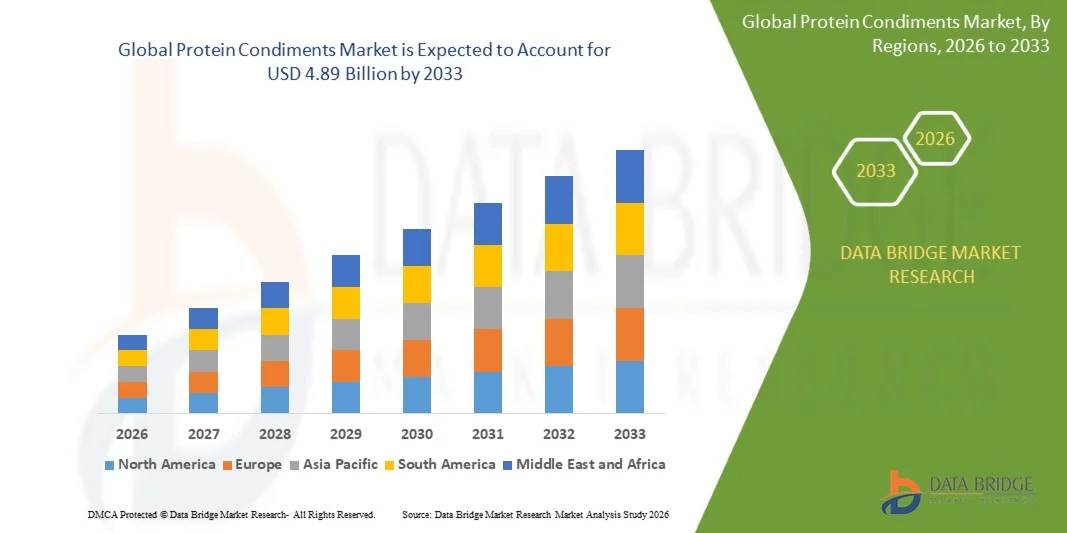
- As per Data Bridge Market Research analysis, the protein condiments market was valued at USD 1.61 billion in 2025 and is projected to reach USD 4.89 billion by 2033, growing at a CAGR of 14.90% from 2026 to 2033.
- The market is experiencing consistent growth driven by rising consumer focus on protein intake, increasing demand for functional and better-for-you foods, and expanding applications across households, foodservice, and food processing, as brands add protein to sauces, dressings, dips, and mayonnaise.
- The increasing shift toward high-protein diets, weight management, and healthy aging, combined with growing use of protein ingredients in everyday foods and the rising popularity of GLP-1 medicines, is supporting market adoption. Protein condiments are being applied across sauces, dressings and condiments used at home, in restaurants, and in packaged meals, with fortification using protein ingredients such as milk, whey, collagen, and plant proteins, and product ranges extending into sauces, dips, and spreads.
Market Size & Forecast
- Global Market Value (2025): USD 1.61 Billion
- Expected Market Value (2033): USD 4.89 Billion
- Forecast CAGR (2026–2033): 14.90%
- Leading Region in 2025: North America
- Fastest Growing Region: Asia-Pacific
What are the Major Takeaways of the Protein Condiments Market?
- North America dominated the protein condiments market with the largest revenue share of 41.36% in 2025, supported by strong consumer focus on protein, a large packaged sauces and dressings industry, and active product innovation by leading condiment brands.
- Asia-Pacific is expected to be the fastest-growing region at a CAGR of 17.42% from 2026 to 2033, fueled by rising health awareness, growing modern retail and e-commerce, expanding foodservice, and a strong sauce and condiment consumption culture.
- The sauces segment led the market with a 38.7% share in 2025, driven by wide use of ketchup, barbecue, hot, and cooking sauces across households and foodservice.
- Dressings are the fastest-growing product type, projected to register a CAGR of 19.20%, reflecting the popularity of protein-fortified ranch and other dressings among health-conscious consumers.
- The milk and whey protein segment dominated the protein source category with a 44.62% revenue share in 2025, led by its high protein quality, neutral taste, and compatibility with creamy dressings and dips.
- Supermarkets and hypermarkets accounted for 52.34% of the market share in 2025, supported by wide product assortments, high shopper footfall, and strong shelf presence of leading condiment brands.
- The online retail segment is the fastest-growing distribution channel, with a CAGR of 21.10%, driven by growing e-commerce, direct-to-consumer brands, and easy access to niche protein products.
Report Scope and Protein Condiments Market Segmentation
|
Attributes |
Protein Condiments Key Market Insights |
|
Segments Covered |
|
|
Countries Covered |
North America
Europe
Asia-Pacific
Middle East and Africa
South America
|
|
Key Market Players |
|
|
Market Opportunities |
|
|
Value Added Data Infosets |
In addition to the insights on market scenarios such as market value, growth rate, segmentation, geographical coverage, and major players, the market reports curated by the Data Bridge Market Research also include in-depth expert analysis, pricing analysis, brand share analysis, consumer survey, demography analysis, supply chain analysis, value chain analysis, raw material/consumables overview, vendor selection criteria, PESTLE Analysis, Porter Analysis, and regulatory framework. |
What is the Key Trend in the Protein Condiments Market?
- Condiments are increasingly evolving from simple flavor enhancers into functional nutrition carriers, with brands adding milk, whey, collagen, plant, and egg proteins to ketchup, mayonnaise, dressings, dips, and sauces while keeping familiar taste and texture.
- For instance, in December 2025, according to FoodNavigator, ingredient experts named protein as the biggest food trend for 2026, with weight management and GLP-1 drug use expected to further raise demand for protein as consumers look to feel fuller for longer and maintain muscle, highlighting the broadening consumer base for protein-enriched foods.
- Dressings and dips are becoming a leading format for protein fortification, as creamy bases can incorporate milk protein and other ingredients, while smaller brands are launching high-protein ketchups, barbecue sauces, and pasta sauces using collagen and whey.
- Protein claims are increasingly combined with lower sugar, fewer calories, and cleaner ingredient lists, allowing brands to position protein condiments as macro-friendly alternatives that fit into weight management and everyday eating.
- For instance, in May 2026, according to Cheese Reporter, protein-focused launches are extending across dairy-based categories, with Marzetti Protein Ranch using milk protein concentrate to provide 3–4 grams of protein per serving and Blue Bell PRO ice cream offering up to 12 grams per serving from March 2026, indicating the spread of protein claims into familiar everyday products.
- As protein ingredients, formulation technologies, and consumer interest in functional foods continue to advance, protein condiments are expected to expand beyond niche products into mainstream sauces, dressings, and dips across retail and foodservice.
What are the Key Drivers of the Protein Condiments Market?
- Rising consumer focus on protein intake for satiety, muscle maintenance, and weight management is significantly increasing demand for everyday foods that deliver protein without changing established eating habits.
- For instance, in December 2025, according to Axios, Chipotle launched its first-ever High Protein Menu, citing International Food Information Council data showing that high-protein diets have been the top U.S. eating pattern for three years and that 70% of Americans prioritize protein, highlighting the mainstream reach of the protein trend.
- Growing use of GLP-1 medicines, an ageing population concerned with muscle loss, and increasing interest in sports nutrition are encouraging brands, retailers, and restaurants to develop protein-rich, smaller-portion, and lower-sugar products.
- For instance, in January 2026, according to Food Ingredients First, U.K. supermarket chain Morrisons planned to launch 53 high-protein products across approximately 400 stores from early January 2026, alongside other restaurants and grocers introducing GLP-1-friendly products, indicating expanding retail commitment to protein.
- With consumers seeking simple ways to add protein to meals, condiments used across many eating occasions can support incremental protein intake, brand differentiation, and premium pricing across retail, foodservice, and online channels.
What Factors Are Challenging the Growth of the Protein Condiments Market?
- Protein condiments require protein ingredients such as milk protein, whey, collagen, and pea protein, which are more expensive than conventional condiment ingredients and can raise production costs and retail prices.
- For instance, in March 2026, according to Spins, sales of mayonnaise fell 1% in 2025, ketchup fell 0.9%, and salad dressing fell 4.6% year-over-year, indicating that mature condiment categories face volume pressure even as better-for-you variants gain traction.
- Adding protein can affect taste, texture, viscosity, emulsion stability, and shelf life, and formulators must balance protein content with creaminess, flavor, and clean-label expectations.
- Consumers may question whether small amounts of protein per serving justify a price premium, and protein source and quality, such as the use of collagen, which is not a complete protein, can influence purchase decisions.
- The combination of higher ingredient costs, formulation complexity, modest protein content per serving, and competition from flavor- and sugar-reduction-led innovation can constrain adoption among price-sensitive consumers, particularly where conventional condiments already meet everyday needs.
How is the Protein Condiments Market Segmented?
The protein condiments market is segmented on the basis of product type, protein source, distribution channel, and end user.
- By Product Type
On the basis of product type, the protein condiments market is segmented into sauces, dressings, dips & spreads, mayonnaise, and others. The sauces segment dominated the market with 38.7% share in 2025, supported by wide consumption of ketchup, barbecue, hot, and cooking sauces across households and foodservice. Sauces are used across many meals and snacks, giving protein fortification frequent opportunities to add value. Brands are developing high-protein ketchups, barbecue sauces, and pasta sauces using collagen, whey, and other ingredients. Established distribution and familiar usage make sauces an accessible entry point for protein claims. Strong brand awareness of leading sauce makers further supports the segment.
The dressings segment is projected to register the fastest growth at a CAGR of 19.20% from 2026 to 2033, driven by the popularity of protein-fortified ranch and other creamy dressings among health-conscious consumers. Creamy bases can incorporate milk protein while preserving familiar taste and texture. Launches from leading dressing brands are increasing visibility and trial. Dressings are used frequently on salads, wraps, and vegetables, supporting regular purchase. Snack-pack formats are also widening the range of use occasions.
- By Protein Source
On the basis of protein source, the protein condiments market is segmented into milk & whey protein, plant protein, collagen protein, egg protein, and others. The milk and whey protein segment dominated the market with 44.62% share in 2025, supported by high protein quality, neutral taste, and compatibility with creamy dressings, dips, and sauces. Milk proteins are widely available from established dairy ingredient suppliers. They provide functional benefits such as emulsion stability and smooth texture. Their nutritional profile and consumer familiarity also support protein claims. Large condiment makers are using milk protein in new launches.
The plant protein segment is projected to register the fastest growth at a CAGR of 18.40% from 2026 to 2033, driven by growing demand for vegan, dairy-free, and allergen-friendly products. Pea, soy, and other plant proteins are being refined to reduce off-flavors and improve solubility. Plant-based mayonnaise and dressings provide platforms for fortification. Flexitarian consumers are increasing demand for plant-based options. Advances in ingredient processing are widening formulation choices.
- By Distribution Channel
On the basis of distribution channel, the protein condiments market is segmented into supermarkets & hypermarkets, convenience stores, online retail, and others. The supermarkets and hypermarkets segment dominated the distribution channel category with 52.34% share in 2025, supported by wide assortments, high shopper footfall, and strong shelf presence of leading condiment brands. Retailers are expanding high-protein sections and promoting new launches. Refrigerated and shelf-stable condiment aisles offer high visibility. Private-label and national-brand competition supports availability at multiple price points. Promotions and in-store displays also help drive trial.
The online retail segment is projected to register the fastest growth at a CAGR of 21.10% from 2026 to 2033, driven by growing e-commerce penetration, direct-to-consumer brands, and easy access to niche protein products. Online channels let small brands reach health-conscious consumers without shelf-space constraints. Subscriptions and bundles encourage repeat purchase. Detailed nutrition information and reviews support purchase decisions. Social media exposure and creator marketing are also boosting discovery.
- By End User
On the basis of end user, the protein condiments market is segmented into households, foodservice, and food processors. The households segment dominated the end-user category with 61.7% share in 2025, supported by widespread everyday use of sauces, dressings, and dips and rising interest in home-based protein intake. Consumers use protein condiments to add protein to meals, snacks, and meal prep without changing their routines. Familiar formats and brands lower the barrier to trial. Wide retail and online availability also supports household purchase. Growing interest in weight management and healthy eating further supports demand.
The foodservice segment is projected to register the fastest growth at a CAGR of 18.30% from 2026 to 2033, driven by restaurants and quick-service chains introducing high-protein menus and protein-enhanced sauces and dressings. Operators are seeking ways to add protein to bowls, wraps, salads, and sides. Bulk and single-serve packaging suits restaurant needs. Menu labeling of protein content is influencing ingredient choices. Partnerships between condiment suppliers and restaurant chains are also widening adoption.
Which Region Holds the Largest Share of the Protein Condiments Market?
- North America dominated the protein condiments market with the largest revenue share of 41.36% in 2025, supported by strong consumer focus on protein, a large packaged sauces and dressings industry, and active product innovation by leading condiment brands.
- The region also benefits from high consumer focus on protein, a large base of packaged sauce and dressing manufacturers, strong retail and e-commerce networks, and active innovation by leading condiment brands. Increasing launches of protein-fortified dressings, dips, and sauces, along with growing use of GLP-1 medicines, continue to strengthen North America’s position in the global market.
U.S. Protein Condiments Market Insight
The U.S. protein condiments market is witnessing strong growth due to high consumer focus on protein, rising use of GLP-1 medicines, and active innovation by leading dressing, sauce, and mayonnaise brands. The country’s large packaged food industry, along with wide retail and online availability, is driving demand for protein-fortified ketchup, dressings, dips, and sauces. In addition, growing high-protein menu offerings by restaurant chains are accelerating adoption of protein-enhanced condiments across household and foodservice applications.
Asia-Pacific Protein Condiments Market Insight
The Asia-Pacific protein condiments market is expected to witness rapid growth, driven by rising health awareness, expanding modern retail and e-commerce, and growing interest in fitness and functional foods across countries such as China, India, and Japan. Strong sauce and condiment consumption culture, growing middle-class spending, and increasing availability of protein ingredients are supporting regional market expansion. In addition, the region’s expanding foodservice sector and manufacturing base are accelerating demand for protein-enriched sauces and dressings.
Japan Protein Condiments Market Insight
The Japan protein condiments market is witnessing consistent growth due to strong interest in health and functional foods, an aging population, and a well-developed condiment industry. Consumers, retailers, and manufacturers are increasingly exploring protein-enriched dressings, mayonnaise, and sauces that fit into everyday meals. Moreover, strong demand for quality, convenience, and reduced sugar and calories is further contributing to market growth in Japan.
China Protein Condiments Market Insight
The China protein condiments market is growing rapidly, driven by rising health awareness, expanding e-commerce and modern retail, and a large sauce and condiment industry. Growing interest in fitness and nutrition is significantly boosting demand for protein-enriched products. In addition, strong domestic food manufacturing, active online brands, and increasing availability of protein ingredients are positioning China as a key growth market for protein condiments across Asia-Pacific.
U.K. Protein Condiments Market Insight
The U.K. protein condiments market is experiencing steady growth, supported by strong retailer focus on high-protein ranges, growing use of GLP-1 medicines, and interest in healthier eating. Supermarkets, brands, and restaurant chains are increasingly launching protein-focused products, including sauces, dressings, and dips. Furthermore, growing consumer awareness of protein and demand for lower-sugar options are supporting wider adoption of protein condiments in the U.K.
Germany Protein Condiments Market Insight
The Germany protein condiments market is expanding steadily due to the country’s strong food manufacturing base, growing fitness and health focus, and established sauce and dressing categories. Retailers, manufacturers, and consumers are increasingly exploring high-protein and reduced-sugar products for everyday meals. Continuous advancements in protein ingredients and formulation, along with Germany’s focus on product quality and clear labeling, are further driving market growth in the country.
Which are the Top Companies in Protein Condiments Market?
The protein condiments industry is primarily led by well-established companies, including:
- The Kraft Heinz Company (U.S.)
- Unilever PLC (U.K.)
- The Marzetti Company (U.S.)
- The Clorox Company (U.S.)
- McCormick & Company, Incorporated (U.S.)
- Conagra Brands, Inc. (U.S.)
- Nestlé S.A. (Switzerland)
- Kikkoman Corporation (Japan)
- Mizkan Holdings Co., Ltd. (Japan)
- Ajinomoto Co., Inc. (Japan)
- Kewpie Corporation (Japan)
- Lifeway Foods, Inc. (U.S.)
- Ken’s Foods, Inc. (U.S.)
- Bolthouse Farms (U.S.)
- Sabra Dipping Company, LLC (U.S.)
- Tessemae’s LLC (U.S.)
- Groupe Danone (France)
- Campbell Soup Company (U.S.)
- Mars, Incorporated (U.S.)
- B&G Foods, Inc. (U.S.)
What are Latest Developments in Protein Condiments Market?
- In March 2026, The Marzetti Company launched Marzetti Protein Ranch, described as a first-to-category innovation, offering 3–4 grams of milk protein per serving in a Protein Ranch Dressing (13 oz. bottle), Protein Ranch Veggie Dip (12 oz. tub), and Protein Ranch Veggie Dip Snack Packs, with availability at major grocery stores nationwide beginning in spring.
- In May 2026, The Clorox Company’s Hidden Valley Ranch introduced Hidden Valley Ranch Dippers, a protein-forward refrigerated snack pairing seasoned grilled chicken strips with Original or Buffalo-Style Ranch dressing to deliver 15 g of protein, developed through a licensing partnership with Carl Buddig and Company and marking the brand’s first entry into refrigerated protein snacking.
- In April 2026, according to The Grocery Edit, Protein Basics offered a line of high-protein condiments, including ketchup, BBQ sauce, and strawberry sauce, with its ketchup delivering 16 g of collagen-derived protein per 35 mL serving, with sugar reduced through sucralose and sodium comparable to or slightly lower than conventional ketchup.
- In June 2026, Kraft Heinz launched three mayo-based dipping sauces under the Heinz brand exclusively at Walmart in the U.S., extending its condiment portfolio in dipping formats, as the company shifts its European range toward shorter ingredient lists, smaller portions, and more high-protein products.
- In August 2025, Kraft Heinz launched Heinz Mayonnaise-Style Sauces in Canada, offering eight flavours including four new varieties, Smoky Bacon, Garlic Parmesan, Mango Habanero, and Pickle, expanding the range alongside Mayochup, Sriracha, Garlic, and Real Mayonnaise sauces in a market where nearly two-thirds of Canadians rank mayo among their top five condiments.

- Interactive Data Analysis Dashboard
- Company Analysis Dashboard for high growth potential opportunities
- Research Analyst Access for customization & queries
- Competitor Analysis with Interactive dashboard
- Latest News, Updates & Trend analysis
- Harness the Power of Benchmark Analysis for Comprehensive Competitor Tracking
Global Protein Condiments Market, Supply Chain Analysis and Ecosystem Framework
To support market growth and help clients navigate the impact of geopolitical shifts, DBMR has integrated in-depth supply chain analysis into its Global Protein Condiments Market research reports. This addition empowers clients to respond effectively to global changes affecting their industries. The supply chain analysis section includes detailed insights such as Global Protein Condiments Market consumption and production by country, price trend analysis, the impact of tariffs and geopolitical developments, and import and export trends by country and HSN code. It also highlights major suppliers with data on production capacity and company profiles, as well as key importers and exporters. In addition to research, DBMR offers specialized supply chain consulting services backed by over a decade of experience, providing solutions like supplier discovery, supplier risk assessment, price trend analysis, impact evaluation of inflation and trade route changes, and comprehensive market trend analysis.
Data collection and base year analysis are done using data collection modules with large sample sizes. The stage includes obtaining market information or related data through various sources and strategies. It includes examining and planning all the data acquired from the past in advance. It likewise envelops the examination of information inconsistencies seen across different information sources. The market data is analysed and estimated using market statistical and coherent models. Also, market share analysis and key trend analysis are the major success factors in the market report. To know more, please request an analyst call or drop down your inquiry.
The key research methodology used by DBMR research team is data triangulation which involves data mining, analysis of the impact of data variables on the market and primary (industry expert) validation. Data models include Vendor Positioning Grid, Market Time Line Analysis, Market Overview and Guide, Company Positioning Grid, Patent Analysis, Pricing Analysis, Company Market Share Analysis, Standards of Measurement, Global versus Regional and Vendor Share Analysis. To know more about the research methodology, drop in an inquiry to speak to our industry experts.
Data Bridge Market Research is a leader in advanced formative research. We take pride in servicing our existing and new customers with data and analysis that match and suits their goal. The report can be customized to include price trend analysis of target brands understanding the market for additional countries (ask for the list of countries), clinical trial results data, literature review, refurbished market and product base analysis. Market analysis of target competitors can be analyzed from technology-based analysis to market portfolio strategies. We can add as many competitors that you require data about in the format and data style you are looking for. Our team of analysts can also provide you data in crude raw excel files pivot tables (Fact book) or can assist you in creating presentations from the data sets available in the report.