


Refsum Disease Market Size
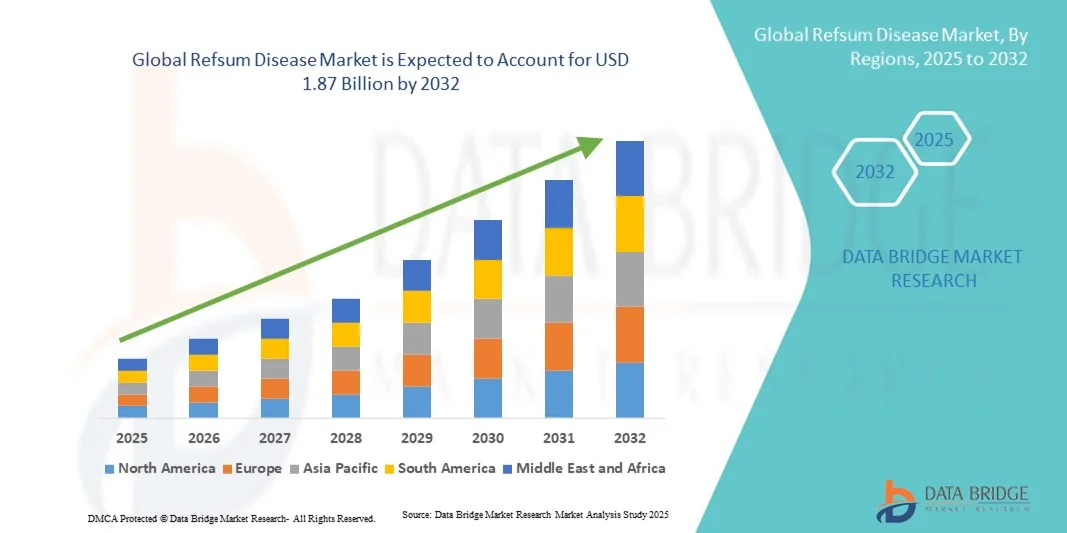
- The global refsum disease market size was valued at USD 1.23 billion in 2024 and is expected to reach USD 1.87 billion by 2032, at a CAGR of 5.40% during the forecast period
- The market growth is largely fueled by the increasing awareness and diagnosis rates of refsum disease, coupled with advancements in genetic testing and molecular diagnostics that enable early and accurate detection
- Furthermore, rising research and development activities focusing on novel therapies, along with supportive government initiatives for rare disease management, are accelerating the adoption of effective treatment options for refsum disease, thereby significantly boosting the market’s growth
Refsum Disease Market Analysis
- The Refsum Disease market, which focuses on the diagnosis and management of this rare metabolic disorder, is witnessing growing attention driven by advances in genetic research, improved awareness, and expanding access to specialized care and diagnostic testing
- Increasing emphasis on early detection, availability of novel treatment approaches, and enhanced genetic counseling services are key factors fueling the growth of the Refsum Disease market globally
- North America dominated the refsum disease market with the largest revenue share of 38.7% in 2024, attributed to strong healthcare infrastructure, increased awareness among clinicians, and active research initiatives for rare metabolic diseases in the U.S. and Canada. The U.S. leads the region due to higher diagnosis rates, strong patient support networks, and ongoing development of advanced therapeutic interventions
- Asia-Pacific is expected to be the fastest-growing region in the refsum disease market during the forecast period, supported by rising healthcare investments, growing access to genetic testing, and improved disease awareness in countries such as China, Japan, and India
- The diet segment dominated the refsum disease market with the largest market revenue share of 46.3% in 2024, as dietary management remains the first-line and most effective approach in controlling phytanic acid accumulation
Report Scope and Refsum Disease Market Segmentation
|
Attributes |
Refsum Disease Key Market Insights |
|
Segments Covered |
|
|
Countries Covered |
North America
Europe
Asia-Pacific
Middle East and Africa
South America
|
|
Key Market Players |
|
|
Market Opportunities |
|
|
Value Added Data Infosets |
In addition to the insights on market scenarios such as market value, growth rate, segmentation, geographical coverage, and major players, the market reports curated by the Data Bridge Market Research also include in-depth expert analysis, pricing analysis, brand share analysis, consumer survey, demography analysis, supply chain analysis, value chain analysis, raw material/consumables overview, vendor selection criteria, PESTLE Analysis, Porter Analysis, and regulatory framework. |
Refsum Disease Market Trends
Enhanced Convenience Through AI and Diagnostic Integration
- A significant and accelerating trend in the global refsum disease market is the deepening integration of artificial intelligence (AI) and advanced diagnostic technologies in disease detection, monitoring, and management. This fusion of innovations is significantly enhancing clinical precision, treatment efficiency, and patient convenience in managing this rare metabolic disorder
- For instance, recent AI-driven platforms in medical genetics assist clinicians in identifying subtle biochemical and phenotypic markers associated with Refsum Disease, expediting accurate diagnosis and enabling earlier intervention. Similarly, digital platforms equipped with advanced imaging analytics and genetic screening capabilities are improving the reliability of peroxisomal disorder assessments, making the diagnostic process more efficient and accessible
- AI-based diagnostic integration in the refsum disease space allows healthcare providers to analyze complex biochemical data, such as elevated phytanic acid levels, and predict potential disease progression trends. Machine learning models are being employed to support early diagnosis, improve treatment planning, and monitor therapeutic outcomes in real time. Furthermore, digital health monitoring solutions are empowering patients with continuous updates about their metabolic parameters and personalized management recommendations, enhancing convenience and quality of life
- The seamless integration of refsum disease management tools with electronic health records (EHR) and digital care platforms facilitates centralized oversight of the patient’s overall health status. Through a unified clinical interface, healthcare professionals can manage biochemical testing data, genetic results, and treatment schedules, creating a coordinated and data-driven care approach
- This trend toward more intelligent, data-driven, and interconnected healthcare systems is fundamentally reshaping patient expectations for rare disease management. Consequently, biotechnology companies are developing AI-enabled diagnostic systems and digital companion tools that aid in early detection and personalized therapy adjustments for Refsum Disease
- The demand for technologically advanced, AI-integrated diagnostic and monitoring solutions is growing rapidly across healthcare institutions and research centers as clinicians increasingly prioritize convenience, accuracy, and comprehensive disease management capabilities
Refsum Disease Market Dynamics
Driver
Growing Need Due to Rising Diagnostic Awareness and Early Disease Detection
- The increasing awareness of rare metabolic disorders among healthcare professionals, coupled with advancements in genetic testing and biochemical analysis, is a significant driver for the rising demand in the Refsum Disease market.
- For instance, in April 2024, several medical research institutions initiated collaborative studies on phytanic acid metabolism and its genetic determinants, aiming to develop early-screening methods and improved dietary management guidelines. Such initiatives by global health organizations and biotech firms are expected to drive the Refsum Disease industry growth over the forecast period
- As patients and physicians become more aware of the severe neurological, ophthalmic, and dermatological complications associated with Refsum Disease, the demand for early and accurate diagnostic solutions is surging. Advanced biochemical assays, genetic sequencing technologies, and awareness programs are helping detect cases earlier, leading to better outcomes and increased adoption of monitoring solutions
- Furthermore, the growing focus on precision medicine and personalized treatment plans is making digital diagnostic tools an essential part of rare disease management. The availability of AI-powered analytics platforms and laboratory automation technologies enhances diagnostic accuracy, reduces turnaround time, and improves patient care coordination
- The convenience of remote biochemical monitoring, teleconsultations, and the integration of patient data with clinical decision support systems are key factors propelling the adoption of Refsum Disease management solutions in both hospital and research settings. The increasing participation of academic institutions and biopharmaceutical companies in developing improved therapeutic interventions further supports market expansion
Restraint/Challenge
Concerns Regarding Limited Treatment Availability and High Diagnostic Costs
- Challenges surrounding limited therapeutic options and the high cost of diagnostic testing pose significant barriers to broader market penetration. As Refsum Disease is an ultra-rare disorder, effective treatment options are currently limited to strict dietary management and supportive care, making the development of novel therapies a critical yet complex challenge
- For instance, the high cost associated with genetic sequencing, plasma analysis, and advanced laboratory procedures can restrict access for patients in low- and middle-income regions. In addition, the lack of specialized diagnostic centers and trained professionals for rare metabolic disorders contributes to delayed or missed diagnoses
- Addressing these challenges through collaborative research funding, improved healthcare infrastructure, and early screening programs is essential to improve access to diagnosis and care. Biotechnology companies and research institutions are emphasizing innovation in biomarker identification and cost-effective genetic testing technologies to make diagnostic solutions more affordable and scalable
- Furthermore, the absence of curative therapies and the reliance on lifelong dietary control may discourage patients from undergoing routine monitoring, particularly in developing regions. While several ongoing research projects are exploring gene therapy and enzyme replacement strategies, the translation of these approaches into commercially available treatments remains limited
- Overcoming these barriers through the development of affordable diagnostic platforms, patient support programs, and targeted awareness initiatives will be vital for ensuring sustainable growth of the Refsum Disease market in the coming years
Refsum Disease Market Scope
The market is segmented on the basis of diagnosis, treatment, end user, and distribution channel
- By Diagnosis
On the basis of diagnosis, the refsum disease market is segmented into blood test, molecular genetic testing, enzyme analysis, and prenatal screening tests. The blood test segment dominated the largest market revenue share of 42.5% in 2024, owing to its essential role as the initial diagnostic step in identifying elevated phytanic acid levels, which are a hallmark of Refsum Disease. Blood tests are cost-effective, widely accessible, and routinely used for metabolic and biochemical assessments, facilitating early disease detection. Growing awareness among healthcare providers and improved screening programs in clinical laboratories have further enhanced demand for blood-based diagnostic approaches. The segment’s strength also lies in its ability to monitor treatment efficacy over time through regular phytanic acid evaluations, making it a cornerstone of Refsum Disease management.
The molecular genetic testing segment is expected to witness the fastest CAGR of 8.9% from 2025 to 2032, driven by the increasing emphasis on precision medicine and the identification of mutations in the PHYH or PEX7 genes. Technological advancements such as next-generation sequencing (NGS) and whole-exome sequencing (WES) are making genetic testing faster, more accurate, and cost-efficient. Rising availability of genetic counseling and inclusion of such tests in newborn screening programs further support market growth. Expanding collaborations between diagnostic labs and research institutions are accelerating the integration of genetic testing into routine clinical practice for Refsum Disease.
- By Treatment
On the basis of treatment, the refsum disease market is segmented into diet, plasmapheresis, hydrating creams, and medication. The diet segment dominated the largest market revenue share of 46.3% in 2024, as dietary management remains the first-line and most effective approach in controlling phytanic acid accumulation. Patients are typically placed on a low-phytanic-acid diet by avoiding foods such as dairy products, beef, and certain fish, significantly reducing disease symptoms and progression. Growing awareness among clinicians regarding nutritional management, along with support from metabolic specialists, has driven this segment’s dominance. The expansion of specialized dietary counseling centers and patient education initiatives has also strengthened adherence to diet-based therapies, contributing to long-term disease stabilization and improved quality of life.
The plasmapheresis segment is projected to witness the fastest CAGR of 9.4% from 2025 to 2032, as it offers an effective short-term therapeutic intervention for patients with severe neurological or cardiac manifestations. The rising adoption of plasma exchange in emergency cases to rapidly lower phytanic acid levels is supporting its growth. Advancements in apheresis technology, along with the increasing availability of trained healthcare professionals and specialized treatment centers, are making plasmapheresis more accessible. Growing inclusion in clinical guidelines for managing acute episodes of Refsum Disease has also accelerated demand globally.
- By End User
On the basis of end user, the refsum disease market is segmented into hospitals, clinics, and others. The hospitals segment dominated the largest market revenue share of 53.8% in 2024, attributed to the comprehensive range of diagnostic and treatment services offered under one roof. Hospitals play a vital role in the management of rare diseases, providing access to multidisciplinary teams including neurologists, geneticists, and dietitians. The availability of advanced laboratory equipment for biochemical and genetic testing further supports hospital-based care. In addition, hospitals are often the primary centers for patient monitoring, emergency management, and long-term follow-up, driving their leadership in the market. Support from government funding for rare disease infrastructure and participation in research studies has further reinforced their dominance.
The clinics segment is expected to witness the fastest CAGR of 8.1% from 2025 to 2032, owing to the rising number of specialized metabolic and genetic clinics offering personalized care for rare diseases. Clinics provide more accessible, patient-friendly settings, often focusing on early diagnosis and dietary management of Refsum Disease. Increasing awareness among local healthcare providers and the expansion of private clinic networks have strengthened the segment’s growth. Furthermore, telemedicine and remote consultation services are allowing clinics to reach underserved regions, enhancing accessibility for Refsum Disease patients globally.
- By Distribution Channel
On the basis of distribution channel, the refsum disease market is segmented into hospital pharmacy, retail pharmacy, and others.The hospital pharmacy segment dominated the largest market revenue share of 49.6% in 2024, primarily due to the centralized distribution of specialized medications and dietary supplements within hospital settings. Hospital pharmacies ensure timely access to treatment for inpatients and outpatients while maintaining strict supervision over prescription and dosage adherence. Growing hospital admissions for diagnostic evaluation and acute management of Refsum Disease have increased dependency on hospital-based dispensing. The segment is further supported by the integration of rare disease management programs and hospital partnerships with pharmaceutical suppliers for specialized drugs and plasma exchange equipment.
The retail pharmacy segment is anticipated to witness the fastest CAGR of 8.7% from 2025 to 2032, driven by rising patient preference for convenient medication refills and access to nutritional supplements outside hospital environments. Retail pharmacies are expanding their offerings to include rare disease products, supported by government initiatives for better drug availability. Technological advancements in e-pharmacy services and doorstep delivery of prescribed treatments are enhancing patient accessibility. Moreover, the growth of community pharmacy programs aimed at rare disease awareness and adherence support further contributes to this segment’s strong expansion outlook.
Refsum Disease Market Regional Analysis
- North America dominated the refsum disease market with the largest revenue share of 38.7% in 2024, attributed to strong healthcare infrastructure, increased awareness among clinicians, and active research initiatives for rare metabolic diseases in the U.S. and Canada. The region’s market growth is further supported by a high level of healthcare expenditure, advanced diagnostic technologies, and the presence of several specialized research centers focusing on peroxisomal and lipid metabolism disorders
- Consumers and healthcare providers in the region are increasingly emphasizing early diagnosis and comprehensive disease management through biochemical testing, genetic analysis, and clinical monitoring
- In addition, robust collaborations between research institutions and biotechnology firms are promoting the development of innovative diagnostic assays and therapeutic interventions for Refsum Disease. The growing number of patient registries, educational campaigns, and clinical trials is enhancing disease awareness and improving treatment outcomes across the region
U.S. Refsum Disease Market Insight
The U.S. refsum disease market captured the largest revenue share in 2024 within North America, fueled by higher diagnosis rates, advanced healthcare infrastructure, and strong patient support networks. Increased clinical focus on rare metabolic disorders, coupled with the availability of genetic sequencing facilities and lipid testing laboratories, has significantly improved diagnostic accuracy. Moreover, ongoing research into dietary management, phytanic acid metabolism, and gene-based therapies is driving further advancements. The presence of specialized centers for metabolic and neurological disorders, combined with supportive government and non-profit initiatives, continues to propel the U.S. market growth for Refsum Disease management.
Europe Refsum Disease Market Insight
The Europe refsum disease market is projected to expand at a substantial CAGR throughout the forecast period, driven by increasing diagnostic awareness and the strengthening of rare disease registries across the region. Government-funded research programs and the growing emphasis on precision medicine are fostering the adoption of advanced biochemical and genetic testing methods. European healthcare systems are integrating rare disease diagnostics into national health frameworks, improving access for patients. Countries such as Germany, France, and the U.K. are seeing significant investments in metabolic disorder research and collaborative networks, promoting timely diagnosis and better clinical outcomes for Refsum Disease patients.
U.K. Refsum Disease Market Insight
The U.K. refsum disease market is anticipated to grow at a noteworthy CAGR during the forecast period, driven by early adoption of genetic testing technologies and strong public health awareness initiatives. The National Health Service (NHS) and related academic institutions are increasingly focusing on identifying and managing inherited metabolic disorders through structured screening programs. Furthermore, the presence of national research databases and rare disease consortia supports data-driven diagnosis, patient tracking, and the development of tailored dietary and therapeutic approaches.
Germany Refsum Disease Market Insight
The Germany refsum disease market is expected to expand at a considerable CAGR during the forecast period, supported by the country’s robust healthcare infrastructure, advanced clinical laboratories, and ongoing investments in metabolic disease research. Germany’s emphasis on personalized medicine, precision diagnostics, and early intervention programs has improved patient outcomes and awareness of rare diseases like Refsum Disease. Collaborations between hospitals, universities, and biotech companies are driving innovation in biomarker discovery and therapeutic development, strengthening the country’s role as a key European hub for rare disease diagnostics.
Asia-Pacific Refsum Disease Market Insight
The Asia-Pacific refsum disease market is poised to grow at the fastest CAGR during the forecast period of 2025 to 2032, supported by rising healthcare investments, improved access to diagnostic facilities, and increasing disease awareness in countries such as China, Japan, and India. The region’s expanding healthcare infrastructure, along with growing government initiatives in rare disease management, is fostering earlier diagnosis and treatment adoption. Enhanced availability of genetic sequencing centers and international research collaborations are further accelerating growth. As Asia-Pacific continues to invest in advanced biochemical and genetic technologies, diagnostic accessibility for rare metabolic disorders like refsum disease market is expected to rise significantly.
Japan Refsum Disease Market Insight
The Japan refsum disease market is gaining momentum due to the country’s strong research orientation, advanced biotechnology sector, and increasing focus on precision diagnostics. Japan’s healthcare system emphasizes early disease detection through national screening programs and genetic counseling, which is improving patient outcomes. The growing prevalence of neurological and metabolic disorders, coupled with government-backed research into rare diseases, is supporting the expansion of the Refsum Disease market in Japan. Collaborative projects between universities and pharmaceutical companies are expected to accelerate new therapeutic development.
China Refsum Disease Market Insight
The China refsum disease market accounted for the largest revenue share in the Asia-Pacific region in 2024, attributed to the country’s rapidly developing healthcare infrastructure, rising middle-class population, and increasing investments in genetic testing and metabolic disease research. China’s strong presence in biotechnology manufacturing and the growing adoption of rare disease diagnostic programs are enhancing disease recognition and accessibility to testing services. The government’s focus on expanding rare disease registries and promoting international research cooperation is further driving the Refsum Disease market’s growth in the region.
Refsum Disease Market Share
The Refsum Disease industry is primarily led by well-established companies, including:
- Napo Therapeutics S.p.A (Italy)
- Biora Therapeutics, Inc. (U.S.)
- Fresenius Kabi AG (Germany)
- B. Braun SE (Germany)
- Illumina, Inc. (U.S.)
- Ceuta Healthcare (U.K.)
- Agilent Technologies, Inc. (U.S.)
Latest Developments in Global Refsum Disease Market
- In September 2025, the Royal Australian College of General Practitioners (RACGP) highlighted the case of Sharon Burstin, who experienced a 40-year delay in the diagnosis of Refsum Disease. This case underscores the importance of raising awareness among general practitioners to facilitate earlier detection of this rare metabolic disorder
- In December 2024, Retina Australia published an article discussing the impact of diagnostic delays on effective treatment of Refsum Disease. The article emphasizes the significance of early diagnosis and the role of dietary management in controlling the progression of the disease
- In February 2025, Retina South Africa identified Refsum Disease as a rare metabolic disorder characterized by the accumulation of phytanic acid in the body. The organization highlighted a case involving a misdiagnosis with Retinitis Pigmentosa for 40 years before the correct diagnosis of Adult Refsum Disease was made
- In April 2024, Medical News Today published an article providing an updated overview of Refsum Disease, including its causes, symptoms, diagnosis, and treatment options. The article serves as a resource for both healthcare professionals and the general public to understand this rare condition

- Interactive Data Analysis Dashboard
- Company Analysis Dashboard for high growth potential opportunities
- Research Analyst Access for customization & queries
- Competitor Analysis with Interactive dashboard
- Latest News, Updates & Trend analysis
- Harness the Power of Benchmark Analysis for Comprehensive Competitor Tracking
Data collection and base year analysis are done using data collection modules with large sample sizes. The stage includes obtaining market information or related data through various sources and strategies. It includes examining and planning all the data acquired from the past in advance. It likewise envelops the examination of information inconsistencies seen across different information sources. The market data is analysed and estimated using market statistical and coherent models. Also, market share analysis and key trend analysis are the major success factors in the market report. To know more, please request an analyst call or drop down your inquiry.
The key research methodology used by DBMR research team is data triangulation which involves data mining, analysis of the impact of data variables on the market and primary (industry expert) validation. Data models include Vendor Positioning Grid, Market Time Line Analysis, Market Overview and Guide, Company Positioning Grid, Patent Analysis, Pricing Analysis, Company Market Share Analysis, Standards of Measurement, Global versus Regional and Vendor Share Analysis. To know more about the research methodology, drop in an inquiry to speak to our industry experts.
Data Bridge Market Research is a leader in advanced formative research. We take pride in servicing our existing and new customers with data and analysis that match and suits their goal. The report can be customized to include price trend analysis of target brands understanding the market for additional countries (ask for the list of countries), clinical trial results data, literature review, refurbished market and product base analysis. Market analysis of target competitors can be analyzed from technology-based analysis to market portfolio strategies. We can add as many competitors that you require data about in the format and data style you are looking for. Our team of analysts can also provide you data in crude raw excel files pivot tables (Fact book) or can assist you in creating presentations from the data sets available in the report.












