


Remote Oncology Care Management Services Market Size
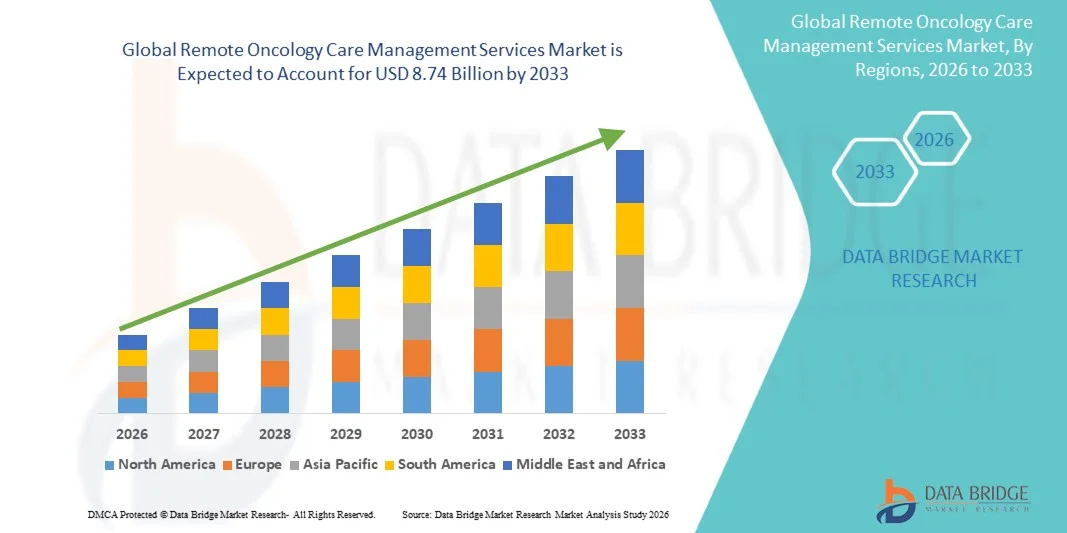
- The global remote oncology care management services market size was valued at USD 2.16 billion in 2025 and is expected to reach USD 8.74 billion by 2033, at a CAGR of 19.10% during the forecast period
- The market growth is largely fueled by the increasing adoption of telehealth solutions and advancements in digital health technologies, enabling continuous remote monitoring and management of cancer patients across various stages of treatment and recovery
- Furthermore, rising demand for personalized, accessible, and cost-effective oncology care, along with the growing emphasis on home-based treatment models and patient-centric care delivery, is positioning remote oncology care management services as a critical component of modern cancer care systems. These converging factors are accelerating the adoption of remote oncology solutions, thereby significantly boosting the industry's growth
Remote Oncology Care Management Services Market Analysis
- Remote oncology care management services, enabling virtual consultation, continuous patient monitoring, and digital symptom management for cancer patients, are becoming increasingly essential components of modern healthcare systems due to their ability to improve treatment adherence, enhance patient outcomes, and expand access to specialized oncology care across geographically dispersed populations
- The escalating demand for remote oncology care management services is primarily fueled by the rapid adoption of telehealth platforms, increasing global cancer burden, and a growing preference for home-based and patient-centric care models that reduce hospital visits and associated costs
- North America dominated the remote oncology care management services market with the largest revenue share of 38.6% in 2025, characterized by advanced healthcare IT infrastructure, high adoption of digital health solutions, and a strong presence of leading healthcare providers, with the U.S. experiencing significant growth in tele-oncology services driven by favorable reimbursement policies and increasing integration of AI-based monitoring tools
- Asia-Pacific is expected to be the fastest growing region in the remote oncology care management services market during the forecast period due to rising healthcare digitization, improving access to cancer care, and increasing investments in telemedicine infrastructure across emerging economies
- Remote patient monitoring segment dominated the remote oncology care management services market with a market share of 41.3% in 2025, driven by its critical role in real-time tracking of patient health, early detection of complications, and improved management of treatment-related side effects
Report Scope and Remote Oncology Care Management Services Market Segmentation
|
Attributes |
Remote Oncology Care Management Services Key Market Insights |
|
Segments Covered |
|
|
Countries Covered |
North America
Europe
Asia-Pacific
Middle East and Africa
South America
|
|
Key Market Players |
|
|
Market Opportunities |
|
|
Value Added Data Infosets |
In addition to the insights on market scenarios such as market value, growth rate, segmentation, geographical coverage, and major players, the market reports curated by the Data Bridge Market Research also include in-depth expert analysis, patient epidemiology, pipeline analysis, pricing analysis, and regulatory framework |
Remote Oncology Care Management Services Market Trends
“Rise of AI-Driven Personalized and Continuous Cancer Care”
- A significant and accelerating trend in the global remote oncology care management services market is the increasing integration of artificial intelligence (AI) and advanced digital health platforms to enable personalized, real-time cancer care delivery. This convergence of technologies is significantly enhancing patient monitoring, clinical decision-making, and overall treatment efficiency
- For instance, several tele-oncology platforms are incorporating AI-powered analytics to track patient symptoms and treatment responses remotely, allowing oncologists to make timely interventions and optimize care plans. Similarly, remote care solutions integrated with electronic health records enable seamless coordination across multidisciplinary oncology teams
- AI integration in remote oncology care enables capabilities such as predictive risk assessment, early detection of adverse events, and automated symptom tracking through mobile applications and wearable devices. For instance, some platforms utilize machine learning algorithms to identify patterns in patient-reported outcomes and generate alerts for potential complications. Furthermore, virtual care capabilities provide patients with convenient access to oncologists, reducing the need for frequent hospital visits
- The seamless integration of remote oncology platforms with broader digital health ecosystems facilitates centralized management of patient data, treatment schedules, and communication channels. Through unified systems, healthcare providers can coordinate care across diagnostics, therapy, and follow-up, creating a more connected and efficient oncology care pathway
- This trend toward more intelligent, proactive, and interconnected cancer care systems is fundamentally transforming how oncology services are delivered. Consequently, companies are developing advanced remote oncology solutions with features such as automated care coordination, AI-assisted diagnostics, and real-time patient engagement tools
- The demand for remote oncology care solutions that offer continuous monitoring and personalized treatment support is growing rapidly across healthcare providers and patient populations, as stakeholders increasingly prioritize accessibility, efficiency, and improved clinical outcomes
- Growing collaborations between healthcare providers and digital health companies are accelerating innovation and expanding the availability of integrated remote oncology care solutions across global markets
Remote Oncology Care Management Services Market Dynamics
Driver
“Growing Demand Due to Rising Cancer Burden and Telehealth Adoption”
- The increasing global incidence of cancer cases, coupled with the rapid expansion of telehealth and digital healthcare infrastructure, is a significant driver for the growing demand for remote oncology care management services
- For instance, in recent years, healthcare providers have increasingly implemented tele-oncology programs to improve access to cancer care in remote and underserved regions, enabling timely diagnosis and treatment planning. Such strategies by key organizations are expected to drive market growth during the forecast period
- As healthcare systems face growing pressure to manage large patient volumes efficiently, remote oncology services offer benefits such as reduced hospital congestion, continuous patient monitoring, and improved care coordination, providing a strong alternative to traditional in-person care models
- Furthermore, the rising preference for patient-centric care and home-based treatment options is making remote oncology services an essential component of modern cancer management, supporting integration with digital tools and personalized care approaches
- The convenience of virtual consultations, remote symptom tracking, and real-time communication with healthcare providers are key factors accelerating adoption across hospitals, clinics, and homecare settings. The increasing availability of user-friendly digital health platforms further contributes to market expansion
- Supportive government initiatives and favorable reimbursement policies for telehealth services are further encouraging healthcare providers to adopt remote oncology care solutions at scale
- Increasing investments by healthcare organizations in digital infrastructure and oncology-specific telehealth platforms are strengthening service delivery capabilities and driving market growth
Restraint/Challenge
“Data Security Concerns and Integration Complexity Challenges”
- Concerns related to data privacy, cybersecurity risks, and the secure handling of sensitive patient information pose significant challenges to the broader adoption of remote oncology care management services. As these platforms rely heavily on digital infrastructure, they are vulnerable to data breaches and unauthorized access
- For instance, reports of cyberattacks targeting healthcare systems and digital health platforms have raised concerns among providers and patients regarding the safety of remote oncology solutions
- Addressing these concerns through robust encryption technologies, secure data management protocols, and compliance with healthcare regulations is essential for building trust among stakeholders. Companies are increasingly focusing on enhancing cybersecurity frameworks and ensuring adherence to global data protection standards
- In addition, the complexity of integrating remote oncology solutions with existing hospital IT systems and workflows can act as a barrier to adoption, particularly for smaller healthcare providers with limited technical capabilities
- While digital health adoption is increasing, the high implementation costs and need for staff training can hinder widespread deployment, especially in developing regions. Overcoming these challenges through improved interoperability, cost-effective solutions, and stronger regulatory support will be critical for sustained market growth
- Limited digital literacy among certain patient populations can restrict effective utilization of remote oncology platforms, impacting overall service adoption and outcomes
- Variability in regulatory frameworks and data protection laws across regions can create compliance challenges for service providers operating in multiple markets
Remote Oncology Care Management Services Market Scope
The market is segmented on the basis of component, service type, application, and end user
- By Component
On the basis of component, the remote oncology care management services market is segmented into software, hardware, and services. The software segment dominated the market with the largest market revenue share in 2025, driven by the increasing reliance on digital platforms for remote monitoring, patient engagement, and oncology data management. Healthcare providers are rapidly adopting AI-enabled software solutions that facilitate real-time symptom tracking, treatment planning, and seamless communication between patients and clinicians. These platforms also integrate with electronic health records, enhancing care coordination and clinical decision-making. The scalability and flexibility of cloud-based oncology software further contribute to its dominance. In addition, continuous advancements in analytics and predictive tools are strengthening the value proposition of software solutions in oncology care.
The services segment is anticipated to witness the fastest growth rate from 2026 to 2033, fueled by the growing demand for end-to-end remote oncology care delivery and support services. Healthcare providers increasingly rely on specialized service providers for implementation, training, and ongoing care management. The complexity of oncology workflows necessitates expert-led services for effective deployment and utilization of digital platforms. Moreover, rising adoption of outsourced care coordination and patient support programs is boosting service demand. The expansion of tele-oncology programs and home-based care models is further accelerating growth in this segment.
- By Service Type
On the basis of service type, the market is segmented into remote consultation, remote patient monitoring, symptom management services, treatment adherence management, telepathology & teleradiology, virtual tumor boards, and palliative & survivorship care. The remote patient monitoring segment dominated the market with the largest revenue share of 41.3% in 2025, driven by its critical role in continuous tracking of patient health and early detection of complications. These solutions enable real-time monitoring of vital signs and treatment responses, reducing hospital visits and improving patient outcomes. The integration of wearable devices and mobile applications enhances the efficiency of monitoring systems. Healthcare providers increasingly prioritize RPM to manage high patient volumes effectively. Its ability to support proactive care models further strengthens its dominance.
The virtual tumor boards segment is expected to witness the fastest growth rate during the forecast period, driven by the need for collaborative and multidisciplinary cancer care. These platforms enable oncologists, radiologists, and pathologists to discuss complex cases remotely and make informed treatment decisions. Increasing adoption of digital collaboration tools and telemedicine infrastructure is supporting this growth. Virtual tumor boards also improve access to specialized expertise, especially in remote regions. Their role in enhancing clinical accuracy and reducing diagnostic delays is accelerating adoption globally.
- By Application
On the basis of application, the market is segmented into chemotherapy monitoring, radiation therapy monitoring, immunotherapy monitoring, post-treatment surveillance, symptom & side-effect management, and palliative care management. The chemotherapy monitoring segment dominated the market with the largest share in 2025, driven by the high need for continuous monitoring of treatment-related side effects and patient adherence. Remote platforms enable timely tracking of adverse reactions, ensuring early intervention and improved safety. The increasing number of chemotherapy procedures globally further supports segment growth. Integration of digital tools allows better management of treatment schedules and patient responses. In addition, healthcare providers prioritize chemotherapy monitoring to reduce hospital readmissions and complications.
The immunotherapy monitoring segment is projected to witness the fastest growth rate from 2026 to 2033, fueled by the rising adoption of advanced cancer therapies and personalized medicine. Immunotherapy treatments require close monitoring due to complex immune-related side effects. Remote care platforms provide efficient tracking and management of these conditions. Increasing investments in innovative cancer treatments are driving demand for specialized monitoring solutions. The shift toward precision oncology is further supporting segment expansion.
- By End User
On the basis of end user, the market is segmented into hospitals, oncology clinics, cancer research centers, homecare settings, and others. The hospitals segment dominated the market with the largest revenue share in 2025, driven by the availability of advanced infrastructure and high patient inflow. Hospitals are primary adopters of remote oncology solutions to improve care coordination and operational efficiency. Integration of telehealth platforms with hospital systems enables seamless patient management. In addition, hospitals benefit from better resource utilization and reduced burden on in-patient services. Strong financial capabilities also support adoption of advanced digital oncology tools.
The homecare settings segment is anticipated to witness the fastest growth rate during the forecast period, driven by the increasing shift toward decentralized and patient-centric care models. Patients prefer receiving treatment and monitoring services at home to enhance comfort and reduce hospital visits. Remote oncology platforms enable continuous care delivery in home settings with minimal clinical supervision. The rising adoption of wearable devices and mobile health applications supports this trend. In addition, cost-effectiveness and improved quality of life are key factors accelerating growth in home-based oncology care.
Remote Oncology Care Management Services Market Regional Analysis
- North America dominated the remote oncology care management services market with the largest revenue share of 38.6% in 2025, characterized by advanced healthcare IT infrastructure, high adoption of digital health solutions, and a strong presence of leading healthcare providers
- Healthcare providers in the region highly value the efficiency, continuous monitoring capabilities, and seamless integration offered by remote oncology platforms with existing hospital systems and electronic health records
- This widespread adoption is further supported by favorable reimbursement policies, high healthcare expenditure, and a technologically advanced ecosystem, along with the growing preference for home-based cancer care and virtual consultations, establishing remote oncology services as a preferred solution for both patients and healthcare providers
U.S. Remote Oncology Care Management Services Market Insight
The U.S. remote oncology care management services market captured the largest revenue share of 79% in 2025 within North America, fueled by the rapid adoption of telehealth solutions and the growing emphasis on value-based cancer care. Healthcare providers are increasingly prioritizing the delivery of continuous and patient-centric oncology care through virtual platforms and remote monitoring tools. The rising demand for home-based cancer management, combined with strong reimbursement frameworks and widespread use of digital health technologies, further propels the market. Moreover, the increasing integration of AI-driven analytics, electronic health records, and virtual care platforms is significantly contributing to the market's expansion.
Europe Remote Oncology Care Management Services Market Insight
The Europe remote oncology care management services market is projected to expand at a substantial CAGR throughout the forecast period, primarily driven by supportive healthcare policies and the growing need for accessible cancer care services. The rise in cancer incidence, coupled with increasing adoption of telemedicine, is fostering the demand for remote oncology solutions. European healthcare systems are also focusing on improving care efficiency and reducing hospital burden through digital health tools. The region is experiencing steady growth across public and private healthcare providers, with remote oncology services being integrated into both primary and specialized care pathways.
U.K. Remote Oncology Care Management Services Market Insight
The U.K. remote oncology care management services market is anticipated to grow at a noteworthy CAGR during the forecast period, driven by the expanding adoption of digital health technologies and a strong focus on improving cancer care outcomes. In addition, increasing pressure on healthcare systems and long patient waiting times are encouraging the use of remote monitoring and virtual consultations. The UK’s advanced healthcare infrastructure, alongside its commitment to innovation in telehealth, is expected to continue to stimulate market growth.
Germany Remote Oncology Care Management Services Market Insight
The Germany remote oncology care management services market is expected to expand at a considerable CAGR during the forecast period, fueled by rising awareness of digital healthcare solutions and the demand for efficient oncology care delivery. Germany’s well-established healthcare system, combined with its focus on technological innovation and data security, promotes the adoption of remote oncology platforms. The integration of digital care tools with hospital systems is also becoming increasingly prevalent, with a strong emphasis on secure and compliant data management aligning with local healthcare standards.
Asia-Pacific Remote Oncology Care Management Services Market Insight
The Asia-Pacific remote oncology care management services market is poised to grow at the fastest CAGR of 23% during the forecast period of 2026 to 2033, driven by increasing cancer prevalence, improving healthcare infrastructure, and rapid digitalization in countries such as China, Japan, and India. The region's growing focus on expanding access to cancer care, supported by government initiatives promoting telemedicine, is driving adoption. Furthermore, as healthcare providers invest in digital platforms and remote care technologies, the accessibility and affordability of oncology services are expanding to a broader population base.
Japan Remote Oncology Care Management Services Market Insight
The Japan remote oncology care management services market is gaining momentum due to the country’s advanced healthcare system, aging population, and increasing demand for efficient cancer care solutions. The Japanese market places strong emphasis on early diagnosis and continuous monitoring, driving adoption of remote oncology platforms. The integration of these services with digital health technologies, such as wearable devices and teleconsultation tools, is fueling growth. Moreover, Japan's focus on innovation and patient-centric care is likely to support demand for advanced remote oncology solutions in both clinical and homecare settings.
India Remote Oncology Care Management Services Market Insight
The India remote oncology care management services market accounted for the largest market revenue share in Asia Pacific in 2025, attributed to the country’s growing cancer burden, expanding healthcare access, and rapid adoption of telemedicine solutions. India stands as a key emerging market for digital health services, and remote oncology care is gaining traction across urban and semi-urban regions. The push towards digital healthcare initiatives and increasing availability of cost-effective remote care platforms, alongside strong growth in healthcare startups, are key factors propelling the market in India
Remote Oncology Care Management Services Market Share
The Remote Oncology Care Management Services industry is primarily led by well-established companies, including:
- Teladoc Health, Inc. (U.S.)
- Vinehealth Ltd (U.K.)
- Navigating Cancer, Inc. (U.S.)
- Kaiku Health Oy (Finland)
- Color Health, Inc. (U.S.)
- American TelePhysicians (U.S.)
- Eagle Telemedicine (U.S.)
- AmplifyMD, Inc. (U.S.)
- Current Health Ltd (U.K.)
- Vivalnk, Inc. (U.S.)
- Oleena Health, Inc. (U.S.)
- Outcomes4Me Inc. (U.S.)
- Astron Health Ltd (U.K.)
- Guardant Health, Inc. (U.S.)
- Flatiron Health, Inc. (U.S.)
- Tempus AI, Inc. (U.S.)
- OncoLens, Inc. (U.S.)
- Biofourmis Pte. Ltd. (Singapore)
- ResMed (U.S.)
- iOncology Solutions ltd. (U.K.)
What are the Recent Developments in Global Remote Oncology Care Management Services Market?
- In August 2025, SSG Hospital in India launched an AI-powered oncology chatbot designed to support cancer patients with treatment guidance, symptom management, and follow-up care, improving accessibility and real-time communication in remote oncology care delivery
- In June 2025, Outcomes4Me announced the acquisition of Germany-based MIKA Health, a digital oncology platform focused on symptom tracking and behavioral support, to expand its AI-driven remote cancer care capabilities and strengthen its presence in global tele-oncology services
- In February 2025, VSee Health announced a contract to deploy a virtual telehealth command center for a major oncology network in the U.S., aimed at enhancing remote patient management, care coordination, and clinical workflow efficiency through its AI-driven digital health platform
- In June 2024, research presented at the American Society of Clinical Oncology (ASCO) highlighted that telehealth-based oncology care can significantly reduce environmental impact, with studies showing up to 33.1% reduction in greenhouse gas emissions due to decreased patient travel, reinforcing the sustainability benefits of remote cancer care models
- In August 2021, the Government of West Bengal launched a large-scale telemedicine initiative expanding into oncology services, enabling remote consultations across thousands of health centers and significantly improving access to cancer care in rural and underserved regions

- Interactive Data Analysis Dashboard
- Company Analysis Dashboard for high growth potential opportunities
- Research Analyst Access for customization & queries
- Competitor Analysis with Interactive dashboard
- Latest News, Updates & Trend analysis
- Harness the Power of Benchmark Analysis for Comprehensive Competitor Tracking
Data collection and base year analysis are done using data collection modules with large sample sizes. The stage includes obtaining market information or related data through various sources and strategies. It includes examining and planning all the data acquired from the past in advance. It likewise envelops the examination of information inconsistencies seen across different information sources. The market data is analysed and estimated using market statistical and coherent models. Also, market share analysis and key trend analysis are the major success factors in the market report. To know more, please request an analyst call or drop down your inquiry.
The key research methodology used by DBMR research team is data triangulation which involves data mining, analysis of the impact of data variables on the market and primary (industry expert) validation. Data models include Vendor Positioning Grid, Market Time Line Analysis, Market Overview and Guide, Company Positioning Grid, Patent Analysis, Pricing Analysis, Company Market Share Analysis, Standards of Measurement, Global versus Regional and Vendor Share Analysis. To know more about the research methodology, drop in an inquiry to speak to our industry experts.
Data Bridge Market Research is a leader in advanced formative research. We take pride in servicing our existing and new customers with data and analysis that match and suits their goal. The report can be customized to include price trend analysis of target brands understanding the market for additional countries (ask for the list of countries), clinical trial results data, literature review, refurbished market and product base analysis. Market analysis of target competitors can be analyzed from technology-based analysis to market portfolio strategies. We can add as many competitors that you require data about in the format and data style you are looking for. Our team of analysts can also provide you data in crude raw excel files pivot tables (Fact book) or can assist you in creating presentations from the data sets available in the report.













