


Global Resectoscope Market
Market Size in USD Billion
CAGR :
% 
 USD
1.02 Billion
USD
1.45 Billion
2025
2033
USD
1.02 Billion
USD
1.45 Billion
2025
2033
 Forecast Period Forecast Period |
2026 –2033 |
 Market Size (Base Year) Market Size (Base Year) |
USD 1.02 Billion |
 Market Size (Forecast Year) Market Size (Forecast Year) |
USD 1.45 Billion |
 CAGR CAGR |
% |
| Major Markets Players |
|
Resectoscope Market Size
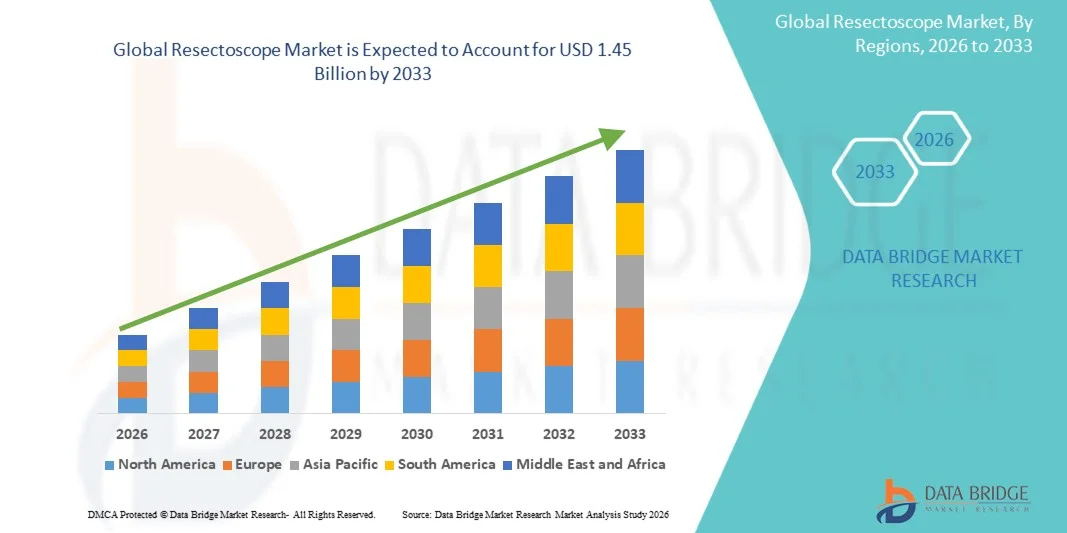
- The global resectoscope market size was valued at USD 1.02 billion in 2025 and is expected to reach USD 1.45 billion by 2033, at a CAGR of 4.50% during the forecast period
- The market growth is largely fueled by the increasing prevalence of urological disorders and gynecological conditions, along with a rising number of minimally invasive surgical procedures performed across hospitals and specialty clinics, driving demand for advanced resection instruments
- Furthermore, ongoing technological advancements in endoscopic visualization, energy-based resection systems, and ergonomic instrument design, coupled with growing preference for procedures that reduce hospital stay and recovery time, are establishing resectoscopes as a critical tool in modern surgical interventions. These converging factors are accelerating the adoption of resectoscope systems, thereby significantly boosting the industry's growth
Resectoscope Market Analysis
- Resectoscopes, offering endoscopic surgical access for tissue resection in urological and gynecological procedures, are increasingly vital components of modern minimally invasive surgery in hospital and specialty clinical settings due to their enhanced precision, real-time visualization, and ability to effectively treat conditions such as benign prostatic hyperplasia (BPH), uterine fibroids, and abnormal uterine bleeding
- The escalating demand for resectoscopes is primarily fueled by the rising prevalence of urological and gynecological disorders, growing preference for minimally invasive procedures, and increasing adoption of advanced bipolar and electrosurgical systems that improve procedural safety and clinical outcomes
- North America dominated the resectoscope market with the largest revenue share of 35.9% in 2025, characterized by advanced healthcare infrastructure, high procedural volumes, and strong adoption of technologically advanced surgical devices, with the U.S. witnessing steady growth in resectoscope utilization driven by continuous innovations and surgeon preference for efficient, precision-based interventions
- Asia-Pacific is expected to be the fastest growing region in the resectoscope market during the forecast period due to increasing healthcare investments, expanding hospital infrastructure, rising patient awareness, and growing adoption of minimally invasive surgical techniques across emerging economies
- The bipolar resectoscope segment dominated the resectoscope market with a substantial market share of 60.4% in 2025, driven by its improved safety profile, reduced risk of complications, and increasing clinical preference for efficient and controlled tissue resection in endoscopic procedures
Report Scope and Resectoscope Market Segmentation
|
Attributes |
Resectoscope Key Market Insights |
|
Segments Covered |
|
|
Countries Covered |
North America
Europe
Asia-Pacific
Middle East and Africa
South America
|
|
Key Market Players |
|
|
Market Opportunities |
|
|
Value Added Data Infosets |
In addition to the insights on market scenarios such as market value, growth rate, segmentation, geographical coverage, and major players, the market reports curated by the Data Bridge Market Research also include in-depth expert analysis, patient epidemiology, pipeline analysis, pricing analysis, and regulatory framework |
Resectoscope Market Trends
“Advancements in Bipolar and High-Definition Endoscopic Technologies”
- A significant and accelerating trend in the global resectoscope market is the integration of advanced bipolar energy systems with high-definition (HD) and 4K endoscopic visualization technologies, significantly improving surgical precision, safety, and procedural outcomes in minimally invasive urological and gynecological surgeries
- For instance, modern resectoscope systems from leading medical device manufacturers incorporate enhanced optics and bipolar electrosurgical platforms that allow simultaneous cutting and coagulation, reducing intraoperative bleeding and improving visibility during procedures
- The adoption of advanced visualization technologies enables surgeons to achieve more accurate tissue resection with improved depth perception and clarity, supporting better clinical decision-making and reducing operative complications. In addition, innovations in electrode design and loop configurations are enhancing cutting efficiency and control during procedures
- The seamless integration of resectoscopes with digital surgical platforms and endoscopy systems is facilitating improved workflow efficiency in operating rooms, allowing better imaging, documentation, and interoperability with other surgical devices within integrated operating suites
- This trend towards more precise, energy-efficient, and digitally enhanced resectoscopic systems is fundamentally reshaping surgical expectations. Consequently, companies such as Olympus Corporation and KARL STORZ are developing next-generation resectoscopes with improved ergonomics, enhanced imaging, and advanced energy delivery systems to support complex procedures
- The demand for advanced resectoscope systems is growing steadily across hospitals and ambulatory surgical centers, as healthcare providers increasingly prioritize minimally invasive techniques that reduce patient recovery time, hospital stay, and overall procedural risks
Resectoscope Market Dynamics
Driver
“Rising Prevalence of Urological Disorders and Shift Toward Minimally Invasive Surgeries”
- The increasing prevalence of urological conditions such as benign prostatic hyperplasia (BPH) and bladder tumors, along with gynecological disorders such as uterine fibroids, is a significant driver for the growing demand for resectoscope procedures worldwide
- For instance, the rising aging population globally is contributing to higher incidence rates of prostate-related conditions, which are commonly treated using transurethral resection procedures performed with resectoscopes
- As patients and healthcare providers increasingly prefer minimally invasive surgical options due to reduced postoperative pain, shorter hospital stays, and faster recovery times, resectoscopes are becoming essential tools in endoscopic surgical interventions
- Furthermore, advancements in hospital infrastructure, increasing number of trained surgeons, and greater availability of endoscopic surgical systems are supporting the widespread adoption of resectoscope-based procedures across both developed and emerging markets
- The growing integration of advanced bipolar energy systems and improved imaging capabilities in resectoscopes is further enhancing procedural safety and effectiveness, thereby accelerating their adoption in clinical practice
Restraint/Challenge
“High Equipment Costs and Technical Complexity of Procedures”
- The high cost associated with advanced resectoscope systems, including capital investment in endoscopic towers, energy generators, and maintenance, poses a significant challenge to broader market penetration, particularly in cost-sensitive healthcare settings
- For instance, premium resectoscope systems equipped with high-definition imaging and bipolar energy platforms require substantial upfront investment, which can be a barrier for smaller hospitals and clinics in developing regions
- In addition, the technical complexity of resectoscopic procedures requires specialized training and skilled surgeons, limiting adoption in regions with shortages of trained medical professionals in endoscopic surgery
- Addressing these challenges through cost optimization, increased availability of training programs, and development of more user-friendly and modular systems is crucial for expanding the adoption of resectoscope technologies and supporting sustained market growth
- Rising emphasis on infection control and sterilization requirements is also adding to operational complexity and cost considerations for healthcare providers, further influencing purchasing decisions and adoption rates
Resectoscope Market Scope
The market is segmented on the basis of product type and application.
- By Product Type
On the basis of product type, the resectoscope market is segmented into unipolar resectoscopes and bipolar resectoscopes. The bipolar resectoscopes segment dominated the market with the largest market revenue share of 60.4% in 2025, driven by their enhanced safety profile, reduced risk of complications such as fluid absorption syndrome, and improved hemostasis during surgical procedures. Bipolar systems allow current to pass locally between electrodes, minimizing damage to surrounding tissues and making them highly suitable for complex urological and gynecological surgeries. Their increasing adoption is further supported by growing clinical preference for precision-based minimally invasive procedures and compatibility with modern endoscopic systems. Hospitals and surgical centers increasingly favor bipolar resectoscopes due to their efficiency in reducing intraoperative bleeding and improving surgical visibility. In addition, continuous technological advancements in energy delivery and electrode design are strengthening their position as the preferred choice among surgeons globally. The segment also benefits from rising training and awareness among healthcare professionals regarding safer electrosurgical techniques.
The unipolar resectoscopes segment is anticipated to witness the fastest growth rate from 2026 to 2033, driven by their relatively lower cost, widespread availability, and established use in conventional surgical procedures. Unipolar systems are often preferred in cost-sensitive healthcare settings and emerging markets where budget constraints influence procurement decisions. Their compatibility with a wide range of existing surgical setups makes them easier to adopt without significant infrastructure upgrades. Furthermore, ongoing improvements in safety mechanisms and design enhancements are helping mitigate some of the limitations traditionally associated with unipolar energy systems. Increasing demand from smaller hospitals and clinics, along with rising procedural volumes in developing regions, is contributing to the growth of this segment. As healthcare access expands and investments in surgical infrastructure increase, unipolar resectoscopes are expected to gain traction as a cost-effective alternative.
- By Application
On the basis of application, the resectoscope market is segmented into hospitals, ambulatory surgery centers (ASCs), and others. The hospitals segment dominated the market with the largest market revenue share of 70% in 2025, driven by the high volume of surgical procedures performed in hospital settings, availability of advanced infrastructure, and presence of skilled healthcare professionals. Hospitals are the primary centers for complex urological and gynecological surgeries that require advanced endoscopic equipment such as resectoscopes. They also benefit from integrated surgical suites equipped with advanced imaging and energy systems, enabling efficient and precise procedures. The dominance of hospitals is further supported by favorable reimbursement policies in developed regions and the ability to handle both elective and emergency procedures. In addition, continuous investments in upgrading hospital infrastructure and adoption of minimally invasive surgical technologies are reinforcing their leading position. The concentration of trained surgeons and multidisciplinary teams further enhances procedural outcomes, contributing to higher utilization of resectoscopes in hospital environments.
The ambulatory surgery centers (ASCs) segment is expected to witness the fastest growth rate from 2026 to 2033, driven by the rising shift toward outpatient procedures, lower treatment costs, and shorter patient recovery times. ASCs are increasingly preferred for minimally invasive procedures that do not require extended hospitalization, making resectoscope-based treatments highly suitable for these settings. The growing emphasis on cost efficiency and operational productivity in healthcare delivery is encouraging the expansion of ASCs globally. Technological advancements in compact and portable resectoscope systems are also facilitating their adoption in these facilities. Patients benefit from reduced waiting times, lower infection risks, and faster discharge, further boosting the attractiveness of ASCs. In addition, increasing healthcare investments and supportive regulatory frameworks in emerging markets are accelerating the establishment of ASCs, thereby driving the growth of this segment.
Resectoscope Market Regional Analysis
- North America dominated the resectoscope market with the largest revenue share of 35.9% in 2025, characterized by advanced healthcare infrastructure, high procedural volumes, and strong adoption of technologically advanced surgical devices
- Healthcare providers in the region widely adopt advanced resectoscope systems due to the presence of well-established hospital infrastructure, availability of skilled surgeons, and early adoption of innovative medical technologies such as bipolar energy systems and high-definition endoscopic imaging
- This widespread adoption is further supported by high healthcare expenditure, favorable reimbursement frameworks, and continuous advancements in surgical techniques, establishing resectoscopes as a preferred solution for efficient and precise endoscopic interventions in both hospital and ambulatory settings
U.S. Resectoscope Market Insight
The U.S. resectoscope market captured the largest revenue share of 75% in 2025 within North America, fueled by the high prevalence of urological disorders such as benign prostatic hyperplasia (BPH) and the strong adoption of minimally invasive surgical procedures. Healthcare providers are increasingly prioritizing advanced bipolar resectoscope systems that offer improved safety, precision, and reduced procedural complications. The presence of well-established healthcare infrastructure, skilled surgeons, and continuous technological advancements in endoscopic equipment further supports market growth. In addition, favorable reimbursement policies and high healthcare expenditure contribute to the widespread use of resectoscopes across hospitals and ambulatory surgical centers.
Europe Resectoscope Market Insight
The Europe resectoscope market is projected to expand at a substantial CAGR throughout the forecast period, primarily driven by the increasing aging population and rising incidence of urological and gynecological conditions. The region benefits from well-developed healthcare systems and strong emphasis on minimally invasive surgical techniques. Growing demand for advanced surgical instruments, along with favorable reimbursement frameworks in several European countries, is fostering adoption. Hospitals and specialty clinics are increasingly incorporating high-definition endoscopic systems and bipolar resectoscopes to improve procedural outcomes and patient recovery times.
U.K. Resectoscope Market Insight
The U.K. resectoscope market is anticipated to grow at a noteworthy CAGR during the forecast period, driven by increasing demand for minimally invasive procedures and rising awareness of advanced treatment options for urological disorders. The country’s healthcare system supports the adoption of modern surgical technologies across public and private hospitals. In addition, the growing burden of age-related conditions such as prostate enlargement is contributing to higher procedural volumes. Investments in healthcare infrastructure and the presence of skilled medical professionals further support the adoption of resectoscope systems in clinical practice.
Germany Resectoscope Market Insight
The Germany resectoscope market is expected to expand at a considerable CAGR during the forecast period, fueled by the country’s strong focus on medical innovation, high healthcare standards, and demand for technologically advanced surgical solutions. Germany’s well-established hospital infrastructure and emphasis on precision medicine promote the adoption of bipolar resectoscopes and advanced endoscopic systems. Increasing prevalence of urological conditions, coupled with a growing preference for minimally invasive procedures, is further driving market growth. In addition, the integration of resectoscopes with advanced imaging technologies aligns with the country’s focus on efficient and high-quality patient care.
Asia-Pacific Resectoscope Market Insight
The Asia-Pacific resectoscope market is poised to grow at the fastest CAGR of 10% during the forecast period of 2026 to 2033, driven by rising healthcare expenditure, rapid urbanization, and increasing prevalence of urological and gynecological disorders. The region is witnessing growing adoption of minimally invasive surgical techniques across emerging economies such as China and India. Expanding healthcare infrastructure, increasing number of hospitals and surgical centers, and improving access to advanced medical technologies are supporting market growth. In addition, the availability of cost-effective resectoscope systems and government initiatives to enhance healthcare services are accelerating adoption across the region.
Japan Resectoscope Market Insight
The Japan resectoscope market is gaining momentum due to the country’s aging population, high healthcare standards, and strong adoption of advanced medical technologies. The increasing incidence of prostate-related disorders among elderly males is contributing to higher demand for resectoscopic procedures. Japan’s healthcare system emphasizes precision, safety, and minimally invasive approaches, encouraging the use of bipolar resectoscopes with advanced imaging capabilities. Furthermore, integration of endoscopic systems with digital operating platforms and a strong focus on technological innovation are supporting market expansion in both hospital and specialty care settings.
India Resectoscope Market Insight
The India resectoscope market accounted for a significant market revenue share in Asia Pacific in 2025, attributed to rapid urbanization, expanding healthcare infrastructure, and increasing awareness of minimally invasive surgical treatments. The growing middle-class population and rising affordability of advanced medical procedures are driving demand for resectoscope-based surgeries in hospitals and ambulatory centers. Government initiatives aimed at improving healthcare access, along with the expansion of private healthcare facilities, are further supporting market growth. In addition, the availability of cost-effective surgical equipment and increasing number of trained surgeons are contributing to the rising adoption of resectoscopes across the country.
Resectoscope Market Share
The Resectoscope industry is primarily led by well-established companies, including:
- Karl Storz SE & Co. KG (Germany)
- Stryker (U.S.)
- Olympus Corporation (Japan)
- Richard Wolf GmbH (Germany)
- Erbe Elektromedizin GmbH (Germany)
- Ackermann Instrumente GmbH (Germany)
- Beijing Taktvoll Technology Co., Ltd. (China)
- Canwell Medical Co., Ltd. (China)
- Centrel GmbH (Germany)
- Delmont Imaging GmbH (Germany)
- ESC Medicams Pvt. Ltd. (India)
- Günter Bissinger Medizintechnik GmbH & Co. KG (Germany)
- HEBUmedical GmbH (Germany)
- Lamidey Noury Medical (France)
- Samed GmbH (Germany)
- Scaner Science & Engineering Center (China)
- SIMAI S.p.A. (Italy)
- EndoMed Systems GmbH (Germany)
- WISAP Medical Technology GmbH & Co. KG (Germany)
What are the Recent Developments in Global Resectoscope Market?
- In November 2025, a government e-procurement tender in India specified acquisition of HF units and complete resectoscope sets with accessories from single OEM sources, highlighting rising institutional demand for modern surgical systems in public healthcare facilities
- In June 2025, the RZ Resectoscope System from RZ Medizintechnik GmbH received U.S. FDA 510(k) clearance, authorizing its use for cutting, ablation, vaporization, and coagulation of tissue in endoscopic urological and gynecological electrosurgical procedures, marking an important regulatory milestone for broader clinical adoption.
- In November 2024, Olympus Corporation of the Americas presented a comprehensive range of gynecological surgical innovations at the American Association of Gynecologic Laparoscopists (AAGL) World Congress, including the VERSAPOINT II Bipolar Electrosurgery System and an 8.5 mm Hystero-resectoscope, enhancing precision and safety in minimally invasive procedure
- In June 2023, Olympus Medical Systems announced the launch of a new high-definition resectoscope featuring improved imaging and ergonomic design, aimed at enhancing precision and surgeon comfort during minimally invasive urological and gynecological procedures. This development reflects ongoing innovation in resectoscope technology to support better clinical outcomes.
- In October 2022, KARL STORZ received U.S. FDA approval for an innovative single-use resectoscope, expanding options for disposable endoscopic instruments and addressing sterility concerns while simplifying workflow in surgical settings. This approval highlights regulatory progress for next-generation resectoscope devices
SKU-
Get online access to the report on the World's First Market Intelligence Cloud

- Interactive Data Analysis Dashboard
- Company Analysis Dashboard for high growth potential opportunities
- Research Analyst Access for customization & queries
- Competitor Analysis with Interactive dashboard
- Latest News, Updates & Trend analysis
- Harness the Power of Benchmark Analysis for Comprehensive Competitor Tracking
Research Methodology
Data collection and base year analysis are done using data collection modules with large sample sizes. The stage includes obtaining market information or related data through various sources and strategies. It includes examining and planning all the data acquired from the past in advance. It likewise envelops the examination of information inconsistencies seen across different information sources. The market data is analysed and estimated using market statistical and coherent models. Also, market share analysis and key trend analysis are the major success factors in the market report. To know more, please request an analyst call or drop down your inquiry.
The key research methodology used by DBMR research team is data triangulation which involves data mining, analysis of the impact of data variables on the market and primary (industry expert) validation. Data models include Vendor Positioning Grid, Market Time Line Analysis, Market Overview and Guide, Company Positioning Grid, Patent Analysis, Pricing Analysis, Company Market Share Analysis, Standards of Measurement, Global versus Regional and Vendor Share Analysis. To know more about the research methodology, drop in an inquiry to speak to our industry experts.
Customization Available
Data Bridge Market Research is a leader in advanced formative research. We take pride in servicing our existing and new customers with data and analysis that match and suits their goal. The report can be customized to include price trend analysis of target brands understanding the market for additional countries (ask for the list of countries), clinical trial results data, literature review, refurbished market and product base analysis. Market analysis of target competitors can be analyzed from technology-based analysis to market portfolio strategies. We can add as many competitors that you require data about in the format and data style you are looking for. Our team of analysts can also provide you data in crude raw excel files pivot tables (Fact book) or can assist you in creating presentations from the data sets available in the report.












