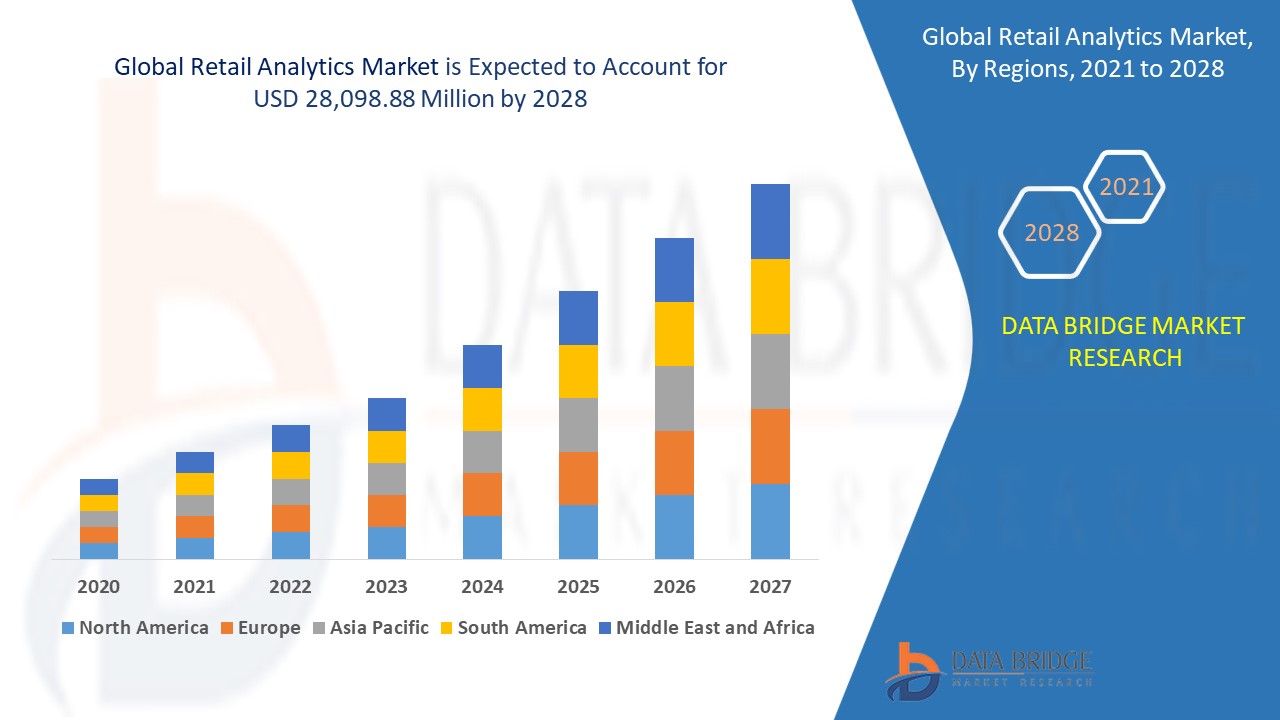
Global Retail Analytics Market Analysis
The global retail analytics market is experiencing significant growth, driven by the increasing adoption of big data, AI, and cloud computing. Retail analytics helps businesses optimize operations, enhance customer experience, and improve decision-making through data-driven insights. The market is segmented by offering (software and services), deployment model (cloud and on-premises), organization size, business functionality, application, and end-user. Major applications include customer management, inventory analysis, and pricing optimization. Large enterprises and SMEs are leveraging analytics to enhance sales, supply chain efficiency, and marketing strategies. Key players such as Microsoft, IBM, Oracle, and SAP are investing in AI-powered analytics solutions. Recent developments include advanced AI-driven predictive analytics, real-time data processing, and cloud-based retail analytics solutions. The rise of e-commerce and omnichannel retailing is further fueling market expansion. As retailers focus on data-driven decision-making, the market is expected to witness continuous growth, transforming the retail landscape with enhanced efficiency and profitability.
Global Retail Analytics Market Size
The global retail analytics market size was valued at USD 13.19 billion in 2024 and is projected to reach USD 59.81 billion by 2032, with a CAGR of 20.80% during the forecast period of 2025 to 2032. In addition to the market insights such as market value, growth rate, market segments, geographical coverage, market players, and market scenario, the market report curated by the Data Bridge Market Research team includes in-depth expert analysis, import/export analysis, pricing analysis, production consumption analysis, and pestle analysis.
Global Retail Analytics Market Trends
“Growing Adoption of Cloud-Based Retail Analytics”
The increasing shift towards cloud computing is revolutionizing the retail analytics market by enabling scalable and real-time data processing. Cloud-based solutions offer retailers enhanced flexibility, cost-effectiveness, and seamless access to critical business insights from anywhere. These platforms eliminate the need for heavy infrastructure investments, allowing businesses of all sizes to leverage advanced analytics without high upfront costs. Real-time data processing enhances operational efficiency by optimizing inventory management, detecting fraud, and facilitating dynamic pricing strategies. In addition, cloud-based analytics supports omnichannel retailing by integrating data across online and offline stores for a unified customer experience. As retailers prioritize agility and scalability, the adoption of cloud-based analytics is expected to surge, driving efficiency, informed decision-making, and overall business growth.
Report Scope and Global Retail Analytics Market Segmentation
|
Attributes |
Global Retail Analytics Key Market Insights |
|
Segments Covered |
|
|
Countries Covered |
U.S., Canada and Mexico in North America, Germany, France, U.K., Netherlands, Switzerland, Belgium, Russia, Italy, Spain, Turkey, Rest of Europe in Europe, China, Japan, India, South Korea, Singapore, Malaysia, Australia, Thailand, Indonesia, Philippines, Rest of Asia-Pacific (APAC) in the Asia-Pacific (APAC), Saudi Arabia, U.A.E, South Africa, Egypt, Israel, Rest of Middle East and Africa (MEA) as a part of Middle East and Africa (MEA), Brazil, Argentina and Rest of South America as part of South America |
|
Key Market Players |
Microsoft (U.S.), IBM Corporation (U.S.), Oracle (U.S.), Adobe (U.S.), SAP SE (Germany), Tableau Software LLC (U.S.), TIBCO Software Inc. (U.S.), 10101Data (U.S.), Retail Solutions Inc. (U.S.), RetailNext Inc. (U.S.), Alteryx Inc. (U.S.), Teradata Corporation (U.S.), MicroStrategy Incorporated (U.S.), SAS Institute Inc. (U.S.), Wipro Limited (India), HCL Technologies Limited (India), QlikTech International AB (Sweden), Flir Systems Inc. (U.S.), Fractal Analytics Inc. (India), Happiest Minds (India) |
|
Market Opportunities |
|
|
Value Added Data Infosets |
In addition to the market insights such as market value, growth rate, market segments, geographical coverage, market players, and market scenario, the market report curated by the Data Bridge Market Research team includes in-depth expert analysis, import/export analysis, pricing analysis, production consumption analysis, and pestle analysis. |
Global Retail Analytics Market Definition
Retail analytics refers to the process of collecting, analyzing, and interpreting retail data to enhance decision-making, optimize operations, and improve customer experiences. It involves leveraging technologies such as AI, machine learning, big data, and cloud computing to extract actionable insights from sales, inventory, customer behavior, and supply chain data. Retail analytics helps businesses in demand forecasting, pricing optimization, fraud detection, and personalized marketing. The global retail analytics market encompasses solutions and services designed for both online and offline retailers, enabling data-driven strategies for growth and profitability. With the rise of e-commerce, omnichannel retailing, and real-time analytics, retail businesses increasingly rely on analytics to stay competitive, streamline processes, and enhance overall efficiency.
Global Retail Analytics Market Dynamics
Drivers
- Rising Adoption of AI and Big Data
Retailers are increasingly adopting AI-driven analytics to transform business operations and enhance decision-making. By leveraging predictive insights, businesses can forecast demand, identify shopping trends, and optimize stock levels to prevent overstocking or stockouts. AI-powered analytics also enables hyper-personalization by analyzing customer behavior, preferences, and purchase history to deliver targeted marketing campaigns and tailored recommendations. In addition, real-time data analysis helps retailers streamline supply chain management, detect fraud, and improve pricing strategies. As AI continues to evolve, its integration in retail analytics is driving market growth by improving operational efficiency, increasing sales, and enhancing overall customer experience.
- Growth of E-Commerce and Omnichannel Retailing
The growing demand for seamless shopping experiences across online and offline channels is accelerating the adoption of retail analytics. Consumers expect a unified journey, whether shopping in physical stores, mobile apps, or e-commerce platforms. Retail analytics enables businesses to track customer interactions across multiple touchpoints, providing insights into buying behavior and preferences. By integrating data from various channels, retailers can optimize inventory distribution, enhance personalized marketing, and improve customer engagement. The ability to offer a consistent and data-driven experience across platforms is crucial for competitiveness, making omnichannel retailing a key driver of the global retail analytics market growth.
Opportunities
- Demand for Customer-Centric Insights
Retailers are increasingly leveraging analytics to gain deeper insights into consumer behavior, presenting a significant market opportunity. By analyzing purchase history, browsing patterns, and preferences, businesses can create personalized shopping experiences that drive customer loyalty and boost sales. Advanced analytics enables retailers to segment customers, predict trends, and deliver targeted promotions, improving engagement and conversion rates. In addition, sentiment analysis and AI-driven recommendations help enhance brand interactions, fostering stronger customer relationships. As personalization becomes a competitive differentiator, the demand for sophisticated consumer analytics solutions is rising, opening new growth avenues for the global retail analytics market.
- Technological Advancements in IoT and Smart Retailing
The integration of IoT devices with retail analytics is creating significant market opportunities by transforming store operations, demand forecasting, and automation. Smart sensors, RFID tags, and connected devices enable real-time tracking of inventory, customer movement, and sales trends. Retailers use IoT-driven analytics to optimize stock levels, reduce waste, and improve supply chain efficiency. Automated checkout systems, smart shelves, and personalized in-store recommendations further enhance customer experiences. As retailers seek greater operational efficiency and data-driven decision-making, the adoption of IoT-powered analytics is expected to surge, driving innovation and expanding the global retail analytics market in the coming years.
Restraints/Challenges
- Lack of Skilled Professionals
The shortage of skilled data analysts and artificial intelligence experts is a major challenge in the retail analytics market, limiting the effective implementation and utilization of advanced solutions. Retail analytics relies on data scientists, AI specialists, and technical professionals to extract meaningful insights, develop predictive models, and optimize retail operations. However, the demand for such expertise exceeds supply, making it difficult for retailers to fully leverage analytics capabilities. Small and mid-sized retailers, in particular, struggle to hire and retain skilled professionals. This talent gap slows digital transformation, delays ROI on analytics investments, and hampers the overall growth of the retail analytics market.
- High Implementation Costs
The adoption of advanced retail analytics solutions is hindered by high implementation costs, posing a significant restraint on market growth, especially for small retailers. Deploying sophisticated analytics tools requires substantial investments in technology, cloud infrastructure, and AI-driven software. In addition, businesses must hire skilled data analysts and IT professionals to manage and interpret data effectively. The costs associated with system integration, maintenance, and staff training further add to the financial burden. Many small and mid-sized retailers struggle to allocate resources for such investments, limiting their ability to leverage analytics for competitive advantage, thereby slowing the overall market expansion.
Global Retail Analytics Market Scope
The market is segmented on the basis of offering, deployment model, organization size, business functionality, application, and end user. The growth amongst these segments will help you analyze meagre growth segments in the industries and provide the users with a valuable market overview and market insights to help them make strategic decisions for identifying core market applications.
Offering
- Software
- Services
Deployment Model
- Cloud
- On-Premises
Organization Size
- Large Enterprises
- Small and Medium Enterprises (SMEs)
Business Functionality
- Sales and Marketing
- Supply Chain
- Finance
- Operations
- Procurement
- Human Resource
Application
- Customer Management
- Merchandising Analysis
- Inventory Analysis
- Performance Analysis
- Pricing Analysis
- Yield Analysis
- Order and Fulfillment Management
- Cluster Planning and Transportation Management
- Others
End User
- Offline
- Online (E-Commerce)
Global Retail Analytics Market Regional Analysis
The market is analyzed and market size insights and trends are provided by country, offering, deployment model, organization size, business functionality, application, and end user as referenced above.
The countries covered in the market report are U.S., Canada, Mexico in North America, Germany, Sweden, Poland, Denmark, Italy, U.K., France, Spain, Netherland, Belgium, Switzerland, Turkey, Russia, Rest of Europe in Europe, Japan, China, India, South Korea, New Zealand, Vietnam, Australia, Singapore, Malaysia, Thailand, Indonesia, Philippines, Rest of Asia-Pacific (APAC) in Asia-Pacific (APAC), Brazil, Argentina, Rest of South America as a part of South America, U.A.E, Saudi Arabia, Oman, Qatar, Kuwait, South Africa, Rest of Middle East and Africa (MEA) as a part of Middle East and Africa (MEA).
North America is the fastest growing region in the retail analytics market, driven by the presence of major retail corporations and a strong focus on advanced technology adoption. The region's retailers are increasingly leveraging analytics to adapt to changing consumer behavior and enhance decision-making. In addition, rising investments in retail analytics solutions are fueling market growth, improving operational efficiency and customer engagement.
Europe dominated the retail analytics market due to the widespread adoption of big data in the retail sector, a high concentration of retail stores, and a growing emphasis on consumer behavior analysis. In addition, China held the largest market share, driven by the increasing focus on online and personalized shopping. The country's retailers are leveraging analytics to study consumer purchasing patterns and enhance customer experiences.
The country section of the report also provides individual market impacting factors and changes in market regulation that impact the current and future trends of the market. Data points such as down-stream and upstream value chain analysis, technical trends and porter's five forces analysis, case studies are some of the pointers used to forecast the market scenario for individual countries. Also, the presence and availability of global brands and their challenges faced due to large or scarce competition from local and domestic brands, impact of domestic tariffs and trade routes are considered while providing forecast analysis of the country data.
Global Retail Analytics Market Share
The market competitive landscape provides details by competitor. Details included are company overview, company financials, revenue generated, market potential, investment in research and development, new market initiatives, global presence, production sites and facilities, production capacities, company strengths and weaknesses, product launch, product width and breadth, application dominance. The above data points provided are only related to the companies' focus related to market.
Global Retail Analytics Market Leaders Operating in the Market Are:
- Microsoft (U.S.)
- IBM Corporation (U.S.)
- Oracle (U.S.)
- Adobe (U.S.)
- SAP SE (Germany)
- Tableau Software LLC (U.S.)
- TIBCO Software Inc. (U.S.)
- 10101Data (U.S.)
- Retail Solutions Inc. (U.S.)
- RetailNext Inc. (U.S.)
- Alteryx Inc. (U.S.)
- Teradata Corporation (U.S.)
- MicroStrategy Incorporated (U.S.)
- SAS Institute Inc. (U.S.)
- Wipro Limited (India)
- HCL Technologies Limited (India)
- QlikTech International AB (Sweden)
- Flir Systems Inc. (U.S.)
- Fractal Analytics Inc. (India)
- Happiest Minds (India)
Latest Developments in Global Retail Analytics Market
- In February 2024, Kroger partnered with AI-driven retail analytics company Intelligence Node to enhance marketplace listings. Through this collaboration, Kroger aims to provide third-party vendors with clearer, more detailed product guides. The initiative focuses on improving product visibility, pricing strategies, and overall vendor experience. By leveraging AI-powered insights, Kroger seeks to enhance the efficiency and accuracy of its marketplace operations
- In January 2024, Microsoft introduced new Generative AI tools designed specifically for the retail industry. These AI-powered features, integrated into Data Fabric with GenAI Copilots, aim to personalize shopping experiences and improve decision-making. The tools provide real-time insights to retail employees, helping them better serve customers. This innovation underscores Microsoft's commitment to enhancing efficiency and personalization in retail operations
- In October 2023, Omnicommerce launched a retail media and analytics platform to help brands track product performance. The platform enables businesses to analyze product competitiveness across 30 different marketplaces and retail chains. With real-time analytics, brands can make data-driven decisions on pricing, inventory, and marketing strategies. This launch enhances transparency and strategic planning in retail operations
- In May 2023, NIQ unveiled the Connected Collaboration platform, integrating Rite Aid's data assets with NIQ’s advanced data science and software. This platform provides manufacturers and retailers with a unified solution for various business functions, including market insights, supply chain management, and customer loyalty programs. By consolidating multiple data sources, NIQ aims to streamline operations and improve decision-making efficiency
- In April 2023, Infosys partnered with Walmart Commerce Technologies to deploy Store Assist, a cloud-based omnichannel retail solution. Store Assist enhances store operations by facilitating order pickups, in-store shipping, and delivery services. This solution improves both customer and employee experiences by streamlining fulfillment processes. The partnership highlights the growing demand for digital transformation in retail operations

- Interactive Data Analysis Dashboard
- Company Analysis Dashboard for high growth potential opportunities
- Research Analyst Access for customization & queries
- Competitor Analysis with Interactive dashboard
- Latest News, Updates & Trend analysis
- Harness the Power of Benchmark Analysis for Comprehensive Competitor Tracking
Data collection and base year analysis are done using data collection modules with large sample sizes. The stage includes obtaining market information or related data through various sources and strategies. It includes examining and planning all the data acquired from the past in advance. It likewise envelops the examination of information inconsistencies seen across different information sources. The market data is analysed and estimated using market statistical and coherent models. Also, market share analysis and key trend analysis are the major success factors in the market report. To know more, please request an analyst call or drop down your inquiry.
The key research methodology used by DBMR research team is data triangulation which involves data mining, analysis of the impact of data variables on the market and primary (industry expert) validation. Data models include Vendor Positioning Grid, Market Time Line Analysis, Market Overview and Guide, Company Positioning Grid, Patent Analysis, Pricing Analysis, Company Market Share Analysis, Standards of Measurement, Global versus Regional and Vendor Share Analysis. To know more about the research methodology, drop in an inquiry to speak to our industry experts.
Data Bridge Market Research is a leader in advanced formative research. We take pride in servicing our existing and new customers with data and analysis that match and suits their goal. The report can be customized to include price trend analysis of target brands understanding the market for additional countries (ask for the list of countries), clinical trial results data, literature review, refurbished market and product base analysis. Market analysis of target competitors can be analyzed from technology-based analysis to market portfolio strategies. We can add as many competitors that you require data about in the format and data style you are looking for. Our team of analysts can also provide you data in crude raw excel files pivot tables (Fact book) or can assist you in creating presentations from the data sets available in the report.