


Sandhoff Disease Treatment Market Size
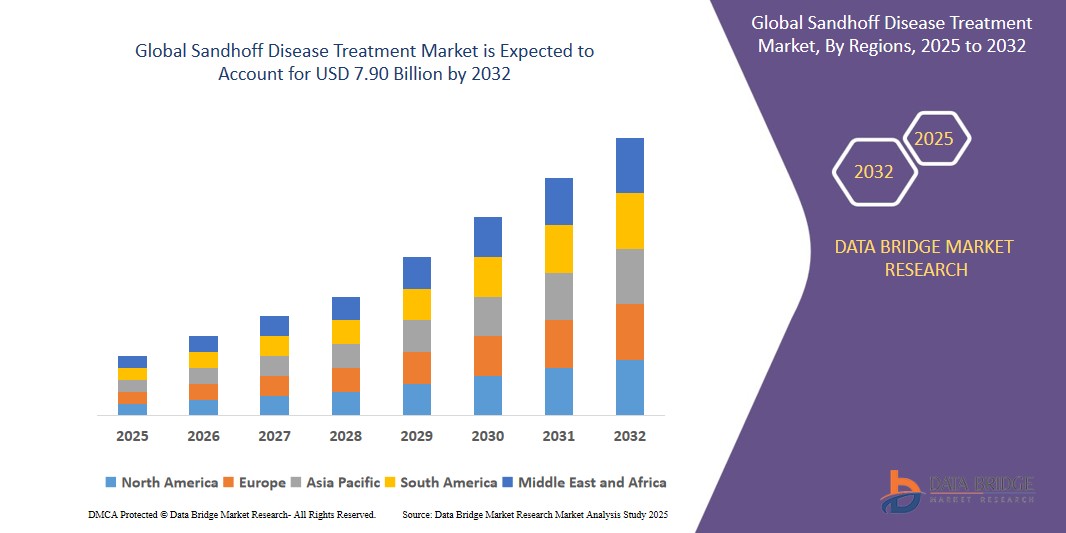
- The Global Sandhoff Disease Treatment Market size was valued at USD 4.92 billion in 2024 and is expected to reach USD 7.90 billion by 2032, at a CAGR of 6.10% during the forecast period
- The market growth is primarily driven by increasing advancements in medical research and biotechnological innovations aimed at developing effective treatments for Sandhoff disease. These developments are accelerating the digitalization and modernization of rare disease management in both clinical and research settings.
- Moreover, the growing demand from patients and healthcare providers for safe, targeted, and integrated therapeutic solutions is positioning Sandhoff disease treatments as a critical focus within the rare disease segment. These combined factors are significantly propelling the growth of the Global Sandhoff Disease Treatment Market.
Sandhoff Disease Treatment Market Analysis
- Sandhoff disease, also referred as beta-hexosaminidase-beta-subunit deficiency is a rare, inherited lipid storage disorder which is caused by a deficiency of the enzyme beta-hexosaminidase, resulting in the harmful accumulation of certain fats (lipids) in the brain or other organs. This ongoing accumulation of lipid affects the function of the nerve cells and causes other neurological problem.
- The increasing demand for Sandhoff disease treatment is primarily fueled by growing awareness of rare genetic disorders, advancements in diagnostic technologies, and a rising focus on personalized medicine and gene therapy.
- North America leads the Global Sandhoff Disease Treatment Market, holding the largest revenue share of 40.01% in 2025. This dominance is attributed to early adoption of advanced medical treatments, high healthcare expenditure, and a strong presence of key pharmaceutical and biotech companies. The U.S. is witnessing substantial growth in treatment development and clinical trial activity, particularly driven by innovations in enzyme replacement and gene therapies from both established firms and biotech startups.
- The Asia-Pacific region is projected to be the fastest-growing market during the forecast period, propelled by increasing urbanization, expanding healthcare infrastructure, and rising disposable incomes, which improve access to rare disease diagnostics and treatment options.
- The infantile segment is expected to dominate the Sandhoff Disease Treatment Market with a market share of 43.2% in 2025. This is due to the higher prevalence and earlier onset of the disease in infants, leading to increased diagnosis rates and focused research and treatment efforts targeting this age group.
Report Scope and Sandhoff Disease Treatment Market Segmentation
|
Attributes |
Sandhoff Disease Treatment Key Market Insights |
|
Segments Covered |
|
|
Countries Covered |
North America
Europe
Asia-Pacific
Middle East and Africa
South America
|
|
Key Market Players |
|
|
Market Opportunities |
|
|
Value Added Data Infosets |
In addition to the insights on market scenarios such as market value, growth rate, segmentation, geographical coverage, and major players, the market reports curated by the Data Bridge Market Research also include in-depth expert analysis, pricing analysis, brand share analysis, consumer survey, demography analysis, supply chain analysis, value chain analysis, raw material/consumables overview, vendor selection criteria, PESTLE Analysis, Porter Analysis, and regulatory framework. |
Sandhoff Disease Treatment Market Trends
“Rising Focus on Personalized and Precision Medicine for Rare Genetic Disorders”
- A significant and accelerating trend in the Global Sandhoff Disease Treatment Market is the rising focus on personalized and precision medicine for rare genetic disorders. This approach tailors medical treatment to individual characteristics, such as genetic profile, disease progression, and specific biomarkers, offering improved efficacy and minimized.
- For instance, biotech companies like Sio Gene Therapies, Inc. are actively developing gene therapies specifically targeting the underlying genetic causes of Sandhoff disease. Their lead candidate, AXO-AAV-GM2, is designed to deliver a functional copy of the HEXB gene using an adeno-associated virus (AAV) vector, directly addressing the enzymatic deficiency at the root of the disease in a patient-specific manner
- Precision medicine in Sandhoff disease also enables more accurate diagnosis, prognosis, and treatment monitoring. For example, next-generation sequencing (NGS) technologies help identify the exact genetic mutations in patients, allowing clinicians to select or design more effective and personalized therapeutic interventions. This is particularly beneficial in early-onset (infantile) cases, where time-sensitive interventions can dramatically alter outcomes.
- The integration of precision medicine into rare disease treatment is also attracting increased investment and regulatory incentives, such as orphan drug designations and fast-track approvals, further accelerating the development of targeted Sandhoff disease therapies.
- This trend is fundamentally transforming the landscape of rare disease care by shifting from generalized symptom management to targeted, disease-modifying solutions, ultimately offering renewed hope for affected individuals and families.
Sandhoff Disease Treatment Market Dynamics
Driver
“Increasing Prevalence of Genetic Disorders and Advancements in Early Diagnosis Techniques”
- The increasing prevalence of rare genetic disorders such as Sandhoff disease, combined with significant advancements in early diagnosis techniques, is a key driver of growth in the Global Sandhoff Disease Treatment Market. Improved awareness and screening technologies have led to earlier and more accurate diagnoses, creating greater demand for effective therapeutic interventions.
- For instance, in 2023, PerkinElmer Inc. expanded its newborn screening panel to include Sandhoff disease through advanced tandem mass spectrometry and genetic testing technologies. This enables early detection in infants, often before symptoms become severe, allowing for timely treatment interventions and improved disease management outcomes.
- As genetic testing becomes more accessible and cost-effective, more patients—especially newborns—are being identified with Sandhoff disease at an early stage. This is crucial, as early intervention is known to slow disease progression and improve quality of life, particularly in infantile cases where the condition is most severe.
- Furthermore, national healthcare programs and rare disease advocacy organizations are increasingly promoting the inclusion of Sandhoff disease in newborn screening initiatives, particularly in developed countries. This shift toward proactive diagnosis is not only raising awareness but also expanding the addressable patient population for treatment developers.
- The convergence of these diagnostic advancements with rising disease prevalence is significantly accelerating research, clinical trial activity, and pharmaceutical investments in this space, making it a major growth catalyst for the Sandhoff Disease Treatment Market.
Restraint/Challenge
“High Treatment Costs and Limited Reimbursement Policies Hindering Market Growth”
- The high cost of Sandhoff disease treatments, combined with limited reimbursement policies across many regions, poses a significant restraint to the market’s growth. Due to the complexity of developing rare disease therapies—often involving advanced gene and enzyme replacement technologies—the prices of these treatments tend to be prohibitively expensive for many patients and healthcare systems.
- For instance, gene therapy candidates such as those developed by Sio Gene Therapies, Inc. and Intrabio involve highly specialized manufacturing processes and clinical trials, which contribute to substantial treatment costs. In many countries, these therapies are either not covered or only partially reimbursed by insurance providers, limiting patient access.
- This financial barrier is especially pronounced in developing regions where healthcare infrastructure and insurance frameworks are less developed. Even in developed countries, restrictive reimbursement policies and lengthy approval processes can delay patient access to these life-changing therapies.
- Moreover, the rarity of Sandhoff disease means that pharmaceutical companies face challenges in recouping research and development investments, often passing costs onto patients and healthcare providers. This results in treatment affordability being a major concern, especially for families affected by infantile and juvenile forms of the disease.
- Overcoming this restraint will require collaborative efforts involving government agencies, insurance companies, pharmaceutical manufacturers, and patient advocacy groups to establish better reimbursement frameworks, introduce patient assistance programs, and foster price negotiations that improve treatment accessibility.
Sandhoff Disease Treatment Market Scope
The market is segmented on the basis of types, therapy, treatment, drugs, route of administration, distribution channel and end user.
- By Type
On the basis of type, the Global Sandhoff Disease Treatment Market is segmented into infantile, juvenile, and late-onset forms of the disease. The infantile segment is expected to dominate the market, holding the largest revenue share of 43.2% in 2025, driven by the higher prevalence and severity of symptoms in this age group, which necessitates urgent and targeted treatment interventions.
The infantile form of Sandhoff disease, being the most aggressive and rapidly progressing, has led to increased focus on early diagnosis and treatment development. This urgency drives demand for innovative therapies that can slow disease progression and improve patient outcomes. Furthermore, the infantile segment is anticipated to witness the fastest growth rate of 21.7% from 2025 to 2032, fueled by expanding clinical research, increased newborn screening programs, and growing awareness among healthcare providers and caregivers. Advancements in gene therapy and enzyme replacement therapies are particularly benefiting this segment by offering potential disease-modifying effects early in life.
- By Therapy
On the basis of therapy, the Global Sandhoff Disease Treatment Market is segmented into gene therapy, enzyme replacement therapy, stem cell therapy, and others. The gene therapy segment held the largest market revenue share in 2025, driven by significant advancements in genetic engineering and increasing clinical trial activities targeting the underlying genetic mutations responsible for Sandhoff disease.
Gene therapy is expected to witness the fastest compound annual growth rate (CAGR) from 2025 to 2032, fueled by its potential to provide a long-term or even curative effect by addressing the root cause of the disease. The development of novel viral vectors and delivery systems has improved the safety and efficacy of gene therapies, making them increasingly viable treatment options. Enzyme replacement therapy and stem cell therapy are also important treatment approaches, with ongoing research aiming to enhance their effectiveness and accessibility. However, gene therapy’s ability to offer personalized, targeted intervention is driving its rapid adoption and investment within the market.
- By Treatment
On the basis of treatment, the Global Sandhoff Disease Treatment Market is segmented into medication and surgery. The medication segment held the largest market revenue share in 2025, driven by ongoing advancements in pharmacological therapies aimed at managing symptoms and slowing disease progression in patients with Sandhoff disease.
Medication remains the preferred treatment option due to its non-invasive nature and ability to be administered in various forms, including oral and injectable therapies. Additionally, increased research into targeted therapies and supportive care medications is enhancing treatment efficacy and patient quality of life.The medication segment is also expected to witness the fastest compound annual growth rate (CAGR) from 2025 to 2032. This growth is attributed to the continuous development of novel drugs, increasing patient awareness, and improved healthcare access worldwide.
- By Drugs
On the basis of drugs, the Global Sandhoff Disease Treatment Market is segmented into anticonvulsants, miglustat, and others. The anticonvulsants segment accounted for the largest market revenue share in 2024, primarily due to the high incidence of seizures associated with Sandhoff disease, making these drugs essential for symptom management and improving patient quality of life.
The anticonvulsants segment is expected to witness the fastest compound annual growth rate (CAGR) from 2025 to 2032, driven by increasing clinical focus on comprehensive symptom control and supportive care. Growing awareness among healthcare providers and caregivers about managing neurological symptoms is expanding the use of anticonvulsant therapies. Miglustat, a substrate reduction therapy, is also gaining traction as it targets the underlying disease mechanism by reducing the accumulation of harmful substances in cells, thereby slowing disease progression.
- By Route of Administration
On the basis of route of administration, the Global Sandhoff Disease Treatment Market is segmented into oral, inhalation, and parenteral. The oral segment accounted for the largest market revenue share in 2024, primarily due to the convenience, ease of administration, and patient preference for oral medications in managing symptoms associated with Sandhoff disease.
The oral segment is also expected to witness the fastest compound annual growth rate (CAGR) from 2025 to 2032, driven by increasing clinical emphasis on effective symptom management and supportive care through accessible treatment options. Growing awareness among healthcare providers and caregivers regarding neurological symptom control is expanding the use of oral therapies, including anticonvulsants. Additionally, miglustat, a substrate reduction therapy administered orally, is gaining significant traction as it targets the root cause of the disease by reducing the accumulation of harmful substrates in cells, thereby helping to slow disease progression and improve patient outcomes.
- By Distribution Channel
On the basis of distribution channel, the Global Sandhoff Disease Treatment Market is segmented into hospital pharmacy, retail pharmacy, and online pharmacy. The hospital pharmacy segment accounted for the largest market revenue share in 2024, primarily because hospitals are the primary points of care for patients with Sandhoff disease, where specialized treatments and close medical supervision are required.
The hospital pharmacy segment is also expected to witness the fastest compound annual growth rate (CAGR) from 2025 to 2032. This growth is driven by increasing clinical focus on comprehensive symptom management and supportive care, as well as the rising number of diagnosed patients requiring hospital-administered therapies and follow-up. Additionally, growing awareness among healthcare providers and caregivers about the benefits of anticonvulsant therapies and substrate reduction treatments like miglustat is expanding their utilization in clinical settings. These treatments often require prescriptions and monitoring that hospital pharmacies are well-equipped to manage, further strengthening this distribution channel’s market dominance.
- By End User
On the basis of end users, the Global Sandhoff Disease Treatment Market is segmented into hospitals, homecare, specialty clinics, and others. The hospitals segment accounted for the largest market revenue share in 2024, driven by the need for advanced medical infrastructure and multidisciplinary care required for managing complex and progressive conditions like Sandhoff disease.
The hospitals segment is expected to witness the fastest compound annual growth rate (CAGR) from 2025 to 2032, supported by increasing diagnostic rates, greater investment in rare disease research, and expanded access to novel therapies. Additionally, therapies such as miglustat, which target the underlying metabolic dysfunction in Sandhoff disease, are increasingly being prescribed and managed within hospital settings, where patient progress can be closely monitored.
Sandhoff Disease Treatment Market Regional Analysis
- North America dominates the Global Sandhoff Disease Treatment Market, holding the largest revenue share of 40.01% in 2024, driven by increased awareness of rare genetic disorders, strong healthcare infrastructure, and significant investments in research and development.
- The region benefits from a high rate of early diagnosis due to widespread access to advanced genetic testing and newborn screening programs. Additionally, the presence of key biopharmaceutical companies and academic institutions engaged in rare disease research supports the development of novel therapies
- Favorable regulatory frameworks, such as orphan drug incentives provided by the U.S. FDA, and high healthcare spending further contribute to the region’s leadership. Collectively, these factors have positioned North America at the forefront of Sandhoff disease treatment innovation and accessibility.
U.S. Sandhoff Disease Treatment Market Insight
The U.S. Sandhoff Disease Treatment Market captured the largest revenue share of 81% within North America in 2025, driven by advanced healthcare infrastructure, early adoption of innovative therapies, and strong support for rare disease research. The U.S. continues to lead in clinical trials and the development of gene and enzyme replacement therapies for Sandhoff disease. This dominance is further supported by favorable regulatory policies such as the Orphan Drug Act, which provides incentives for the development of treatments for rare conditions. Additionally, growing awareness among healthcare professionals and patient advocacy groups is improving early diagnosis and treatment access across the country.
Europe Sandhoff Disease Treatment Market Insight
The European Sandhoff Disease Treatment Market is projected to expand at a substantial compound annual growth rate (CAGR) throughout the forecast period, driven primarily by increasing government initiatives and funding aimed at rare disease research and improved healthcare infrastructure. Growing awareness and early diagnosis of Sandhoff disease across the region are contributing to higher demand for effective treatment options. The rise in specialized healthcare facilities, along with expanded access to advanced therapies such as gene therapy and enzyme replacement, supports market growth in Europe. Additionally, strong regulatory support through the European Medicines Agency (EMA) and orphan drug incentives are encouraging pharmaceutical innovation and market penetration.
U.K. Sandhoff Disease Treatment Market Insight
The U.K. Sandhoff Disease Treatment Market is anticipated to grow at a noteworthy compound annual growth rate (CAGR) during the forecast period, driven by increasing awareness of rare genetic disorders and advancements in diagnostic capabilities. Enhanced early detection through newborn screening programs and improved access to specialized healthcare services are key factors supporting market expansion. Additionally, strong government support for rare disease research, including funding initiatives and streamlined regulatory pathways for orphan drugs, is encouraging the development and adoption of innovative treatment options. Growing collaboration between healthcare providers, research institutions, and patient advocacy groups in the U.K. is further fostering improved management and therapeutic outcomes for Sandhoff disease patients.
Germany Sandhoff Disease TreatmentMarket Insight
The German Sandhoff Disease Treatment Market is expected to expand at a considerable compound annual growth rate (CAGR) during the forecast period, driven by increasing awareness of rare genetic disorders and the availability of advanced healthcare services. Germany’s well-established healthcare infrastructure, strong focus on medical research, and government support for rare disease initiatives are key factors propelling market growth. The country’s emphasis on innovation in biotechnology and pharmaceutical development fosters the introduction of novel therapies, including gene therapy and enzyme replacement treatments. Additionally, increasing diagnosis rates through expanded genetic screening programs and growing collaboration between academic institutions and industry players contribute to the expanding Sandhoff disease treatment landscape in Germany..
Asia-Pacific Sandhoff Disease TreatmentMarket Insight
The Asia-Pacific Sandhoff Disease Treatment Market is poised to grow at the fastest compound annual growth rate (CAGR) of over 24% from 2025 onward, driven by increasing healthcare infrastructure development, rising disposable incomes, and growing awareness of rare genetic disorders in countries such as China, Japan, and India. Government initiatives aimed at improving access to rare disease treatments, coupled with expanding newborn screening programs, are facilitating earlier diagnosis and intervention. Additionally, the region is witnessing significant investment in biotechnology and pharmaceutical manufacturing, making advanced therapies more affordable and accessible to a broader patient population.
Japan Sandhoff Disease Treatment Market Insight
The Japan Sandhoff Disease Treatment Market is gaining momentum due to the country’s advanced healthcare infrastructure, increasing awareness of rare genetic disorders, and a strong emphasis on improving quality of life for patients. Japan’s rapidly aging population is expected to drive demand for effective and user-friendly treatment options that can manage symptoms and improve patient outcomes in both residential care and clinical settings. Additionally, ongoing investments in biotechnology research and development, combined with government support for orphan drug programs, are fostering the introduction of innovative therapies for Sandhoff disease. The integration of multidisciplinary care approaches and expanding newborn screening programs further contribute to early diagnosis and timely intervention, fueling market growth in Japan.
China Sandhoff Disease Treatment Market Insight
The China Sandhoff Disease Treatment Market accounted for the largest market revenue share in Asia Pacific in 2025, driven by the country’s expanding middle class, rapid urbanization, and increasing healthcare investments. China’s growing focus on rare disease diagnosis and treatment, supported by government policies promoting access to advanced therapies, is a key factor propelling market growth. The country is witnessing significant advancements in biotechnology and pharmaceutical manufacturing, supported by strong domestic companies developing affordable and effective Sandhoff disease treatments. Additionally, increasing awareness among healthcare providers and patients, along with expanded newborn screening programs, is enhancing early diagnosis and treatment adoption across residential and clinical settings.
Sandhoff Disease Treatment Market Share
The Sandhoff Disease Treatmentindustry is primarily led by well-established companies, including:
- IntraBio Ltd. (UK)
- Sio Gene Therapies, Inc. (U.S.)
- Roivant Sciences Ltd. (U.S.)
- Bioasis Technologies Inc. (Canada)
- Polaryx Therapeutics, Inc. (U.S.)
- Azafaros B.V. (Netherlands)
- Sanofi S.A. (France)
- Novartis AG (Switzerland)
- GlaxoSmithKline plc (UK)
- Gilead Sciences, Inc. (U.S.)
- Bristol-Myers Squibb Company (U.S.)
- AbbVie Inc. (U.S.)
- Merck & Co., Inc. (U.S.)
- Ionis Pharmaceuticals, Inc. (U.S.)
- Intellia Therapeutics, Inc. (U.S.)

- Interactive Data Analysis Dashboard
- Company Analysis Dashboard for high growth potential opportunities
- Research Analyst Access for customization & queries
- Competitor Analysis with Interactive dashboard
- Latest News, Updates & Trend analysis
- Harness the Power of Benchmark Analysis for Comprehensive Competitor Tracking
Data collection and base year analysis are done using data collection modules with large sample sizes. The stage includes obtaining market information or related data through various sources and strategies. It includes examining and planning all the data acquired from the past in advance. It likewise envelops the examination of information inconsistencies seen across different information sources. The market data is analysed and estimated using market statistical and coherent models. Also, market share analysis and key trend analysis are the major success factors in the market report. To know more, please request an analyst call or drop down your inquiry.
The key research methodology used by DBMR research team is data triangulation which involves data mining, analysis of the impact of data variables on the market and primary (industry expert) validation. Data models include Vendor Positioning Grid, Market Time Line Analysis, Market Overview and Guide, Company Positioning Grid, Patent Analysis, Pricing Analysis, Company Market Share Analysis, Standards of Measurement, Global versus Regional and Vendor Share Analysis. To know more about the research methodology, drop in an inquiry to speak to our industry experts.
Data Bridge Market Research is a leader in advanced formative research. We take pride in servicing our existing and new customers with data and analysis that match and suits their goal. The report can be customized to include price trend analysis of target brands understanding the market for additional countries (ask for the list of countries), clinical trial results data, literature review, refurbished market and product base analysis. Market analysis of target competitors can be analyzed from technology-based analysis to market portfolio strategies. We can add as many competitors that you require data about in the format and data style you are looking for. Our team of analysts can also provide you data in crude raw excel files pivot tables (Fact book) or can assist you in creating presentations from the data sets available in the report.












