


Self-Sterilizing Medical Devices Market Size
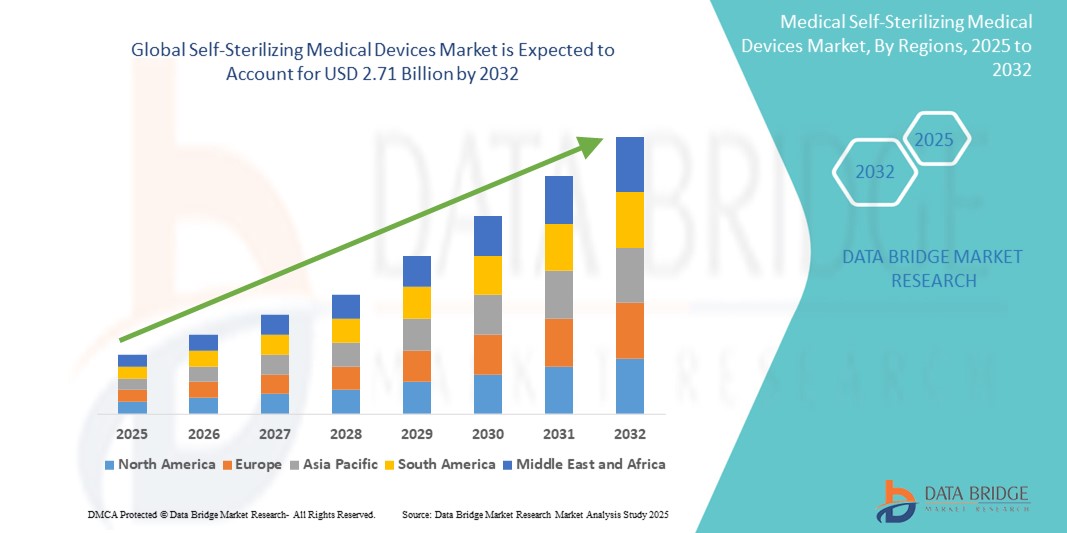
- The global self-sterilizing medical devices market size was valued at USD 1.07 billion in 2024 and is expected to reach USD 2.71 billion by 2032, at a CAGR of 12.20% during the forecast period
- The market growth is largely fueled by the rising prevalence of hospital-acquired infections (HAIs) and the urgent need for advanced infection prevention solutions in healthcare settings, leading to increased demand for self-sterilizing medical technologies across hospitals, clinics, and diagnostic centers
- Furthermore, growing emphasis on patient safety, advancements in antimicrobial technologies such as UV-C and ozone sterilization, and the shift towards minimally invasive procedures are establishing self-sterilizing medical devices as a critical component of modern healthcare infrastructure. These converging factors are accelerating the adoption of self-sterilizing solutions, thereby significantly boosting the industry's growth
Self-Sterilizing Medical Devices Market Analysis
- Self-sterilizing medical devices, which utilize technologies such as UV-C light, antimicrobial coatings, and automated disinfection systems, are becoming essential tools in modern healthcare and clinical environments due to their enhanced ability to reduce pathogen transmission and ensure continuous sterilization
- The rising demand for infection control, particularly in the wake of global health crises and the growing burden of hospital-acquired infections (HAIs), is a primary driver accelerating the adoption of self-sterilizing technologies across hospitals, ambulatory centers, and diagnostic facilities
- North America dominated the self-sterilizing medical devices market with the largest revenue share of 38.9% in 2024, supported by strong healthcare infrastructure, significant investments in medical innovation, and regulatory emphasis on infection prevention protocols
- Asia-Pacific is projected to be the fastest-growing region in the self-sterilizing medical devices market during the forecast period, with a CAGR of 13.5%. This growth is driven by rapidly expanding healthcare infrastructure, rising awareness of infection control, and the adoption of affordable sterilization technologies in emerging economies such as China and India
- The self-sterilizing surgical instruments segment dominated the largest market revenue share of 36.5% in 2024, driven by the growing number of surgical procedures and the critical need to prevent surgical site infections. These instruments are particularly vital in high-risk environments such as ICUs and operating rooms, where infection control is paramount.
Report Scope and Self-Sterilizing Medical Devices Market Segmentation
|
Attributes |
Self-Sterilizing Medical Devices Key Market Insights |
|
Segments Covered |
|
|
Countries Covered |
North America
Europe
Asia-Pacific
Middle East and Africa
South America
|
|
Key Market Players |
Tuttnauer (Israel) |
|
Market Opportunities |
|
|
Value Added Data Infosets |
In addition to the insights on market scenarios such as market value, growth rate, segmentation, geographical coverage, and major players, the market reports curated by the Data Bridge Market Research also include in-depth expert analysis, pricing analysis, brand share analysis, consumer survey, demography analysis, supply chain analysis, value chain analysis, raw material/consumables overview, vendor selection criteria, PESTLE Analysis, Porter Analysis, and regulatory framework. |
Self-Sterilizing Medical Devices Market Trends
“Advanced Automation and Integration for Infection Control”
- A key trend shaping the global self-sterilizing medical devices market is the growing integration of automation technologies and smart sterilization systems within healthcare environments. These advancements are significantly improving efficiency, hygiene, and infection prevention across a wide range of clinical and homecare applications
- For instance, self-sterilizing catheters and surgical instruments are now embedded with antimicrobial coatings or automated UV-C light systems that actively eliminate pathogens without manual intervention. These features reduce the burden on healthcare staff and ensure continuous sterilization, even during extended procedures
- Emerging innovations include the use of micro-sensors in self-sterilizing devices that track contamination levels and trigger sterilization cycles in real time, thereby minimizing infection risks. Hospitals and diagnostic centers are increasingly adopting these intelligent devices to streamline operations and enhance patient safety
- Furthermore, integration with electronic health records (EHR) and connected monitoring systems enables data-driven decision-making and real-time alerts about device hygiene status. This is especially critical in intensive care units, operating rooms, and homecare setups where precision and cleanliness are paramount
- The trend toward more responsive, self-regulating sterilization mechanisms is transforming how healthcare providers manage infection control. Companies are investing heavily in R&D to bring AI-driven diagnostics, predictive maintenance, and automated sterilization protocols to the forefront of medical technology
- As awareness around hospital-acquired infections (HAIs) rises, and regulatory bodies emphasize stricter sterilization standards, the demand for self-sterilizing medical devices is expected to surge across both developed and emerging markets
Self-Sterilizing Medical Devices Market Dynamics
Driver
“Growing Need Due to Rising Infection Control Demands and Antimicrobial Resistance”
- The rising global burden of hospital-acquired infections (HAIs) and the increasing urgency to combat antimicrobial resistance (AMR) are major factors fueling demand for Self-Sterilizing Medical Devices across hospitals, clinics, and homecare settings
- For instance, in April 2024, several U.S.-based medtech firms announced the integration of UV-C and antimicrobial nanocoating technologies into wearable health monitors and diagnostic catheters, reducing the need for manual sterilization and enhancing patient safety. Such innovations are anticipated to significantly boost the Self-Sterilizing Medical Devices industry during the forecast period
- As healthcare providers become more aware of contamination risks, there is heightened interest in medical instruments that can autonomously eliminate pathogens. These devices not only offer continuous protection but also reduce workload for healthcare professionals and minimize human error in sterilization processes
- Moreover, the growing demand for remote patient care and self-monitoring tools is expanding the application of self-sterilizing technologies to wearables and home-use diagnostic kits. Integration with digital health platforms enables real-time tracking of sterility status and device performance
- The need for uninterrupted, real-time sterilization is becoming critical in areas such as ICUs, surgical theaters, and emergency departments. This has driven R&D efforts toward user-friendly, automated sterilization solutions that integrate seamlessly with existing hospital infrastructure
- The convergence of infection prevention with smart, self-operating technologies is poised to transform the landscape of device hygiene and safety, offering a compelling value proposition for hospitals and patients alike
Restraint/Challenge
“High Development Costs and Regulatory Barriers”
- Despite their potential, self-sterilizing medical devices face challenges related to high development costs and complex regulatory pathways, particularly in regions with stringent medical device approval protocols
- For instance, integrating UV-C emitters or ozone generators into devices demands rigorous testing for safety and efficacy. Gaining FDA or CE approval requires detailed evidence, making time-to-market longer and costlier for manufacturers
- In addition, the upfront investment required for incorporating antimicrobial coatings or sterilization systems into basic diagnostic tools often deters small manufacturers and healthcare providers operating on limited budgets
- Compatibility with existing sterilization workflows and interoperability with healthcare IT systems also present challenges. Devices must be robust enough to function autonomously without interfering with clinical operations or compromising patient safety
- Addressing these barriers through global harmonization of regulatory standards, scalable production methods, and public-private innovation funding will be essential to ensure widespread adoption
- As the market matures, economies of scale and technological standardization are expected to reduce costs, making Self-Sterilizing Medical Devices more accessible across both developed and developing healthcare systems
Self-Sterilizing Medical Devices Market Scope
The market is segmented on the basis of type, sterilization technology, end user, and distribution channel.
• By Type
On the basis of type, the self-sterilizing medical devices market is segmented into self-sterilizing surgical instruments, self-sterilizing catheters, self-sterilizing endoscopes, self-sterilizing wearables, and others. The self-sterilizing surgical instruments segment dominated the largest market revenue share of 36.5% in 2024, driven by the growing number of surgical procedures and the critical need to prevent surgical site infections. These instruments are particularly vital in high-risk environments such as ICUs and operating rooms, where infection control is paramount.
The self-sterilizing wearables segment is anticipated to witness the fastest CAGR of 24.1% from 2025 to 2032, due to rising demand for personal health monitoring and infection-resistant devices in both clinical and homecare settings. These devices combine antimicrobial features with smart diagnostics, making them attractive in post-operative recovery and chronic disease management.
• By Sterilization Technology
On the basis of sterilization technology, the self-sterilizing medical devices market is segmented into UV-C Light, ozone sterilization, antimicrobial coatings, steam-based sterilization, and others. The UV-C Light segment held the largest market share in 2024, accounting for 32.8%, due to its effectiveness in inactivating a wide range of pathogens quickly without residue. Its integration into devices such as catheters and endoscopes allows for continuous and automated sterilization.
The antimicrobial coatings segment is expected to witness the fastest growth during the forecast period, with a projected CAGR of 22.3%, driven by advances in nanotechnology and biocompatible materials that offer long-lasting pathogen resistance with minimal maintenance.
• By End User
On the basis of end user, the self-sterilizing medical devices market is segmented into hospitals, ambulatory surgical centers, clinics, diagnostic laboratories, and homecare settings. The hospitals segment accounted for the largest revenue share of 45.6% in 2024, attributed to the high volume of patients, stringent sterilization requirements, and growing focus on reducing healthcare-associated infections (HAIs).
The homecare Settings segment is expected to grow at the fastest CAGR of 23.5% from 2025 to 2032, fueled by the shift toward decentralized care and increased use of self-monitoring devices by aging and chronically ill populations.
• By Distribution Channel
On the basis of distribution channel, the self-sterilizing medical devices market is segmented into direct sales, medical supply distributors, online retailers, and others. The direct sales segment dominated the market in 2024 with a revenue share of 38.2%, as large healthcare institutions prefer direct purchases for better customization, service agreements, and volume discounts.
The online retailers segment is anticipated to grow at the fastest CAGR of 26.7% from 2025 to 2032, supported by the increasing adoption of e-commerce platforms by both healthcare professionals and consumers seeking quick and easy access to advanced self-sterilizing solutions.
Self-Sterilizing Medical Devices Market Regional Analysis
- North America dominated the self-sterilizing medical devices market with the largest revenue share of 38.9% in 2024, driven by an increasing focus on infection prevention, a rise in surgical procedures, and growing adoption of advanced sterilization technologies in healthcare settings. The region also benefits from strong healthcare infrastructure, favorable reimbursement scenarios, and increased awareness about hospital-acquired infections (HAIs), propelling the demand for self-sterilizing technologies
- Consumers and healthcare providers in the region highly value the efficiency, reduced contamination risk, and improved operational turnaround enabled by self-sterilizing medical devices
- This widespread adoption is further supported by government initiatives promoting sterilization and infection control, as well as the growing integration of smart sterilization technology in both public and private healthcare sectors
U.S. Self-Sterilizing Medical Devices Market Insight
The U.S. self-sterilizing medical devices market captured the largest revenue share of 81% in 2024 within North America, fueled by the country’s robust healthcare system and rapid uptake of technological innovations. The increasing number of surgeries, strict regulatory standards for device sterilization, and growing awareness about HAIs have significantly boosted the demand for self-sterilizing solutions. Furthermore, ongoing investments in healthcare modernization and infection prevention protocols continue to expand market penetration.
Europe Self-Sterilizing Medical Devices Market Insight
The Europe self-sterilizing medical devices market is projected to grow at a substantial CAGR throughout the forecast period, driven by rigorous hygiene regulations, high surgical volume, and increasing adoption of eco-friendly sterilization methods. Countries in Western Europe are especially adopting antimicrobial coatings and UV-based sterilization integrated into medical devices, which are becoming standard in hospitals and diagnostic labs.
U.K. Self-Sterilizing Medical Devices Market Insight
The U.K. self-sterilizing medical devices market is expected to grow at a notable CAGR during the forecast period, owing to government-backed infection control initiatives and an aging population requiring frequent medical interventions. Growing concerns about superbugs and antibiotic resistance are also pushing healthcare institutions to adopt self-sterilizing tools and devices that reduce pathogen transmission.
Germany Self-Sterilizing Medical Devices Market Insight
The Germany self-sterilizing medical devices market is anticipated to grow at a considerable CAGR, supported by strong healthcare infrastructure, a high volume of surgical procedures, and increased investments in hospital sanitation protocols. Demand for technologically advanced, sustainable sterilization solutions, including ozone- and UV-based technologies, is on the rise in both public and private medical facilities.
Asia-Pacific Self-Sterilizing Medical Devices Market Insight
The Asia-Pacific self-sterilizing medical devices market is forecasted to register the fastest CAGR of 13.5% from 2025 to 2032, driven by rising healthcare expenditure, expanding patient pool, and improving healthcare infrastructure in countries such as China, India, and Japan. Government programs to curb healthcare-associated infections and increasing private hospital chains are further accelerating market demand across the region.
Japan Self-Sterilizing Medical Devices Market Insight
The Japan self-sterilizing medical devices market is expected to witness a considerable CAGR during the forecast period, supported by the country's strong focus on medical innovation, hygiene, and elderly care. The integration of self-sterilizing technologies in home healthcare and outpatient facilities is also gaining traction due to the aging population and the rise in chronic illness-related procedures.
China Self-Sterilizing Medical Devices Market Insight
The China self-sterilizing medical devices market accounted for the largest revenue share in Asia-Pacific at 38.2% in 2024, driven by the rapid modernization of healthcare facilities, increased surgical volumes, and a surge in public health campaigns promoting sanitation. Strong domestic production capacity and cost-effective innovation are positioning China as a key contributor to the global supply of self-sterilizing devices.
Self-Sterilizing Medical Devices Market Share
The self-sterilizing medical devices industry is primarily led by well-established companies, including:
- BD (U.S.)
- STERIS plc (U.S.)
- 3M (U.S.)
- Medtronic (Ireland)
- Olympus Corporation (Japan)
- Boston Scientific Corporation (U.S.)
- Owens & Minor (U.S.)
- Belimed AG (Switzerland)
- Getinge AB (Sweden)
- ASP (U.S.)
- Ecolab (U.S.)
- Medivators Inc. (U.S.)
- Nanosonics (Australia)
- Matachana Group (Spain)
- Tuttnauer (Israel)
Latest Developments in Global Self-Sterilizing Medical Devices Market
- In April 2023, STERIS Corporation announced the launch of its next-generation self-sterilizing surgical instrument line, integrating advanced UV-C and antimicrobial coating technologies to automatically maintain sterility during extended procedures. This innovation is aimed at reducing surgical site infections (SSIs) and improving operating room efficiency across high-volume hospitals in North America and Europe
- In March 2023, Olympus Corporation introduced a self-sterilizing endoscope series, featuring built-in ozone-based sterilization modules that eliminate up to 99.9% of pathogens between uses. The development is part of Olympus’s broader strategy to support infection control compliance and operational turnaround in ambulatory surgical centers
- In March 2023, 3M Health Care partnered with a network of hospitals in Southeast Asia to pilot its antimicrobial-coated wearable sensors. These devices, designed for remote patient monitoring, leverage nano-silver technologies to provide continuous protection against microbial contamination, thus reducing the burden on traditional sterilization methods in resource-constrained settings
- In February 2023, Medtronic plc unveiled a self-sterilizing catheter prototype incorporating steam-based sterilization chambers activated post-procedure. This solution targets intensive care and interventional cardiology use, aiming to minimize infection risks and reduce reliance on external sterilization services
- In January 2023, BD (Becton, Dickinson and Company) announced regulatory clearance for its self-sterilizing infusion port system, which uses integrated UV-C light mechanisms to sanitize the port site between infusions. The technology aims to enhance safety in oncology and dialysis treatment environments, where infection control is critical

- Interactive Data Analysis Dashboard
- Company Analysis Dashboard for high growth potential opportunities
- Research Analyst Access for customization & queries
- Competitor Analysis with Interactive dashboard
- Latest News, Updates & Trend analysis
- Harness the Power of Benchmark Analysis for Comprehensive Competitor Tracking
Data collection and base year analysis are done using data collection modules with large sample sizes. The stage includes obtaining market information or related data through various sources and strategies. It includes examining and planning all the data acquired from the past in advance. It likewise envelops the examination of information inconsistencies seen across different information sources. The market data is analysed and estimated using market statistical and coherent models. Also, market share analysis and key trend analysis are the major success factors in the market report. To know more, please request an analyst call or drop down your inquiry.
The key research methodology used by DBMR research team is data triangulation which involves data mining, analysis of the impact of data variables on the market and primary (industry expert) validation. Data models include Vendor Positioning Grid, Market Time Line Analysis, Market Overview and Guide, Company Positioning Grid, Patent Analysis, Pricing Analysis, Company Market Share Analysis, Standards of Measurement, Global versus Regional and Vendor Share Analysis. To know more about the research methodology, drop in an inquiry to speak to our industry experts.
Data Bridge Market Research is a leader in advanced formative research. We take pride in servicing our existing and new customers with data and analysis that match and suits their goal. The report can be customized to include price trend analysis of target brands understanding the market for additional countries (ask for the list of countries), clinical trial results data, literature review, refurbished market and product base analysis. Market analysis of target competitors can be analyzed from technology-based analysis to market portfolio strategies. We can add as many competitors that you require data about in the format and data style you are looking for. Our team of analysts can also provide you data in crude raw excel files pivot tables (Fact book) or can assist you in creating presentations from the data sets available in the report.













