


Sepsis Market Overview
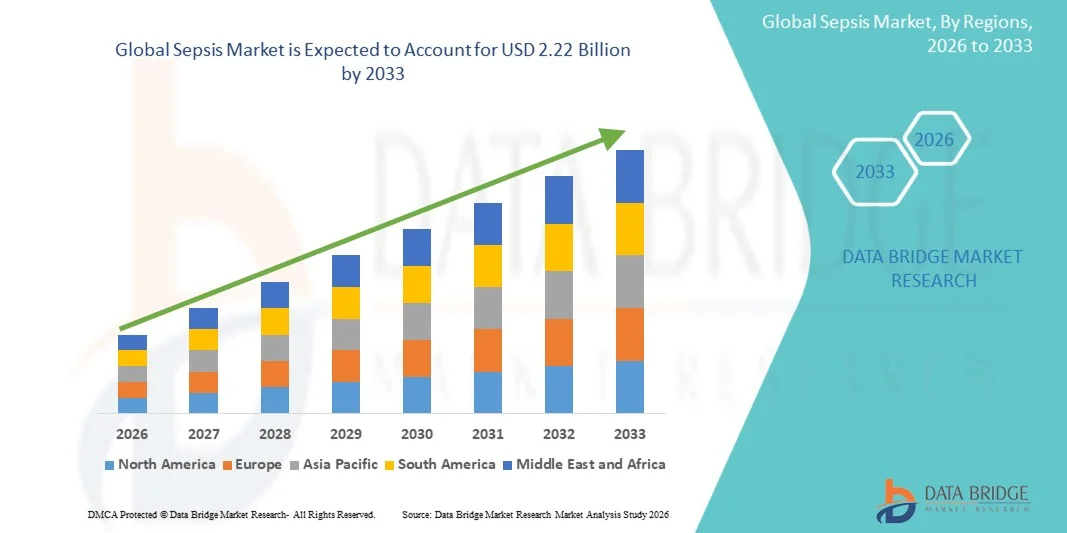
The Sepsis Market was valued at USD 1.16 billion in 2025 and is projected to reach USD 2.22 billion by 2033, growing at a CAGR of 8.50% from 2026 to 2033. The Sepsis Market is experiencing consistent growth driven by the rising incidence of sepsis and bloodstream infections, increasing awareness regarding early diagnosis and treatment, growing adoption of advanced diagnostic technologies, and expanding investments in critical care infrastructure. The growing burden of hospital-acquired infections, antimicrobial resistance, and an aging population with higher susceptibility to severe infections is further accelerating demand for sepsis diagnostics, therapeutics, and monitoring solutions.
The increasing prevalence of chronic diseases such as diabetes, cancer, kidney disorders, and cardiovascular conditions, combined with rising numbers of intensive care unit (ICU) admissions and surgical procedures, is compelling healthcare providers to strengthen sepsis detection and management protocols. Advanced molecular diagnostics, biomarker-based testing, and rapid pathogen identification technologies are increasingly replacing conventional diagnostic approaches in many healthcare settings, enabling faster clinical decision-making and improved patient outcomes. In addition, growing government initiatives to reduce sepsis-related mortality, expanding adoption of AI-enabled clinical decision support systems, and ongoing research focused on novel anti-infective therapies and precision medicine approaches are further supporting market growth across both developed and emerging healthcare markets.
Key Market Trends & Insights
- North America dominated the Sepsis Market with the largest revenue share of 38.42% in 2025, supported by advanced healthcare infrastructure, high adoption of rapid diagnostic technologies, substantial healthcare expenditure, and a strong presence of leading diagnostic and pharmaceutical companies. The region also benefits from increasing awareness regarding early sepsis detection, favorable reimbursement frameworks, and growing implementation of hospital-based sepsis management protocols.
- The lab segment dominated the market with a share of 67.35% in 2025 due to its high diagnostic accuracy, comprehensive testing capabilities, and widespread use across healthcare institutions.
- Asia-Pacific is expected to be the fastest-growing region at a CAGR of 8.1% from 2026 to 2033, fueled by rising healthcare expenditure, increasing incidence of infectious diseases, expanding healthcare infrastructure, and growing awareness regarding sepsis management in countries such as China, India, and Japan.
- The Software segment is the fastest-growing product category, projected to register a CAGR of 8.4%, reflecting increasing adoption of AI-powered clinical decision support systems, predictive analytics platforms, and sepsis monitoring solutions that enable early intervention and improved patient management.
- The Biomarkers segment dominates the technology category with a 36.28% revenue share in 2025, led by widespread utilization of biomarkers such as procalcitonin (PCT), C-reactive protein (CRP), and interleukins for rapid diagnosis, risk stratification, and treatment monitoring in sepsis patients.
- The Lab Testing segment accounted for 67.35% of the market in 2025, preferred due to its high diagnostic accuracy, comprehensive pathogen identification capabilities, and extensive use in hospitals, pathology laboratories, and reference diagnostic centers.
- The PCR technology segment is the fastest-growing technology category, with a CAGR of 8.3%, driven by increasing demand for rapid and highly sensitive pathogen detection, shorter turnaround times, and growing integration of molecular diagnostic platforms into critical care and emergency medicine settings.
Market Size & Forecast
- Global Market Value (2025): USD 1.16 Billion
- Expected Market Value (2033): USD 2.22 Billion
- Forecast CAGR (2026–2033): 8.50%
- Leading Region in 2025: North America
- Fastest Growing Region: Asia-Pacific
Report Scope and Sepsis Market Segmentation
|
Attributes |
Sepsis Key Market Insights |
|
Segments Covered |
|
|
Countries Covered |
North America · U.S. · Canada · Mexico Europe · Germany · France · U.K. · Netherlands · Switzerland · Belgium · Russia · Italy · Spain · Turkey · Rest of Europe Asia-Pacific · China · Japan · India · South Korea · Singapore · Malaysia · Australia · Thailand · Indonesia · Philippines · Rest of Asia-Pacific Middle East and Africa · Saudi Arabia · U.A.E. · South Africa · Egypt · Israel · Rest of Middle East and Africa South America · Brazil · Argentina · Rest of South America |
|
Key Market Players |
• Becton, Dickinson and Company (BD) (U.S.) |
|
Market Opportunities |
· Expansion of Rapid Molecular and Point-of-Care (POC) Diagnostic Technologies · Growing Integration of Artificial Intelligence and Predictive Analytics in Sepsis Management · Rising Demand for Novel Therapeutics and Personalized Sepsis Treatment Approaches |
|
Value Added Data Infosets |
In addition to the insights on market scenarios such as market value, growth rate, segmentation, geographical coverage, and major players, the market reports curated by the Data Bridge Market Research also include in-depth expert analysis, geographically represented company-wise production and capacity, network layouts of distributors and partners, detailed and updated price trend analysis and deficit analysis of supply chain and demand. |
Sepsis Market Trends
Trend: Increasing Adoption of AI-Powered Rapid Diagnostics and Biomarker-Based Sepsis Detection
Healthcare providers are increasingly adopting advanced diagnostic technologies to enable earlier and more accurate sepsis detection. Biomarkers such as procalcitonin (PCT), C-reactive protein (CRP), and interleukins are becoming standard tools in sepsis screening and monitoring protocols. At the same time, artificial intelligence and machine learning algorithms are being integrated into hospital electronic health record systems to identify high-risk patients before clinical deterioration occurs. For instance, several leading healthcare systems in the U.S. and Europe have implemented AI-driven sepsis alert platforms capable of analyzing patient vital signs and laboratory data in real time. Rapid PCR-based pathogen identification systems and point-of-care diagnostic platforms are also gaining traction, helping clinicians reduce diagnostic turnaround times from several days to just a few hours. These advancements are improving treatment outcomes, reducing ICU stays, and supporting the transition toward precision medicine in sepsis management.
Sepsis Market Dynamics
Key Market Driver: Rising Incidence of Sepsis and Growing Burden of Hospital-Acquired Infections
The increasing global prevalence of sepsis is a major factor driving market growth. According to estimates from the World Health Organization (WHO), approximately 49 million sepsis cases occur globally each year, resulting in nearly 11 million deaths and accounting for around 20% of worldwide mortality. The growing incidence of healthcare-associated infections, antimicrobial resistance, and chronic diseases such as diabetes, cancer, and kidney disorders has significantly increased the risk of sepsis development. Hospitals are increasingly investing in rapid diagnostic assays, molecular testing platforms, and biomarker-based screening tools to enable early intervention and improve survival rates. In addition, organizations such as the WHO and the Global Sepsis Alliance continue to promote awareness campaigns and clinical guidelines aimed at improving sepsis diagnosis and treatment. Rising adoption of sepsis management bundles in intensive care units and emergency departments is further accelerating demand for diagnostic and therapeutic solutions worldwide.
Key Restraint/Challenge: High Cost of Advanced Diagnostic Technologies and Limited Access in Developing Regions
A major challenge in the Sepsis Market is the high cost associated with advanced diagnostic technologies and specialized treatment protocols. Molecular diagnostic systems, next-generation sequencing platforms, and multiplex PCR assays require substantial capital investment and skilled laboratory personnel, limiting adoption in resource-constrained healthcare settings. In many low- and middle-income countries, delayed diagnosis remains common due to inadequate laboratory infrastructure and limited access to advanced testing technologies. Additionally, sepsis often presents with non-specific symptoms that overlap with other infectious conditions, making early and accurate diagnosis difficult. The financial burden associated with prolonged ICU admissions, broad-spectrum antimicrobial therapy, and advanced supportive care further strains healthcare systems. These challenges continue to restrict market penetration, particularly in rural and underserved regions.
Key Market Opportunity: Expansion of AI-Enabled Sepsis Management and Precision Medicine Approaches
The integration of artificial intelligence, predictive analytics, and precision medicine represents a significant growth opportunity for the sepsis market. AI-powered clinical decision-support systems can analyze thousands of patient data points in real time to identify early signs of sepsis and predict disease progression before severe complications occur. Companies developing digital health platforms are increasingly collaborating with hospitals to deploy automated sepsis detection solutions that improve response times and reduce mortality. Furthermore, growing research into biomarker-guided therapies, immunomodulatory treatments, and personalized treatment pathways is creating opportunities for next-generation sepsis care. The expansion of telemedicine, cloud-based healthcare analytics, and remote patient monitoring technologies is also improving access to sepsis management services. As healthcare providers increasingly focus on preventive and precision-based approaches, demand for innovative diagnostic, monitoring, and therapeutic solutions is expected to accelerate across both developed and emerging markets.
Sepsis Market Scope
The Sepsis market is segmented on the basis of type, product, technology, test type, pathogen, distribution channel, end user, and application.
- By Type
On the basis of type, the Sepsis Market is segmented into diagnosis and therapeutics. The diagnosis segment dominated the market with a share of 58.76% in 2025 due to the critical importance of early disease identification and timely clinical intervention in reducing sepsis-related mortality. The increasing prevalence of bloodstream infections, hospital-acquired infections, and antimicrobial-resistant pathogens has significantly increased demand for rapid diagnostic solutions. Hospitals and diagnostic laboratories are increasingly adopting biomarker testing, blood culture systems, PCR-based assays, and molecular diagnostic technologies to improve detection accuracy and shorten diagnosis time. Growing implementation of sepsis screening protocols across emergency departments and intensive care units is further supporting segment growth. In addition, favorable reimbursement policies for diagnostic testing, increasing healthcare expenditure, and technological advancements in automated diagnostic platforms are accelerating adoption. The growing emphasis on precision medicine and personalized patient management is driving healthcare providers to invest in advanced diagnostic tools. Furthermore, increasing awareness among clinicians regarding the benefits of early diagnosis and treatment continues to support market expansion. Strong research activities focused on identifying novel sepsis biomarkers are further reinforcing the leading position of the diagnosis segment in the global market.
The therapeutics segment is expected to witness the fastest CAGR of 8.2% from 2026 to 2033, driven by increasing demand for advanced treatment options aimed at reducing sepsis mortality and improving patient outcomes. Rising incidence of severe infections, septic shock, and multi-organ dysfunction syndrome is creating substantial demand for innovative therapeutic solutions. Pharmaceutical companies are investing heavily in the development of targeted therapies, immunomodulators, monoclonal antibodies, and precision medicine approaches to address complex sepsis pathways. The growing use of combination therapies and personalized treatment regimens is improving clinical effectiveness and driving adoption. Increasing ICU admissions worldwide and expanding access to critical care services are further supporting segment growth. Governments and healthcare organizations are also increasing funding for sepsis treatment research and clinical trials. In addition, advancements in biologics, host-directed therapies, and anti-inflammatory drugs are creating new growth opportunities. Rising healthcare awareness and improving treatment accessibility in emerging economies are further contributing to market expansion. These factors collectively position therapeutics as the fastest-growing segment during the forecast period.
- By Product
On the basis of product, the Sepsis Market is segmented into reagents, assay, instruments, and software. The reagents segment dominated the market with a share of 39.84% in 2025 due to its indispensable role in routine sepsis diagnosis, pathogen identification, biomarker analysis, and molecular testing procedures. Reagents are consumed repeatedly across diagnostic workflows, creating a consistent demand stream from hospitals, pathology laboratories, and reference laboratories worldwide. The increasing incidence of sepsis and bloodstream infections has significantly increased testing volumes, driving higher consumption of diagnostic reagents. Growing adoption of PCR-based assays, biomarker panels, and automated blood culture systems is further supporting market growth. In addition, continuous advancements in reagent formulations have improved diagnostic sensitivity, specificity, and turnaround times. Healthcare facilities are increasingly investing in high-quality diagnostic consumables to enhance clinical decision-making and patient outcomes. The rising implementation of sepsis screening protocols across emergency departments and ICUs is further contributing to segment expansion. Strong distribution networks and recurring purchasing requirements continue to reinforce the dominance of the reagents segment globally. Furthermore, increasing healthcare expenditure and expanding laboratory infrastructure across emerging economies are supporting long-term market growth.
The software segment is expected to witness the fastest CAGR of 8.4% from 2026 to 2033, driven by the increasing adoption of artificial intelligence, predictive analytics, and digital healthcare solutions in sepsis management. Hospitals are integrating advanced software platforms with electronic health records to improve early detection and clinical response times. AI-powered clinical decision support systems can analyze large volumes of patient data in real time and identify patients at risk of sepsis before clinical deterioration occurs. Growing demand for workflow automation and data-driven healthcare solutions is accelerating adoption. Additionally, software solutions help healthcare providers improve diagnostic accuracy, optimize resource utilization, and reduce hospital costs. The expansion of telemedicine and remote patient monitoring platforms is creating further growth opportunities. Increasing investments in healthcare digitalization initiatives across developed and emerging markets are supporting segment expansion. Continuous technological advancements in cloud computing and machine learning algorithms are enhancing software capabilities and adoption rates. These factors are expected to drive strong growth throughout the forecast period.
- By Technology
On the basis of technology, the Sepsis Market is segmented into microbiology, PCR, sequencing, and biomarkers. The biomarkers segment dominated the market with a share of 36.28% in 2025 due to the widespread use of biomarkers such as procalcitonin, C-reactive protein, lactate, and interleukins for early diagnosis and monitoring of sepsis patients. Biomarker testing enables rapid clinical assessment and supports timely therapeutic interventions, helping improve survival rates. Healthcare providers increasingly rely on biomarker-guided treatment protocols to enhance patient management and reduce unnecessary antibiotic usage. Growing awareness regarding the importance of early diagnosis has accelerated adoption across hospitals and critical care centers. Continuous research efforts aimed at identifying novel biomarkers are expanding the clinical utility of these tests. The increasing prevalence of severe infections and hospital-acquired infections is further supporting demand. In addition, advancements in automated biomarker testing systems are improving efficiency and accessibility. Rising healthcare investments and favorable reimbursement support in developed markets continue to strengthen segment growth. These factors collectively reinforce the leadership position of the biomarkers segment.
The PCR segment is expected to witness the fastest CAGR of 8.3% from 2026 to 2033, driven by increasing demand for rapid pathogen detection and molecular diagnostic testing. PCR technology provides highly sensitive and specific results within significantly shorter timeframes than conventional culture methods. Growing concerns regarding antimicrobial resistance are encouraging healthcare providers to adopt rapid molecular diagnostics for targeted therapy selection. Continuous technological advancements in multiplex PCR platforms and automation capabilities are improving operational efficiency. Hospitals are increasingly utilizing PCR testing to accelerate treatment decisions and reduce mortality risks associated with delayed diagnosis. Expanding investments in molecular diagnostic infrastructure and laboratory modernization are supporting market growth. Furthermore, increasing awareness among clinicians regarding the benefits of rapid diagnostics is accelerating adoption. The growing burden of infectious diseases globally is creating sustained demand for advanced PCR solutions. These factors are expected to support strong growth over the forecast period.
- By Test Type
On the basis of test type, the Sepsis Market is segmented into lab and POC. The lab segment dominated the market with a share of 67.35% in 2025 due to its high diagnostic accuracy, comprehensive testing capabilities, and widespread use across healthcare institutions. Laboratory testing remains the gold standard for confirming sepsis and identifying causative pathogens. Hospitals and diagnostic laboratories extensively utilize blood cultures, molecular assays, biomarker tests, and antimicrobial susceptibility testing to guide treatment decisions. The availability of advanced laboratory infrastructure and skilled personnel further supports segment dominance. Increasing investments in laboratory automation and digital pathology systems are improving workflow efficiency and testing capacity. Growing prevalence of severe infections and increasing ICU admissions are generating higher testing volumes globally. In addition, healthcare providers continue to rely on laboratory-based diagnostics for detailed clinical evaluation and disease monitoring. Rising awareness regarding the importance of accurate diagnosis is further strengthening segment growth. These factors collectively contribute to the leadership position of laboratory testing in the sepsis market.
The POC segment is expected to witness the fastest CAGR of 8.6% from 2026 to 2033, driven by growing demand for rapid bedside diagnostics and immediate clinical decision-making. Point-of-care testing significantly reduces diagnostic turnaround times and enables healthcare professionals to initiate treatment more quickly. Technological advancements in portable diagnostic devices and biomarker testing platforms are enhancing accessibility and convenience. Increasing adoption of decentralized healthcare models and emergency care services is supporting market expansion. Healthcare providers are increasingly utilizing POC tests to improve patient outcomes and reduce hospital stays. Growing investments in healthcare infrastructure across emerging economies are further driving adoption. Rising demand for cost-effective diagnostic solutions and increasing awareness regarding early sepsis detection continue to support growth. Continuous innovation in miniaturized molecular diagnostic technologies is creating new opportunities for market participants. These factors are expected to fuel substantial segment expansion during the forecast period.
- By Distribution Channel
On the basis of distribution channel, the Sepsis Market is segmented into hospital pharmacies, retail pharmacies, and online pharmacies. The Hospital Pharmacies segment dominated the market with a share of 52.84% in 2025 due to the critical role hospitals play in the diagnosis and treatment of sepsis, severe sepsis, and septic shock. Hospital pharmacies serve as the primary distribution point for broad-spectrum antibiotics, antifungal agents, vasopressors, intravenous fluids, and supportive care medications used in emergency and intensive care settings. The high volume of sepsis-related hospital admissions, increasing ICU utilization rates, and growing implementation of sepsis management protocols are driving demand through this channel. In addition, hospital pharmacies ensure rapid access to life-saving therapeutics and diagnostic products, which is essential for improving patient outcomes. The presence of advanced healthcare infrastructure, established procurement systems, and strong reimbursement frameworks further supports segment dominance. Growing adoption of antimicrobial stewardship programs and increasing investments in critical care facilities are also contributing to the leadership position of hospital pharmacies in the global market.
The Online Pharmacies segment is expected to witness the fastest CAGR of 8.2% from 2026 to 2033, driven by the rapid expansion of digital healthcare platforms and e-commerce pharmaceutical services. Increasing internet penetration, rising smartphone usage, and growing consumer preference for convenient medicine purchasing are accelerating adoption of online pharmacy services. Healthcare providers and patients are increasingly utilizing digital channels for prescription fulfillment, follow-up therapies, and chronic disease management. Additionally, advancements in telemedicine and remote healthcare delivery are strengthening the integration between online consultation platforms and pharmaceutical distribution networks. The availability of competitive pricing, home delivery services, and improved accessibility in underserved regions is further supporting market growth. Expanding regulatory support for digital health ecosystems and increasing investments by major pharmacy chains and healthcare technology providers are expected to further accelerate the growth of online pharmacies during the forecast period.
- By End User
On the basis of end user, the Sepsis Market is segmented into hospitals and pathology & reference laboratories. The Hospitals segment dominated the market with a share of 68.91% in 2025 due to the high burden of sepsis cases requiring immediate diagnosis, intensive monitoring, and comprehensive treatment. Hospitals serve as the primary point of care for patients presenting with severe infections, septic shock, and multiple organ dysfunction syndromes. The widespread availability of intensive care units, emergency departments, advanced diagnostic technologies, and specialized healthcare professionals contributes significantly to segment dominance. Hospitals are increasingly adopting rapid molecular diagnostic platforms, biomarker testing solutions, and antimicrobial stewardship programs to improve sepsis management. Furthermore, increasing healthcare expenditure, rising hospitalization rates associated with chronic diseases and surgical procedures, and growing awareness regarding early sepsis detection are supporting demand. The integration of clinical decision-support systems and real-time patient monitoring technologies is also enhancing diagnostic accuracy and treatment efficiency, reinforcing the leading position of hospitals within the Sepsis Market.
The Pathology and Reference Laboratories segment is expected to witness the fastest CAGR of 8.0% from 2026 to 2033, driven by increasing demand for specialized diagnostic testing and advanced molecular analysis. These laboratories play a crucial role in pathogen identification, antimicrobial susceptibility testing, PCR diagnostics, and biomarker assessment. Growing adoption of high-throughput sequencing technologies and automation platforms is improving testing efficiency and turnaround times. Additionally, healthcare providers are increasingly outsourcing complex diagnostic procedures to specialized laboratories to enhance accuracy and reduce operational burdens. Rising investments in laboratory infrastructure, expanding diagnostic networks, and increasing focus on precision medicine are further accelerating growth. The emergence of centralized testing facilities and growing collaborations between hospitals and diagnostic service providers are expected to create significant opportunities for pathology and reference laboratories during the forecast period.
- By Application
On the basis of application, the Sepsis Market is segmented into sepsis, severe sepsis, and septic shock. The Sepsis segment dominated the market with a share of 48.73% in 2025 due to the large patient population diagnosed during the early stages of systemic infection. Increasing awareness regarding early diagnosis and intervention has significantly expanded testing volumes and treatment initiation at the sepsis stage. Healthcare providers are focusing on rapid pathogen identification and biomarker-based screening to prevent disease progression to severe sepsis and septic shock. The segment benefits from growing implementation of sepsis screening programs, rising hospital admissions associated with infectious diseases, and increasing adoption of evidence-based treatment guidelines. Additionally, continuous advancements in molecular diagnostics, biomarker testing, and antimicrobial therapies are improving clinical outcomes and supporting segment growth. Government initiatives promoting early detection and infection control, coupled with increasing healthcare expenditure and improved access to critical care services, further reinforce the dominance of the sepsis segment in the global market.
The Septic Shock segment is expected to witness the fastest CAGR of 8.4% from 2026 to 2033, driven by increasing focus on advanced critical care management and high mortality risks associated with the condition. Septic shock represents the most severe stage of sepsis and requires rapid intervention, intensive monitoring, and specialized therapeutic approaches. Rising adoption of advanced diagnostic technologies, precision medicine strategies, and targeted treatment protocols is improving patient management and supporting market growth. Furthermore, increasing investments in intensive care infrastructure, growing use of biomarker-guided therapies, and expanding clinical research activities focused on septic shock treatment are accelerating innovation. Pharmaceutical companies and healthcare institutions are actively developing novel therapies and supportive care solutions to address unmet clinical needs in this high-risk patient population. These factors are expected to drive robust growth of the septic shock segment throughout the forecast period.
Sepsis Market Regional Analysis
North America dominated the Sepsis market and accounted for the largest revenue share of 38.42% in 2025, supported by advanced healthcare infrastructure, high adoption of rapid diagnostic technologies, substantial healthcare expenditure, and the strong presence of leading diagnostic, biotechnology, and pharmaceutical companies. The region benefits from widespread implementation of sepsis screening programs, advanced intensive care unit (ICU) capabilities, and increasing utilization of molecular diagnostics, biomarker testing, and AI-enabled clinical decision-support systems for early sepsis detection. Favorable reimbursement policies, growing awareness regarding sepsis-related mortality, and strong government support for infection control initiatives are further driving market growth. In addition, increasing investments in critical care medicine, hospital-based sepsis management protocols, and research focused on antimicrobial resistance continue to strengthen North America's leadership position in the Sepsis Market.
U.S. Sepsis Market Insight
The U.S. Sepsis market is witnessing strong growth due to rising incidence of hospital-acquired infections, increasing prevalence of chronic diseases, and growing adoption of rapid diagnostic technologies. The country's advanced healthcare ecosystem, supported by extensive ICU infrastructure and significant healthcare spending, is driving demand for sepsis diagnostics and therapeutics. Hospitals are increasingly implementing evidence-based sepsis management programs and utilizing biomarker-based testing, PCR diagnostics, and AI-powered monitoring systems to improve patient outcomes. In addition, growing investments in precision medicine, antimicrobial stewardship programs, and clinical research initiatives are accelerating innovation across the sepsis care continuum. The presence of major healthcare technology providers and pharmaceutical companies further supports market expansion in the United States.
Europe Sepsis Market Insight
The Europe Sepsis market remains a major contributor to global revenue, driven by strong healthcare systems, increasing government initiatives for infection prevention, and rising adoption of advanced diagnostic solutions. The region is witnessing growing implementation of sepsis screening protocols across hospitals and critical care centers, supporting early disease identification and timely intervention. Increasing investments in molecular diagnostics, biomarker research, and intensive care infrastructure are contributing significantly to market growth. Furthermore, favorable regulatory support, strong academic research networks, and growing awareness regarding antimicrobial resistance continue to promote the adoption of innovative sepsis management solutions throughout Europe.
U.K. Sepsis Market Insight
The U.K. Sepsis market is experiencing steady growth, supported by increasing awareness regarding early sepsis diagnosis and national healthcare initiatives focused on reducing sepsis-related mortality. Hospitals and healthcare providers are increasingly adopting rapid diagnostic technologies and evidence-based treatment pathways to improve patient outcomes. Rising investments in critical care infrastructure, laboratory modernization, and digital health technologies are contributing to market expansion. Furthermore, growing use of artificial intelligence and predictive analytics for early identification of high-risk patients is enhancing clinical decision-making and strengthening the country's position as a key contributor to the European sepsis market.
Germany Sepsis Market Insight
The Germany Sepsis market is expanding steadily due to the country's advanced healthcare infrastructure, strong diagnostic capabilities, and growing focus on critical care medicine. Hospitals and research institutions are increasingly utilizing molecular diagnostics, biomarker testing, and automated laboratory technologies to improve sepsis detection and treatment outcomes. Rising healthcare expenditure, increasing prevalence of healthcare-associated infections, and growing emphasis on antimicrobial stewardship programs are supporting market growth. In addition, continuous investments in medical research, precision diagnostics, and intensive care services are further accelerating adoption of advanced sepsis management solutions across Germany.
Asia-Pacific Sepsis Market Insight
The Asia-Pacific Sepsis market is expected to witness rapid growth and is projected to register the fastest CAGR of 8.1% from 2026 to 2033, driven by rising healthcare expenditure, increasing incidence of infectious diseases, expanding healthcare infrastructure, and growing awareness regarding sepsis management across the region. Countries such as China, India, and Japan are investing significantly in hospital modernization, laboratory diagnostic capabilities, and critical care facilities. Increasing government initiatives aimed at reducing infection-related mortality, coupled with improving access to healthcare services, are supporting market expansion. Furthermore, rising adoption of advanced diagnostic technologies, increasing medical tourism, and expanding healthcare coverage are accelerating the uptake of sepsis diagnostics and therapeutics across Asia-Pacific.
Japan Sepsis Market Insight
The Japan Sepsis market is witnessing consistent growth due to increasing healthcare investments, a rapidly aging population, and strong adoption of advanced medical technologies. Hospitals and healthcare providers are increasingly utilizing rapid molecular diagnostics, biomarker-based testing, and precision medicine approaches to improve sepsis diagnosis and treatment. Growing emphasis on patient safety, infection control measures, and critical care management is further driving market demand. Moreover, ongoing advancements in laboratory automation, digital healthcare systems, and clinical research activities continue to support the development of innovative sepsis management solutions in Japan.
China Sepsis Market Insight
The China Sepsis market is growing rapidly, driven by expanding healthcare infrastructure, rising incidence of infectious diseases, and increasing government focus on improving critical care services. Healthcare institutions are increasingly adopting rapid diagnostic platforms, molecular testing technologies, and advanced laboratory solutions to enhance early sepsis detection and treatment efficiency. Rising healthcare expenditure, growing awareness regarding sepsis-related complications, and expanding access to hospital and diagnostic services are significantly boosting market demand. In addition, increasing investments in biotechnology research, precision medicine, and healthcare digitization are positioning China as one of the fastest-growing markets for sepsis diagnostics and therapeutics globally.
Sepsis Market Share
The Sepsis industry is primarily led by well-established companies, including:
- Becton, Dickinson and Company (BD) (U.S.)
- bioMérieux SA (France)
- F. Hoffmann-La Roche Ltd. (Switzerland)
- Thermo Fisher Scientific Inc. (U.S.)
- Abbott Laboratories (U.S.)
- Siemens Healthineers AG (Germany)
- QIAGEN N.V. (Netherlands)
- Bio-Rad Laboratories, Inc. (U.S.)
- Bruker Corporation (U.S.)
- Baxter International Inc. (U.S.)
- B. Braun SE (Germany)
- Fresenius Kabi AG (Germany)
- Merck KGaA (Germany)
- Pfizer Inc. (U.S.)
- Johnson & Johnson (Janssen Pharmaceuticals) (U.S.)
- T2 Biosystems, Inc. (U.S.)
- Luminex Corporation (U.S.)
- Accelerate Diagnostics, Inc. (U.S.)
- Immunexpress Pty Ltd. (Australia)
- Sekisui Diagnostics LLC (U.S.)
- Trinity Biotech plc (Ireland)
- EKF Diagnostics Holdings plc (U.K.)
- Werfen S.A. (Spain)
- Nova Biomedical Corporation (U.S.)
- Molecular Partners AG (Switzerland)
- Cytovale, Inc. (U.S.)
- Prenosis Inc. (U.S.)
- Inotrem S.A. (France)
- Adrenomed AG (Germany)
- Sysmex Corporation (Japan)
- Mindray Medical International Limited (China)
- Nihon Kohden Corporation (Japan)
Latest Developments in Sepsis Market
- In April 2024, Prenosis Inc., a healthcare technology company specializing in artificial intelligence-driven diagnostics, announced that the U.S. Food and Drug Administration (FDA) granted De Novo authorization to its Sepsis ImmunoScore platform, making it the first FDA-authorized AI-based diagnostic tool for sepsis. The solution utilizes machine learning algorithms and patient-specific clinical data to assist healthcare providers in identifying patients at risk of sepsis earlier and more accurately. This milestone represents a significant advancement in AI-powered clinical decision support and highlights the growing role of artificial intelligence in improving sepsis diagnosis and patient outcomes
- In January 2024, the World Health Organization (WHO) released its new Guidelines on the Clinical Management of Sepsis, aimed at improving prevention, diagnosis, and treatment practices worldwide. The guidelines provide evidence-based recommendations for healthcare providers across emergency, critical care, and hospital settings, with a particular focus on low- and middle-income countries where the burden of sepsis remains highest. This development reinforces global efforts to reduce sepsis-related mortality through standardized clinical care and early intervention strategies
- In August 2023, the U.S. Centers for Disease Control and Prevention (CDC) introduced its Hospital Sepsis Program Core Elements framework to strengthen sepsis management programs across hospitals in the United States. The initiative outlines key components including leadership commitment, accountability, tracking, reporting, and education to improve sepsis recognition and treatment. The program is designed to help healthcare facilities enhance patient outcomes, reduce mortality rates, and standardize sepsis care practices nationwide
- In December 2024, T2 Biosystems, a leader in rapid sepsis diagnostics, announced that it had surpassed the milestone of 250,000 sepsis tests shipped globally. The achievement reflects increasing adoption of the company’s direct-from-whole-blood diagnostic technology, which enables faster identification of sepsis-causing pathogens compared to traditional blood culture methods. The milestone highlights the growing demand for rapid diagnostic solutions capable of accelerating targeted antimicrobial therapy and improving patient outcomes
- In January 2025, T2 Biosystems reported record full-year 2024 sepsis product revenues driven by strong demand for its sepsis detection platforms and expanding global installations of T2Dx instruments. The company cited increasing utilization of rapid pathogen detection technologies by hospitals seeking to improve antimicrobial stewardship and reduce time-to-treatment for critically ill patients. This development demonstrates the growing commercial momentum of advanced sepsis diagnostic solutions within healthcare systems worldwide

- Interactive Data Analysis Dashboard
- Company Analysis Dashboard for high growth potential opportunities
- Research Analyst Access for customization & queries
- Competitor Analysis with Interactive dashboard
- Latest News, Updates & Trend analysis
- Harness the Power of Benchmark Analysis for Comprehensive Competitor Tracking
Data collection and base year analysis are done using data collection modules with large sample sizes. The stage includes obtaining market information or related data through various sources and strategies. It includes examining and planning all the data acquired from the past in advance. It likewise envelops the examination of information inconsistencies seen across different information sources. The market data is analysed and estimated using market statistical and coherent models. Also, market share analysis and key trend analysis are the major success factors in the market report. To know more, please request an analyst call or drop down your inquiry.
The key research methodology used by DBMR research team is data triangulation which involves data mining, analysis of the impact of data variables on the market and primary (industry expert) validation. Data models include Vendor Positioning Grid, Market Time Line Analysis, Market Overview and Guide, Company Positioning Grid, Patent Analysis, Pricing Analysis, Company Market Share Analysis, Standards of Measurement, Global versus Regional and Vendor Share Analysis. To know more about the research methodology, drop in an inquiry to speak to our industry experts.
Data Bridge Market Research is a leader in advanced formative research. We take pride in servicing our existing and new customers with data and analysis that match and suits their goal. The report can be customized to include price trend analysis of target brands understanding the market for additional countries (ask for the list of countries), clinical trial results data, literature review, refurbished market and product base analysis. Market analysis of target competitors can be analyzed from technology-based analysis to market portfolio strategies. We can add as many competitors that you require data about in the format and data style you are looking for. Our team of analysts can also provide you data in crude raw excel files pivot tables (Fact book) or can assist you in creating presentations from the data sets available in the report.













