


Sitosterolemia Market Size
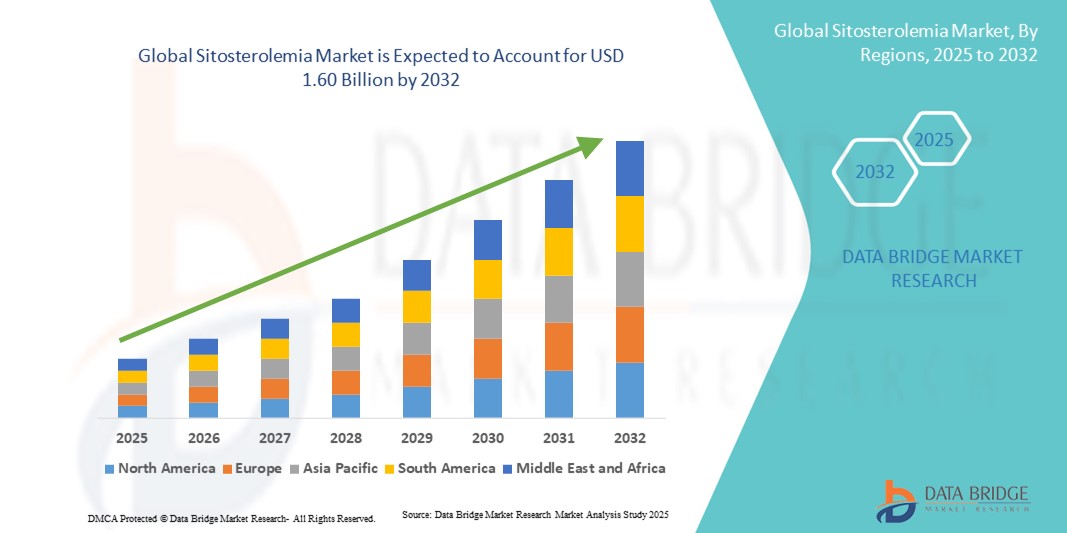
- The global Sitosterolemia market size was valued at USD 1.02 billion in 2024 and is expected to reach USD 1.60 billion by 2032, at a CAGR of 5.80% during the forecast period
- The market growth is largely fueled by the increasing prevalence of Sitosterolemia, a rare inherited lipid disorder, along with advancements in diagnostic technologies and specialized therapeutic solutions, leading to improved disease management and early detection
- Furthermore, rising awareness among healthcare professionals and patients, along with growing demand for effective and targeted treatments, is establishing Sitosterolemia therapies as the preferred choice for managing the disorder. These converging factors are accelerating the uptake of innovative diagnostic and treatment solutions, thereby significantly boosting the industry's growth
Sitosterolemia Market Analysis
- Sitosterolemia, a rare inherited lipid disorder characterized by elevated plant sterol levels in the blood, is increasingly recognized as a critical condition requiring early diagnosis and effective treatment due to its association with premature cardiovascular complications and other systemic effects
- The escalating demand for Sitosterolemia management is primarily fueled by growing awareness among healthcare professionals and patients, advancements in diagnostic technologies such as blood tests and genetic testing, and the development of targeted therapies such as ezetimibe that improve patient outcomes
- North America dominated the Sitosterolemia market with the largest revenue share of 39.5% in 2024, driven by high disease awareness, advanced healthcare infrastructure, the presence of leading biotech and pharmaceutical companies, and increasing adoption of innovative treatment and diagnostic solutions
- Asia-Pacific is expected to be the fastest growing region in the Sitosterolemia market during the forecast period due to rising healthcare investments, increasing rare disease awareness, and expanding access to diagnostics and treatment in emerging economies
- Ezetimibe treatment segment dominated the Sitosterolemia market with a market share of 43.5% in 2024, driven by its established efficacy in reducing plasma plant sterol levels and its widespread adoption in clinical practice for managing Sitosterolemia
Report Scope and Sitosterolemia Market Segmentation
|
Attributes |
Sitosterolemia Key Market Insights |
|
Segments Covered |
|
|
Countries Covered |
North America
Europe
Asia-Pacific
Middle East and Africa
South America
|
|
Key Market Players |
|
|
Market Opportunities |
|
|
Value Added Data Infosets |
In addition to the insights on market scenarios such as market value, growth rate, segmentation, geographical coverage, and major players, the market reports curated by the Data Bridge Market Research also include in-depth expert analysis, pricing analysis, brand share analysis, consumer survey, demography analysis, supply chain analysis, value chain analysis, raw material/consumables overview, vendor selection criteria, PESTLE Analysis, Porter Analysis, and regulatory framework. |
Sitosterolemia Market Trends
Advancements in Targeted Therapies and Diagnostics
- A significant and accelerating trend in the global Sitosterolemia market is the development of targeted therapies such as ezetimibe and improved dietary management protocols, along with advanced diagnostics including genetic testing and blood sterol measurement, which enhance disease management and patient outcomes
- For instance, specialized lipid-lowering therapies are increasingly used to reduce plasma plant sterol levels effectively, while novel genetic testing panels enable early and accurate diagnosis of Sitosterolemia, supporting timely treatment initiation
- Advancements in personalized medicine allow treatments to be tailored to individual patient needs, improving therapeutic efficacy and minimizing side effects, while advanced monitoring tools enable clinicians to track patient responses and adjust regimens accordingly
- The integration of diagnostics and therapeutics into comprehensive care pathways is improving disease management by enabling clinicians to combine dietary interventions, pharmacological treatment, and regular monitoring in a single coordinated approach
- This trend towards more precise, personalized, and integrated care solutions is fundamentally transforming patient expectations for Sitosterolemia management. Consequently, biotech companies are focusing on combination therapies and diagnostic-therapeutic integration for enhanced clinical outcomes
- The demand for innovative, personalized, and integrated treatment solutions is growing rapidly across both developed and emerging markets, as healthcare providers prioritize effective disease management and patient-centric approaches
Sitosterolemia Market Dynamics
Driver
Rising Awareness and Growing Need for Early Diagnosis and Treatment
- The increasing prevalence of Sitosterolemia awareness among healthcare professionals and patients, coupled with growing access to advanced diagnostics and therapies, is a significant driver of market growth
- For instance, clinical initiatives promoting early lipid screening and genetic testing are facilitating timely identification and management of the disorder, which can prevent cardiovascular complications
- As patients and caregivers become more informed about potential health risks, targeted therapies such as ezetimibe and dietary interventions offer effective solutions, driving adoption and market demand
- Furthermore, the expansion of rare disease networks and patient advocacy programs is increasing engagement with healthcare providers and enhancing treatment uptake across regions
- The convenience of personalized treatment plans, coupled with access to specialized diagnostics and therapeutic options, is propelling the adoption of Sitosterolemia management solutions in clinics, hospitals, and specialized centers
- Ongoing research and educational initiatives are enabling clinicians to implement evidence-based management strategies, further boosting market growth and patient outcomes
Restraint/Challenge
Limited Awareness, High Treatment Costs, and Access Barriers
- Low awareness of Sitosterolemia among general practitioners and patients poses a challenge to early diagnosis and treatment, limiting market penetration in certain regions
- For instance, lack of familiarity with rare lipid disorders can result in misdiagnosis or delayed therapy initiation, impacting patient outcomes and overall market expansion
- The relatively high cost of therapies such as ezetimibe and specialized dietary management plans can hinder adoption, particularly in developing regions or for price-sensitive patients
- Furthermore, limited availability of advanced diagnostics and specialized treatment centers in emerging markets restricts access to care, creating regional disparities in management and growth opportunities
- Overcoming these challenges through awareness programs, insurance coverage expansion, and development of affordable treatment options will be vital for broader market adoption and sustained growth
- Healthcare providers and companies are increasingly focusing on education, outreach, and cost-effective solutions to reduce barriers and improve accessibility for Sitosterolemia patients
Sitosterolemia Market Scope
The market is segmented on the basis of type, treatment, symptoms, diagnosis, end-users, and distribution
- By Type
On the basis of type, the Sitosterolemia market is segmented into phytosterols and sterols from animals. The phytosterols segment dominated the market with the largest revenue share in 2024, driven by the direct involvement of plant sterols in the pathophysiology of Sitosterolemia. Patients with elevated phytosterol levels often require targeted therapies and dietary restrictions to manage symptoms effectively. The segment benefits from well-established clinical understanding and treatment protocols that focus on limiting phytosterol absorption. Awareness campaigns and healthcare provider focus on phytosterol management further strengthen market adoption. In addition, diagnostics and therapeutic interventions are primarily designed to detect and reduce phytosterol accumulation. The growing prevalence of phytosterol-related complications in patients also reinforces the dominance of this segment.
The sterols from animals segment is expected to witness the fastest growth during 2025–2032, driven by increasing research into the effects of animal-derived sterols on lipid metabolism. Rising interest in understanding the contribution of dietary sterols from animal sources to Sitosterolemia progression is creating new diagnostic and therapeutic opportunities. Clinical trials and research studies focusing on combined dietary interventions are accelerating adoption. Furthermore, healthcare providers are emphasizing holistic patient management that considers both plant and animal sterols. Growing awareness among patients and caregivers about diverse sterol sources is boosting market uptake. The development of nutritional supplements and diet plans targeting sterols from animals also contributes to segment growth.
- By Treatment
On the basis of treatment, the Sitosterolemia market is segmented into dietary restrictions, bile acid sequestrants, and ezetimibe. The ezetimibe segment dominated the market with the largest share of 43.5% in 2024, due to its proven efficacy in reducing plasma plant sterol concentrations. Patients using ezetimibe often achieve significant lipid profile improvements, supporting long-term cardiovascular health. The segment benefits from well-established clinical guidelines recommending ezetimibe as first-line therapy for severe Sitosterolemia. Widespread adoption among healthcare providers and availability across hospital pharmacies reinforce its market dominance. The therapy’s ability to complement dietary interventions increases treatment compliance and effectiveness. In addition, patient preference for pharmacological treatment over strict dietary restrictions strengthens the segment’s leadership.
The dietary restrictions segment is expected to witness the fastest growth during 2025–2032, fueled by increasing awareness of personalized nutrition and lifestyle management. Patients and caregivers are adopting plant sterol-limited diets to complement pharmacological therapy. Nutritionists and healthcare providers are actively promoting dietary modifications to control sterol intake. The growth is supported by the rising trend of patient-centric management plans and home-based interventions. Availability of dietitian-led consultation services and educational resources is accelerating adoption. In addition, integration of dietary management with advanced diagnostics is boosting segment growth.
- By Symptoms
On the basis of symptoms, the Sitosterolemia market is segmented into xanthomas, macrothrombocytopenia, thrombocytopenia, stomatocytes, and joint stiffness and pain. The xanthomas segment dominated the market with the largest share in 2024, as visible lipid deposits are among the earliest and most recognized clinical manifestations of Sitosterolemia. Patients presenting with xanthomas often seek early diagnosis and treatment, driving demand for therapeutic and diagnostic services. Xanthomas are a key clinical indicator for healthcare providers, supporting the development of targeted interventions. Awareness of xanthomas among clinicians and patients ensures timely monitoring and management. Furthermore, treatment protocols for xanthomas, including pharmacological and dietary interventions, are well-established. The prominence of xanthomas in clinical assessment reinforces the segment’s market dominance.
The macrothrombocytopenia segment is expected to witness the fastest growth during 2025–2032, driven by increasing recognition of hematologic manifestations in Sitosterolemia. Advanced diagnostic tests are enabling early detection of platelet abnormalities. Clinicians are emphasizing integrated care to manage both lipid and hematologic complications. Research studies on platelet-related complications are fueling awareness and treatment adoption. Emerging therapies targeting macrothrombocytopenia are enhancing patient outcomes. In addition, increased reporting in clinical literature supports the accelerated growth of this segment.
- By Diagnosis
On the basis of diagnosis, the Sitosterolemia market is segmented into blood tests and genetic testing. The blood test segment dominated the market in 2024, due to its cost-effectiveness, availability, and ability to rapidly detect elevated plant sterol levels in patients. Blood tests are routinely used in clinical practice for initial diagnosis and monitoring treatment efficacy. Healthcare providers rely on blood tests to guide therapy adjustments. High patient compliance and minimal invasiveness contribute to segment adoption. Widespread integration of blood tests into standard lipid panels reinforces market leadership. Early detection through blood testing reduces the risk of complications, further boosting dominance.
The genetic testing segment is expected to witness the fastest growth from 2025 to 2032, driven by rising awareness of inherited lipid disorders. Genetic testing provides definitive diagnosis and enables family screening. Advances in next-generation sequencing technologies are improving test accuracy and reducing costs. Adoption of genetic testing by specialty clinics and research centers is increasing rapidly. Personalized treatment strategies based on genetic results support patient-centric care. Expansion of genetic counseling services also contributes to segment growth.
- By End-Users
On the basis of end-users, the Sitosterolemia market is segmented into clinics, hospitals, diagnostic centers, surgical centers, and others. The clinics segment dominated the market in 2024, due to their primary role in early diagnosis, patient monitoring, and management of Sitosterolemia. Clinics offer personalized treatment plans including dietary counseling and pharmacological therapy. Accessibility and patient trust in clinic-based care drive market adoption. Integration of clinics with diagnostic labs strengthens patient follow-up. Awareness programs and routine lipid screening in clinics enhance service uptake. Clinics also serve as referral hubs for specialized care, reinforcing market dominance.
The hospitals segment is expected to witness the fastest growth during 2025–2032, fueled by the increasing number of specialized lipid and rare disease centers. Hospitals provide advanced diagnostic facilities and multidisciplinary care for complex Sitosterolemia cases. Growing investment in hospital infrastructure and rare disease programs supports adoption. Hospitals enable clinical trials and research studies, increasing treatment visibility. Expansion of hospital pharmacy networks enhances patient access to therapies. In addition, collaboration with healthcare insurers promotes treatment affordability and hospital-based care growth.
- By Distribution Channel
On the basis of distribution channel, the Sitosterolemia market is segmented into hospital pharmacy, retail pharmacy, and online pharmacy. The hospital pharmacy segment dominated the market in 2024, as most Sitosterolemia therapies and specialized medications are dispensed in controlled clinical settings. Hospital pharmacies provide patients with immediate access to prescribed treatments under professional supervision. Integration with hospital-based diagnostic and consultation services enhances treatment adherence. Strong relationships with physicians reinforce the segment’s adoption. Availability of combination therapies in hospital pharmacies further strengthens leadership. Hospital pharmacies also facilitate patient education and monitoring, ensuring effective disease management.
The online pharmacy segment is expected to witness the fastest growth from 2025 to 2032, driven by rising e-commerce adoption and increased patient preference for home delivery of medications. Online pharmacies offer convenience, especially in regions with limited hospital or retail pharmacy access. Integration with telemedicine and prescription services enhances accessibility. Growing awareness of rare disease treatment availability online supports adoption. Competitive pricing and subscription-based delivery models further fuel growth. Digital marketing and awareness campaigns by online platforms are accelerating segment uptake.
Sitosterolemia Market Regional Analysis
- North America dominated the Sitosterolemia market with the largest revenue share of 39.5% in 2024, driven by high disease awareness, advanced healthcare infrastructure, the presence of leading biotech and pharmaceutical companies, and increasing adoption of innovative treatment and diagnostic solutions
- Healthcare providers and patients in the region highly value early diagnosis, personalized treatment plans, and access to advanced therapies such as ezetimibe, along with comprehensive monitoring of plasma sterol levels
- This widespread adoption is further supported by high healthcare expenditure, strong presence of leading biotech and pharmaceutical companies, and well-developed rare disease awareness programs, establishing North America as a key hub for Sitosterolemia management and therapeutic innovation
U.S. Sitosterolemia Market Insight
The U.S. Sitosterolemia market captured the largest revenue share of 80% in 2024 within North America, fueled by advanced healthcare infrastructure, high awareness of rare lipid disorders, and widespread adoption of targeted therapies such as ezetimibe. Patients and healthcare providers are increasingly prioritizing early diagnosis, personalized treatment plans, and continuous monitoring of plasma sterol levels. The growing availability of specialized clinics, genetic testing, and dietary management programs further propels market growth. Moreover, integration of Sitosterolemia management into broader cardiovascular and rare disease care pathways is significantly contributing to market expansion.
Europe Sitosterolemia Market Insight
The Europe Sitosterolemia market is projected to expand at a substantial CAGR throughout the forecast period, primarily driven by rising awareness of rare lipid disorders, supportive healthcare policies, and the increasing adoption of advanced diagnostics and therapies. Urbanization, coupled with a focus on preventive healthcare and early intervention, is fostering market growth. European healthcare providers are also emphasizing patient education, routine lipid screenings, and integrated treatment plans. The region is experiencing notable growth across clinics, hospitals, and specialized diagnostic centers, with Sitosterolemia management being incorporated into standard care for high-risk populations.
U.K. Sitosterolemia Market Insight
The U.K. Sitosterolemia market is anticipated to grow at a noteworthy CAGR during the forecast period, driven by the rising trend of early rare disease detection and the increasing availability of advanced therapeutics. In addition, heightened awareness of cardiovascular risks and genetic predispositions encourages patients and healthcare providers to adopt targeted treatment and monitoring solutions. The U.K.’s well-developed healthcare system, strong presence of specialty clinics, and emphasis on patient-centric care are expected to continue stimulating market growth.
Germany Sitosterolemia Market Insight
The Germany Sitosterolemia market is expected to expand at a considerable CAGR during the forecast period, fueled by growing awareness of inherited lipid disorders and the demand for precise, personalized treatment solutions. Germany’s robust healthcare infrastructure, combined with research initiatives and rare disease programs, promotes the adoption of diagnostic and therapeutic services. Integration of genetic testing and advanced lipid monitoring in routine clinical practice is increasingly prevalent, with a strong preference for evidence-based, outcome-driven care aligning with local medical standards.
Asia-Pacific Sitosterolemia Market Insight
The Asia-Pacific Sitosterolemia market is poised to grow at the fastest CAGR during the forecast period of 2025 to 2032, driven by rising awareness of rare lipid disorders, increasing healthcare investments, and expanding access to advanced diagnostics and therapies in countries such as China, Japan, and India. The region's growing inclination towards specialized clinics and patient-centered care is driving adoption. Furthermore, initiatives promoting rare disease awareness and the establishment of diagnostic networks are enhancing accessibility. As APAC emerges as a hub for research and development in rare lipid disorders, affordability and availability of diagnostic and treatment solutions are expanding to a wider patient base.
Japan Sitosterolemia Market Insight
The Japan Sitosterolemia market is gaining momentum due to the country’s advanced healthcare system, emphasis on preventive care, and high patient awareness of rare lipid disorders. The adoption of Sitosterolemia management solutions is driven by an increasing number of genetic testing facilities, specialized lipid clinics, and integration of therapies into standard cardiovascular care. Moreover, Japan’s aging population is such asly to spur demand for early diagnosis, ongoing monitoring, and patient-friendly therapeutic solutions in both residential and clinical settings.
India Sitosterolemia Market Insight
The India Sitosterolemia market accounted for the largest market revenue share in Asia-Pacific in 2024, attributed to the country’s expanding healthcare infrastructure, increasing awareness of rare diseases, and rising adoption of targeted therapies and diagnostics. India stands as a growing market for specialized clinics and genetic testing facilities, and Sitosterolemia management is becoming increasingly available in urban hospitals and diagnostic centers. Government initiatives promoting rare disease care, along with the availability of affordable treatment and diagnostic options, are key factors propelling the market in India.
Sitosterolemia Market Share
The Sitosterolemia industry is primarily led by well-established companies, including:
- Amryt Pharma plc (Ireland)
- AstraZeneca (U.K.)
- Lilly USA, LLC (U.S.)
- Johnson & Johnson and its affiliates (U.S.)
- Sanofi (U.K.)
- Merck & Co., Inc. (U.S.)
- Pfizer Inc. (U.S.)
- Regeneron Pharmaceuticals Inc. (U.S.)
- Novartis AG (Switzerland)
- Recordati Rare Diseases (U.S.)
- Alexion Pharmaceuticals Inc. (U.S.)
- Vertex Pharmaceuticals Incorporated (U.S.)
- Alnylam Pharmaceuticals, Inc. (U.S.)
- Ionis Pharmaceuticals, Inc. (U.S.)
- Ultragenyx Pharmaceutical Inc. (U.S.)
- Cheplapharm Arzneimittel GmbH (Germany)
- Camber Pharmaceuticals, Inc. (U.S.)
What are the Recent Developments in Global Sitosterolemia Market?
- In June 2025, a clinical study highlighted on ClinicalTrials.gov, sponsored by the National Heart, Lung, and Blood Institute (NHLBI), continued to investigate the use of a higher dose of ezetimibe (40 mg daily) for patients with sitosterolemia. This study aims to determine the safety and effectiveness of a higher dose in lowering plant sterol levels
- In May 2025, a bibliometric analysis published in the Journal of Clinical Lipidology highlighted the growing trend of global scientific collaboration in sitosterolemia research, with a specific focus on genetic analysis. The study found that research institutions are increasingly collaborating to understand the disease's underlying genetics, particularly whole exome sequencing to identify pathogenic variants in the ABCG5 and ABCG8 genes
- In November 2024, the American Society of Hematology (ASH) highlighted that hematologists should consider sitosterolemia as a potential diagnosis in patients presenting with hemolytic anemia and thrombocytopenia. Historically, the disease has been primarily associated with high cholesterol and xanthomas, often leading to a misdiagnosis of familial hypercholesterolemia (FH)
- In October 2023, a case report published in the journal Pediatric Patients with Sitosterolemia highlighted the critical role of next-generation sequencing (NGS) in the accurate diagnosis of sitosterolemia. The report detailed three new cases where NGS custom panels, which included the ABCG5 and ABCG8 genes, were used to differentiate sitosterolemia from other inherited disorders such as familial hypercholesterolemia
- In October 2023, a case study presented at the European Congress of Endocrinology provided a 17-year follow-up on a patient with sitosterolemia treated with ezetimibe. The report concluded that ezetimibe therapy, in combination with dietary management, was effective in preventing the progression of xanthomas (fatty deposits under the skin), which is a key clinical feature of the disease

- Interactive Data Analysis Dashboard
- Company Analysis Dashboard for high growth potential opportunities
- Research Analyst Access for customization & queries
- Competitor Analysis with Interactive dashboard
- Latest News, Updates & Trend analysis
- Harness the Power of Benchmark Analysis for Comprehensive Competitor Tracking
Data collection and base year analysis are done using data collection modules with large sample sizes. The stage includes obtaining market information or related data through various sources and strategies. It includes examining and planning all the data acquired from the past in advance. It likewise envelops the examination of information inconsistencies seen across different information sources. The market data is analysed and estimated using market statistical and coherent models. Also, market share analysis and key trend analysis are the major success factors in the market report. To know more, please request an analyst call or drop down your inquiry.
The key research methodology used by DBMR research team is data triangulation which involves data mining, analysis of the impact of data variables on the market and primary (industry expert) validation. Data models include Vendor Positioning Grid, Market Time Line Analysis, Market Overview and Guide, Company Positioning Grid, Patent Analysis, Pricing Analysis, Company Market Share Analysis, Standards of Measurement, Global versus Regional and Vendor Share Analysis. To know more about the research methodology, drop in an inquiry to speak to our industry experts.
Data Bridge Market Research is a leader in advanced formative research. We take pride in servicing our existing and new customers with data and analysis that match and suits their goal. The report can be customized to include price trend analysis of target brands understanding the market for additional countries (ask for the list of countries), clinical trial results data, literature review, refurbished market and product base analysis. Market analysis of target competitors can be analyzed from technology-based analysis to market portfolio strategies. We can add as many competitors that you require data about in the format and data style you are looking for. Our team of analysts can also provide you data in crude raw excel files pivot tables (Fact book) or can assist you in creating presentations from the data sets available in the report.












