


What is the Global Smart Dental Cleaning Devices Market Size and Growth Rate?
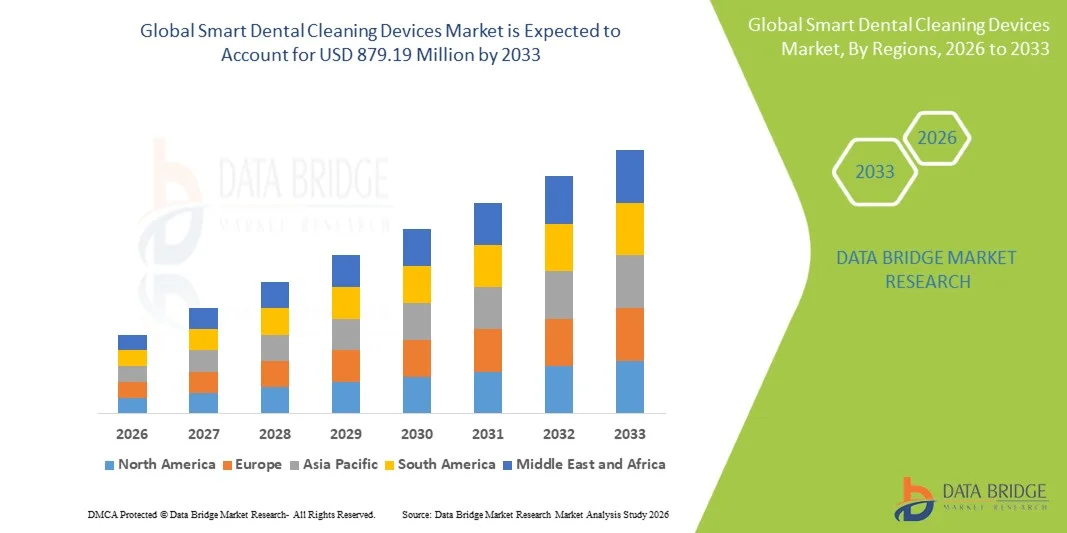
- The global smart dental cleaning devices market size was valued at USD 384.26 million in 2025 and is expected to reach USD 879.19 million by 2033, at a CAGR of 10.90% during the forecast period
- The market growth is driven by the rising awareness of oral hygiene, increasing adoption of smart home and connected health devices, and growing emphasis on preventive dental care. The integration of AI-powered brushing analysis, real-time feedback, and Bluetooth-enabled oral care solutions is propelling market demand globally
- Furthermore, the expansion of e-commerce platforms, technological advancements in oral care devices, and increasing disposable incomes in emerging economies are expected to accelerate market growth substantially during the forecast period
What are the Major Takeaways of Smart Dental Cleaning Devices Market?
- The rapid adoption of connected oral care technologies such as smart toothbrushes, water flossers, and plaque detection sensors is transforming at-home dental hygiene, enhancing user experience and dental outcomes
- The market is witnessing increasing demand for AI-integrated oral care devices that provide personalized feedback, usage tracking, and gamified brushing experiences, driving consumer engagement and product adoption
- Sustainability and eco-friendly product designs, such as recyclable brush heads and energy-efficient charging systems, are gaining traction among environmentally conscious consumers.
- Leading companies are investing in AI-based diagnostics and mobile app integration to create a connected ecosystem for oral health monitoring, positioning smart dental cleaning devices as an essential component of preventive healthcare
- North America dominated the smart dental cleaning devices market with the largest revenue share of 39.5% in 2025, driven by advanced dental healthcare infrastructure, high adoption of digital dentistry, and increasing awareness of preventive oral care
- The Asia-Pacific region is projected to witness the fastest growth rate of 10.2% during 2026–2033, driven by expanding dental infrastructure, increasing disposable incomes, and growing awareness of oral hygiene in emerging economies
- The air polishing devices segment dominated the market with the largest revenue share of 41.3% in 2025, attributed to their growing adoption in professional dental cleaning for effective plaque and biofilm removal
Report Scope and Smart Dental Cleaning Devices Market Segmentation
|
Attributes |
Smart Dental Cleaning Devices Key Market Insights |
|
Segments Covered |
|
|
Countries Covered |
North America
Europe
Asia-Pacific
Middle East and Africa
South America
|
|
Key Market Players |
|
|
Market Opportunities |
|
|
Value Added Data Infosets |
In addition to the insights on market scenarios such as market value, growth rate, segmentation, geographical coverage, and major players, the market reports curated by the Data Bridge Market Research also include in-depth expert analysis, pricing analysis, brand share analysis, consumer survey, demography analysis, supply chain analysis, value chain analysis, raw material/consumables overview, vendor selection criteria, PESTLE Analysis, Porter Analysis, and regulatory framework. |
What is the Key Trend in the Smart Dental Cleaning Devices Market?
“Rising Demand for Sustainable, AI-Integrated, and Personalized Oral Care Solutions”
- The smart dental cleaning devices market is witnessing a significant transformation driven by the growing demand for eco-friendly, AI-powered, and personalized oral care technologies. Consumers are increasingly opting for sustainable products that combine digital intelligence with environmentally responsible designs
- For instance, companies such as Philips and Oral-B (Procter & Gamble) have launched smart toothbrushes made with recyclable materials and energy-efficient charging systems, integrating AI-based brushing analysis to enhance oral hygiene performance
- The adoption of Bluetooth and app-connected devices is rapidly increasing, enabling real-time data tracking, brushing habit analysis, and personalized coaching to improve user compliance and dental outcomes
- Manufacturers are focusing on sustainable production practices, including the use of biodegradable plastics, recyclable packaging, and reusable brush heads, to minimize waste and align with global sustainability goals
- Consumers are also showing strong interest in smart dental devices designed for children, featuring gamification, colorful interfaces, and parental monitoring through mobile applications to encourage healthy oral care habits
- As sustainability and technology converge, the trend toward AI-integrated, eco-conscious, and user-centric dental cleaning devices will continue to shape innovation, brand positioning, and long-term growth across the global market
What are the Key Drivers of Smart Dental Cleaning Devices Market?
- The increasing global awareness about oral health and hygiene, coupled with the rising prevalence of dental disorders such as cavities and gingivitis, is one of the primary growth drivers for the smart dental cleaning devices market
- For instance, in 2025, Oral-B (U.S.) reported a surge in demand for its iO Series Smart Toothbrushes, driven by the integration of AI-powered pressure sensors, real-time feedback, and app-based oral health tracking
- The expanding adoption of IoT and AI technologies in healthcare devices is fueling innovation in smart oral care, allowing for better diagnostics, performance monitoring, and personalized cleaning routines
- Rising disposable incomes, increased penetration of smart home ecosystems, and the growing popularity of connected healthcare devices are encouraging consumers to invest in premium oral care products
- Manufacturers are increasingly focusing on ergonomic designs, portable water flossers, and battery-efficient devices to enhance convenience and accessibility for both adults and children
- As preventive healthcare gains momentum and digital health ecosystems expand, the demand for connected, data-driven, and sustainable smart dental cleaning devices is expected to grow steadily throughout the forecast period
Which Factor is Challenging the Growth of the Smart Dental Cleaning Devices Market?
- High product costs and limited accessibility in developing regions are key challenges restraining the Smart Dental Cleaning Devices market. The inclusion of AI sensors, Bluetooth modules, and rechargeable batteries significantly increases the manufacturing cost of these devices
- For instance, smaller dental device manufacturers in countries such as India and Brazil face challenges in adopting advanced production technologies and maintaining affordability for price-sensitive consumers
- Limited awareness about the long-term benefits of smart dental devices and lack of standardized interoperability between device ecosystems hinder mass adoption in emerging markets
- Fluctuations in the prices of electronic components and biodegradable materials further affect profit margins, particularly for companies emphasizing sustainability and smart features
- Regulatory compliance related to consumer electronics safety and medical device approvals across different regions adds complexity and delays product launches.
- To mitigate these challenges, manufacturers are focusing on cost-optimized designs, subscription-based oral care programs, and strategic collaborations with dental professionals. Over time, advances in AI efficiency, manufacturing automation, and economies of scale are expected to reduce costs and enhance market accessibility globally
How is the Smart Dental Cleaning Devices Market Segmented?
The market is segmented on the basis of type, packaging type, and application.
• By Product Type
On the basis of product type, the smart dental cleaning devices market is segmented into air polishing devices, prophy angles, prophy pastes, rubber cups, and others. The air polishing devices segment dominated the market with the largest revenue share of 41.3% in 2025, attributed to their growing adoption in professional dental cleaning for effective plaque and biofilm removal. These devices offer faster, minimally invasive cleaning and are increasingly used in periodontal and orthodontic treatments. Their ability to improve patient comfort and reduce chair time has further enhanced their appeal among dental professionals.
The prophy pastes segment is projected to witness the fastest CAGR from 2026 to 2033, driven by advancements in flavoring agents, fluoride content, and sensitivity-friendly formulations. The rising emphasis on preventive dental care and aesthetic polishing treatments is expected to propel the demand for innovative, eco-friendly, and patient-specific prophy pastes during the forecast period.
• By Application
Based on application, the smart dental cleaning devices market is categorized into dental clinics, hospitals, and dental laboratories. The dental clinics segment dominated the market with the largest revenue share of 54.6% in 2025, owing to the high patient influx for routine cleanings, preventive care, and cosmetic procedures. Clinics are increasingly adopting smart devices integrated with real-time monitoring, pressure sensors, and AI-guided brushing technologies to ensure precision and enhance treatment outcomes. In addition, the growing popularity of home-based smart dental devices prescribed by dental practitioners is further supporting this segment.
The hospitals segment is anticipated to grow at the fastest CAGR from 2026 to 2033, driven by the rising prevalence of dental surgeries, oral disease management programs, and government initiatives to expand oral healthcare infrastructure. Increasing integration of digital dentistry systems and multi-specialty collaborations in hospitals is fueling demand for advanced smart cleaning devices.
• By End User
On the basis of end user, the smart dental cleaning devices market is segmented into dentists, dental hygienists, and others. The dentists segment dominated the market with the largest revenue share of 48.9% in 2025, attributed to the widespread use of advanced smart cleaning tools in professional dental procedures, including scaling, polishing, and prophylaxis. The incorporation of AI-assisted diagnostics and precision-based cleaning tools enables dentists to offer personalized treatment and enhanced patient experiences.
The dental hygienists segment is expected to exhibit the fastest growth from 2026 to 2033, as preventive dentistry gains momentum globally. Increasing focus on oral hygiene awareness programs, adoption of ergonomic and portable devices, and continuous skill development among dental hygienists are contributing to the segment’s growth. Moreover, the rising availability of training modules and certification programs in digital dental cleaning techniques supports their growing adoption of smart dental cleaning devices.
Which Region Holds the Largest Share of the Smart Dental Cleaning Devices Market?
- North America dominated the smart dental cleaning devices market with the largest revenue share of 39.5% in 2025, driven by advanced dental healthcare infrastructure, high adoption of digital dentistry, and increasing awareness of preventive oral care. The presence of major manufacturers, coupled with strong consumer preference for smart, connected dental hygiene tools, further strengthens regional leadership
- The region’s focus on technological innovation, AI-powered oral health devices, and personalized dental care solutions has accelerated adoption across professional and home-use segments
- Moreover, government-supported oral health initiatives, rising expenditure on dental treatments, and the integration of smart devices with tele-dentistry platforms continue to reinforce North America’s leadership in the global Smart Dental Cleaning Devices market
U.S. Smart Dental Cleaning Devices Market Insight
The U.S. held the largest share in the North America Smart Dental Cleaning Devices market in 2025, supported by the rapid adoption of smart toothbrushes, ultrasonic cleaning tools, and AI-enabled oral hygiene systems. Increasing emphasis on preventive dental care, along with strong demand for connected health monitoring devices, is driving market growth. Major companies are focusing on wireless connectivity, app integration, and personalized brushing analytics to enhance user engagement and compliance. Moreover, consumer inclination toward premium dental devices and the presence of established dental care brands solidify the U.S. position as the regional leader.
Canada Smart Dental Cleaning Devices Market Insight
Canada remains a significant contributor to the North American market, driven by growing public awareness of oral health and government-supported dental care programs. Increasing adoption of advanced cleaning devices in both home and clinical settings is fueling market expansion. Canadian manufacturers and distributors are emphasizing eco-friendly materials, long-lasting battery technologies, and sustainable packaging to align with environmental goals. The rise in cosmetic dentistry procedures and preventive oral care programs across the country continues to boost demand for smart dental cleaning solutions.
Asia-Pacific Smart Dental Cleaning Devices Market Insight
The Asia-Pacific region is projected to witness the fastest growth rate of 10.2% during 2026–2033, driven by expanding dental infrastructure, increasing disposable incomes, and growing awareness of oral hygiene in emerging economies. Rapid urbanization, lifestyle changes, and the rising influence of digital health technologies are fueling the adoption of smart oral care devices. Furthermore, cross-border investments by Western dental tech companies and local manufacturing advancements are supporting strong market growth across the region.
China Smart Dental Cleaning Devices Market Insight
China is a key player in the Asia-Pacific market, supported by its strong manufacturing ecosystem, expanding dental healthcare sector, and increasing consumer focus on technological innovation in oral hygiene. The demand for smart electric toothbrushes, water flossers, and ultrasonic cleaners is growing rapidly, especially among urban populations. Local startups and global brands are investing in affordable, AI-driven dental cleaning devices integrated with mobile health applications. Government initiatives promoting digital healthcare and preventive dentistry are further boosting China’s role as a major production and consumption hub.
India Smart Dental Cleaning Devices Market Insight
India is experiencing a significant rise in demand for smart dental cleaning devices due to increasing dental awareness, rising disposable incomes, and improving healthcare access. Government campaigns promoting oral hygiene, such as the National Oral Health Programme (NOHP), are enhancing market visibility. Growing penetration of e-commerce platforms and affordable product lines by domestic and international brands are contributing to rapid adoption. Furthermore, dental professionals and clinics are increasingly adopting AI-based and ultrasonic cleaning tools to improve treatment precision, driving strong market growth across the country.
Japan Smart Dental Cleaning Devices Market Insight
Japan is one of the most mature markets in the Asia-Pacific region, known for its advanced healthcare technologies and early adoption of smart oral care solutions. High dental awareness, an aging population, and preference for technologically superior products are propelling demand for AI-powered toothbrushes and professional-grade cleaning systems. Domestic manufacturers are emphasizing precision, ergonomic design, and sensor-based feedback systems to enhance oral hygiene outcomes. The country’s leadership in robotics and electronics continues to position Japan as a major innovator in smart dental cleaning technologies.
Europe Smart Dental Cleaning Devices Market Insight
The Europe market is expanding steadily, driven by increasing focus on preventive dental care and growing use of connected oral hygiene products. Countries such as Germany, the U.K., and France are leading in adoption due to strong healthcare infrastructure and rising demand for advanced dental technologies. EU regulations promoting eco-friendly and durable devices are encouraging innovation in recyclable materials and battery-efficient products. Continuous R&D in personalized oral care and AI-driven diagnostics supports Europe’s sustained growth in the global market.
Germany Smart Dental Cleaning Devices Market Insight
Germany leads the European market due to its robust dental healthcare system and strong focus on preventive oral treatments. The country’s consumers prioritize quality and efficiency, driving demand for high-end, precision-based dental cleaning devices. German manufacturers are focusing on integrating pressure sensors, app-based monitoring, and adaptive brushing algorithms to meet regulatory and consumer standards. Partnerships between dental clinics and technology firms are fostering innovation and expanding accessibility of advanced smart dental cleaning products.
U.K. Smart Dental Cleaning Devices Market Insight
The U.K. market is witnessing steady growth, fueled by rising consumer interest in connected oral care and the increasing availability of premium dental devices through e-commerce channels. Dental professionals are increasingly recommending smart toothbrushes and ultrasonic scalers for better plaque removal and oral hygiene maintenance. Post-Brexit market flexibility allows faster adoption of innovative technologies and imports, while the growing trend of home-based oral care is enhancing product sales. Sustainability initiatives are also encouraging the use of recyclable and energy-efficient devices.
Which are the Top Companies in Smart Dental Cleaning Devices Market?
The smart dental cleaning devices industry is primarily led by well-established companies, including:
- Dentsply Sirona (U.S.)
- 3M (U.S.)
- KaVo Kerr (Germany)
- Hu-Friedy (U.S.)
- Young Innovations, Inc. (U.S.)
- Coltene Holding AG (Switzerland)
- Ultradent Products, Inc. (U.S.)
- GC Corporation (Japan)
- Ivoclar Vivadent AG (Liechtenstein)
- Premier Dental Products Company (U.S.)
- Shofu Inc. (Japan)
- Henry Schein, Inc. (U.S.)
- Patterson Dental (U.S.)
- VOCO GmbH (Germany)
- ACTEON Group (France)
- Microcopy Dental (U.S.)
- DÜRR Dental SE (Germany)
- DenMat Holdings, LLC (U.S.)
- DMG America (U.S.)
- NSK Nakanishi Inc. (Japan)
What are the Recent Developments in Global Smart Dental Cleaning Devices Market?
- In November 2024, Prevest Denpro Limited, a leading name in dental care innovation, unveiled its groundbreaking oral care range Oradox at the World Dental Show. This launch represents a major advancement in oral health, emphasizing Prevest’s commitment to innovation and efficacy. By merging cutting-edge science with consumer-focused design, the Oradox line sets a new benchmark for professional and everyday dental care. This initiative strengthens Prevest’s position as a frontrunner in the global oral healthcare landscape
- In August 2024, Lewie, a new entrant in the oral health and beauty segment, introduced a sustainable product line focused on enhancing smiles through expert-approved, portable, and eco-friendly solutions. Each product showcases an ergonomic design, modern aesthetics, and environmentally responsible materials. With its focus on sustainability and confidence-driven innovation, Lewie is redefining smart, sustainable oral care for modern consumers worldwide
- In July 2024, SDI Limited launched the Riva Cem Automix resin-modified glass ionomer cement, featuring its proprietary Ionglass technology to deliver superior strength and aesthetic excellence. This innovative formulation enhances clinical outcomes and user convenience, catering to both functional and cosmetic dental requirements. The launch reinforces SDI’s dedication to advancing restorative dentistry through material innovation and performance-driven design
- In January 2024, Dr. Dento introduced a comprehensive line of GMP-certified oral care products, including electric toothbrushes, toothpaste, and mouthwash that combine advanced technology with natural ingredients. Formulated with components such as NHap, Coconut Extract, Theobromine, and Hyaluronic Acid, the range ensures holistic oral health benefits. This development underscores Dr. Dento’s mission to integrate science and nature for complete dental wellness
- In January 2023, W&H expanded its hygiene and maintenance portfolio with the Lexa Plus Class B sterilizer and the Assistina One maintenance device. These state-of-the-art solutions enhance infection control and equipment reprocessing efficiency in dental practices. The introduction highlights W&H’s dedication to supporting safer and more efficient clinical workflows across dental care environments

- Interactive Data Analysis Dashboard
- Company Analysis Dashboard for high growth potential opportunities
- Research Analyst Access for customization & queries
- Competitor Analysis with Interactive dashboard
- Latest News, Updates & Trend analysis
- Harness the Power of Benchmark Analysis for Comprehensive Competitor Tracking
Data collection and base year analysis are done using data collection modules with large sample sizes. The stage includes obtaining market information or related data through various sources and strategies. It includes examining and planning all the data acquired from the past in advance. It likewise envelops the examination of information inconsistencies seen across different information sources. The market data is analysed and estimated using market statistical and coherent models. Also, market share analysis and key trend analysis are the major success factors in the market report. To know more, please request an analyst call or drop down your inquiry.
The key research methodology used by DBMR research team is data triangulation which involves data mining, analysis of the impact of data variables on the market and primary (industry expert) validation. Data models include Vendor Positioning Grid, Market Time Line Analysis, Market Overview and Guide, Company Positioning Grid, Patent Analysis, Pricing Analysis, Company Market Share Analysis, Standards of Measurement, Global versus Regional and Vendor Share Analysis. To know more about the research methodology, drop in an inquiry to speak to our industry experts.
Data Bridge Market Research is a leader in advanced formative research. We take pride in servicing our existing and new customers with data and analysis that match and suits their goal. The report can be customized to include price trend analysis of target brands understanding the market for additional countries (ask for the list of countries), clinical trial results data, literature review, refurbished market and product base analysis. Market analysis of target competitors can be analyzed from technology-based analysis to market portfolio strategies. We can add as many competitors that you require data about in the format and data style you are looking for. Our team of analysts can also provide you data in crude raw excel files pivot tables (Fact book) or can assist you in creating presentations from the data sets available in the report.













