


Spnodylocostal Dysostosis Market Size
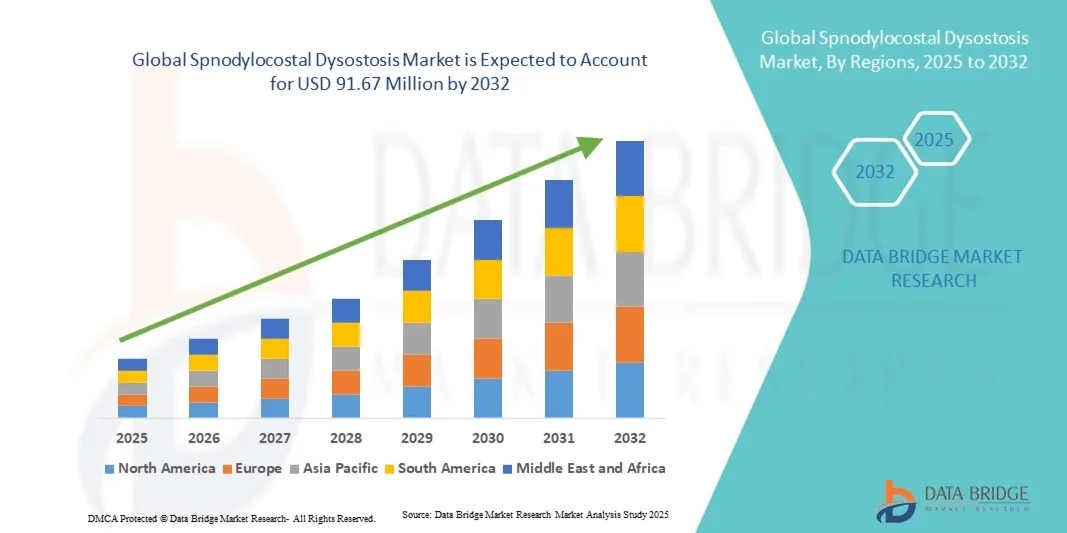
- The global spnodylocostal dysostosis market size was valued at USD 63.00 Million in 2024 and is expected to reach USD 91.67 Million by 2032, at a CAGR of 4.80% during the forecast period
- The market growth is largely fueled by increasing advancements in genetic diagnostics, molecular research, and prenatal screening technologies, which are enabling earlier and more accurate identification of spondylocostal dysostosis cases. Growing awareness among healthcare professionals and patients, coupled with improved accessibility to specialized genetic testing services, is driving the expansion of this market across developed and emerging regions
- Furthermore, rising research collaborations aimed at understanding the underlying gene mutations and the development of potential therapeutic interventions are creating new opportunities for innovation. Government initiatives supporting rare disease management, combined with expanding clinical trial activity for spinal and skeletal disorder treatments, are accelerating the adoption of spondylocostal dysostosis solutions, thereby significantly boosting the industry’s growth
Spnodylocostal Dysostosis Market Analysis
- Spondylocostal Dysostosis, a rare congenital disorder characterized by abnormal vertebral and rib development, is gaining increasing attention in the medical and genetic research community due to advancements in molecular diagnostics, next-generation sequencing, and prenatal screening. These technologies are enabling earlier and more precise diagnosis, significantly improving patient management and long-term outcomes
- The rising prevalence of rare genetic conditions, coupled with growing investments in rare disease research and improved healthcare infrastructure in emerging economies, is fueling market expansion. Enhanced awareness among clinicians, patient advocacy initiatives, and government programs supporting rare disease treatment and genetic testing are also contributing to sustained market growth worldwide
- North America dominated the spondylocostal dysostosis market with the largest revenue share of 42.8% in 2024, driven by advanced healthcare infrastructure, strong presence of genetic research institutions, and high adoption of next-generation sequencing technologies. The United States leads regional growth due to extensive newborn screening programs, increased funding for rare disease studies, and collaborations between biotechnology firms and research organizations for therapeutic development
- Asia-Pacific is expected to be the fastest-growing region in the spondylocostal dysostosis market during the forecast period, registering a CAGR from 2025 to 2032, due to rising awareness of rare disorders, improving access to specialized diagnostics, and growing government focus on healthcare modernization. Countries such as China, Japan, and India are witnessing accelerated investment in genomics and rare disease registries, which will continue to drive regional market expansion
- The Multigene Panel segment held the largest market share of 48.6% in 2024, owing to its ability to detect mutations in multiple genes simultaneously, including DLL3, LFNG, and HES7, which are commonly implicated in the disorder
Report Scope and Spnodylocostal Dysostosis Market Segmentation
|
Attributes |
Spnodylocostal Dysostosis Key Market Insights |
|
Segments Covered |
|
|
Countries Covered |
North America
Europe
Asia-Pacific
Middle East and Africa
South America
|
|
Key Market Players |
|
|
Market Opportunities |
|
|
Value Added Data Infosets |
In addition to the insights on market scenarios such as market value, growth rate, segmentation, geographical coverage, and major players, the market reports curated by the Data Bridge Market Research also include in-depth expert analysis, patient epidemiology, pipeline analysis, pricing analysis, and regulatory framework. |
Spnodylocostal Dysostosis Market Trends
Advancements in Genetic Research and Diagnostic Technologies
- A significant and accelerating trend in the global spondylocostal dysostosis (SCD) market is the growing integration of advanced genetic testing, next-generation sequencing (NGS), and molecular diagnostic tools, which have substantially improved the early and accurate identification of genetic mutations associated with the disorder. This technological progress is enhancing diagnostic precision and aiding in better patient management and counseling
- For instance, recent innovations in genomic sequencing platforms have enabled clinicians to detect pathogenic variants in genes such as DLL3, MESP2, HES7, LFNG, and TBX6, which are directly linked to the development of Spondylocostal Dysostosis. The introduction of rapid, cost-effective sequencing assays is facilitating broader accessibility of genetic testing across both clinical and research settings
- Advancements in molecular diagnostics are also supporting prenatal and neonatal screening programs, allowing healthcare providers to identify the disorder at an early stage and plan appropriate interventions. For instance, whole-exome sequencing and targeted gene panels are now routinely employed in specialized genetic centers for the detection of skeletal dysplasias, including SCD
- The seamless incorporation of genetic and imaging diagnostics—such as low-dose CT and MRI scans—has further improved the ability to assess vertebral and rib malformations associated with spondylocostal dysostosis. these integrated approaches are enabling clinicians to develop more personalized and effective care strategies for affected individuals
- This trend toward the use of advanced diagnostic tools, genetic research, and molecular profiling is fundamentally transforming the clinical landscape of rare congenital skeletal disorders. Consequently, biotechnology companies and research institutions are investing heavily in developing new diagnostic kits, clinical testing solutions, and genetic databases to support early detection and improve treatment outcomes for spondylocostal dysostosis
- The growing emphasis on genetic counseling, early diagnosis, and patient-specific management plans is expected to drive sustained growth in the spondylocostal dysostosis market across both developed and emerging regions
Spnodylocostal Dysostosis Market Dynamics
Driver
Growing Need for Early Diagnosis and Genetic Counseling
- The rising awareness of rare genetic disorders and the growing emphasis on early diagnosis are major drivers of the spondylocostal dysostosis market. Improved access to genetic testing and prenatal screening programs is enabling timely detection, which is essential for managing the progression of skeletal deformities
- For instance, in April 2024, several research collaborations were established between leading genetic laboratories and pediatric hospitals to enhance screening for rare congenital spine malformations. Such initiatives are expected to advance genetic understanding and drive innovation in diagnostic methodologies for spondylocostal dysostosis during the forecast period
- As healthcare systems increasingly focus on early-stage diagnosis and precision medicine, genetic testing services for disorders like SCD are witnessing rapid adoption. This rising demand for specialized testing, combined with the growing availability of advanced sequencing technologies, is strengthening market growth
- Furthermore, the increased availability of government and non-profit funding for rare disease research is facilitating the development of new diagnostic tools and improving patient access to genetic counseling services. The integration of these efforts supports not only diagnosis but also family planning and long-term clinical management of spondylocostal dysostosis
- The establishment of multidisciplinary clinics that combine genetic, orthopedic, and pediatric expertise is another contributing factor, as it enhances patient care coordination and clinical efficiency. The global trend toward precision medicine and targeted care is therefore propelling the adoption of diagnostic and counseling services related to SCD
Restraint/Challenge
Limited Treatment Options and High Diagnostic Costs
- Despite technological advancements, limited therapeutic options remain a major restraint for the Spondylocostal Dysostosis market. Current management strategies are primarily supportive and surgical, aimed at correcting spinal deformities and improving respiratory function, rather than addressing the underlying genetic causes
- The high cost of advanced genetic testing and the lack of standardized treatment protocols continue to pose barriers to widespread adoption, particularly in low- and middle-income countries. This limits early diagnosis and effective management of the disorder, especially in regions with limited healthcare infrastructure
- For instance, while the cost of next-generation sequencing has declined, the overall expenses for genetic counseling, confirmatory tests, and long-term orthopedic management remain substantial. As a result, some healthcare systems struggle to implement routine screening programs for rare skeletal conditions like SCD
- Addressing these challenges through greater public funding, insurance coverage, and collaboration between healthcare providers and diagnostic companies is crucial for ensuring equitable access to advanced testing and care. Industry players are also focusing on developing cost-efficient sequencing methods and simplified diagnostic kits to expand availability
- In addition, the scarcity of large-scale clinical studies and limited awareness among healthcare professionals about spondylocostal dysostosis hinder timely diagnosis and intervention. Strengthening medical education, enhancing research collaboration, and developing innovative treatment models are vital steps to overcome these constraints and ensure sustainable market growth
Spnodylocostal Dysostosis Market Scope
The market is segmented on the basis of symptoms, diagnosis, treatment, and end-users.
- By Symptoms
On the basis of symptoms, the Spondylocostal Dysostosis market is segmented into Multiple Segmentation Defects of the Vertebrae (M-SDV), Mild Degree of Scoliosis, Rib Abnormalities, Absence of Other Congenital Anomalies, and Others. The Multiple Segmentation Defects of the Vertebrae (M-SDV) segment dominated the largest market revenue share of 46.3% in 2024, primarily due to its high diagnostic incidence and direct association with core vertebral malformations. Increasing awareness of congenital spine disorders and the growing availability of early prenatal imaging techniques such as MRI and 3D ultrasound have accelerated detection rates. Hospitals and pediatric specialists are adopting multidisciplinary approaches that combine orthopedic, genetic, and radiological assessments to manage M-SDV effectively. Rising investments in rare disease research and the inclusion of M-SDV under congenital spine anomaly screening programs are supporting market expansion. The segment also benefits from better postnatal monitoring systems that help in long-term orthopedic management. Enhanced access to neonatal intensive care units (NICUs) and early surgical intervention in severe cases further consolidate its dominance. Increased publication of genetic research linking DLL3 and MESP2 mutations with M-SDV continues to drive diagnostic accuracy and treatment advancements.
The Mild Degree of Scoliosis segment is expected to witness the fastest CAGR of 21.5% from 2025 to 2032, driven by the growing incidence of spinal curvature deformities linked to vertebral malformation. Rising adoption of school-based spinal screening programs and the availability of non-invasive bracing techniques are expanding early treatment opportunities. In addition, advanced orthopedic tools for curvature measurement, combined with AI-based imaging interpretation, enable precise monitoring. Growing awareness among parents regarding early posture correction and the expansion of pediatric physiotherapy centers support the segment’s growth. The increasing use of minimally invasive corrective surgeries and genetic counseling for hereditary scoliosis cases also contribute to its upward trajectory.
- By Diagnosis
On the basis of diagnosis, the Spondylocostal Dysostosis market is segmented into Multigene Panel, Serial Single-Gene Testing, and Genomic Testing. The Multigene Panel segment held the largest market share of 48.6% in 2024, owing to its ability to detect mutations in multiple genes simultaneously, including DLL3, LFNG, and HES7, which are commonly implicated in the disorder. This method offers superior diagnostic yield compared to single-gene testing and has become the standard approach in major clinical laboratories. The integration of next-generation sequencing (NGS) platforms has reduced analysis time while improving sensitivity and accuracy. Hospitals and specialty clinics increasingly prefer multigene panels for their cost efficiency and comprehensive coverage. Collaborative partnerships between genetic research institutes and diagnostic firms are also propelling adoption. Growing awareness about prenatal testing for congenital disorders and the inclusion of genetic panels in government-sponsored health programs further enhance market growth.
The Genomic Testing segment is projected to grow at the fastest CAGR of 22.1% from 2025 to 2032, propelled by rapid advancements in whole-exome and whole-genome sequencing technologies. These tests provide deeper insights into gene interactions and novel variant discovery, supporting precision diagnosis. Decreasing sequencing costs, coupled with improved bioinformatics tools, are making genomic testing more accessible to healthcare providers. The growing use of personalized medicine frameworks and the expansion of rare disease genomic databases are major growth drivers. Moreover, increased government funding for genetic infrastructure development and the rising demand for definitive diagnostic results continue to accelerate adoption.
- By Treatment
On the basis of treatment, the Spondylocostal Dysostosis market is segmented into Genetic Counseling, Surgeries, and Drugs. The Genetic Counseling segment dominated the largest revenue share of 42.9% in 2024, primarily due to the high demand for risk assessment and family planning guidance in genetic disorders. Counseling services help families understand inheritance patterns, recurrence risks, and prenatal options. Integration of tele-genetic counseling platforms has improved accessibility, particularly in developing regions. Hospitals are increasingly embedding counseling units alongside diagnostic labs to ensure seamless patient education and care continuity. Rising awareness initiatives from health organizations and rare disease foundations are boosting patient participation in counseling sessions. Moreover, the combination of genetic counseling with genomic test results allows for personalized guidance, improving patient confidence and outcomes. Growing collaborations between healthcare providers and research institutes further strengthen this segment’s dominance.
The Surgeries segment is expected to witness the fastest CAGR of 20.4% from 2025 to 2032, driven by technological advancements in orthopedic and spinal correction techniques. The adoption of 3D-printed spinal implants and image-guided navigation systems enhances procedural precision. Increasing availability of pediatric spine specialists and improvements in postoperative rehabilitation have contributed to higher success rates. Rising healthcare expenditure in developing nations and government support for congenital spine correction surgeries are fueling segment growth. Moreover, innovations such as expandable growing rods and robotic-assisted surgeries are revolutionizing the treatment landscape, enabling better long-term outcomes in children with severe deformities.
- By End-Users
On the basis of end-users, the Spondylocostal Dysostosis market is segmented into Hospitals, Homecare, and Specialty Clinics. The Hospitals segment accounted for the largest market share of 55.7% in 2024, attributed to their integrated infrastructure for diagnosis, treatment, and genetic management of rare congenital disorders. Hospitals house multidisciplinary teams consisting of orthopedic surgeons, geneticists, radiologists, and pediatric specialists, ensuring comprehensive care delivery. Advanced diagnostic tools such as high-resolution CT scanners and molecular diagnostic laboratories enable accurate detection and monitoring. Increased funding from government health programs for rare disease research and hospital infrastructure upgrades continues to drive segment growth. Hospitals also act as major referral centers for complex spinal deformity cases, further reinforcing their dominance.
The Specialty Clinics segment is projected to grow at the fastest CAGR of 18.9% from 2025 to 2032, driven by the increasing establishment of dedicated genetic and orthopedic clinics worldwide. These centers specialize in individualized care pathways and provide long-term patient management services. The availability of genetic counseling, diagnostic testing, and post-surgical follow-up under one roof enhances patient convenience. Expansion of telehealth-enabled specialty practices and collaborations with academic research centers are also accelerating growth. Rising patient preference for targeted and less hospital-centric care models strengthens this segment’s trajectory through 2032.
Spnodylocostal Dysostosis Market Regional Analysis
- North America dominated the spondylocostal dysostosis market with the largest revenue share of 42.8% in 2024, driven by advanced healthcare infrastructure, a strong network of genetic research institutions, and widespread adoption of next-generation sequencing (NGS) technologies
- The region’s early implementation of comprehensive newborn screening programs for rare congenital disorders plays a critical role in early diagnosis and intervention. In addition, collaborations between biotechnology companies, academic institutions, and government agencies have accelerated the development of innovative diagnostic tools and therapeutic approaches for congenital vertebral malformations
- High healthcare expenditure, coupled with favorable reimbursement policies for genetic testing, further strengthens market growth. Growing awareness among pediatricians and families regarding rare genetic syndromes, combined with the presence of leading molecular diagnostics providers, ensures North America remains the leading contributor to global market revenue
U.S. Spondylocostal Dysostosis Market Insight
The U.S. spondylocostal dysostosis market captured the largest share within North America in 2024, driven by extensive investment in rare disease genomics and precision medicine initiatives. The country benefits from well-established infrastructure supporting genetic counseling, advanced imaging, and early surgical correction of congenital deformities. Federal programs such as the National Institutes of Health’s (NIH) Rare Diseases Clinical Research Network (RDCRN) have expanded the scope of clinical trials and patient registries related to vertebral segmentation defects. In addition, the growing adoption of NGS and exome sequencing for pediatric diagnostics enhances diagnostic accuracy and turnaround time. The presence of leading genetic laboratories, robust data-sharing frameworks, and cross-institutional collaborations continue to foster innovation. Increased focus on personalized therapies and patient-centric care models will further strengthen the U.S. position in the global market through 2032.
Europe Spondylocostal Dysostosis Market Insight
The Europe spondylocostal dysostosis market is projected to grow steadily throughout the forecast period, supported by strong healthcare policies, government-backed rare disease frameworks, and widespread adoption of advanced diagnostic technologies. European nations have made significant progress in integrating rare disease registries into their national healthcare systems, promoting early identification and management. Growing collaborations between universities, healthcare centers, and biotechnology firms are leading to improved treatment approaches. High research funding, especially in Western Europe, for genetic sequencing and orthogenetic disorder studies continues to drive progress. Furthermore, awareness campaigns and genetic counseling programs are improving patient access to specialized care.
U.K. Spondylocostal Dysostosis Market Insight
The U.K. spondylocostal dysostosis market is anticipated to expand at a notable CAGR during the forecast period, driven by the increasing focus on genomic healthcare and nationwide efforts such as the 100,000 Genomes Project. The U.K. maintains one of the most comprehensive rare disease frameworks in Europe, emphasizing early screening, accurate diagnosis, and patient support systems. Continuous investment in public healthcare genomics and partnerships between NHS trusts and biotechnology firms are improving clinical outcomes for patients with congenital spine disorders. The country’s robust clinical trial infrastructure and genetic data analytics capabilities also reinforce market growth prospects.
Germany Spondylocostal Dysostosis Market Insight
The Germany spondylocostal dysostosis market is expected to grow at a steady rate during the forecast period, bolstered by its highly developed healthcare system, government funding for biomedical research, and strong industry-academia collaboration in the field of rare diseases. Germany’s emphasis on molecular diagnostics and personalized treatment solutions enhances early intervention rates for congenital vertebral abnormalities. The presence of advanced research centers specializing in genetics and pediatric orthopedics, coupled with rising public health awareness, continues to drive growth. Moreover, the integration of digital health platforms for remote genetic counseling supports patient access and long-term disease monitoring.
Asia-Pacific Spondylocostal Dysostosis Market Insight
The Asia-Pacific spondylocostal dysostosis market is projected to register the fastest CAGR from 2025 to 2032, driven by rising awareness of rare genetic disorders, expanding access to specialized diagnostic facilities, and government efforts to modernize healthcare infrastructure. Rapid advancements in genomic research and a surge in public-private collaborations for rare disease mapping are fueling regional growth. Emerging economies such as China, Japan, and India are investing heavily in biotechnology, clinical genetics, and newborn screening initiatives. In addition, improved healthcare funding and the introduction of regional rare disease registries are enhancing diagnostic capabilities. Increasing demand for genetic counseling, combined with the affordability of sequencing technologies, positions the region as a major growth frontier for Spondylocostal Dysostosis research and care delivery.
Japan Spondylocostal Dysostosis Market Insight
The Japan spondylocostal dysostosis market is experiencing significant momentum due to the nation’s emphasis on advanced genetic medicine, early screening, and precision healthcare. Japan’s Ministry of Health, Labour and Welfare has expanded rare disease support programs and encouraged integration of genetic testing into public hospitals. The increasing number of clinical studies focusing on congenital spine and rib disorders, combined with a strong innovation ecosystem, supports continuous market expansion. In addition, collaborations between universities and biotechnology firms are facilitating the development of localized diagnostic kits and new treatment methodologies.
China Spondylocostal Dysostosis Market Insight
The China spondylocostal dysostosis market accounted for the largest share within Asia-Pacific in 2024, driven by the nation’s rapidly growing biotechnology sector, government investment in genomics, and expanding middle-class access to healthcare. Large-scale national programs focusing on genome sequencing and rare disease registries have significantly improved awareness and early diagnosis rates. Domestic manufacturers are developing cost-effective molecular testing solutions, improving accessibility across tier-2 and tier-3 cities. The country’s “Healthy China 2030” initiative further supports long-term healthcare modernization, emphasizing early detection and treatment of congenital disorders. Growing partnerships between hospitals and genetic research centers continue to enhance diagnostic precision and treatment outcomes.
Spnodylocostal Dysostosis Market Share
The Spnodylocostal Dysostosis industry is primarily led by well-established companies, including:
- Quest Diagnostics Inc. (U.S.)
- Centogene N.V. (Germany)
- Invitae Corporation (U.S.)
- 3billion Inc. (South Korea)
- Arup Laboratories (U.S.)
- Eurofins Scientific (Luxembourg)
- Ambry Genetics (U.S.)
- PerkinElmer, Inc. (U.S.)
- Macrogen, Inc. (South Korea)
- Baylor Genetics (U.S.)
- Color Genomics, Inc. (U.S.)
- PreventionGenetics (U.S.)
- Myriad Genetics, Inc. (U.S.)
- Laboratory Corporation of America Holdings (U.S.)
- Opko Health, Inc. (U.S.)
Latest Developments in Global Spnodylocostal Dysostosis Market
- In November 2022, a comprehensive mini-review published in Frontiers in Genetics provided updated insights into the molecular genetics of SCD (covering genes such as DLL3, MESP2, LFNG, HES7, TBX6), and recommended broadened use of multigene panels and next-generation sequencing for improved diagnosis
- In February 2023, a study published in Molecular Syndromology reported the identification of a novel homozygous nonsense variant in the DLL3 gene (c.535G>T; p.Glu179Ter) in a consanguineous Pakistani family, enhancing the mutation database for SCD and improving genetic counseling capabilities
- In October 2024, a research paper introduced a novel homozygous splice variant (c.43-9T>A) in the HES7 gene in a Vietnamese SCDO4 patient, detected via whole-exome sequencing, expanding the spectrum of causative genes for SCD
- In July 2024, a case-report detailed the co-occurrence of SCD with a type II split-cord malformation in a patient, emphasizing the need for combined spinal and rib imaging in complex congenital syndromes and influencing diagnostic protocols

- Interactive Data Analysis Dashboard
- Company Analysis Dashboard for high growth potential opportunities
- Research Analyst Access for customization & queries
- Competitor Analysis with Interactive dashboard
- Latest News, Updates & Trend analysis
- Harness the Power of Benchmark Analysis for Comprehensive Competitor Tracking
Data collection and base year analysis are done using data collection modules with large sample sizes. The stage includes obtaining market information or related data through various sources and strategies. It includes examining and planning all the data acquired from the past in advance. It likewise envelops the examination of information inconsistencies seen across different information sources. The market data is analysed and estimated using market statistical and coherent models. Also, market share analysis and key trend analysis are the major success factors in the market report. To know more, please request an analyst call or drop down your inquiry.
The key research methodology used by DBMR research team is data triangulation which involves data mining, analysis of the impact of data variables on the market and primary (industry expert) validation. Data models include Vendor Positioning Grid, Market Time Line Analysis, Market Overview and Guide, Company Positioning Grid, Patent Analysis, Pricing Analysis, Company Market Share Analysis, Standards of Measurement, Global versus Regional and Vendor Share Analysis. To know more about the research methodology, drop in an inquiry to speak to our industry experts.
Data Bridge Market Research is a leader in advanced formative research. We take pride in servicing our existing and new customers with data and analysis that match and suits their goal. The report can be customized to include price trend analysis of target brands understanding the market for additional countries (ask for the list of countries), clinical trial results data, literature review, refurbished market and product base analysis. Market analysis of target competitors can be analyzed from technology-based analysis to market portfolio strategies. We can add as many competitors that you require data about in the format and data style you are looking for. Our team of analysts can also provide you data in crude raw excel files pivot tables (Fact book) or can assist you in creating presentations from the data sets available in the report.












