


Stasis Dermatitis Market Size
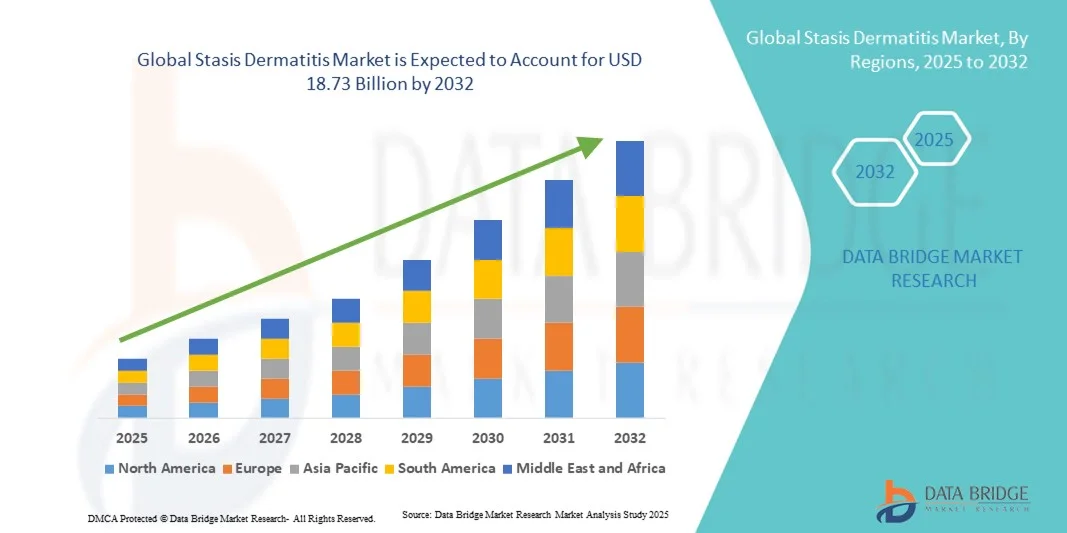
- The global stasis dermatitis market size was valued at USD 12.78 billion in 2024 and is expected to reach USD 18.73 billion by 2032, at a CAGR of 4.90% during the forecast period
- The market growth is largely fueled by the rising prevalence of chronic venous insufficiency and related dermatological conditions, combined with increasing awareness of early diagnosis and treatment options among patients and healthcare providers
- Furthermore, growing demand for effective topical and systemic treatment options, coupled with advances in dermatology therapeutics and patient-friendly formulations, is positioning stasis dermatitis treatments as an essential component of dermatological care. These converging factors are accelerating the adoption of stasis dermatitis solutions, thereby significantly boosting the industry's growth
Stasis Dermatitis Market Analysis
- Stasis dermatitis, a chronic inflammatory skin condition primarily affecting the lower extremities due to venous insufficiency, is increasingly recognized as a significant dermatological concern in both outpatient and hospital settings due to its impact on quality of life, susceptibility to infection, and long-term management challenges
- The escalating demand for effective stasis dermatitis treatments is primarily fueled by the rising prevalence of chronic venous diseases, increasing awareness of early intervention, and growing patient preference for advanced topical and systemic therapies
- North America dominated the stasis dermatitis market with the largest revenue share of 39.6% in 2024, characterized by a high geriatric population, advanced healthcare infrastructure, and a strong presence of key pharmaceutical and dermatology companies, with the U.S. experiencing substantial growth in treatment adoption, driven by innovations in topical corticosteroids, compression therapies, and patient-centric care programs
- Asia-Pacific is expected to be the fastest growing region in the stasis dermatitis market during the forecast period due to increasing incidence of chronic venous insufficiency, expanding healthcare access, and rising awareness of dermatological care in emerging economies
- Corticosteroids segment dominated the stasis dermatitis market with a market share of 45.8% in 2024, driven by their established efficacy, ease of application, and wide acceptance among dermatologists and patients for symptom management and inflammation control
Report Scope and Stasis Dermatitis Market Segmentation
|
Attributes |
Stasis Dermatitis Key Market Insights |
|
Segments Covered |
|
|
Countries Covered |
North America
Europe
Asia-Pacific
Middle East and Africa
South America
|
|
Key Market Players |
|
|
Market Opportunities |
|
|
Value Added Data Infosets |
In addition to the insights on market scenarios such as market value, growth rate, segmentation, geographical coverage, and major players, the market reports curated by the Data Bridge Market Research also include in-depth expert analysis, patient epidemiology, pipeline analysis, pricing analysis, and regulatory framework |
Stasis Dermatitis Market Trends
Advanced Topical and Systemic Therapy Integration
- A significant and accelerating trend in the global stasis dermatitis market is the increasing integration of advanced topical formulations and systemic therapies, enhancing treatment efficacy and patient adherence for chronic venous disease-related skin conditions
- For instance, the combination of corticosteroids with emollients or bioactive compounds in products such as Venoclear Topical Gel allows targeted relief of inflammation while promoting skin barrier repair in affected lower limbs
- Integration of novel therapies, such as nanoparticle-based delivery systems, enables improved drug penetration and sustained release, reducing the frequency of application and enhancing patient compliance. For instance, some proprietary formulations use liposomal corticosteroids for deeper dermal absorption and more effective inflammation control
- The seamless adoption of combination treatment regimens with compression therapy facilitates comprehensive care, improving both cosmetic outcomes and clinical resolution, while simplifying management for patients with chronic stasis dermatitis
- Personalized medicine approaches, including gene-based and biomarker-guided therapies, are emerging to target high-risk patients and prevent recurrence. For instance, some pharmaceutical pipelines are exploring patient-specific anti-inflammatory formulations based on venous disease severity
- This trend towards more effective, patient-friendly, and multi-modal treatment strategies is reshaping clinician and patient expectations for stasis dermatitis care. Consequently, companies such as Galderma and Pfizer are developing formulations combining anti-inflammatory and skin barrier restoration therapies for optimized outcomes
- The demand for integrated treatment options that combine efficacy with ease of use is growing rapidly across both outpatient clinics and hospital dermatology units, as patients increasingly prioritize treatments that minimize recurrence and improve quality of life
Stasis Dermatitis Market Dynamics
Driver
Increasing Prevalence of Chronic Venous Disorders and Awareness
- The rising prevalence of chronic venous insufficiency and related dermatological complications, coupled with increasing awareness of early diagnosis and treatment, is a significant driver for the heightened demand for stasis dermatitis therapies
- For instance, in March 2024, Pfizer announced the expansion of its dermatology portfolio with the introduction of a combination corticosteroid and emollient cream, targeting chronic venous disease-related skin disorders, aiming to improve patient outcomes
- As healthcare providers and patients become more aware of potential complications such as ulcerations and infections, stasis dermatitis treatments offer targeted management, reducing progression and improving quality of life
- Furthermore, the growing adoption of multi-modal treatment strategies, including compression therapy and topical corticosteroids, is making stasis dermatitis care more standardized and effective across outpatient and hospital settings
- Expanding partnerships between dermatology clinics and pharmaceutical companies for co-developed treatment programs are boosting access and adoption. For instance, Galderma has collaborated with regional hospitals to provide combined therapy and patient education programs
- Rising investments in R&D for novel formulations and delivery systems are accelerating product launches and expanding treatment options. For instance, some companies are testing polymer-based sustained-release corticosteroid creams to improve adherence and outcomes
Restraint/Challenge
Side Effects and Regulatory Compliance Hurdle
- Concerns surrounding potential side effects of long-term corticosteroid use, as well as regulatory compliance for novel drug formulations, pose a significant challenge to broader market penetration
- For instance, reports of skin thinning and irritation from prolonged topical corticosteroid use have made some patients hesitant to adhere to treatment regimens without close medical supervision
- Addressing these safety concerns through controlled-release formulations, patient education, and rigorous regulatory approval is crucial for building trust and adoption. Companies such as Galderma and Pfizer emphasize safety data and dermatologist-guided usage instructions in marketing to reassure patients
- In addition, the relatively high cost of advanced topical or combination therapies compared to generic options can be a barrier to adoption, particularly in developing regions or for patients without insurance coverage. While generic corticosteroids remain widely used, novel multi-modal therapies often come at a premium
- Overcoming these challenges through safer formulations, patient education programs, and broader accessibility will be vital for sustained market growth
- Inconsistent treatment adherence and lack of awareness about proper management among patients with chronic venous disease further restrict market growth. For instance, surveys show many patients discontinue therapy prematurely due to perceived slow results
Stasis Dermatitis Market Scope
The market is segmented on the basis of treatment, route of administration, end-users, and distribution channels.
- By Treatment
On the basis of treatment, the stasis dermatitis market is segmented into corticosteroids, antihistamines, antibiotics, and others. The corticosteroids segment dominated the market with the largest market revenue share of 45.8% in 2024, driven by their established efficacy in reducing inflammation and relieving itchiness associated with stasis dermatitis. Patients and dermatologists often prioritize corticosteroids for their rapid symptomatic relief and proven track record in chronic venous disease-related skin conditions. The market also sees strong demand for corticosteroids due to their wide availability in topical and combination formulations, ease of application, and compatibility with compression therapy regimens. Continuous innovations in controlled-release and bioactive corticosteroid creams further enhance patient adherence and outcomes. Furthermore, corticosteroids are widely recommended in both outpatient clinics and hospital dermatology units, contributing to sustained market dominance.
The antihistamines segment is anticipated to witness the fastest growth rate of 18.6% from 2025 to 2032, fueled by increasing recognition of histamine-mediated itch as a key symptom in stasis dermatitis. Antihistamines provide a non-steroidal alternative for symptom relief, making them suitable for patients requiring long-term management or those with corticosteroid sensitivity. Their oral and topical forms allow flexible administration, increasing patient compliance and comfort. Growing awareness of antihistamines’ role in combination therapy and supportive care drives adoption in outpatient and hospital settings. Rising investment in novel antihistamine formulations that minimize side effects and enhance skin hydration also contributes to market growth.
- By Route of Administration
On the basis of route of administration, the market is segmented into oral, parenteral, topical, and others. The topical segment dominated the market with the largest revenue share in 2024 due to its ease of application directly to affected areas, providing localized relief while minimizing systemic exposure. Patients often prefer topical therapies for their convenience, immediate effect on inflammation, and integration with compression therapy. The availability of over-the-counter and prescription topical formulations further strengthens its market position. Topical delivery allows dermatologists to customize treatment strength, frequency, and combination with moisturizers or barrier repair agents. In addition, topical therapy adoption is high in both outpatient clinics and home care settings, reinforcing its dominance.
The oral segment is expected to witness the fastest growth from 2025 to 2032, driven by rising demand for systemic treatments in moderate-to-severe cases or in patients with multiple comorbidities. Oral therapies such as antihistamines and systemic antibiotics provide broader relief and are often prescribed in combination with topical treatments. Increasing awareness of oral therapy benefits among healthcare providers and patients, along with innovations in patient-friendly formulations, contributes to rapid adoption. The convenience of oral medication in long-term management plans and its integration with telemedicine monitoring further accelerates growth.
- By End-Users
On the basis of end-users, the market is segmented into clinics, hospitals, dermatology centers, and others. The hospitals segment dominated the market in 2024, owing to the availability of specialized dermatology departments, advanced treatment modalities, and comprehensive patient care for chronic stasis dermatitis. Hospitals offer multi-modal care including topical, systemic, and compression therapy in a structured environment, attracting complex cases. The integration of patient education and follow-up programs also contributes to higher adoption of therapies in hospital settings. Moreover, hospitals provide access to newer and combination treatments often unavailable in smaller clinics, reinforcing their dominant position.
The dermatology centers segment is expected to witness the fastest growth from 2025 to 2032, driven by rising patient preference for specialized and personalized care. Dermatology centers offer focused expertise, rapid diagnosis, and tailored treatment plans, improving patient adherence and outcomes. The growing number of standalone dermatology clinics, coupled with awareness campaigns on venous disease-related skin disorders, is fueling adoption. In addition, dermatology centers are increasingly incorporating digital tools, such as teledermatology and remote monitoring, enhancing accessibility and convenience.
- By Distribution Channel
On the basis of distribution channel, the market is segmented into hospital pharmacy, retail pharmacy, online pharmacy, and others. The hospital pharmacy segment dominated the market in 2024, driven by direct access to prescribed treatments for stasis dermatitis during patient visits. Hospital pharmacies ensure availability of specialized formulations and combination therapies, enhancing convenience for patients receiving multi-modal care. The presence of trained pharmacists to counsel on dosage, application, and safety contributes to higher trust and adherence. Integration with hospital record systems also ensures better monitoring of patient treatment history and follow-ups, reinforcing the segment’s dominant share.
The online pharmacy segment is expected to witness the fastest growth from 2025 to 2032, fueled by increasing e-commerce adoption, telemedicine expansion, and convenience in home delivery of prescription and OTC stasis dermatitis products. Online pharmacies provide access to hard-to-find formulations and allow price comparison, driving consumer preference. Growth is further supported by digital marketing, subscription services for chronic care, and increased patient confidence in secure delivery and quality assurance. The convenience of doorstep delivery and discreet purchase also accelerates adoption, particularly in urban and semi-urban regions.
Stasis Dermatitis Market Regional Analysis
- North America dominated the stasis dermatitis market with the largest revenue share of 39.6% in 2024, characterized by a high geriatric population, advanced healthcare infrastructure, and a strong presence of key pharmaceutical and dermatology companies, with the U.S. experiencing substantial growth in treatment adoption, driven by innovations in topical corticosteroids, compression therapies, and patient-centric care programs
- Patients and healthcare providers in the region prioritize early diagnosis, access to specialized dermatology services, and multi-modal treatment approaches combining topical, systemic, and compression therapies
- This widespread adoption is further supported by strong insurance coverage, high healthcare spending, and the presence of key pharmaceutical and dermatology companies, establishing stasis dermatitis treatments as the preferred solution for both outpatient clinics and hospital care
U.S. Stasis Dermatitis Market Insight
The U.S. stasis dermatitis market captured the largest revenue share of 39% in 2024 within North America, fueled by the high prevalence of chronic venous insufficiency and growing awareness of early diagnosis and treatment. Patients are increasingly prioritizing effective, multi-modal therapies combining topical corticosteroids, systemic antihistamines, and compression therapy. The growing adoption of outpatient dermatology clinics, teledermatology consultations, and patient education programs further propels the market. Moreover, the availability of advanced, physician-recommended topical and combination formulations is significantly contributing to the market's expansion.
Europe Stasis Dermatitis Market Insight
The Europe stasis dermatitis market is projected to expand at a substantial CAGR throughout the forecast period, primarily driven by well-established healthcare systems and increasing awareness of chronic venous disease-related skin disorders. Rising urbanization and the need for early intervention and treatment adherence are fostering the adoption of advanced therapies. European patients are also drawn to convenient, effective, and non-invasive treatment options. The region is experiencing significant growth across hospitals, dermatology centers, and clinics, with therapies being incorporated into both standard care and specialized treatment programs.
U.K. Stasis Dermatitis Market Insight
The U.K. stasis dermatitis market is anticipated to grow at a noteworthy CAGR during the forecast period, driven by the rising prevalence of venous insufficiency, patient education initiatives, and demand for better dermatological care. Concerns regarding skin ulceration, infections, and recurrence are encouraging both patients and healthcare providers to adopt combination treatment regimens. The UK’s advanced healthcare infrastructure, alongside strong pharmaceutical presence and telemedicine adoption, is expected to continue to stimulate market growth.
Germany Stasis Dermatitis Market Insight
The Germany stasis dermatitis market is expected to expand at a considerable CAGR during the forecast period, fueled by increasing awareness of chronic venous disease management and adoption of technologically advanced treatment solutions. Germany’s well-developed healthcare infrastructure and emphasis on clinical guidelines promote the use of standardized treatment protocols in hospitals and dermatology centers. The integration of topical and systemic therapies with compression devices is becoming increasingly prevalent, with a strong preference for evidence-based, patient-centric approaches aligning with local healthcare practices.
Asia-Pacific Stasis Dermatitis Market Insight
The Asia-Pacific stasis dermatitis market is poised to grow at the fastest CAGR of 21% during the forecast period of 2025 to 2032, driven by rising incidence of chronic venous insufficiency, expanding healthcare access, and increasing awareness of dermatological care in countries such as China, Japan, and India. The region's growing inclination toward specialized dermatology clinics, supported by telemedicine and e-health initiatives, is driving the adoption of stasis dermatitis therapies. Furthermore, as APAC develops as a hub for pharmaceutical production, the affordability and accessibility of advanced treatment options are expanding to a wider patient population.
Japan Stasis Dermatitis Market Insight
The Japan stasis dermatitis market is gaining momentum due to the country’s high awareness of healthcare, growing geriatric population, and focus on preventive dermatology. Patients and clinicians prioritize effective topical and systemic treatments for chronic venous disease-related skin conditions. The adoption of teledermatology, patient monitoring platforms, and integrated care programs is fueling growth. Moreover, Japan's aging population is expected to increase demand for easier-to-apply, clinically effective treatment options in both outpatient and hospital settings.
India Stasis Dermatitis Market Insight
The India stasis dermatitis market accounted for the largest revenue share in Asia Pacific in 2024, attributed to increasing prevalence of venous insufficiency, rising healthcare awareness, and expanding dermatology services. India stands as one of the fastest-growing markets for chronic skin disorder management, with therapies increasingly adopted across clinics, hospitals, and dermatology centers. Government health initiatives, growing middle-class population, and improving healthcare infrastructure are key factors propelling the market in India.
Stasis Dermatitis Market Share
The Stasis Dermatitis industry is primarily led by well-established companies, including:
- Actiza Pharmaceutical Private Limited (India)
- Teva Pharmaceuticals USA, Inc. (U.S.)
- Glenmark Pharmaceutical Inc. (U.S.)
- Perrigo Company plc (Ireland)
- Pfizer Inc. (U.S.)
- Astellas Pharma Inc. (U.S.)
- Sandoz Group AG (Switzerland)
- Veloxis Pharmaceuticals, Inc. (U.S.)
- GIST LIFE PHARMACEUTICALS (U.S.)
- LEXICARE PHARMA PVT. LTD. (India)
- Bayer AG (Germany)
- Johnson & Johnson Services, Inc. (U.S.)
- Lannett (U.S.)
- Viatris Inc. (U.S.)
- Sun Pharmaceutical Industries Ltd (India)
- Apotex Inc. (Canada)
- F. Hoffmann-La Roche Ltd. (Switzerland)
- Sanofi (France)
- GSK plc (U.K.)
What are the Recent Developments in Global Stasis Dermatitis Market?
- In September 2025, the U.S. Food and Drug Administration (FDA) approved Incyte's Opzelura (ruxolitinib) cream for the treatment of atopic dermatitis in pediatric patients aged 2 to 11. This approval extends the use of Opzelura, which became the first topical Janus kinase (JAK) inhibitor approved in 2021 for individuals aged 12 and older. The decision was based on successful late-stage trial results showing better efficacy than a non-medicated cream. Eczema, or atopic dermatitis, affects about 2–3 million children aged 2–11 and over 21 million older individuals in the U.S.
- In July 2025, the U.S. Food and Drug Administration (FDA) approved delgocitinib (Anzupgo), a topical Janus kinase (JAK) inhibitor, for the treatment of chronic hand eczema in adults. This approval marks a significant advancement in the treatment options available for chronic hand eczema
- In May 2025, A study published in May 2025 explored the use of intermittent pneumatic impulse compression as an adjunct therapy for stasis dermatitis. The proof-of-concept study provided evidence supporting this approach, demonstrating significant edema reduction and enhanced oxygenation. The findings suggest potential benefits in managing stasis dermatitis symptoms
- In December 2024, the U.S. Food and Drug Administration (FDA) approved pimecrolimus cream for the treatment of mild-to-moderate atopic dermatitis. Pimecrolimus is a nonsteroidal topical medication that offers an alternative for patients seeking steroid-free options for managing atopic dermatitis
- In August 2024, a study published in the Journal of the American Academy of Dermatology reported that crisaborole ointment, 2%, significantly improved stasis dermatitis compared to a vehicle and was well tolerated. This innovative fully decentralized study successfully evaluated the efficacy and safety of crisaborole in treating stasis dermatitis

- Interactive Data Analysis Dashboard
- Company Analysis Dashboard for high growth potential opportunities
- Research Analyst Access for customization & queries
- Competitor Analysis with Interactive dashboard
- Latest News, Updates & Trend analysis
- Harness the Power of Benchmark Analysis for Comprehensive Competitor Tracking
Data collection and base year analysis are done using data collection modules with large sample sizes. The stage includes obtaining market information or related data through various sources and strategies. It includes examining and planning all the data acquired from the past in advance. It likewise envelops the examination of information inconsistencies seen across different information sources. The market data is analysed and estimated using market statistical and coherent models. Also, market share analysis and key trend analysis are the major success factors in the market report. To know more, please request an analyst call or drop down your inquiry.
The key research methodology used by DBMR research team is data triangulation which involves data mining, analysis of the impact of data variables on the market and primary (industry expert) validation. Data models include Vendor Positioning Grid, Market Time Line Analysis, Market Overview and Guide, Company Positioning Grid, Patent Analysis, Pricing Analysis, Company Market Share Analysis, Standards of Measurement, Global versus Regional and Vendor Share Analysis. To know more about the research methodology, drop in an inquiry to speak to our industry experts.
Data Bridge Market Research is a leader in advanced formative research. We take pride in servicing our existing and new customers with data and analysis that match and suits their goal. The report can be customized to include price trend analysis of target brands understanding the market for additional countries (ask for the list of countries), clinical trial results data, literature review, refurbished market and product base analysis. Market analysis of target competitors can be analyzed from technology-based analysis to market portfolio strategies. We can add as many competitors that you require data about in the format and data style you are looking for. Our team of analysts can also provide you data in crude raw excel files pivot tables (Fact book) or can assist you in creating presentations from the data sets available in the report.












