


Strabismus Market Size
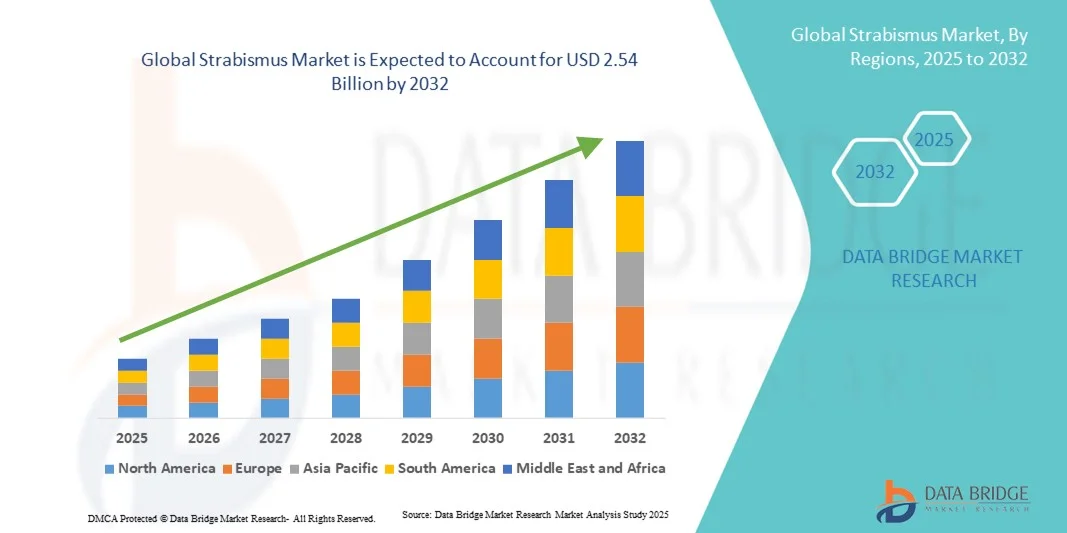
- The global strabismus market size was valued at USD 1.56 billion in 2024 and is expected to reach USD 2.54 billion by 2032, at a CAGR of 6.30% during the forecast period
- The market growth is largely fueled by advancements in diagnostic and therapeutic devices, increasing awareness about early diagnosis, and rising demand for non-surgical treatment options
- Furthermore, growing preference for non-invasive treatments and expanding healthcare access in emerging regions are establishing advanced strabismus treatment solutions as the choice for patients and practitioners. These converging factors are accelerating the uptake of strabismus treatments, thereby significantly boosting the industry's growth
Strabismus Market Analysis
- Strabismus treatments, including surgical and non-surgical interventions, are increasingly vital components of ophthalmic care due to their role in correcting eye misalignment, improving vision, and enhancing patients’ quality of life in both pediatric and adult population
- The escalating demand for strabismus treatments is primarily fueled by growing awareness about early diagnosis, rising prevalence of ocular disorders, and increasing preference for effective, patient-friendly therapeutic solutions
- North America dominated the strabismus market with the largest revenue share of 39% in 2024, characterized by advanced healthcare infrastructure, high awareness among caregivers, and a strong presence of leading ophthalmic device manufacturers, with the U.S. witnessing substantial growth in treatment adoption through specialized clinics and pediatric ophthalmology centers
- Asia-Pacific is expected to be the fastest growing region in the strabismus market during the forecast period due to improving healthcare access, increasing awareness programs, and expanding availability of affordable treatment options
- Eye Muscle Surgery segment dominated the strabismus market with a market share of 43.2% in 2024, driven by its high efficacy in correcting severe eye misalignment, widespread adoption among ophthalmologists, and growing patient preference for long-term solutions
Report Scope and Strabismus Market Segmentation
|
Attributes |
Strabismus Key Market Insights |
|
Segments Covered |
|
|
Countries Covered |
North America
Europe
Asia-Pacific
Middle East and Africa
South America
|
|
Key Market Players |
|
|
Market Opportunities |
|
|
Value Added Data Infosets |
In addition to the insights on market scenarios such as market value, growth rate, segmentation, geographical coverage, and major players, the market reports curated by the Data Bridge Market Research also include in-depth expert analysis, patient epidemiology, pipeline analysis, pricing analysis, and regulatory framework |
Strabismus Market Trends
Advancements in Minimally Invasive and Non-Surgical Treatments
- A significant and accelerating trend in the global strabismus market is the increasing development and adoption of minimally invasive procedures and non-surgical therapies such as vision therapy, prism lenses, and botulinum toxin injections, enhancing patient comfort and compliance
- For instance, Vision Therapy programs such as those offered by Bernell Corporation allow patients, particularly children, to improve eye coordination and alignment without undergoing surgery
- These advanced treatment options enable ophthalmologists to customize care based on patient needs, reducing recovery time and improving long-term outcomes compared to traditional eye muscle surgery
- Integration of diagnostic devices with treatment plans, such as digital eye-tracking systems, allows practitioners to monitor progress and adjust therapies more effectively
- The trend toward personalized, patient-friendly treatment solutions is reshaping expectations for strabismus management, with companies such as Bausch + Lomb developing new non-invasive devices that complement traditional surgical approaches
- Growing awareness and demand for less invasive options in both pediatric and adult populations are driving the adoption of these innovative strabismus treatment methods across clinics and hospitals
Strabismus Market Dynamics
Driver
Increasing Awareness and Early Diagnosis Initiatives
- The rising global awareness about strabismus, coupled with early screening programs, is a major driver of market growth as timely detection improves treatment success rates and patient outcomes
- For instance, organizations such as the American Association for Pediatric Ophthalmology and Strabismus (AAPOS) promote routine eye screenings in schools and clinics to identify misalignment disorders early
- Enhanced knowledge among caregivers and patients about available treatment options is encouraging greater adoption of both surgical and non-surgical interventions
- In addition, the growing prevalence of strabismus, particularly among children, is prompting healthcare providers to expand services and offer comprehensive treatment plans
- Increasing healthcare infrastructure, better insurance coverage, and specialized ophthalmic centers are facilitating access to effective treatments, thus fueling market expansion
- Early intervention programs and awareness campaigns are leading to higher diagnosis rates, which in turn boosts demand for corrective procedures and therapeutic solutions in developed and emerging markets
Restraint/Challenge
High Treatment Costs and Limited Access in Emerging Regions
- The relatively high cost of strabismus treatments, especially surgical interventions and advanced diagnostic devices, remains a significant challenge to widespread adoption in price-sensitive markets
- For instance, Eye Muscle Surgery procedures in private ophthalmic centers can be cost-prohibitive for many families in developing countries, limiting access to timely care
- Limited availability of trained ophthalmologists and specialized strabismus clinics in rural and underdeveloped regions further hinders market penetration
- Inadequate insurance coverage for non-surgical or advanced treatments such as botulinum toxin injections also restricts patient access, particularly in emerging economies
- While awareness is increasing, financial constraints and infrastructural limitations continue to impede adoption of effective strabismus therapies
- Overcoming these barriers through affordable treatment options, mobile screening programs, and training initiatives for healthcare professionals is critical for sustained market growth
Strabismus Market Scope
The market is segmented on the basis of type, treatment, end-users, and distribution channel.
- By Type
On the basis of type, the strabismus market is segmented into Esotropia, Exotropia, Hypertropia, and Hypotropia. The Esotropia segment dominated the market with the largest revenue share in 2024, driven by its high prevalence among children and strong clinical awareness programs promoting early intervention. Esotropia, characterized by inward eye deviation, is the most commonly diagnosed form of strabismus globally, leading to higher demand for corrective lenses, surgery, and vision therapy. Increased access to pediatric ophthalmology and availability of advanced surgical techniques have further supported its dominance. The segment also benefits from government and NGO-led screening programs targeting childhood visual disorders. Growing investments in pediatric eye care facilities continue to boost the esotropia treatment market.
The Exotropia segment is anticipated to witness the fastest growth from 2025 to 2032, owing to increasing detection rates and improved access to eye alignment correction procedures. Exotropia, or outward eye deviation, is gaining clinical attention due to its impact on binocular vision and depth perception. For instance, advancements in adjustable suture techniques and image-guided surgeries are improving patient outcomes. Rising demand for vision therapy and non-surgical management is further supporting this segment’s rapid expansion, particularly in Asia-Pacific and Europe.
- By Treatment
On the basis of treatment, the strabismus market is segmented into eyeglasses or contact lenses, prism lenses, vision therapy, eye drops, botulinum toxin, and eye muscle surgery. The Eye Muscle Surgery segment dominated the market in 2024, accounting for the largest revenue share of 43.2% due to its established efficacy in correcting severe misalignment cases. This treatment remains the standard of care for complex or residual strabismus and is widely performed across hospitals and specialized clinics. Continuous innovation in surgical techniques, such as minimally invasive adjustable sutures, has enhanced accuracy and patient recovery rates. Increasing healthcare spending and better access to ophthalmic surgeons in developed markets are also key growth contributors.
The Vision Therapy segment is expected to register the fastest growth rate from 2025 to 2032, driven by growing awareness of non-surgical correction methods and increasing availability of digital therapy programs. Vision therapy, involving structured eye exercises and visual training, offers an effective and less invasive alternative for mild to moderate cases. For instance, digital eye-tracking systems are enabling personalized therapy sessions and improved monitoring of patient progress. Rising adoption of tele-optometry and home-based therapy tools is further fueling this segment’s expansion.
- By End-Users
On the basis of end-users, the market is segmented into clinics, hospitals, homecare, therapy centres, and others. The Hospitals segment dominated the global strabismus market in 2024, owing to the concentration of advanced ophthalmic equipment, skilled professionals, and comprehensive treatment options under one roof. Hospitals serve as key centers for both surgical and non-surgical interventions and are often preferred for complex cases requiring multidisciplinary care. The availability of insurance reimbursement and advanced diagnostic infrastructure further strengthens hospital dominance. Hospitals also play a leading role in conducting clinical trials and adopting advanced surgical tools, supporting the segment’s market share.
The Therapy Centres segment is projected to exhibit the fastest growth from 2025 to 2032, driven by increasing focus on non-invasive treatments and rehabilitation-focused care. Therapy centres specializing in vision training and corrective exercises are becoming popular among pediatric and adult patients seeking alternatives to surgery. For instance, many independent eye therapy clinics now integrate computer-assisted visual exercises for better treatment outcomes. Growing parental awareness, affordability, and shorter treatment cycles are driving demand for therapy centre-based care globally.
- By Distribution Channel
On the basis of distribution channel, the strabismus market is segmented into direct tender, hospital pharmacy, retail pharmacy, online pharmacy, and others. The Hospital Pharmacy segment dominated the market in 2024, supported by the high volume of prescriptions for eye drops, botulinum toxin, and post-surgical medications dispensed through hospital-based systems. Hospitals often procure ophthalmic drugs and consumables directly, ensuring reliability and regulatory compliance. The segment benefits from bulk purchasing, structured supply chains, and close coordination between healthcare providers and suppliers. Increasing demand for hospital-based eye care and availability of specialized pharmaceuticals are expected to sustain its leading position.
The Online Pharmacy segment is expected to grow at the fastest rate from 2025 to 2032, driven by the rising popularity of e-commerce in healthcare and the convenience of home delivery for vision-related medications and optical products. For instance, platforms offering prescription validation and teleconsultation services are improving accessibility for patients in remote regions. The increasing digitalization of pharmaceutical supply chains and patient preference for cost-effective online purchasing are key growth enablers. Growing internet penetration and expansion of tele-ophthalmology services will further accelerate this segment’s growth trajectory.
Strabismus Market Regional Analysis
- North America dominated the strabismus market with the largest revenue share of 39% in 2024, characterized by advanced healthcare infrastructure, high awareness among caregivers, and a strong presence of leading ophthalmic device manufacturers, with the U.S. witnessing substantial growth in treatment adoption through specialized clinics and pediatric ophthalmology centers
- Consumers in the region highly value access to advanced diagnostic tools, innovative treatment options such as botulinum toxin and adjustable suture surgery, and comprehensive eye care programs for both children and adults
- This widespread adoption is further supported by strong healthcare reimbursement policies, increasing awareness about pediatric eye health, and the presence of leading ophthalmic device manufacturers, establishing North America as the primary hub for advanced strabismus diagnosis and treatment solutions
U.S. Strabismus Market Insight
The U.S. strabismus market captured the largest revenue share of 79% in 2024 within North America, fueled by the increasing prevalence of pediatric vision disorders and widespread access to advanced ophthalmic care. Consumers are increasingly prioritizing early eye screenings and corrective treatments such as vision therapy and eye muscle surgery. The growing demand for minimally invasive procedures, supported by the presence of key players such as Bausch + Lomb and Novartis, further propels market growth. Moreover, the integration of advanced diagnostic technologies and tele-ophthalmology services is significantly enhancing treatment accessibility and patient outcomes across the U.S.
Europe Strabismus Market Insight
The Europe strabismus market is projected to expand at a substantial CAGR throughout the forecast period, primarily driven by increasing awareness of pediatric eye disorders and the implementation of national vision screening programs. The region’s strong healthcare infrastructure and the growing focus on preventive ophthalmology are fostering treatment adoption. European consumers are drawn to advanced therapeutic options such as botulinum toxin injections and adjustable suture surgeries. The market is experiencing strong growth across both public and private healthcare sectors, with increased investments in ophthalmic research and hospital infrastructure supporting expansion.
U.K. Strabismus Market Insight
The U.K. strabismus market is anticipated to grow at a noteworthy CAGR during the forecast period, driven by rising demand for early detection and access to specialized vision therapy services. In addition, government-backed initiatives such as school vision screening programs are encouraging early intervention and diagnosis. The growing availability of advanced eye care facilities and the presence of organizations promoting pediatric vision health are supporting market growth. Furthermore, the U.K.’s strong optometry network and focus on digital diagnostic technologies continue to enhance accessibility and treatment efficiency.
Germany Strabismus Market Insight
The Germany strabismus market is expected to expand at a considerable CAGR during the forecast period, fueled by advancements in ophthalmic surgical equipment and a growing emphasis on precision-based corrective treatments. Germany’s well-developed healthcare infrastructure and continuous investment in clinical research promote the adoption of modern therapeutic approaches. Increasing awareness among parents about pediatric eye health and the availability of highly skilled ophthalmologists are key growth drivers. Moreover, the integration of digital eye-tracking systems and AI-assisted diagnostic tools is further optimizing treatment outcomes in hospitals and specialized clinics.
Asia-Pacific Strabismus Market Insight
The Asia-Pacific strabismus market is poised to grow at the fastest CAGR of 7.5% during the forecast period of 2025 to 2032, driven by improving access to ophthalmic care, increasing healthcare spending, and growing public awareness about vision health. Countries such as China, Japan, and India are witnessing higher rates of diagnosis due to enhanced screening programs and urban healthcare expansion. Government initiatives promoting child health and digital eye testing are boosting the adoption of strabismus treatments. Furthermore, the availability of affordable procedures and the emergence of local ophthalmic device manufacturers are broadening access to care across the region.
Japan Strabismus Market Insight
The Japan strabismus market is gaining momentum due to the country’s advanced healthcare infrastructure, high awareness levels, and technological leadership in ophthalmic diagnostics. The market is driven by increasing demand for vision therapy and non-surgical treatments, supported by innovations in eye-tracking and optical alignment systems. Japan’s aging population and high prevalence of visual disorders are prompting wider adoption of corrective solutions. Moreover, the integration of AI and digital imaging in eye care is facilitating more accurate diagnosis and personalized treatment strategies for both pediatric and adult patients.
India Strabismus Market Insight
The India strabismus market accounted for the largest market revenue share in Asia-Pacific in 2024, attributed to the country’s growing pediatric population, expanding healthcare infrastructure, and rising incidence of eye alignment disorders. India is witnessing rapid improvements in ophthalmic diagnostic capabilities, supported by government programs promoting early screening. The increasing number of specialized eye hospitals and therapy centers is boosting access to both surgical and non-surgical treatments. Furthermore, the availability of cost-effective solutions and collaborations with international ophthalmic firms are accelerating market growth across urban and semi-urban regions.
Strabismus Market Share
The Strabismus industry is primarily led by well-established companies, including:
- Alcon Inc. (U.S.)
- Johnson & Johnson Services, Inc. (U.S.)
- Carl Zeiss AG (Germany)
- Bausch + Lomb (U.S.)
- AbbVie Inc. (U.S.)
- Merck & Co., Inc. (U.S.)
- Novartis AG (Switzerland)
- Regeneron Pharmaceuticals Inc. (U.S.)
- Allergan (Ireland)
- Santen Pharmaceutical Co., Ltd. (Japan)
- Hoya Corporation (Japan)
- Essilor International (France)
- Topcon Corporation (Japan)
- Nidek Co., Ltd. (Japan)
- Canon Inc. (Japan)
- Medtronic Ireland)
- Thermo Fisher Scientific Inc. (U.S.)
- Glaukos Corporation (U.S.)
- Neuroptics, Inc. (U.S.)
- Bynocs (India)
What are the Recent Developments in Global Strabismus Market?
- In September 2025, Bynocs and Dr. Shroff’s Charity Eye Hospital in New Delhi collaborated to launch the Advanced Amblyopia & Binocular Vision Clinic. This clinic provides AI-powered digital therapeutics (game-such as home-based exercises) aimed at treating amblyopia and intermittent squint (a type of strabismus)
- In June 2025, investigators completed work on the EyeTurn App, a mobile medical application designed to screen for and measure eye misalignment (strabismus) via image processing techniques (corneal reflection / Hirschberg test) using a smartphone
- In October 2024, AmblyoPlay launched a new technology called Active Peripheral Stimulation (APS), integrated into its vision therapy platform to better stimulate peripheral vision as part of treatments for amblyopia, strabismus, and other binocular disorders
- In September 2024, NovaSight released new supporting data for its CureSight binocular eye-tracking device (which had earlier obtained FDA 510(k) clearance) showing effectiveness not only in amblyopia but also mild strabismus (up to ~5 prism diopters)
- In April 2024, researchers discovered genetic variants associated with esotropia and exotropia, offering new insights into the biological basis of strabismus and opening avenues for gene-based diagnostics or therapies

- Interactive Data Analysis Dashboard
- Company Analysis Dashboard for high growth potential opportunities
- Research Analyst Access for customization & queries
- Competitor Analysis with Interactive dashboard
- Latest News, Updates & Trend analysis
- Harness the Power of Benchmark Analysis for Comprehensive Competitor Tracking
Data collection and base year analysis are done using data collection modules with large sample sizes. The stage includes obtaining market information or related data through various sources and strategies. It includes examining and planning all the data acquired from the past in advance. It likewise envelops the examination of information inconsistencies seen across different information sources. The market data is analysed and estimated using market statistical and coherent models. Also, market share analysis and key trend analysis are the major success factors in the market report. To know more, please request an analyst call or drop down your inquiry.
The key research methodology used by DBMR research team is data triangulation which involves data mining, analysis of the impact of data variables on the market and primary (industry expert) validation. Data models include Vendor Positioning Grid, Market Time Line Analysis, Market Overview and Guide, Company Positioning Grid, Patent Analysis, Pricing Analysis, Company Market Share Analysis, Standards of Measurement, Global versus Regional and Vendor Share Analysis. To know more about the research methodology, drop in an inquiry to speak to our industry experts.
Data Bridge Market Research is a leader in advanced formative research. We take pride in servicing our existing and new customers with data and analysis that match and suits their goal. The report can be customized to include price trend analysis of target brands understanding the market for additional countries (ask for the list of countries), clinical trial results data, literature review, refurbished market and product base analysis. Market analysis of target competitors can be analyzed from technology-based analysis to market portfolio strategies. We can add as many competitors that you require data about in the format and data style you are looking for. Our team of analysts can also provide you data in crude raw excel files pivot tables (Fact book) or can assist you in creating presentations from the data sets available in the report.












