


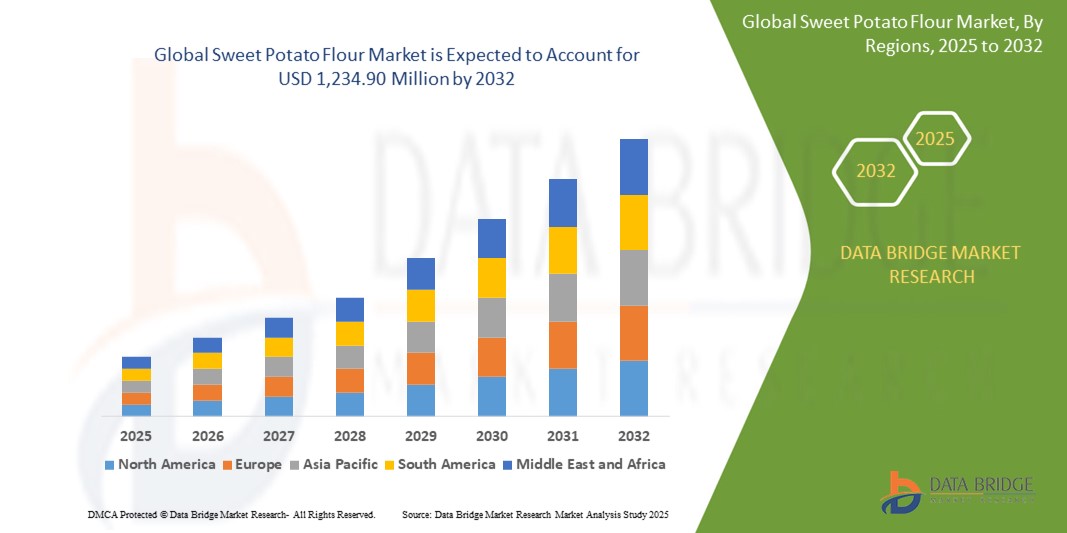
Sweet Potato Flour Market Size
- The global sweet potato flour market size was valued at USD 855.18 million in 2024 and is expected to reach USD 1,234.90 million by 2032, at a CAGR of 4.7% during the forecast period
- The market growth is primarily driven by increasing consumer preference for gluten-free and nutrient-rich alternatives in food products, coupled with the rising popularity of clean-label and natural ingredients in the food and beverage industry
- The growing awareness of the health benefits associated with sweet potato flour, such as high fiber content, vitamins, and antioxidants, is boosting its adoption in both household and industrial applications, further accelerating market expansion
Sweet Potato Flour Market Analysis
- Sweet potato flour, derived from dehydrated and ground sweet potatoes, is increasingly recognized as a versatile ingredient in gluten-free baking, nutritional supplements, and functional foods due to its natural sweetness, high nutritional value, and adaptability in various culinary applications
- The rising demand for sweet potato flour is fueled by growing health consciousness, the expansion of the gluten-free product market, and increasing applications in the foodservice and nutraceutical sectors
- Asia-Pacific dominated the sweet potato flour market with the largest revenue share of 42.5% in 2024, driven by the region's abundant sweet potato production, cultural preference for sweet potato-based products, and increasing adoption of healthy food ingredients in countries such as China, Japan, and India
- Middle East and Africa is expected to be the fastest-growing region during the forecast period, propelled by rising demand for natural and organic food products, increasing urbanization, and growing awareness of gluten-free diets
- The conventional segment dominated the largest market revenue share of 94% in 2024, driven by its cost-effectiveness and widespread use in commercial applications, such as bakery and food processing, where affordability is key
Report Scope and Sweet Potato Flour Market Segmentation
|
Attributes |
Sweet Potato Flour Key Market Insights |
|
Segments Covered |
|
|
Countries Covered |
North America
Europe
Asia-Pacific
Middle East and Africa
South America
|
|
Key Market Players |
|
|
Market Opportunities |
|
|
Value Added Data Infosets |
In addition to the insights on market scenarios such as market value, growth rate, segmentation, geographical coverage, and major players, the market reports curated by the Data Bridge Market Research also include in-depth expert analysis, pricing analysis, brand share analysis, consumer survey, demography analysis, supply chain analysis, value chain analysis, raw material/consumables overview, vendor selection criteria, PESTLE Analysis, Porter Analysis, and regulatory framework. |
Sweet Potato Flour Market Trends
“Increasing Integration of Clean Label and Functional Food Innovations”
- The global sweet potato flour market is experiencing a notable trend toward the integration of clean label and functional food innovations
- These advancements focus on producing sweet potato flour that aligns with consumer demand for natural, minimally processed, and nutrient-rich ingredients, enhancing its appeal in health-conscious markets
- Clean label sweet potato flour products, free from artificial additives, are gaining traction as consumers prioritize transparency and sustainability in food choices
- For instance, companies are developing organic and non-GMO sweet potato flour variants to cater to the rising demand for gluten-free and plant-based diets, often used in bakery products, snacks, and nutraceuticals
- This trend is increasing the market appeal of sweet potato flour, making it a preferred choice for both individual consumers and food manufacturers seeking versatile, health-focused ingredients
- Functional food innovations leverage sweet potato flour’s high fiber, vitamin, and antioxidant content to create products such as nutrient-dense snacks, smoothies, and dietary supplements tailored to specific health needs
Sweet Potato Flour Market Dynamics
Driver
“Rising Demand for Gluten-Free and Nutrient-Dense Food Products”
- Growing consumer awareness of health and wellness is a key driver for the global sweet potato flour market, with increasing demand for gluten-free and nutrient-dense alternatives to traditional flours
- Sweet potato flour offers significant health benefits, including high levels of vitamins, minerals, and fiber, making it popular among consumers with dietary restrictions, such as those with celiac disease or gluten intolerance
- Government initiatives promoting sustainable and locally sourced ingredients, particularly in regions such as Asia-Pacific, are boosting the adoption of sweet potato flour in food production
- The expansion of e-commerce platforms and improved supply chain logistics are enabling broader market access, facilitating the distribution of sweet potato flour to both business-to-business (B2B) and business-to-consumer (B2C) channels
- Food manufacturers are increasingly incorporating sweet potato flour into their product lines, such as bakery goods, sauces, and snacks, to meet consumer preferences for healthier and sustainable food options
Restraint/Challenge
“High Production Costs and Supply Chain Challenges”
- The high initial costs associated with sweet potato flour production, including sourcing, processing, and packaging, can be a significant barrier, particularly for small-scale manufacturers in emerging markets
- Integrating sweet potato flour into diverse food applications requires advanced processing techniques, which can increase production complexity and costs
- Supply chain issues, such as variable quality of raw sweet potatoes, seasonal availability, and transportation logistics, particularly for purple sweet potato flour, pose challenges to consistent production and distribution
- Limited consumer awareness in some regions about the benefits and applications of sweet potato flour can hinder market growth, especially in areas where traditional flours dominate
- These factors may deter market expansion in cost-sensitive regions or where supply chain infrastructure is underdeveloped, potentially limiting the adoption of sweet potato flour
Sweet Potato Flour market Scope
The market is segmented on the basis of nature, distribution channel, end use, type, and product.
- By Nature
On the basis of nature, the global sweet potato flour market is segmented into organic and conventional. The conventional segment dominated the largest market revenue share of 94% in 2024, driven by its cost-effectiveness and widespread use in commercial applications, such as bakery and food processing, where affordability is key. Conventional farming requires less input compared to organic methods, making it the preferred choice for manufacturers aiming to maintain profitability.
The organic segment is expected to witness the fastest growth rate from 2025 to 2032, fueled by rising consumer preference for clean-label, non-GMO, and sustainably sourced products. Increasing health consciousness and demand for eco-friendly farming practices are accelerating the adoption of organic sweet potato flour, particularly in health-conscious markets such as Europe and North America.
- By Distribution Channel
On the basis of distribution channel, the global sweet potato flour market is segmented into business-to-business (B2B) and business-to-consumer (B2C). The B2B segment is expected to hold the largest market revenue share of 65% in 2024, driven by high demand from food manufacturers, bakeries, and nutraceutical companies for bulk purchases of sweet potato flour for use in processed foods, snacks, and supplements. Strategic partnerships between suppliers and food producers further bolster this segment.
The B2C segment is anticipated to experience the fastest growth rate of 6.2% from 2025 to 2032, propelled by rising consumer awareness of sweet potato flour’s nutritional benefits and its availability through online retail, supermarkets, hypermarkets, convenience stores, and specialty stores. The growing trend of home cooking and demand for gluten-free baking ingredients are key drivers.
- By End Use
On the basis of end use, the global sweet potato flour market is segmented into food and beverage industry, nutraceuticals, foodservice industry, and retail/household. The food and beverage industry segment is expected to hold the largest market revenue share of 40% in 2024, driven by the extensive use of sweet potato flour in bakery products, snacks, sauces, and smoothies. Its gluten-free and nutrient-rich properties make it a preferred ingredient for health-conscious product formulations.
The nutraceuticals segment is projected to witness the fastest growth from 2025 to 2032, with a CAGR of 5.2%, driven by the increasing incorporation of sweet potato flour in dietary supplements and functional foods. Its high vitamin, mineral, and antioxidant content aligns with the growing demand for health-focused products, particularly among athletes and health-conscious consumers.
- By Type
On the basis of type, the global sweet potato flour market is segmented into yellow, white, and purple sweet potatoes. The yellow sweet potato segment is expected to hold the largest market revenue share of 50% in 2024, owing to its widespread availability, mild flavor, and versatility in culinary applications such as baking and snack production. Yellow sweet potatoes are a staple in many regions, particularly in Asia-Pacific, contributing to their dominance.
The purple sweet potato segment is anticipated to experience the fastest growth from 2025 to 2032, driven by its unique flavor, vibrant color, and high antioxidant content, which appeal to health-conscious consumers and food manufacturers. Innovations in processing, such as spray drying by companies such as Xian Shunyi Bio-Chemical Technology Co., Ltd., enhance the appeal of purple sweet potato flour in premium products.
- By Product
On the basis of product, the global sweet potato flour market is segmented into sweet potato stem and fresh sweet potato. The fresh sweet potato segment is expected to hold the largest market revenue share of 85% in 2024 as it is the primary source for sweet potato flour production due to its availability, nutritional content, and established supply chains. Its use in diverse applications, from baking to thickening agents, supports its dominance.
The sweet potato stem segment is projected to witness significant growth from 2025 to 2032, driven by increasing interest in sustainable and zero-waste practices. Utilizing sweet potato stems for flour production reduces waste and appeals to environmentally conscious consumers and manufacturers, particularly in regions such as Asia-Pacific and the Middle East and Africa.
Sweet Potato Flour Market Regional Analysis
- Asia-Pacific dominated the sweet potato flour market with the largest revenue share of 42.5% in 2024, driven by the region's abundant sweet potato production, cultural preference for sweet potato-based products, and increasing adoption of healthy food ingredients in countries such as China, Japan, and India
- Consumers prioritize sweet potato flour for its nutritional benefits, including high fiber, vitamins, and antioxidants, appealing to health-conscious diets and diverse culinary applications
- Growth is supported by advancements in processing technologies, increasing adoption in food and beverage, nutraceutical, and foodservice industries, and rising popularity in both organic and conventional segments
Japan Sweet Potato Flour Market Insight
Japan’s sweet potato flour market is expected to grow steadily, driven by consumer preference for high-quality, nutrient-dense ingredients and the integration of sweet potato flour in traditional foods such as confectionery and noodles. The presence of major food manufacturers and rising demand for organic and purple sweet potato flour varieties accelerate market penetration. Retail and foodservice channels contribute significantly to growth.
China Sweet Potato Flour Market Insight
China holds the largest share of the Asia-Pacific sweet potato flour market, propelled by rapid urbanization, increasing health consciousness, and widespread use of sweet potato flour in food and beverage applications. The growing middle class and demand for gluten-free and functional foods drive adoption. Strong domestic production capabilities and competitive pricing enhance market accessibility.
U.S. Sweet Potato Flour Market Insight
The U.S. sweet potato flour market is expected to witness significant growth, fueled by growing consumer demand for gluten-free and nutrient-rich ingredients. The trend toward clean-label and plant-based diets, coupled with increased use in baking and snack products, drives market expansion. Strong retail and e-commerce distribution channels further enhance market penetration.
Europe Sweet Potato Flour Market Insight
The Europe sweet potato flour market is expected to experience robust growth, supported by rising consumer interest in healthy and sustainable food options. Demand is driven by the food and beverage industry’s use of sweet potato flour in gluten-free products and the nutraceutical sector’s focus on functional foods. Countries such as Germany and the U.K. show significant adoption due to health trends and innovative product launches.
U.K. Sweet Potato Flour Market Insight
The U.K. market for sweet potato flour is projected to grow steadily, driven by increasing consumer awareness of its nutritional benefits and versatility in cooking and baking. The rise in vegan and gluten-free diets, along with growing retail availability through supermarkets and online platforms, boosts demand. Regulatory support for clean-label products further encourages market growth.
Germany Sweet Potato Flour Market Insight
Germany is expected to witness strong growth in the sweet potato flour market, attributed to its advanced food processing industry and high consumer preference for organic and functional foods. Sweet potato flour’s use in premium baked goods and nutraceuticals supports market expansion. The focus on sustainability and energy-efficient production processes aligns with consumer and regulatory priorities.
Middle East and Africa Sweet Potato Flour Market Insight
The Middle East and Africa region is expected to witness the fastest growth rate in the sweet potato flour market, driven by increasing adoption of nutritious and gluten-free ingredients in food and beverage applications. Rising health awareness, coupled with growing retail and foodservice sectors in countries such as South Africa and the UAE, supports market expansion. The demand for organic sweet potato flour and its use in nutraceuticals further accelerates growth.
Sweet Potato Flour Market Share
The sweet potato flour industry is primarily led by well-established companies, including:
- Saipro Biotech Private Limited. (India)
- Sacoma (Kenya)
- Hearthy Foods (U.S.)
- MicroDried (U.S.)
- Bulk (U.K.)
- Xian Shunyi Bio-Chemical Technology Co.,Ltd (China)
- Shree Biotech (India)
- Urban Platter (India)
- Shaanxi Undersun Biomedtech Co., Ltd (China)
- YT (Xi'an) Biochem Co., Ltd (China)
- Nash Produce (U.S.)
- Dole Food Company Inc (U.S.)
- Sinofi Ingredients (China)
- Ham Farms (U.S.)
- J.R. Simplot Company (U.S.)
- UWC Foods Private Limited (India)
What are the Recent Developments in Global Sweet Potato Flour Market?
- In May 2025, IFCG Egypt highlighted innovative uses of sweet potatoes in food manufacturing, specifically emphasizing the potential of sweet potato flour and puree for enhancing nutritional profiles and adding unique textures and flavors to various food products. This underscores a broader industry trend of exploring new applications for sweet potato flour to meet consumer demands for healthier and diverse food options
- In April 2025, research underscored the significant promise of incorporating sweet potato flour into bakery products to boost nutritional value and expand food options. The study revealed that sweet potato flour can notably increase moisture, sugar, protein, and dietary fiber levels in baked goods without compromising sensory quality
- In March 2025, Persistence Market Research noted that the global sweet potato flour market is projected for significant growth, driven by increasing consumer preference for gluten-free and nutritious alternatives. This report highlighted that manufacturers are increasingly incorporating sweet potato flour as a key ingredient in their product formulations due to rising awareness of gluten-related disorders and a growing number of consumers requiring gluten-free diets
- In October 2024, openPR.com reported on the rising popularity of sweet potato flour, attributing it to the increasing global demand for gluten-free, plant-based, and functional food products. The report emphasized product innovation, including flavored and organic varieties, and new product launches featuring sweet potato flour as a primary ingredient in snacks, bakery items, pasta, pancakes, and baby food
- In September 2023, ResearchGate published a study on the potential development and utilization of sweet potato flour as a raw material for the food industry in Indonesia. The research explored various drying methods and processing techniques to improve flour quality, especially color and functional characteristics, indicating a focus on optimizing production for industrial applications

- Interactive Data Analysis Dashboard
- Company Analysis Dashboard for high growth potential opportunities
- Research Analyst Access for customization & queries
- Competitor Analysis with Interactive dashboard
- Latest News, Updates & Trend analysis
- Harness the Power of Benchmark Analysis for Comprehensive Competitor Tracking
Global Sweet Potato Flour Market, Supply Chain Analysis and Ecosystem Framework
To support market growth and help clients navigate the impact of geopolitical shifts, DBMR has integrated in-depth supply chain analysis into its Global Sweet Potato Flour Market research reports. This addition empowers clients to respond effectively to global changes affecting their industries. The supply chain analysis section includes detailed insights such as Global Sweet Potato Flour Market consumption and production by country, price trend analysis, the impact of tariffs and geopolitical developments, and import and export trends by country and HSN code. It also highlights major suppliers with data on production capacity and company profiles, as well as key importers and exporters. In addition to research, DBMR offers specialized supply chain consulting services backed by over a decade of experience, providing solutions like supplier discovery, supplier risk assessment, price trend analysis, impact evaluation of inflation and trade route changes, and comprehensive market trend analysis.
Data collection and base year analysis are done using data collection modules with large sample sizes. The stage includes obtaining market information or related data through various sources and strategies. It includes examining and planning all the data acquired from the past in advance. It likewise envelops the examination of information inconsistencies seen across different information sources. The market data is analysed and estimated using market statistical and coherent models. Also, market share analysis and key trend analysis are the major success factors in the market report. To know more, please request an analyst call or drop down your inquiry.
The key research methodology used by DBMR research team is data triangulation which involves data mining, analysis of the impact of data variables on the market and primary (industry expert) validation. Data models include Vendor Positioning Grid, Market Time Line Analysis, Market Overview and Guide, Company Positioning Grid, Patent Analysis, Pricing Analysis, Company Market Share Analysis, Standards of Measurement, Global versus Regional and Vendor Share Analysis. To know more about the research methodology, drop in an inquiry to speak to our industry experts.
Data Bridge Market Research is a leader in advanced formative research. We take pride in servicing our existing and new customers with data and analysis that match and suits their goal. The report can be customized to include price trend analysis of target brands understanding the market for additional countries (ask for the list of countries), clinical trial results data, literature review, refurbished market and product base analysis. Market analysis of target competitors can be analyzed from technology-based analysis to market portfolio strategies. We can add as many competitors that you require data about in the format and data style you are looking for. Our team of analysts can also provide you data in crude raw excel files pivot tables (Fact book) or can assist you in creating presentations from the data sets available in the report.













