


What is the Synaptic Plasticity Modulating Drug Market Size and Growth Rate?
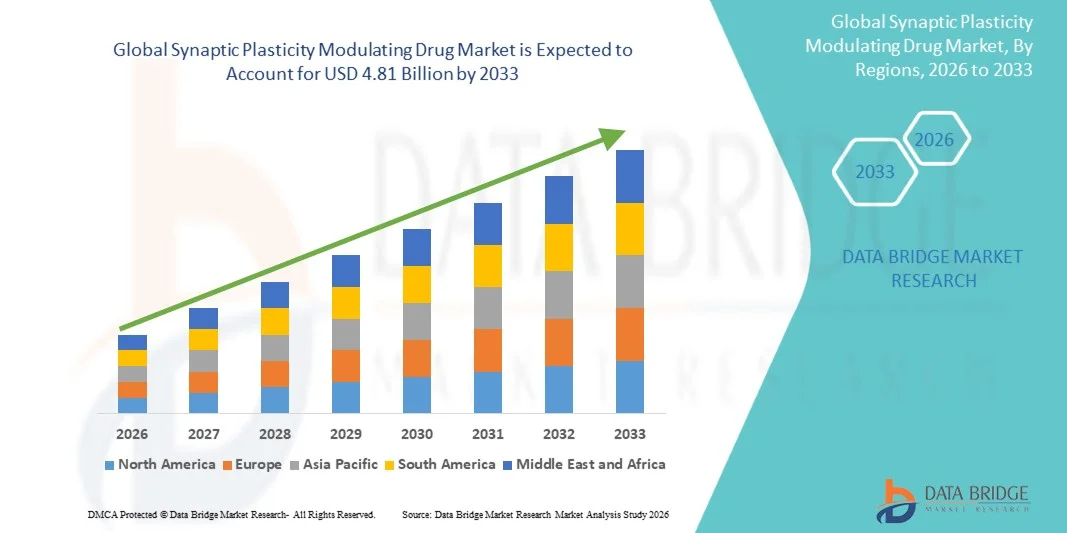
- As per Data Bridge Market Research Analysis the global synaptic plasticity modulating drug market size was valued at USD 1.48 billion in 2025 and is expected to reach USD 4.81 billion by 2033, at a CAGR of 15.90% during the forecast period
- The market growth is primarily driven by increasing prevalence of neurological and neuropsychiatric disorders such as Alzheimer’s disease, depression, schizophrenia, and stroke, along with growing scientific understanding of synaptic dysfunction as a core disease mechanism
- Furthermore, rising investment in neuroscience drug discovery, advances in neuropharmacology targeting synaptic transmission pathways, and expanding clinical focus on cognitive enhancement and brain repair therapies are accelerating the development and adoption of synaptic plasticity modulating drugs, thereby significantly supporting industry growth
Market Size & Forecast
Global Market Value (2025): USD 1.48 billion
Expected Market Value (2033):USD 4.81 billion
Forecast CAGR (2026–2033): 15.90%
What are the Major Takeaways of Synaptic Plasticity Modulating Drug Market ?
- Synaptic plasticity modulating drugs, which regulate neuronal connectivity and synaptic strength in the brain, are emerging as a key therapeutic class in modern neuropharmacology for treating disorders such as depression, Alzheimer’s disease, schizophrenia, and other neurodegenerative and cognitive conditions due to their ability to restore impaired neural circuit function and enhance brain adaptability
- The escalating demand for synaptic plasticity modulating drugs is primarily fueled by the rising global burden of neurological and psychiatric disorders, increasing focus on disease-modifying and mechanism-based therapies, and rapid advancements in neuroscience research targeting synaptic signaling pathways and neuroplasticity mechanisms
- North America dominated the synaptic plasticity modulating drug market with the largest revenue share of 42.6% in 2025, driven by strong neuroscience R&D funding, advanced clinical trial infrastructure, high healthcare expenditure, and the presence of leading pharmaceutical and biotechnology companies actively developing CNS-targeted therapies, particularly in the U.S.
- Asia-Pacific is expected to be the fastest growing region in the synaptic plasticity modulating drug market during the forecast period due to rising prevalence of mental health and neurodegenerative diseases, increasing healthcare investments, expanding biotech research capabilities, and growing awareness of advanced neurological treatments across major economies such as China, Japan, and India
- NMDA receptor modulators segment dominated the synaptic plasticity modulating drug market with a market share of 38.4% in 2025, owing to their strong clinical efficacy in modulating excitatory synaptic transmission, their role in rapid-acting antidepressant effects, and their central importance in regulating synaptic plasticity mechanisms in the central nervous system
Report Scope and Synaptic Plasticity Modulating Drug Market Segmentation
|
Attributes |
Synaptic Plasticity Modulating Drug Key Market Insights |
|
Segments Covered |
|
|
Countries Covered |
North America
Europe
Asia-Pacific
Middle East and Africa
South America
|
|
Key Market Players |
|
|
Market Opportunities |
|
|
Value Added Data Infosets |
In addition to the insights on market scenarios such as market value, growth rate, segmentation, geographical coverage, and major players, the market reports curated by the Data Bridge Market Research also include in-depth expert analysis, patient epidemiology, pipeline analysis, pricing analysis, and regulatory framework |
What is the Key Trend in the Synaptic Plasticity Modulating Drug Market ?
“Advancement in Precision Neuroplasticity and Brain Circuit–Targeted Therapies”
- A significant and accelerating trend in the global synaptic plasticity modulating drug market is the growing focus on precision neuroplasticity therapies targeting specific synaptic pathways such as glutamatergic and serotonergic systems to restore impaired brain circuit function in neuropsychiatric and neurodegenerative disorders
- For instance, ketamine-based NMDA receptor modulators and emerging rapid-acting antidepressants are being increasingly studied for treatment-resistant depression, demonstrating fast synaptic remodeling effects at the cortical level
- Integration of advanced biomarker profiling and neuroimaging tools is enabling better understanding of synaptic dysfunction, allowing researchers to design drugs that more precisely regulate synaptic strength and plasticity mechanisms such as LTP and LTD
- Furthermore, combination approaches linking synaptic plasticity drugs with digital cognitive therapies and neurostimulation techniques are enabling synergistic improvements in memory, learning, and recovery outcomes in neurological patients
- Increasing exploration of neurotrophic factor–based therapies, such as BDNF pathway modulators, is expanding the pipeline of drugs aimed at enhancing synaptogenesis and long-term neuronal resilience in degenerative brain conditions
- This trend toward highly targeted, mechanism-based brain circuit modulation is reshaping therapeutic expectations, with companies such as Johnson & Johnson and Sage Therapeutics advancing novel glutamate-modulating compounds
- The demand for synaptic plasticity modulating drugs that deliver rapid, durable, and circuit-specific therapeutic effects is growing rapidly across neurology and psychiatry, as healthcare systems increasingly prioritize disease-modifying brain therapies
Synaptic Plasticity Modulating Drug Market Dynamics
Driver
“Rising Neurological Disease Burden and Shift Toward Disease-Modifying CNS Therapies”
- The increasing prevalence of neurological and psychiatric disorders, coupled with strong scientific validation of synaptic dysfunction as a core disease mechanism, is a major driver for the growing demand for synaptic plasticity modulating drugs
- For instance, in March 2025, multiple clinical-stage programs targeting NMDA and AMPA receptor modulation demonstrated promising results in treatment-resistant depression, highlighting strong pipeline momentum in synaptic-based therapeutics
- As neurodegenerative diseases such as Alzheimer’s and Parkinson’s continue to rise globally, there is increasing demand for therapies that not only manage symptoms but also restore synaptic connectivity and cognitive function
- Furthermore, advancements in molecular neuroscience and drug discovery platforms are enabling faster identification of compounds that regulate synaptic signaling pathways and neuronal network plasticity
- Growing integration of AI-based drug discovery and computational neuroscience models is accelerating identification of novel synaptic targets and reducing early-stage development time for CNS drugs
- The increasing adoption of mechanism-driven CNS drug development strategies and strong pharmaceutical investment in brain health are key factors propelling market expansion across both developed and emerging regions
Restraint/Challenge
“Complex CNS Drug Development and High Clinical Failure Rates”
- Challenges related to blood–brain barrier penetration, complex neural pathway interactions, and unpredictable central nervous system responses significantly hinder successful development of synaptic plasticity modulating drugs
- For instance, multiple late-stage clinical trials targeting glutamatergic modulation have failed due to safety concerns, limited efficacy, or neuropsychiatric side effects, slowing commercialization timelines
- The high cost, long development cycles, and stringent regulatory requirements for CNS drugs further increase financial risk for pharmaceutical companies operating in this space
- In addition, variability in patient response due to heterogeneity in neurological disorders makes it difficult to achieve consistent therapeutic outcomes across large populations
- Limited availability of validated biomarkers for synaptic function monitoring restricts accurate assessment of drug efficacy in clinical trials
- While advancements in biomarkers and precision medicine are improving trial design, the overall complexity of modulating synaptic networks remains a major barrier to rapid market expansion
- Overcoming these challenges through improved drug delivery systems, better patient stratification, and enhanced neurobiological understanding will be essential for sustained growth in this market
How is the Synaptic Plasticity Modulating Drug Market Segmented?
The market is segmented on the basis of drug class, mechanism of action, application, and end user.
- By Drug Class
On the basis of drug class, the synaptic plasticity modulating drug market is segmented into NMDA receptor modulators, AMPA receptor modulators, GABAergic modulators, Glutamatergic modulators, Dopaminergic modulators, Serotonergic modulators, Neurotrophic factor-based drugs, and Multi-target synaptic plasticity enhancers. The NMDA receptor modulators segment dominated the market with the largest revenue share of 38.4% in 2025, driven by strong clinical validation in rapid-acting antidepressant therapies and their central role in regulating excitatory synaptic transmission and neuroplasticity. These drugs are widely studied for treatment-resistant depression and cognitive dysfunction due to their ability to rapidly restore synaptic connectivity. The segment also benefits from a strong pipeline of ketamine derivatives and next-generation glutamate modulators in clinical development.
The Neurotrophic factor-based drugs segment is expected to witness the fastest growth rate from 2026 to 2033, fueled by increasing focus on brain repair mechanisms and synaptogenesis enhancement. These therapies target pathways such as BDNF and NGF to promote neuronal survival, synaptic formation, and long-term cognitive improvement. Rising research in neurodegenerative diseases such as Alzheimer’s and Parkinson’s is accelerating interest in disease-modifying approaches rather than symptomatic treatment. Furthermore, advancements in biologics and peptide-based drug delivery systems are improving the clinical feasibility of neurotrophic therapies.
- By Mechanism of Action
On the basis of mechanism of action, the market is segmented into synaptic potentiation enhancers (LTP), synaptic depression modulators (LTD), receptor trafficking modulators, neurotransmitter release modulators, intracellular signaling pathway modulators, and neurogenesis & synaptogenesis stimulators. The synaptic potentiation enhancers (LTP) segment dominated the market in 2025, driven by its direct role in strengthening synaptic connections and improving learning, memory, and cognitive function. LTP-targeting drugs are widely explored in depression and Alzheimer’s disease due to their ability to enhance long-term neuronal communication. Strong preclinical and clinical evidence linking LTP modulation with cognitive recovery supports its dominant position. In addition, many NMDA and AMPA modulators operate through LTP-related pathways, further strengthening this segment.
The neurogenesis & synaptogenesis stimulators segment is expected to witness the fastest growth from 2026 to 2033, driven by increasing focus on brain regeneration and structural neural repair. These mechanisms aim to generate new neurons and synapses, offering potential disease-modifying benefits in chronic neurodegenerative conditions. Growing investment in regenerative neuroscience and stem-cell–based drug discovery is accelerating innovation in this segment. Furthermore, demand for therapies that can restore lost cognitive function rather than only manage symptoms is significantly boosting research activity.
- By Application
On the basis of application, the market is segmented into depression, schizophrenia, Alzheimer’s disease, Parkinson’s disease, epilepsy, autism spectrum disorders, neurorehabilitation, addiction & substance use disorders, and traumatic brain injury. The depression segment dominated the market in 2025, driven by the high global prevalence of major depressive disorder and increasing demand for rapid-acting antidepressant therapies targeting synaptic dysfunction. Drugs modulating glutamatergic and monoaminergic pathways are widely used in clinical and experimental settings for treatment-resistant depression. Strong clinical success of NMDA receptor antagonists has further strengthened this segment’s dominance. In addition, increasing mental health awareness and diagnosis rates are contributing to higher treatment adoption globally.
The neurorehabilitation segment is expected to witness the fastest growth from 2026 to 2033, driven by rising cases of stroke, traumatic brain injury, and post-neurological recovery conditions. Synaptic plasticity drugs are increasingly being explored to enhance brain rewiring and functional recovery after injury. Integration of pharmacological treatment with physical and cognitive rehabilitation therapies is boosting demand. Furthermore, advancements in personalized neurorehabilitation protocols are expanding clinical adoption of synaptic modulation-based interventions.
- By End User
On the basis of end user, the market is segmented into hospitals & neurology centers, psychiatric clinics, rehabilitation centers, research laboratories & universities, and pharmaceutical & biotechnology companies. The hospitals & neurology centers segment dominated the market in 2025, driven by high patient inflow for neurological and psychiatric disorders requiring specialized diagnosis and treatment. These facilities serve as primary sites for administration of advanced CNS therapies and clinical monitoring of synaptic plasticity drugs. Availability of advanced neuroimaging and diagnostic infrastructure further supports dominance of this segment. In addition, increasing hospitalization rates for neurodegenerative conditions strengthens demand from this end user category.
The pharmaceutical & biotechnology companies segment is expected to witness the fastest growth from 2026 to 2033, driven by strong R&D investment in CNS drug discovery and expanding clinical pipelines targeting synaptic modulation. Companies are increasingly focusing on precision neuropharmacology and biomarker-driven drug development. Rising collaborations between biotech firms and academic institutions are accelerating innovation in synaptic plasticity research. Furthermore, growing venture capital funding in neuroscience startups is significantly boosting experimental drug development activities in this segment.
Which Region Holds the Largest Share of the Synaptic Plasticity Modulating Drug Market ?
- North America dominated the synaptic plasticity modulating drug market with the largest revenue share of 42.6% in 2025, driven by strong neuroscience R&D funding, advanced clinical trial infrastructure, high healthcare expenditure, and the presence of leading pharmaceutical and biotechnology companies actively developing CNS-targeted therapies, particularly in the U.S.
- Research institutions and pharmaceutical companies in the region highly prioritize advanced neurotherapeutics targeting synaptic dysfunction, with increasing focus on precision medicine approaches for conditions such as depression, Alzheimer’s disease, and schizophrenia
- This widespread leadership is further supported by robust clinical trial infrastructure, high healthcare spending, early adoption of innovative biologics and small-molecule CNS drugs, and strong presence of leading biotech and pharmaceutical players, establishing North America as a key hub for synaptic plasticity modulating drug development and commercialization
The U.S. Synaptic Plasticity Modulating Drug Market Insight
The U.S. synaptic plasticity modulating drug market captured the largest revenue share of 81% in North America in 2025, driven by rapid advancements in neuroscience research and strong adoption of innovative CNS therapeutics. Increasing prevalence of depression, Alzheimer’s disease, and other neuropsychiatric disorders is significantly boosting demand for synaptic modulation-based treatments. The country benefits from a highly developed clinical trial ecosystem and strong funding from both public and private sectors supporting drug discovery. Moreover, the presence of leading pharmaceutical and biotech companies focusing on glutamatergic and neurotrophic pathway modulation is accelerating market expansion.
Europe Synaptic Plasticity Modulating Drug Market Insight
The Europe synaptic plasticity modulating drug market is projected to expand at a substantial CAGR during the forecast period, primarily driven by rising burden of neurodegenerative diseases and strong regulatory support for advanced CNS drug development. Increasing demand for disease-modifying therapies targeting synaptic dysfunction is fostering adoption across major healthcare systems. Europe’s strong academic research base and collaborations between universities and pharmaceutical companies are supporting innovation in neuroplasticity-based treatments. In addition, growing emphasis on early diagnosis and advanced neurological care is contributing to market expansion across the region.
U.K. Synaptic Plasticity Modulating Drug Market Insight
The U.K. synaptic plasticity modulating drug market is anticipated to grow at a noteworthy CAGR during the forecast period, driven by rising cases of depression, dementia, and neuropsychiatric disorders. Increasing investment in neuroscience research and strong clinical trial activity are supporting development of novel synaptic modulation therapies. The country’s well-established healthcare system and focus on mental health treatment are further boosting demand. Moreover, growing adoption of advanced CNS therapeutics and participation of biotech startups in neurodrug innovation are accelerating market growth.
Germany Synaptic Plasticity Modulating Drug Market Insight
The Germany synaptic plasticity modulating drug market is expected to expand at a considerable CAGR during the forecast period, fueled by strong emphasis on neurological research and precision medicine approaches. Rising prevalence of Alzheimer’s disease and Parkinson’s disease is increasing demand for advanced synaptic repair therapies. Germany’s robust pharmaceutical manufacturing base and high investment in biotechnology are supporting drug development activities. Furthermore, integration of neuroscience research with AI-based drug discovery platforms is enhancing innovation in synaptic plasticity modulation.
Asia-Pacific Synaptic Plasticity Modulating Drug Market Insight
The Asia-Pacific synaptic plasticity modulating drug market is poised to grow at the fastest CAGR of 25% during the forecast period of 2026 to 2033, driven by rising neurological disease burden, expanding healthcare infrastructure, and increasing investments in biotechnology. Growing awareness of mental health disorders and improving access to advanced neurological treatments are accelerating market adoption. The region is also benefiting from expanding clinical research activities and government support for life sciences innovation. In addition, increasing collaborations between global pharma companies and local biotech firms are strengthening market growth.
Japan Synaptic Plasticity Modulating Drug Market Insight
The Japan synaptic plasticity modulating drug market is gaining momentum due to the country’s aging population, high prevalence of neurodegenerative disorders, and strong focus on advanced medical research. Demand for therapies targeting Alzheimer’s disease and cognitive decline is particularly high. Japan’s technologically advanced healthcare system supports rapid adoption of novel CNS therapeutics. Moreover, integration of neurotechnology with drug development and strong academic-industry collaboration are driving innovation in synaptic plasticity research.
India Synaptic Plasticity Modulating Drug Market Insight
The India synaptic plasticity modulating drug market accounted for the largest market revenue share in Asia-Pacific in 2025, attributed to rising neurological disease incidence, expanding healthcare access, and growing pharmaceutical manufacturing capabilities. Increasing awareness of mental health conditions is boosting demand for advanced neurological treatments. India’s strong position as a global hub for generic drug production and clinical research is supporting market expansion. Furthermore, government initiatives promoting healthcare modernization and biotechnology development are contributing to the growth of synaptic plasticity modulating drug adoption.
Which are the Top Companies in Synaptic Plasticity Modulating Drug Market ?
The Synaptic Plasticity Modulating Drug industry is primarily led by well-established companies, including:
- Merck & Co., Inc. (U.S.)
- Pfizer Inc. (U.S.)
- Eli Lilly and Company (U.S.)
- Bristol-Myers Squibb Company (U.S.)
- AbbVie Inc. (U.S.)
- Novartis AG (Switzerland)
- Sanofi (France)
- AstraZeneca (U.K.)
- GSK plc (U.K.)
- Takeda Pharmaceutical Company Limited (Japan)
- Otsuka Pharmaceutical Co., Ltd. (Japan)
- Sumitomo Pharma Co., Ltd. (Japan)
- H. Lundbeck A/S (Denmark)
- Sage Therapeutics, Inc. (U.S.)
- Biogen Inc. (U.S.)
- Jazz Pharmaceuticals plc (Ireland)
- Alkermes plc (Ireland)
- Delix Therapeutics, Inc. (U.S.)
What are Latest Developments in Synaptic Plasticity Modulating Drug Market ?
- In December 2025, a neuroscience study reported new mechanistic evidence showing that modulation of NMDA–AMPA signaling pathways can restore impaired synaptic plasticity in trauma-related disorders such as PTSD. The findings highlighted how excitatory synapse regulation can normalize disrupted neural circuits and improve cognitive and emotional processing. This supports expanding clinical exploration of synaptic plasticity modulators in neuropsychiatric recovery
- In May 2025, a landmark study published in Science demonstrated that a single dose of ketamine can produce long-lasting antidepressant effects by inducing sustained changes in synaptic plasticity. The research confirmed that ketamine enhances synaptic connectivity in brain regions associated with mood regulation, reducing the need for frequent dosing. This finding reinforced NMDA receptor modulation as a leading strategy in synaptic plasticity-based drug development
- In April 2025, a major scientific review highlighted the growing clinical focus on targeting NMDA–AMPA receptor pathways to restore synaptic plasticity in treatment-resistant depression and neuropsychiatric disorders. The study emphasized rapid-acting antidepressants such as ketamine and next-generation glutamatergic modulators, which are reshaping CNS drug development by directly influencing synaptic strength and neural connectivity. This development underscores the industry’s shift toward mechanism-based neuroplasticity therapies aimed at circuit-level brain restoration
- In November 2024, emerging research introduced next-generation non-hallucinogenic neuroplastogens designed to enhance synaptic plasticity without psychedelic side effects. These compounds aim to replicate ketamine-like synaptic remodeling while improving safety, tolerability, and scalability for broader psychiatric use. This marks a significant innovation direction in neuroplasticity drug development
- In September 2024, clinical pipeline updates in CNS drug development confirmed that multiple glutamatergic modulators are advancing in late-stage trials for treatment-resistant depression. These include NMDA receptor antagonists and AMPA receptor potentiators designed to enhance synaptic plasticity and rapid antidepressant response. The progress reflects strong pharmaceutical investment in synapse-targeted neurotherapeutics

- Interactive Data Analysis Dashboard
- Company Analysis Dashboard for high growth potential opportunities
- Research Analyst Access for customization & queries
- Competitor Analysis with Interactive dashboard
- Latest News, Updates & Trend analysis
- Harness the Power of Benchmark Analysis for Comprehensive Competitor Tracking
Data collection and base year analysis are done using data collection modules with large sample sizes. The stage includes obtaining market information or related data through various sources and strategies. It includes examining and planning all the data acquired from the past in advance. It likewise envelops the examination of information inconsistencies seen across different information sources. The market data is analysed and estimated using market statistical and coherent models. Also, market share analysis and key trend analysis are the major success factors in the market report. To know more, please request an analyst call or drop down your inquiry.
The key research methodology used by DBMR research team is data triangulation which involves data mining, analysis of the impact of data variables on the market and primary (industry expert) validation. Data models include Vendor Positioning Grid, Market Time Line Analysis, Market Overview and Guide, Company Positioning Grid, Patent Analysis, Pricing Analysis, Company Market Share Analysis, Standards of Measurement, Global versus Regional and Vendor Share Analysis. To know more about the research methodology, drop in an inquiry to speak to our industry experts.
Data Bridge Market Research is a leader in advanced formative research. We take pride in servicing our existing and new customers with data and analysis that match and suits their goal. The report can be customized to include price trend analysis of target brands understanding the market for additional countries (ask for the list of countries), clinical trial results data, literature review, refurbished market and product base analysis. Market analysis of target competitors can be analyzed from technology-based analysis to market portfolio strategies. We can add as many competitors that you require data about in the format and data style you are looking for. Our team of analysts can also provide you data in crude raw excel files pivot tables (Fact book) or can assist you in creating presentations from the data sets available in the report.












