




Global Tattoo Removal Devices Market
Market Size in USD Million
CAGR :
% 
 USD
182.19 Million
USD
326.38 Million
2025
2033
USD
182.19 Million
USD
326.38 Million
2025
2033
 Forecast Period Forecast Period |
2026 –2033 |
 Market Size (Base Year) Market Size (Base Year) |
USD 182.19 Million |
 Market Size (Forecast Year) Market Size (Forecast Year) |
USD 326.38 Million |
 CAGR CAGR |
% |
| Major Markets Players |
|
Tattoo Removal Devices Market Size
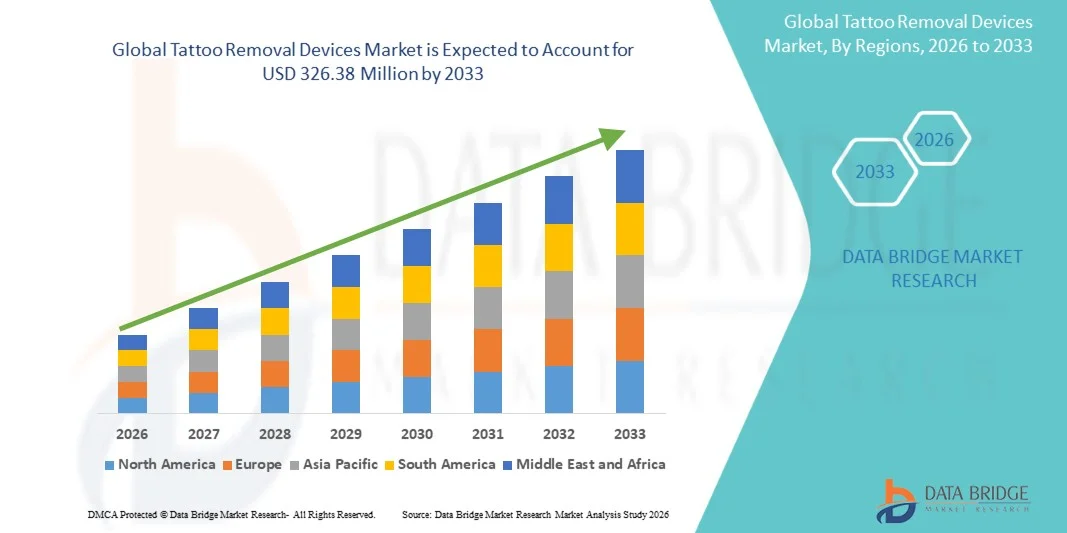
- The global tattoo removal devices market size was valued at USD 182.19 million in 2025 and is expected to reach USD 326.38 million by 2033, at a CAGR of 7.56% during the forecast period
- The market growth is largely driven by increasing awareness of cosmetic treatments, rising prevalence of tattoos, and technological advancements in laser and non-laser removal systems, enabling more effective and safer procedures
- In addition, growing consumer preference for aesthetic enhancements and minimally invasive solutions, coupled with expanding dermatology and cosmetic clinics worldwide, is positioning tattoo removal devices as a key segment in aesthetic and dermatological treatments. These factors are collectively accelerating market adoption and fueling substantial industry growth
Tattoo Removal Devices Market Analysis
- Tattoo removal devices, including laser-based, radiofrequency, and ultrasound systems, are increasingly critical in dermatology and cosmetic practices, offering precise, minimally invasive solutions for removing unwanted tattoos safely and effectively
- The rising demand for tattoo removal devices is primarily driven by increasing tattoo prevalence, growing awareness of cosmetic procedures, and advancements in technology that enhance treatment efficiency and minimize side effects
- North America dominated the tattoo removal devices market with the largest revenue share of 41.7% in 2025, supported by high consumer spending on aesthetic treatments, a strong network of dermatology clinics, and innovations from leading device manufacturers in laser and non-laser technologies
- Asia-Pacific is expected to be the fastest-growing region in the tattoo removal devices market during the forecast period due to rising disposable incomes, expanding urban population, and increasing adoption of cosmetic and dermatological procedures
- Laser-based devices segment dominated the tattoo removal devices market with a share of 46.5% in 2025, driven by their proven effectiveness, precision, and widespread adoption across dermatology clinics and medical spas globally
Report Scope and Tattoo Removal Devices Market Segmentation
|
Attributes |
Tattoo Removal Devices Key Market Insights |
|
Segments Covered |
|
|
Countries Covered |
North America
Europe
Asia-Pacific
Middle East and Africa
South America
|
|
Key Market Players |
|
|
Market Opportunities |
|
|
Value Added Data Infosets |
In addition to the insights on market scenarios such as market value, growth rate, segmentation, geographical coverage, and major players, the market reports curated by the Data Bridge Market Research also include in-depth expert analysis, patient epidemiology, pipeline analysis, pricing analysis, and regulatory framework |
Tattoo Removal Devices Market Trends
“Advancements in Picosecond and Multi-Wavelength Laser Technology”
- A significant and accelerating trend in the global tattoo removal devices market is the adoption of picosecond and multi-wavelength laser systems, which enable faster, more precise, and safer tattoo removal compared to traditional Q-switched lasers
- For instance, the PicoSure laser system allows clinicians to treat a wider range of ink colors with fewer sessions, reducing skin damage and discomfort for patients
- These advanced lasers improve pigment fragmentation, shorten recovery time, and minimize scarring risks, enhancing patient satisfaction and treatment outcomes
- The integration of multi-wavelength technology facilitates customized treatment for different tattoo types, ink colors, and skin tones, allowing dermatologists to offer more effective and personalized care
- Increasing interest in combination therapies, such as pairing laser removal with topical skin treatments, is enhancing overall effectiveness and broadening clinical applications
- Tele-dermatology and remote consultation trends are enabling clinics to expand patient access to tattoo removal services, allowing pre-treatment assessment and follow-up monitoring digitally
- This trend towards more efficient, versatile, and patient-friendly tattoo removal systems is reshaping expectations in cosmetic dermatology, prompting manufacturers such as Cynosure to innovate devices that combine multiple laser wavelengths and optimized pulse durations
- The growing demand for faster, less invasive, and highly effective tattoo removal solutions is driving widespread adoption across dermatology clinics, medical spas, and beauty centers worldwide
Tattoo Removal Devices Market Dynamics
Driver
“Increasing Tattoo Prevalence and Rising Awareness of Cosmetic Procedures”
- The growing popularity of tattoos, coupled with heightened awareness of cosmetic treatments and aesthetic correction, is a major driver for the increasing demand for tattoo removal devices
- For instance, in March 2025, Candela Medical reported rising adoption of its PicoWay system in dermatology clinics across North America, reflecting consumer interest in effective tattoo removal solutions
- As individuals seek to remove unwanted or outdated tattoos, dermatology and aesthetic clinics are investing in advanced laser technologies that offer safer, faster, and more precise treatments
- In addition, increasing media coverage and social acceptance of tattoo removal procedures are encouraging more consumers to opt for professional treatments over at-home or outdated methods
- The convenience, efficacy, and reduced side-effect profiles of modern devices, combined with expanding cosmetic service infrastructure, are further propelling the market growth globally
- Rising collaborations between device manufacturers and dermatology chains to provide training and demonstration programs are boosting market adoption and confidence among practitioners
- Expanding medical tourism for cosmetic procedures, particularly in regions with lower treatment costs, is creating new growth opportunities for tattoo removal device providers
Restraint/Challenge
“High Device Cost and Skin Safety Concerns”
- The relatively high cost of advanced tattoo removal devices, particularly picosecond and multi-wavelength lasers, poses a significant barrier to widespread adoption in smaller clinics and emerging markets
- For instance, clinics in developing regions may delay investment in premium devices due to budget constraints, limiting accessibility for patients seeking professional removal services
- In addition, potential side effects such as skin irritation, hyperpigmentation, and scarring remain a concern for both patients and providers, necessitating careful treatment planning and expertise
- Manufacturers must provide training, safety guidelines, and post-treatment care protocols to mitigate risks, ensuring patient safety while maintaining treatment efficacy
- Overcoming cost barriers through device leasing options, financing, or affordable entry-level systems, alongside enhanced safety measures and consumer education, is essential for sustaining market expansion in the global tattoo removal devices industry
- Regulatory compliance for medical-grade devices, including approvals from agencies such as FDA or CE, can delay product launches and limit market availability in certain regions
- Limited awareness or misinformation among consumers about procedure safety and expected results may reduce adoption rates, requiring targeted marketing and educational campaigns by device providers
Tattoo Removal Devices Market Scope
The market is segmented on the basis of product type, technique, and end user.
- By Product Type
On the basis of product type, the tattoo removal devices market is segmented into laser-based devices, radiofrequency devices, ultrasound devices, and others. The laser-based devices segment dominated the market with the largest revenue share of 46.5% in 2025, driven by their proven effectiveness, precision, and widespread adoption in dermatology clinics and medical spas. These devices, including Q-switched and picosecond lasers, are preferred for treating a wide range of ink colors with minimal side effects. Clinics often prioritize laser-based systems due to faster treatment times, reduced risk of scarring, and high patient satisfaction rates. In addition, laser-based devices benefit from continuous technological innovations, such as multi-wavelength and fractional lasers, further enhancing their capabilities. The strong presence of established manufacturers offering advanced laser solutions contributes to sustained dominance in the market.
The radiofrequency devices segment is anticipated to witness the fastest growth rate from 2026 to 2033, fueled by increasing adoption in dermatology and beauty centers as an alternative for patients with sensitive skin or challenging tattoo types. Radiofrequency-based tattoo removal offers minimal discomfort, fewer sessions, and suitability for combination therapies with topical treatments. Its growing popularity in emerging markets is supported by affordability and ease of use compared to advanced laser systems. Clinics value radiofrequency devices for their versatility and potential to expand service offerings beyond traditional laser treatments. The segment’s growth is further boosted by rising consumer demand for less invasive and pain-reduced aesthetic procedures.
- By Technique
On the basis of technique, the market is segmented into passive laser tattoo removal technique and active laser tattoo removal technique. The active laser tattoo removal technique dominated the market in 2025 due to its high precision, shorter treatment duration, and ability to effectively target multiple ink colors. Active laser techniques allow dermatologists to control pulse duration, energy levels, and spot size, optimizing results for each patient. Patients benefit from faster pigment fragmentation, minimal downtime, and reduced risk of skin damage. The widespread adoption of active laser systems in dermatology clinics and medical spas reinforces their market leadership. Furthermore, continuous innovation in active laser technologies, such as picosecond pulses and multi-wavelength capabilities, strengthens their preference among practitioners.
The passive laser tattoo removal technique is expected to witness the fastest CAGR from 2026 to 2033, driven by increasing interest in combination therapies and home-use devices. Passive techniques, which rely on skin healing processes post-laser exposure, appeal to clinics and small beauty centers seeking cost-effective solutions with lower operational complexity. This method also offers potential for integration with tele-dermatology services, allowing remote monitoring and follow-up care. Rising awareness among patients for minimally invasive procedures with reduced pain and downtime is contributing to its rapid adoption.
- By End User
On the basis of end user, the market is segmented into dermatology clinics, medical spa and beauty centers, and tattoo studios. The dermatology clinics segment dominated the market with the largest revenue share in 2025, supported by established infrastructure, trained professionals, and preference for advanced, clinically validated tattoo removal techniques. Clinics prioritize laser-based and active laser techniques to ensure safety and high efficacy for patients. The segment benefits from a strong network of referral systems, patient trust, and high repeat treatment rates. In addition, continuous technological upgrades and partnerships with device manufacturers reinforce dermatology clinics as the primary adopters of advanced tattoo removal systems.
The medical spa and beauty centers segment is expected to witness the fastest growth during the forecast period, driven by increasing consumer preference for aesthetic treatments in non-clinical settings. These centers are adopting cost-effective laser and radiofrequency devices to expand their service offerings. Rising awareness about tattoo removal and minimal downtime procedures among young adults and urban populations is fueling demand in this segment. Marketing initiatives, bundled cosmetic services, and flexible payment options also contribute to rapid adoption in medical spas and beauty centers.
Tattoo Removal Devices Market Regional Analysis
- North America dominated the tattoo removal devices market with the largest revenue share of 41.7% in 2025, supported by high consumer spending on aesthetic treatments, a strong network of dermatology clinics, and innovations from leading device manufacturers in laser and non-laser technologies
- Consumers and clinics in the region highly value precision, safety, and effectiveness offered by laser-based and multi-wavelength tattoo removal systems, making them the preferred choice for aesthetic procedures
- This widespread adoption is further supported by a strong network of dermatology clinics and medical spas, high disposable incomes, and increasing demand for minimally invasive cosmetic treatments, establishing tattoo removal devices as a critical segment within the cosmetic dermatology market
U.S. Tattoo Removal Devices Market Insight
The U.S. tattoo removal devices market captured the largest revenue share of 79% in 2025 within North America, fueled by the high prevalence of tattoos and rising consumer awareness of cosmetic treatments. Clinics and medical spas are increasingly prioritizing advanced laser and multi-wavelength systems to meet demand for safe, effective, and minimally invasive tattoo removal procedures. The growing trend of aesthetic enhancement, combined with increasing disposable incomes and insurance coverage for cosmetic procedures in select cases, further propels market growth. Moreover, the widespread integration of innovative technologies, such as picosecond lasers and combination therapies, is significantly contributing to the expansion of the tattoo removal devices market.
Europe Tattoo Removal Devices Market Insight
The Europe tattoo removal devices market is projected to expand at a substantial CAGR throughout the forecast period, primarily driven by increasing awareness of cosmetic procedures and rising demand for skin-safe, non-invasive treatments. Urbanization and higher spending on aesthetic services are fostering the adoption of tattoo removal devices in both dermatology clinics and beauty centers. European consumers are also attracted to the precision, reduced downtime, and effectiveness offered by advanced laser systems. The region is witnessing significant growth across medical spas, dermatology clinics, and cosmetic centers, with laser and radiofrequency devices being incorporated into both new clinics and service expansions.
U.K. Tattoo Removal Devices Market Insight
The U.K. tattoo removal devices market is anticipated to grow at a noteworthy CAGR during the forecast period, driven by rising popularity of aesthetic treatments and increasing consumer preference for professional tattoo removal services. Concerns regarding skin safety and effective removal outcomes are encouraging clinics and beauty centers to adopt advanced laser systems. The U.K.’s strong healthcare infrastructure, e-commerce availability of devices, and awareness campaigns for minimally invasive treatments are expected to continue to stimulate market growth. Increasing interest in non-laser options, such as radiofrequency devices, also supports diversified service offerings.
Germany Tattoo Removal Devices Market Insight
The Germany tattoo removal devices market is expected to expand at a considerable CAGR during the forecast period, fueled by high awareness of cosmetic safety and technological advancements in dermatology. Germany’s well-established healthcare and cosmetic services infrastructure, combined with emphasis on quality and innovation, promotes adoption of advanced laser and radiofrequency devices. Clinics and medical spas are increasingly integrating tattoo removal devices with other aesthetic treatments to offer comprehensive services. In addition, demand for eco-friendly, low-downtime procedures aligns with local consumer preferences, driving further market penetration.
Asia-Pacific Tattoo Removal Devices Market Insight
The Asia-Pacific tattoo removal devices market is poised to grow at the fastest CAGR of 22% during the forecast period of 2026 to 2033, driven by rising tattoo popularity, increasing disposable incomes, and technological advancements in countries such as China, Japan, and India. The region’s growing interest in cosmetic treatments, supported by government health awareness initiatives, is driving adoption of tattoo removal devices. Furthermore, Asia-Pacific’s emergence as a manufacturing hub for affordable laser and radiofrequency systems is expanding accessibility to clinics and medical spas. Urbanization, social acceptance of aesthetic procedures, and increasing marketing by local and international device manufacturers are further propelling market growth.
Japan Tattoo Removal Devices Market Insight
The Japan tattoo removal devices market is gaining momentum due to the country’s high-tech culture, rising aesthetic awareness, and demand for minimally invasive procedures. Japanese consumers emphasize safety and precision, fueling adoption of advanced laser-based devices in dermatology clinics and beauty centers. Integration with other cosmetic services, such as skin rejuvenation and scar reduction treatments, is enhancing the appeal of tattoo removal devices. Moreover, Japan’s aging population is expected to increase demand for simpler, low-pain procedures that are effective for diverse skin types in both residential and commercial service settings.
India Tattoo Removal Devices Market Insight
The India tattoo removal devices market accounted for the largest market revenue share in Asia-Pacific in 2025, attributed to rising tattoo prevalence, growing middle-class awareness of aesthetic treatments, and rapid adoption of cosmetic technologies. Clinics and medical spas are increasingly equipping themselves with laser-based and radiofrequency devices to meet consumer demand for safe and effective removal solutions. The growing trend of medical tourism for cosmetic procedures, combined with affordable device options from local and international manufacturers, is propelling market growth. In addition, government initiatives promoting dermatological health and rising urbanization in major cities are contributing to the expansion of the tattoo removal devices market in India.
Tattoo Removal Devices Market Share
The Tattoo Removal Devices industry is primarily led by well-established companies, including:
- Cynosure (U.S.)
- Quanta System (Italy)
- Alma Lasers (Israel)
- Asclepion Laser Technologies (Germany)
- Cutera (U.S.)
- Lumenis Be Ltd. (Israel)
- Sciton (U.S.)
- Fotona (Slovenia)
- Lutronic (South Korea)
- Syneron Candela (U.S.)
- Pollogen (Israel)
- Mediostar (Germany)
- Deka LASER (Italy)
- Cynosure‑Lutronic EMEA (U.K.)
- Zimmer MedizinSystems (Germany)
- El.En. Group (Italy)
- Bison Medical (U.S.)
- Alma IN|T2 (Israel)
- Erchonia Corporation (U.S.)
- Candela Medical (U.S.)
What are the Recent Developments in Global Tattoo Removal Devices Market?
- In October 2025, 86INK Tattoo Removal & Skin Studio opened in Tulsa, U.S., offering advanced tattoo removal and skin treatment services using the industry‑leading Candela PicoWay® laser, demonstrating clinical adoption of cutting‑edge picosecond technology in new clinics
- In August 2025, Removery published a study showing that early picosecond laser treatment (within 14 days of tattooing) is safe and does not cause adverse effects, challenging the traditional wait times before beginning tattoo removal
- In July 2025, Huamei Laser announced the launch of its advanced Picosecond Tattoo Removal System, designed to shatter pigment more efficiently with ultra‑short pulses, improving treatment outcomes while minimizing damage to surrounding tissue
- In April 2025, MAYER launched its next‑generation Q‑Switched Nd:YAG laser systems (MAYER MINI & MAYER MAX) for tattoo removal and permanent makeup correction, offering multi‑wavelength treatment capabilities and improved safety features that enhance pigment removal performance
- In March 2025, portable Q Switched Nd:YAG laser devices with multi wavelength capability were highlighted as emerging solutions in aesthetic clinics, representing a trend toward more compact and efficient tattoo removal systems that broaden treatment accessibility
SKU-
Get online access to the report on the World's First Market Intelligence Cloud

- Interactive Data Analysis Dashboard
- Company Analysis Dashboard for high growth potential opportunities
- Research Analyst Access for customization & queries
- Competitor Analysis with Interactive dashboard
- Latest News, Updates & Trend analysis
- Harness the Power of Benchmark Analysis for Comprehensive Competitor Tracking
Research Methodology
Data collection and base year analysis are done using data collection modules with large sample sizes. The stage includes obtaining market information or related data through various sources and strategies. It includes examining and planning all the data acquired from the past in advance. It likewise envelops the examination of information inconsistencies seen across different information sources. The market data is analysed and estimated using market statistical and coherent models. Also, market share analysis and key trend analysis are the major success factors in the market report. To know more, please request an analyst call or drop down your inquiry.
The key research methodology used by DBMR research team is data triangulation which involves data mining, analysis of the impact of data variables on the market and primary (industry expert) validation. Data models include Vendor Positioning Grid, Market Time Line Analysis, Market Overview and Guide, Company Positioning Grid, Patent Analysis, Pricing Analysis, Company Market Share Analysis, Standards of Measurement, Global versus Regional and Vendor Share Analysis. To know more about the research methodology, drop in an inquiry to speak to our industry experts.
Customization Available
Data Bridge Market Research is a leader in advanced formative research. We take pride in servicing our existing and new customers with data and analysis that match and suits their goal. The report can be customized to include price trend analysis of target brands understanding the market for additional countries (ask for the list of countries), clinical trial results data, literature review, refurbished market and product base analysis. Market analysis of target competitors can be analyzed from technology-based analysis to market portfolio strategies. We can add as many competitors that you require data about in the format and data style you are looking for. Our team of analysts can also provide you data in crude raw excel files pivot tables (Fact book) or can assist you in creating presentations from the data sets available in the report.












