


Topical Drug Market Size
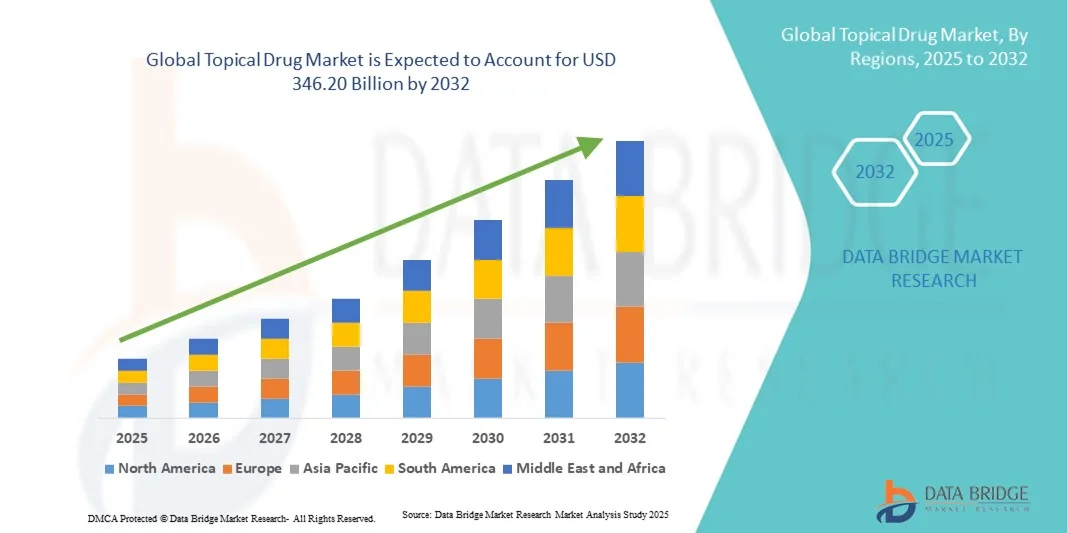
- The global topical drug market size was valued at USD 196.30 billion in 2024 and is expected to reach USD 346.20 billion by 2032, at a CAGR of 7.35% during the forecast period
- The market growth is largely fueled by the increasing prevalence of skin disorders, rising awareness of targeted therapies, and technological advancements in drug formulations, leading to more effective and convenient topical treatments
- Furthermore, growing demand from patients and healthcare providers for safe, easy-to-apply, and efficacious solutions is positioning topical drugs as a preferred treatment option for dermatological and localized conditions. These converging factors are accelerating the uptake of topical drug solutions, thereby significantly boosting the industry's growth
Topical Drug Market Analysis
- Topical drugs, offering localized treatment and non-invasive administration, are increasingly vital components in dermatology, pain management, and cosmetic applications due to their convenience, targeted action, and ease of self-application
- The escalating demand for topical drugs is primarily fueled by rising awareness of skin and pain conditions, growing preference for non-invasive treatments, and the adoption of advanced formulations for better efficacy and patient compliance
- North America dominated the topical drug market with the largest revenue share of 42.56% in 2024, driven by the region’s advanced healthcare infrastructure, high consumer awareness, and the presence of leading pharmaceutical companies. The U.S., in particular, witnessed substantial growth in topical drug consumption across dermatology, pain management, and cosmetic applications, fueled by innovations in formulation technologies, including sustained-release gels, transdermal patches, and advanced dermatological creams. High healthcare expenditure and increasing adoption of clinically tested and prescription-based topical therapies further reinforced the market’s dominance
- Asia-Pacific is expected to be the fastest-growing region in the topical drug market during the forecast period, registering a CAGR of 23.1% from 2025 to 2032. The growth is supported by rising urbanization, increasing disposable incomes, and expanding healthcare infrastructure in countries such as China, India, and Japan. In addition, the growing prevalence of dermatological conditions, increasing awareness of preventive skincare, and rising demand for pain relief and cosmetic topical treatments contribute significantly to the market expansion in the region
- The dermatology segment dominated the topical drug market with a revenue share of 49.3% in 2024, due to the high prevalence of skin disorders worldwide, rising awareness of topical treatments, and growing adoption of non-invasive therapies
Report Scope and Topical Drug Market Segmentation
|
Attributes |
Topical Drug Key Market Insights |
|
Segments Covered |
|
|
Countries Covered |
North America
Europe
Asia-Pacific
Middle East and Africa
South America
|
|
Key Market Players |
|
|
Market Opportunities |
|
|
Value Added Data Infosets |
In addition to the insights on market scenarios such as market value, growth rate, segmentation, geographical coverage, and major players, the market reports curated by the Data Bridge Market Research also include in-depth expert analysis, pricing analysis, brand share analysis, consumer survey, demography analysis, supply chain analysis, value chain analysis, raw material/consumables overview, vendor selection criteria, PESTLE Analysis, Porter Analysis, and regulatory framework. |
Topical Drug Market Trends
Enhanced Convenience Through Advanced Formulations and Delivery Systems
- A significant and accelerating trend in the global topical drug market is the increasing focus on advanced formulations and innovative delivery systems that enhance efficacy, patient compliance, and ease of application. This trend is significantly improving therapeutic outcomes and broadening the applicability of topical treatments across dermatology, pain management, and wound care
- For instance, liposomal and nano-emulsion-based topical formulations are being developed to improve drug penetration, stability, and targeted delivery. Similarly, hydrogel-based and transdermal patches are providing sustained release options for chronic conditions, offering patients more consistent therapeutic effects
- Advanced topical drug delivery enables precise targeting of affected areas, reduces systemic side effects, and improves patient adherence to treatment regimens. Novel carriers such as microneedles, ethosomes, and nanoparticles are being integrated into topical formulations to optimize absorption and bioavailability
- The combination of formulation innovation with patient-centric designs, such as ease-of-application tubes, sprays, or gels, facilitates greater acceptance and routine use of topical therapies. This is particularly significant in populations with limited dexterity, such as elderly patients or those with chronic musculoskeletal conditions
- The trend towards personalized and precision topical therapies, including combination formulations and customizable dosing, is reshaping treatment protocols in dermatology, pain management, and chronic wound care. Pharmaceutical companies are increasingly investing in R&D to develop patient-friendly, effective, and safe topical drug solutions
- The demand for novel and effective topical drugs is growing rapidly across both prescription and over-the-counter segments, as healthcare providers and patients increasingly prioritize efficacy, safety, and convenience in dermatological and localized therapies
Topical Drug Market Dynamics
Driver
Rising Prevalence of Skin Disorders, Pain Management Needs, and Chronic Wounds
- The growing incidence of dermatological conditions, chronic pain, and non-healing wounds is a significant driver of the topical drug market. Increasing patient awareness and demand for effective localized therapies are fueling adoption
- For instance, in 2024, several pharmaceutical companies launched advanced topical formulations for psoriasis, eczema, and neuropathic pain, aiming to improve patient compliance and therapeutic outcomes. Such initiatives are expected to drive the Topical Drug industry growth in the forecast period
- The rising prevalence of chronic wounds and diabetic ulcers, particularly in aging populations, is increasing the need for advanced topical therapies that promote faster healing and reduce infection risks
- Enhanced awareness about non-invasive treatment options and patient preference for self-administered topical therapies over systemic medications contribute to market growth
- The development of multifunctional topical drugs, combining anti-inflammatory, analgesic, and regenerative properties, supports the increasing adoption of advanced therapies across clinical and home care settings
- Continuous research in formulation technologies and integration of novel excipients improves therapeutic efficacy, stability, and shelf-life, making topical drugs more accessible and effective for patients globally
Restraint/Challenge
Regulatory Complexity, Formulation Challenges, and Market Access Constraints
- Stringent regulatory requirements for topical drug approval, including safety, efficacy, and quality testing, pose challenges to new product launches and market penetration. Compliance with varying international standards can delay product commercialization
- High development costs associated with advanced formulation technologies, such as nano-carriers, liposomes, and transdermal patches, can limit investment, especially for small- and mid-sized pharmaceutical companies
- Variability in patient response due to skin type, age, or disease condition can impact the effectiveness of topical therapies, creating challenges in standardizing dosing and formulation
- Storage, stability, and packaging requirements for sensitive formulations, such as temperature-sensitive gels or biologic-containing creams, increase production and distribution costs
- Market access constraints, including reimbursement limitations and preference for systemic therapies in some regions, can slow adoption despite demonstrated efficacy
- Emerging competition from generic topical drugs and alternative delivery systems may reduce profitability for novel formulations, requiring companies to balance innovation with cost-effectiveness
- Addressing these challenges through robust clinical trials, regulatory compliance strategies, and cost-optimized manufacturing is critical for sustained growth in the topical drug market
Topical Drug Market Scope
The market is segmented on the basis of product, disease, and end-user.
- By Product
On the basis of product, the topical drug market is segmented into liquid, semisolid, and solid formulations. The semisolid segment dominated the market with a revenue share of 46.5% in 2024, driven by its widespread use in dermatology, pain management, and wound care applications. Semisolids, such as creams, gels, and ointments, offer better patient compliance, localized action, and ease of application. Hospitals and clinics prefer semisolids due to their controlled dosage, minimal systemic side effects, and suitability for both acute and chronic conditions. Technological advancements in formulation, such as sustained-release and enhanced absorption, further strengthen the segment’s adoption. The availability of generic and branded semisolid products also reduces treatment costs. Increasing skin-related health issues, including eczema, psoriasis, and chronic wounds, along with rising cosmetic dermatology demand, fuel market growth. Healthcare providers in emerging economies are increasingly adopting semisolids as cost-effective alternatives to systemic drugs. Regulatory approvals for topical therapeutic innovations further support the segment. The segment’s versatility across multiple indications ensures steady demand across hospitals, clinics, and outpatient centers.
The liquid segment is expected to witness the fastest CAGR of 19.2% from 2025 to 2032, attributed to its increasing application in ophthalmology, respiratory treatments, and transdermal therapy. Liquids, such as solutions, suspensions, and sprays, are favored for precise dosing and rapid absorption. Rising prevalence of eye disorders, upper respiratory infections, and the need for rapid-acting formulations support growth. The segment also benefits from technological innovations in nebulizers, dropper systems, and spray devices, ensuring safe and effective administration. Expansion of ambulatory care centers and homecare treatments is driving adoption in both developed and emerging markets. Rising awareness about convenience, portability, and minimal discomfort further supports uptake. Market players are increasingly introducing ready-to-use and multi-dose liquid formulations, making this segment highly attractive.
- By Disease
On the basis of disease, the Topical Drug market is segmented into dermatology, ophthalmology, rectal, gynecology, and respiratory. The dermatology segment dominated with a revenue share of 49.3% in 2024, due to the high prevalence of skin disorders worldwide, rising awareness of topical treatments, and growing adoption of non-invasive therapies. Dermatology products are used extensively in hospitals, dermatology clinics, and cosmetic centers. Advanced formulations, including antimicrobial, anti-inflammatory, and cosmetic dermatology creams, further enhance adoption. Government initiatives promoting skin health awareness, combined with increasing aging populations, support demand. The segment also benefits from technological innovations in targeted delivery systems, better patient compliance, and reduced systemic exposure. Insurance coverage for chronic skin conditions in developed regions encourages hospitals and clinics to adopt topical solutions.
The ophthalmology segment is expected to witness the fastest CAGR of 18.5% from 2025 to 2032, driven by the rising prevalence of eye disorders such as glaucoma, dry eye, and conjunctivitis. Topical ocular drugs, including eye drops and gels, are preferred for their localized effect, minimal systemic exposure, and rapid onset of action. Hospitals, clinics, and ambulatory care centers increasingly utilize ophthalmic products for outpatient treatment. Technological improvements, such as preservative-free and sustained-release formulations, support segment growth. Awareness campaigns for eye health, increasing geriatric populations, and the rising incidence of vision disorders contribute to high adoption. The segment benefits from expanding healthcare access in Asia-Pacific and Latin America.
- By End-User
On the basis of end-user, the Topical Drug market is segmented into hospitals, clinics, and ambulatory centers. The hospitals segment dominated the market with a revenue share of 52.1% in 2024, owing to the high patient footfall, availability of specialized departments, and the preference for standardized treatment protocols using topical drugs. Hospitals utilize topical medications across dermatology, ophthalmology, and post-surgical care, emphasizing efficacy, safety, and patient compliance. Technologically advanced formulations, ease of integration into treatment regimens, and availability of hospital pharmacies supporting compounding and ready-to-use topical drugs drive adoption. The segment benefits from government hospital programs, reimbursement policies, and bulk procurement strategies.
The clinics segment is expected to witness the fastest CAGR of 20.7% from 2025 to 2032, especially multi-specialty and outpatient clinics. Clinics adopt topical drugs to provide cost-effective treatment for chronic and acute conditions without requiring systemic therapies. Growth is driven by increasing clinic networks, expansion of dermatology and ophthalmology specialty centers, and rising patient awareness. Advanced formulations and high-efficacy products ensure better patient compliance and repeat prescriptions. The trend toward outpatient care and home-use treatments also supports segment growth.
Topical Drug Market Regional Analysis
- North America dominated the topical drug market with the largest revenue share of 42.56% in 2024, driven by the region’s advanced healthcare infrastructure, high consumer awareness, and the presence of leading pharmaceutical companies
- The market in particular, witnessed substantial growth in topical drug consumption across dermatology, pain management, and cosmetic applications, fueled by innovations in formulation technologies, including sustained-release gels, transdermal patches, and advanced dermatological creams. High healthcare expenditure and increasing adoption of clinically tested and prescription-based topical therapies further reinforced the market’s dominance. In addition, rising patient preference for non-invasive treatment options, growing geriatric population, and increased focus on preventive and cosmetic skincare contributed to the wide adoption of topical drug solutions across both clinical and over-the-counter segments
- The expansion of e-commerce platforms and robust pharmaceutical distribution channels in the region also facilitated easier accessibility and availability of topical drugs, enhancing consumer convenience and accelerating market growth
U.S. Topical Drug Market Insight
The U.S. topical drug market captured the largest revenue share within North America in 2024, fueled by the adoption of innovative formulations, increasing prevalence of chronic dermatological conditions, and rising demand for advanced pain management and cosmetic therapies. Growth is driven by pharmaceutical R&D investments, new product launches, and enhanced patient awareness of effective topical solutions. In addition, the country’s strong regulatory framework and high healthcare expenditure encourage adoption of clinically validated topical therapies across hospitals, clinics, and retail pharmacies.
Europe Topical Drug Market Insight
The Europe topical drug market is projected to expand at a substantial CAGR throughout the forecast period, primarily driven by growing healthcare expenditure, increasing prevalence of skin disorders, and advancements in formulation technologies. The rise in patient awareness regarding preventive skincare and non-invasive therapeutic options is fostering adoption. In addition, aging populations in countries such as Germany, France, and Italy are boosting the demand for dermatological, pain relief, and cosmetic topical treatments. The presence of well-established pharmaceutical manufacturers and expanding OTC product availability further accelerates market growth across residential and clinical applications.
U.K. Topical Drug Market Insight
The U.K. topical drug market is anticipated to grow at a noteworthy CAGR during the forecast period, fueled by rising awareness of dermatological health, increasing incidence of chronic skin conditions, and growing adoption of advanced topical therapies for pain management and cosmetic purposes. Furthermore, expanding retail pharmacy chains, online drug delivery platforms, and healthcare initiatives promoting preventive care are supporting market expansion.
Germany Topical Drug Market Insight
The Germany topical drug market is expected to expand at a considerable CAGR during the forecast period, driven by the country’s focus on healthcare innovation, advanced pharmaceutical R&D infrastructure, and high patient awareness of preventive and therapeutic topical treatments. Increasing adoption of clinically validated and prescription-based topical drugs, coupled with a growing geriatric population, further strengthens market growth. In addition, sustainable and eco-friendly topical formulations are gaining traction, aligning with local consumer preferences for green and safe healthcare products.
Asia-Pacific Topical Drug Market Insight
The Asia-Pacific topical drug market is poised to grow at the fastest CAGR of 23.1% during the forecast period of 2025 to 2032, driven by rising urbanization, increasing disposable incomes, and expanding healthcare infrastructure in countries such as China, India, and Japan. The growing prevalence of dermatological conditions, coupled with rising awareness of preventive skincare and demand for cosmetic and pain relief treatments, significantly contributes to market expansion. Moreover, government initiatives supporting healthcare access, increasing pharmaceutical manufacturing capabilities, and the affordability of advanced topical formulations are accelerating adoption across clinical and retail sectors.
Japan Topical Drug Market Insight
The Japan topical drug market is gaining momentum due to the country’s high healthcare standards, rapid urbanization, and increasing demand for convenience in self-administered therapies. Rising incidences of skin disorders, growing awareness of cosmetic skincare, and an aging population drive adoption across dermatology and pain management segments. In addition, integration of advanced drug delivery technologies and sustained-release formulations further propels growth in both residential and clinical use.
China Topical Drug Market Insight
The China topical drug market accounted for the largest market revenue share in Asia-Pacific in 2024, attributed to rapid urbanization, an expanding middle class, and growing healthcare access. Increasing prevalence of chronic dermatological conditions, rising demand for pain relief and cosmetic therapies, and government initiatives supporting healthcare infrastructure are key factors driving market growth. The expansion of domestic pharmaceutical manufacturing, combined with rising consumer awareness of advanced topical formulations, is further boosting adoption across hospitals, clinics, and retail channels.
Topical Drug Market Share
The Topical Drug industry is primarily led by well-established companies, including:
- Johnson & Johnson and its affiliates (U.S.)
- GSK plc (U.K.)
- Novartis AG (Switzerland)
- Pfizer Inc. (U.S.)
- Sanofi (France)
- AbbVie Inc. (U.S.)
- Bayer AG (Germany)
- Sun Pharmaceutical Industries Ltd. (India)
- Dr. Reddy’s Laboratories Ltd. (India)
- Teva Pharmaceutical Industries Ltd. (Israel)
- Aurobindo Pharma Ltd. (India)
- Cipla Ltd. (India)
- Glenmark Pharmaceuticals Ltd. (India)
Latest Developments in Global Topical Drug Market
- In May 2023, the U.S. Food and Drug Administration (FDA) approved Vyjuvek (beremagene geperpavec), the first topical gene therapy for treating dystrophic epidermolysis bullosa (DEB), a rare skin condition. Vyjuvek utilizes a genetically modified herpes simplex virus to deliver normal copies of the COL7A1 gene to wounds, promoting skin healing
- In July 2025, India's Sun Pharma launched its anti-baldness drug, Leqselvi, in the United States following a patent dispute resolution with Incyte Corp. Leqselvi is indicated for the treatment of severe alopecia areata, an autoimmune disorder causing patchy hair loss. The launch is expected to significantly boost Sun Pharma's presence in the U.S. dermatology market
- In September 2025, Bristol Myers Squibb announced that it would offer its psoriasis drug, Sotyktu, to uninsured and underinsured U.S. patients at more than an 80% discount through its new direct-to-patient platform, BMS Patient Connect. Starting in January 2026, Sotyktu will be available for $950 per month, significantly lower than its current list price of USD 6,828

- Interactive Data Analysis Dashboard
- Company Analysis Dashboard for high growth potential opportunities
- Research Analyst Access for customization & queries
- Competitor Analysis with Interactive dashboard
- Latest News, Updates & Trend analysis
- Harness the Power of Benchmark Analysis for Comprehensive Competitor Tracking
Data collection and base year analysis are done using data collection modules with large sample sizes. The stage includes obtaining market information or related data through various sources and strategies. It includes examining and planning all the data acquired from the past in advance. It likewise envelops the examination of information inconsistencies seen across different information sources. The market data is analysed and estimated using market statistical and coherent models. Also, market share analysis and key trend analysis are the major success factors in the market report. To know more, please request an analyst call or drop down your inquiry.
The key research methodology used by DBMR research team is data triangulation which involves data mining, analysis of the impact of data variables on the market and primary (industry expert) validation. Data models include Vendor Positioning Grid, Market Time Line Analysis, Market Overview and Guide, Company Positioning Grid, Patent Analysis, Pricing Analysis, Company Market Share Analysis, Standards of Measurement, Global versus Regional and Vendor Share Analysis. To know more about the research methodology, drop in an inquiry to speak to our industry experts.
Data Bridge Market Research is a leader in advanced formative research. We take pride in servicing our existing and new customers with data and analysis that match and suits their goal. The report can be customized to include price trend analysis of target brands understanding the market for additional countries (ask for the list of countries), clinical trial results data, literature review, refurbished market and product base analysis. Market analysis of target competitors can be analyzed from technology-based analysis to market portfolio strategies. We can add as many competitors that you require data about in the format and data style you are looking for. Our team of analysts can also provide you data in crude raw excel files pivot tables (Fact book) or can assist you in creating presentations from the data sets available in the report.













