


Torg-Winchester Syndrome Market Size
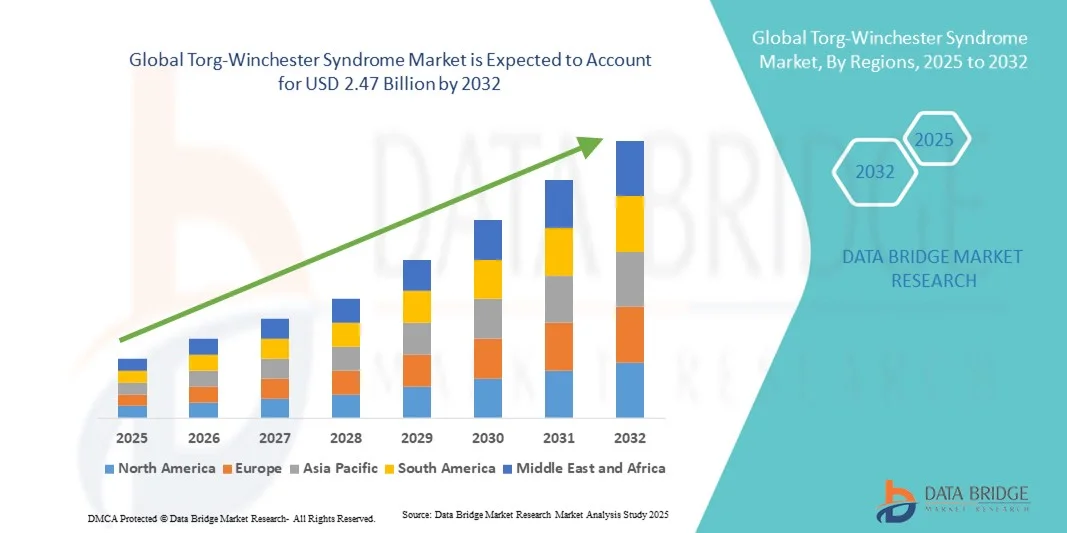
- The global Torg-Winchester Syndrome market size was valued at USD 1.57 billion in 2024 and is expected to reach USD 2.47 billion by 2032, at a CAGR of 5.80% during the forecast period
- The market growth is primarily driven by increasing research efforts to understand the genetic and molecular basis of rare connective tissue disorders, coupled with rising awareness and early diagnosis initiatives supported by healthcare organizations and patient advocacy groups
- Furthermore, advancements in precision medicine, orphan drug development, and supportive government frameworks for rare disease research are fostering innovation in treatment approaches. These combined factors are propelling the expansion of the Torg-Winchester Syndrome market and strengthening its global growth trajectory
Torg-Winchester Syndrome Market Analysis
- Torg-Winchester Syndrome, a rare hereditary disorder marked by progressive osteolysis and connective tissue degeneration, is gaining research focus as advances in molecular genetics and rare disease diagnostics improve clinical recognition and management options. The market is expanding due to the growing integration of genomic technologies in early disease detection and targeted intervention research
- The increasing demand for specialized diagnosis and care is primarily driven by the rising prevalence of rare bone disorders, improved genetic screening programs, and enhanced collaborations between academic research bodies and pharmaceutical companies pursuing orphan drug development for ultra-rare conditions
- North America dominated the Torg-Winchester Syndrome market with the largest revenue share of 42.9% in 2024, supported by robust investments in rare disease research, advanced healthcare infrastructure, and the active participation of U.S.-based genetic research centers in collaborative studies on skeletal dysplasias
- Asia-Pacific is expected to be the fastest-growing region during the forecast period, owing to increasing adoption of molecular genetic testing, improving healthcare accessibility, and growing awareness initiatives surrounding rare congenital disorders
- The molecular genetic testing segment led the Torg-Winchester Syndrome market with a market share of 47.4% in 2024, driven by its precision in identifying MMP2 gene mutations, enabling early and accurate diagnosis, and facilitating the development of patient-specific treatment and management strategies
Report Scope and Torg-Winchester Syndrome Market Segmentation
|
Attributes |
Torg-Winchester Syndrome Key Market Insights |
|
Segments Covered |
|
|
Countries Covered |
North America
Europe
Asia-Pacific
Middle East and Africa
South America
|
|
Key Market Players |
|
|
Market Opportunities |
|
|
Value Added Data Infosets |
In addition to the insights on market scenarios such as market value, growth rate, segmentation, geographical coverage, and major players, the market reports curated by the Data Bridge Market Research also include in-depth expert analysis, patient epidemiology, pipeline analysis, pricing analysis, and regulatory framework |
Torg-Winchester Syndrome Market Trends
Advancements in Gene-Based Diagnostics and Research Collaboration
- A significant and accelerating trend in the global Torg-Winchester Syndrome market is the advancement of gene-based diagnostic tools and the expansion of collaborative research initiatives aimed at understanding the genetic mutations, particularly MMP2 gene defects, responsible for this rare disorder
- For instance, researchers at the National Institutes of Health (NIH) and international genetic research centers are conducting studies using next-generation sequencing (NGS) to identify novel variants linked to Torg-Winchester Syndrome, improving early and precise detection
- The integration of genomic sequencing with AI-based bioinformatics enables more accurate mutation mapping and phenotype correlation, helping clinicians predict disease progression and personalize treatment strategies for affected patients
- Furthermore, multinational collaborations between research institutions and biotech firms are fostering shared genetic databases and registries, promoting data transparency and accelerating rare disease discovery and therapeutic pipeline development
- This growing trend toward precision diagnostics and interdisciplinary collaboration is revolutionizing how ultra-rare genetic bone disorders are studied and managed, laying the foundation for targeted therapies and improved patient outcomes
- The increasing focus on genetic screening, cross-border research alliances, and advanced molecular testing is expected to strengthen diagnostic capabilities and create new therapeutic opportunities in the global Torg-Winchester Syndrome market
Torg-Winchester Syndrome Market Dynamics
Driver
Rising Research Investments and Orphan Drug Development Initiative
- The growing global emphasis on rare disease research and the rising number of orphan drug development programs are key drivers fueling growth in the Torg-Winchester Syndrome market
- For instance, in March 2024, several biotech firms initiated partnerships with academic medical centers to explore enzyme replacement and gene-editing approaches targeting MMP2-related disorders, marking a major step toward therapeutic innovation
- As governments and regulatory agencies enhance funding for rare disease projects, more research networks are being established to improve clinical trial accessibility and patient registry coverage
- Furthermore, increasing collaboration between biopharmaceutical companies and genetic laboratories is advancing diagnostic accuracy and early intervention possibilities for rare skeletal dysplasias
- The expansion of global orphan drug legislations, including incentives such as market exclusivity and research grants, continues to attract pharmaceutical investment and accelerate therapy discovery in this niche domain
- Growing research support, combined with public-private partnerships and technological breakthroughs in genomics, is driving significant momentum in developing sustainable treatment pathways for Torg-Winchester Syndrome
- The rising availability of advanced biobanks and rare disease tissue repositories is enabling researchers to analyze patient samples more effectively, facilitating progress in biomarker discovery and potential drug target identification
- The involvement of rare disease consortia and global advocacy groups is strengthening funding mechanisms, patient engagement, and international collaboration to fast-track therapeutic advancements in this market
Restraint/Challenge
Limited Patient Pool and Diagnostic Accessibility Barriers
- The extremely low global prevalence of Torg-Winchester Syndrome, coupled with a lack of clinical awareness, poses a major challenge to achieving large-scale research and commercial viability
- For instance, only a handful of confirmed cases worldwide limit the availability of patient data, hindering robust clinical trials and making it difficult to evaluate potential therapeutic efficacy
- The scarcity of specialized diagnostic centers capable of conducting comprehensive molecular testing delays early detection and contributes to frequent misdiagnosis in many regions
- Furthermore, the high cost of genetic testing technologies and the absence of widespread reimbursement frameworks in developing economies create accessibility gaps for accurate diagnosis.
- Regulatory challenges in securing orphan drug approval and limited funding for ultra-rare conditions further constrain research scalability and cross-border collaboration opportunities
- Overcoming these barriers through increased awareness campaigns, global rare disease registries, and affordable genetic testing initiatives will be essential to foster sustainable growth in the Torg-Winchester Syndrome market
- The lack of standardized clinical guidelines for management and monitoring leads to inconsistent treatment practices, reducing overall care quality for affected individuals
- The low return on investment (ROI) discourages private pharmaceutical firms from entering this niche segment, limiting innovation and slowing the pace of new therapy development
Torg-Winchester Syndrome Market Scope
The market is segmented on the basis of symptoms, gender, diagnosis, and treatment.
- By Symptoms
On the basis of symptoms, the Torg-Winchester Syndrome market is segmented into multifocal osteoporosis, progressive osteolysis, osteopenia, arthropathy, congenital heart defects, coarse facial features, corneal opacities, and skin findings. The Progressive Osteolysis segment dominated the market with the largest revenue share in 2024, as it represents the most clinically defining and debilitating feature of the disorder. This symptom leads to severe bone resorption, deformities, and physical disability, prompting frequent medical intervention and research focus. Hospitals and genetic clinics are increasingly prioritizing early osteolysis detection through advanced imaging and biochemical testing to improve patient outcomes. In addition, ongoing studies into molecular pathways related to osteoclastic activity are driving therapeutic interest in managing progressive osteolysis. The segment’s dominance is further supported by a growing number of clinical publications emphasizing its diagnostic and prognostic significance. Consequently, progressive osteolysis remains the key target for both clinical management and drug development in this market.
The Multifocal Osteoporosis segment is expected to witness the fastest growth rate from 2025 to 2032, due to advancements in bone density diagnostics and increased awareness among clinicians. Multifocal osteoporosis, involving the loss of bone mass in multiple skeletal regions, is gaining importance for differential diagnosis and disease monitoring. Early identification of bone fragility allows clinicians to implement preventive interventions such as physical therapy and calcium/vitamin D supplementation. Moreover, technological innovations in DEXA scanning and bone turnover markers are enhancing precision in osteoporosis assessment. The growing clinical emphasis on distinguishing multifocal osteoporosis from other metabolic bone disorders is also fueling this segment’s expansion. As a result, this segment is projected to grow significantly during the forecast period.
- By Gender
On the basis of gender, the Torg-Winchester Syndrome market is bifurcated into male and female. The Male segment dominated the market with the largest revenue share in 2024, as reported cases indicate slightly higher prevalence and severity among males. Studies suggest that males often exhibit earlier onset and more pronounced skeletal deformities, resulting in greater clinical attention and diagnosis rates. Research funding and registry data have predominantly focused on male patients, providing a more robust dataset for genetic correlation and treatment planning. Healthcare professionals emphasize early screening among males presenting with unexplained bone resorption or connective tissue abnormalities to ensure timely management. The segment’s dominance also stems from its contribution to research trials, where male cases serve as key study models for rare bone disorders. Hence, male representation continues to drive both diagnostic and therapeutic advancements in this field.
The Female segment is projected to grow at the fastest CAGR from 2025 to 2032, as awareness regarding genetic disorders among women continues to rise. Historically underdiagnosed, female patients are now increasingly included in rare disease screening initiatives across hospitals and genetic clinics. Enhanced accessibility to molecular testing and counseling programs is improving case identification among female carriers and symptomatic individuals. Governments and advocacy organizations are expanding educational campaigns on genetic bone disorders, encouraging early diagnosis in women. The expansion of female-focused patient registries is also improving data accuracy and gender balance in clinical research. This increasing inclusion and diagnostic progress are expected to accelerate the growth of the female segment throughout the forecast period.
- By Diagnosis
On the basis of diagnosis, the market is divided into clinical genetic testing, molecular genetic testing, and others. The Molecular Genetic Testing segment dominated the Torg-Winchester Syndrome market with the largest revenue share of 47.4% in 2024, driven by its precision in identifying MMP2 gene mutations, the key genetic cause of this condition. Molecular testing enables definitive confirmation of diagnosis, reducing the time to intervention and improving disease management outcomes. With the growing use of next-generation sequencing (NGS) and advanced bioinformatics tools, healthcare providers can now detect even subtle genetic variants linked to the syndrome. The integration of molecular testing into rare disease programs by major research hospitals is accelerating adoption. In addition, increased availability of laboratory infrastructure and funding for genetic diagnostics has made molecular testing more accessible. As personalized medicine becomes a major healthcare focus, this segment is expected to maintain its dominance in the coming years.
The Clinical Genetic Testing segment is anticipated to witness the fastest growth rate during the forecast period, supported by the growing adoption of initial diagnostic evaluations in clinical settings. This segment includes detailed clinical assessment, imaging studies, and pedigree analysis to identify potential genetic transmission patterns. Clinical evaluations are often the first diagnostic step before confirmatory molecular tests, especially in regions with limited access to genomic technology. The affordability of these tests and growing physician training in recognizing rare syndromes are enhancing early identification rates. In addition, global expansion of rare disease diagnostic networks is making clinical evaluation more systematic and data-driven. This segment’s growth is further reinforced by its vital role in expanding patient registries and guiding genetic counseling for families.
- By Treatment
On the basis of treatment, the Torg-Winchester Syndrome market is segmented into physical therapy and analgesic therapy. The Physical Therapy segment dominated the market with the largest share in 2024, as it remains the cornerstone of supportive management for improving joint flexibility and mobility. Physical therapy is critical for reducing musculoskeletal stiffness, preventing deformities, and enhancing quality of life in patients with skeletal dysplasia. Healthcare providers are increasingly incorporating customized rehabilitation programs for children and adults with rare bone diseases. The expansion of multidisciplinary care centers and hospital-based physiotherapy departments is further driving the adoption of this treatment modality. Growing clinical evidence highlighting the role of consistent physiotherapy in maintaining motor function supports its market leadership. Moreover, advancements in assistive technologies, including robotic and hydrotherapy systems, are enhancing patient outcomes in this segment.
The Analgesic Therapy segment is expected to record the fastest CAGR from 2025 to 2032, as pain management becomes a central focus in treating chronic osteolysis and arthropathy. Analgesic therapy is crucial in managing long-term discomfort and inflammation resulting from progressive bone degradation. Pharmaceutical advancements in targeted pain modulators and non-opioid alternatives are creating new opportunities in this space. For instance, researchers are developing safer formulations of anti-inflammatory agents tailored for patients with rare bone conditions. Increasing hospital-based pain management programs and improved access to prescription therapies are also accelerating segment adoption. As awareness of comprehensive palliative care for rare diseases grows, the analgesic therapy segment is projected to expand rapidly during the forecast period.
Torg-Winchester Syndrome Market Regional Analysis
- North America dominated the Torg-Winchester Syndrome market with the largest revenue share of 42.9% in 2024, supported by robust investments in rare disease research, advanced healthcare infrastructure, and the active participation of U.S.-based genetic research centers in collaborative studies on skeletal dysplasias
- The presence of specialized healthcare institutions, expanding access to genomic sequencing technologies, and ongoing clinical studies targeting connective tissue and skeletal disorders further support market expansion
- In addition, supportive reimbursement frameworks for rare disease testing and treatment are enhancing patient access to genetic testing and multidisciplinary therapies. These factors collectively position North America as a leading hub for both research and patient care in the Torg-Winchester Syndrome market
U.S. Torg-Winchester Syndrome Market Insight
The U.S. Torg-Winchester Syndrome market captured the largest revenue share of 78% in 2024 within North America, driven by the nation’s robust genomic research ecosystem and increased awareness of rare skeletal disorders. The presence of leading genetic research centers and advanced diagnostic technologies such as next-generation sequencing (NGS) have significantly improved early diagnosis rates. Federal initiatives supporting rare disease research through NIH and patient advocacy networks are further bolstering clinical advancements. Moreover, rising collaboration between biotechnology firms and academic institutions is accelerating the discovery of potential gene-targeted therapies. These factors collectively strengthen the U.S. position as a key hub for innovation and patient management in Torg-Winchester Syndrome.
Europe Torg-Winchester Syndrome Market Insight
The Europe Torg-Winchester Syndrome market is projected to grow at a notable CAGR during the forecast period, supported by well-established healthcare infrastructure and government-backed rare disease programs. Increased access to genetic counseling and public health awareness initiatives in countries such as Germany, France, and Italy are fostering better patient outcomes. The European Reference Networks (ERNs) for rare and complex diseases are playing a pivotal role in cross-border collaboration and diagnostic harmonization. Furthermore, growing investments in molecular research and patient registries are enhancing disease tracking and data-driven treatment strategies across the continent.
U.K. Torg-Winchester Syndrome Market Insight
The U.K. Torg-Winchester Syndrome market is anticipated to expand steadily due to rising integration of genetic testing into the National Health Service (NHS) and the development of biobanks for rare disease research. The 100,000 Genomes Project has significantly improved understanding of rare genetic conditions, fostering accurate diagnosis and personalized care approaches. Collaboration between public health authorities and genomic startups is driving the development of molecular diagnostics and patient support systems. Moreover, increasing awareness among healthcare providers and improved access to specialized clinical care centers are supporting sustained market growth in the country.
Germany Torg-Winchester Syndrome Market Insight
The Germany Torg-Winchester Syndrome market is expected to grow at a considerable pace, backed by the country’s advanced molecular diagnostics infrastructure and commitment to rare disease innovation. Government-supported initiatives under the National Action Plan for Rare Diseases have strengthened early screening and interdisciplinary treatment frameworks. German research institutions are actively studying the role of MMP2 gene mutations, which drive the condition’s pathology, fostering new therapeutic approaches. In addition, high research funding, collaborations with global biotech companies, and patient advocacy networks contribute to the market’s steady expansion.
Asia-Pacific Torg-Winchester Syndrome Market Insight
The Asia-Pacific Torg-Winchester Syndrome market is poised to grow at the fastest CAGR of 23% from 2025 to 2032, driven by rising genomic research activities and expanding healthcare access in countries such as Japan, China, and India. Growing government focus on rare disease diagnosis and treatment, alongside the expansion of genetic testing laboratories, is fueling market development. Regional collaborations between research institutes and biotech companies are enabling better data collection and clinical trial participation. Increasing healthcare expenditure and patient advocacy awareness further support early diagnosis and multidisciplinary care across emerging economies.
Japan Torg-Winchester Syndrome Market Insight
The Japan Torg-Winchester Syndrome market is gaining traction due to strong governmental support for rare disease initiatives and advanced clinical genetics programs. Japan’s precision medicine framework and the establishment of nationwide rare disease registries enhance diagnostic precision and treatment access. The integration of AI-assisted genetic analysis tools and hospital-based genomic platforms is accelerating mutation detection in complex skeletal disorders. Moreover, collaborations between research hospitals and pharmaceutical firms are driving translational research aimed at developing molecular and gene-targeted interventions.
India Torg-Winchester Syndrome Market Insight
The India Torg-Winchester Syndrome market accounted for a significant share within Asia-Pacific in 2024, driven by growing access to affordable genetic testing and expanding awareness of congenital skeletal disorders. Government-led rare disease policies, along with initiatives such as the National Policy for Rare Diseases (NPRD), are improving early diagnosis and patient support infrastructure. Domestic biotechnology startups are entering the space, offering localized molecular diagnostic solutions at lower costs. In addition, rising collaborations with global genomic databases and patient advocacy organizations are strengthening disease surveillance and therapeutic development in India.
Torg-Winchester Syndrome Market Share
The Torg-Winchester Syndrome industry is primarily led by well-established companies, including:
- BioMarin (U.S.)
- Ultragenyx Pharmaceutical Inc. (U.S.)
- Sarepta Therapeutics, Inc. (U.S.)
- Vertex Pharmaceuticals Incorporated (U.S.)
- Regeneron Pharmaceuticals, Inc. (U.S.)
- Amgen Inc. (U.S.)
- Pfizer Inc. (U.S.)
- Novartis AG (Switzerland)
- Sanofi (France)
- Takeda Pharmaceutical Company Limited (Japan)
- Merck & Co., Inc. (U.S.)
- Bristol-Myers Squibb Company (U.S.)
- Eli Lilly and Company (U.S.)
- AbbVie Inc. (U.S.)
- Bayer AG (Germany)
- GSK plc (U.K.)
- Novo Nordisk A/S (Denmark)
- CSL Limited (Australia)
- Alnylam Pharmaceuticals, Inc. (U.S.)
- Alkermes plc (Ireland)
What are the Recent Developments in Global Torg-Winchester Syndrome Market?
- In July 2024, Mamadapur et al. published a case series + literature review of MONA (Torg-Winchester spectrum), collating recent case reports, summarizing genotype-phenotype patterns (MMP2 mutations) and practical management notes strengthening the clinical evidence base and highlighting the ongoing absence of disease-modifying therapies
- In September 2023, Ishaq et al. described clinical, radiographic and molecular characterization of affected individuals from two families and reported novel MMP2 splice/missense variants with functional modelling — the study expanded the variant list, documented intrafamilial variability, and reinforced the role of whole-exome/targeted sequencing for accurate diagnosis
- In April 2023, Shakiba et al. (Heliyon) reported a novel homozygous nonsense MMP2 mutation in a child with MONA (first reported case from Iran), highlighted an uncommon initial presentation (congenital heart defect) and recommended earlier genetic screening in children with congenital cardiac lesions plus unexplained skeletal changes — the report added a new pathogenic variant to the MMP2 catalog and urged broader phenotypic awareness
- In March 2023, the GeneReviews entry for Multicentric Osteolysis, Nodulosis and Arthropathy (MONA) was revised (last revision 30 March 2023) to reflect nosology updates and to emphasize that Torg, Winchester and related presentations fall on the same MMP-related spectrum (MMP2 / MMP14), clarifying diagnostic criteria, genetic testing strategy, and management this revision helped standardize nomenclature and clinical guidance for clinicians and geneticists
- In July 2021, Elsebaie and colleagues published a detailed clinical–genetic report of two unrelated children with MMP2 variants, clarifying phenotype–genotype correlations and stressing that MONA/Torg-Winchester can be misdiagnosed as juvenile idiopathic arthritis — the paper expanded the known mutation spectrum and reinforced the need for molecular testing in atypical early-onset arthropathy

- Interactive Data Analysis Dashboard
- Company Analysis Dashboard for high growth potential opportunities
- Research Analyst Access for customization & queries
- Competitor Analysis with Interactive dashboard
- Latest News, Updates & Trend analysis
- Harness the Power of Benchmark Analysis for Comprehensive Competitor Tracking
Data collection and base year analysis are done using data collection modules with large sample sizes. The stage includes obtaining market information or related data through various sources and strategies. It includes examining and planning all the data acquired from the past in advance. It likewise envelops the examination of information inconsistencies seen across different information sources. The market data is analysed and estimated using market statistical and coherent models. Also, market share analysis and key trend analysis are the major success factors in the market report. To know more, please request an analyst call or drop down your inquiry.
The key research methodology used by DBMR research team is data triangulation which involves data mining, analysis of the impact of data variables on the market and primary (industry expert) validation. Data models include Vendor Positioning Grid, Market Time Line Analysis, Market Overview and Guide, Company Positioning Grid, Patent Analysis, Pricing Analysis, Company Market Share Analysis, Standards of Measurement, Global versus Regional and Vendor Share Analysis. To know more about the research methodology, drop in an inquiry to speak to our industry experts.
Data Bridge Market Research is a leader in advanced formative research. We take pride in servicing our existing and new customers with data and analysis that match and suits their goal. The report can be customized to include price trend analysis of target brands understanding the market for additional countries (ask for the list of countries), clinical trial results data, literature review, refurbished market and product base analysis. Market analysis of target competitors can be analyzed from technology-based analysis to market portfolio strategies. We can add as many competitors that you require data about in the format and data style you are looking for. Our team of analysts can also provide you data in crude raw excel files pivot tables (Fact book) or can assist you in creating presentations from the data sets available in the report.












