


What is the Trichinosis Treatment Market Size and Growth Rate?
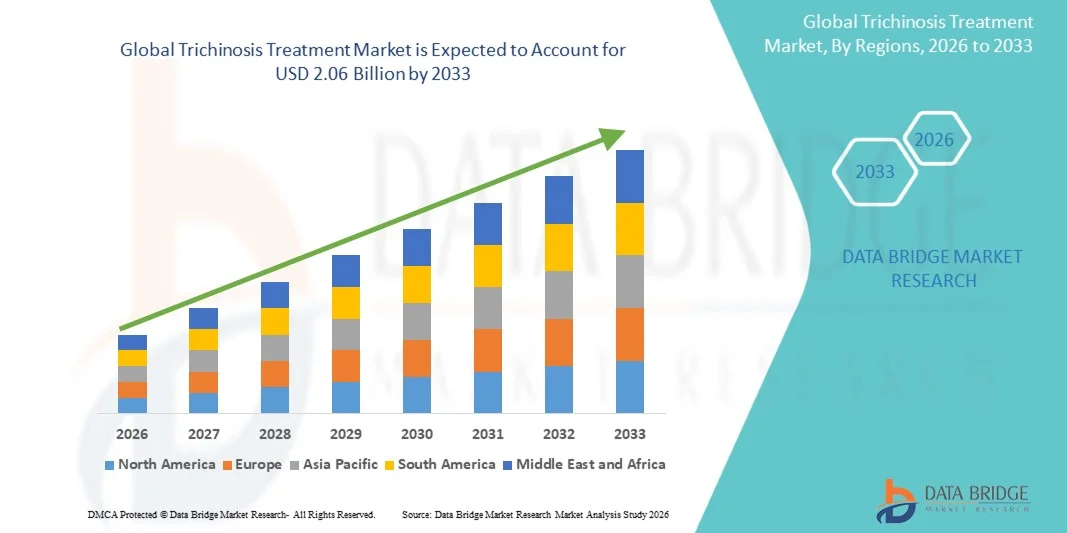
- As per Data Bridge Market Research Analysis the global trichinosis treatment market size was valued at USD 1.20 billion in 2025 and is expected to reach USD 2.06 billion by 2033, at a CAGR of 7.0% during the forecast period
- The market growth is largely driven by increasing awareness of foodborne parasitic infections, especially trichinellosis caused by Trichinella roundworms, along with advancements in antiparasitic therapeutics and supportive treatment protocols that enhance clinical outcomes
- Furthermore, rising healthcare expenditure, improved diagnostic capabilities, and growing investments in research and development for novel and effective treatment options are encouraging adoption in both hospitals and homecare settings, thereby elevating the demand for trichinosis treatments and significantly boosting industry expansion over the coming years
Market Size and Forecast:
- Global Market Value (2025): USD 1.20 billion
- Expected Market Value (2033): USD 2.06 billion
- Forecast CAGR (2026–2033): 7.0%
How Trichinosis Treatment Market Analysed?
- Trichinosis treatments, including antiparasitic drugs and supportive therapies, are increasingly vital components of managing trichinellosis infections in both humans and animals due to their ability to reduce parasitic load, alleviate symptoms, and prevent severe complications
- The escalating demand for trichinosis treatments is primarily fueled by growing awareness of foodborne parasitic infections, rising consumption of undercooked meat products, and increased focus on early diagnosis and effective management protocols
- North America dominated the trichinosis treatment market with the largest revenue share of 38.5% in 2025, driven by advanced healthcare infrastructure, high awareness of zoonotic infections, and the presence of key pharmaceutical companies investing in research and development of novel therapeutic options
- Asia-Pacific is expected to be the fastest-growing region in the trichinosis treatment market during the forecast period due to higher prevalence rates, increasing healthcare access, and rising government initiatives for infectious disease control
- Antiparasitic segment dominated the trichinosis treatment market in 2025 with a market share of 62.7%, owing to their proven efficacy in eliminating Trichinella larvae, established clinical use, and inclusion in standard treatment protocols for trichinellosis management
Report Scope and Trichinosis Treatment Market Segmentation
|
Attributes |
Trichinosis Treatment Key Market Insights |
|
Segments Covered |
|
|
Countries Covered |
North America
Europe
Asia-Pacific
Middle East and Africa
South America
|
|
Key Market Players |
|
|
Market Opportunities |
|
|
Value Added Data Infosets |
In addition to the insights on market scenarios such as market value, growth rate, segmentation, geographical coverage, and major players, the market reports curated by the Data Bridge Market Research also include in-depth expert analysis, patient epidemiology, pipeline analysis, pricing analysis, and regulatory framework |
Trichinosis Treatment Market Trends
“Advancements in Targeted Antiparasitic Therapies”
- A significant and accelerating trend in the global trichinosis treatment market is the development of more targeted and patient-friendly antiparasitic therapies, including oral formulations and combination regimens that improve treatment efficacy and reduce side effects
- For instance, recent clinical studies have explored optimized albendazole and mebendazole dosing schedules that increase parasite clearance rates while minimizing gastrointestinal discomfort. Similarly, combination therapies with corticosteroids for severe cases are gaining traction to manage inflammation and tissue damage caused by Trichinella infection
- Innovation in treatment delivery systems, such as slow-release capsules or pediatric-friendly formulations, is enabling better adherence and improving outcomes in high-risk populations, particularly in rural and endemic regions
- Integration of treatment protocols with diagnostic tools, including serological and molecular testing, allows early detection and timely intervention, further improving recovery rates and reducing severe complications
- Emerging research on adjunctive therapies and immunomodulators is enhancing treatment outcomes by reducing inflammation and tissue damage, offering a more holistic approach to managing trichinosis
- This trend towards more effective, patient-centric, and integrated treatment approaches is reshaping expectations for trichinosis management, prompting pharmaceutical companies to invest in R&D for advanced antiparasitic solutions
- The demand for safer, easier-to-administer, and clinically optimized trichinosis treatments is growing rapidly across both endemic and non-endemic regions, as healthcare providers aim to reduce disease burden and improve patient outcomes
Trichinosis Treatment Market Dynamics
Driver
“Rising Awareness of Foodborne Parasitic Infections and Preventive Healthcare”
- The increasing awareness of foodborne parasitic infections, especially trichinellosis caused by consumption of undercooked pork or wild game, is a major driver for the heightened demand for trichinosis treatments
- For instance, public health campaigns in North America and Europe highlighting preventive measures and early treatment protocols have improved diagnosis rates and expanded the treated population
- Healthcare providers are increasingly emphasizing timely intervention with antiparasitic drugs to prevent severe complications, which enhances adoption of recommended treatment regimens
- Furthermore, rising preventive healthcare initiatives, coupled with growing government focus on food safety and zoonotic disease management, are promoting proactive use of trichinosis treatments in both human and veterinary medicine
- The convenience and efficacy of oral antiparasitic therapies, along with improved accessibility in hospitals and clinics, further accelerate the adoption of these treatments globally
- Increasing collaborations between pharmaceutical companies and public health organizations for mass treatment campaigns in high-risk regions are further boosting market growth
- Expansion of veterinary treatment programs to control Trichinella infections in livestock is also indirectly driving the human treatment market by reducing transmission risks and promoting preventive measures
Restraint/Challenge
“Limited Awareness and Diagnostic Gaps in Endemic Regions”
- A significant challenge to market growth is the limited awareness of trichinosis symptoms and the lack of rapid diagnostic capabilities in many endemic regions, leading to underdiagnosis and delayed treatment
- For instance, in rural areas of Asia-Pacific and Eastern Europe, mild infections often go unnoticed, reducing demand for formal treatment despite the presence of the parasite
- Addressing these challenges requires improved public health education, wider availability of diagnostic testing, and integration of treatment guidelines into local healthcare practices
- In addition, high costs associated with newer, optimized antiparasitic therapies can restrict access in low-income regions, limiting market penetration
- Overcoming these barriers through community outreach, affordable treatment options, and expanded diagnostic infrastructure is crucial for sustaining growth in the trichinosis treatment market
- Regulatory hurdles for introducing new antiparasitic drugs in different countries can delay product launches and limit market expansion
- Resistance to existing antiparasitic drugs, though currently limited, poses a potential future challenge that could impact treatment efficacy and market confidence
Trichinosis Treatment Market Scope
The market is segmented on the basis of mechanism of action, drugs, route of administration, distribution channel, and end-users
- By Mechanism of Action
On the basis of mechanism of action, the trichinosis treatment market is segmented into Anti-Parasitics, Analgesics, Corticosteroids, and Others. The Anti-Parasitics segment dominated the market in 2025 with the largest revenue share of 62.7%, driven by their direct efficacy in eliminating Trichinella larvae. Anti-parasitic drugs such as albendazole and mebendazole remain the first-line therapy due to their proven clinical success, widespread availability, and inclusion in treatment guidelines. Their dominance is reinforced by their cost-effectiveness and ease of administration, making them accessible in both hospital and homecare settings. The segment also benefits from increasing awareness among physicians and patients regarding early treatment to prevent severe complications. Growing public health campaigns and veterinary programs that reduce parasite transmission further support this segment's growth. Anti-parasitics continue to remain the cornerstone of trichinosis management globally.
The Analgesics segment is expected to witness the fastest growth during 2026–2033, as they are increasingly used to manage pain and inflammation associated with severe trichinellosis infections. Rising demand for patient-centric care and improved symptom management is driving the adoption of analgesic therapies alongside standard anti-parasitic regimens. Analgesics offer rapid relief of myalgia, headache, and abdominal discomfort, improving overall patient compliance. The growing focus on combination therapies that target both the parasite and inflammatory symptoms is also boosting this segment. Increased healthcare access and prescription awareness in emerging regions contribute to the fast-paced growth of analgesics in trichinosis treatment.
- By Drugs
On the basis of drugs, the market is segmented into Albendazole, Mebendazole, Prednisone, and Others. The Albendazole segment dominated the market in 2025, holding the largest revenue share of 41%, due to its proven effectiveness in eliminating Trichinella larvae, ease of oral administration, and low cost. Albendazole is widely preferred in clinical practice for both adults and pediatric patients and is often recommended in national and WHO treatment guidelines. Its broad availability across hospital and retail pharmacies ensures rapid accessibility. Continuous clinical research demonstrating its efficacy in combination therapy further strengthens its market dominance. Albendazole is also increasingly utilized in veterinary medicine to prevent transmission from infected animals to humans, supporting the segment’s sustained growth globally.
The Prednisone segment is expected to witness the fastest CAGR from 2026 to 2033, primarily due to its use in severe cases of trichinosis where inflammation and tissue damage occur. Corticosteroids such as prednisone help manage complications such as myositis and neurological symptoms, complementing anti-parasitic therapy. Growing awareness of the benefits of combination therapy and increasing physician adoption in high-risk patient populations are fueling segment growth. Prednisone’s role in improving patient comfort, recovery time, and compliance is contributing to its rapid adoption in both hospital and homecare settings globally.
- By Route of Administration
On the basis of route of administration, the market is segmented into oral and parenteral. The Oral segment dominated the market in 2025 with a revenue share of 74%, owing to the convenience of administration, patient compliance, and widespread prescription of oral albendazole and mebendazole. Oral therapy is preferred in both hospital and homecare settings for mild-to-moderate infections and allows easy dosing for pediatric and adult patients. The dominance is reinforced by cost-effectiveness and minimal infrastructure requirements compared to parenteral formulations. Government and NGO programs in endemic regions often prioritize oral therapy for mass treatment campaigns, further consolidating its market share. Oral administration remains the first choice for outpatient treatment and preventive therapy programs worldwide.
The Parenteral segment is expected to witness the fastest growth during 2026–2033 due to its critical use in severe or complicated cases requiring rapid drug delivery. Parenteral administration, including intravenous and intramuscular injections, is preferred in hospital settings for patients with systemic infections or gastrointestinal complications that hinder oral intake. Advanced hospital care facilities and increasing awareness of early intensive interventions are driving adoption. The segment also benefits from ongoing research into novel parenteral formulations for improved bioavailability and faster clinical response.
- By Distribution Channel
On the basis of distribution channel, the market is segmented into hospital pharmacy, retail pharmacy, and online pharmacy. The Hospital Pharmacy segment dominated the market in 2025 with a revenue share of 55%, driven by the administration of trichinosis treatment in inpatient settings, clinics, and specialized care centers. Hospitals provide integrated services, including diagnosis, prescription, and monitoring of treatment, ensuring higher adoption of both anti-parasitic and adjunctive therapies. Presence of trained healthcare professionals and access to severe-case management protocols make hospitals the preferred channel for treatment. Hospitals also serve as key centers for public health campaigns and community outreach programs, reinforcing their market dominance.
The Online Pharmacy segment is expected to witness the fastest growth from 2026 to 2033 due to the increasing trend of e-pharmacy adoption, convenience of home delivery, and growing awareness of treatment options. Patients in remote or underserved areas can easily access medications without visiting physical stores, improving adherence. The segment benefits from rising digital literacy, telemedicine integration, and regulatory support for online prescription fulfillment. Online pharmacies are increasingly promoting patient education and adherence tools, contributing to rapid growth.
- By End-Users
On the basis of end-users, the market is segmented into hospitals, homecare, specialty clinics, and others. The Hospitals segment dominated the market in 2025 with a revenue share of 61%, as they handle the majority of severe trichinosis cases requiring anti-parasitic therapy combined with supportive care. Hospitals provide comprehensive treatment, monitoring, and post-treatment follow-up, ensuring optimal clinical outcomes. The segment benefits from structured treatment protocols, availability of all major drugs, and trained healthcare personnel. Hospitals are also central to public health initiatives and mass treatment campaigns, reinforcing their market dominance.
The Homecare segment is expected to witness the fastest growth during 2026–2033 due to increasing adoption of oral therapies and patient-friendly treatment regimens that allow safe administration outside hospital settings. Rising awareness, telemedicine support, and the convenience of monitoring treatment at home are driving the uptake of homecare services. This segment is particularly gaining traction in regions with limited hospital access, allowing early treatment and reducing healthcare system burden. Growth in homecare services is further accelerated by patient preference for comfort, cost savings, and minimal disruption to daily life.
Trichinosis Treatment Market Regional Analysis
- North America dominated the trichinosis treatment market with the largest revenue share of 38.5% in 2025, driven by advanced healthcare infrastructure, high awareness of zoonotic infections, and the presence of key pharmaceutical companies
- Healthcare providers and patients in the region highly value the availability of effective anti-parasitic drugs, combination therapies, and comprehensive treatment options, ensuring rapid intervention and reduced complication rates
- This widespread adoption is further supported by strong public health initiatives, government awareness programs, and continuous investment in research and development by key pharmaceutical companies, establishing trichinosis treatments as a preferred solution in both hospital and homecare settings
U.S. Trichinosis Treatment Market Insight
The U.S. trichinosis treatment market captured the largest revenue share of 82% in North America in 2025, driven by advanced healthcare infrastructure, high awareness of foodborne parasitic infections, and robust diagnostic capabilities. Early detection programs, public health campaigns, and widespread availability of anti-parasitic drugs such as albendazole and mebendazole are supporting strong market demand. Increasing patient preference for outpatient treatment and homecare options, coupled with telemedicine support, is enhancing treatment adherence. The growing focus on preventive healthcare, food safety regulations, and collaboration between hospitals and public health organizations further propels market growth. Furthermore, the U.S. market benefits from strong R&D investment by pharmaceutical companies to develop optimized therapies for severe trichinosis cases.
Europe Trichinosis Treatment Market Insight
The Europe trichinosis treatment market is projected to expand at a substantial CAGR during the forecast period, primarily driven by stringent food safety regulations and rising awareness of zoonotic infections. Government-led surveillance programs and diagnostic initiatives are facilitating early treatment adoption. Increased urbanization and high healthcare standards support widespread use of oral and combination therapies. European patients and healthcare providers are drawn to clinically proven and patient-friendly treatment options. The market is experiencing steady growth across hospitals, specialty clinics, and homecare settings, with trichinosis treatments being increasingly integrated into preventive healthcare strategies.
U.K. Trichinosis Treatment Market Insight
The U.K. trichinosis treatment market is anticipated to grow at a noteworthy CAGR during the forecast period, fueled by heightened awareness of foodborne infections and preventive healthcare programs. Concerns regarding outbreaks from imported or locally sourced meat products encourage timely treatment and monitoring. Adoption of patient-centric oral therapies, homecare services, and combination regimens is rising. The U.K.’s strong healthcare infrastructure, supportive regulatory framework, and public health campaigns continue to drive growth. Telemedicine initiatives and education on proper dietary practices are further strengthening the adoption of trichinosis treatments across residential and clinical settings.
Germany Trichinosis Treatment Market Insight
The Germany trichinosis treatment market is expected to expand at a considerable CAGR during the forecast period, driven by increasing awareness of parasitic infections and rising public health initiatives. Germany’s well-developed healthcare infrastructure, early diagnostic programs, and emphasis on preventive care support wide adoption of anti-parasitic and supportive therapies. Hospitals and specialty clinics play a critical role in administering treatment protocols for severe cases. Integration of trichinosis management with broader infectious disease monitoring systems enhances early intervention. German patients increasingly prefer patient-friendly, evidence-based treatment regimens that minimize side effects and improve compliance.
Asia-Pacific Trichinosis Treatment Market Insight
The Asia-Pacific trichinosis treatment market is poised to grow at the fastest CAGR of 23% during 2026–2033, driven by higher prevalence of Trichinella infections, rising healthcare access, and increased public awareness in countries such as China, Japan, and India. Government initiatives promoting disease surveillance, mass treatment campaigns, and food safety regulations are accelerating market adoption. Expanding hospital and homecare services, coupled with affordable oral therapies, are enhancing access to treatment. The region also benefits from increasing investment in healthcare infrastructure and growing telemedicine support, allowing early diagnosis and improved treatment adherence across urban and rural populations.
Japan Trichinosis Treatment Market Insight
The Japan trichinosis treatment market is gaining momentum due to increasing awareness of foodborne parasitic infections, rising healthcare standards, and adoption of patient-centric treatment approaches. Japanese hospitals and specialty clinics emphasize early diagnosis, combination therapy, and supportive care to reduce complications. Telemedicine and homecare support for oral therapies are enhancing treatment adherence. The aging population is likely to spur demand for easy-to-administer and safe trichinosis treatments. Integration of public health campaigns with hospital protocols further strengthens market growth across residential and clinical settings.
India Trichinosis Treatment Market Insight
The India trichinosis treatment market accounted for the largest market revenue share in Asia-Pacific in 2025, attributed to the country’s high prevalence of Trichinella infections, expanding healthcare infrastructure, and rising public awareness. Rapid urbanization, increasing disposable income, and adoption of oral therapies for outpatient care are supporting growth. Government initiatives for food safety, preventive healthcare programs, and veterinary interventions are reducing transmission risks while promoting treatment adoption. The availability of affordable therapies and growing homecare services are also contributing to faster market uptake. India’s focus on strengthening diagnostic capabilities and rural healthcare access continues to propel market expansion.
Which are the Top Companies in Trichinosis Treatment Market?
The Trichinosis Treatment industry is primarily led by well-established companies, including:
- GSK plc (U.K.)
- Dr. Reddy’s Laboratories Ltd (India)
- Sun Pharmaceutical Industries Ltd (India)
- Lupin Limited (India)
- Novartis AG (Switzerland)
- Pfizer Inc. (U.S.)
- Bayer AG (Germany)
- Sanofi (France)
- Johnson & Johnson Services, Inc. (U.S.)
- Teva Pharmaceutical Industries Ltd (Israel)
- Viatris Inc. (U.S.)
- Zoetis Inc. (U.S.)
- Romark Laboratories, L.C. (U.S.)
- SIFI S.p.A (Italy)
- Cadila Healthcare Ltd (India)
- Glenmark Pharmaceuticals Ltd (India)
- Mankind Pharma (India)
- Sequent Scientific Ltd (India)
- Ipsen (France)
- Amedra Pharmaceuticals (U.S.)
What are the Recent Developments in Global Trichinosis Treatment Market?
- In August 2025, health authorities in Argentina reported multiple human trichinellosis outbreaks linked to undercooked pork, with dozens of confirmed cases across provinces, underscoring ongoing public health challenges and the need for effective detection and treatment strategies
- In August 2025, scientists developed improved oral nano‑formulations of mebendazole that showed significantly better bioavailability and therapeutic efficacy against T. spiralis in murine models, highlighting progress toward more effective drug delivery systems beyond standard formulations
- In May 2025, researchers published evidence that metformin, alone and in combination with albendazole loaded onto chitosan nanoparticles, significantly reduced Trichinella spiralis worm and larvae counts in infected murine models, suggesting a potential novel therapeutic alternative to standard treatments in experimental settings
- In September 2024, Argentina approved a new national plan for preventing and controlling Trichinella infections in livestock and meat, incorporating updated diagnostic methods (including ELISA testing) to enhance early detection and reduce human cases through regulatory changes
- In August 2024, the U.S. Department of Agriculture (USDA) reported that a nationwide survey of over 3.2 million commercial pigs found zero Trichinella infections, confirming that modern pork production and biosecurity practices have effectively eliminated Trichinella risk in the U.S. commercial pork supply and reducing public health risk from trichinellosis. This large‑scale surveillance finding underscores progress in controlling parasite transmission and shaping food safety policies

- Interactive Data Analysis Dashboard
- Company Analysis Dashboard for high growth potential opportunities
- Research Analyst Access for customization & queries
- Competitor Analysis with Interactive dashboard
- Latest News, Updates & Trend analysis
- Harness the Power of Benchmark Analysis for Comprehensive Competitor Tracking
Data collection and base year analysis are done using data collection modules with large sample sizes. The stage includes obtaining market information or related data through various sources and strategies. It includes examining and planning all the data acquired from the past in advance. It likewise envelops the examination of information inconsistencies seen across different information sources. The market data is analysed and estimated using market statistical and coherent models. Also, market share analysis and key trend analysis are the major success factors in the market report. To know more, please request an analyst call or drop down your inquiry.
The key research methodology used by DBMR research team is data triangulation which involves data mining, analysis of the impact of data variables on the market and primary (industry expert) validation. Data models include Vendor Positioning Grid, Market Time Line Analysis, Market Overview and Guide, Company Positioning Grid, Patent Analysis, Pricing Analysis, Company Market Share Analysis, Standards of Measurement, Global versus Regional and Vendor Share Analysis. To know more about the research methodology, drop in an inquiry to speak to our industry experts.
Data Bridge Market Research is a leader in advanced formative research. We take pride in servicing our existing and new customers with data and analysis that match and suits their goal. The report can be customized to include price trend analysis of target brands understanding the market for additional countries (ask for the list of countries), clinical trial results data, literature review, refurbished market and product base analysis. Market analysis of target competitors can be analyzed from technology-based analysis to market portfolio strategies. We can add as many competitors that you require data about in the format and data style you are looking for. Our team of analysts can also provide you data in crude raw excel files pivot tables (Fact book) or can assist you in creating presentations from the data sets available in the report.












