


What is the Triple A Syndrome Treatment Market Size and Overview?
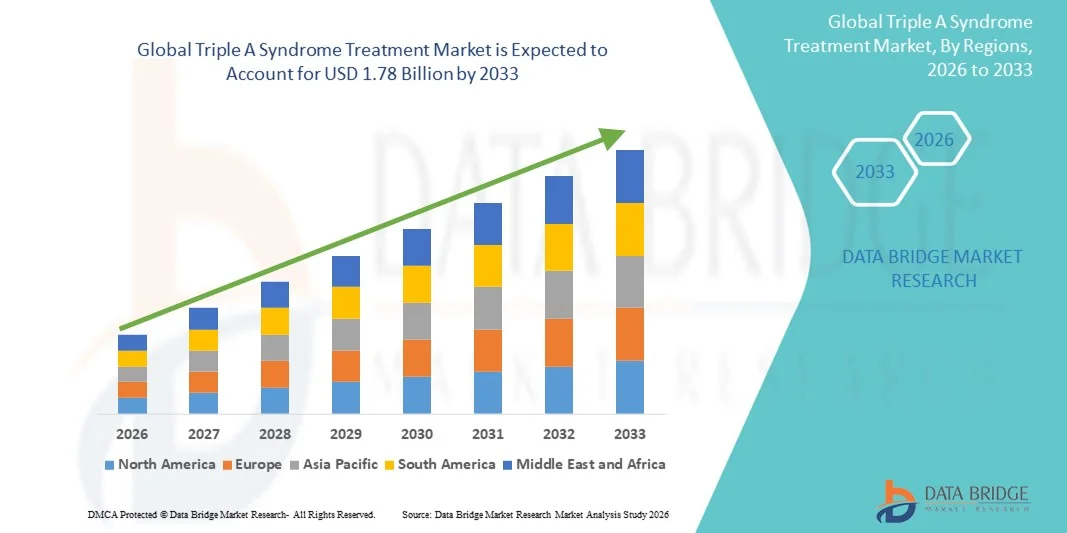
- As per Data Bridge Market Research Analysis The global triple A syndrome treatment market size was valued at USD 1.20 billion in 2025 and is expected to reach USD 1.78 billion by 2033, at a CAGR of 5.10% during the forecast period
- The market growth is largely fueled by increasing awareness of rare genetic disorders, expanding healthcare infrastructure, and advancements in diagnostic technologies, including genetic testing, imaging, and endocrinological assessments. Early diagnosis and intervention are improving patient outcomes and driving adoption of treatment solutions
- Furthermore, rising demand for effective management of triple A syndrome, including therapies targeting adrenal insufficiency, esophageal dysfunction, and autonomic abnormalities, combined with expanding access to specialized hospitals, multidisciplinary care centers, and government-supported rare disease programs, is significantly boosting the uptake of Triple A Syndrome Treatment solutions. Ongoing research initiatives, clinical trials, and orphan drug development are further accelerating innovation and market growth
Market Size & Forecast
- Global Market Value (2025): USD1.20 billion
- Expected Market Value (2033): USD 1.78 billion
- Forecast CAGR (2026–2033): 5.10%
What are the Major Takeaways of Triple A Syndrome Treatment Market?
- Triple A Syndrome, a rare genetic disorder affecting the adrenal glands, esophagus, and autonomic nervous system, is increasingly gaining attention due to rising awareness, improved diagnostic capabilities, and the availability of targeted treatment options. Early diagnosis and intervention are critical for effective disease management and better patient outcomes
- The escalating demand for triple A syndrome treatment is primarily fueled by growing adoption of advanced therapies, including adrenal hormone replacement, esophageal dilation, and supportive care for autonomic dysfunction. Increasing access to specialized pediatric and rare disease care centers, coupled with government support for orphan drug development, is driving market expansion
- North America dominated the triple A syndrome treatment market with the largest revenue share of 42.3% in 2025, characterized by well-established healthcare infrastructure, advanced genetic testing facilities, high awareness levels, and strong research support. The U.S. experienced substantial growth in Triple A Syndrome Treatment adoption, particularly in specialized hospitals and pediatric care centers, supported by clinical research programs, government funding, and orphan drug incentives
- Asia-Pacific is expected to be the fastest growing region in the triple A syndrome treatment market during the forecast period, projected to register a CAGR of 23.1%, driven by increasing healthcare investments, improving diagnostic capabilities, growing awareness of rare diseases, and expanding access to advanced treatment options across developing countries, including China and India
- The oral route dominated the largest market share of 48.8% in 2025, due to simplicity and affordability. Long-term hormone therapy is mainly administered orally
Report Scope and Triple A Syndrome Treatment Market Segmentation
Attributes |
Triple A Syndrome Treatment Key Market Insights |
|
Segments Covered |
|
|
Countries Covered |
North America
Europe
Asia-Pacific
Middle East and Africa
South America
|
|
Key Market Players |
• Fresenius Kabi (Germany) |
|
Market Opportunities |
|
|
Value Added Data Infosets |
In addition to the insights on market scenarios such as market value, growth rate, segmentation, geographical coverage, and major players, the market reports curated by the Data Bridge Market Research also include in-depth expert analysis, patient epidemiology, pipeline analysis, pricing analysis, and regulatory framework. |
What is the Key Trend in the Triple A Syndrome Treatment Market?
Growing Need Due to Increasing Disease Awareness and Improved Diagnosis
- The rising awareness of triple A syndrome among healthcare providers and patients is a key driver of market growth. Improved diagnostic capabilities, including genetic testing and advanced imaging, are enabling earlier detection and more effective management of the condition
- For instance, in April 2025, a leading healthcare institution announced the integration of a comprehensive diagnostic panel for Triple A Syndrome in specialized clinics, facilitating early intervention and tailored treatment strategies. Such initiatives by key organizations are expected to drive the Triple A Syndrome Treatment market during the forecast period
- As knowledge of the disease spreads, healthcare providers are increasingly recommending timely treatment options, which can prevent complications such as adrenal insufficiency, achalasia-related digestive issues, and neurological impairments
- Enhanced clinical guidelines and standardized treatment protocols are contributing to better disease management, encouraging adoption of therapies like corticosteroids, surgical interventions, and supportive care
- Furthermore, patient education initiatives and advocacy programs are increasing treatment compliance, thereby expanding the overall patient pool for available therapies
- The convenience of comprehensive treatment plans that combine medication, monitoring, and supportive care are helping patients manage their condition effectively, enhancing quality of life and driving market demand
Triple A Syndrome Treatment Market Dynamics
Driver
Increasing Focus on Personalized and Multimodal Treatment Approaches
- A significant trend in the global triple A syndrome treatment market is the growing emphasis on personalized and multimodal treatment strategies that combine medication, surgical interventions, and supportive care
- Healthcare providers are increasingly tailoring therapies to individual patient needs, considering genetic variations, disease severity, and comorbid condition
- For instance, in June 2024, a major pediatric hospital launched a patient-specific care program for Triple A Syndrome that integrates corticosteroid therapy with digestive and neurological monitoring, aiming to optimize patient outcomes
- Multidisciplinary teams, including endocrinologists, gastroenterologists, and genetic counselors, are being employed to develop comprehensive care plans for each patient
- Advances in diagnostic tools, such as genetic testing and high-resolution imaging, are enabling earlier detection and intervention, which is improving treatment efficacy
- There is also a trend toward integrating lifestyle management and nutritional support into treatment plans, as these measures can help mitigate disease complications and improve quality of life
- The adoption of telemedicine and remote patient monitoring is complementing traditional in-clinic treatments, allowing for regular follow-ups and timely adjustments to therapy
- Patient-centric programs, clinical trials, and outcome-based care initiatives are also contributing to more evidence-driven treatment approaches
- This shift toward personalized, multimodal care is enhancing treatment adherence, reducing complications, and supporting the overall growth of the Triple A Syndrome Treatment market
Restraint/Challenge
Challenges Related to Treatment Accessibility and High Costs
- Limited access to specialized treatment centers and high costs of therapy pose a significant challenge to market growth, particularly in developing regions where awareness and infrastructure are limited
- For instance, reports indicate that in some regions, delayed referral to specialized clinics results in disease complications, highlighting the need for improved healthcare accessibility
- The cost of treatments such as stem cell transplantation, ongoing corticosteroid therapy, and surgical interventions can be prohibitive for many patients, limiting widespread adoption
- Insurance coverage for rare disease therapies, including Triple A Syndrome, remains inconsistent, adding to out-of-pocket expenses and creating barriers to timely care
- Healthcare providers are addressing these challenges by introducing patient assistance programs, subsidized treatment options, and regional treatment centers to improve access
- While incremental improvements in healthcare infrastructure are being made, ensuring equitable treatment availability and affordability will remain vital for sustaining market growth globally
How is the Triple A Syndrome Treatment Market Segmented?
The market is segmented on the basis of Treatment, Diagnosis, Dosage, Route of Administration, End-Users, and Distribution Channel.
- By Treatment
On the basis of treatment, the Triple A Syndrome Treatment market is segmented into hydrocortisone substitutive therapy, surgery, gastric acid reduction therapy, topical lubricants, and others. The hydrocortisone substitutive therapy segment dominated the largest market revenue share of 47.6% in 2025, due to its central role in managing adrenal insufficiency, which is the most life-threatening component of Triple A Syndrome. Patients require lifelong hormone replacement, making hydrocortisone a continuous and essential treatment. Increased awareness and early diagnosis of adrenal failure further contribute to high adoption. Improved availability of oral and injectable formulations across both developed and developing nations also supports dominance. Many treatment guidelines recommend immediate hydrocortisone intervention, strengthening market reliance. Hospitals and endocrinology clinics highly depend on this therapy. Government and NGO programs supplying essential medicines in rare diseases have also boosted demand. Frequent monitoring requires stable medication supply. Pediatric and adult populations are equally dependent. Insurance coverage in major regions also favors steroid replacement. This makes hydrocortisone therapy the backbone of Triple A treatment worldwide.
The surgery segment is expected to witness the fastest CAGR of 14.9% from 2026 to 2033, driven by increasing awareness and advanced surgical correction options for achalasia complications. As improved diagnostic imaging becomes accessible, more cases of severe esophageal dysfunction are being treated surgically. Rising investments in specialized healthcare facilities also support this trend. Technological advancements in minimally invasive procedures reduce patient risk and recovery time. Growing medical tourism in emerging economies contributes to higher surgical volumes. Surgeons are becoming more trained in rare endoscopic interventions. Increased diagnosis in pediatric populations encourages early surgical management. Advanced pre- and post-operative care drives higher success rates. Strong patient outcomes are raising confidence in surgical treatment. Government initiatives supporting rare disease treatments further boost acceptance. Awareness campaigns are also contributing. This positions surgery as the fastest-growing treatment segment.
- By Diagnosis
On the basis of diagnosis, the market is segmented into adrenal function testing, molecular testing, genetic testing, and others. The adrenal function testing segment dominated with a revenue share of 44.2% in 2025, since adrenal insufficiency is the primary life-threatening manifestation of Triple A Syndrome. Cortisol and ACTH testing are essential for early diagnosis. These tests are widely available in most hospital laboratories. Routine screening is conducted in suspected cases. Physicians prioritize adrenal testing before moving to advanced diagnostics. Public and private laboratories frequently conduct these tests. Increased awareness among pediatric specialists further drives demand. These tests are cost-effective and widely prescribed. Emergency diagnosis in acute crisis situations also relies on adrenal tests. Their accuracy and speed make them critical diagnostics. Major diagnostic companies continue to invest in improved hormone analysis kits. This consistent clinical necessity ensures dominant share.
The genetic testing segment is projected to grow at the fastest CAGR of 18.6% from 2026 to 2033, due to rising technological advancement in genomics and personalized medicine. More families seek early familial screening. Reduced cost of genetic tests is improving accessibility. Awareness of autosomal recessive inheritance patterns is increasing. Research institutions are promoting genome-based identification. Governments are supporting rare disease screening initiatives. Integration with AI-assisted diagnostics accelerates adoption. Clinical trials increasingly require genetic confirmation of disease. Pediatric hospitals are introducing routine genetic panels. Expanded newborn screening programs will support demand. This enables faster diagnosis. These factors make genetic testing the fastest-growing diagnostic approach.
- By Dosage
On the basis of dosage, the market is segmented into tablet, injection, cream, and others. The tablet segment dominated with a market revenue share of 42.5% in 2025, due to convenience, cost-effectiveness, and high patient compliance. Hydrocortisone tablet forms are preferred for long-term treatment. Easy storage and transportation support wider adoption. Tablets are ideal for home-based care. Chronic therapy encourages repeated purchase. Hospitals and pharmacies stock oral forms in high volumes. Pediatric dosages are easily adjustable. Rural and remote regions prefer tablets. Governments include tablets in national essential medicine lists. Patients prefer non-invasive options. All these factors ensure dominance in the dosage segment.
The injection segment is expected to grow at the fastest CAGR of 16.3% from 2026 to 2033, mainly due to emergency management of adrenal crisis. Increasing awareness in clinical staff promotes injectable availability. Hospitals are improving emergency preparedness kits. Rapid drug action boosts demand. New auto-injectors are entering the market. Better accessibility in ambulatory settings supports use. Training programs encourage proper use. Portable injection kits are increasingly prescribed. Higher hospital admission rates with adrenal crisis contribute. Improved formulation stability is boosting demand. These factors strongly support injection-based growth.
- By Route of Administration
On the basis of route of administration, the market is segmented into oral, intravenous, topical, and others. The oral route dominated the largest market share of 48.8% in 2025, due to simplicity and affordability. Long-term hormone therapy is mainly administered orally. Patient compliance is significantly higher. Reduced need for hospital visits also aids preference. Pediatric administration is easier through oral route. Widespread availability in pharmacies is another major driver. Good bioavailability and dosing flexibility support this segment. Limited side effects boost acceptance. Educational programs encourage home medication management. Healthcare providers primarily prescribe oral forms first. These cumulative reasons make oral administration dominant.
The intravenous route is expected to witness the fastest CAGR of 15.1% from 2026 to 2033, as it is essential for acute adrenal crisis situations. Hospitals are expanding ICU and emergency facilities. Rising severe case admissions increase demand. Fast drug absorption is a major advantage. Growing investment in critical care infrastructure boosts this route. Advanced monitoring improves safety. Higher awareness among emergency physicians also plays a role. Training standards now emphasize IV hydrocortisone use. Global rise in hospital readiness strengthens market growth. These factors continuously support expansion.
- By End-Users
On the basis of end-users, the market is segmented into clinic, hospital, and others. The hospital segment dominated with a revenue share of 51.4% in 2025, due to the complex and life-threatening nature of Triple A Syndrome. Hospitals provide multi-specialty treatment. Advanced testing facilities are available only in hospitals. Emergency and surgical treatment is conducted in hospitals. Pediatric and ICU support strengthens dominance. Specialized endocrinology departments drive demand. Availability of skilled medical teams is a key factor. Long-term follow-up programs occur in hospitals. Government funding is hospital-focused. Rare disease centers are mainly hospital based. This ensures the hospital segment remains dominant.
The clinic segment is projected to grow at the fastest CAGR of 13.8% from 2026 to 2033, due to increasing outpatient treatment demand. Management of stable patients is shifting to clinics. Lower treatment costs encourage clinic visits. Expansion of private specialty clinics supports growth. Improved diagnostic equipment in clinics drives adoption. Telemedicine is linking clinics with specialists. Follow-up visits are mostly clinic-based. More trained rare-disease specialists are joining clinics. Accessibility in rural regions is improving. This is resulting in fast growth.
- By Distribution Channel
On the basis of distribution channel, the market is segmented into hospital pharmacy, retail pharmacy, and online pharmacy. The hospital pharmacy segment dominated the market with a 49.9% revenue share in 2025, since treatments are initiated during hospitalization. Emergency medicines are dispensed directly. Strict dosage monitoring favors hospital pharmacy distribution. Rare disease drugs are stocked in hospitals. Specialized handling and storage are conducted by hospital pharmacists. Continuous inpatient demand strengthens this channel. Physicians prefer hospital-controlled distribution. Treatment protocols ensure hospital usage. Availability of trained pharmacists boosts safety. Inventory management is more reliable. These reasons result in dominant position.
The online pharmacy segment is expected to grow at the fastest CAGR of 19.2% from 2026 to 2033, due to increased digital penetration and rare disease patient access. Home delivery of medications attracts families. Subscription-based models improve adherence. Rural accessibility is greatly enhanced. Online platforms offer better price comparisons. Increased smartphone adoption fuels this channel. E-prescription systems are being accepted globally. Patient convenience is driving repeat purchases. Regulatory approval of online medicine sales also plays a key role. These factors drive the rapid expansion of the segment.
Triple A Syndrome Treatment Market Regional Analysis
- North America dominated the triple A Syndrome Treatment market with the largest revenue share of 42.3% in 2025
- Supported by a well-established healthcare infrastructure, advanced genetic testing facilities, high awareness levels regarding rare diseases, and strong research support
- The market witnessed significant growth in Triple A Syndrome Treatment adoption, particularly in specialized hospitals and pediatric care centers, driven by clinical research programs, government funding, and orphan drug incentives
U.S. Triple A Syndrome Treatment Market Insight
The U.S. triple A Syndrome Treatment market captured the largest revenue share within North America in 2025, fueled by the growing focus on early diagnosis, availability of advanced treatment therapies including hydrocortisone substitutive therapy and stem cell interventions, and increasing support for rare disease management. The presence of leading research institutions, pediatric specialty centers, and active clinical trials further propels market expansion.
Europe Triple A Syndrome Treatment Market Insight
The Europe triple A Syndrome Treatment market is projected to expand at a substantial CAGR throughout the forecast period, primarily driven by increasing awareness of rare genetic disorders, strong healthcare infrastructure, and favorable regulatory frameworks for orphan drugs. Countries such as Germany, France, and Italy are witnessing growth due to established clinical programs and investments in pediatric care centers.
U.K. Triple A Syndrome Treatment Market Insight
The U.K. triple A Syndrome Treatment market is anticipated to grow at a noteworthy CAGR during the forecast period, supported by heightened awareness of rare diseases, government healthcare initiatives, and the adoption of advanced treatment protocols in specialized hospitals. Enhanced diagnostic facilities and research funding further stimulate market growth.
Germany Triple A Syndrome Treatment Market Insight
The Germany triple A Syndrome Treatment market is expected to expand at a considerable CAGR during the forecast period, driven by strong healthcare infrastructure, advanced pediatric care, and high adoption of novel therapies. Germany’s focus on clinical research, genetic testing, and orphan drug incentives encourages the adoption of Triple A Syndrome Treatment in hospitals and specialized clinics.
Asia-Pacific Triple A Syndrome Treatment Market Insight
The Asia-Pacific triple A Syndrome Treatment market is poised to grow at the fastest CAGR of 23.1% during the forecast period, driven by increasing healthcare investments, improving diagnostic capabilities, rising awareness of rare diseases, and expanding access to advanced treatment options across developing countries including China, India, and Japan. The region’s focus on enhancing pediatric care and government initiatives supporting rare disease management are key growth drivers.
Japan Triple A Syndrome Treatment Market Insight
The Japan triple A Syndrome Treatment market is gaining momentum due to its highly advanced healthcare system, strong focus on pediatric and rare disease management, and widespread availability of hospital-based treatment. Enhanced diagnostic protocols, early intervention strategies, and clinical research programs are supporting market expansion.
China Triple A Syndrome Treatment Market Insight
The China triple A Syndrome Treatment market accounted for the largest revenue share in Asia-Pacific in 2025, attributed to expanding healthcare infrastructure, rising awareness of rare genetic disorders, increasing investments in advanced diagnostics, and growing access to specialized therapies. The adoption of Triple A Syndrome Treatment is rising in pediatric hospitals and specialty clinics, supported by government programs and local research initiatives focused on rare disease management.
Triple A Syndrome Treatment Market Share
The Triple A Syndrome Treatment industry is primarily led by well-established companies, including:
• Fresenius Kabi (Germany)
• Novartis (Switzerland)
• Roche (Switzerland)
• Sanofi (France)
• Pfizer (U.S.)
• Janssen Pharmaceuticals (Belgium)
• Celgene (U.S.)
• Shire Pharmaceuticals (Ireland)
• BioMarin Pharmaceutical (U.S.)
• Sobi (Sweden)
• Horizon Therapeutics (U.S.)
• Akorn Pharmaceuticals (U.S.)
• Apotex Inc. (Canada)
• Lundbeck (Denmark)
• Recordati (Italy)
• Takeda Pharmaceutical (Japan)
• Grifols (Spain)
• Alexion Pharmaceuticals (U.S.)
• Amgen (U.S.)
• Boehringer Ingelheim (Germany)
Latest Developments in Global Triple A Syndrome Treatment Market
- In March 2024, a case report described a 16‑year-old boy with Triple A syndrome who presented with neuromuscular symptoms; treatment consisted of existing supportive care (glucocorticoids for adrenal insufficiency, artificial tears, surgical correction of achalasia). The report highlighted the disease’s clinical variability but confirmed there’s no disease‑specific therapy
- In August 2025, a study from Sudan published updated clinical and genetic profiles of children with Triple A syndrome, including novel AAAS‑gene mutations. This helps expand diagnostic awareness but does not reflect any new therapeutic option

- Interactive Data Analysis Dashboard
- Company Analysis Dashboard for high growth potential opportunities
- Research Analyst Access for customization & queries
- Competitor Analysis with Interactive dashboard
- Latest News, Updates & Trend analysis
- Harness the Power of Benchmark Analysis for Comprehensive Competitor Tracking
Data collection and base year analysis are done using data collection modules with large sample sizes. The stage includes obtaining market information or related data through various sources and strategies. It includes examining and planning all the data acquired from the past in advance. It likewise envelops the examination of information inconsistencies seen across different information sources. The market data is analysed and estimated using market statistical and coherent models. Also, market share analysis and key trend analysis are the major success factors in the market report. To know more, please request an analyst call or drop down your inquiry.
The key research methodology used by DBMR research team is data triangulation which involves data mining, analysis of the impact of data variables on the market and primary (industry expert) validation. Data models include Vendor Positioning Grid, Market Time Line Analysis, Market Overview and Guide, Company Positioning Grid, Patent Analysis, Pricing Analysis, Company Market Share Analysis, Standards of Measurement, Global versus Regional and Vendor Share Analysis. To know more about the research methodology, drop in an inquiry to speak to our industry experts.
Data Bridge Market Research is a leader in advanced formative research. We take pride in servicing our existing and new customers with data and analysis that match and suits their goal. The report can be customized to include price trend analysis of target brands understanding the market for additional countries (ask for the list of countries), clinical trial results data, literature review, refurbished market and product base analysis. Market analysis of target competitors can be analyzed from technology-based analysis to market portfolio strategies. We can add as many competitors that you require data about in the format and data style you are looking for. Our team of analysts can also provide you data in crude raw excel files pivot tables (Fact book) or can assist you in creating presentations from the data sets available in the report.












