


Tuberous Sclerosis Drug Market Size
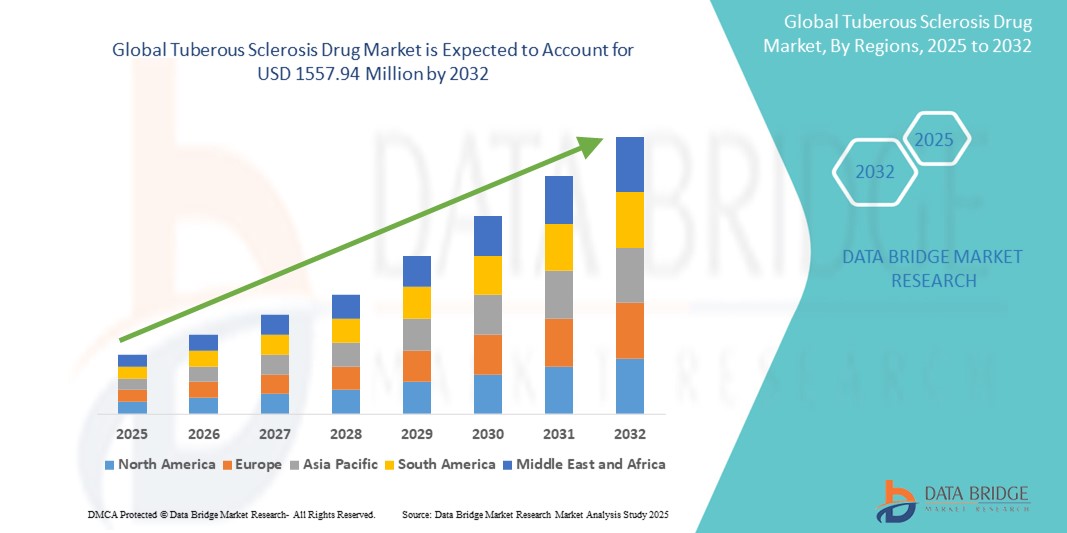
- The global tuberous sclerosis drug market size was valued at USD 891.29 million in 2024 and is expected to reach USD 1557.94 million by 2032, at a CAGR of 7.23% during the forecast period
- The market growth is largely fuelled by the rising prevalence of tuberous sclerosis, increasing awareness, advancements in targeted therapies, and growing healthcare expenditure across developed and emerging regions
- Increasing research and development activities along with regulatory support for orphan drugs are further accelerating the adoption of innovative treatments for tuberous sclerosis across global healthcare systems
Tuberous Sclerosis Drug Market Analysis
- The tuberous sclerosis drug market is experiencing steady expansion due to the rising availability of advanced therapies and improved diagnosis rates among patients worldwide
- Companies are focusing on expanding their treatment portfolios through clinical trials and strategic collaborations to address unmet needs in managing this complex genetic disorder
- North America dominates the tuberous sclerosis drug market with the largest revenue share of 38.9% in 2024, driven by advanced healthcare systems, substantial research investments, and higher awareness of tuberous sclerosis complex (TSC)
- Asia-Pacific region is expected to witness the highest growth rate in the global tuberous sclerosis drug market, driven by increasing awareness of rare diseases, expanding healthcare infrastructure, rising investment in genetic research, and supportive government initiatives promoting access to advanced treatments
- The laser therapy segment holds the largest market revenue share of 38% in 2024, driven by its precision and effectiveness in treatment delivery. Laser therapy's increasing adoption in cosmetic and medical applications boosts demand for specialized containers that ensure product stability and hygiene
Report Scope and Tuberous Sclerosis Drug Market Segmentation
|
Attributes |
Tuberous Sclerosis Drug Key Market Insights |
|
Segments Covered |
|
|
Countries Covered |
North America
Europe
Asia-Pacific
Middle East and Africa
South America
|
|
Key Market Players |
|
|
Market Opportunities |
|
|
Value Added Data Infosets |
In addition to the insights on market scenarios such as market value, growth rate, segmentation, geographical coverage, and major players, the market reports curated by the Data Bridge Market Research also include depth expert analysis, patient epidemiology, pipeline analysis, pricing analysis, and regulatory framework. |
Tuberous Sclerosis Drug Market Trends
“Increasing Focus on Targeted and mTOR Inhibitor-Based Therapies”
- Targeted therapies, especially mTOR inhibitors, are gaining popularity due to their effectiveness in treating symptoms such as brain tumors and kidney lesions
- For instance, everolimus is commonly used to manage subependymal giant cell astrocytomas
- The adoption of everolimus has increased significantly as it directly addresses abnormal cell growth caused by the genetic mutation in tuberous sclerosis
- Pharmaceutical firms are heavily investing in enhancing mTOR-based drugs, such as Novartis’s Afinitor, which has shown positive results in controlling disease progression
- Research is ongoing to improve the safety profile and delivery methods of these treatments, making them more accessible and tolerable for long-term use
- This shift reflects a broader movement toward precision medicine, which focuses on personalized care strategies tailored to the genetic and clinical profile of individual patients with tuberous sclerosis
Tuberous Sclerosis Drug Market Dynamics
Driver
“Advancements in Genetic and Molecular Research”
- Advancements in genetic and molecular research have enhanced the understanding of TSC1 and TSC2 gene mutations, which are the root causes of tuberous sclerosis
- Targeted therapies such as mTOR inhibitors have emerged as a key treatment innovation, helping regulate abnormal cell growth linked to these gene mutations
- For instance, Everolimus, has shown significant clinical success in treating brain tumors and kidney lesions associated with tuberous sclerosis
- Research continues to explore combination therapies and next-generation mTOR inhibitors aimed at improving outcomes and minimizing side effects
- Increased investment by pharmaceutical companies and research institutions is expanding the pipeline of personalized and effective treatment options tailored to individual genetic profiles
Restraint/Challenge
“High Cost and Limited Accessibility of Treatment”
- The high cost of advanced therapies, such as mTOR inhibitors, significantly limits access to treatment for many patients across different regions
- These therapies are often classified as orphan drugs, which serve small populations and carry high price tags due to limited economies of scale
- For instance, Everolimus, a leading mTOR inhibitor used for treating tuberous sclerosis, is known for its substantial cost, making it difficult for patients to afford long-term use
- Limited access to specialized healthcare providers and diagnostic tools delays accurate diagnosis and targeted treatment, especially in rural or underdeveloped areas
- Disparities in healthcare infrastructure, insurance coverage, and awareness further restrict equitable treatment access, widening the gap in outcomes across socioeconomic groups
Tuberous Sclerosis Drug Market Scope
The market is segmented on the basis of therapy type, route of administration, and end-users.
- By Therapy Type
On the basis of therapy type, the tuberous sclerosis drug market is segmented into laser therapy, behavioural therapy, and psychiatric therapy. The laser therapy segment holds the largest market revenue share of 38% in 2024, driven by its precision and effectiveness in treatment delivery. Laser therapy's increasing adoption in cosmetic and medical applications boosts demand for specialized containers that ensure product stability and hygiene.
The behavioural therapy segment is expected to witness the fastest growth rate from 2025 to 2032 due to rising awareness and acceptance of mental health treatments. This growth is driving demand for innovative, user-friendly packaging solutions that cater specifically to this segment. Packaging designed for behavioural therapy focuses on ease of use and portability, supporting patient adherence. The rise of telehealth and home-based care further boosts the need for convenient packaging options.
- By Route of Administration
On the basis of route of administration, the tuberous sclerosis drug market is segmented into oral, injectable, and topical. The oral segment holds the largest market share in 2024, driven by the extensive use of orally administered mascara and other related personal care products that fit seamlessly into daily beauty routines. Consumers prefer these products for their ease of use and convenience.
The injectable is expected to witness the fastest growth rate, fuelled by the increasing popularity of advanced cosmetic procedures that demand sterile, single-use containers. This rising demand encourages manufacturers to develop innovative packaging solutions that ensure product safety and maintain hygiene standards, especially in clinical and professional settings.
- By End-Users
On the basis of end-users, the tuberous sclerosis drug market is segmented into hospitals, homecare, specialty clinics, and others. The hospital segment dominates the market revenue share in 2024, primarily due to large-scale institutional purchases and the need for bulk packaging solutions that cater to diverse patient needs. Hospitals require reliable, durable containers to support high-volume usage and ensure product safety.
The homecare segment is expected to witness the fastest growth rate throughout the forecast period, driven by a rising preference for at-home treatments. Consumers increasingly seek easy-to-use, convenient packaging that supports self-administration, boosting demand for innovative and user-friendly container designs in this segment.
Tuberous Sclerosis Drug Market Regional Analysis
- North America dominates the tuberous sclerosis drug market with the largest revenue share of 38.9% in 2024, driven by advanced healthcare systems, substantial research investments, and higher awareness of tuberous sclerosis complex (TSC)
- The region benefits from a robust pipeline of pharmaceutical products and ongoing clinical trials, along with favourable reimbursement policies that enhance drug accessibility
- The market in North America is experiencing robust growth due to ongoing research and development of targeted therapies and novel drug formulations, alongside increasing FDA approvals and orphan drug designations
- Telemedicine and remote monitoring are also contributing to improved access to specialized care, driving demand for medications
U.S. Tuberous Sclerosis Drug Market Insight
The U.S. tuberous sclerosis drug market is expected to witness the fastest growth rate significantly, fuelled by the FDA's approval of new drugs for TSC treatment and increasing product launches by pharmaceutical companies. The high prevalence of TSC in the U.S. and the rising demand for mTOR inhibitors, as well as conventional anticonvulsants and anti-seizure medications, are key drivers. The U.S. market also benefits from strong neurological research leadership and a focus on innovative treatment options, including those for drug-resistant epilepsy.
Europe Tuberous Sclerosis Drug Market Insight
The Europe tuberous sclerosis drug market is expected to witness the fastest growth rate throughout the forecast period. This growth is primarily driven by the increasing prevalence of TSC, enhanced awareness, and advancements in medical technology and genetic testing. The establishment of European Reference Networks (ERNs) has significantly improved the management and research into rare diseases such as TSC, standardizing data collection and promoting the development of targeted therapies, especially mTOR inhibitors.
U.K. Tuberous Sclerosis Drug Market Insight
The U.K. tuberous sclerosis drug market is expected to witness the fastest growth rate during the forecast period, driven by increasing awareness and the rising prevalence of TSC. The market is benefiting from the launch of various multi-stage pipeline products, which are expected to revolutionize market dynamics. Efforts to improve diagnosis and the availability of emerging therapies, including mTOR inhibitors and new anti-seizure medications, are contributing to market expansion in the UK.
Germany Tuberous Sclerosis Drug Market Insight
The Germany tuberous sclerosis drug market is expected to witness the fastest growth rate during the forecast period. This growth is primarily fuelled by increasing awareness of TSC, improved diagnostic capabilities, and the demand for advanced, effective treatment options. Germany's strong healthcare infrastructure and focus on research and development contribute to the adoption of novel therapies, including targeted mTOR inhibitors, for managing TSC symptoms and improving patient quality of life.
Asia-Pacific Tuberous Sclerosis Drug Market Insight
The Asia-Pacific tuberous sclerosis drug market is expected to witness the fastest growth rate during the forecast period. This growth is driven by increasing prevalence of TSC, rising healthcare expenditures, and improving access to medications across emerging economies such as China, Japan, and India. Increased awareness regarding TSC and ongoing clinical studies by market players are fuelling the demand for effective treatments in the region.
Japan Tuberous Sclerosis Drug Market Insight
The Japan tuberous sclerosis drug market is expected to witness the fastest growth rate due to the country's advanced healthcare system, strong emphasis on rare disease research, and increasing patient awareness. Universal healthcare coverage and a robust manufacturing base for pharmaceuticals support the availability and adoption of TSC drugs. The market is also driven by research into innovative therapies and the integration of advanced diagnostics.
China Tuberous Sclerosis Drug Market Insight
The China tuberous sclerosis drug market accounted for a significant market revenue share in Asia Pacific, attributed to the country's large patient pool, rapid advancements in healthcare infrastructure, and government initiatives to improve access to advanced therapies. The increasing awareness and diagnosis rates of TSC, coupled with the availability of both domestic and international drug manufacturers, are key factors propelling the market in China.
Tuberous Sclerosis Drug Market Share
The tuberous sclerosis drug industry is primarily led by well-established companies, including:
- Novartis AG (Switzerland)
- Nobelpharma Co., Ltd. (Japan)
- Jazz Pharmaceuticals, Inc. (U.K.)
- Takeda Pharmaceutical Company Limited (Japan)
- Aucta Pharmaceuticals Inc. (U.K.)
- Shijiazhuang Yiling Pharmaceutical Co,Ltd. (China)
- H. Lundbeck A/S (Denmark)
- AbbVie Inc. (U.S.)
- Amgen Inc. (U.S.)
- AstraZeneca (U.K.)
- Bausch Health Companies Inc. (Canada)
- F. Hoffmann-La Roche Ltd (Switzerland)
- Hikma Pharmaceuticals PLC (Jordan)
- Jazz Pharmaceuticals, Inc. (Ireland)
- Johnson & Johnson Private Limited (U.S.)
- Pfizer Inc. (U.S.)
Latest Developments in Global Tuberous Sclerosis Drug Market
-
In September 2024, Marinus Pharmaceuticals announced its plans to launch ZTALMY (ganaxolone) for treating tuberous sclerosis complex (TSC). The company revealed that the Phase 3 TrustTSC trial had completed enrollment with 129 participants, and topline data was expected in the first half of Q4 2024. The trial maintained a low discontinuation rate of 6.2%, with 93% of patients transitioning to the open-label extension phase. Marinus is targeting a supplemental New Drug Application (sNDA) submission to the U.S. Food and Drug Administration (FDA) in April 2025, aiming for priority review. The company also highlighted a new patent allowance for ganaxolone's oral titration regimen, expected to extend through September 2042. With a U.S. market opportunity of approximately USD 2.5 billion for both CDKL5 deficiency disorder and TSC, Marinus is preparing for a rapid and efficient U.S. launch, pending FDA approval.

- Interactive Data Analysis Dashboard
- Company Analysis Dashboard for high growth potential opportunities
- Research Analyst Access for customization & queries
- Competitor Analysis with Interactive dashboard
- Latest News, Updates & Trend analysis
- Harness the Power of Benchmark Analysis for Comprehensive Competitor Tracking
Data collection and base year analysis are done using data collection modules with large sample sizes. The stage includes obtaining market information or related data through various sources and strategies. It includes examining and planning all the data acquired from the past in advance. It likewise envelops the examination of information inconsistencies seen across different information sources. The market data is analysed and estimated using market statistical and coherent models. Also, market share analysis and key trend analysis are the major success factors in the market report. To know more, please request an analyst call or drop down your inquiry.
The key research methodology used by DBMR research team is data triangulation which involves data mining, analysis of the impact of data variables on the market and primary (industry expert) validation. Data models include Vendor Positioning Grid, Market Time Line Analysis, Market Overview and Guide, Company Positioning Grid, Patent Analysis, Pricing Analysis, Company Market Share Analysis, Standards of Measurement, Global versus Regional and Vendor Share Analysis. To know more about the research methodology, drop in an inquiry to speak to our industry experts.
Data Bridge Market Research is a leader in advanced formative research. We take pride in servicing our existing and new customers with data and analysis that match and suits their goal. The report can be customized to include price trend analysis of target brands understanding the market for additional countries (ask for the list of countries), clinical trial results data, literature review, refurbished market and product base analysis. Market analysis of target competitors can be analyzed from technology-based analysis to market portfolio strategies. We can add as many competitors that you require data about in the format and data style you are looking for. Our team of analysts can also provide you data in crude raw excel files pivot tables (Fact book) or can assist you in creating presentations from the data sets available in the report.












