


Tumor-Agnostic Oncology Drug Market Size
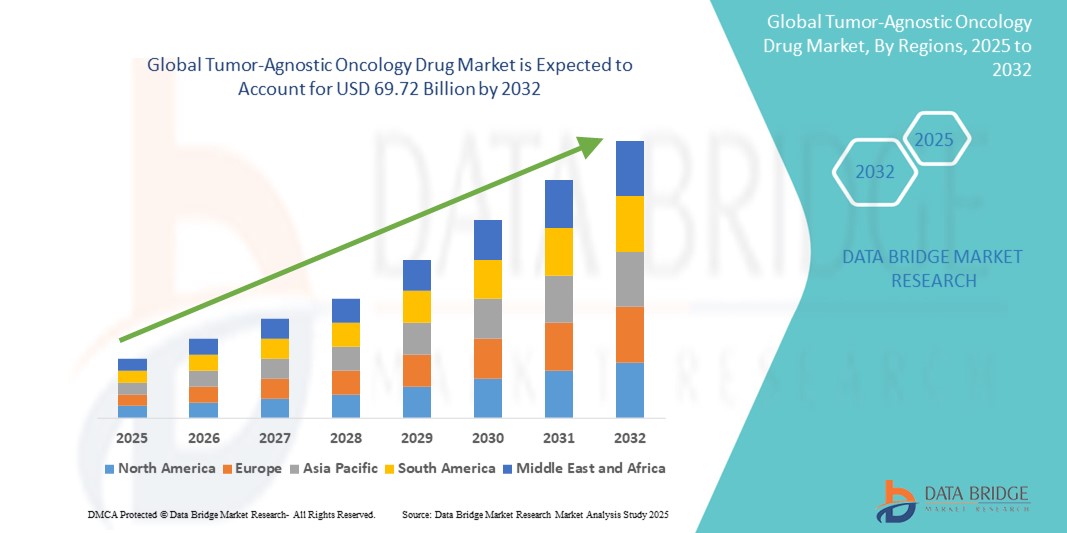
- The global tumor-agnostic oncology drug market size was valued at USD 22.32 billion in 2024 and is expected to reach USD 69.72 billion by 2032, at a CAGR of 15.30% during the forecast period
- The market growth is largely fueled by advancements in precision medicine and the increasing identification of actionable genetic biomarkers across diverse tumor types, enabling more personalized cancer treatment approaches
- Furthermore, rising regulatory approvals, growing investments in biomarker-driven therapies, and expanding clinical trial pipelines are accelerating the adoption of tumor-agnostic drugs across healthcare systems. These developments are positioning tumor-agnostic therapies as a pivotal shift in oncology treatment paradigms, thereby significantly boosting the industry's growth
Tumor-Agnostic Oncology Drug Market Analysis
- Tumor-agnostic oncology drugs, designed to target specific genetic mutations or biomarkers regardless of cancer type or origin, are becoming pivotal in modern cancer treatment due to their precision, broad applicability, and improved patient outcomes across multiple tumor types
- The growing demand for tumor-agnostic therapies is primarily driven by the increasing prevalence of actionable biomarkers, rising investments in genomic research, and heightened awareness among healthcare providers about personalized, mutation-specific treatment options
- North America dominated the tumor-agnostic oncology drug market with the largest revenue share of 47% in 2024, supported by advanced diagnostic infrastructure, early adoption of precision medicine, and robust regulatory support from agencies such as the FDA, with the U.S. seeing significant uptake of approved tumor-agnostic drugs in major cancer treatment centers
- Asia-Pacific is expected to be the fastest growing region in the tumor-agnostic oncology drug market during the forecast period due to expanding healthcare access, increasing cancer burden, and growing adoption of biomarker-based screening in countries such as China, Japan, and India
- The MSI-H/dMMR biomarker segment dominated the tumor-agnostic oncology drug market with a share of 38.7% in 2024, owing to its broad detection across several cancer types and the clinical success of associated immune checkpoint inhibitors approved under tumor-agnostic indications
Report Scope and Tumor-Agnostic Oncology Drug Market Segmentation
|
Attributes |
Tumor-Agnostic Oncology Drug Key Market Insights |
|
Segments Covered |
|
|
Countries Covered |
North America
Europe
Asia-Pacific
Middle East and Africa
South America
|
|
Key Market Players |
|
|
Market Opportunities |
|
|
Value Added Data Infosets |
In addition to the insights on market scenarios such as market value, growth rate, segmentation, geographical coverage, and major players, the market reports curated by the Data Bridge Market Research also include in-depth expert analysis, pricing analysis, brand share analysis, consumer survey, demography analysis, supply chain analysis, value chain analysis, raw material/consumables overview, vendor selection criteria, PESTLE Analysis, Porter Analysis, and regulatory framework. |
Tumor-Agnostic Oncology Drug Market Trends
“Rising Demand for Precision Oncology and Biomarker-Driven Therapies”
- A significant and accelerating trend in the global tumor-agnostic oncology drug market is the growing adoption of precision oncology supported by biomarker testing, enabling treatment decisions based on specific genetic alterations rather than tumor origin. This paradigm shift is reshaping clinical approaches to cancer care by promoting personalized therapy across multiple cancer types
- For instance, drugs such as Larotrectinib and Entrectinib have demonstrated efficacy across solid tumors with NTRK gene fusions, regardless of tumor location, and have received tumor-agnostic FDA approval. Similarly, pembrolizumab was the first cancer drug approved for tumors with MSI-H or dMMR biomarkers rather than site-specific criteria
- Pharmaceutical companies are increasingly investing in biomarker-driven R&D pipelines, targeting rare but actionable mutations such as RET, NTRK, BRAF V600, and others. This has led to the emergence of next-generation sequencing (NGS) as a standard diagnostic tool, streamlining the identification of eligible patients for tumor-agnostic therapies
- Academic institutions, biotechs, and global pharma players are partnering with diagnostic companies to co-develop companion diagnostics, supporting clinical adoption and regulatory approvals. This integration of genomics, diagnostics, and therapeutics is enhancing precision, reducing trial-and-error treatments, and improving patient outcomes
- The trend toward tumor-agnostic indications is fundamentally reshaping oncology drug development and regulatory frameworks. The increasing number of clinical trials evaluating single therapies across multiple cancer types based on shared biomarkers is expected to expand the tumor-agnostic drug portfolio in the coming years
- This shift is rapidly gaining momentum across oncology centers worldwide, as healthcare providers and patients seek more personalized, effective, and genomically informed cancer treatment options. As a result, tumor-agnostic drugs are emerging as a cornerstone of the next generation of cancer therapies
Tumor-Agnostic Oncology Drug Market Dynamics
Driver
“Increasing Regulatory Approvals and Focus on Personalized Cancer Treatment”
- The rise in regulatory approvals of tumor-agnostic therapies, driven by the success of biomarker-specific drug trials, is a significant factor propelling market growth. Regulatory agencies such as the U.S. FDA and EMA are now actively supporting tumor-agnostic drug development through expedited pathways, recognizing the clinical value of targeting molecular alterations over tumor histology
- For instance, pembrolizumab and larotrectinib were granted accelerated approvals based on strong biomarker-driven efficacy across tumor types. This has set a precedent for pharmaceutical companies to design pan-tumor clinical trials, streamlining market access and encouraging further innovation
- As the understanding of cancer genomics deepens, oncologists and researchers are shifting from organ-based therapies to targeted approaches, leading to the discovery of new actionable mutations and therapeutic targets. This enhances the demand for broad-spectrum drugs that can treat patients based on genetic signatures, regardless of tumor origin
- The rising global incidence of cancer, combined with increased biomarker testing, is expanding the eligible patient pool for tumor-agnostic drugs. This momentum is further supported by growing healthcare investments, patient awareness, and the adoption of advanced diagnostics in both developed and developing regions
Restraint/Challenge
“Limited Biomarker Prevalence and High Development Costs”
- Despite their promise, tumor-agnostic drugs face challenges due to the rarity of certain actionable biomarkers across tumor types, which restricts the number of eligible patients and limits widespread application. The low prevalence of fusions such as NTRK or RET means that many tumor-agnostic therapies may only be applicable to a small subset of patients.
- Moreover, the high cost of next-generation sequencing (NGS) and companion diagnostic testing remains a barrier in low- and middle-income countries, where access to advanced molecular diagnostics is still limited
- Drug development in this field also requires large-scale genomic studies, multi-tumor clinical trials, and complex regulatory navigation, all of which contribute to high R&D costs and prolonged timelines. For example, clinical trials need to recruit rare biomarker-positive patients across diverse cancer types, complicating trial design and enrollment
- Furthermore, the high pricing of tumor-agnostic drugs can strain healthcare budgets and lead to reimbursement challenges. This may impact patient access, especially in regions with limited insurance coverage or public healthcare funding
- Overcoming these challenges through wider access to genomic testing, innovative trial designs, and global regulatory harmonization will be essential to unlock the full potential of tumor-agnostic oncology therapies and drive equitable adoption worldwide
Tumor-Agnostic Oncology Drug Market Scope
The market is segmented on the basis of drug type, indication, biomarker type, and end user.
- By Drug Type
On the basis of drug type, the tumor-agnostic oncology drug market is segmented into immune checkpoint inhibitors, targeted therapies, and others. The immune checkpoint inhibitors segment dominated the market with the largest revenue share in 2024, owing to their strong clinical success and broad efficacy across multiple tumor types exhibiting MSI-H or dMMR biomarkers. Drugs such as pembrolizumab have set a precedent for tumor-agnostic indications, fueling adoption in major cancer treatment centers globally. Their ability to harness the body’s immune system and deliver durable responses across diverse cancers contributes to their clinical and commercial strength.
The targeted therapies segment is anticipated to witness the fastest growth rate from 2025 to 2032, driven by rising approvals of drugs targeting rare genomic alterations such as NTRK, RET, and BRAF mutations. The precision and effectiveness of targeted therapies in genetically defined patient populations, along with expanding companion diagnostic tools, are accelerating their demand across both developed and emerging markets.
- By Indication
On the basis of indication, the tumor-agnostic oncology drug market is segmented into non-small cell lung cancer (NSCLC), colorectal cancer, thyroid cancer, breast cancer, pancreatic cancer, solid tumors with NTRK fusion, and others. The solid tumors with NTRK fusion segment held the largest revenue share in 2024, supported by the approval of therapies such as larotrectinib and entrectinib, which have demonstrated efficacy across various NTRK fusion-positive tumors regardless of origin. The rarity but cross-cancer applicability of NTRK fusions, coupled with favorable regulatory support, has driven early clinical adoption.
The non-small cell lung cancer (NSCLC) segment is expected to grow at the fastest pace during the forecast period, driven by rising incidences, high rates of biomarker testing, and a growing pipeline of tumor-agnostic agents targeting mutations commonly found in NSCLC, such as RET and BRAF alterations.
- By Biomarker Type
On the basis of biomarker type, the tumor-agnostic oncology drug market is segmented into MSI-H/dMMR, NTRK gene fusion, RET gene alteration, BRAF V600 mutation, and others. The MSI-H/dMMR segment accounted for the largest market share of 38.7% in 2024, owing to its higher prevalence across multiple tumor types and early approval of immunotherapies targeting this biomarker. These markers serve as key indicators for checkpoint inhibitor eligibility, contributing to broad clinical adoption.
The NTRK gene fusion segment is projected to experience the highest growth from 2025 to 2032 due to the increasing availability of NGS diagnostics and the growing number of clinical trials targeting this biomarker. Although rare, NTRK fusions are present across diverse tumor types, positioning this segment for rapid expansion through pan-cancer indications.
- By End User
On the basis of end user, the tumor-agnostic oncology drug market is segmented into hospitals, cancer research institutes, specialty clinics, ambulatory surgical centers, and others. The hospital segment dominated the market in 2024, supported by their central role in oncology treatment, infrastructure for advanced diagnostics, and access to the latest approved therapies. Hospitals are typically the first point of access for biomarker testing and eligibility determination for tumor-agnostic drugs.
The cancer research institutes segment is expected to witness the fastest growth rate during the forecast period, driven by rising investments in clinical trials, genomic research, and collaborations with pharmaceutical companies for early access to innovative therapies. These institutions play a crucial role in advancing tumor-agnostic drug development and early patient recruitment for precision oncology programs.
Tumor-Agnostic Oncology Drug Market Regional Analysis
- North America dominated the tumor-agnostic oncology drug market with the largest revenue share of 47% in 2024, supported by advanced diagnostic infrastructure, early adoption of precision medicine, and robust regulatory support from agencies such as the FDA, with the U.S. seeing significant uptake of approved tumor-agnostic drugs in major cancer treatment centers
- Patients and providers in the region increasingly favor tumor-agnostic therapies due to their targeted efficacy, ability to treat rare mutations across cancer types, and the support of companion diagnostics that streamline treatment decisions
- This widespread acceptance is further supported by proactive regulatory frameworks (e.g., FDA approvals), robust pharmaceutical pipelines, and high awareness among oncologists, positioning tumor-agnostic drugs as a critical component of modern cancer care across both academic and community healthcare settings
U.S. Tumor-Agnostic Oncology Drug Market Insight
The U.S. tumor-agnostic oncology drug market captured the largest revenue share of 87% in North America in 2024, driven by early adoption of precision medicine and strong clinical uptake of FDA-approved tumor-agnostic therapies. The U.S. healthcare system is highly advanced in genetic testing and biomarker-driven treatment, enabling broader access to personalized cancer care. In addition, extensive clinical trial activity, patient advocacy, and supportive reimbursement frameworks are further accelerating market growth, positioning the U.S. as a global leader in tumor-agnostic oncology innovation.
Europe Tumor-Agnostic Oncology Drug Market Insight
The Europe tumor-agnostic oncology drug market is projected to expand at a substantial CAGR throughout the forecast period, driven by increased genomic testing, regulatory openness to tumor-agnostic approvals, and a rising focus on individualized cancer therapies. The region’s healthcare systems are progressively integrating biomarker-based treatment pathways, supported by collaborations between pharma companies and diagnostic firms. Growth is evident across major markets in oncology centers, where tumor-agnostic drugs are being adopted as part of modern precision medicine programs.
U.K. Tumor-Agnostic Oncology Drug Market Insight
The U.K. tumor-agnostic oncology drug market is anticipated to grow at a noteworthy CAGR during the forecast period, supported by the National Health Service’s emphasis on personalized cancer treatment and expanding access to genomic screening. Efforts by organizations such as Genomics England to integrate whole-genome sequencing into cancer care are facilitating early detection of actionable mutations. Combined with rising public awareness and a strong research ecosystem, these initiatives are positioning the U.K. as a growing market for tumor-agnostic therapies.
Germany Tumor-Agnostic Oncology Drug Market Insight
The Germany tumor-agnostic oncology drug market is expected to expand at a considerable CAGR during the forecast period, bolstered by a high standard of cancer care, early adoption of molecular diagnostics, and a well-funded healthcare system. Germany’s strong biotech and pharmaceutical landscape is accelerating the availability of companion diagnostics and innovative treatments. With growing physician familiarity and patient access to advanced therapies, tumor-agnostic drugs are gaining ground in both university hospitals and specialized oncology clinics.
Asia-Pacific Tumor-Agnostic Oncology Drug Market Insight
The Asia-Pacific tumor-agnostic oncology drug market is poised to grow at the fastest CAGR of 26.8% during the forecast period of 2025 to 2032, driven by rising cancer incidence, increasing genomic testing capabilities, and favorable healthcare reforms. Countries such as China, Japan, and India are investing heavily in precision oncology, with government-backed initiatives promoting early diagnosis and biomarker-guided treatment. The expanding availability of NGS technologies and pharmaceutical partnerships are making tumor-agnostic therapies more accessible across the region.
Japan Tumor-Agnostic Oncology Drug Market Insight
The Japan tumor-agnostic oncology drug market is gaining momentum due to the country’s leadership in cancer research, aging population, and commitment to precision medicine. Japan’s approval and integration of drugs such as entrectinib and pembrolizumab in tumor-agnostic settings reflect a regulatory and clinical shift toward mutation-specific therapies. Widespread use of advanced diagnostics and integration with national cancer care guidelines are fueling market expansion in both public and private healthcare institutions.
India Tumor-Agnostic Oncology Drug Market Insight
The India tumor-agnostic oncology drug market accounted for the largest market revenue share in Asia Pacific in 2024, supported by a growing middle class, expanding oncology infrastructure, and increasing affordability of genomic testing. With a high cancer burden and rising awareness about biomarker-targeted therapies, India is rapidly becoming a key market for tumor-agnostic drugs. The emergence of local genomic testing labs, government-backed healthcare schemes, and strategic partnerships with global pharma companies are driving access and adoption across urban centers and tier-2 cities asuch as.
Tumor-Agnostic Oncology Drug Market Share
The tumor-agnostic oncology drug industry is primarily led by well-established companies, including:
- F. Hoffmann-La Roche Ltd (Switzerland)
- Merck & Co., Inc. (U.S.)
- Bayer AG (Germany)
- Eisai Co., Ltd. (Japan)
- Pfizer Inc. (U.S.)
- Novartis AG (Switzerland)
- Blueprint Medicines Corporation (U.S.)
- GSK plc (U.K.)
- Takeda Pharmaceutical Company Limited (Japan)
- Bristol-Myers Squibb Company (U.S.)
- Foundation Medicine, Inc. (U.S.)
- Daiichi Sankyo Company, Limited (Japan)
- Genentech, Inc. (U.S.)
- Amgen Inc. (U.S.)
- Regeneron Pharmaceuticals, Inc. (U.S.)
- Illumina, Inc. (U.S.)
- Tempus Labs, Inc. (U.S.)
- Guardant Health, Inc. (U.S.)
- Exact Sciences Corporation (U.S.)
What are the Recent Developments in Global Tumor-Agnostic Oncology Drug Market?
- In May 2024, Roche announced the initiation of a global Phase III clinical trial evaluating its novel tumor-agnostic therapy, Rozartinib, which targets RET gene fusions across various solid tumors. The study marks a significant step in expanding the company’s precision oncology portfolio and highlights its strategic focus on developing treatments based on molecular alterations rather than tumor origin. This move reinforces Roche’s leadership in the tumor-agnostic space and its commitment to addressing rare oncogenic drivers through innovative therapeutics
- In March 2024, Bayer AG launched an expanded access program for Vitrakinib, its investigational NTRK inhibitor, in collaboration with select oncology centers across Europe and Asia. The initiative aims to provide early treatment access for patients with advanced solid tumors harboring NTRK fusions who have limited therapeutic options. This development demonstrates Bayer’s dedication to broadening access to precision medicines while also gathering real-world evidence to support regulatory pathways and future approvals
- In February 2024, Foundation Medicine, Inc., a subsidiary of Roche, announced the launch of a next-generation sequencing (NGS)-based comprehensive genomic profiling (CGP) test designed specifically to support tumor-agnostic therapy selection. The test identifies key biomarkers such as MSI-H, NTRK, RET, and BRAF mutations, enabling more efficient patient stratification for targeted therapies. This advancement underscores the growing importance of diagnostic innovation in enabling the clinical implementation of tumor-agnostic treatments
- In January 2024, Eisai Co., Ltd. and Merck & Co., Inc. jointly reported promising results from the LEAP-101 trial evaluating the combination of Lenvatinib and Pembrolizumab in patients with solid tumors exhibiting MSI-H or dMMR mutations. The data showed durable responses across multiple tumor types, supporting further regulatory submissions for a tumor-agnostic indication. This collaboration reinforces the trend toward combination therapies as a strategy to enhance treatment efficacy in genetically defined populations
- In December 2023, Blueprint Medicines Corporation received FDA Fast Track designation for its investigational drug BLU-945, targeting resistance mutations in RET-altered cancers. The company is exploring tumor-agnostic applications of the therapy, based on early-phase data showing activity across various RET-driven tumor types. This recognition from the FDA emphasizes the growing momentum behind targeted therapies with pan-cancer applicability and supports expedited development for high-need patient populations

- Interactive Data Analysis Dashboard
- Company Analysis Dashboard for high growth potential opportunities
- Research Analyst Access for customization & queries
- Competitor Analysis with Interactive dashboard
- Latest News, Updates & Trend analysis
- Harness the Power of Benchmark Analysis for Comprehensive Competitor Tracking
Data collection and base year analysis are done using data collection modules with large sample sizes. The stage includes obtaining market information or related data through various sources and strategies. It includes examining and planning all the data acquired from the past in advance. It likewise envelops the examination of information inconsistencies seen across different information sources. The market data is analysed and estimated using market statistical and coherent models. Also, market share analysis and key trend analysis are the major success factors in the market report. To know more, please request an analyst call or drop down your inquiry.
The key research methodology used by DBMR research team is data triangulation which involves data mining, analysis of the impact of data variables on the market and primary (industry expert) validation. Data models include Vendor Positioning Grid, Market Time Line Analysis, Market Overview and Guide, Company Positioning Grid, Patent Analysis, Pricing Analysis, Company Market Share Analysis, Standards of Measurement, Global versus Regional and Vendor Share Analysis. To know more about the research methodology, drop in an inquiry to speak to our industry experts.
Data Bridge Market Research is a leader in advanced formative research. We take pride in servicing our existing and new customers with data and analysis that match and suits their goal. The report can be customized to include price trend analysis of target brands understanding the market for additional countries (ask for the list of countries), clinical trial results data, literature review, refurbished market and product base analysis. Market analysis of target competitors can be analyzed from technology-based analysis to market portfolio strategies. We can add as many competitors that you require data about in the format and data style you are looking for. Our team of analysts can also provide you data in crude raw excel files pivot tables (Fact book) or can assist you in creating presentations from the data sets available in the report.












