


Ulnar Nerve Treatment Market Size
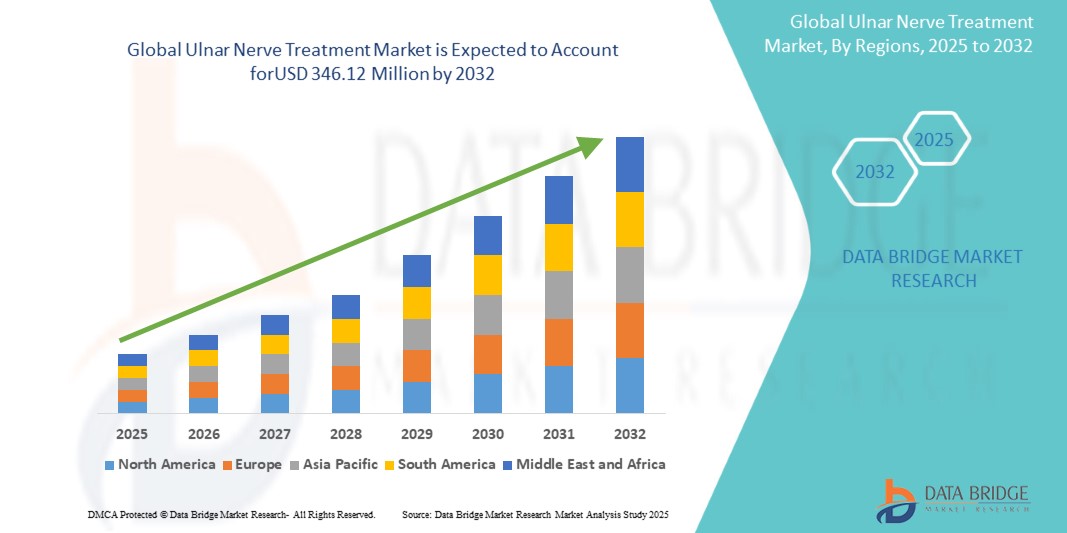
- The Global Ulnar Nerve Treatment Market size was valued at USD 215.53 Million in 2024 and is expected to reach USD 346.12 Million by 2032, at a CAGR of 6.10% during the forecast period
- The market growth is primarily driven by the rising incidence of ulnar nerve entrapment and neuropathy, particularly due to an aging population, repetitive strain injuries, and increasing prevalence of diabetes and arthritis-related nerve complications
- Additionally, increasing awareness of early diagnosis, growing adoption of minimally invasive surgical techniques, and advancements in physical therapy and drug-based interventions are propelling demand for effective ulnar nerve treatment options. The surge in outpatient care and availability of therapies across multiple channels—including retail and online pharmacies—further enhances accessibility and boosts market expansion globally.
Ulnar Nerve Treatment Market Analysis
- Ulnar nerve treatment options, including over-the-counter (OTC) pain relievers, nerve spasm drugs, physical therapy, and surgery, are increasingly essential for managing ulnar nerve entrapment and related neuropathies in both clinical and home care settings due to their role in reducing pain, improving function, and preventing long-term disability.
- The growing prevalence of repetitive strain injuries, diabetes-related neuropathies, and conditions like cubital tunnel syndrome is driving the demand for effective ulnar nerve treatment worldwide. Additionally, the rise in awareness, early diagnosis, and minimally invasive surgical advancements are contributing to increased treatment uptake.
- North America dominates the ulnar nerve treatment market with the largest revenue share in 2025 of 41.3%, fueled by a robust healthcare infrastructure, high incidence of nerve-related disorders, and the presence of key pharmaceutical and medtech companies. The U.S. leads the regional market with growing adoption of advanced surgical interventions and physical rehabilitation programs.
- Asia-Pacific is expected to be the fastest-growing region in the ulnar nerve treatment market during the forecast period, supported by increasing healthcare expenditure, improved access to therapy in developing countries, and a rapidly aging population that is more prone to nerve compression syndromes.
- Among treatment types, the surgery segment is expected to dominate the market with a market share of 38.7% in 2025, due to its effectiveness in relieving severe ulnar nerve compression and the increasing use of robotic-assisted and endoscopic procedures that offer improved patient outcomes and shorter recovery periods.
Report Scope and Ulnar Nerve Treatment Market Segmentation
|
Attributes |
Ulnar Nerve Treatment Key Market Insights |
|
Segments Covered |
|
|
Countries Covered |
North America
Europe
Asia-Pacific
Middle East and Africa
South America
|
|
Key Market Players |
|
|
Market Opportunities |
|
|
Value Added Data Infosets |
In addition to the insights on market scenarios such as market value, growth rate, segmentation, geographical coverage, and major players, the market reports curated by the Data Bridge Market Research also include in-depth expert analysis, pricing analysis, brand share analysis, consumer survey, demography analysis, supply chain analysis, value chain analysis, raw material/consumables overview, vendor selection criteria, PESTLE Analysis, Porter Analysis, and regulatory framework. |
Ulnar Nerve Treatment Market Trends
“Rising Demand for Non-Invasive and Targeted Therapeutics”
- A major emerging trend in the global ulnar nerve treatment market is the increasing preference for non-invasive and targeted therapies over traditional surgical interventions. Patients and healthcare providers alike are gravitating toward conservative management options such as physical therapy, ergonomic correction, corticosteroid injections, and nerve glide exercises.
- For instance, ultrasound-guided hydrodissection has gained attention as a minimally invasive outpatient procedure to relieve ulnar nerve compression, particularly in early-stage cases. Such image-guided techniques improve precision and reduce recovery time.
- Pharmaceutical advances are also contributing to this trend, with growing demand for neuropathic pain medications such as gabapentinoids and localized botulinum toxin injections. These therapies offer symptom control without requiring operative intervention, especially for patients with comorbidities or mild-to-moderate nerve entrapment.
- The integration of wearable medical devices for remote rehabilitation, including nerve stimulation and posture correction tools, is another trend reshaping patient management. These digital health solutions help monitor nerve function and guide personalized recovery programs.
- In tandem, biotech companies and medtech startups are investing in next-gen nerve regeneration technologies, such as bioresorbable nerve conduits and tissue-engineered scaffolds. These innovations aim to support surgical nerve repair and improve functional recovery in complex or severe cases.
- This trend towards minimally invasive, patient-centric, and tech-enabled solutions is reshaping the treatment paradigm for ulnar nerve conditions, offering expanded choices beyond conventional open surgery.
Ulnar Nerve Treatment Market Dynamics
Driver
“Increasing Prevalence of Repetitive Strain Injuries and Occupational Risk Factors”
- The growing burden of repetitive strain injuries (RSIs) caused by prolonged computer use, manual labor, and repetitive elbow flexion is a major driver fueling demand in the global ulnar nerve treatment market.
- Occupational exposure, especially among desk-based professionals, assembly line workers, athletes, and musicians, increases the risk of ulnar nerve compression at the elbow (cubital tunnel syndrome), creating a large and expanding patient pool.
- According to the American Academy of Orthopaedic Surgeons (AAOS), cubital tunnel syndrome is the second most common compressive neuropathy in the upper extremity. As awareness grows, early diagnosis and proactive management are becoming more common, accelerating market demand.
- Furthermore, increased screening efforts, growing health insurance penetration, and improved access to physical therapy services in developing regions are boosting diagnosis and early-stage management of ulnar nerve disorders.
- The demand for integrated care pathways—including diagnostics, conservative treatments, and rehabilitation—is driving healthcare providers to expand service offerings, benefiting pharmaceutical and physical therapy solution providers alike.
Restraint/Challenge
“Underdiagnosis, Treatment Delays, and Cost Barriers in Developing Regions”
- A key restraint in the ulnar nerve treatment market is the underdiagnosis and delayed treatment of nerve compression syndromes, particularly in low- and middle-income countries.
- Limited awareness, lack of access to neurologists or orthopedic specialists, and the misattribution of symptoms to other musculoskeletal conditions often delay appropriate intervention, resulting in worsened patient outcomes.
- High treatment costs, especially for surgical interventions and advanced diagnostics such as electromyography (EMG) and MRI, act as a barrier to adoption for a large segment of the population. In many developing nations, public health systems prioritize more acute conditions, limiting coverage for peripheral nerve disorders.
- Additionally, the fragmented care approach—where diagnosis, medication, and rehabilitation are handled by separate entities—can lead to poor continuity and suboptimal results, especially in rural and semi-urban areas.
- Overcoming these challenges will require integrated healthcare models, government-led awareness campaigns, affordable treatment options, and telemedicine-enabled physiotherapy programs to improve early detection and holistic care access.
Ulnar Nerve Treatment Market Scope
The market is segmented on the basis of type, end-users, and distribution channel.
• By Type
On the basis of type, the ulnar nerve treatment market is segmented into OTC pain relievers, nerve spasm drugs, physical therapy, and surgery. The physical therapy segment is expected to dominate the market with the largest revenue share of 38.6% in 2025, driven by its non-invasive approach, effectiveness in early-stage cubital tunnel syndrome, and increasing adoption among patients seeking conservative management. Physical therapy, including nerve gliding exercises, ergonomic training, and ultrasound-guided interventions, is increasingly recommended as a first-line treatment, particularly among working professionals and athletes.
The surgery segment is anticipated to witness the fastest CAGR of 5.8% from 2025 to 2032, fueled by rising diagnosis of moderate-to-severe ulnar nerve compression cases and improved outcomes from advanced surgical techniques such as endoscopic cubital tunnel release and ulnar nerve transposition. The availability of microsurgical expertise and minimally invasive options is also boosting demand for operative interventions in both developed and emerging markets.
• By End-Users
On the basis of end-users, the ulnar nerve treatment market is segmented into hospitals, clinics, home healthcare, and therapy centres. The hospitals segment accounted for the largest market revenue share in 2025 due to the concentration of surgical procedures, diagnostics, and multidisciplinary treatment under one roof. Hospitals often serve as the primary centers for nerve conduction studies, EMG tests, and both non-operative and operative management of ulnar nerve conditions.
The therapy centres segment is expected to witness the fastest CAGR from 2025 to 2032, driven by the rise in dedicated rehabilitation facilities focusing on nerve disorders, physiotherapy advancements, and increased patient preference for outpatient care. These centers offer specialized recovery programs for post-operative patients and those seeking non-invasive alternatives to surgery.
• By Distribution Channel
On the basis of distribution channel, the ulnar nerve treatment market is segmented into direct tender, hospital pharmacy, retail pharmacy, online pharmacy, and others. The hospital pharmacy segment dominates the market in 2025, primarily due to the high demand for prescribed pain management drugs, anti-inflammatory medications, and post-surgical pharmacological support sourced directly from inpatient settings.
The online pharmacy segment is expected to witness the fastest CAGR from 2025 to 2032, driven by increasing consumer preference for convenience, the growing e-pharmacy landscape, and the availability of a wide range of OTC pain relievers and supportive supplements. Furthermore, telehealth services and remote prescriptions are boosting the online purchase of nerve-related therapeutics.
Ulnar Nerve Treatment Market Regional Analysis
- North America dominates the ulnar nerve treatment market with the largest revenue share of 41.3% in 2025, fueled by a robust healthcare infrastructure, high incidence of nerve-related disorders, and the presence of leading pharmaceutical and medtech companies.
- The U.S. plays a pivotal role in the region’s dominance, with growing adoption of advanced surgical interventions, physical rehabilitation programs, and outpatient therapy solutions. Increasing awareness campaigns and insurance coverage for physical therapy services also support treatment uptake.
- This strong market presence is further supported by early adoption of minimally invasive surgical procedures, extensive R&D efforts, and a favorable reimbursement landscape for both pharmacological and non-pharmacological therapies.
U.S. Ulnar Nerve Treatment Market Insight
The U.S. ulnar nerve treatment market captured the largest revenue share of 83.5% within North America in 2025, driven by high diagnosis rates of cubital tunnel syndrome and carpal tunnel overlap, alongside widespread access to specialized care and advanced treatment options. The growing adoption of outpatient physical therapy, ergonomic workplace interventions, and minimally invasive surgical techniques such as endoscopic ulnar nerve decompression contribute significantly to market growth. Favorable reimbursement policies and continuous advancements in neuro-rehabilitation technologies further support market expansion.
Europe Ulnar Nerve Treatment Market Insight
The European ulnar nerve treatment market is projected to expand at a moderate but steady CAGR during the forecast period, supported by increased awareness of nerve compression syndromes, a strong network of physiotherapy clinics, and the presence of multinational pharmaceutical manufacturers. With aging populations and sedentary lifestyles contributing to musculoskeletal strain, the demand for conservative treatment options such as physical therapy and nerve gliding exercises is increasing. Surgical innovation and adoption of day-care procedures also play a crucial role in regional growth.
U.K. Ulnar Nerve Treatment Market Insight
The U.K. ulnar nerve treatment market is expected to witness a healthy CAGR, driven by rising occupational health concerns, early referral systems within the NHS, and expanding access to physiotherapy. The country’s shift towards community-based care and rising ergonomic interventions in workplace settings are facilitating increased demand for non-invasive and preventive therapies. Additionally, academic collaborations in nerve regeneration and diagnostics support innovation in treatment modalities.
Germany Ulnar Nerve Treatment Market Insight
The German ulnar nerve treatment market is poised to grow at a considerable CAGR, supported by the country’s advanced healthcare infrastructure, high treatment-seeking behavior, and robust insurance penetration. Germany's emphasis on rehabilitation and precision surgery, including microsurgical nerve repair and intraoperative monitoring, drives the growth of both outpatient and surgical segments. The integration of wearable rehab devices and diagnostic imaging tools further enhances treatment precision and uptake.
Asia-Pacific Ulnar Nerve Treatment Market Insight
The Asia-Pacific ulnar nerve treatment market is expected to grow at the fastest CAGR of over 5.8% during the forecast period, fueled by increasing healthcare access, urbanization, and rising incidence of nerve injuries linked to repetitive strain and trauma. Countries like India, China, and Japan are seeing increased investment in physiotherapy centers, awareness programs, and public-private partnerships for affordable diagnostics and treatment. The region also benefits from a growing base of skilled orthopedic and neuro-rehabilitation specialists.
Japan Ulnar Nerve Treatment Market Insight
The Japan ulnar nerve treatment market is gaining momentum, driven by a rapidly aging population and a strong focus on non-invasive and home-based therapies. With a highly organized rehabilitation system and government-backed wellness programs, Japan is seeing increased demand for physical therapy, electrostimulation devices, and wearable support systems. Technological integration in diagnostics and therapy is further accelerating market adoption.
China Ulnar Nerve Treatment Market Insight
The China ulnar nerve treatment market accounted for the largest market revenue share in Asia-Pacific in 2025, due to its expanding healthcare infrastructure, growing patient awareness, and high prevalence of work-related nerve disorders. The government's push toward digital healthcare, tele-rehabilitation, and improved access to orthopedic care across urban and rural regions is playing a critical role in treatment adoption. Domestic pharma players are also contributing to market expansion through cost-effective generics and nerve regeneration therapies.
Ulnar Nerve Treatment Market Share
The Ulnar Nerve Treatment industry is primarily led by well-established companies, including:
- Teva Pharmaceuticals USA, Inc. (U.S.)
- Allied Chemicals & Pharmaceuticals Pvt. Ltd. (India)
- Saol Therapeutics Inc. (U.S.)
- Lannett (U.S.)
- Mylan Inc. (U.S.)
- Pfizer (U.S.)
- LEXICARE PHARMA PVT. LTD. (India)
- Endo International plc (Ireland)
- Almirall, S.A (Spain)
- GSK group of companies (UK)
- Johnson & Johnson Consumer Inc. (U.S.)
- Reckitt Benckiser Group plc. (UK)
- Bayer (Germany)
- AxisPro Physical Therapy & Lymphedema Clinic (U.S.)
- STAR PT (U.S.)
- Lott Physical Therapy (U.S.)
- Tecoland Corporation (U.S.)
- Zoetis Services LLC (U.S.)
- Apotex Inc. (Canada)
- Alkem Labs (India)
- Amneal Pharmaceuticals LLC. (U.S.)
- Aurobindo Pharma USA. (U.S.)
- AdvaCare Pharma (UK)

- Interactive Data Analysis Dashboard
- Company Analysis Dashboard for high growth potential opportunities
- Research Analyst Access for customization & queries
- Competitor Analysis with Interactive dashboard
- Latest News, Updates & Trend analysis
- Harness the Power of Benchmark Analysis for Comprehensive Competitor Tracking
Data collection and base year analysis are done using data collection modules with large sample sizes. The stage includes obtaining market information or related data through various sources and strategies. It includes examining and planning all the data acquired from the past in advance. It likewise envelops the examination of information inconsistencies seen across different information sources. The market data is analysed and estimated using market statistical and coherent models. Also, market share analysis and key trend analysis are the major success factors in the market report. To know more, please request an analyst call or drop down your inquiry.
The key research methodology used by DBMR research team is data triangulation which involves data mining, analysis of the impact of data variables on the market and primary (industry expert) validation. Data models include Vendor Positioning Grid, Market Time Line Analysis, Market Overview and Guide, Company Positioning Grid, Patent Analysis, Pricing Analysis, Company Market Share Analysis, Standards of Measurement, Global versus Regional and Vendor Share Analysis. To know more about the research methodology, drop in an inquiry to speak to our industry experts.
Data Bridge Market Research is a leader in advanced formative research. We take pride in servicing our existing and new customers with data and analysis that match and suits their goal. The report can be customized to include price trend analysis of target brands understanding the market for additional countries (ask for the list of countries), clinical trial results data, literature review, refurbished market and product base analysis. Market analysis of target competitors can be analyzed from technology-based analysis to market portfolio strategies. We can add as many competitors that you require data about in the format and data style you are looking for. Our team of analysts can also provide you data in crude raw excel files pivot tables (Fact book) or can assist you in creating presentations from the data sets available in the report.












