


What is the Vaginal anti‑infectives Market Size and Growth Rate?
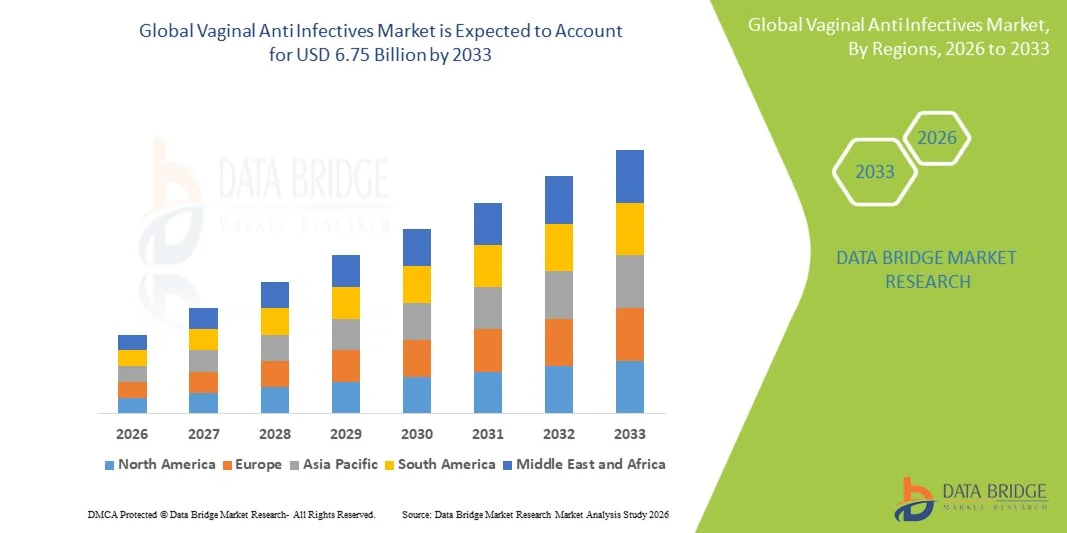
- As per Data Bridge Market Research Analysis the global vaginal anti infectives market size was valued at USD 3.57 billion in 2025 and is expected to reach USD 6.75 billion by 2033, at a CAGR of 8.3% during the forecast period
- The market growth is largely fueled by the rising prevalence of vaginal infections such as bacterial vaginosis, vulvovaginal candidiasis, and trichomoniasis, increasing awareness of women’s reproductive health, and advancements in therapeutic formulations and delivery technologies that improve treatment outcomes
- Furthermore, growing demand for both prescription and over‑the‑counter treatment options, coupled with expanded access to healthcare services and proactive diagnosis, is positioning vaginal anti‑infectives as essential components of women’s health care. These converging factors are accelerating the adoption of effective anti‑infective therapies, thereby significantly boosting the industry’s growth
Market Size & Forecast
Global Market Value (2025): USD 3.57 billion
Expected Market Value (2033): USD 6.75 billion
Forecast CAGR (2026–2033): 8.3%
What are the Major Takeaways of Vaginal anti‑infectives Market?
- Vaginal anti‑infectives, encompassing treatments for bacterial vaginosis, vulvovaginal candidiasis, and trichomoniasis, are increasingly vital components of women’s health care due to their ability to effectively manage infections, improve reproductive health, and enhance quality of life
- The escalating demand for vaginal anti‑infectives is primarily fueled by rising awareness of women’s reproductive health, increasing prevalence of vaginal infections, and advancements in formulations and delivery technologies that provide improved efficacy and patient compliance
- North America dominated the vaginal anti‑infectives market with the largest revenue share of 38.9% in 2025, characterized by well-established healthcare infrastructure, high awareness levels among women, and a strong presence of key pharmaceutical players, with the U.S. experiencing substantial growth in prescriptions and over-the-counter treatments, driven by innovations in novel therapies and patient-friendly delivery systems
- Asia-Pacific is expected to be the fastest-growing region in the vaginal anti‑infectives market during the forecast period due to increasing healthcare accessibility, rising awareness of women’s health issues, and growing demand for convenient and effective treatment options
- Antifungal segment dominated the market with a market share of 55.9% in 2025, driven by the high prevalence of fungal infections such as vulvovaginal candidiasis
Report Scope and Vaginal Anti Infectives Market Segmentation
|
Attributes |
Vaginal Anti Infectives Key Market Insights |
|
Segments Covered |
|
|
Countries Covered |
North America
Europe
Asia-Pacific
Middle East and Africa
South America
|
|
Key Market Players |
|
|
Market Opportunities |
|
|
Value Added Data Infosets |
|
What is the Key Trend in the Vaginal anti‑infectives Market?
“Emergence of Microbiome-Friendly and Targeted Therapies”
- A significant and accelerating trend in the global vaginal anti‑infectives market is the development of microbiome-friendly formulations that target pathogens while preserving healthy vaginal flora, improving treatment outcomes and reducing recurrence rates
- For instance, newer antifungal creams and gels are designed to selectively inhibit Candida species without disrupting beneficial Lactobacillus populations, promoting faster recovery and fewer side effects
- Advancements in sustained-release delivery systems, such as pessaries and intravaginal rings, are enabling longer treatment duration and better patient compliance, reducing the frequency of administration and associated discomfort
- The integration of diagnostics with targeted therapies, such as rapid point-of-care tests guiding prescription choices, allows personalized treatment plans and reduces overuse of broad-spectrum medications
- Growing interest in natural and herbal-based vaginal anti-infectives, such as probiotic-infused gels and plant extracts, is driving innovation in safer, non-antibiotic options
- This trend towards safer, more effective, and patient-centric therapies is fundamentally reshaping expectations in women’s health, with pharmaceutical companies developing products that combine efficacy with minimal disruption to natural microbiota
- The demand for advanced, microbiome-preserving anti-infectives is growing rapidly across both hospitals and homecare settings, as patients increasingly prioritize treatments that are effective, convenient, and compatible with their overall vaginal health
Vaginal Anti Infectives Market Dynamics
Driver
“Rising Prevalence of Vaginal Infections and Awareness of Women’s Health”
- The increasing prevalence of bacterial, fungal, and viral vaginal infections, coupled with growing awareness of women’s reproductive health, is a significant driver for the heightened demand for vaginal anti-infectives
- For instance, the rising incidence of vulvovaginal candidiasis among women aged 18–45 has led to increased prescriptions of antifungal creams and pessaries in hospitals and specialty clinics
- As women become more proactive in seeking care for gynecological infections, vaginal anti-infectives provide effective solutions with faster recovery, improved comfort, and reduced risk of complications
- Furthermore, the expansion of women’s health programs and government awareness campaigns in both developed and developing regions is increasing early diagnosis and timely treatment of infections
- The convenience of over-the-counter creams and gels, combined with prescription-based solutions in hospitals and clinics, is propelling adoption of vaginal anti-infectives across a broad patient base
- Increasing investment by pharmaceutical companies in R&D to develop targeted antiviral and antibacterial formulations is creating new growth opportunities
- Rising telemedicine consultations and online pharmacy access allow wider distribution of vaginal anti-infectives, particularly in remote and underserved regions
- Awareness campaigns on maternal and reproductive health in developing countries are driving early detection and treatment, further expanding the market
- Innovations in packaging and dosage forms, such as pre-measured applicators and single-dose units, are improving patient compliance and driving adoption globally
Restraint/Challenge
“Side Effects, Misuse, and Regulatory Compliance Hurdles”
- Concerns surrounding potential side effects, such as irritation or allergic reactions, pose a significant challenge to broader market penetration, particularly for first-time users or sensitive populations
- For instance, improper use of antifungal creams or repeated use of broad-spectrum antibiotics can disrupt natural vaginal flora, leading to recurrence or secondary infections
- Addressing these issues through patient education, clear usage guidelines, and development of gentler formulations is crucial for building consumer confidence and encouraging adherence
- In addition, regulatory compliance for new formulations can delay product launches, especially in regions with strict approval processes for women’s health products
- While generic and OTC products are widely available, premium or novel formulations often face high development costs, which can hinder affordability and limit access in price-sensitive markets
- Resistance development due to overuse of antibiotics and improper treatment regimens is emerging as a critical challenge, necessitating careful prescription practices
- Limited awareness in certain emerging markets about proper usage and treatment duration can lead to non-adherence, lowering effectiveness and contributing to recurring infections
- The lack of standardized guidelines across regions for combination or herbal-based therapies creates uncertainties for manufacturers and healthcare providers
- Overcoming these challenges through improved formulations, better patient guidance, educational initiatives, and streamlined regulatory approvals will be vital for sustained market growth
How is the Vaginal anti‑infectives Market Segmented?
The market is segmented on the basis of type, product, end-users, and distribution channel.
- By Type
On the basis of type, the vaginal anti‑infectives market is segmented into antifungal, antibacterial, antiviral, and others. The antifungal segment dominated the market with the largest market revenue share of 55.9% in 2025, driven by the high prevalence of fungal infections such as vulvovaginal candidiasis. Antifungal therapies, including creams, gels, and pessaries, are widely prescribed and preferred due to their rapid efficacy and proven safety profile. Women often prioritize antifungal treatments for their ability to provide localized relief while minimizing systemic side effects. The market also sees strong demand for antifungal therapies due to increasing awareness of recurrent infections and the importance of maintaining vaginal microbiota balance. Leading pharmaceutical companies continue to innovate antifungal formulations, improving adherence, reducing irritation, and offering combination therapies. The extensive availability of both prescription and over-the-counter antifungal products further reinforces their market dominance.
The antibacterial segment is anticipated to witness the fastest growth rate of 12% CAGR from 2026 to 2033, fueled by rising incidences of bacterial vaginosis and other bacterial infections. Antibacterial treatments, including metronidazole-based creams, gels, and tablets, are increasingly adopted in both hospital and homecare settings. These therapies benefit from growing awareness among women about early detection and treatment of infections to prevent complications such as pelvic inflammatory disease. Enhanced formulations with targeted delivery and reduced systemic absorption are driving adoption. In addition, increasing telemedicine consultations and online pharmacy availability are making antibacterial treatments more accessible, particularly in emerging regions. Rising R&D investments by pharmaceutical companies to develop safer and more effective antibacterial therapies further support the growth of this segment.
- By Product
On the basis of product, the market is segmented into creams, pessaries (tablets), gels, solutions, and others. The creams segment dominated the market with a revenue share of 45% in 2025, driven by ease of application, rapid symptom relief, and established efficacy. Cream formulations are widely preferred for topical treatment of fungal and bacterial infections, providing localized action with minimal systemic absorption. Women often favor creams for convenience, comfort, and immediate relief from itching, irritation, and discharge. Pharmaceutical companies continue to enhance cream formulations to reduce messiness, improve absorption, and offer patient-friendly packaging. Over-the-counter availability of creams also drives their widespread adoption across hospitals, clinics, and homecare settings. Marketing campaigns highlighting user convenience, safety, and rapid effectiveness further reinforce the dominance of creams.
The pessaries (tablets) segment is expected to witness the fastest growth rate, with an estimated CAGR of 13% from 2026 to 2033, due to their sustained-release properties and targeted intravaginal delivery. Pessaries are increasingly prescribed for recurrent infections or as part of combination therapy. They allow controlled drug release, which reduces the frequency of application and improves adherence. The discreet and convenient nature of pessaries appeals to patients seeking privacy and comfort during treatment. Hospitals and specialty clinics are actively adopting pessary-based regimens for effective treatment plans, while online pharmacies facilitate easy access for homecare patients. The rising preference for evidence-based treatments and better patient compliance is driving growth in this subsegment.
- By End-Users
On the basis of end-users, the market is segmented into hospitals, homecare, specialty clinics, and others. The hospitals and specialty clinics segment dominated the market with a combined revenue share of 50–55% in 2025, due to prescription-based treatment protocols and professional healthcare management. Hospitals provide access to both antifungal and antibacterial therapies, ensuring appropriate diagnosis, treatment, and follow-up care. Specialty clinics often focus on women’s reproductive health, offering personalized treatment plans that enhance therapeutic effectiveness. The presence of trained healthcare professionals ensures proper guidance on dosage, duration, and adherence, reducing recurrence and complications. Hospitals and clinics also facilitate combination therapies and new formulations for recurrent or resistant infections. Increased awareness programs and preventive screenings in hospitals and clinics further strengthen adoption.
The homecare segment is expected to witness the fastest growth rate, with a CAGR of 14% from 2026 to 2033, fueled by rising patient preference for privacy and convenience. Homecare adoption is boosted by the availability of over-the-counter creams, gels, and pessaries, as well as online pharmacy access. Digital health consultations allow patients to receive prescriptions without visiting a clinic, driving self-care and adherence. Increasing awareness of recurrent infections and early symptom recognition is encouraging home treatment. Packaging innovations, such as pre-measured doses and applicators, improve patient compliance in homecare settings. The convenience of remote guidance, rapid symptom relief, and privacy ensures strong adoption in both urban and semi-urban regions.
- By Distribution Channel
On the basis of distribution channel, the market is segmented into hospital pharmacy, online pharmacy, and retail pharmacy. The hospital pharmacy segment dominated the market with the largest revenue share of 48% in 2025, driven by the prescription-based nature of most antifungal and antibacterial therapies. Hospital pharmacies provide regulated access to treatments and ensure patient education on proper usage, dosage, and adherence. Many hospitals also offer combination therapies and new formulations for resistant or recurrent infections. The presence of professional healthcare providers enhances patient trust and encourages compliance. Strong hospital networks in North America and Europe contribute to the segment’s dominance. Regular awareness campaigns and patient counseling in hospital settings further support high adoption rates.
The online pharmacy segment is expected to witness the fastest growth rate, with a projected CAGR of 15% from 2026 to 2033, fueled by the growing e-commerce penetration, telemedicine adoption, and convenience of doorstep delivery. Online pharmacies provide access to both prescription and OTC anti-infectives, including creams, pessaries, and gels. Consumers increasingly prefer the privacy, time-saving convenience, and discreet packaging offered by online channels. Rising smartphone penetration and digital payment adoption further drive online pharmacy growth, particularly in emerging markets. Partnerships between pharmaceutical companies and online platforms are expanding distribution networks and enhancing accessibility for homecare patients. Online pharmacies also facilitate subscription models, ensuring continuity of treatment and patient adherence.
Which Region Holds the Largest Share of the Vaginal anti‑infectives Market?
- North America dominated the vaginal anti‑infectives market with the largest revenue share of 38.9% in 2025, characterized by well-established healthcare infrastructure, high awareness levels among women, and a strong presence of key pharmaceutical players
- Consumers in the region highly value the availability of both prescription and over-the-counter treatments, access to specialized healthcare providers, and advanced formulations that ensure rapid symptom relief and minimal side effects
- This widespread adoption is further supported by strong hospital and specialty clinic networks, high disposable incomes, and growing preference for early diagnosis and effective treatment, establishing vaginal anti‑infectives as essential components of women’s health care in both urban and semi-urban settings
U.S. Vaginal Anti Infectives Market Insight
The U.S. vaginal anti-infectives market captured the largest revenue share of 82% in 2025 within North America, fueled by rising awareness of women’s reproductive health and increasing prevalence of vaginal infections such as vulvovaginal candidiasis and bacterial vaginosis. Consumers are increasingly prioritizing early diagnosis and effective treatment, with a growing preference for over-the-counter creams, gels, and prescription pessaries. The expansion of telemedicine and e-pharmacy platforms further propels the market, enabling convenient access to treatments. Moreover, innovations in microbiome-friendly and sustained-release formulations are significantly contributing to market growth, enhancing both patient adherence and therapeutic outcomes.
Europe Vaginal Anti‑Infectives Market Insight
The Europe vaginal anti-infectives market is projected to expand at a substantial CAGR throughout the forecast period, primarily driven by government initiatives promoting women’s health, increasing awareness of reproductive wellness, and the rising prevalence of bacterial and fungal infections. The increase in urbanization, coupled with strong healthcare infrastructure, is fostering adoption across hospitals, specialty clinics, and retail pharmacies. European consumers are also drawn to safe, clinically validated treatments and convenient dosage forms such as creams and pessaries. The region is experiencing significant growth in both private and public healthcare settings, with advanced formulations being integrated into treatment protocols for recurrent infections.
U.K. Vaginal Anti‑Infectives Market Insight
The U.K. vaginal anti-infectives market is anticipated to grow at a noteworthy CAGR during the forecast period, driven by the increasing trend of preventive healthcare and awareness of women’s reproductive issues. In addition, concerns regarding recurrent infections and antimicrobial resistance are encouraging both patients and healthcare providers to choose clinically effective treatments. The U.K.’s well-established healthcare system, combined with strong e-commerce and retail pharmacy networks, is expected to continue stimulating market growth. Consumer preference for privacy, homecare accessibility, and OTC options further supports adoption.
Germany Vaginal Anti‑Infectives Market Insight
The Germany vaginal anti-infectives market is expected to expand at a considerable CAGR during the forecast period, fueled by high awareness of women’s health, stringent prescription regulations, and demand for safe and effective treatment options. Germany’s well-developed healthcare infrastructure and emphasis on clinical efficacy promote the adoption of advanced antifungal and antibacterial formulations. Hospitals and specialty clinics actively provide guided therapies, ensuring patient adherence and minimizing recurrence. Moreover, growing interest in microbiome-friendly and combination therapies aligns with consumer preferences for treatments that are both safe and effective.
Asia-Pacific Vaginal Anti‑Infectives Market Insight
The Asia-Pacific vaginal anti-infectives market is poised to grow at the fastest CAGR of 14% during 2026 to 2033, driven by increasing awareness of reproductive health, rising disposable incomes, and expanding healthcare access in countries such as China, India, and Japan. The region's growing inclination toward modern, effective treatment options supported by telemedicine, online pharmacies, and homecare services is driving adoption. Furthermore, expanding urban populations, improving healthcare infrastructure, and rising investment by pharmaceutical companies are making treatments more accessible and affordable for a broader consumer base.
Japan Vaginal Anti‑Infectives Market Insight
The Japan vaginal anti-infectives market is gaining momentum due to high healthcare standards, growing awareness of preventive women’s health measures, and demand for convenient treatment options. Japan emphasizes early detection and management of infections, which is fueling the adoption of creams, pessaries, and gels in both hospital and homecare settings. Integration of educational campaigns on vaginal health and telehealth platforms supports patient adherence and treatment outcomes. Moreover, the aging female population is likely to spur demand for easy-to-use, safe, and effective anti-infective solutions in both residential and clinical settings.
India Vaginal Anti‑Infectives Market Insight
The India vaginal anti-infectives market accounted for the largest market revenue share in Asia-Pacific in 2025, attributed to rapid urbanization, a growing middle-class population, and rising awareness of reproductive health. India is emerging as a key market for OTC creams, gels, and prescription pessaries, with increasing adoption in hospitals, clinics, and homecare. Government health initiatives, telemedicine expansion, and affordable treatment options provided by domestic manufacturers are key factors propelling market growth. The rising prevalence of infections and the push toward accessible healthcare in semi-urban and rural areas are further supporting market expansion.
Which are the Top Companies in Vaginal anti‑infectives Market?
The Vaginal Anti Infectives industry is primarily led by well-established companies, including:
- Pfizer Inc (U.S.)
- SCYNEXIS, Inc., (U.S.)
- GSK plc (U.K.)
- Bayer AG (Germany)
- AbbVie Inc (U.S.)
- Aurobindo Pharma Limited (India)
- Lupin Limited (India)
- Hikma Pharmaceuticals plc (U.K.)
- Perrigo Company plc (Ireland)
- Bristol Myers Squibb Company (U.S.)
- Melinta Therapeutics, Inc (U.S.)
- Organon & Co (U.S.)
- Mycovia Pharmaceuticals Inc (U.S.)
- Exeltis (Spain)
- Symbiomix Therapeutics (U.S.)
- Lallemand Health Solutions (Canada)
- Novartis AG (Switzerland)
- Teva Pharmaceutical Industries Ltd., (Israel)
- Sanofi (France)
What are the Recent Developments in Global Vaginal Anti Infectives Market?
- In November 2025, Mycovia Pharmaceuticals published long‑term (96‑week) efficacy results for VIVJOA from extended Phase 3 data showing sustained protection against recurrent vulvovaginal candidiasis, reinforcing the drug’s clinical benefit for chronic yeast infection patients
- In December 2022, the FDA approved a second indication for BREXAFEMME to reduce the incidence of recurrent vulvovaginal candidiasis (RVVC), providing the first oral therapy for both acute and recurrent yeast infections and addressing a significant unmet need for women with repeated episodes
- In April 2022, the FDA approved VIVJOA® (oteseconazole), an oral azole antifungal specifically indicated to reduce the recurrence of RVVC, representing a major advancement for chronic yeast infection management and offering sustained efficacy shown in pivotal clinical trials
- In September 2021, BREXAFEMME became commercially available in the U.S., enabling patients to access the first oral non‑azole therapy for vaginal yeast infections through pharmacies, offering broader therapeutic choice and fungicidal efficacy against Candida strains, including some resistant to existing treatments
- In June 2021, the U.S. FDA approved BREXAFEMME® (ibrexafungerp tablets) as the first and only oral non‑azole antifungal treatment for vulvovaginal candidiasis (vaginal yeast infections), marking the first new antifungal class for this indication in more than 20 years and providing women a novel therapeutic option beyond traditional azoles

- Interactive Data Analysis Dashboard
- Company Analysis Dashboard for high growth potential opportunities
- Research Analyst Access for customization & queries
- Competitor Analysis with Interactive dashboard
- Latest News, Updates & Trend analysis
- Harness the Power of Benchmark Analysis for Comprehensive Competitor Tracking
Data collection and base year analysis are done using data collection modules with large sample sizes. The stage includes obtaining market information or related data through various sources and strategies. It includes examining and planning all the data acquired from the past in advance. It likewise envelops the examination of information inconsistencies seen across different information sources. The market data is analysed and estimated using market statistical and coherent models. Also, market share analysis and key trend analysis are the major success factors in the market report. To know more, please request an analyst call or drop down your inquiry.
The key research methodology used by DBMR research team is data triangulation which involves data mining, analysis of the impact of data variables on the market and primary (industry expert) validation. Data models include Vendor Positioning Grid, Market Time Line Analysis, Market Overview and Guide, Company Positioning Grid, Patent Analysis, Pricing Analysis, Company Market Share Analysis, Standards of Measurement, Global versus Regional and Vendor Share Analysis. To know more about the research methodology, drop in an inquiry to speak to our industry experts.
Data Bridge Market Research is a leader in advanced formative research. We take pride in servicing our existing and new customers with data and analysis that match and suits their goal. The report can be customized to include price trend analysis of target brands understanding the market for additional countries (ask for the list of countries), clinical trial results data, literature review, refurbished market and product base analysis. Market analysis of target competitors can be analyzed from technology-based analysis to market portfolio strategies. We can add as many competitors that you require data about in the format and data style you are looking for. Our team of analysts can also provide you data in crude raw excel files pivot tables (Fact book) or can assist you in creating presentations from the data sets available in the report.












