


Vasovagal Syncope Treatment Market Size
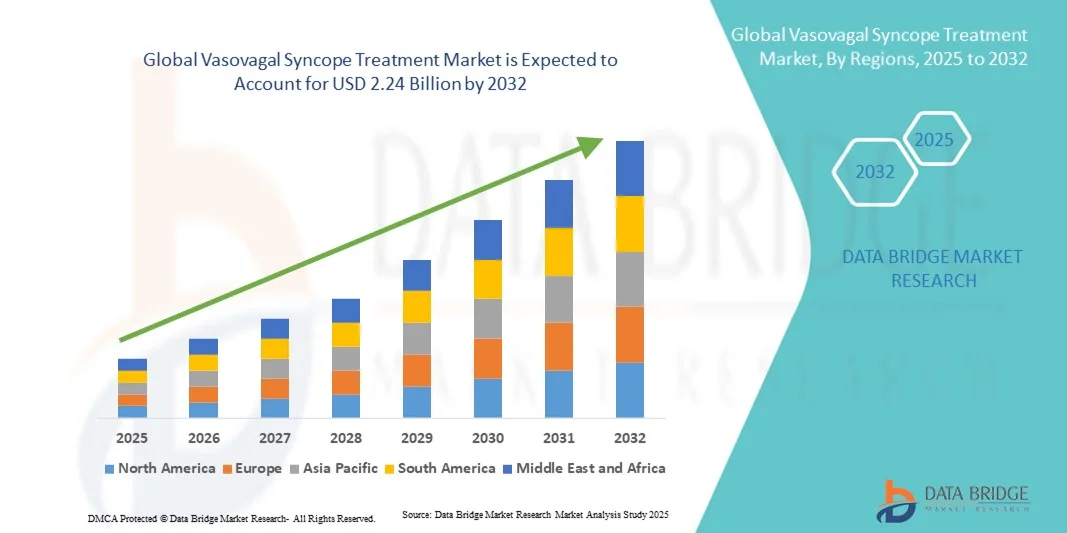
- The global vasovagal syncope treatment market size was valued at USD 1.63 billion in 2024 and is expected to reach USD 2.24 billion by 2032, at a CAGR of 4.10% during the forecast period
- This market growth is primarily driven by the increasing awareness and diagnosis of vasovagal syncope, leading to a higher demand for effective treatment options
- Advancements in treatment modalities, such as pharmacological therapies and neuromodulation techniques, are enhancing patient outcomes and satisfaction. The rising elderly population and the corresponding increase in cardiovascular issues contribute to an increased focus on managing syncope, further propelling market growth.
Vasovagal Syncope Treatment Market Analysis
- Vasovagal syncope treatments, including medication and diagnostic tests, are increasingly vital for managing sudden fainting episodes and preventing injury, with growing importance in both outpatient and hospital care settings due to their effectiveness, personalized approach, and integration with cardiovascular monitoring systems
- The escalating demand for vasovagal syncope treatments is primarily fueled by increasing awareness and diagnosis of the condition, rising prevalence among the elderly, and growing adoption of advanced therapies such as beta-blockers, fludrocortisone, and neuromodulation techniques
- North America dominated the vasovagal syncope treatment market with the largest revenue share of 43% in 2024, characterized by advanced healthcare infrastructure, high patient awareness, and strong presence of key market players, with the U.S. experiencing substantial growth in treatment adoption, particularly in hospitals and specialty clinics, driven by innovations from both established pharmaceutical companies and medical device startups
- Asia-Pacific is expected to be the fastest-growing region in the vasovagal syncope treatment market during the forecast period due to increasing healthcare investments, rising awareness of syncope management, and a growing elderly population
- Medication segment dominated the vasovagal syncope treatment market in 2024 with a market share of 55.4%, with beta-blockers and fludrocortisone being widely prescribed for effective symptom management, while oral administration remained the preferred route due to convenience and patient compliance
Report Scope and Vasovagal Syncope Treatment Market Segmentation
|
Attributes |
Vasovagal Syncope Treatment Key Market Insights |
|
Segments Covered |
|
|
Countries Covered |
North America
Europe
Asia-Pacific
Middle East and Africa
South America
|
|
Key Market Players |
|
|
Market Opportunities |
|
|
Value Added Data Infosets |
In addition to the insights on market scenarios such as market value, growth rate, segmentation, geographical coverage, and major players, the market reports curated by the Data Bridge Market Research also include in-depth expert analysis, pricing analysis, brand share analysis, consumer survey, demography analysis, supply chain analysis, value chain analysis, raw material/consumables overview, vendor selection criteria, PESTLE Analysis, Porter Analysis, and regulatory framework. |
Vasovagal Syncope Treatment Market Trends
Integration of Remote Monitoring and Telehealth Solutions
- A notable and accelerating trend in the global vasovagal syncope treatment market is the integration of remote monitoring technologies and telehealth solutions, enabling continuous patient monitoring and timely interventions
- For instance, wearable devices equipped with sensors can detect early signs of syncope episodes, alerting healthcare providers and patients in real-time, thereby enhancing patient safety and reducing emergency incidents
- Telehealth platforms facilitate virtual consultations and follow-ups, improving access to care for patients in remote or underserved areas and ensuring consistent management of the condition
- This integration allows for personalized treatment plans based on continuous data, leading to more effective management of vasovagal syncope and improved patient outcomes
- The adoption of these technologies is reshaping the landscape of vasovagal syncope treatment, making it more patient-centric and accessible. For instance, AI-based predictive algorithms are being developed to forecast syncope episodes based on historical patient data, supporting preventive care strategies
- Remote monitoring also supports data collection for large-scale research studies, helping healthcare providers refine treatment guidelines and improve long-term patient outcomes
Vasovagal Syncope Treatment Market Dynamics
Driver
Increasing Prevalence of Cardiovascular Conditions
- The rising incidence of cardiovascular diseases, such as hypertension and arrhythmias, is a significant driver for the growth of the vasovagal syncope treatment market
- These conditions often lead to autonomic dysfunctions, increasing the risk of vasovagal syncope episodes and necessitating effective management strategies
- Advancements in diagnostic techniques, such as tilt-table testing and electrophysiological studies, have improved the accuracy of vasovagal syncope diagnosis, facilitating timely and appropriate treatment
- The development of novel pharmacological therapies and implantable devices offers new treatment options, enhancing the management of the condition
- Increasing public awareness and education about vasovagal syncope contribute to early detection and intervention, further driving market growth
- For instance, government-led health campaigns and hospital programs are promoting awareness of fainting disorders, increasing patient engagement and treatment adoption
- Rising geriatric population with age-related cardiovascular and neurological disorders further fuels the demand for effective vasovagal syncope management solution
Restraint/Challenge
Challenges in Diagnosis and Treatment Standardization
- A significant challenge in the vasovagal syncope treatment market is the variability in diagnostic criteria and treatment protocols across different healthcare settings
- The absence of universally accepted guidelines can lead to inconsistencies in patient care and outcomes
- In addition, the episodic nature of vasovagal syncope makes it difficult to capture accurate data during clinical visits, hindering effective diagnosis and monitoring
- The high cost of advanced diagnostic tools and treatment modalities may limit their accessibility, particularly in low-resource settings
- These factors contribute to delays in diagnosis and suboptimal treatment, affecting patient quality of life and overall market growth
- For instance, limited availability of trained specialists in remote regions delays accurate diagnosis and timely intervention
- Patient non-compliance with long-term medication regimens or follow-up visits can reduce treatment effectiveness, posing an additional challenge for market growth
Vasovagal Syncope Treatment Market Scope
The market is segmented on the basis of treatment type, drug type, application, route of administration, end user, mode of purchase, and distribution channel
- By Treatment Type
On the basis of treatment type, the vasovagal syncope treatment market is segmented into medication and diagnostic tests. Medication dominated the market with the largest revenue share of 55.4% in 2024, driven by the high prevalence of recurrent syncope episodes requiring pharmacological management. Commonly prescribed drugs such as beta-blockers, fludrocortisone, and midodrine help stabilize heart rate and blood pressure during episodes. Hospitals and specialty clinics rely heavily on medications due to well-established treatment protocols. Patient awareness about preventive therapy and long-term management also contributes to high demand. Oral formulations and generic availability make medications accessible across geographies. The segment benefits from consistent prescription trends in both acute and outpatient care settings.
Diagnostic Tests are anticipated to witness the fastest growth rate from 2025 to 2032, fueled by increased adoption of tilt-table testing, ECG monitoring, and continuous ambulatory monitoring for precise diagnosis. These tests help differentiate vasovagal syncope from other causes, enabling personalized treatment plans. Technological advancements in diagnostic devices have made testing more accurate and patient-friendly. Remote and home-based monitoring solutions are gaining traction, further accelerating adoption. Rising physician preference for evidence-based management strengthens the market for diagnostics. Overall, this segment is expanding rapidly due to both technological and clinical drivers.
- By Drug Type
On the basis of drug type, the market is segmented into beta-blockers, disopyramide, scopolamine, clonidine, theophylline, fludrocortisone. Beta-Blockers dominated the market in 2024 due to their extensive use in preventing reflex-mediated heart rate increases that trigger syncope. They are included in most treatment guidelines and have high physician familiarity, supporting sustained prescriptions. Hospitals and specialty clinics rely on them for both acute management and long-term prophylaxis. Oral administration and generic availability enhance accessibility and affordability. High patient compliance and minimal monitoring requirements further strengthen dominance. Beta-blockers remain the first-line therapy in many clinical protocols worldwide.
Fludrocortisone is expected to witness the fastest growth rate from 2025 to 2032. By increasing blood volume, it helps prevent recurrent fainting, making it suitable for patients resistant to conventional therapies. Clinical evidence supporting its efficacy is driving adoption among physicians. Its favorable safety profile and improved patient adherence contribute to rapid growth. Hospitals, specialty clinics, and home healthcare increasingly utilize fludrocortisone for long-term management. Rising awareness among patients seeking preventive therapy further accelerates this segment’s expansion.
- By Application
On the basis of application, the market is segmented into cardiogenic, neurological, metabolic, vasomotor, and others. Vasomotor application dominated the market in 2024, as vasovagal syncope is primarily triggered by sudden changes in heart rate and blood pressure. High patient prevalence and frequent hospital visits support strong demand. Physicians actively monitor vasomotor syncope due to potential complications, including falls and injuries. Hospitals and specialty clinics are key revenue contributors. Awareness campaigns and improved diagnosis rates maintain consistent growth. This segment remains central to the vasovagal syncope treatment market.
Neurological application is expected to witness the fastest growth rate from 2025 to 2032. Advances in neuro-cardiology have highlighted autonomic nervous system dysfunction as a key contributor to syncope. Tailored pharmacological interventions and remote monitoring devices for neurological triggers are driving adoption. Home-based monitoring tools and wearables are expanding the patient base. Increased clinical research supporting neurological interventions further boosts growth. The segment is growing rapidly as physicians integrate neurology-focused treatment strategies.
- By Route of Administration
On the basis of route of administration, the market is segmented into oral, parenteral, and intravenous. Oral administration dominated the market in 2024 due to convenience, high patient compliance, and suitability for long-term therapy. Most prescribed medications, such as beta-blockers and fludrocortisone, are available in oral formulations. Outpatient and home healthcare settings rely heavily on oral drugs. Consistent physician prescriptions contribute to revenue dominance. Oral administration is preferred for maintenance therapy. The segment benefits from wide availability and patient familiarity with tablets and capsules.
Parenteral administration is expected to witness the fastest growth rate from 2025 to 2032. It is primarily used in acute or severe syncope cases requiring rapid stabilization of heart rate or blood pressure. Hospitals and emergency care settings prefer parenteral administration due to precise dosing and immediate effects. Improved safety profiles and new injectable formulations support adoption. Acute care protocols in specialty clinics increase usage. Growth is driven by clinical demand for quick therapeutic response.
- By End User
On the basis of end user, the market is segmented into hospitals, specialty clinics, and home and healthcare. Hospitals dominated the market in 2024, managing the majority of vasovagal syncope cases, including recurrent and severe episodes. Hospital cardiology and neurology departments implement standardized treatment protocols. Advanced diagnostic facilities support adoption of both medications and diagnostic tests. High patient inflow ensures sustained demand and revenue. Hospitals are primary distributors through their in-house pharmacies. This segment benefits from consistent clinical integration and trusted physician networks.
Home and Healthcare segment is expected to witness the fastest growth rate from 2025 to 2032. Telemedicine, remote monitoring, and wearable devices enable early detection and timely intervention. Patients increasingly prefer home-based care for chronic management, reducing hospital visits. Digital platforms and online pharmacies facilitate convenient access to medications. Elderly populations with mobility limitations drive adoption. This segment is rapidly expanding due to convenience, technological advancements, and patient preference.
- By Mode of Purchase
On the basis of mode of purchase, the market is segmented into prescription and over-the-counter (OTC). Prescription dominated the market in 2024 due to physician supervision requirements for safe drug use. Drugs such as beta-blockers and clonidine require careful dosing and monitoring. Hospitals, clinics, and pharmacies are key distribution points. Prescription drugs ensure regulatory compliance and maintain consistent revenue. They are essential for long-term management of recurrent syncope. Market dominance is reinforced by strong clinical adoption and physician trust.
Over-the-Counter (OTC) is anticipated to witness the fastest growth rate from 2025 to 2032. Self-care and preventive solutions are increasingly preferred by patients. OTC products, including minor pharmacological interventions and supplements, are gaining popularity. Online pharmacies and home delivery improve accessibility and convenience. Awareness campaigns educate patients on safe self-administration. Growth is driven by patient demand, digital health integration, and expanding home healthcare adoption.
- By Distribution Channel
On the basis of distribution channel, the market is segmented into hospital pharmacies, retail pharmacies, online pharmacies, and others. Hospital Pharmacies dominated the market in 2024 due to direct integration with clinical departments and immediate access post-diagnosis. Hospitals maintain inventory for acute and long-term treatment. Frequent patient visits ensure steady revenue. In-hospital dispensing strengthens patient adherence to therapy. Hospitals are a trusted source for medication and monitoring. The segment benefits from structured healthcare systems and high patient inflow.
Online Pharmacies are expected to witness the fastest growth rate from 2025 to 2032. E-commerce penetration, home delivery services, and digital prescriptions enhance convenience. Patients prefer online platforms for chronic management and home-based care. Telemedicine integration allows seamless prescription fulfillment. Expanding digital literacy and smartphone usage contribute to adoption. The segment benefits from increased demand for accessibility and flexible healthcare solutions.
Vasovagal Syncope Treatment Market Regional Analysis
- North America dominated the vasovagal syncope treatment market with the largest revenue share of 43% in 2024, characterized by advanced healthcare infrastructure, high patient awareness, and strong presence of key market players
- Patients and physicians in the region increasingly adopt advanced pharmacological treatments and diagnostic tests, supported by widespread clinical awareness and adherence to international treatment guidelines
- The presence of technologically advanced hospitals, specialty clinics, and home healthcare solutions facilitates early diagnosis, continuous monitoring, and effective management of vasovagal syncope
U.S. Vasovagal Syncope Treatment Market Insight
The U.S. vasovagal syncope treatment market captured the largest revenue share of 82% in 2024 within North America, driven by advanced healthcare infrastructure and high adoption of guideline-based therapies. Patients increasingly rely on early diagnosis and pharmacological interventions to prevent recurrent syncope episodes. The growing use of wearable monitoring devices, telemedicine services, and remote patient management solutions is further boosting market demand. Hospitals and specialty clinics emphasize both acute management and preventive care, increasing the prescription of beta-blockers, fludrocortisone, and diagnostic tests. Strong healthcare expenditure, high patient awareness, and widespread availability of medications ensure sustained growth. The integration of digital health platforms for home monitoring is also significantly contributing to market expansion.
Europe Vasovagal Syncope Treatment Market Insight
The Europe vasovagal syncope treatment market is projected to expand at a substantial CAGR during the forecast period, driven by well-established healthcare systems and growing awareness of cardiovascular health. Regulatory frameworks and national guidelines encourage standardized diagnosis and treatment of syncope, increasing adoption of both medications and diagnostic tests. The rise in elderly populations, particularly in Germany, France, and Italy, is fueling demand for preventive care and long-term monitoring solutions. The integration of outpatient care, telemedicine, and home healthcare programs facilitates accessibility. Growing patient preference for minimally invasive monitoring and tailored treatment plans supports market growth. Europe continues to witness adoption across hospitals, specialty clinics, and home care settings.
U.K. Vasovagal Syncope Treatment Market Insight
The U.K. vasovagal syncope treatment market is anticipated to grow at a noteworthy CAGR during the forecast period, driven by rising awareness of syncope-related complications and the need for timely intervention. Both healthcare providers and patients are increasingly adopting preventive and diagnostic measures to reduce recurrent episodes. Hospital-based treatment protocols, combined with home monitoring solutions, are improving patient outcomes. Digital health technologies and wearable devices are playing a crucial role in patient engagement and adherence to prescribed therapies. The availability of prescription drugs, along with expanding specialty clinics, is supporting market growth. Increased public health initiatives for cardiovascular health awareness also stimulate adoption.
Germany Vasovagal Syncope Treatment Market Insight
The Germany vasovagal syncope treatment market is expected to expand at a considerable CAGR during the forecast period, fueled by advanced healthcare infrastructure and strong clinical research activities. Growing awareness of autonomic nervous system disorders is encouraging the adoption of both pharmacological treatments and diagnostic tests. Hospitals and specialty clinics actively integrate evidence-based protocols for effective management. Home healthcare services, along with telemedicine adoption, are facilitating patient monitoring and follow-up care. Germany’s emphasis on preventive health and cardiovascular wellness supports market expansion. The market is witnessing increased uptake across acute, outpatient, and home-based care settings.
Asia-Pacific Vasovagal Syncope Treatment Market Insight
The Asia-Pacific vasovagal syncope treatment market is poised to grow at the fastest CAGR of 25% during the forecast period of 2025 to 2032, driven by increasing urbanization, rising healthcare awareness, and expanding access to medical services. Countries such as China, Japan, and India are investing in healthcare infrastructure, telemedicine platforms, and wearable monitoring devices. Rising prevalence of syncopal episodes, combined with patient preference for early diagnosis and preventive care, accelerates adoption. The availability of affordable medications and diagnostic solutions is increasing accessibility. Government initiatives promoting cardiovascular health and digital health integration further boost market growth. APAC’s expanding middle class and growing healthcare expenditure support widespread adoption across residential and hospital settings.
Japan Vasovagal Syncope Treatment Market Insight
The Japan vasovagal syncope treatment market is gaining momentum due to high clinical awareness, an aging population, and advanced healthcare infrastructure. Early diagnosis and personalized treatment are emphasized, with hospitals and specialty clinics adopting guideline-based therapies. Wearable devices, home monitoring solutions, and telemedicine are enhancing patient compliance and long-term management. Growing emphasis on preventive care for the elderly drives prescription of beta-blockers, fludrocortisone, and diagnostic tests. Integration of digital health platforms allows real-time monitoring and intervention, improving outcomes. Japan’s technologically advanced healthcare ecosystem supports sustained market expansion across acute, outpatient, and home care segments.
India Vasovagal Syncope Treatment Market Insight
The India vasovagal syncope treatment market accounted for the largest market revenue share in Asia-Pacific in 2024, attributed to rising awareness of syncope, urbanization, and expanding healthcare services. Patients increasingly seek early diagnosis and preventive treatment, supported by hospitals, specialty clinics, and emerging home healthcare providers. The growing availability of affordable medications and diagnostic devices facilitates widespread access. Government initiatives promoting cardiovascular health and digital health programs contribute to market growth. Rising disposable incomes and increasing telemedicine adoption further accelerate market penetration. India’s expanding healthcare infrastructure and patient education programs are key factors driving the country’s prominence in the APAC market.
Vasovagal Syncope Treatment Market Share
The Vasovagal Syncope Treatment industry is primarily led by well-established companies, including:
- Medtronic (Ireland)
- Koninklijke Philips N.V. (Netherlands)
- Sanofi (France)
- GE HealthCare (U.S.)
- Fukuda Denshi Co., Ltd. (Japan)
- Boehringer Ingelheim International GmbH (Germany)
- BIOTRONIK SE & Co. KG (Germany)
- OSI Systems, Inc. (U.S.)
- Medicomp Inc (U.S.)
- Bristol-Myers Squibb Company (U.S.)
- Abbott (U.S.)
- Novartis AG (Switzerland)
- Gilead Sciences Inc. (U.S.)
- Amgen Inc. (U.S.)
- Siemens Healthineers AG (Germany)
- Stryker (U.S.)
- Regeneron Pharmaceuticals Inc. (U.S.)
- Boston Scientific Corporation (U.S.)
- Terumo Corporation (Japan)
What are the Recent Developments in Global Vasovagal Syncope Treatment Market?
- In August 2025, the COMFORTS-II trial assessed the effectiveness of thigh-high elastic compression stockings in preventing vasovagal syncope. The study concluded that while compression stockings did not reduce syncope recurrence or improve syncope-free survival, they remain a non-pharmacological option for symptom management
- In August 2025, a study published in Frontiers in Neuroscience demonstrated that Cardioneuroablation (CNA) is a safe and effective treatment for vasodepressor vasovagal syncope. The procedure achieved a 76.92% syncope-free survival rate without serious complications, offering a promising alternative to traditional pacing in patients with recurrent syncope
- In February 2025, the Mayo Clinic updated its guidelines for managing vasovagal syncope, emphasizing a comprehensive approach that includes lifestyle modifications, pharmacological treatments such as fludrocortisone and selective serotonin reuptake inhibitors, and, in rare cases, surgical interventions such as pacemaker implantation
- In December 2024, a comprehensive review in the Journal of Cardiovascular Electrophysiology highlighted significant progress in understanding the pathophysiology of vasovagal syncope. The review emphasized the importance of improved tilt-testing methodologies, pharmacological interventions, and pacing therapies, reflecting a more nuanced approach to diagnosis and treatment
- In January 2024 meta-analysis published in MDPI Biomedicines found that midodrine, an alpha-agonist vasoconstrictor, significantly reduced the recurrence of vasovagal syncope. This pharmacological approach offers a non-invasive treatment option, particularly beneficial for patients with orthostatic-induced reflex syncope.

- Interactive Data Analysis Dashboard
- Company Analysis Dashboard for high growth potential opportunities
- Research Analyst Access for customization & queries
- Competitor Analysis with Interactive dashboard
- Latest News, Updates & Trend analysis
- Harness the Power of Benchmark Analysis for Comprehensive Competitor Tracking
Data collection and base year analysis are done using data collection modules with large sample sizes. The stage includes obtaining market information or related data through various sources and strategies. It includes examining and planning all the data acquired from the past in advance. It likewise envelops the examination of information inconsistencies seen across different information sources. The market data is analysed and estimated using market statistical and coherent models. Also, market share analysis and key trend analysis are the major success factors in the market report. To know more, please request an analyst call or drop down your inquiry.
The key research methodology used by DBMR research team is data triangulation which involves data mining, analysis of the impact of data variables on the market and primary (industry expert) validation. Data models include Vendor Positioning Grid, Market Time Line Analysis, Market Overview and Guide, Company Positioning Grid, Patent Analysis, Pricing Analysis, Company Market Share Analysis, Standards of Measurement, Global versus Regional and Vendor Share Analysis. To know more about the research methodology, drop in an inquiry to speak to our industry experts.
Data Bridge Market Research is a leader in advanced formative research. We take pride in servicing our existing and new customers with data and analysis that match and suits their goal. The report can be customized to include price trend analysis of target brands understanding the market for additional countries (ask for the list of countries), clinical trial results data, literature review, refurbished market and product base analysis. Market analysis of target competitors can be analyzed from technology-based analysis to market portfolio strategies. We can add as many competitors that you require data about in the format and data style you are looking for. Our team of analysts can also provide you data in crude raw excel files pivot tables (Fact book) or can assist you in creating presentations from the data sets available in the report.












