


Virtual Reality (VR) Therapy for Mental Health Market Size
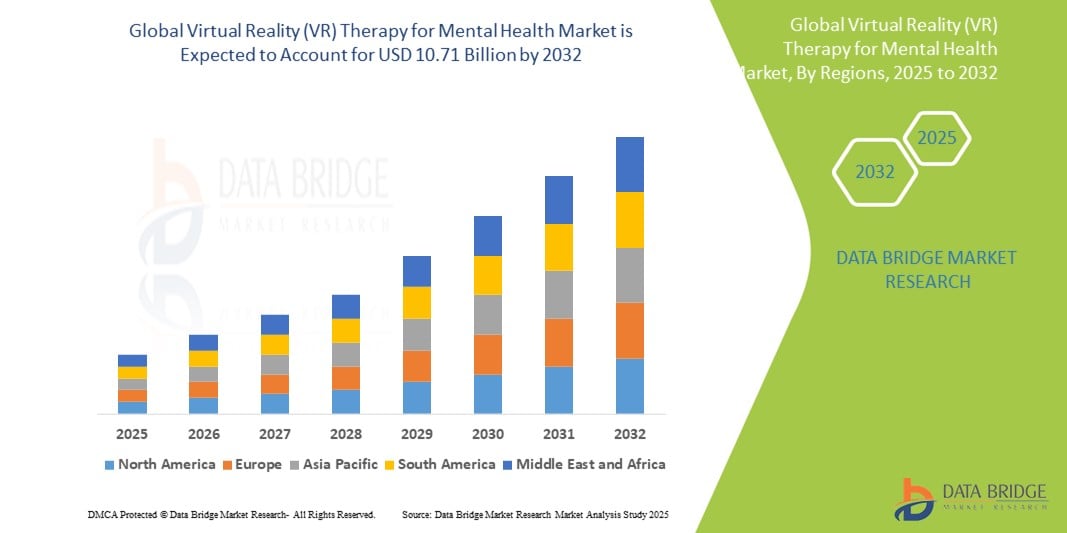
- The global virtual reality (VR) therapy for mental health market size was valued at USD 1.83 billion in 2024 and is expected to reach USD 10.71 billion by 2032, at a CAGR of 24.7% during the forecast period
- The market growth for virtual reality (VR) therapy for mental health is significantly fuelled by the increasing global prevalence of mental health disorders such as anxiety, PTSD, and depression, coupled with a rising demand for innovative, non-pharmacological treatment options. Advancements in VR hardware and software, leading to more accessible and immersive therapeutic experiences, are enhancing patient engagement and treatment efficacy
- Furthermore, the growing acceptance of digital therapeutics and telehealth, accelerated by the need for remote healthcare solutions, is establishing VR therapy as an essential tool for delivering personalized and accessible mental healthcare. These converging factors, along with increasing investments in mental health technology, are significantly boosting the industry's growth
Virtual Reality (VR) Therapy for Mental Health Market Analysis
- Virtual reality (VR) therapy for mental health, offering innovative and immersive solutions for psychiatric and psychological conditions, is increasingly becoming a vital component of modern mental healthcare settings, including hospitals, specialized clinics, and burgeoning homecare models, due to its role in enhancing therapeutic engagement and accessibility
- The escalating demand for VR Therapy solutions is primarily fueled by the increasing global prevalence of mental health disorders, a growing awareness and destigmatization of mental illness, and the rising need for accessible, non-pharmacological, and personalized treatment approaches.
- North America dominates the virtual reality (VR) therapy for mental health market with a market share of 36.8% in 2024, characterized by advanced healthcare infrastructure, high technological adoption rates, and a strong presence of leading VR and digital health innovators
- Asia-Pacific is expected to be the fastest-growing region in the virtual reality (VR) therapy for mental health market during the forecast period, with a anticipated CAGR of 31.10% from driven by increasing healthcare expenditure, a rising awareness of mental health issues, growing digital literacy, and expanding investments in VR technology within rapidly developing healthcare systems
- The VR headsets (HMDs) segment dominates the virtual reality (VR) therapy for mental health market with a market share of 47.5% driven by their crucial role as the fundamental interface for delivering immersive therapeutic experiences. The increasing demand for accessible, comfortable, and high-resolution VR headsets, coupled with ongoing technological advancements that enhance user experience and portability, continues to solidify its leading position as the primary point of access for VR therapy solutions
Report Scope and Virtual Reality (VR) Therapy for Mental Health Market Segmentation
|
Attributes |
Virtual Reality (VR) Therapy for Mental Health Key Market Insights |
|
Segments Covered |
|
|
Countries Covered |
North America
Europe
Asia-Pacific
Middle East and Africa
South America
|
|
Key Market Players |
|
|
Market Opportunities |
|
|
Value Added Data Infosets |
In addition to the insights on market scenarios such as market value, growth rate, segmentation, geographical coverage, and major players, the market reports curated by the Data Bridge Market Research also include in-depth expert analysis, pricing analysis, brand share analysis, consumer survey, demography analysis, supply chain analysis, value chain analysis, raw material/consumables overview, vendor selection criteria, PESTLE Analysis, Porter Analysis, and regulatory framework. |
Virtual Reality (VR) Therapy for Mental Health Market Trends
“AI and Voice Revolutionizing VR Mental Health Therapy”
- A significant and accelerating trend in the global virtual reality (VR) therapy for mental health market is the deepening integration with artificial intelligence (AI) and intuitive user interfaces, including voice-controlled systems. This fusion of technologies is significantly enhancing the personalized nature and ease of access to therapeutic interventions
- For instance, advanced VR therapy platforms are increasingly integrating AI-powered conversational agents, allowing users to navigate virtual environments or receive personalized therapeutic prompts with simple voice commands. Similarly, smart VR applications can track emotional responses and adapt scenarios, offering a more responsive mental health solution
- AI integration in VR therapy enables features such as learning patient behavioral patterns to potentially suggest therapeutic adjustments in real-time and providing more intelligent feedback based on user engagement
- The seamless integration of VR therapy solutions with digital assistants and broader smart health ecosystems facilitates centralized control over various aspects of a user's mental well-being journey. Through a unified interface, users can manage their VR therapy sessions alongside mood tracking apps, mindfulness programs, and other digital health tools, creating a cohesive and supportive wellness environment
- This trend towards more intelligent, intuitive, and interconnected VR therapy systems is fundamentally reshaping user expectations for mental healthcare. Consequently, companies are developing AI-enabled VR therapy platforms with features such as automatic session adjustments based on real-time emotional data and voice control compatibility for streamlined user interaction
Virtual Reality (VR) Therapy for Mental Health Market Dynamics
Driver
“Growing Need Due to Rising Mental Health Disorders and Advanced Digital Therapies”
- The increasing global prevalence of various mental health disorders, including anxiety disorders, depression, and PTSD, coupled with a surging demand for accessible and effective therapeutic interventions, is a significant driver for the heightened demand for virtual reality (VR) therapy for mental health solutions
- For instance, in early 2025, XRHealth, a leading VR therapy company, announced advancements in its AI-powered platform to personalize therapy plans and provide real-time patient guidance. Such strategic innovations by key companies are expected to significantly drive the virtual reality (VR) therapy for mental health industry growth in the forecast period
- As healthcare providers and patients become more aware of the critical need for effective and engaging mental health support and seek enhanced patient outcomes, advanced VR therapy solutions offer features such as immersive exposure therapy, real-time biofeedback integration, and AI-driven personalized modules, providing a compelling upgrade over traditional methods
- The convenience of home-based VR therapy options, the ability to deliver engaging content for various conditions, and the potential for remote clinician oversight through integrated platforms are key factors propelling the adoption of advanced VR Therapy for Mental Health in both clinical and home healthcare sectors. The trend towards early intervention for psychological distress and the increasing availability of user-friendly VR mental health options further contribute to market growth
Restraint/Challenge
“Concerns Regarding Technology Complexity and High Implementation Costs”
- Concerns surrounding the technological complexity of advanced virtual reality (VR) therapy for mental health systems and the potential for improper implementation by untrained professionals pose a significant challenge to broader market penetration. As these solutions often rely on sophisticated software and specific hardware requirements, they can be susceptible to user unfamiliarity or integration issues, raising anxieties among healthcare providers about therapeutic efficacy and patient data security
- For instance, initial clinician hesitation regarding integrating novel VR technologies into established therapeutic workflows or concerns about adequate training for diverse patient populations has impacted adoption rates in some settings
- Addressing these usability and integration concerns through intuitive user interfaces, comprehensive training programs for therapists, and standardized protocols for VR therapy delivery is crucial for building clinician trust and patient confidence. Companies such as Psious and OxfordVR emphasize user-friendly platforms and extensive support resources to reassure potential buyers and users
- While the prices of consumer-grade VR hardware are gradually decreasing, the perceived premium for robust, clinically validated VR therapy platforms can still hinder widespread adoption, especially for those who do not see an immediate need for the most sophisticated features or integrated capabilities offered
- Overcoming these challenges through enhanced platform usability, comprehensive clinician education on best practices for VR therapy, and the development of more affordable and scalable virtual reality (VR) therapy for mental health options will be vital for sustained market growth
Virtual Reality (VR) Therapy for Mental Health Market Scope
The market is segmented on the basis of type, patient age, procedure, application and end user.
By Component
On the basis of component, the global virtual reality (VR) therapy for mental health market is segmented into VR headsets (HMDs), VR workstations, VR applications/platforms, and services. The VR headsets (HMDs) segment dominates the market with share of 47.5% in 2024, driven by their essential role as the primary interface for immersive therapeutic experiences and the increasing demand for accessible and user-friendly devices. The continuous advancements in headset technology, offering greater comfort, portability, and resolution, further solidify its dominance.
The VR applications/platforms segment is anticipated to witness a significant growth rate of 31% CAGR from 2025 to 2032, fueled by the continuous development of diverse, evidence-based therapeutic content, personalized treatment modules, and the growing demand for scalable and customizable VR solutions. The increasing integration of AI within these platforms for adaptive therapy and real-time feedback is also a major growth driver.
By Application/Disorder
On the basis of application/disorder, the virtual reality (VR) therapy for mental health market is segmented into anxiety disorders, post-traumatic stress disorder (PTSD), depression, addiction management, pain management (psychological aspect), and other mental disorders. The anxiety disorders segment held the largest market revenue share of 29.6% in 2024, driven by the high global prevalence of anxiety, the proven efficacy of VR-based exposure therapy, and the ability of VR to create controlled environments for fear extinction.
The pain management (psychological aspect) segment, is expected to witness a high CAGR, driven by the increasing recognition of the psychological impact of chronic pain, the effectiveness of VR in distraction and cognitive restructuring for pain relief, and the growing demand for non-pharmacological pain management solutions.
By End User
On the basis of end user, the virtual reality (VR) therapy for mental health market is segmented into hospitals & clinics, therapy clinics & rehabilitation centers, homecare settings, and research & academic institutions. The hospitals & clinics segment accounted for the largest market revenue share of 41.7% in 2024, driven by the established infrastructure, the concentration of mental health specialists, and the increasing integration of VR therapy into inpatient and outpatient psychiatric programs within these large healthcare facilities.
The homecare settings segment is expected to witness the fastest CAGR, driven by the increasing trend of remote healthcare delivery, the demand for convenient and private therapy options, and the growing availability of user-friendly VR solutions designed for self-management of mental well-being in a familiar environment.
By Technology
On the basis of technology, the virtual reality (VR) therapy for mental health market is segmented into fully immersive VR, semi-immersive VR, and non-immersive VR. The fully immersive VR segment is expected to dominate the market throughout the forecast period, driven by its ability to create highly realistic and engaging virtual environments crucial for effective exposure therapy, skill-building, and profound emotional processing in mental health treatment. This technology offers the deepest sense of presence, which is vital for many therapeutic applications
The non-immersive VR segment is anticipated to witness significant growth, as it offers a more accessible and cost-effective alternative, expanding the reach of VR therapy to a wider audience. This growth is fueled by its compatibility with readily available devices (smartphones, computers) and its utility for less intense therapeutic interventions or supplemental exercises that do not require full immersion, thereby enhancing treatment accessibility and affordability
Virtual Reality (VR) Therapy for Mental Health Market Regional Analysis
- North America currently leads the virtual reality (VR) therapy for mental health market with a market share of 36.8% in 2024, driven by a high prevalence of mental health disorders, a technologically advanced healthcare infrastructure, and substantial investment in digital health innovations across the region
- Consumers and healthcare providers in North America highly value the clinical effectiveness, immersive nature, and personalized therapeutic experiences offered by VR solutions. The ability of VR to provide accessible, engaging, and stigma-reducing interventions for various mental health conditions contributes significantly to its high adoption
- This widespread adoption in North America is further supported by robust healthcare expenditure, a proactive regulatory environment facilitating the integration of digital therapeutics, and a strong presence of key VR technology developers and mental health service providers. The region's emphasis on innovative patient care models and the growing acceptance of remote therapy options further cements its market leadership
U.S. Virtual Reality (VR) Therapy for Mental Health Market Insight
The U.S. virtual reality (VR) therapy for mental health market holds a significant share within North America, representing 38.6% of the region’s share, driven by the rapid adoption of innovative digital health technologies and a growing emphasis on accessible patient care. Healthcare providers and mental health services are increasingly prioritizing the enhancement of therapeutic outcomes and patient engagement through immersive, integrated VR solutions. The rising preference for non-pharmacological interventions, combined with robust demand for advanced, personalized mental health platforms, further propels the VR Therapy for Mental Health industry. Moreover, the increasing integration of sophisticated AI-driven software and telehealth connectivity features is significantly contributing to the market's expansion.
Europe Virtual Reality (VR) Therapy for Mental Health Market Insight
The European virtual reality (VR) therapy for mental health market is projected to expand at a substantial CAGR throughout the forecast period, primarily driven by increasing awareness of mental health issues and the escalating need for scalable, effective therapeutic support in clinical and homecare settings. The rise in mental health conditions across an aging population, coupled with the demand for innovative digital health solutions, is fostering the adoption of advanced VR therapy technologies. European healthcare providers are also drawn to the enhanced patient engagement and outcome measurement capabilities these immersive solutions offer. The region is experiencing significant growth across hospital psychiatric units, specialized therapy centers, and home-based mental wellness applications, with advanced VR therapy being incorporated into both new healthcare initiatives and upgrades of existing ones.
U.K. Virtual Reality (VR) Therapy for Mental Health Market Insight
The U.K. virtual reality (VR) therapy for mental health market is anticipated to grow at a noteworthy CAGR during the forecast period, driven by the escalating trend of digital healthcare adoption and a strong desire for heightened patient well-being and treatment efficacy. In addition, concerns regarding the widespread impact of mental health conditions and the need for scalable therapeutic solutions are encouraging both healthcare providers and homecare users to choose advanced VR therapy technologies. The UK’s embrace of technological advancements in healthcare, alongside its robust healthcare infrastructure and National Health Service (NHS) initiatives, is expected to continue to stimulate market growth.
Germany Virtual Reality (VR) Therapy for Mental Health Market Insight
The German virtual reality (VR) therapy for mental health market is expected to expand at a considerable CAGR during the forecast period, fueled by increasing awareness of mental health care and the demand for technologically advanced, patient-centric solutions. Germany’s well-developed healthcare infrastructure, combined with its emphasis on innovation and data privacy in digital health, promotes the adoption of advanced VR therapy solutions, particularly in clinical and specialized care settings. The integration of VR therapy platforms with existing patient management and digital health systems is also becoming increasingly prevalent, with a strong preference for secure, reliable solutions aligning with local healthcare standards.
Asia-Pacific Virtual Reality (VR) Therapy for Mental Health Market Insight
The Asia-Pacific virtual reality (VR) therapy for mental health market is poised to grow at the fastest CAGR of 31.10%, driven by increasing healthcare investments, rising disposable incomes, and rapid technological advancements in countries such as China, Japan, and India. The region's growing inclination towards digital healthcare solutions, supported by government initiatives promoting healthcare modernization and mental wellness, is driving the adoption of advanced VR therapy. Furthermore, as APAC emerges as a hub for VR technology manufacturing and innovation, the affordability and accessibility of certain VR therapy solutions are expanding to a wider healthcare base.
Japan Virtual Reality (VR) Therapy for Mental Health Market Insight
The Japan virtual reality (VR) therapy for mental health market is gaining momentum due to the country’s high-tech culture, rapidly aging population, and increasing demand for innovative mental healthcare solutions. The Japanese market places a significant emphasis on personalized care and patient comfort, and the adoption of advanced VR therapy solutions is driven by the increasing number of elderly patients seeking mental well-being support and the rising complexity of mental health cases. The integration of VR therapy platforms with other digital health and monitoring systems is fueling growth. Moreover, Japan's aging population is likely to spur demand for accessible, reliable, and culturally sensitive VR mental health solutions in both clinical and homecare sectors.
India Virtual Reality (VR) Therapy for Mental Health Market Insight
The India virtual reality (VR) therapy for mental health market accounted for the highest CAGR in the Asia Pacific, attributed to the country's expanding middle class, rapid urbanization, and increasing healthcare awareness and access. The growing demand for mental healthcare, coupled with increasing investments in healthcare infrastructure and the rising recognition of mental health challenges, is driving the adoption of advanced VR therapy in clinics and wellness centers across India. The strong push towards digital healthcare transformation and the increasing availability of affordable VR technology solutions are key factors propelling the market in India.
Virtual Reality (VR) Therapy for Mental Health Market Share
The virtual reality (VR) therapy for mental health industry is primarily led by well-established companies, including:
- XRHealth Inc. (U.S.)
- MyndVR Inc. (U.S.)
- Rapid City Counseling, Inc. (U.S.)
- VRelax (Netherlands)
- AppliedVR, Inc. (U.S.)
- Rendever, Inc. (U.S.)
- Virti (U.K.)
- AdagioVR (U.K.)
- PsyTech VR Therapy (U.S.)
- Meta (U.S.)
- Limbitless Solutions (U.S.)
- Virtually Better Inc. (U.S.)
- Proprio (U.S.)
- EMDR-VR B.V. (Netherlands)
Latest Developments in Global Virtual Reality (VR) Therapy for Mental Health Market
- In February 2025, XRHealth, a leading provider of therapeutic Extended Reality (XR) solutions, announced its acquisition of RealizedCare, a digital therapeutics company. This strategic move aims to create the largest AI-driven therapeutic XR platform globally, integrating RealizedCare's evidence-based methods for chronic pain and behavioral health, including a new AI triage tool to optimize personalized patient care
- In January 2025, various industry reports highlighted OxfordVR as a top-rated behavioral health technology vendor for 2025, recognized for client satisfaction and innovation. This underscores the increasing recognition and adoption of specialized VR solutions for mental health conditions within the broader behavioral health IT landscape
- In December 2024, the US government, through a new bill (Home-Based Tele-mental Health Care Act of 2023), and the Centers for Medicare and Medicaid Services (CMS) approved new reimbursement codes for FDA-cleared digital mental health therapies. This development significantly boosts the accessibility and adoption of digital therapeutics, including VR-based solutions, by improving reimbursement pathways for providers
- In September 2024, AppliedVR announced that its flagship VR device for chronic low back pain treatment, RelieVRx, became in-network for Highmark members. This partnership represents a significant step towards broader insurance coverage and validates the efficacy of VR as a non-pharmacological treatment for chronic conditions that often have psychological components
- In April 2023, XRHealth also completed the acquisition of Amelia Virtual Care (formerly Psious), a VR platform specifically designed for mental health professionals. This acquisition further expanded XRHealth's capabilities and market reach in providing flexible virtual reality software for diverse mental health therapeutic applications

- Interactive Data Analysis Dashboard
- Company Analysis Dashboard for high growth potential opportunities
- Research Analyst Access for customization & queries
- Competitor Analysis with Interactive dashboard
- Latest News, Updates & Trend analysis
- Harness the Power of Benchmark Analysis for Comprehensive Competitor Tracking
Data collection and base year analysis are done using data collection modules with large sample sizes. The stage includes obtaining market information or related data through various sources and strategies. It includes examining and planning all the data acquired from the past in advance. It likewise envelops the examination of information inconsistencies seen across different information sources. The market data is analysed and estimated using market statistical and coherent models. Also, market share analysis and key trend analysis are the major success factors in the market report. To know more, please request an analyst call or drop down your inquiry.
The key research methodology used by DBMR research team is data triangulation which involves data mining, analysis of the impact of data variables on the market and primary (industry expert) validation. Data models include Vendor Positioning Grid, Market Time Line Analysis, Market Overview and Guide, Company Positioning Grid, Patent Analysis, Pricing Analysis, Company Market Share Analysis, Standards of Measurement, Global versus Regional and Vendor Share Analysis. To know more about the research methodology, drop in an inquiry to speak to our industry experts.
Data Bridge Market Research is a leader in advanced formative research. We take pride in servicing our existing and new customers with data and analysis that match and suits their goal. The report can be customized to include price trend analysis of target brands understanding the market for additional countries (ask for the list of countries), clinical trial results data, literature review, refurbished market and product base analysis. Market analysis of target competitors can be analyzed from technology-based analysis to market portfolio strategies. We can add as many competitors that you require data about in the format and data style you are looking for. Our team of analysts can also provide you data in crude raw excel files pivot tables (Fact book) or can assist you in creating presentations from the data sets available in the report.













