


Willams Syndrome Market Size
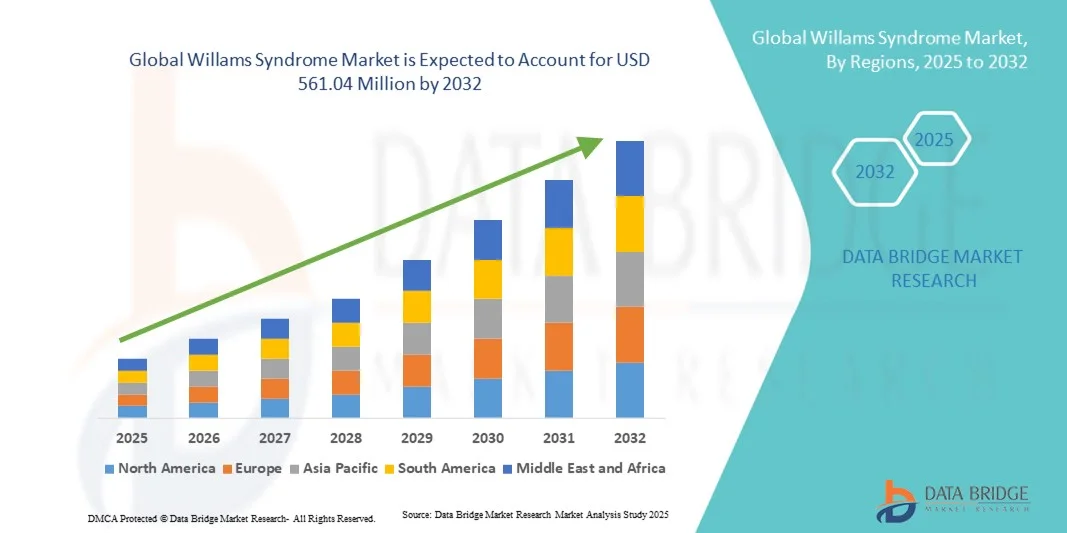
- The global Willams Syndrome market size was valued at USD 382.64 million in 2024 and is expected to reach USD 561.04 million by 2032, at a CAGR of 4.90% during the forecast period
- The market growth is largely fueled by greater awareness and improved diagnostics of Williams syndrome, advances in genetic testing and personalized medicine, and the increasing demand for therapies and supportive care for rare genetic disorders
- Furthermore, rising investment in genetic research, expansion of rare-disease infrastructure in both developed and emerging markets, and the unmet needs in therapeutic and supportive interventions are establishing Williams-syndrome related services and products as a growth segment in rare disease care. These converging factors are accelerating uptake of related diagnostics & therapies, thereby significantly boosting the industry’s growth
Willams Syndrome Market Analysis
- Williams syndrome, a rare genetic disorder characterized by distinct facial features such as puffiness around the eyes, a short nose with a broad nasal tip, wide mouth, full cheeks, full lips, and a small chin, has emerged as a significant focus in genetic diagnostics and pediatric care due to its multisystem involvement and complex management needs
- The escalating demand within the Williams syndrome market is primarily driven by the growing identification of symptoms such as colic or feeding problems, ADHD, learning disorders, inward bend of the pinky finger, short stature, speech delays, and varying degrees of intellectual disability highlighting the importance of early detection and specialized interventions
- North America dominated the Williams syndrome market with the largest revenue share of 42% in 2024, supported by advanced healthcare infrastructure, robust investment in genetic testing technologies, and high awareness levels among healthcare providers, particularly across the U.S. and Canada
- Asia-Pacific is expected to be the fastest-growing region in the Williams syndrome market during the forecast period, propelled by rising healthcare spending, improved pediatric screening programs, and increasing government support for rare disease management across China, Japan, and India
- The blood pressure check segment dominated the Williams syndrome market with a share of 47.3% in 2024, attributed to the high prevalence of hypertension and cardiovascular abnormalities in patients, making regular blood pressure monitoring a critical diagnostic and management tool for early detection and long-term care
Report Scope and Willams Syndrome Market Segmentation
|
Attributes |
Willams Syndrome Key Market Insights |
|
Segments Covered |
|
|
Countries Covered |
North America
Europe
Asia-Pacific
Middle East and Africa
South America
|
|
Key Market Players |
|
|
Market Opportunities |
|
|
Value Added Data Infosets |
In addition to the insights on market scenarios such as market value, growth rate, segmentation, geographical coverage, and major players, the market reports curated by the Data Bridge Market Research also include in-depth expert analysis, patient epidemiology, pipeline analysis, pricing analysis, and regulatory framework |
Willams Syndrome Market Trends
Advancement in Genetic Diagnostics and Early Detection Technologies
- A significant and accelerating trend in the global Williams syndrome market is the increasing adoption of advanced genetic testing techniques such as fluorescence in situ hybridization (FISH), chromosomal microarray analysis (CMA), and next-generation sequencing (NGS), enabling faster and more accurate diagnosis of chromosomal deletions associated with the disorder
- For instance, laboratories offering comprehensive genetic panels have made early screening more accessible, helping clinicians identify Williams syndrome at birth or in early childhood, allowing timely interventions for cardiovascular and developmental complications
- The integration of genetic diagnostics with digital health platforms allows remote genetic counseling and patient data management, helping healthcare professionals track developmental progress and customize therapy plans for affected individuals
- Furthermore, collaborations between biotech firms and rare disease research organizations are fostering innovation in diagnostic kits and molecular testing solutions, ensuring greater accuracy and global accessibility in detecting Williams syndrome
- The growing emphasis on precision medicine and early genetic testing is reshaping clinical approaches, enabling healthcare systems to move from reactive to proactive management of rare neurodevelopmental disorders. Consequently, companies and research institutions are focusing on refining diagnostic tools and expanding awareness campaigns to increase early detection rates
- The demand for accurate, non-invasive, and affordable genetic testing technologies continues to grow globally, as healthcare providers and families increasingly prioritize early diagnosis and intervention for improved patient outcomes
Willams Syndrome Market Dynamics
Driver
Rising Awareness and Expanding Genetic Testing Accessibility
- The increasing awareness of Williams syndrome among healthcare professionals and families, coupled with broader access to advanced genetic testing technologies, is a major driver for market expansion across both developed and emerging regions
- For instance, in April 2024, research initiatives by organizations such as the Williams Syndrome Association and National Institutes of Health (NIH) emphasized the importance of early screening programs and multidisciplinary care models to improve patient management
- As awareness grows, more patients are being referred for confirmatory testing, and governments are allocating funds for early childhood genetic screening programs, creating a favorable environment for market growth
- Furthermore, advancements in molecular genetics, along with increasing collaboration between hospitals and diagnostic laboratories, are improving early identification rates and supporting better disease management
- The growing importance of genetic counseling, coupled with technological innovations in testing kits, drives the adoption of Williams syndrome diagnostics globally. The trend toward personalized healthcare and early intervention further contributes to market development
- The convenience of precise and rapid diagnosis, coupled with increasing investments in research on rare genetic disorders, continues to propel the adoption of Williams syndrome testing across clinical and academic institutions
Restraint/Challenge
Limited Treatment Options and High Diagnostic Costs
- The absence of disease-specific therapies for Williams syndrome, coupled with the high cost of comprehensive genetic testing, poses a significant challenge to market growth, particularly in low- and middle-income regions
- For instance, while early diagnostic technologies such as FISH and CMA have improved detection accuracy, their high cost and limited insurance coverage restrict accessibility for many patients in developing economies
- In addition, the lack of standardized treatment protocols and reliance on supportive therapies such as physiotherapy and behavioral management limit the overall commercial potential of this market
- Furthermore, limited awareness in rural healthcare settings and the shortage of trained genetic specialists hinder the early identification and proper management of patients, affecting diagnosis rates
- The psychological and financial burden associated with managing a lifelong condition also contributes to delayed testing and underdiagnosis in many parts of the world
- Overcoming these challenges through expanded healthcare funding, broader insurance coverage for genetic testing, and continued research into targeted therapies will be crucial for sustaining market growth
Willams Syndrome Market Scope
The market is segmented on the basis of characteristics, symptoms, and diagnosis.
- By Characteristics
On the basis of characteristics, the Williams syndrome market is segmented into puffiness around the eyes, a short nose with a broad nasal tip, wide mouth, full cheeks, full lips, a small chin, and others. The full cheeks segment dominated the Williams syndrome market with the largest revenue share of 33.7% in 2024, as it remains one of the most distinct and clinically recognized features used in early diagnosis of the disorder. Physicians and geneticists often rely on facial morphology patterns particularly the combination of full cheeks and a broad smile as key visual indicators for early suspicion prior to confirmatory genetic testing. Increased awareness and advancements in facial analysis tools have further enhanced the diagnostic accuracy of this characteristic. The segment’s dominance is reinforced by its frequent appearance in early childhood, helping differentiate Williams syndrome from other congenital syndromes.
The puffiness around the eyes segment is expected to witness the fastest growth rate of 7.2% CAGR from 2025 to 2032, due to growing use of AI-based facial recognition systems in rare disease diagnostics and higher emphasis on early visual screening in pediatrics. This trait is increasingly being incorporated into machine-learning models that help clinicians identify potential genetic syndromes. The segment’s rapid growth is also supported by rising parental awareness and the integration of telemedicine tools for preliminary phenotype assessments, especially in regions lacking genetic specialists.
- By Symptoms
On the basis of symptoms, the Williams syndrome market is segmented into colic or feeding problems, ADHD, learning disorders, inward bend of pinky finger, specific phobias, short stature, speech delays, sunken chest, intellectual disability, and others. The learning disorders segment held the largest market share of 29.4% in 2024, driven by the high prevalence of cognitive and developmental challenges among individuals with Williams syndrome. Specialized learning and behavioral programs have emerged globally to address these cognitive deficits, leading to increased demand for educational support services. The growing inclusion of Williams syndrome in neurodevelopmental research has further supported the identification and treatment of learning difficulties through structured interventions. The dominance of this segment reflects the central role cognitive impairments play in long-term care and therapy planning.
The ADHD segment is projected to be the fastest-growing with a CAGR of 8.1% from 2025 to 2032, as behavioral and psychological manifestations of Williams syndrome are increasingly being recognized and documented. Rising adoption of behavioral therapy, use of non-stimulant medications, and broader access to child neuropsychology services are fueling the segment’s expansion. In addition, growing awareness among pediatricians and caregivers regarding the link between Williams syndrome and ADHD has led to earlier intervention, significantly improving patient quality of life and driving market demand.
- By Diagnosis
On the basis of diagnosis, the Williams syndrome market is segmented into fluorescent in situ hybridization (FISH), kidney ultrasound, blood pressure check, and echocardiogram. The blood pressure check segment dominated the market with the largest revenue share of 47.3% in 2024, due to the high incidence of hypertension and cardiovascular anomalies among patients with Williams syndrome. Regular monitoring of blood pressure remains a cornerstone in clinical management, enabling early detection of arterial stenosis and other cardiac complications. The widespread availability of non-invasive BP monitoring devices in both clinical and home settings has further reinforced its dominance. Growing physician awareness and integration of cardiovascular screening into early diagnostic protocols continue to drive this segment’s leadership position.
The FISH segment is expected to record the fastest growth rate of 9.4% CAGR from 2025 to 2032, propelled by its critical role in confirming chromosomal deletions specific to Williams syndrome. FISH testing remains the gold standard for definitive diagnosis, and the rising availability of advanced molecular diagnostic laboratories globally is expanding access to this test. Ongoing advancements in probe design and automation are improving detection accuracy while reducing turnaround times, further enhancing its adoption. In addition, increased government funding and collaboration in rare disease genomics are fostering steady growth of this segment through 2032.
Willams Syndrome Market Regional Analysis
- North America dominated the Williams syndrome market with the largest revenue share of 42% in 2024, supported by advanced healthcare infrastructure, robust investment in genetic testing technologies, and high awareness levels among healthcare providers, particularly across the U.S. and Canada
- The region benefits from extensive research funding for rare diseases, government-backed patient support programs, and collaborations between biotech firms and research institutions focusing on chromosomal abnormalities
- The strong presence of leading pharmaceutical and diagnostic players further accelerates access to specialized testing and emerging therapies, establishing North America as the primary hub for Williams Syndrome diagnosis and treatment
U.S. Willams Syndrome Market Insight
The U.S. Williams Syndrome market captured the largest revenue share of 82% in 2024 within North America, driven by strong awareness initiatives, early diagnostic capabilities, and extensive rare disease research funding. The country benefits from well-established genetic testing infrastructure and specialized healthcare programs tailored to managing chromosomal disorders. In addition, increasing participation in clinical studies and government-supported genetic counseling initiatives are fueling early identification and treatment support. The U.S. also leads in technological advancements such as FISH and echocardiogram-based diagnostics, strengthening its dominant market position.
Europe Williams Syndrome Market Insight
The Europe Williams Syndrome market is projected to expand at a substantial CAGR throughout the forecast period, primarily driven by supportive healthcare policies for rare diseases and strong genetic research frameworks. The region’s focus on early intervention, multidisciplinary care, and inclusion of Williams Syndrome under national rare disease registries supports consistent diagnosis and management. The expansion of specialized pediatric and neurodevelopmental care centers across Europe also contributes to market growth. Increased collaboration between hospitals and genomic research institutes is further driving advancements in diagnosis and care.
U.K. Williams Syndrome Market Insight
The U.K. Williams Syndrome market is anticipated to grow at a noteworthy CAGR during the forecast period, driven by the country’s robust public healthcare system (NHS) and increasing adoption of advanced diagnostic tools. Government-backed rare disease strategies and access to national genomic testing programs are enabling early and accurate detection of Williams Syndrome. In addition, strong advocacy from patient associations and community-based support initiatives are improving quality of care and treatment access. The U.K.’s ongoing commitment to precision medicine and rare disease research further enhances market expansion.
Germany Williams Syndrome Market Insight
The Germany Williams Syndrome market is expected to expand at a considerable CAGR during the forecast period, supported by the country’s advanced medical infrastructure and emphasis on genetic and metabolic disorder research. Germany’s healthcare system facilitates widespread access to diagnostic tests such as FISH and echocardiogram evaluations for early detection. Moreover, increasing funding for clinical research and collaborations between universities and biotech firms are enhancing understanding of genetic causes and potential therapeutic approaches. The nation’s strong focus on patient-centered care continues to foster consistent market growth.
Asia-Pacific Williams Syndrome Market Insight
The Asia-Pacific Williams Syndrome market is poised to grow at the fastest CAGR of 25% from 2025 to 2032, fueled by increasing healthcare investments, improving access to genetic diagnostics, and growing awareness of rare diseases. Countries such as Japan, China, and India are witnessing a rise in specialized pediatric and genetic testing facilities, promoting earlier detection. Government efforts to strengthen rare disease frameworks and increase funding for rare disorder research are also contributing to market expansion. In addition, collaboration between regional research institutes and international foundations is enhancing treatment awareness and patient support.
Japan Williams Syndrome Market Insight
The Japan Williams Syndrome market is gaining momentum due to its advanced genetic testing infrastructure and emphasis on early childhood developmental screening. Strong government support for rare disease management and public health initiatives has facilitated better identification of Williams Syndrome cases. Japan’s high investment in biogenetic research and innovation in non-invasive diagnostic technologies further strengthens market growth. The country’s coordinated approach to healthcare, combining precision diagnostics and comprehensive patient support, continues to enhance treatment accessibility and awareness.
India Williams Syndrome Market Insight
The India Williams Syndrome market accounted for the largest market share within Asia-Pacific in 2024, driven by rapid improvement in healthcare infrastructure and expanding access to genetic testing services. Increasing awareness of rare diseases through government and NGO initiatives, along with growing private sector participation, is promoting early diagnosis and patient care. The nation’s growing healthcare expenditure, establishment of regional genetic laboratories, and inclusion of rare diseases under national health programs are key growth drivers. Furthermore, expanding collaboration with global research bodies is enhancing diagnostic accuracy and treatment outcomes.
Willams Syndrome Market Share
The Willams Syndrome industry is primarily led by well-established companies, including:
- Labcorp (U.S.)
- Thermo Fisher Scientific Inc. (U.S.)
- Quest Diagnostics Incorporated (U.S.)
- Illumina, Inc. (U.S.)
- Myriad Genetics, Inc. (U.S.)
- Baylor Genetics (U.S.)
- GeneDx, LLC (U.S.)
- Natera, Inc. (U.S.)
- ARUP Laboratories (U.S.)
- Fulgent Genetics (U.S.)
- Centogene N.V. (Germany)
- PerkinElmer U.S.)
- Invitae Corporation (U.S.)
- Bio-Rad Laboratories, Inc. (U.S.)
- Agilent Technologies, Inc. (U.S.)
- Ambry Genetics Corporation (U.S.)
- F. Hoffmann-La Roche Ltd (Switzerland)
- BGI Genomics Co., Ltd. (China)
- Eurofins (Luxembourg)
- 10x Genomics (U.S.)
What are the Recent Developments in Global Willams Syndrome Market?
- In June 2025, the Armellino Center of Excellence for Williams Syndrome (ACE-WS) at University of Pennsylvania and Children’s Hospital of Philadelphia officially opened a new multidisciplinary centre for children and adults with Williams syndrome, offering research, clinical care and transition-to-adulthood support
- In September 2024, the Massachusetts General Hospital Williams Syndrome Program hosted a dedicated event for parents/caregivers of children under 16 with Williams syndrome (“Common Issues in Children with Williams Syndrome: Challenges & Solutions”) to educate on anxiety, IEPs and transition-care
- In February 2024, scientists at the Sanford Stem Cell Institute at University of California, San Diego published research deciphering how GTF2I gene deletions in Williams syndrome contribute to “cocktail-party” personality traits versus autism-such as traits in the opposite genomic duplication, offering deeper genomic insight
- In January 2024, researchers at Tel Aviv University discovered that deletion of the gene GTF2I (one of the ~25 genes in Williams syndrome) causes mitochondrial dysfunction in neurons, potentially explaining the neurodevelopmental impairment in the condition
- In October 2022, a study published online showed a potential novel treatment pathway for Williams syndrome in a mouse model by modulating the endocannabinoid system (using inhibitor JZL184) which led to improvements in memory, blood pressure and heart

- Interactive Data Analysis Dashboard
- Company Analysis Dashboard for high growth potential opportunities
- Research Analyst Access for customization & queries
- Competitor Analysis with Interactive dashboard
- Latest News, Updates & Trend analysis
- Harness the Power of Benchmark Analysis for Comprehensive Competitor Tracking
Data collection and base year analysis are done using data collection modules with large sample sizes. The stage includes obtaining market information or related data through various sources and strategies. It includes examining and planning all the data acquired from the past in advance. It likewise envelops the examination of information inconsistencies seen across different information sources. The market data is analysed and estimated using market statistical and coherent models. Also, market share analysis and key trend analysis are the major success factors in the market report. To know more, please request an analyst call or drop down your inquiry.
The key research methodology used by DBMR research team is data triangulation which involves data mining, analysis of the impact of data variables on the market and primary (industry expert) validation. Data models include Vendor Positioning Grid, Market Time Line Analysis, Market Overview and Guide, Company Positioning Grid, Patent Analysis, Pricing Analysis, Company Market Share Analysis, Standards of Measurement, Global versus Regional and Vendor Share Analysis. To know more about the research methodology, drop in an inquiry to speak to our industry experts.
Data Bridge Market Research is a leader in advanced formative research. We take pride in servicing our existing and new customers with data and analysis that match and suits their goal. The report can be customized to include price trend analysis of target brands understanding the market for additional countries (ask for the list of countries), clinical trial results data, literature review, refurbished market and product base analysis. Market analysis of target competitors can be analyzed from technology-based analysis to market portfolio strategies. We can add as many competitors that you require data about in the format and data style you are looking for. Our team of analysts can also provide you data in crude raw excel files pivot tables (Fact book) or can assist you in creating presentations from the data sets available in the report.












