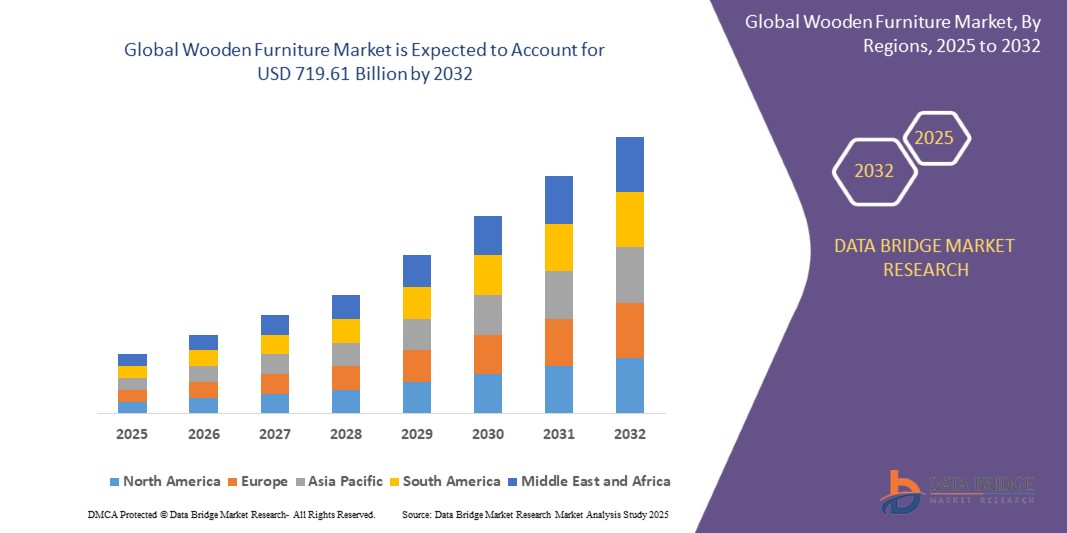
Global Wooden Furniture Market Size
- The global wooden furniture market was valued at USD 461.84 billion in 2024 and is expected to reach USD 719.61 billion by 2032
- During the forecast period of 2025 to 2032 the market is such as to grow at a CAGR of 5.70%, primarily driven by the rising consumer preference for sustainable and aesthetically appealing home interiors
- This growth is driven by factors such as the increasing demand for durable, customizable, and eco-friendly furniture solutions
Global Wooden Furniture Market Analysis
- In recent years the wooden furniture market has increasingly leaned toward customization as consumers seek furniture that aligns with their personal lifestyle and design preferences
- This demand has led many brands to provide modular and tailor-made furniture options enabling buyers to select sizes finishes materials and layouts according to their needs
- The adoption of digital tools such as 3D visualization and online customization platforms has further supported this trend by making the design process interactive and user-friendly
- Consumers are also prioritizing functional customization such as built-in storage space convertible layouts and space-saving features which adds practicality to personalized furniture
- As a result, manufacturers are shifting toward flexible production processes allowing greater agility in catering to diverse consumer requirements and encouraging stronger brand loyalty
- For instance, a growing number of direct-to-consumer furniture brands allow buyers to personalize items online and preview their choices before making a purchase ensuring a better match with home decor and personal taste
- In conclusion, this movement toward design individuality and practical customization continues to transform the wooden furniture market making it more engaging and consumer-centric
Report Scope and Global Wooden Furniture Market Segmentation
|
Attributes |
Global Wooden Furniture Key Market Insights |
|
Segments Covered |
|
|
Countries Covered |
North America
Europe
Asia-Pacific
Middle East and Africa
South America
|
|
Key Market Players |
|
|
Market Opportunities |
|
|
Value Added Data Infosets |
In addition to the insights on market scenarios such as market value, growth rate, segmentation, geographical coverage, and major players, the market reports curated by the Data Bridge Market Research also include in-depth expert analysis, pricing analysis, brand share analysis, consumer survey, demography analysis, supply chain analysis, value chain analysis, raw material/consumables overview, vendor selection criteria, PESTLE Analysis, Porter Analysis, and regulatory framework. |
Global Wooden Furniture Market Trends
“Rising Preference for Minimalist and Sustainable Wooden Furniture””
- Consumers are gravitating towards wooden furniture that complements minimalist interiors, choosing pieces with clean lines, natural textures, and subdued finishes that highlight the grain and character of the wood
- The popularity of Scandinavian and Japandi interior styles has boosted demand for wooden furniture with simple silhouettes, neutral tones, and an emphasis on warmth and natural aesthetics
- Eco-conscious buyers are increasingly seeking out wooden furniture made from reclaimed, recycled, or certified sustainable wood sources, aligning their home décor choices with environmental values
- Artisanal and handcrafted wooden pieces are gaining attention as consumers value unique items with visible craftsmanship and a story behind their production
- For instance, coffee tables or bed frames made of raw-edge solid wood with minimal processing have become statement pieces in modern homes, blending nature with contemporary design sensibilities
- In conclusion, the shift toward minimalist and sustainable living is redefining how consumers choose wooden furniture. This evolving preference is driving innovation while reinforcing the value of simplicity, functionality, and eco-conscious design in the market
Global Wooden Furniture Market Dynamics
Driver
“Consumer Shift Toward Sustainable and Natural Living”
- Consumers are increasingly choosing wooden furniture made from reclaimed or sustainably sourced materials due to a heightened focus on eco-conscious living and health-friendly environments
- The popularity of natural materials aligns with modern lifestyle choices that prioritize toxin-free and long-lasting products especially among urban homeowners and environmentally aware millennials
- Brands such as IKEA and West Elm have adopted eco-certifications such as Forest Stewardship Council labeling to assure customers of ethical sourcing and responsible production practices
- Social media and digital platforms play a key role in promoting sustainable furniture choices with influencers and interior designers showcasing wood-based home setups that blend aesthetics and sustainability
- For instance, many customers now seek pieces such as reclaimed wood dining tables or bamboo shelving units for their homes reflecting the growing fusion of design and eco-responsibility
- In conclusion, the preference for sustainable wooden furniture is no longer niche but a mainstream driver influencing market growth and design direction
Opportunity
“Growth in Online Furniture Retail and Customization”
- E-commerce has enabled consumers to access a wider range of wooden furniture styles and brands without the limitations of geography or showroom availability
- The rise of virtual planners and 3D visualization tools allows buyers to personalize furniture dimensions, wood type, and finishes to suit individual tastes and home layouts
- Brands can now collect customer feedback instantly through online platforms and adjust designs or inventory in real-time to better align with evolving preferences
- Smaller wooden furniture businesses and artisans benefit from digital marketplaces by showcasing custom handcrafted products to a broader and more appreciative audience
- For instance, many consumers now use platforms such as Urban Ladder or Pepper fry to design and order personalized wooden wardrobes or bookshelves tailored to their exact room specifications
- In conclusion, the digital shift has transformed how people shop for wooden furniture by combining convenience with creativity
Restraint/Challenge
“Fluctuating Raw Material Costs and Supply Issues”
- Raw materials such as teak and oak face frequent price swings due to environmental policies, climate change, and limited harvesting quotas which disrupt cost planning for manufacturers
- Wood sourcing is tightly regulated in many countries requiring certifications that ensure legal and sustainable logging practices which raises procurement and compliance costs
- International supply chains can be delayed by global shipping issues trade restrictions or political tensions making it harder for companies to maintain timely production and delivery
- Smaller businesses struggle the most since they often rely on fewer suppliers and lack the financial flexibility to absorb cost hikes or stockpile inventory
- For instance, a mid-sized wooden furniture brand may face delays in production if its teak wood supplier is affected by a logging ban in Southeast Asia leading to increased lead times and cost overruns
- In conclusion, the challenge of raw material volatility directly impacts product pricing and production timelines
Global Wooden Furniture Market Scope
The market is segmented on the basis of product type, application, and distribution channel.
|
Segmentation |
Sub-Segmentation |
|
By Product Type |
|
|
By Application |
|
|
By Distribution Channel
|
|
Global Wooden Furniture Market Regional Analysis
“North America is the Dominant Region in the Global Wooden Furniture Market”
- North America holds a leading position in the wooden furniture market due to strong consumer demand for high-quality, sustainable, and stylish furniture
- The U.S. plays a major role supported by high consumer spending, a growing interest in home décor, and consistent housing development
- Increasing popularity of custom-made furniture and growth of e-commerce platforms allow consumers to access a wide variety of wooden furniture designs
- Consumers are more inclined toward eco-conscious living, encouraging brands to adopt sustainable practices and responsibly sourced wood
- Strong presence of established manufacturers and a culture of innovation in product design continue to support the region's dominance in the market
“Europe is Projected to Register the Highest Growth Rate”
- Europe is witnessing rapid growth in the wooden furniture market driven by evolving consumer preferences and focus on sustainability
- Countries such as Germany, Italy, and France are influencing demand through their emphasis on quality, craftsmanship, and design innovation
- The popularity of compact, multi-functional furniture is rising in urban spaces where efficient use of space is critical
- Environmentally responsible sourcing and production methods are aligning well with consumer values
- Growth in online retail platforms is also enhancing product accessibility, contributing to market expansion across the region
Global Wooden Furniture Market Share
The market competitive landscape provides details by competitor. Details included are company overview, company financials, revenue generated, market potential, investment in research and development, new market initiatives, global presence, production sites and facilities, production capacities, company strengths and weaknesses, product launch, product width and breadth, application dominance. The above data points provided are only related to the companies' focus related to market.
The Major Market Leaders Operating in the Market Are:
- Ashley Furniture Industries, Inc. (U.S.)
- Bassett Furniture Industries (U.S.)
- Bernhardt Furniture Company (U.S.)
- Bush Industries Inc. (U.S.)
- Century Furniture LLC (U.S.)
- DOIMO (Italy)
- Dorel Industries Inc. (Canada)
- Ethan Allen Global, Inc. (U.S.)
- Hafele (Germany)
- Hooker Furniture (U.S.)
- hülsta-werke Hüls GmbH & Co. KG (Germany)
- Kinnarps AB (Sweden)
- Klaussner Home Furnishing (U.S.)
- Kvist Industries A/S (Denmark)
- La-Z-Boy, Incorporated (U.S.)
- IKEA (Sweden)
- Godrej Interio (India)
- Durian Industries Ltd. (India)
- Welle Mobel (Germany)
- L. & J. G. Stickley, Inc. (U.S.)
Latest Developments in Global Wooden Furniture Market
- In April 2025, Gaze Burvill announced the debut of its National Trust Collection, a handcrafted outdoor furniture line made from sustainably sourced British oak, set to premiere at the Chelsea Flower Show in May. The oak is harvested from National Trust woodlands in Berkshire and Sussex, promoting local sourcing and reducing reliance on imported materials
- In October 2023, Boll & Branch introduced its first furniture collection, expanding beyond its renowned bedding products. The launch features a range of pieces including solid wood bed frames, upholstered benches, and hand-tufted rugs, all designed with a cozy, coastal aesthetic. The collection emphasizes timeless design and quality craftsmanship, aiming to bring a warm and inviting feel to home interiors
- In December 2022, Kogan.com Limited took over the management of brosa, one of australia’s largest online retailer of luxury furniture. The deal ensures that the popular furniture brand survives and restarts stronger than ever, with the support of the Kogan Group
- In July 2022, Harman Miller Inc. partnered with G Esports to supply gaming chairs, desks and monitor arms. The partnership will help the company to increase sales revenue and gross profit

- Interactive Data Analysis Dashboard
- Company Analysis Dashboard for high growth potential opportunities
- Research Analyst Access for customization & queries
- Competitor Analysis with Interactive dashboard
- Latest News, Updates & Trend analysis
- Harness the Power of Benchmark Analysis for Comprehensive Competitor Tracking
Data collection and base year analysis are done using data collection modules with large sample sizes. The stage includes obtaining market information or related data through various sources and strategies. It includes examining and planning all the data acquired from the past in advance. It likewise envelops the examination of information inconsistencies seen across different information sources. The market data is analysed and estimated using market statistical and coherent models. Also, market share analysis and key trend analysis are the major success factors in the market report. To know more, please request an analyst call or drop down your inquiry.
The key research methodology used by DBMR research team is data triangulation which involves data mining, analysis of the impact of data variables on the market and primary (industry expert) validation. Data models include Vendor Positioning Grid, Market Time Line Analysis, Market Overview and Guide, Company Positioning Grid, Patent Analysis, Pricing Analysis, Company Market Share Analysis, Standards of Measurement, Global versus Regional and Vendor Share Analysis. To know more about the research methodology, drop in an inquiry to speak to our industry experts.
Data Bridge Market Research is a leader in advanced formative research. We take pride in servicing our existing and new customers with data and analysis that match and suits their goal. The report can be customized to include price trend analysis of target brands understanding the market for additional countries (ask for the list of countries), clinical trial results data, literature review, refurbished market and product base analysis. Market analysis of target competitors can be analyzed from technology-based analysis to market portfolio strategies. We can add as many competitors that you require data about in the format and data style you are looking for. Our team of analysts can also provide you data in crude raw excel files pivot tables (Fact book) or can assist you in creating presentations from the data sets available in the report.